#precalculus
1 messages · Page 144 of 1
 viscid thistle
Really because my first programming language
Was kotlin
It's a new language
😂
lol
ik terrible choice
barely any YT Tutorials
try java coding its not too bad
yeah I might try to finish out kotlin because i found some playlist which goes with my book i bought
they make you start a baby code and then to complex things
yeah good idea
I should probably start with Java
Ditch this Kotlin nonsense
let me see if I can find my first code
to show you
oh
where you a computer engineer?
or are*
my bad.
biomedical eng
simple code, the engine it called dr java its free
Haha
First output
Was good
xD
yea lol
That's chill dude
I'll show you a more complicated one
: D
sure
when you think it will run and there is a compiler error lol
RIP
its a clock
its looks crappy, I did not set the face colors right, but you can change it to lookbetter
Oh damn
All I could understand were a few snippets
Damn that looks hard
How long did it take to complete this project?
viscid thistle
I believe he gave us like a week
so you need some math, there is some equations in there
 thick raptor
Wait a minimum of 15 minutes before pinging helpers
viscid thistle
Oh sorry
viscid thistle
No one wants to help me on the step confusion for #17?
viscid thistle
I need help finding the angle.
i would move cos(2theta) to the right and then divide both sides by cos(2theta) to get tan(2theta) = -1
For number 2 would it be fine to rearrange the terms before I solve it so that its, x + w - y ?
Instead of x - y + w
 willow bear
if you're asking whether it is okay to rewrite the expression as $$5 \log(x) + 3 \log(w) - \frac12 \log(y-4),$$ then yes.
@viscid thistle
 obsidian monolithBOT
Ann:
 steady aspen
I would greatly appreciate it if someone could do this question for me in steps:
42 is a member of the sequence with the rule tn = 12 + 3n Find which term it is
Sequencing fucks with my head
willow bear
you are in essence asked to solve the equation 42 = 12 + 3n
willow bear
"this"?
willow bear
start with the side that looks more complicated, and try to simplify it as best you can
if both sides are equally complicated you can start with either one
 cyan flame
How would I know when to apply each trig identitie
willow bear
experiment
apply what seems applicable. if you find it doesn't work out you can always back up
cyan flame
Oh okay. Do you know any good resources to learn the identities? Since that’s prob the part which is hendering me the most.
willow bear
hm. i can send you a list i compiled some time ago, though i cannot guarantee that it will be complete
willow bear
you'll have to wait until i get home tho
 distant flume
"A cylindrical tank standing upright (with one circular base on the ground) has radius 20 cm. How fast does the water level in the tank drop when the water is being drained at 25 cm^3/sec?"
I should use related rates here
 limber bone
V = pi * r^2 * h
distant flume
I know that, but not much else
distant flume
Yeah
willow bear
$\frac{dV}{dt} = ?$
limber bone
nvm let ann help
willow bear
shit. bot's still down
okay so you've got two time-dependent quantities here @distant flume
also this should be in #calculus
distant flume
Alright
viscid thistle
I've got a feeling I screwed up here but can't pinpoint where 🤔
I'm 70% sure logarithms don't work like that
willow bear
they do not indeed
log(a) = log(b) - log(c) does not mean a = b - c
you should instead have gone to e^y = x/(1-x)
viscid thistle
Well yeah but I just couldn't find a way ti solve that for x
viscid thistle
So x=(e^y)/(e^y+1)?
I feel stupid now
Looks so simple and I've been trying to solve it on my own for way too long ;-;
I'd multiply both sides but didn't figure out how to go from there
Thank you so much
 calm tangle
so what exactly is learnt in precalc?
I'm in algebra 2 and I feel like I already know all of the topics listed in the channel description
viscid thistle
Take a precalc test and find out @calm tangle
calm tangle
Yeah, seemed to be what I have been learning in algebra 2
willow bear
@calm tangle read the channel desc for what this server typically considers precalc content
calm tangle
Maybe my school curriculum is different, but yeah I did and thats to be what I am learning in algbera 2
cyan flame
So with half angles
I’m not understanding why
When you say for instance sin x = 12/13
In quad 1
How using the half angle formula would give us that angle
I understand settting up the triangle and such
 lost talon
I don't really understand any of them, but if I could have the first one or two explained, I think I would understand and be able to complete the rest alone.
Usually I can just look at the answer key and figure it out, but there isn't a key for this sheet yet
 potent pulsar
@lost talon
The 3rd one would be 3tan2theta
Thats the only one i know cuz of what u showed lol
viscid thistle
does anyone know what to do with 8b
willow bear
your photo is cut off, so it's impossible to tell which one is 8b as opposed to 7b or 9b
also, don't ping everyone.
it's disabled, but it's still rude.
@viscid thistle
willow bear
is it the one that begins "Let f(x) = ..."?
viscid thistle
yeah
willow bear
no, what have you done for 8b?
ok so
It is given that the graph of y = f(x) cuts the x-axis at P and Q.
obsidian monolithBOT
Ann:
willow bear
how did you arrive at that?
willow bear
no, the discriminant of p^2 + 2p + 3 is not 2. it's -8. but you don't care about that.
viscid thistle
oh I mean the minimum value of the whole thing is 2
willow bear
yes, but i'm not asking you that
viscid thistle
so the minimum value is P+P=1+1=2
willow bear
what is the distance between $-p - \sqrt{p^2 + 2p + 3}$ and $-p + \sqrt{p^2 + 2p + 3}$?
obsidian monolithBOT
Ann:
viscid thistle
P+P
viscid thistle
??
willow bear
i asked you a question
viscid thistle
I add the two roots
willow bear
you what?
viscid thistle
add the two thingy
willow bear
do you know how to find the distance between two points on a number line?
viscid thistle
yes
willow bear
then tell me
viscid thistle
subtract them
willow bear
so why don't you do just that?
viscid thistle
yeah and then?
willow bear
well what do you get?
willow bear
what?
viscid thistle
help me
willow bear
$(-p + \sqrt{p^2 + 2p + 3}) - (-p - \sqrt{p^2 + 2p + 3}) = ~ ?$
obsidian monolithBOT
Ann:
willow bear
yes, the distance is $2\sqrt{p^2 + 2p + 3}$.
obsidian monolithBOT
Ann:
viscid thistle
yas
willow bear
so what's the smallest possible value of that?
willow bear
yes
willow bear
what was y'all's answer
viscid thistle
SOME SAID 4 AND SOME SAID 2
LOL
actually I was quite close
I just didn't know what to do after I found the two rrooots using the quadratic formula
like i coludn't see it could be simplified to the form in 8a
and then I got stuck
anyway thx for helping 😃
 fast cape
Any idea how to simplify (1+i)^2012+(1-i)^2012
 serene heath
whats (1+i)^2?
fast cape
Ah I see. Thanks
serene heath
np
distant flume
Can I post something that goes into Calculus since it's busy?
 warped anvil
@distant flume you can try one of the question channels
distant flume
Ok thanks
 weak helm
if you had sqroot(50^2 + (20-x)^2) wouldnt the square roots cancel with the squares and would just be left with 50 + 20 - x?
willow bear
$5 = \sqrt{25} = \sqrt{9+16} \neq \sqrt{9}+\sqrt{16} = 3 + 4 = 7$
obsidian monolithBOT
Ann:
 patent beacon
You've got to point out to yourself which rule you're using at any given moment. You are saying:
√[a + b] = √[a] + b
Which isn't true
In general, there's nothing nice you can do with square roots over sums
 broken minnow
broken minnow
broken minnow
Plug in 2 where
serene heath
for x
serene heath
yea
now do what i said
plug in 2 for x solve for f(4)
then plug in 4 and solve for f(16)
^
viscid thistle
cuz what is cos(pi/2)/1
 short sorrel
well, it's just cos(pi/2)
do you know what that would correspond to on the unit circle?
viscid thistle
90 degs
short sorrel
The angle pi/2 corresponds to 90 degrees, yes
But i was asking for its cosine
(as a leading question, mind)
Or, to ask a similar question: what does cosine mean on a unit circle, anyway?
 gilded bolt
Cosine is the x coordinate of a point on the unit circle iirc
cosine of 90 degrees will return 0
@short sorrel I hope that helps :+1:
(im worried that I mightve answered it too late considering that you asked that question last night <<;;)
serene heath
lol
short sorrel
I wasn't the one asking the question
Lmao
I was trying to lead someone else to the answer
.>
I appreciate the sentiment, though @gilded bolt
gilded bolt
yeye! I need to read more of the chat history before saying something
viscid thistle
hahahaha namington
viscid thistle
Anyone on right now
And down to help?
Depends on what it is

@viscid thistle just post your question and one of our helpers will be with your shortly
Or in a few weeks
They don't get paid
viscid thistle
@viscid thistle
YOU THERE?
You there*
What you need fren
can you go to #questionk
viscid thistle
Ew double-posting
 half axle
 heady mango
 bright oak
cos x = x/2 ?
willow bear

viscid thistle
No complex exact analytic answer
 hollow estuary
I can’t figure out how to prove that -2 to > 0 doesn’t work without using testing point.
patent beacon
@hollow estuary
What? Do you mean you're trying to prove that f(-2) > 0?
hollow estuary
(-5,-3] U [0,1) is the part I want to prove
serene heath
what exactly are u trying to prove
patent beacon
I'm guessing that you're trying to say "I want to prove that (-2, 0) isn't in the domain of f(x)"
Well, let's look at f(x).
There's a square root, so anything under it must be greater than or equal to zero:
x² + 3x ≥ 0
x² + 3x is a parabola that has roots at x = 0, x = -3. It opens upwards, which means that everything between those roots is negative. (-3, 0) is not in the domain
@hollow estuary
hollow estuary
Thank you, sorry for being so unclear.
 quasi dirge
Can anyone explain how I would go about finding the right multiples of 2 pi for coterminals? I'm not sure I understand where they come from;;
quasi dirge
What do you mean?
 solemn ore
You Know Like How 5pi is coterminal with 1pi
quasi dirge
Yeah
solemn ore
Just subtract 2pi until you get a value less than 2pi
same for negative
add 2pi until you get an absolute value less than 2pi
theres your Answer.
-2pi/3
quasi dirge
Oooh
solemn ore
add 2pi and u get 4pi/3
quasi dirge
I see...thank you very much for your help 😄
solemn ore
np men
 stable kernel
hey can anyone help me out ?
confused about vectors
sorry if this isnt very visible but confused about TU + UP + PS
stable kernel
Ah Thank YOU!
 pliant niche
Think of it like driving
You drive to school, take a left and drive a block, and then another left and drive back toward home
Would be the same as just taking a left at home
Or going the distance from UP
stable kernel
I see, thanks for the analogy!
pliant niche
Also Vectors don't really have a position(i think?) but it's good enough. ¯_(ツ)_/¯
🤔 wait, they don't have positions
Wouldn't the one above just be twice UT and then just UP?
Wait
Gosh darn it I'm confusing myself.
How are you calculating the Magnitudes?
Because PS might = TU
stable kernel
What do you mean by that, like the lengths?
stable kernel
Oh for this section we are just completing the statements so finding the vector that completed it
Np now I'm confused on SR+ TU lol
Because those vectors are really far apart
pliant niche
oh so it wouldn't be anything as fancy as the second thing I said. Neat
stable kernel
pliant niche
Maybe you can use the idea that some other lengths are known to be the same as TU
stable kernel
Yeah these are the answer ive got so far
Yeah that's what I was thinking so TU is SP
pliant niche
yep
stable kernel
So would that be like RP??
pliant niche
Yeah
 analog tinsel
Write an equation of the plane that contains the points P(2,-3,6) and Q(4,1,-2) and is parallel to the line [x,y,z] = [3,3,-2]+t[1,2,-3]
https://cdn.discordapp.com/attachments/238956921581862913/562463456670777344/477e7edb6777b7254e707281399edb9e.png

Thats the answer but I dont get it
pliant niche
So first of all you get to ignore the position of the line you’re trying to make it parallel to. You only need the information about the 3D slope. (It helps to simplify the information) because of this, you might be able to picture that since the plane will be parallel to the line, one of the direction vectors will BE the line. (See the answers for that)
analog tinsel
Oh
so cant i
just find a vector given the two points
then take the cross product between two vectors
@pliant niche ?
pliant niche
Yeah that too. I was having a hard remembering if it was the dot or cross product
Lol
analog tinsel
yeah lol
 frosty heart
why is 1-sinA-cos2A/cosA+sin2A equal to tanA ??
 eternal lotus
$\frac{1-\sin(A)-\cos(2A)}{\cos(A)+\sin(2A)}$?
obsidian monolithBOT
stephen:
willow bear

 echo plaza
double angle
 valid vector
Can someone explain to me why it's the second graph?
When I did the bx-c thing I got π/3 (0) and 5π/3 (2π)
 frozen needle
Well it's the only one that's got the correct amplitude
valid vector
But what if I were to graph it myself, I would have gotten it wrong
Cause when I equaled it to 0 and to 2π I got π/3 and 5π/3
That's not what any of them say
 mellow iris
cos(x + pi/3) is different from cos(x) + pi/3
mellow iris
the one you did on the left should be
bx - c = 0
x + pi/3 = 0 (instead of x - pi/3 = 0)
x = -pi/3
plugging -pi/3 and 5pi/3 into y=4cos(x + pi/3) gives 4 for both, the max on the second graph lines up with that
valid vector
I know, but where do the -2π/3 to 2π/3 in the second graph come from?
mellow iris
I guess that's just to give you a reference to figure out for what prominent pts lines up with what x values?
though I guess you can plug in 2pi/3 into the given expression and find you'll get -4, which lines up on the graph
 fiery spruce
frozen needle
fiery spruce
frozen needle
you could calculate the limit at ±infinity
short sorrel
If you haven't learned limits get, the "trick" is to divide the leading coefficients of each polynomial, assuming they are of the same degree
In this case, 3/1 = 3, so the h. asymptote is as y=3
Explaining why this "trick" works is best done with an understanding of limits, I'm afraid
serene heath
short sorrel
I say this because some curricula introduce this concept without formally introducing limits
Which is dumb imo but whatever
analog tinsel
lets say line = [x,y] = [3,2] + t[4,2]
find the scalar equation of a plane that intersects that line
 frigid vale
guys i managed to make desmos depressed
 grave furnace
Idk if this is precalc but I need help on #9
grave furnace
<@&286206848099549185>
 fading token
,rotate
obsidian monolithBOT
fading token
I suppose this fits in precalc
willow bear
@grave furnace what's holding you up?
valid vector
What's the period of this function?
@willow bear Can you help me? It's urgent, sorry for the tag.
 ruby otter
We can multipy both sides or bring smtng from one side to another if the value/entity is positive right??
serene heath
what
ruby otter
$ |\frac{2x}{x-2}| + |x| = \frac{x^2}{|x-2|}$
ruby otter
@serene heath u der??
 hasty vale
no: |x||x-2| = |x(x-2)|
 keen heath
 deep glacier
does anyone know how to find the interval such that the polar graph is traversed once?
viscid thistle
Yes
viscid thistle
Yes
 prisma prairie
what function is eqivalent ot log(logx)?
if there is any
like how can i write it differently
short sorrel
there isnt really a way to write it in simpler form
is this for classwork @prisma prairie? if so, mind giving the full question?
 vestal plaza
patent beacon
vestal plaza
patent beacon
@vestal plaza
Still want it?
vestal plaza
@patent beacon yes
how do I do this
I know we have -1, and 3
so should be something like
(x+1)(x-3)
ruby otter
ya
but remember at x=3,-1 it is not defined so
x cant be = 3 , -1
change accordingly !
@vestal plaza you got it now??
vestal plaza
no
ruby otter
fine atleast say do you know wavy curve method
vestal plaza
((x-1)^2)/((x+1)(x-3)^2)
idk what number goes in the front
or how to figure that out
ruby otter
its wrong
vestal plaza
no
ruby otter
fine no probs
you know 1/0 = infinity right?? (or) 1/0 -> infinity
you can see at points 3 , and -1 the graph is not defined or in other words it tends to infinity
thus you can say that at that point/s the function isn't defined
so it must be
$ \frac{1}{(x-3)^n(x+1)^m} $
obsidian monolithBOT
Radical Ninja:
vestal plaza
I have no clue what you are saying :x
vestal plaza
yes
ruby otter
in the graph you can it goes straight up which means it tends to infinity or its not defined
and at two points its not defined
they are 3 , -1
vestal plaza
yea
ruby otter
so if you put
$ \frac{1}{(x-3)^n(x+1)^m} $
as a trial and error
vestal plaza
so the bottom part is (x-3)(x+1)^2?
obsidian monolithBOT
Radical Ninja:
ruby otter
try to put x = 3 or -1
it will not be defined it will give 1/0
now that you have found the function what is remaining m,n the powers of each term
for that remember
got it??
ruby otter
no problem the problem you guys are taught some shit in a hard way
vestal plaza
doing math aint everything in my life and what is annoying that it wont even tell me the answer if I get it wrong, cause garbage program
ruby otter
there is a easy way out there
just study this concept
Wavy curve
after that just by seeing that you can answer
vestal plaza
I never heard or the teacher ever said wavy curve
vestal plaza
I just wanna know wtf the answer is
ruby otter
$\frac{1}{\left(x-3\right)^2\left(x+1\right)^1}$
vestal plaza
at this point, or I am just gonna leave it blank and get a 93
obsidian monolithBOT
Radical Ninja:
ruby otter
i said wait
vestal plaza
yea I put it in desmo
ruby otter
i forgot to do one thing
vestal plaza
should be something positive multiplied by the polynomial fraction
obsidian monolithBOT
Radical Ninja:
ruby otter
not this time its definitely correct
vestal plaza
I am sure its not
if you put it in desmos
it doesnt touch the x-axis
top should be (x-1)^2
ruby otter
wait does it touch the x-axis in the question??
ruby otter
fine my brain isn't functioning
just add what you said
i haven't noticed 0.4 and this
thats why i made a mess
ruby otter
exactly that
vestal plaza
yup its right
ruby otter

ruby otter
put x=0
vestal plaza
thanks for the help
ruby otter
put y=0.4
(in LHS put x=0 ) = (RHS is 0.4)
just put some unknown like K ,N
$\frac{n(x-1)^2}{\left(x-3\right)^2\left(x+1\right)^1} = 0.4$
after x= 0 you get
$\frac{n (0-1)^2}{\left(0-3\right)^2\left(0+1\right)^1} = 0.4$
vestal plaza
complicated words = no comprende
viscid thistle
yo tango grande pito
stable kernel
please someone
 keen bloom
@stable kernel the magnitude of the velocity vector gives you speed
keen bloom
o7
eternal lotus
tan(750)=tan(2(360)+30)
 woeful wedge
oh really? I was about to do that but doesn't that give me x and y as points not as an equation?
also it assumes I can do this without a calculator oddly enough, is that a reasonable assumption or should I pull one out
it says "express in exact terms" does that mean -8.8387blah blah blah or 10cos(210)+10sin(210)i
woeful wedge
generally, this one I have here is 281
 hexed ermine
Wut
hexed ermine
What angle
 swift glacier
Can a polynomial in intercept forms have imarginary roots?
obsidian monolithBOT
Pseudo:
 rocky bison
@swift glacier
valid vector
Can someone tell me how do I find the bottom part of the chart?
The y part of the chart
Tag me pls
 grand snow
@valid vector y=2csc(x+π/4). csc(x) is the reciprocal of sin(x), so I would rewrite it as y=2/sin(x+π/4).
From there, you can plug in the θ values and figure out the the sine.
valid vector
And then for the exact points of the csc graph?
grand snow
Sorry. Can you rephrase that?
valid vector
Well if I do what you say I'd end up finding the Sine function graph, right? But I need the exact coordinates for the csc graph, so how would I find those points if I turn it into a Sine function?
grand snow
Oh. Let me see...
y=2/sin(x+π/4)
For example, if you plug in π/4, you get sin(π/2), which is 1.
2/1 is 2
So, for you original equation, y=2csc(x+π/4), plugging in π/4 gives a y value of 2.
Sorry. Made a dumb mistake there.😫
Does that help?
valid vector
Oh yeah, it gives me an idea at least. Thank you so much!
grand snow
I want to say one more thing. For θ=3π/4, you would get csc(π), which is 1/sin(π), which gives you an undefined value. Just a heads up.
csc(x) has vertical asymptotes at x=kπ, where k is an integer.
valid vector
Ah thanks! That had me confused!
grand snow
Does that clear up anything? I sometimes get confused when evaluating reciprocal trigs.
valid vector
It's confusing yeah, but it helped clear some doubts! Thanks again!
woeful wedge
@fringe stream What are the rules about pinging people for help?
 ocean plover
Hello there. My first post here, so please bare with me. I would like if someone could check my proof and see if it is acceptable for Q92. I'd appreciate it very much. Thanks!
willow bear
technically, you missed the case a = b
ocean plover
Shoot. So in the case of a = b, how should I go about explaining that?
willow bear
well, what does max(a,b) return when a=b? and what about the formula?
ocean plover
max(a, b) returns a = b, but I don't know how to write it in words. Suppose b = a, then max (a, b) = max (a, a) = (a + a + a - a) / 2 = 2a / 2 = a = b?
willow bear
when a = b, max(a,b) = a (you could also say max(a,b) = b; here it doesn't matter)
then (a + a + |a-a|)/2 = (2a + 0)/2 = a
essentially the same thing you wrote
 unique basin
Im trying to find the area of the triangle with calculus. What am I doing wrong. I get 4 but the answer should be 6
willow bear
where did that integral come from
willow bear
that applies to right triangles only.
cyan flame
Is the triganomic Identity Sin^2x+Cos^2x=1
The same as sinx+cosx=1
Just sqrt everything?
serene heath
no
willow bear
$\sqrt{x + y} \neq \sqrt{x} + \sqrt{y}$
obsidian monolithBOT
Ann:
 elfin night
x = 0 
echo plaza
y = 0
 wet hare
I am asked to find a positive and negative coterminal for 750°. The way I got the previous ones were by getting -360° and adding it with the given degree and then using 360° and adding it. Can someone explain to me as to why this is incorrect?
By adding like I did with the previous exercises I got this.
viscid thistle
i dont get how it has to be greater than 1
there is no square root in the inverse
 rigid beacon
domain of inverse can only be as big as the range of the original function (or smaller)
it can't be larger
wet hare


 earnest wedge
hi, anyone have examples I can find about
Convert a polar equation to rectangular form.
ruby otter
@echo plaza you free?
ruby otter
if there's modulus in wavy curve the graph always look symmetric ??
ruby otter
no i actually have this doubt for a long time
if we have function having modulus
the wavy curve of that function looks symmetric ??
serene heath

can u give an example
if f(-x)=f(x) then its symmetric about the y axis
for eg: y=|x|
 ruby otter
$ \frac{ (2|x| -2) ( ( |x| -1 )^2 +2 ) (|x|+1)(|x|-3)}{x^2-2|x|}$
obsidian monolithBOT
Radical Ninja:
ruby otter
solve the ineq for >0
serene heath

echo plaza
split it up
ruby otter
i.e. putting + - + - in graph
echo plaza
x>0 and x<0
ruby otter
to find where it is +ve and -ve
echo plaza
2 cases
serene heath
isnt that always positive tho
echo plaza
consider when x is positive and negative tbh
ruby otter
its very big
and finally you have to put wavy curve anyways
instead you can directly do that from this step
ruby otter
ya so x= +-1 , +-3 , 0 , +-2
yaa i have done till this step
after this while plotting im confused
echo plaza
you need to graph it?
ruby otter
to find where it is <0 or >0 like that
ruby otter
then how will you??
echo plaza
just check whether the number of negative factors is odd or even
if it's even and none of them are 0, it's positive
ruby otter
you have to substitute ??
echo plaza
no
for each of these 4 factors
find when they're positive and when they're negative


 ruby otter
ya next
echo plaza
just solve $|x|-3>0$ for example
obsidian monolithBOT
CaptainLightning:
echo plaza
add 3 to both sides if you aren't comfortable yet
echo plaza
yes
ruby otter
its not a prob when its the function is normal
but when it has mod in it, it gets weird
it seems we need to check for each term
 buoyant oxide
who can help with precalc?
viscid thistle
nice
 tall wraith
Hey, im having problems with my precalc for double angle and half angle identities. The question is for a value on sin(∆/2) when i have the value of tan(∆)= 5/12. Im probably supposed to use the formula of sin (theta)/2 which is ±√(1+cos(theta))/2 but i cant for the life of me figure out the steps to get to sin(∆/2) with that bit of formula. Can anyone help with the steps to get to the value of it?
 gloomy spade
@tall wraith use pythagorean theorem to find the hypotenuse of the triangle, then you’ll have sin(∆)
and you can use sin(∆) to solve for sin(∆/2)
 marble crown
wait guys wtf
i got root2 -1
but the answer is 2 times root2
my integral was
pls help
marble crown
wait this isnt precalc?
i dont live in america lol not familiar with syllabus sorry
short sorrel
thats fair, but generally, precalc is what comes before calculus
it usually ends at about limits
maybe introduces the derivative but it doesnt go too into depth
hence the "pre"
integration is definitely straight-up calculus
 tawny nacelle
 short sorrel
yah, it does vary from place to place
my precalc class introduced ln but didnt introduce e in any other context
lmao
it was basically
"here's ln, it has base e. what's base e? its important trust me but thats beyond the scope of this class ™ "
"but yeah, you'll see it around."
viscid thistle
lmao
obsidian monolithBOT
Pseudo:
 sand pewter
Well, I know that. I was just chiding how it was being taught initially. Don't mind my stupidity.
 zenith locust
Tbh whats considered precalc varies a lot generally
We didnt do complex numbers or logs until after i did integration
sand pewter
We did logarithms, but not complex numbers.
 true rose
If there are 2 independent events a and b
P(a)=0.2
P(b)=0.6
What’s the chance that a or b occurs
It’s just adding right? Or do you have to subtract something as well
limber bone
yes
serene heath
$P(A \cup B)=P(A)+P(B)-P(A \cap B)$
obsidian monolithBOT
the one n only:
serene heath
@true rose
ruby otter
$P(A \cup B)=P(A)+P(B)$
obsidian monolithBOT
Radical Ninja:
patent beacon
Only if A and B are independent
ruby otter
it is given they're independent
serene heath
thats if theyre mutually exclusive
ruby otter
nah
ruby otter
what is P(A|B)
ruby otter
mutually exclusive doesn't matter here
as long as their probabilities are independent of each other
it doesn't matter they're mutually exclusive or not
willow bear
Only if A and B are independent
wrong
serene heath
i think you might be mixing up independent and mutually exclusive?
willow bear
how is the meaning of "mutually exclusive" not obvious from the term itself, tbh
ruby otter
well
$ if $$P(A \cap B) = 0 $
obsidian monolithBOT
Radical Ninja:
serene heath
yea thats mutually exclusive
ruby otter
wait i think im confusing
serene heath

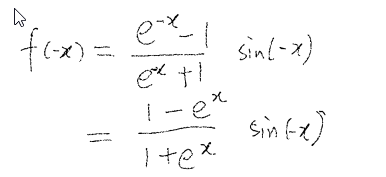 patent beacon
Multiply top and bottom by eˣ
 faint mason
At what point should I know algebra, trigonometry and logarithms to be able to understand calculus fluently?
gloomy spade
@faint mason well.. calculus isnt just algebra, trig, and logs
but you should be fluent in these topics to get a better grasp at calc
faint mason
I mean, so far, just from vaguely hearing things and watching people solve complicated problems, I have a really really rough idea of the stuff calculus does. (I think)
I think I understand what a limit is, just not how to compute it.
but with derivatives and integrals i get completely lost as to how people got ln(x) as the derivative of 1/x for example
gloomy spade
tbh, i think you should be asking in #calculus
#precalculus is just a preparation for calculus, so if you want an idea of what actual calc is like, ask there
faint mason
Sure, then.
gloomy spade
... if no one answers, you could try #math-discussion @faint mason
faint mason
thank you athlete
 gilded leaf
https://cdn.discordapp.com/attachments/269573202018041856/567177741347192877/Math_q.PNG does anyone know how to solve thise

25 a
 autumn violet
@gilded leaf What is P
 gaunt gate
can someone tell me how to multiply a 3x2 and 2x3 matrix ?
willow bear
the same way you would multiply any two compatibly sized matrices?
what is it about doing a 3x2 by 2x3 multiplication that's throwing you off?
@gaunt gate
gaunt gate
tysm for the response but a friend managed to help me out
I was just confused on like what was supposed to be multiplied by what in order to give it the proper amount of rows and collums
columns *
 languid crane
lmao
viscid thistle
1984
ruby otter
sec^2(x)-tan^2(x)
Has period pi/2
How ??
Even it's discontinuous and the holes in the graph repeat with period pi/2
It is a constant function right??
willow bear
π, surely?
ruby otter
What??
willow bear
your holes occur at π/2 + kπ
obsidian monolithBOT
 Requested by Radical Ninja#7581
short sorrel
Requested by Radical Ninja#7581
short sorrel
why's that pi in the domain?
valid vector
So, what would my domain be? x cannot be = 1/2 + n(1)?
obsidian monolithBOT
Namington:
valid vector
Dang, that just confused me more.
valid vector
Oh
short sorrel
'for integer n'
short sorrel
yea
normally there are gonna be pi values
in the restrictions on the domain of tan
but we already have that pi covered
since it's our b value
short sorrel
sure, yeah
valid vector
Oof, OK
valid vector
Yeah
short sorrel
for regular ol' tan(x), we get asymptotes when x = pi*n + pi/2
in tan(pi*x), the pi is already there
so are asymptotes are gonna be when x = n + 1/2
as that ends up getting multiplied by pi anyway
viscid thistle

I am not sure if I am on the right path for solving this.
Would I find the angle now or did I set it up wrong?
 full garden
please someone help me with this
how do I find the resultant displacment for this
it shows that its 13 km but idk where they got it form
even when I add all of those vectors i don't get 13
please help
languid crane
Why is this on precalculus
gloomy spade
@full garden because the person walked back 3m, the person's displacement is now 5m (in the y direction)
then you use Pythagorean theorem to find the resultant

 royal gull
@viscid thistle what did you try?
viscid thistle
i'm still stumped. i wanna say the answer is always, because in this equation sin(x) = 1/2, but i don't think that's right
royal gull
if the answer was always, that means for every x sin(x)=1/2
which is not true - counterexample sin(0)=0
it the anwer was Never - that means there are no x's such taht sin(x)=1/2
If the answer was sometimes, that means that sin(x)=1/2 if there exists x that satisfies the condition, but its not for every x
royal gull
you're welcome!
 glacial island
 charred hull


 slender river
it helps i promise
echo plaza
rocky bison
HE DOESNT EVEN HAVE THE QUESTION READY
viscid thistle
rocky bison
what even is life
willow bear
,rotate
viscid thistle
here u go
obsidian monolithBOT
willow bear
,rotate 180
viscid thistle
,rotate
obsidian monolithBOT
viscid thistle
o
willow bear
so.... which problem do you need help with
willow bear
ok, what's holding you up here?
willow bear
the question is giving you the graphs of two functions it names f and g
and asks you to find $(f \circ g)(0)$
obsidian monolithBOT
Ann:
willow bear
do you know what $f \circ g$ means?
obsidian monolithBOT
Ann:
viscid thistle
ofc
willow bear
then what's the problem?
willow bear
what's holding you up, then?