#precalculus
1 messages · Page 126 of 1
 tardy olive
is that the only way to find solutions
just guessing numbers and putting them in
how do u know those are the only two solutions
nvm
but how do u know the solutions r 1 and 3 other than plugging them in
@thick raptor
 fickle moat
how do you solve 4log (x-6) = 11
 frozen needle
what does log mean for you?
fickle moat
?
frozen needle
when you write "log", what function does it refer to?
frozen needle
alright
fickle moat
10 log(x-6) = 10 11/4
frozen needle
uhh
frozen needle
yes
fickle moat
x = 6+10 11/4
frozen needle
yes
 thick raptor
@tardy olive well you can look at the graph, but I don't have too much advice.
 hexed ermine
Yes @tardy olive with these sorta problems there are not a set way to solving
thick raptor
well you can use Lambert W functions
but there's no elementary approach other than looking at graphs and kinda guessing if you want trivial points
hexed ermine
Ya
fickle moat
for #72
i know that i should use A= Pe^rt
than is the equation should set up as like this?
2 = 2500e^.0375t?
hexed ermine
Yes
fickle moat
can i ask why
hexed ermine
Its asking the time required for double and triple the amount
Well your principle amount is 2500
So double 2500 is 5000
It wants you to find out the time needed to reach 5000 dollars
Where A is your ending amount
It wouldn't make sense to have your starting amount at 2 dollars
fickle moat
you have to solve for T but
whats the 1st step to write this this equation
5000 = 2500e^.0375t?
hexed ermine
Yes
fickle moat
one sec pls let me write it down
ok now
5000 = 2500e^.0375t divied by both side by 2500e
hexed ermine
No no
fickle moat
to cancel so i can have .0375t?
hexed ermine
2=e^0.375t
fickle moat
i got that yea
hexed ermine
So ln(2)=0.375t
hexed ermine
==ln(2)/0.375
 granite stirrupBOT
8×log(2)/3 = 1.84839248149319
fickle moat
sowhen they were given 2500 as inveset in account means i can put it in A and P?
hexed ermine
No put it as P
Your A is your ending amount
So if it asks for double it
You do double 2500
Or 5000
fickle moat
than why did we have to put 2500 into A and P
isnt it suppose to be than 2 = 2500e^
???
nevermind i red the wording wrong
double the invest 2500 = 5000 thats A
so for A we wrote in equation form as 2 x 2500 = 2500e^.0375t
thank you
hexed ermine
Ya
fickle moat
Ok so where do i begin?
since they are telling me who are under "x" inches tall is model by 64< equal to 78 . i can choose any number between it? so let say x = 75
do i have to plug that 75 into x
and solve the equation?
 patent beacon
@fickle moat
The functions take a height → a percent of people who are shorter than that height.
The horizontal asymptotes are 0 and 100, corresponding to the fact that you can't have less than 0% of people, or more than 100% of people
 north bough
why is sin^4(x) written like this for the power reducing function:
=tex sin^4\left(x\right)=\left(\frac{1-cos\left(2x\right)}{2}\right)^2
granite stirrupBOT
granite stirrupBOT
north bough
if sin^2(x) is written like this
=tex sin^2\left(x\right)=\left(\frac{1-cos\left(2x\right)}{2}\right)
granite stirrupBOT
north bough
oh wait nvm
hexed ermine
Square both sides
hexed ermine
😂
 silk sequoia
do you guys have any resources on determining the domain, vertical asymptotes, and x intercepts of log functions?
 limber bone
well
domain of log is [0,inf)
no negatives
x intercepts are when y =0
just google if u want resources
find lim x go to inf for asym
 alpine portal
Can someone help explain what I'm not understanding?
I tried .02x and thats not it either
Since its piecewise is it .02x+300
?
alpine portal
Cant try the problem anymore
sucks but I think it shows me the answer
Ill do it anyways
Its wrong
I think it was .02x+300
 hazy crown
It doesn't show the answer?
alpine portal
Hold on
hazy crown
Sorry man
alpine portal
Not letting me
its okay I got 1 last question for homework
If i get this right ill have 39/40 questions correct
Lol But I still want to know the correct answer
Yeah I think .02x+300 wouldve been right because at that piece of the function the rule is no longer that it starts at 2 dollars. In that part the rule is that it starts at 300 dollars
alpine portal
Its cool not like I failed an exam, I'm learning
alpine portal
Hey my question is up there
My final answer Is .02x+300 but It locked me out so I will never know
 blazing raven
38+0.02(x-300) ... 32 + 0.02x ?
Like okay. What is the amount paid if x = 300?
Then how do you represent "amount of Kwh after 300"?
😃
alpine portal
Ohh I was supposed to plug in 300 to the first function
blazing raven
😃
blazing raven
OH wait ...
Then how do you represent "amount of Kwh after 300"?
blazing raven
um ... looking for x - 300 😃
alpine portal
before 300 is .12x+2
blazing raven
like if I use 350 kWh ... how many of those are at the 0.02 rate? 50 not all 350 😃
alpine portal
ooh ok that makes sense
alpine portal
I see now
alpine portal
Thank you so how would I go about looking at these problems in the future?
So far listing every single variable in the word problem helps
blazing raven
Ooh, good question. In this problem, the x's at the "elbow" points have y values that match. So if it is sensible to assume that then it will help.
Um, that's probably the best advice I can give. Um, another important idea was the "x - 300" part.
alpine portal
Yeah I think we went over it once in class
blazing raven
You are only being charged 0.02 for each additional KwH past 300.
But yeah that's how this problem panned out.
alpine portal
But, I was trying to do it only based on the information because If I used the graphs then they could've taken out that part of the problem
Can you explain how you knew right away that it was x-300?
blazing raven
this is true. My final piece of advice (which hasn't been done) is check your work. what should the answer be at 100, 200, 300, 350, 500 kwh
Anything that is for "additional" stuff ironically uses subtraction 😃
so 3 free bags at the airport and additional bags are $50 means...
for x > 3, 50(x - 3) is the extra cost
(it is basically a ... you've done enough problems thing)
alpine portal
So any problem that has an excess of something I should be thinking that the excess is minus the "not excess"
blazing raven
Well minus the minimum where the excess kicks in usually. But I'm not going to say that works every time.
alpine portal
haha thanks I will try to understand this more now
blazing raven
yup 😃 yw and anytime
alpine portal
excess minus excess min
blazing raven
sure .... most of the time 😃
alpine portal
So in this case the key word was "usage over"
blazing raven
yes!
alpine portal
alright thanks for helping, do you have any books you recommend for understanding math in a different perspective or books on the language of math turned into English haha?
blazing raven
Not that I know of but a book filled with word problem secrets would totally help everyone.
You are welcome.
 viscid thistle
Please help in question 10
 shell salmon
Hint: cos/sin = cot
 fringe stream
*cot
shell salmon
Yup
 snow estuary
Can someone help me with this worksheet, I keep getting answers that are close but not correct
Also, was I supposed to ask this in a different chat??
shell salmon
multiply whole equations to get common denom. then add/subtract. then cross multiply and solve for x
fickle moat
A=Pe^rt
now i have a question since they are asking me a interest earned
the equation should be looked like
A = 7900e^(.08x15) ?
<@&286206848099549185>
viscid thistle
hi fren
fickle moat
hi
viscid thistle
thats correct
viscid thistle
=pup (7900(e^(0.08*15)))
 viscid thistle
what is r?
fickle moat
r =8%
viscid thistle
what is n, what is t
viscid thistle
fickle moat
r =8% t=15 p=7900
viscid thistle
This problem you have clearly states continuous compounding
fickle moat
it says compunded continuously for 15 yrs
that means i use a =per
t
where is this 18k coming from though.. 
viscid thistle
I would discuss this with your teacher/professor and in worst case scenario they will show you the correct method (if theirs was wrong you're ahead of the game)
fickle moat
i get the idea
but.. i feel like they input the wrong answer >.>
i have a question
t=1
37000 should be K?
92500 = p?
<@&286206848099549185>
fickle moat
i get i have to use A=Pe^rt
P = 4000 , T = 200 what is this interest rat for this one?
or do i have to use differernt format
or is this mean i have to solve for R =?
hexed ermine
A=Pe^rt
Plug in your 3 knowns
A=8mil, P=4000, t=200
8000000=4000*e^(200r)
Solve for r
 grizzled solstice
I need help ! How to show that both of them equal to each other
grizzled solstice
Anyone ? TT
 subtle narwhal
hey can someone help identify what these type of problems are called?
 languid nebula
Hi guys
I want to write a math sentence using the correct signs but Im stuck with this one I don't know why
Let n belong to integers (neg/pos). If n>1 and n isn't a prime number, then there is P a prime number that divides n and p<=sqrt(n)
Is it correct to write,
$\forall n > 1, \exists P , n not prime\Rightarrow P|n and P\leq \sqrt{n} $
 hot frost
Could I get some help real quick on these?
-
Adding two functions: what does it mean?
-
How do you compute the domain of the sum, difference, or product of two functions?
-
How do you compute the domain of the quotient of two functions?
-
In your own words, what does it mean to compose two functions?
 sour hemlock
@hot frost very ambiguous questions, can I have some context here. Is this some homework? Class assignment?
 vast trellis
Hello. So i’m doing some homework online and I come across this question.
So I know that because there’s 2 exponents for x and y and the coefficients are the same, making it a circle. And it’s x-y making it a hyperbola. But how do I know if the graph will look like C or D?
hexed ermine
You mean B and D
x^2=4+y^2
x^2-y^2=4
Since the x and y are subtracting itll form a hyperbola
If it were x^2+y^2=4 it would be a circle
So with it being a hyperbola it would be either B Or D
Now since its x^2-y^2 the hyperbola will open to the sides
If it were y^2-x^2 the hyperbola would open up and down
So you can say that the answer is D
vast trellis
Thank u so much
vast trellis
So I got this question wrong and i’m a bit confused. I thought an ellipse was when is x^2 + y^2 and a circle was an ellipse
 rocky bison
frozen needle
rocky bison
frozen needle
iirc oval is an actual thing of its own
 spring thunder

frozen needle
not much is still a little bit :p
spring thunder
😛
 pulsar lynx
im struggling to find the domain of (3/x - 5/x+5)
viscid thistle
The domain is everywhere where the denominator is not zero
@pulsar lynx it's the very similar to the one you've already found
(Same)
viscid thistle
guys, what discontinuities does 1/x^2 have????
 devout osprey
It has one, at 0
viscid thistle
yea, but is there another disconiuity?
cuz i make a table for the limit and the y values are -10, -100, -1000, limit, 1000, 100, 10
 empty pecan
no
devout osprey
I don't think so.
Oh I think you're not operating the signs
You know, (-10)(-10)=100
So when you approach from the left side, the signs become positive as well because (-x)^2=(-x)(-x)=x^2 😄
devout osprey
Here's the graph, if it helps.
empty pecan
ye
viscid thistle
kk thx
 late mauve
sure
 stark trench
I need help with kinematics
high school level stuff
can u help with that?
@late mauve
well rip
stark trench
A police car 150km/h is trying to catch a speeder 1km ahead who is driving at 130km/h. How many meters should the police drive to catch him?
idk where to start with this
stark trench
ok so d=150t and d=130t
late mauve
nope because the theif is 1km ahead
so his equation is
y_thief = 130*t + 1
now find the intersection of these two equations
stark trench
ah I see
late mauve
so at t=0 you get y_thief = 1, meaning he is already at 1km
stark trench
now good old systems
late mauve
exactly!
late mauve
no problem!
viscid thistle
???
on both, set f(x)=0 and solve for x, then do the reverse.. set x=0 and solve for f(x)
viscid thistle
@stark trench yes
stark trench
merci mon ami
viscid thistle
@viscid thistle wait those r just 0s
i have to describe end behavior in terms of limits
i got 5A, but what would 5B be?
try the same way
let me look at the question hold on
do you know how to take derivatives?
you can use L'Hôpital's Rule
or you can reason like this, if we take the limit as x -> inf in both directions, we see that the expression converges to the same number.
if we take the limit of the top and bottom, or ignore everything else except the main factors, we arrive at -6x^2)
(-6x^2)/(2x^2)
=-3
so that f(x) converges to -3 as x approaches infinity by L'Hôpital's Rule
conversely the same is true as x approcahes negative infinity
kk thx
L'Hospitals rule states that if we take x-> inf and we get inf/inf or 0/0, then we are allowed to take the derivative of the top and bottom until we arrive at a easy limit to compute
for example. (2x)/(5x) since both top and bottom go to infinity as x goes to infinity, we can take the derivative and arrive at 2/5
wait 2.5?
2/5?
what does that have to do w -3
no 2/5 is the example I just made
ohh
i get it
thanks!
;3you're answer is -3
:3
stark trench
boiz need help
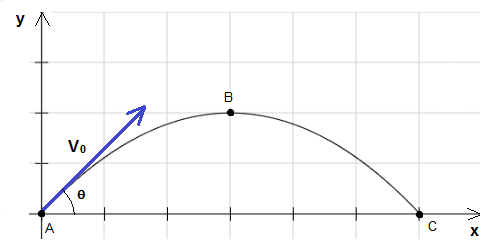
"An object is thrown from ground into air with a velocity of 30 m/s at an angle of 35.0° to the horizontal. What is the range of this object?"
@viscid thistle
<@&286206848099549185>
anyone on?
rip
fringe stream
what have you tried
 nocturne lake
May be more algebra, but I cant seem to get this one.
I was asked to simplify cos(u)sec(u)
I expanded like this: cos(u)*(1/cos(u)) then simplified to 1 but that was incorrect?
patent beacon
Looks right to me
nocturne lake
Hmm. Must be an issue with the question. Thanks!
 limpid plover
Try inputting one if it's some online bullcrap
nocturne lake
cos(u)*(1/cos(u)) worked. I hate this thing.
patent beacon
Wat
nocturne lake
Yeah, the question was Simplify and write the trigonometric expression in terms of sine and cosine.
I guess they really meant that.
limpid plover
Heh
nocturne lake
Hey, so I ran into another one. I got 1/(sin(x)cos(x) but the site says its sin(x)cos(x)
Oh, I went from addition to multiplication in the first few steps. My bad.
hexed ermine
Yep
 royal gust
=tex 9^x+2 = 27^-x
granite stirrupBOT
Rendering failed. Check your code. You can edit your existing message if needed.
spring thunder
$$ 9^x+2 = 27^{-x}$$
granite stirrupBOT
spring thunder
brackets are life
royal gust
ohh thanks
spring thunder
so you wanna solve this eq?
granite stirrupBOT
spring thunder
ah dem
that's even easier
so we can notice that 9 and 27 are powers of 3
ie 9 = 3^2 and 27 = 3^3
spring thunder
ah you can if you want
but that's not compulsory
but can you rewrite the equation using the two equalities i showed you above ? (like that we'll have the same base raised to some powers on both sides)
granite stirrupBOT
royal gust
what about when we put logs in front of them
spring thunder
well you could take logs first, but i'm just doing some work before so that it will be 100% obvious
so then $$9^{x+2} = 27^{-x} \iff (3^2)^{x+2} = (3^3)^{-x}$$
granite stirrupBOT
royal gust
oh I see now
sorry I had such hard time finding that in notes here it looked familar
now we distribute them?
2x+4
-3x
spring thunder
yus
royal gust
$$3^{2x+4} = 3^{-3x}$$
granite stirrupBOT
royal gust
and we some how cancel out both 3s?
royal gust
I like to break things down to know where things go
each step is important
im in precalculus now
spring thunder
one explanation is just : log_3 both sides, but there are more interesting approaches
like saying the function x->3^x is strictly increasing on its domain, therefore you can't have two x-values associated to the same y value
which justifies the equivalence $$3^{2x+4} = 3^{-3x} \iff 2x+4 = -3x$$
granite stirrupBOT
spring thunder
(theres the notion of bijection behind that idea, but that's definitely not precal dope)
royal gust
yes I see it then we cancel out 4
2x = -1
am I doing this right?
im getting 0.5 now
or just leave it as
-1/2?
spring thunder
we all prefer -1/2
spring thunder
👌
royal gust
oh wait wait
is that an x by the 3 I see?
I cannot tell from the improper rending of the bot
spring thunder
yes
royal gust
wow
spring thunder
(just click on the image you'll see it)
royal gust
that means we might be wrong then
royal gust
your equation is good but the bot threw us off
spring thunder
$$2x-4 = -3x \iff 5x = 4$$
granite stirrupBOT
spring thunder
:/
royal gust
yes we are on track
just that last part
that looks good now
5x = 4
so now its 4/5
2x-4 ? isnt it 2x+4?
 winter spoke
A certain radioactive isotope has a half-life of approximately 1050 years. How many years to the nearest year would be required for a given amount of this isotope to decay to 70% of that amount?
Can someone help me with this
viscid thistle
this is actually a physics question.
There is something called exponential decay/first order decay. It is called first order decay because the following expression is obtained from a first order differential equation.
N = Ae^(-kt)
where A is initial amount of substance
N is the current amount of substance
k is decay constant
t is time
Solving for t, eqn will be t = -[ln(N/A)]/k
Plug in the values now
winter spoke
thank you
Determine the half-life of the substance that decays from A0 to A in time t. Round to the nearest tenth of aunit.27.A0 = 11.3, A = 8.5, t = 33 minutes
Ao=11.3, A=8.5, t=33minutes
viscid thistle
another direct question. Same procedure but find k instead.
half life is 0.693/k as arbitrary as it sounds
winter spoke
thank you
 safe maple
a
safe maple
np
viscid thistle
i have a question too
=pup lim (sinx/x)^(sinx/x - sinx) as x approaches 0 + lim 1/(1 - x) as x approaches 1
viscid thistle
The answer is coming to be - infinity
and when i calculated it i got 1
and secondly - infinity is even not in the options of the answer
so can someone pls confirm the answer
@alpine portal can u help me
alpine portal
@viscid thistle sorry I haven't learnt that yet.
vast trellis
Hi. How do I do the Gauss Jordan method
 fading token
You add the two equations in such a way that you get an equation with just one variable
Solve for that variable, and use that answer to solve for the other variable
 gritty blaze
Matrix method ?
 floral tide
I dont get why people take pictures off their screen when you can screenshot on the computer and then paste it which is faster and gives better quality
pro tip: ShareX
fading token
Maybe they're using a public use computer
 slender river
you mean pro tip for windows users: snipping tool
viscid thistle
Can anyone explain simpler steps to Law of Sines?
My teacher is making the entire class do a self teaching Unit (Flipped Unit) so she barely teaches the class...
Ping me if you can be an solution/aide to my problem.
Theres no simple steps to law of sines @viscid thistle
Its just one equation
and also i understand how bad self study is
When it comes to solving the oblique triangle I mean.
my geometry teacher doesnt do much
o idk then
rip me
she just sent a series of barcodes
soz cant help u with that
it's alright
yeah my geometry teacher is the same
I prefer my Algebra II Teacher.
They actually did something.
tru same
I think I'll go back to tutoring.
if you really need help with something ask your teacher
thats what im doing this year
alpine portal
Is this question asking me to put any number as h except for 0?
So can I put h= 1?
Thats the answer I got for that
in the pic
and it marked it wrong....
granite stirrupBOT
alpine portal
In the pic its simplified
ok lemme redo
@viscid thistle howd you get rid of 8/h?
Oh yeah
Lol thanks
viscid thistle
I think that question was abt calculating differncial
alpine portal
Calculating slope of secant
viscid thistle
ok
tardy olive
What is the difference between something being undefined and something being not in the domain of a function?
fading token
Can you give an example?
 fallen cloud
well say you have a function that can only be applied to integers like the factorial function, it is undefined for noninteger values. But something not in a domain means that you can't plug in a certain value in a function or you'll get some complex number. EX: the domain of sqrt(x) for real output y is x >= 0;
factorial is only defined as such: x! = x * (x-1)!, 0! = 1. you can't input fractions or such. it's just not defined
patent beacon
The domain is all points where the x value is defined.
sin(0) / 0 is undefined.
The domain of sin(x) / x does not include x = 0
tardy olive
so by saying something is undefined, I am saying that it is not in the domain of the function?
for example, is log(-3) undefined
hexed ermine
Yeah -3 is not in the domain
tardy olive
but is it undefined?
fallen cloud
no
hexed ermine
Yes in the reals
fallen cloud
if you split it up it would be log(3) + log(i), which we dont know, but at least we have a concise idea of what it is
rather if you input a fraction or such into a function that can only be calculated with integers, then its undefined
hexed ermine
You mean log(3)+2log(i)
patent beacon
But if you're working in the reals, ln is only defined on positive numbers
tardy olive
so if I say log(-3) in undefined instead of saying it is not in the domain, (working with real numbers), the two statements are equivalent?
patent beacon
Which, funnily enough, is another way to say "the domain is positive numbers"
Yeah, I would say those two things are equivalent
fallen cloud
:\
hexed ermine
But it's cool to note that log(-n)= log(n)+2e^((pi/2)i) :v
hexed ermine
well + e^(ipi)
patent beacon
z = re^(iθ)
log(z) = log(r) + iθ
Note the complex logarithm is multivalued. log(-1) = πi, but also log(-1) = 3πi
fallen cloud
ye, but we'll just have fun with the simplest value for now 😃
fallen cloud
ooo
tardy olive
I have a general idea
fallen cloud
derivatives >:) or do we not use that yet?
tardy olive
But the (x-4)^2 is troubling
hexed ermine
What do you have so far?
tardy olive
no calculus
okay, so I reasoned that the bottom term is positive no matter what
so y-4 should be as negative as possible
fallen cloud
the top would be xx - 2x - 7,
tardy olive
except if we just go and look for the most negative y value, we might come up with a x value that makes the denominator really big
making the entire expression only slightly negative
if that makes any sense lol
fallen cloud
you do limits?
fallen cloud
what if we just set the top to 0 and solve for x that way?
tardy olive
that might not be the most negative value it can achieve though
fallen cloud
like xx - 2x - 7 = 0, use quadratic?
tardy olive
because there could be some negative value which is smaller than 0
like, x^2-2x-7, there is some x value that will make it negative
fallen cloud
then... how about take the average of the roots of 'xx-2x-7' and plug it in to the top an bottom
tardy olive
why would we do that?
fallen cloud
well, maybe test it?
 wise umbra
Hii! I was wanting some help w these exponential functions.
32^-2x-3 = 64^-2x
I know that we do the root and for this it would be 2, but idk how to like write that out.
and the other one is
(1/4)^3x-1=64^-x-3
 glass venture
could you please use some more parenthesis? I can't tell what's supposed to be in the exponent
glass venture
so by the way, are you familiar with logs yet or no?
wise umbra
yeah but i dont really understand them
glass venture
ok well I can talk about those after I give you a way of doing this without them. They're simple but teachers often manage to explain them badly (as with most high school level math).
ok so to do these without logs, the key thing to notice is that the bases happen to be powers of 2
in the first problem, 32 = 2^5, 64=2^6
so I'm going to substitute those in and use some standard exponent properties
wise umbra
yeah i did see those 2 powers i was just so confused on how to write them 
because i know that base rule thingy
glass venture
=tex 32^{-2x-3} = (2^5)^{-2x-3}
granite stirrupBOT
wise umbra
OHH ok thats how you write it
glass venture
so yeah do you think you could do some more from here then?
glass venture
np
btw, for the second one, you'll use 1/4 = 2^(-2) . That's basically as complicated as this type of thing can get
wise umbra
oh thanks! so we just leave the 1/4 alone lol.
glass venture
well you should replace it with 2^(-2)
wise umbra
OH i see
glass venture
the general idea is that if you have a^x = a^y, then x=y
so you want to get everything to the same base always
wise umbra
yeah i didnt notice you were saying 2^(-2) was = 1/4 i thought u were saying the whole equation
thanks xD
glass venture
np
so anyway, for logs, the definition is pretty simple
suppose you know this:
=tex a^x = y
granite stirrupBOT
wise umbra
mhm.
granite stirrupBOT
glass venture
so this is a different way of writing a^x = y
wise umbra
OK SO THATS WHY exponentials and logs are related
glass venture
yeah, the log is the inverse of the exponential basically
log_a is a function that's defined so that the following is true:
=tex \log_a a^x = x
granite stirrupBOT
glass venture
log_a y is the number you raise a to in order to get y
so it's reversing exponentation
wise umbra
so would the 2 a's cancel eachother out?
wise umbra
ok
glass venture
we can think of the function which take a number to the number a^x
log_a is the function which reverses this process
it takes things of the form a^x back to x
wise umbra
hmm that makes more sense
glass venture
except usually you're not given something in the form a^x. Like you might be asked "what is log_2 8"
do you think you can figure out what log_2 8 is?
glass venture
how'd you get that?
wise umbra
because 8 squared is 64
glass venture
well I'd probably just write 8^2 if I wanted you to find 8^2 :p
wise umbra
xD
glass venture
so log_2 8 means "the number x for which 2^x = 8"
glass venture
yeah exactly
so it's a bit to swallow and think through, but once you get some practice with it it won't be too bad
it's like with square roots, you have to think "what squared is 64"
and with logs you think "what power do I raise this to"
wise umbra
i really can't thank you enough
you explain much better than my teacher does in a hour lesson
maybe i wont fail this test
glass venture
well one on one is a little easier lol
so btw, you may have seen some log properties
these all follow from exponent properties, and they're easy to prove if you've really swallowed the definition
wise umbra
yes i have a sheet for some of the properties
granite stirrupBOT
glass venture
this comes from the fact that (c^m)(c^n) = c^(m+n)
let me just prove this formally so you can get an idea of how this sort of thing goes.
viscid thistle
Actually that's a 2 liner
glass venture
which is why I'm doing it lol
viscid thistle
😛
wise umbra
xD
granite stirrupBOT
granite stirrupBOT
granite stirrupBOT
granite stirrupBOT
wise umbra
im not gonna lie thats so much easier on my brain now
viscid thistle
yea
wise umbra
like it makes so much more sense
glass venture
protip: everything in math makes sense. don't accept stuff which don't makes sense. this is how you get good at math
viscid thistle
Just knowing how exponents work, you'll understand root, log, etc.
glass venture
anyway if you have the time I encourage you to try and derive the other log rules with this type of strategy
wise umbra
yeah, i have like 5 pages of packet to do and a test so ima be up late studying
viscid thistle
Actually, instead of straight-up not accepting the fact, you can analyze what's wrong in that so that you won't come to conclusions just like that.
viscid thistle
Current education system exposes students to applications of math, but actual math involves relating stuff and THAT is more important.
last min studying, huh
glass venture
my main tip is avoid doing stuff last minute lol
viscid thistle
You could pay attention to lectures during class.
Otherwise, 0 way to do it at the last min
wise umbra
ik. i do pay attention just sometimes i cant really make those conneections.
glass venture
so some people get away with cramming more than others, but it eventually falls apart for everyone
wise umbra
like the lesson is easy but the sheet is just so hard
wise umbra
do i wanna know what that is xD
glass venture
so I would recommend in general to focus effort on making sure everything you do makes sense
wise umbra
lol sorry if i sound so immature im a sophmore in hs so unprepared for college.
glass venture
avoid memorizing procedures
wise umbra
yeah ofc.
glass venture
try to see why rules and procedures work
viscid thistle
math which deals with spaces. They have so many different terminologies which confuses me sometimes
glass venture
if you can do that you'll be way ahead of most people
but after that, just do practice problems until you stop making silly mistakes
viscid thistle
I still haven't found even ONE satisfactory video/site which explains why curl indicates rotation
wise umbra
yeah i really like math its honestly fav subject its just getting it is my problem
glass venture
don't be afraid to go slowly and write lots of things at first
@viscid thistle did you see the 3b1b video on that?
viscid thistle
Is there one?
viscid thistle
ok.
glass venture

Intuitions for divergence and curl, and where they come up in physics. Thoughts on going sponsor-free: https://www.patreon.com/posts/19586800 Special thanks ...
wise umbra
geez that looks crazy
viscid thistle
He said "it's possible to prove that cross product is curl"
I think, towards the end of the vid or something
glass venture
@wise umbra everyone who gets that had to go through the same path you're going through now, so don't worry about it
@viscid thistle yeah it's been a while since I watched it, I just remember enjoying it
wise umbra
what do you rec me take next year for math
thanks u guys btw u have helped me a ton :o
glass venture
I mean you can follow you're schools curriculum and you'll be fine. If you like it, try to be on the most advanced track. If you really like it, read up ahead, maybe try to skip a grade (you could take a class in the summer to do this maybe).
viscid thistle
Everyone is gonna fail at one point or the other. The actual thing that separates people who are good at math from those who are bad is: people who are good NEVER give up and never get discouraged by the dip
wise umbra
the dip
glass venture
when you get to college there are usually placement exams, so even if your school doesn't have a very advanced track, you can get ahead on your own
wise umbra
what is that
viscid thistle
Dip means failures.
viscid thistle
Just a metaphoric way of saying that
viscid thistle
Dip typically occurs in any year b/w 13-18
Giving up is the worst thing you could do at that time
wise umbra
15 rn
glass venture
but yeah everyone has to deal with some failures. Also 90% of the time spent on learning math involves not totally understanding something, so don't get discouraged by that either
wise umbra
honestly me.
glass venture
lots of people aren't comfortable with not knowing what to do and all, so just don't get discouraged by that
wise umbra
im just worried that i wont be able to make it well in ap cal
glass venture
if you get the basics well you'll do fine
viscid thistle
^
wise umbra
ok :)
viscid thistle
I'll be honest rn. I am not satisfied by my math performance this time. I am not giving up that easily.
practice and interest is most important imo
glass venture
and remember, if you don't like your teacher, or whatever, it's on you to get past that. Read the book, hang out on the discord and ask questions, and you'll be able to do well for sure.
wise umbra
yeah. thanks so much! you made my day ik it sounds weird but thanks
viscid thistle
Good to hear!
glass venture
lol it's really no problem, I'm glad we could help 😃
wise umbra
ofc thanks c;
viscid thistle
One more tip: Help others in solving problems
Them asking doubts can make you think more
wise umbra
i do help my friends sometimes
true
anyways you all have a nice day or night
thanks~
wise umbra
thanks same to you
So one other question, I'll probably have a lot in the next few hours, xD. Just to make sure im right, if im trying to find x for the expression below, it would be x=8.5 right?
=tex \log_5 x + \log_5 (x+1) = \log_5 20
granite stirrupBOT
glass venture
ok so first I would use one of the log rules
viscid thistle
x^2 + x - 20 = 0
wise umbra
oh so we always set it to 0?
glass venture
not exactly
viscid thistle
I guess, x = 5 and x = -4
glass venture
ok so I mentioned this before:
hexed ermine
For finding quadratic solutions yes
glass venture
=tex log_a(a^x) = x
granite stirrupBOT
granite stirrupBOT
wise umbra
WAIT No I did what you guys were saying i just messed up the problems!
glass venture
if you think carefully about the definition this is obvious
wise umbra
sorry if i wasted your time. xD
viscid thistle
But, the bigger concept is negative numbers should not be inside logarithms
glass venture
it's fine no worries
granite stirrupBOT
granite stirrupBOT
hexed ermine
You know your log properties?
wise umbra
i have a sheet with them and sorta understand them but applying them is a whole nother story
hexed ermine
Okay well since the two logs are subtracting the argument itself is dividing
So we have log_5((x+1)/(x-1))=2
wise umbra
Oh yeah i forget about all this dividing ahhh
hexed ermine
Now you know how log_b(a)=c is the same as b^c=a?
wise umbra
yes
wise umbra
yes, thanks c;
hexed ermine
No problem
thick raptor
#❓how-to-get-help
Wait a minimum of 15 minutes after posting your problem before pinging helpers.
 rare zephyr
Aite
hexed ermine
@rare zephyr Okay
So for that top line, we have 2y=x+8
Or y=x/2+4
That means that for that line, the slope is 1/2
Since the line QR meets that meet orthogonally, the slope of QR is the opposite reciprocal
So -2
Now we have y=-2x+b
So to find b, since the y intercept is Q itself, you plug in 0 in for x in 2y=x+8 to find y which is 4
So now we have QRs line being y=-2x+4
Now notice with that line, (k,0) is on the line as well so plugging in k for x and 0 for y will satisfy
Plugging in them both, you get 0=-2k+4
Solve for k, gets you 2
All in all your final answer for k is k=2
@rare zephyr
 main geyser
=tex \log_5 (x+1) - \log_5 (x-1) = 2
granite stirrupBOT
 elfin night
=tex \log_5\left(\frac{x+1}{x-1}\right)=2 \ \frac{x+1}{x-1}=25 \ x+1=25\left(x-1\right) \ x+1=25x-25 \ 26=24x \ \frac{26}{24}=\frac{13}{12}=x
granite stirrupBOT
 solid reef
 old stag
hey can anyone help me with a question
old stag
the area of a circle is 48 πcm^2 - What is the exact length of the square
I know the answer
but I cnt figure out
how
- what is th elength of the diagonal of the squar
and its in a circle
old stag
and they want the perimeter also
viscid thistle
Then the answer is just to find the radius of the circle.
sqrt(48)
4sqrt(3)
So,
Since square is symmetrical
old stag
they have the length as: 8(sqrt)3 and perimiter as: 16(sqrt)6
viscid thistle
wait wot
old stag
its a mixed radical
old stag
length of the diagonal
viscid thistle
then it's radius x 2
4sqrt(3) x 2
8sqrt(3)
Anyways, since square is symmetrical, diagonal^2 = 2*side^2
This means side^2 = 32*3
side = 4sqrt(6)
perimeter = 4*side
16sqrt(6)
old stag
im trying to figure it out, i just dont get it
viscid thistle
Lemme sum stuff up because I think that my writing was a bit confusing.
Now, a square is inscribed within a circle. Your question asks you to find the diagonal length of the square. So, now since it is inscribed, it's safe to say that diagonal length is 2 times the radius of the circle. Find the radius using area formula.
Since square is symmetrical, by pythagoras theorem, (diagonal acts as hypotenuse, sides act as base and height) diagonal^2 = 2 x side^2.
Perimeter of the square is 4 x side.
old stag
what is the area formula
old stag
its early pre-calc
im studying like 8 hours a day paced through
so I hope 2 get good, and help others ;p
thanx for tht
saved me time
viscid thistle
no probs
viscid thistle
Good to hear!
viscid thistle
Actually, it's our teachers asking to leave us so. As a matter of fact, when dividing, it should be:
sqrt((48 pi cm^2)/pi)
Now notice that both "pi"s get cancelled.
sqrt of cm^2 is cm
sqrt of 48 is 4sqrt(3)
It's how it SHOULD work but our teachers never explain why we are not including that
You'll get your answers as soon as you learn about homogeneity principle.
old stag
I think you are wrong dude
somewhere
thts not right
it just dosent work
your reasoning is ok
but the answer is wrong
viscid thistle
I got the answer
 fallen swallow
I tried solving it but I'm unsure of the answer. Is the answer : the limit doesn't exist?
viscid thistle
Yeah
Actually, wait.
Limit doesn't exist
It's because it might be useful to separate out the function into parts
lim 1, lim (1/x)
lim 1 is clearly 1
lim (1/x) doesn't exist
viscid thistle
Actually, I'm unable to understand your question.
fallen swallow
Hold on.
To know the limit, I must first know what ƒ(x) is. Problem is, I don't know what ƒ(x) is.
viscid thistle
f(x) is given...
It's wise if you check Left and right hand limits for this question.
 wicked token
f(x) is a piece wise function
vast trellis
Question when multiplying two matrices with different sizes, how do you know the size of product matrix? Example: 3x2 and 2x3
 civic plaza
M x N matrix multiplied on the right by N x P matrix will be M x P
vast trellis
Thank you
wise umbra
Hello! I am working on logs and such. If im expanding this log:
=tex \log _2\left(\frac{x+1}{y^2\sqrt{z}}\right)
granite stirrupBOT
granite stirrupBOT