#precalculus
1 messages · Page 115 of 1
 vital tartan
 granite stirrupBOT
 lost pawn
That's what I thought two
 viscid thistle
the first one isn't infinity, the second is
 hollow obsidian
^
viscid thistle
you can graph it if you don't believe me
or calculate for like 0.9, 1.1 and you'll see why
vital tartan
nah it's fine but is it ^^^^ that you're testing it with?
I'm pretty sure that limit doesn't exist
=tex \lim_{x \to 1^{-}} \frac{x}{x - 1} = -\infty
granite stirrupBOT
lost pawn
Does this have something to do with the even exponent?
In which case is the following limit true for any n?
=tex \lim_{x\rightarrow 1} \left ( \frac{x}{x-1} \right )^{|2n|}=\infty
vital tartan
=tex \lim_{x \to 1^{+}} \frac{x}{x - 1} = \infty
granite stirrupBOT
vital tartan
oh wait
granite stirrupBOT
vital tartan
what's the question then ?!
I saw multiple equations
I'm confused at which one it is
lost pawn
Look at the limit i posted tho
lost pawn
Would the same function raised to the power of 6 go to infinity?
viscid thistle
yes
lost pawn
So this is true+
=tex \lim_{x\rightarrow 1} \left ( \frac{x}{x-1} \right )^{|2n|}=\infty
granite stirrupBOT
viscid thistle
depends what n is
viscid thistle
$$\lim_{x\rightarrow 1} \left ( \frac{x}{x-1} \right )^{|2n|}=\infty \ \forall \ n \in \mathbb{N}$$
lost pawn
Yes
granite stirrupBOT
viscid thistle
I think so
viscid thistle
as long as it's even so everything is positive
lost pawn
Thanks for the help 😛
 gritty blaze
n = 0
 fringe stream
can you graph 3^x?
3^x is the inverse of log_3(x), so that's the way i'd do it.
graph it, then use y = x as the axis of symmetry.
 proper flicker
but how do I graph log_3(x) after?
fringe stream
since 3^x and log_3(x) are inverses of each other, their graphs will be symmetric about y = x.
so, graph 3^x, then use y = x as the line of symmetry to graph log_3(x).
=pup graph 3^x and log_3(x)
granite stirrupBOT
Query made by @fringe stream
Data sourced from Wolfram|Alpha: http://www.wolframalpha.com/input/?i=graph+3^x+and+log_3(x)
Do more with Wolfram|Alpha Pro: http://www.wolframalpha.com/pro/
proper flicker
what do you mean by using the line of symmetry?
sorry I don't get how to graph the log part
 unborn mist
So imagine a mirror was on the y=x line
And all you gotta do is create the image shown by the mirror
proper flicker
So the point for 3^x would be (-2,1/9) , (-1,-1/3) , (0,1) , (1,3) , (2,9)
and I'd just flip x and y?
unborn mist
Uhuh
Since you know log1 is 0
When we do inverses we essentially swap the range and domain
 real fog
cos^4+2cos^2sin^2+sin^4 = (cos^2+sin^2)(cos^2+sin^2) i cant seem to factorise it what method
x^2+2xy+y^2
real fog
kyizo did it
fringe stream
what do you not understand about that?
real fog
how do i factorise this cos^4+2cos^2sin^2+sin^4 after changing to this x^2+2xy+y^2
real fog
ohhh now i get it thanks you guys
 true vigil
👌
 slate hill
how do i "Write the statement as an absolute value equation. Let x represent the unknown number.The distance between 5 and a number is 2."
 young fractal
For negative tangent graphs
viscid thistle
If a function is neither odd nor even, what would it be?
@viscid thistle go algebra
pls
Uhhhh... ok.
viscid thistle
what
young fractal
For negative tangent graphs
I’m trying to find out where I’m putting my asymptotes
viscid thistle
I don't know honestly
@true vigil
Idk and i’m not a helper :/
loses honorable
young fractal
@viscid thistle you at least know what I’m asking?
true vigil
What
young fractal
Oh
true vigil
Whats a negative tangent graph
 dense zealot
@viscid thistle neither
There's odd, even, and neither
@true vigil -tan(x)
???
Idk
true vigil
=pup -tan(x)
granite stirrupBOT
Query made by @true vigil
Data sourced from Wolfram|Alpha: http://www.wolframalpha.com/input/?i=-tan(x)
Do more with Wolfram|Alpha Pro: http://www.wolframalpha.com/pro/
young fractal
@true vigil it’s meant to be like cotangent
But
I’m new to this so
I don’t know if the cotangent rule where you set (x-c) to 0 and pi to find the asymptotes apply
true vigil
What
 hasty wadi
hi, im confused on how im wrong for this question. i'll post my work so you can look at it cuz im confused. i need help lol
never mind, i got it
viscid thistle
Someone can help?
 deft granite
$$0.5 = r/(1/2)^\theta$$ 
granite stirrupBOT
 golden oriole
deft granite
golden oriole
deft granite
Try again for the fill in the blank
viscid thistle
that's pretty cool
didn't know quadratic solar troughs were a thing
also that's really smart
viscid thistle
so how I would solve it is I'd put the bottom of the thing at the point (0, 0)
then the end points are (+- 90, 56)
right?
 stark trench
Yep I got that but the equation was so diff from mine
viscid thistle
wait actually the equation would differ based on where we put this solar panel on the graph
dense zealot
Parabolic solar panels are smart
Since beams bounce around
and stuff
And all hit where u want them tk
stark trench
So...?
granite stirrupBOT
289.85507246
hasty wadi
granite stirrupBOT
Query made by @pine kindle
Data sourced from Wolfram|Alpha: http://www.wolframalpha.com/input/?i=solve+-14000+-+10.35n+%2B+58.65n++%3D+105000
Do more with Wolfram|Alpha Pro: http://www.wolframalpha.com/pro/
2463.76811594
hasty wadi
stark trench
Someone please tell me the steps to solve this
I just need this solved because Idk how quadratic function word problems work
 void patio
it's asking for 2 roots at -90, and 90 with a vertex at (0, -56).
@stark trench
just write the general formula that represents it
 rotund mantle
^ with these three points you can simply use the vertex form to solve it, or if you’re fancy express it as a Laplace polynomial
viscid thistle
Can someone help?
 brave cedar
viscid thistle
brave cedar
viscid thistle
I solved it already thanks.
V = pir^2h
make r^2 subject of the formula
and solve
after getting 15.9, I square root, since it is r^2
hence I get 3.9, which is 4.
The Answer is A, thanks for the assist though.
unborn mist
Np
viscid thistle
I NEED HELP FOR MY PRACTICE TEST TO SKIP PRE CALC OMG I NEVER STUDIED
its tomorrow
 final sigil
Why skip Pre-Calc?
viscid thistle
lol cuz it was an available option
final sigil
I don't think that's a good idea.
viscid thistle
i kinda understand how to do the question but not fully
 rocky bison
Do you know your rules of indices
viscid thistle
i still want to try the test tho
rocky bison
Or exponents you americans all them
final sigil
There's a lot of precalc that then transfers to calculus.
viscid thistle
oooohhhhhh
rocky bison
Then the solutions are kinda obvious
viscid thistle
gah ok
rocky bison
for the first two
viscid thistle
but the third one?????
rocky bison
First of all
I'd move that square inside the brackets
on the left bracket
After that I'd move the bottom terms up to the top
and make them negative powers
Then just add the powers as they multiply together
make sense?
rocky bison
np
 hexed ermine
yes
You can prove that by doing Hypotenuse/Opposite = csc(theta) and a trigonometric function multiplied by it's inverse will equal one
csc(sin)=1; sec(cos)=1; cot(tan)=1
 past jay
Yeah what you've really done here is make a reciprocal identity. since sin(theta) = y/r then it follows r/y * sin(theta) = 1 since r/y * y/r = 1
Of course, what pjs said is just as true. Though I'd be careful calling csc and sin "inverses" but.
hexed ermine
Haha true, you can confuse inverses. for example sin^-1 you would think is the 1/sin or the reciprocal but it's the arcsin instead :v a bit confusing at first
past jay
personally I never use the ridiculous -1 notation for trig
I try to avoid it for functions entirely
I just write arcsin and arccos, etc
hexed ermine
same lol
 grim yarrow
-1 forever
past jay
HERETIC
 onyx basalt
Hey everyone! This ought to be super simple for you, but I can't seem to figure out what to do.
How would you find out the result of the following expression on paper?
granite stirrupBOT
 patent beacon
= log1/4(3*8 / 6)
onyx basalt
I see, I am an idiot. thanks 😄
patent beacon
Not at all! Just new to these rules
onyx basalt
actually, not new to this at all. I have just forgotten about this rule 😊
onyx basalt
alrighty, so I have another one here:
granite stirrupBOT
onyx basalt
My attempt:
looking at the denominator, it's domain is
granite stirrupBOT
onyx basalt
since argument of square root can't be negative and the denominator can't yield 0. The next thing is that the argument of log must be > 0. Since the square root in denominator returns both positive and negative results, I am not sure how to proceed.
onyx basalt
I am an idiot again. the domain of f in whole numbers is -6, -5, -4, -3, -2, -1, 0, 1, 2
sorry for spamming here
onyx basalt
Since I havem't gotten the answer in #help-2 yesterday, I am trying my luck today here.
How do I find such q which will make the line a tangent of the parabola?
https://cdn.discordapp.com/attachments/359052604149465088/419142317853638656/latex.png

 clever inlet
with only precalc i assume
well substitute them into each other
resulting in a new quadratic
you need to force this new quadratic to have a discriminant of 0
(x+q)^2 - x - 1 = 0
onyx basalt
🤔 that was my train of thought as well, but then I have gotten that q^2 is a negative number. But it's nice to see my reasoning was right and I just screwed up with numbers.
Thank you 😄
also - if you get only one result for intersection of parabola and line, it does not have to be the tangent IMO.
lemme draw an image
oh no, it does have to be a tangent line, I see
$$(x+q)^2-x-1=0$$
$$x^2+2xq+q^2-x-1=0$$
$$x^2+x(2q-1)+(q^2-1)=0$$
$$D=(2q-1)^2-4(q^2-1)$$
$$D=4q^2-4q+1-4q^2+4=0$$
$$-4q=-5$$
$$q=\frac{5}{4}$$
granite stirrupBOT
clever inlet
yeah
onyx basalt
😊
nice, thanks 😄
 gritty pewter
anyone mind an assist? Got one making my head hurt a tad, lol
System of three numbers problem
can't seem to eliminate anything
viscid thistle

viscid thistle
Yep.
So we can now substitute/add equations in our system together to get values for t, s and f
vich von first zo
unborn mist
try using eqns 1 and 2 to sub into 3 and make sure you only get either t,f or s on the LHS
gritty pewter
write this out as t + s - 10 +s = 125?
unborn mist
I think the easiest is f
gritty pewter
effort is being made not to set this pc on fire
viscid thistle
Which PC 0.o
gritty pewter
my own
viscid thistle
Jeez.
gritty pewter
lol
gritty pewter
Not really yet no
viscid thistle
Try rewriting eq. 3 in terms of f.
gritty pewter
just keep writing and rewriting this out , hoping it clicks
so then f = s - 10 and 3f = t
gritty pewter
f = t/3
viscid thistle
Wait wut
unborn mist
hold on
you have t=3f and s=10+f
and also that f+s+t=125
so from here
try and find a way to use those first two equations
to make the third equation simpler
so that you would have 1 unknown for 1 equation
viscid thistle
Have you seen substitution before?
gritty pewter
I have, just been at this too long this mornig
viscid thistle
I see.
gritty pewter
may be its break time
viscid thistle
Maybe.
This is the most important piece of information.
you have t=3f and s=10+f
and also that f+s+t=125
viscid thistle
Where did you get the s-10 from?
f+s+t = 125
f+s+(3f) = 125
I understand this, because t = 3f
gritty pewter
so 4f+s =125
gritty pewter
4(s-10)+s=125
viscid thistle
Sure.
So now we rearrange to get s.
And since we know f = s-10, and t=3f, it's pretty easy to get the other two values from here.
viscid thistle
Okay.
gritty pewter
s = 33
makes jokes about writing problem incorrectly always leading to the wrong solution
viscid thistle
== 69+23+33
granite stirrupBOT
125
gritty pewter
Jichael, thank you mate
viscid thistle
You're welcome.
hasty wadi
I'm confused on this problem
I get two lengths but idk how to differentiate between which one is the right length
In order to find the width
hasty wadi
?
dense zealot
Oh u just want dimensions
hasty wadi
yes
hasty wadi
i don't know that lol
hasty wadi
im only supposed to be getting the dimentions by means of using system of equations
im confused on how i can get two lengths
dense zealot
Then use substitution
x+y=15
xy=56
x= 56/y
y+ 56/y = 15
(y^2+56)/y = 15
y^2 + 56 = 15y
y^2 - 15y +56=0
dense zealot
yes
hasty wadi
which is only the width
hasty wadi
7 and 8
hasty wadi
so how to you know which one is the right answer?
hasty wadi
ohhhhhhhhhhh
hasty wadi
so it doesn't matter which one i put as width or length?
dense zealot
Ya doesn't matter
hasty wadi
🤔
dense zealot
Yw
 gilded echo
hey, I'm wondering how I could find the h (missing in the parentheses) in the following problem:
it should be pretty easy, I just can't figure it out
 viscid thistle
can someone help with that
 pliant tide
yo wanna do my homework
 rugged marsh
Depends
rugged marsh
I guess
rugged marsh
The problems?
pliant tide
d and e
rugged marsh
Hmm
pliant tide
plz?
rugged marsh
How much time do you have?
pliant tide
THANK U
rugged marsh
Im only doing this because you told me you were tired
rugged marsh
Oh
hexed ermine
Moving to other channel I see lmao
rugged marsh
Then you should definitely get rest
rugged marsh
Done
rugged marsh
pliant tide
is the bottom part e?
rugged marsh
Ya
pliant tide
thanks bro
rugged marsh
Hey
pliant tide
?
rugged marsh
What's going on in the general voice channel?
pliant tide
thanks! you too!
granite stirrupBOT
 frosty hound
lol hey spider
past jay
Aaaanyway,
frosty hound
lol!
past jay
Tbh, trying to figure out best way to do this,
past jay
Yes but he just bulldozed through
frosty hound
xD
past jay
I'm sure there's probably a much neater way of it
frosty hound
ok
past jay
So here's what I'm gonna try,
$$\frac{\cot(x) + \cot(y)}{\frac{1}{\cot(x)} + \frac{1}{\cot(y)}} = \cot(x)\cot(y)$$
granite stirrupBOT
frosty hound
ok
past jay
Just reciprocal identity
Now I'm going to get a common denominator for the two bottom fractions
$$\frac{\cot(x)+\cot(y)}{\frac{\cot(y)}{\cot(x)\cot(y)} + \frac{\cot(x)}{\cot(x)\cot(y)}} = \cot(x)\cot(y)$$
granite stirrupBOT
hexed ermine
LOL
past jay
$$\frac{\cot(x) + \cot(y)}{\frac{\cot(x)+\cot(y)}{\cot(x)\cot(y)}} = \cot(x)\cot(y)$$
granite stirrupBOT
 livid birch
Ahhhhh
past jay
Hush boi
 analog hawk
lmao
frosty hound
hi pjs long time no see
hexed ermine
Heylo
past jay
So now, multiply the left by cot(x)cot(y)/cot(x)cot(y)
livid birch
What is this proof
past jay
$$\frac{\cot(x)+\cot(y)}{\frac{\cot(x)+\cot(y)}{\cot(x)\cot(y)}} \times\frac{\cot(x)\cot(y)}{\cot(x)\cot(y)} = \cot(x)\cot(y)$$
livid birch
You could just shorthand it right?
hexed ermine
The ended doesn't have { i think
livid birch
Just imply how many operations you wanna do
granite stirrupBOT
past jay
$$\frac{\cot(x)\cot(y)(\cot(x) + \cot(y))}{\cot(x)+\cot(y)} = \cot(x)\cot(y)$$
granite stirrupBOT
past jay
And, as you can see, we now have cot(x) + cot(y) in the numerator and denominator, simplify and you get,
$$\cot(x)\cot(y) = \cot(x)\cot(y)$$
granite stirrupBOT
frosty hound
but the best answer
lol
i mean best equation
alright i wrote that all in my notebook
as reference
granite stirrupBOT
past jay
True.
I thought of doing that but figured it would take more steps... clearly I was wrong.
viscid thistle
Does anyone know a trig eqns pdf resource or something? Not in my textbook
 dull hinge
Tbh you can work all of them out from sin^2+cos^2=1
I still don't know most off the top of my head and I can function fine
viscid thistle
Really? That's cool, I'm gonna try it now
patent beacon
@viscid thistle
You can work them all out from
sin(a + b) = sin(a)cos(b) + cos(a)sin(b)
cos(a + b) = cos(a)cos(b) - sin(a)sin(b)
sin²(a) + cos²(a) = 1
That's enough to get everything.
viscid thistle
Thanks, I will write them down.
patent beacon
Try an app for trig equations, if you want a quick resource
viscid thistle
Thanks, my trig unit didn't cover trig equations. Would like the see how they are derived.
dull hinge
do you know complex numbers?
viscid thistle
Yes a bit, for creating a Mandelbrot set once
viscid thistle
No, I know e^i pi tho lol
I'm just going to find a textbook which has it :P, mine doesn't
dull hinge
hang on
viscid thistle
Oh my gosh, it makes a circle in the complex plane?? That's cool
viscid thistle
Thanks for the help! My goal is to learn trig equations by next week.
Keeps popping up everywhere, kind of annoying that I can't solve them.
dull hinge
so to find cos(a+b) you note that cos(a+b)+isin(a+b)=e^(i(a+b))=(e^ia)(e^ib)=(cos(a)+isin(a))(cos(b)+isin(b))
=cos(a)cos(b)-sin(a)sin(b)+i(sin(a)cos(b)+sin(b)cos(a))
and you just want the real part
so you end up with cos(a+b)=cos(a)cos(b)-sin(a)sin(b)
it's quicker in your head tbh
it also means you can get the formulas for multiple angles too pretty easily
viscid thistle
Oh yea I see it now
dull hinge
so you can do things like that for all the formulas
viscid thistle
That's pretty neat, thanks again for showing it.
hasty wadi
i need help with this problem, this is my work
i did it but im confused on how my answer is wrong
@earnest nymph i see ur a helper, can you please help me on this problem if you can
viscid thistle
@void patio create a triangle
void patio
ok how will that help me
i'll just label the sin from csc and the inverse of cosine?
i'll try it but i have no idea where you're pointing me to
hasty wadi
damn, this question is killin me
dense zealot
1/sinx * 1/cosx = 1/sinxcosx = 2/sin(2x)
@hasty wadi double the second
Subtract from first
Double the first
Subtract from the second
hasty wadi
im redoing the problem right now
dense zealot
triple the middle
hasty wadi
do you mind if you check my work real quick
hasty wadi
dense zealot
Looks ok
hasty wadi
my answer problem on my phone says it's infinite solutions
for some reason
but that's what i got
i checked my answer
it's wrong again @dense zealot
viscid thistle
@void patio what would be the csc of this?
hasty wadi
void patio
idk, the opposite is missing.
if i can't figure out sin then i can't say what csc is.
viscid thistle
how do you find the opposite given the adjacent and the hypotenuse?
hasty wadi
void patio
after doing the a^2+b^2=c^2 stuff
yeah pythagorean theorem
i remember the name
oh ok i see alright thanks.
viscid thistle
@hasty wadi i think i got it, let a be any integer, and the solutions are x = 3(7-a), y =5(a-3), and z = a
hasty wadi
i tried that, didn't work
viscid thistle
fuck
hasty wadi
it doesn't matter anyways. i had 5 attempts and used them all lol
(the assignment isn't graded, don't worry)
viscid thistle
haha thats pretty lucky, my ap physics teacher gives us only 2 attempts
hasty wadi
i tried the factored out version, and the simplified version
fml, i gotta talk to my teacher
shietttttttttt 2 attempts?
that dude need to chill
viscid thistle
^^
viscid thistle
learned more linear algebra doing this problem than i ever have from my school :p
 unborn mist
you been taught CAST?
 sacred eagle
probably yes since i have this homework
unborn mist
 sacred eagle
yes
unborn mist
yeah
so sintheta is negative in the tan and cos quadrants
and tan is negative in the cos and sin quadrants
they both intersect negative in the cos quadrant
sacred eagle
thx
unborn mist
np irene
sacred eagle
its seulgi
sacred eagle
the best
viscid thistle
Hello 😄
 calm thicket
So yesterday our teacher wanted us to add the values of some sinusoidal function from f(0)..f(100) using our calculator
and got no credit because I used summation
so that's my little mini-rant
manually type it out apparently
(slightly exaggerated, only went to 20, not 100)
Me or her?
dense zealot
Her
 delicate fractal
Me
past jay
Well.... did the argument within the sine have a pi?
Because if that's the case she may have wanted you to look at the repeating values and make a conclusion based on that
i.e. if it was similar to
$$f(x) = 5\sin(\pi x) + 7$$
granite stirrupBOT
past jay
Then you could calculate f(0) + f(1) + f(2) +... + f(20) by noticing that ... well this was a poorly chosen example but every value in this case will be 7
so you'd have 7*21 = 147
Again, poorly chosen example but you get the idea.
viscid thistle
so, im struggling with matrices and identities in trig. anyone willing to help out for a few?
 tall granite
just post your question
viscid thistle
this was the resulting matrix from number 2:
[cos(beta) * cos(alpha) + -sin(beta) * sin(alpha)]
[sin(beta) * cos(alpha) + cos(beta) * sin(alpha)]
viscid thistle
im not sure how to use the matrix to modify the equations
like, im so lost with all of this
tall granite
you don't need to use the matrix anymore
you're done with it
the point is that you've derived new identities
for sin(x+y) and cos(x+y)
tall granite
and you can use them
tall granite
"this was the resulting matrix from number 2:
[cos(beta) * cos(alpha) + -sin(beta) * sin(alpha)]
[sin(beta) * cos(alpha) + cos(beta) * sin(alpha)]"
this is a vector
matrix would have 4 entries
viscid thistle
so for problem 3 a i would basically be choosing a negative rotation of theta from the unit circle to make the sin(pi/2 - theta) into sin(pi/2 + theta) which I would then turn into cos(theta)
right?
or am I completely off track
the vector did have 4 entries
viscid thistle
It's linear programming
 subtle narwhal
@delicate fractal i tried looking that up but nothing related came up
delicate fractal
google "logarithm problems"
rocky bison
@subtle narwhal Logarithmic Simplification
viscid thistle
Hey Iam relearning logarithmic inequations, can anyone point me in the right direction? here is a screenshot
the result is suposed to be ]1,2/3] U ]2,3]
 thick raptor
what's wrong with 1 > 2/3?
oic
ugh
why can't you just attach images like normal people 👀
tall granite
just rename .jpg to [anything].jpg ;D
viscid thistle
sry Iam new here 😦
tall granite
:D
thick raptor
:P
tall granite
i got that the answer is ]3/2, 3[
viscid thistle
😮
tall granite
you basically do the same thing as with polynomials
as ln is an increasing function
do the difference of squares
tall granite
ah yes
thick raptor
when you multiplied both sides by ln(x-1), you assumed it was positive
If its negative, the inequality flips into ≥
thick raptor
np
tall granite
i guess 2 case investigation would work
granite stirrupBOT
thick raptor
So you really want to check |ln(x-1)| ≤ ln(2)
which comes out to
-ln(2) ≤ ln(x-1) ≤ ln(2)
with the restriction that ln(x-1) is positive
then do the same with ln(x-1) being negative
tall granite
imo just taking the difference of squares works better here
like with polynomials
ln((x-1)/2) ln(2x - 2) ≤ 0
you check where each factor becomes 0
which is not hard
thick raptor
 I personally don't like factoring approaches for inequalities but whatever suits you
tall granite
your method seems more complicated
viscid thistle
well its cool to knw both ways 😄
thick raptor
¯_(ツ)_/¯
patent beacon
You can avoid some case work by setting one side of line 2 equal to zero via subtraction.
Bridge the denominator, and find when positive.
unborn mist
divide by the norm
so you get unit length
say you had the vector (1,1)^t
then the norm is sqrt(2)
dense zealot
Oh
unborn mist
dividing by that the unit vector is (1/sqrt(2),1(sqrt(2))^t
dense zealot
k thx
unborn mist
np
viscid thistle
help
dull hinge
find the y intercept and the gradient
viscid thistle
what does gradient mean
dull hinge
the slope
viscid thistle
ah
dull hinge
change in x/change in y
viscid thistle
i got y = 2x + 3
dull hinge
what do you get when x=0?
viscid thistle
3
dull hinge
what do you get when y=0?
viscid thistle
-1.5
dull hinge
seems right then
viscid thistle
but there are 2 points of discontinuity
dull hinge
oh is that what those are?
viscid thistle
yea
dull hinge
then you can just find the x values and the y values and say this is the equation except for these points i guess
viscid thistle
iight
 loud swan
What is the problem?
loud swan
it's positive infinity as x tends to infinity
since the x+2 term increases at a faster tate than the sqrt(x-10) term
your domain is correct
subtle narwhal
can u give an example of a similar problem where the solution would be - infinity please?
granite stirrupBOT
subtle narwhal
i see, thanks alot 😃
granite stirrupBOT
 quartz garnet
Yea bc denominators are not supposed to equal 0
viscid thistle
$$z=\frac{15cos(\sqrt{(x-10)^{2}+(y-10)^{2}})}{\frac{1}{10}((x-10)^{2}+(y-10)^{2})+6}+\frac{15cos(\sqrt{(x+10)^{2}+(y-10)^{2}})}{\frac{1}{10}((x+10)^{2}+(y-10)^{2})+6}+\frac{15cos(\sqrt{x^{2}+(y-10)^{2}})}{\frac{1}{10}(x^{2}+(y-10)^{2})+6}$$
granite stirrupBOT
dense zealot
I already got it it's k
viscid thistle
@dense zealot Is that Art of Problem Solving?
deft granite
@dense zealot have you seen how matrices connect with linear maps?
true vigil
things don't have to commute @k, flipping and then rotating will be different from rotating and then flipping
viscid thistle
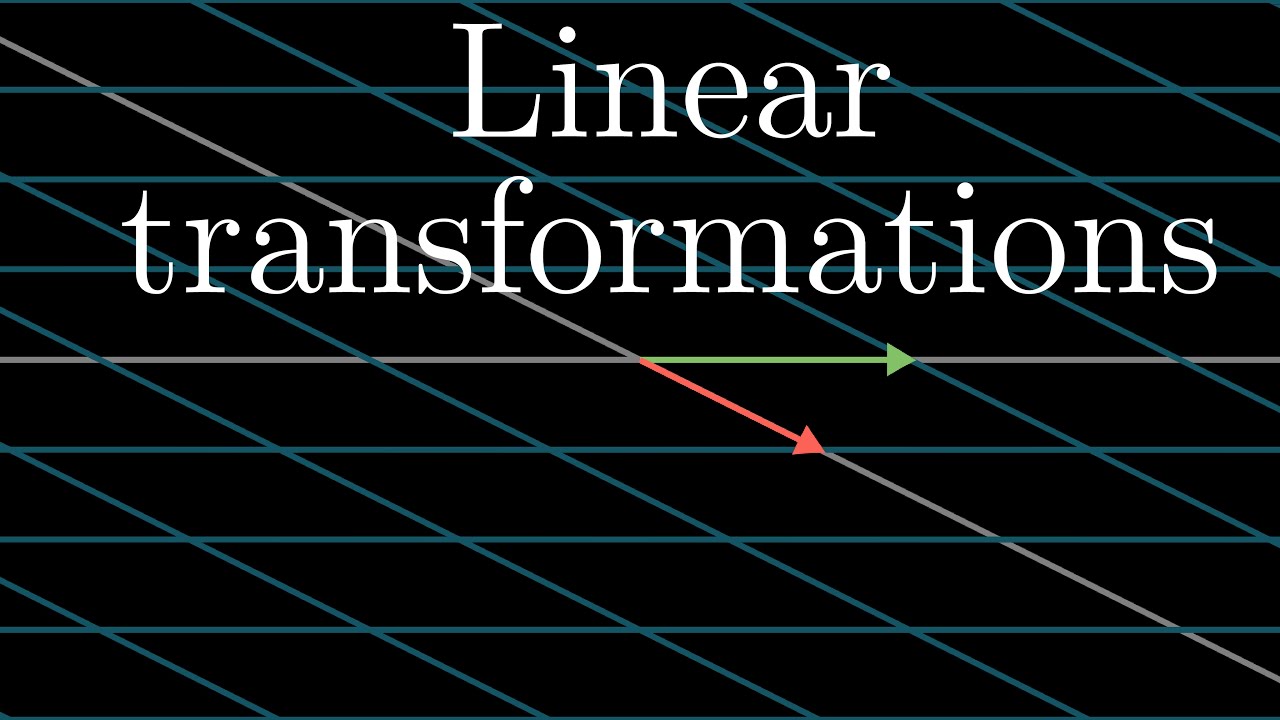
Matrices can be thought of as transforming space, and understanding how this work is crucial for understanding many other ideas that follow in linear algebra...

Multiplying two matrices represents applying one transformation after another. Many facts about matrix multiplication become much clearer once you digest thi...
sacred eagle
hey
loud swan
Hey
sacred eagle
im gonna need some help lol
always get confused when something should be positive or negative on the sin or tangent stuff
dense zealot
Is this actually precalc.. ;-;
hexed ermine
Yes
sacred eagle
yeah
hexed ermine
Trig is classified as precal
sacred eagle
its in my precalc class so i think
dense zealot
No, linear algebra stuff
hexed ermine
???
Anyways, if you give me an example, I can walk you through why it would be positive or negative
hexed ermine
Alright
 loud swan
Cot is negative where tan is negative
hexed ermine
So cot is negative
and cosine is positive
So for cot, its negative in 2 and 3
4*
2 and 4
sacred eagle
and cosine 4 so 4
sacred eagle
what was the formula for these ?

25pi /180
then that times 45 ?
i get D like that just not sure if its the right formula
hexed ermine
yes
s=r(theta)
where theta is in radians\
so 25 in radians is just 25pi/180
So you get as your final 45(25pi/180)
Which you are correct
 hexed ermine
No
sacred eagle
sqrt 97
hexed ermine
tangent is defined as sin/cos
or when dealing with the unit circle
y/x
so we do 9/4
sacred eagle
ooh just y/x
hexed ermine
yes
sacred eagle
thx man

 true bone
yep since it is neg
true bone
-2(x-pi/4_
sacred eagle
the professor just said if its + in the equation its going to the left
sacred eagle
idk
hexed ermine
sacred eagle
whats that
dense zealot
@hexed ermine ur evil
hexed ermine
it's shifted to the left
LOL
I like to use an inequality to show if it's being shifted
 hexed ermine
405-360
 hexed ermine
That works
sacred eagle
if u dont use that how do u do it
 sacred eagle
but i got x = 17 y = -8 and r=9
hexed ermine
That means that 8 is negative
no no
quadrant iii, cosine is also negative
So hypotenuse is 9 and leg is 8
so we can say the other is 81-64
hexed ermine
sqrt(17)
sacred eagle
oh sqrt ?
hexed ermine
Remember it must be squart root
Yeah the pythagorean identity
a^2+b^2=c^2
a^2+-8^2=9^2
a^2=81-64
a=sqrt(17)
So we have the horizontal component now, so sec is inverse of cosine
cosine would be -sqrt(17)/9
sacred eagle
 hexed ermine
Using pythagorean's identity?
$$ a^2+b^2=c^2 \Rightarrow a^2+(-8^2)=9^2 \newline \Rightarrow a^2+64=81 \Rightarrow a^2=17 \newline \Rightarrow a=\sqrt{17}$$
granite stirrupBOT
hexed ermine
sacred eagle
yeah
i just got rid of the sqrt and the ^2
but is this negative cuz its in the 2nd quadrant

also wondering if this is negative as well always get mixed up on it


 clever inlet
Thats fine