
#geometry-and-trigonometry
1 messages · Page 366 of 1
 dark sparrow
wait hold on
...can you try calculating cos(100) on your calculator?
i have a sneaking suspicion
 thorny forge
0-0
dark sparrow
your calculator is in grad mode
dark sparrow
grads are a rarely used unit of angle equal to 1/400 of a circle
you'll need to reset your calculator to degrees
thorny forge
that explains it i spent ages trying to find what i was doing wrong
changing to grad will not disturb anything will it
DEG*
dark sparrow
well changing to deg is kind of necessary
thorny forge
ohhh it’s not gonna change any answers that u know of
dark sparrow
??
thorny forge
ah nvm thank u so much for ur help :)
 dark sparrow
@lapis pine the last few problems i've seen you post, i haven't seen you demonstrate any attempts you made to solve them yourself
should this be taken as a sign that you are stuck not knowing how to begin?
 lapis pine
Yes
Whenever I don't even know where to begin with. I post here. Cos I'm self studying
But this time I've made few attempts. Figure out length of PR
dark sparrow
you should be explicit in saying "i am stuck and don't know where to begin"
lapis pine
Figured out <P
dark sparrow
(and if you have progress, you can and should share all of it)
so you have calculated PR and angle P, have you?
lapis pine
Yes
dark sparrow
wait actually
how did you calculate angle P? it doesn't look like you could do that right away
lapis pine
Shit
lapis pine
dark sparrow
wait actually
how *did* you calculate angle P? it doesn't look like you could do...
Tan inverse (800/900)
We get total angle of pr with Y
lapis pine
Deduct 30
dark sparrow
based on the angles marked here in pencil, it will be possible to calculate all the angles in your triangle.
and then you can just use the law of sines
lapis pine
lapis pine
Deduct 30
Subtract*
Yes but I don't know how to figure out even one angle from remaining two
lapis pine
dark sparrow
based on the angles marked here in pencil, it will be possible to calculate all ...
How ?
Just give a lil hint
dark sparrow
well you can calculate angle R in a similar fashion as you did angle P
draw a ray RZ extending directly south from P, then angle QRZ will be 45° and angle PRZ is arctan(800/900)
lapis pine
Thanks ma'am
@dark sparrow 🙏
@dark sparrow what do you think how much dumb I'm? (Asking for self awareness)
lapis pine
Yes
dark sparrow
i cannot answer that question
i have no value judgment of your intelligence in mind

 fast grove
<@&286206848099549185>
 upper karma
fast grove
can I have some help please?
upper karma
fast grove
can I have some help please?
here you go

although I drew circles having almost the same diameter, the construction and the proof works for irregular diameters of S and T too.
 granite matrix

 pearl lava
Why is -cos60 equal to -sin30?
 wanton saddle
can somebody solve this i have the right answer but im not sure if its right my answer: 9.82
 wanton saddle
can somebody solve this i have the right answer but im not sure if its right ...
wanton saddle
wanton saddle
can somebody solve this i have the right answer but im not sure if its right ...
area
.
( my name is marwan 16 years old
)
 spiral plover
 lost patrol
is -4sinxcosx equal to -2sin2x
 lone copper
yes
upper karma
How do you get b and c

Data is... triangle is equilateral all vertex lie on the circle and each side is equal 8
Wait... that's too easy..... sorry guys no need to help now but i can give the answer if anyone is interested
 median cobalt

 scarlet plaza
wanton saddle
can somebody solve this i have the right answer but im not sure if its right ...
scarlet plaza
wanton saddle
can somebody solve this i have the right answer but im not sure if its right ...
this was actually featured on a video that i watched
a few days ago when i was do ing quiz on youtube
let me try to find it
here it is! https://www.youtube.com/watch?v=cPNdvdYn05c&t

This popular problem is stumping everyone, and many, many people emailed it to me. I give extra thanks Chaitanya from India who was the first person who sent it to me. I also thank David K, Achille Hui, and Seyed who found geometric solutions to this problem when I posted it to Math StackExchange. Watch the video for 3 ways to solve this proble...
 uneven ferry
can somebody help me?- not really much good at geometry
 uneven ferry
just need the 3rd and 4th answer
uneven ferry
2 and 4th ^
 molten delta
I identified some of the unknown angles but I’m stuck
 molten delta
<@&286206848099549185>
upper karma
molten delta
I identified some of the unknown angles but I’m stuck
well A should be 20 not 100
180 - (80 + 80) = 20
molten delta
Oh right
Let me fix that real quick
Alright so mBAC (or whatever you’d like to call it) is 20
molten delta
upper karma
180 - (80 + 80) = 20
So what do I do next?
upper karma
molten delta
So what do I do next?
this is hard as hell lmao
anyways I managed to figure it out ... sorta
but I'd rather not act like I managed to solve it alone so here's the video with the exact same problem

In the figure, what is the value of angle x? This problem is known as Langley's Adventitious Angles. It is also known as the hardest easy geometry problem because it can be solved by elementary methods but it is notoriously difficult to work out. Can you figure it out? The video presents a solution to this tricky geometry problem.
*At 5:04 I mi...
I hope this isn't ur homework 😭
molten delta
It actually is…..
But the fact that they just took the problem out of a YouTube video lmao
molten delta
Lol ty
 olive solstice
ye no wonder it took so long to write
i thought i was missing the pt as well lmao
 dusky surge
Wow! That's so hard
 dark thicket
molten delta
I identified some of the unknown angles but I’m stuck
dark thicket
molten delta
I identified some of the unknown angles but I’m stuck
Ill think about it
dark thicket
molten delta
I identified some of the unknown angles but I’m stuck
Ok i realised something
The 100 on the right is wrong
Nvm someone already said that
Oh someone already helped you
ok
 dapper marlin
does someone want to help me with a geometry paper it’s 10 questions
 wise hornet

i've proved the equation holds via brute force
but i can't for the life of me relate it to the second half
and i feel like it's really obvious
i mean it says 'deduce'
and i'm just not seeing it
 solid mantle
Can someone lmk what the equation would be?

 remote hill
y=6tan(9x)
 storm portal
solid mantle
Can someone lmk what the equation would be?
storm portal
solid mantle
Can someone lmk what the equation would be?
You should try figuring it out yourself. You'll have to use the amplitude of the graph and its period to determine what A and w are
solid mantle
Yeah I actually got it it’s always a hit or misss with these
 ancient oyster
can someone explain how this works please
 solid mantle
remote hill
y=6tan(9x)
solid mantle
remote hill
y=6tan(9x)
No that wasn’t it
remote hill
:sadge:
remote hill
ancient oyster
can someone explain how this works please
for 25 and 26 since both sides have same base
u can take the exponents of both sides and equate them then solve x
ancient oyster
x = 2
remote hill
do u know how to solve quadratics
ancient oyster
not really
 chrome oak
 tight frigate

 nocturne remnant
q13 is a common configuration
 nocturne pebble
C = 12.25 E = 6.8 D = 3.75 are the answers, but I don't know how they were found
nocturne remnant
and has tons of similar triangles
nocturne remnant
nocturne remnant
q13 is a common configuration
when you have an altitude cutting right through a right triangle, forming 2 other right triangles
then all 3 right triangle are similar
nocturne pebble
theyre similar?
nocturne pebble
I have a basic idea already, but I have no idea where to start
nocturne remnant
you are given 14 : 16
nocturne pebble
yes
nocturne remnant
so the corresponding ratios for other triangles are alos 14:16
nocturne pebble
I can't think of similarity equation to set up with those numbers only
nocturne pebble
14 is the hypotenuse and 16 is c + d?
nocturne remnant
yeh but
in triangle with c, e, and 14
c : 14 = 14 : 16
cuz of similar triangles
actually maybe someone help here im going off :/
nocturne pebble
Nvm, I figured it out. I just have really bad visualization skills
med/long correct?
nocturne remnant
after you find c, just pythag chase or sth to get to e and d
nocturne pebble
yeah thanks
 next pecan
how does one do this? factoring out the sin2x to 2sinxcosx doesnt seem to help

 pure cape
Assuming you are supposed to solve for x
Move the cos(x) to the left hand side and then factor out a cos(x)
Then just solve it normally
upper karma

 upper merlin
upper karma
upper merlin
upper karma
cosine rule?
upper karma
Without calculator?
upper merlin
i think cos 120 is standard

 upper merlin
uhh idt so cos120 = -0.5 and that won't give negative
upper karma
Yeah I know
upper karma
upper merlin
uhh idt so cos120 = -0.5 and that won't give negative
Answer is wrong
 upper karma
upper merlin
other way could be to draw perpendicular from A
upper karma
upper merlin
other way could be to draw perpendicular from A
I did it and got the same result

I imagined that the triangle is a Bart of equilateral triangle where all sides are perpendicular
 shut finch
does anyone know graph function for golden spiral
 sonic fern
Let CD = base(b), height = h
Area of ADP = h(DP)/2 and area of BPC = h(PC)
Sum = h(DP+PC)/2 = h(CD)/2 = bh/2
Area of ABP = bh/2
@upper karma
 rustic slate
So I stumbled upon this strange property,
If you construct 2 circles on a big circle and then create a line like in the picture, then the purple segment has the same length as R (the radius of the big circle)
Does anyone know why that's the case?
 upper karma

 heady dove

<@&286206848099549185>
I need help here please
I don't have much time to wait for 15 minutes
upper karma
uh
4x-7 = 3x+1
x = 8
m<ACB = 50
50 degrees i think
plug the x into the two equations
 upper karma
c

 fallow edge
 lime crownBOT
From
Rule 4
If your question has not been answered for a minimum of 15 minutes, you may use the Helpers tag once. Please do not try to bump your question using this ping unnecessarily. Do not abuse this ping. Do not individually ping users with the Helpers tag without their express permission.
 tropic shard
 heady dove
tropic shard
heady dove
tropic shard
okay understood, but can you help me with my question please. Since you are here
tropic shard
Read the image I've posted after the bot please.
heady dove
tropic shard
Read the image I've posted after the bot please.
I did
tropic shard
Could you please do what it says?
heady dove
tropic shard
Could you please do what it says?
I did tried
tropic shard
Could you "show what you tried to solve the problem"?
heady dove
I am not good at math
tropic shard
Okay I might be too pedantic. Point is this is the third question you gave where you never showed your attempts so it seems you're ignoring what the underlined part says.
heady dove
tropic shard
Okay I might be too pedantic. Point is this is the third question you gave where...
because it on a computer?
tropic shard
Do you know what a kite is?
heady dove
tropic shard
Do you know what a kite is?
no?
tropic shard
Okay so you see that we have two triangles, ACD and ABC
tropic shard
Sides AD and AB must be the same length due to the angles and the side,
So the triangles can be said to be *blank*, you know what goes in the blank?
heady dove
tropic shard
So the triangles can be said to be \*blank\*, you know what goes in the blank?
No?
what next
tropic shard
How would you determine if two triangles are congruent?
heady dove
If two angles and the non included side of one triangle are equal to the corresponding angles and side of another triangle.
tropic shard
Sounds about right (I'm probably tired to not know what you mean by "not included side"),
 broken ingot
does anyone here have any expeirence with trig?
tropic shard
But I think it's called ASA
for Angle-Side-Angle
Do you believe we can apply that in this case?
heady dove
tropic shard
Do you believe we can apply that in this case?
yes I think
tropic shard
Indeed,
So we know the two triangles (ACD and ABC) are the same. Are you able to visualize how you're able to move one to overlap the other? (that's how you can get the answers)
broken ingot
 upper karma

 formal pike
upper karma
formal pike
upper karma
8,2?
upper karma
sure?
 noble heath
rustic slate
So I stumbled upon this strange property,
If you construct 2 circles on a big ci...
noble heath
rustic slate
So I stumbled upon this strange property,
If you construct 2 circles on a big ci...
After some hard work I figured it out. Thing that leads to the solution: ||Prove that a rotation of 60 degrees clockwise about D maps triangle ACD to triangle GED in this diagram||

 surreal wolf
How to find
Tan210-cot(-240)
rustic slate
noble heath
After some hard work I figured it out. Thing that leads to the solution: ||Prove...
that's really cool, thanks for the help and the insight!
upper karma
Guys I need help... help 23
 fallen sleet
rustic slate
So I stumbled upon this strange property,
If you construct 2 circles on a big ci...
fallen sleet
rustic slate
So I stumbled upon this strange property,
If you construct 2 circles on a big ci...
is this from euclidea?!
great game haha
 ivory path
I'm currently studying the unit circle.. Is the co-ordinates 0,1 false in tangent?
upper karma
Hi guys... help 12 if anyone is free
 oblique hatch
upper karma
Hi guys... help 12 if anyone is free
oblique hatch
upper karma
Hi guys... help 12 if anyone is free
What's 12?
upper karma
Channel help 12
oblique hatch
upper karma
Channel help 12
Oh!
upper karma
Take a look please
scarlet plaza
@hard radish the guy didn't type .reopen 
 hard radish
lmao
 gritty trout
 dusky surge
 wanton sparrow
Thank you
 safe frigate
 dusky surge
sin(x) ≠ x
sin(x) is just ≈ to x when x is "small enough"
rustic slate
fallen sleet
is this from euclidea?!
yep it is lol
I still don't understand how all of those solutions in it work so yeah
 junior plinth
anyone here a trig wiz?
junior plinth
i will pay someone to help tutor me
ive got a test next week and am in desperate help for someone thats knowledgable
<@&286206848099549185>
 ember heart
You can ask some doubts that you've based on your understanding 😕

 sick sable
 loud shard
can someone pls help
loud shard
can someone pls help
remember the relation between tan, sin and cos
use the fundamental identity
then you can find either
after this, use the double angle formulas

turns into

junior plinth
@sick sable ill pay u for an hour tutor sesh?
sick sable
junior plinth
<@520057286220316683> ill pay u for an hour tutor sesh?
how are you planning to do it?
junior plinth
sick sable
how are you planning to do it?
just over discord call?
sick sable
I'm not the best english speaker but we can try
loud shard
can u help me witht this one?
 sick sable
also depending on the subject
sick sable
loud shard
can u help me witht this one?
use the double angle formula in reverse, find cos, sen, then tan
the information about the interval is important to make sure you get the signal correct
 humble pulsar
 somber coyoteBOT
Juan Caballo

 winter pumice
upper karma
$3=\tan{a}=\frac{\sin{a}}{\cos{a}}$
winter pumice
upper karma
$3=\tan{a}=\frac{\sin{a}}{\cos{a}}$
Who are you responding to? Is this a new question? Use arctan. You will have a solution in Q1 and Q3 (why?).
This says you need a triangle whose side ratios are in y/x = 3/1 proportion
 feral charm
uh can someone find the answer and explain it to me? i have 0 clue how to solve it after finding the circumcenters of both triangles
 winter pumice
feral charm
uh can someone find the answer and explain it to me? i have 0 clue how to solve ...
winter pumice
feral charm
uh can someone find the answer and explain it to me? i have 0 clue how to solve ...
idk...8?
winter pumice

How though, b.c. I could only figure it for the right triangle case, which is very specific. I couldnt prove (to myself) it wouldn't matter, or why this works for all cases
@feral charm
sonic fern
winter pumice
How though, b.c. I could only figure it for the right triangle case, which is ve...
a/sinA = 2R
Extended Sine Rule
winter pumice
sonic fern
Extended Sine Rule
ah! Thank you
 silk jacinth
could someone help me troubleshoot a solution to a simple trigonometry problem? at the moment I get a result that's different from the textbook but I'm having a... let's say cognitively poor day
dark sparrow
ok, can you share the problem, your solution and the textbook's solution?
silk jacinth
dark sparrow
ok, can you share the problem, your solution and the textbook's solution?
the question is (I have to translate these since they're not in English):
"What solutions to the equation _sin 2α = 1/√2 _ are within [-π,2π]?"
My solution:
-
Determine what angle corresponds to the y-coordinate 1/√2 —> one such angle would be π/4
-
2α = π/4, which means that α = π/8
-
Therefore, all angles with the same sine as α are:
α + n *2π
andπ-α + n*2π(supplementary angle)
 silent plank
you made the common mistake of isolating alpha before considering the period and supplementary identitiy
silk jacinth
so I'd need it to write the equation as
2α = π/4 + 2π*n instead ?
silent plank
for 2α in quad1, yes
silk jacinth
due to brain fog I'm having trouble understanding why this is
silent plank
why what is
silk jacinth
what I mean is that I don't understand how the period and supplementary identity are "considered"
silent plank
unit circle
silk jacinth
I don't understand. is that a hint or a prompt for me to draw one and see what the angles look like or something else?
silent plank
its a prompt to recall properties of the unit circle
something you should have a decent idea of
(and/or properties/itentities of trigonometric functions which are linked to that circle)
silk jacinth
clearly I've missed some crucial insight because I still don't understand even though I have the basic grasp of the unit circle and its relations to trig. functions
doh well I'll just hit the books
 livid moss
sin(pi - t) = sin(t)
Using this gives you another solution in [0,2pi]
And then you have to add multiples of 2pi to both solutions to get the general solution
silk jacinth
livid moss
sin(pi - t) = sin(t)
I do know this. it's just that the 2α made it hard to comprehend
livid moss
t is now 2α
silk jacinth
[retried]
I understand that β = 2α is basically completely unnecessary
but it just made something in my head go click
livid moss
Sure, the last part is wrong
silk jacinth
oops
livid moss
You need to apply the identity to the angle you are taking the sin of
β = pi - pi/4 + 2pi n
silk jacinth
okay, I'll try it once more 😄
sin 2α = 1/√2
let β = 2α
sin β = 1/√2
sin β = sin π/4
β = π/4 = π/4 + 2πn
or
β = π – π/4 = 3π/4 + 2πn
β = 2α:
2α = π/4 + 2πn —> α = π/8 + πn
or
2α = 3π/4 + 2πn —> α = 3π/8 + πn
livid moss
Yes
silk jacinth
I think I now understand why I need to apply the supplementary identity and "full circles" (not sure about these terms in English, I assume that's the "period" that was mentioned previously?) prior to any isolation
it was that β = 2α that helped me see this 😄
it was that β = 2α that helped me see this 😄
thanks
livid moss
👍
silk jacinth
I have another assignment, my answer is correct but the way I've reached it differs from the textbook's example and now I'm wondering if my method is valid:
I need to solve α here:
sin (α) * cos (α) + sin (α) = 0
sin α (cos (α) + 1) = 0
sin (α) = 0 or cos (α) + 1 = 0
1st half:
sin (α) = 0
sin (α) = sin 0 or sin (α) = sin π
—> α = 0 or α = π
2nd half:
cos (α) + 1 = 0
cos (α) = -1
cos (α) = cos π
—> α = π
—> α = 2πn or α = π-2πn
am I making any subtle mistakes here?
 lost fulcrum
I am been stucked at this questions-
-
- In a ∆ ABC, ∠A = 35° and ∠B = 65°, then the measure of ∠C is:
(a) 50°
(b) 80°
(c) 30°
(d) 60°
- In a ∆ ABC, ∠A = 35° and ∠B = 65°, then the measure of ∠C is:
-
An iron rod 5m long is placed against the wall in such a way that the foot of the rod is 3m away from the wall. Find how high the top of the iron rod reaches in the wall?
Can anyone help me out?
winter pumice
lost fulcrum
I am been stucked at this questions-
1. 16. In a ∆ ABC, ∠A = 35° and ∠B = 65°, ...
- Do you remember what all triangles have in common?
- This question says the rod is 5m long, and it's placed like this:
   /|
  / |
5/  |
/___|
  3
Can you name a line with only one point?
dusky surge
If you are talking about straight lines, with one point, you can find a family of straight lines passing through that point
upper karma
dusky surge
If you are talking about straight lines, with one point, you can find a family o...
I don't quite get what you mean, but I'll sketch it out for you
 dusky surge
Hmmm...
upper karma
like it doesn't even tell you if it's a point on the line or the line itself
can you assume that "a" is a line then?
dusky surge
Usually, we will L for lines, and A,B,C… for points
And in case you are having more than 1 straight line on the same graph
We can use $L_1,L_2,…$
somber coyoteBOT
Biscuit
 dusky surge
That is
Let's say you have a point A.
Where a line is also on A.
It's hard to tell whether A is representing the point of the line.
So, we have some convention to use block letters other than L for points. And L for the line.

So, in this picture, A will be the point (0,2) and L is the line y=x+2
winter pumice
@dusky surge sometimes I think this server is an experiment designed for trolls to abuse mathematicians--like Westworld, except nobody's getting laid.
ivory path
winter pumice
1. Do you remember what all triangles have in common?
2. This question says the ...
Use pythagorean theorem, a^2 + b^2 = c^2
@lost fulcrum
Only if c^2 is the hypotenuse
for this we can do: c^2 - b^2 = a^2
5^2 - 3^2 = a^2
25 - 9 = a^2
16 = a^2
4 = a
dusky surge
winter pumice
<@681190496273432663> sometimes I think this server is an experiment designed fo...
lol
 ocean snow
helpp problem 2
 dark sparrow
@ocean snow is this a test?
 mystic karma
lost fulcrum
I am been stucked at this questions-
1. 16. In a ∆ ABC, ∠A = 35° and ∠B = 65°, ...
mystic karma
lost fulcrum
I am been stucked at this questions-
1. 16. In a ∆ ABC, ∠A = 35° and ∠B = 65°, ...
- 80 , 2)4 m
 wise pawn
what have you tried
I think you mixed up the order, (1,-2) means x is 1 and y is -2
you're adding an extra 4 in there
y=-4x+b
-2=-4(1)+b
parallel means the same slope
the line you have is y=-4x+b so using that point (1,-2) you're solving for b
which will be different than the original line
what you're saying sounds partly wrong and partly right
what do you get for b
look at what you're saying
"-2=-4+-6"
think about it
this step is good
but you have to add 4 to both sides
4-2=4-4+b
the point is to get rid of -4 you have to cancel it with +4
what you're saying -2=-4+-6 makes no sense
cause -2 is not equal to -10
yeah, you have to because otherwise it won't be equal anymore
if both sides are equal, you have to do the same thing to both sides to keep it equal
you tell me
what is -4+2
nice
 mystic karma
god usopp studiyng math
 robust tide
Can someone help?
Problem:
Find the first three terms of the geometric sequence whose sum is 7/16 and product is 1/312
I don't seem to go anywhere with this problem, i've tried
x/y + x + xy = 7/16
x/y * x * xy = 1/312
But still I don't get the right answer
ocean snow
dark sparrow
<@866731299896295436> is this a test?
umm no, it's jus an assignment
 austere jewel
hey guys, does anyone know if we can simplify this?
 dusky surge
There are quite a few ways in my mind right now for your question.
But I would suggest this as it the results seems to look prettier.
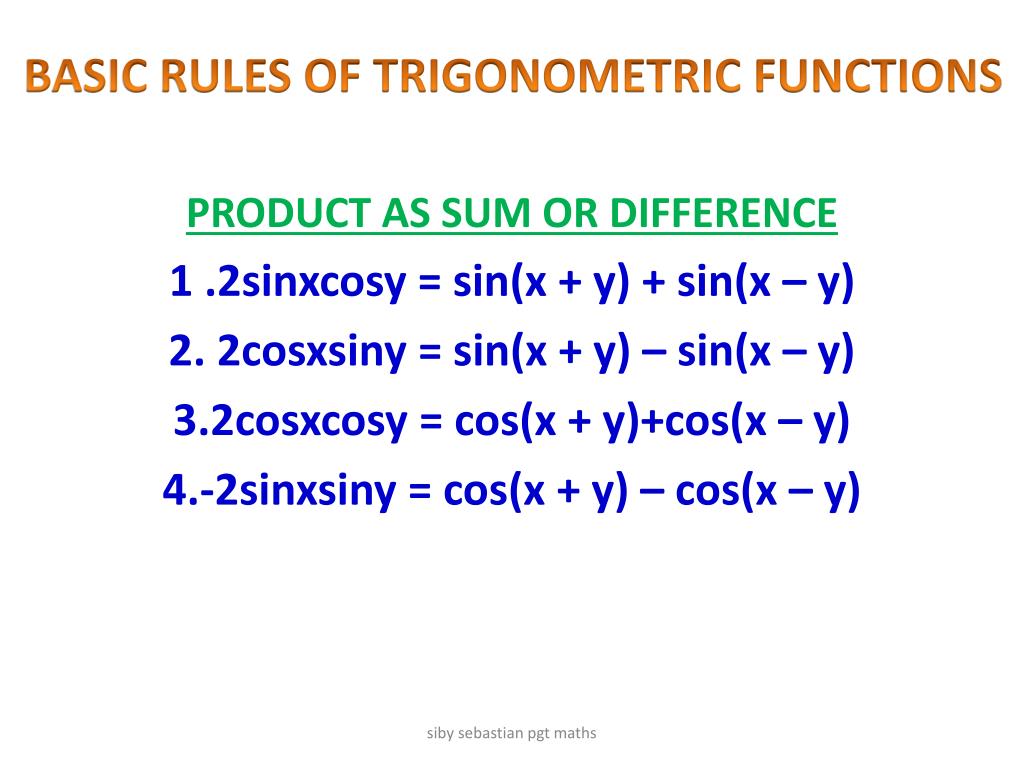
https://image3.slideserve.com/6453499/slide41-l.jpg
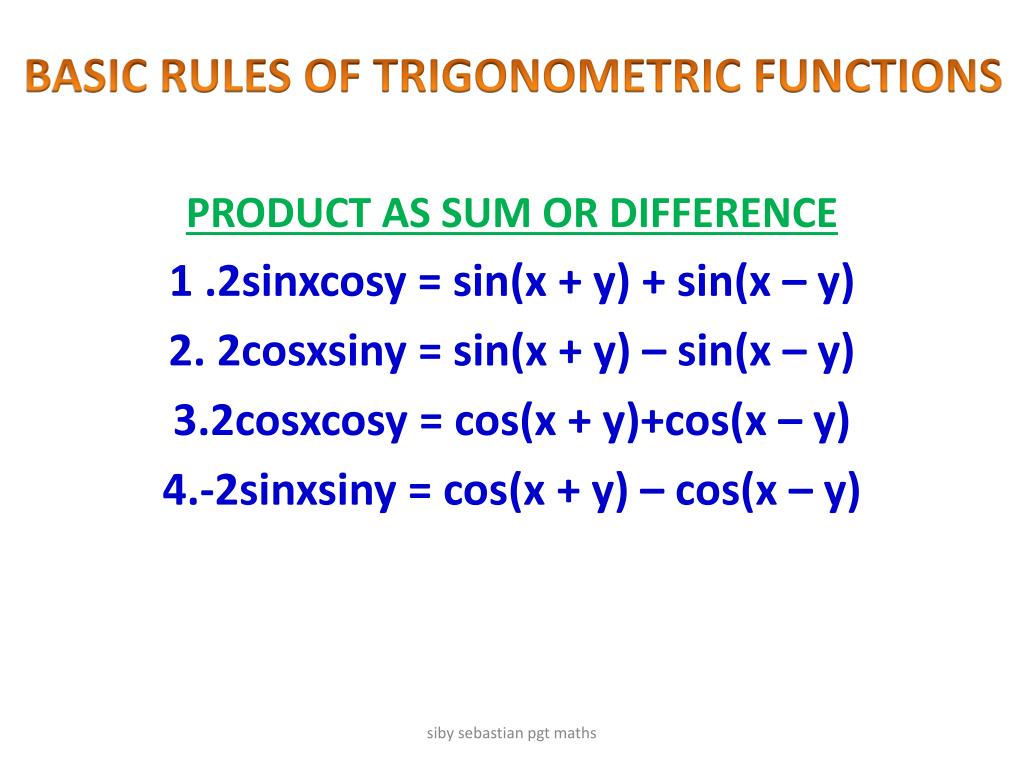
Careful with the coefficients.
broken ingot
does anyone know how to write cos(x) in terms of csc(x)
 still mica
Am I correct in assuming this is wrong?

 summer canopy
yoo guys
I have a question on a simple matter

are those vertical?
so like are they congruent
nocturne remnant
vertically opposite
so yes, their measures are the same
summer canopy
cool!
and we call that format
consecutive interior angles?


did I do it right?

for this problem
ivory path
summer canopy
do 6x -7 = 8y + 17
ivory path
huh
summer canopy
I'd rather find what's x first
summer canopy
Find x first
summer canopy
9x -36 = 180
summer canopy
X= 24
ivory path
I thought it was 6x - 7 = 8x + 17
summer canopy
We plug it in with that
ivory path
thought they're the same variable-
summer canopy
Lol
ivory path
Ok then do 6x - 7 + 3x - 29 = 180
Combine like terms
get 24
then do:
6(24) - 7 = 8y + 17
upper karma
someone please help me in this ques....
 dark sparrow
have you made any progress so far? @upper karma
upper karma
i tried but no conclusion
upper karma
dark sparrow
have you made any progress so far? <@456226577798135808>
i found the median by apollonius theorem and altitude also
dark sparrow
do you have a diagram or are you trying to do this blind?
upper karma
yes
dark sparrow
okay, then show your diagram please
 dark sparrow
,rccw
somber coyoteBOT
 upper karma
dark sparrow
okay, the diagram checks out so far
upper karma
dark sparrow
okay, the diagram checks out so far
how to continue?
dark sparrow
i have a feeling that the area of AQPRB will be some rational multiple of the area of ABC
oh actually hold on
here's something
look at triangle CXD, for which CA and XP are medians
so XQ:QP = 2:1
you can find the ratio of area(QXA) to area(PXD) this way
find more area ratios in the same fashion and you should eventually arrive at the ratio of area(AQPRB) to area(ABC)
at which point it should be easy
upper karma
how PXD
dark sparrow
what do you mean?
upper karma
i mean how will i find area of pxd
dark sparrow
you don't need to
i'm telling you that it's possible to find the ratio area(QXA):area(PXD)
without necessarily knowing each individual area
upper karma
dark sparrow
i'm telling you that it's possible to find the **ratio** area(QXA):area(PXD)
ok let me try
upper karma
dark sparrow
without necessarily knowing each individual area
unable to do please help....
dark sparrow
what are you unable to do?
upper karma
dark sparrow
_what_ are you unable to do?
this area ratio
dark sparrow
QXA:PXD?
upper karma
dark sparrow
QXA:PXD?
yes
dark sparrow
dark sparrow
so XQ:QP = 2:1
do you understand this?
upper karma
dark sparrow
do you understand this?
yep since it is median of cxd
dark sparrow
please don't reply-ping me on every message. it's annoying.
upper karma
ok
dark sparrow
ok, and do you know the formula for the area of a triangle in terms of two sides and the angle between them?
dark sparrow
oh, you did?
upper karma
thanks
dark sparrow
does that mean you're able to continue all the way to the solution now?
upper karma
yes now i think i can
dark sparrow
ok, as you say.
dark sparrow
i have the same answer as you.
upper karma
dark sparrow
i have the same answer as you.
please help in this question also
 dark sparrow
you're doing the reply pings again...
dark sparrow
and have you made any progress on this so far?
upper karma
dark sparrow
and have you made any progress on this so far?
i just know that this inequality holds when P0 is centroid and P is any other point in the triangular plane
dark sparrow
......
what did i say about reply-pings?
need i repeat it another thousand times?
upper karma
o sorry i forget it again and again
dark sparrow
also, i'm not so sure what you said there is true.
from what i googled just now, the point that minimizes AP+BP+CP is called the Fermat point, and i see no reason why it'd always coincide with the centroid.
dark sparrow
you do?
please share.
but this is about the minimizer of the sum of squared distances.
not the sum of the distances themselves.
upper karma
so u tell how can i solve that question
dark sparrow
....
https://en.wikipedia.org/wiki/Fermat_point here's what i found by googling.

In geometry, the Fermat point of a triangle, also called the Torricelli point or Fermat–Torricelli point, is a point such that the total distance from the three vertices of the triangle to the point is the minimum possible. It is so named because this problem was first raised by Fermat in a private letter to Evangelista Torricelli, who solved it...
maybe read that and take a look for yourself.
upper karma
ok
upper karma
dark sparrow
....
i read that it means that P0 is the fermat point
upper merlin
upper karma
please help in this question also
does knowing that ABC is right-angled help?
upper karma
upper merlin
does knowing that ABC is right-angled help?
i know
but don't know how to use it
upper merlin
upper karma
but don't know how to use it
well u know the the point P0 is the centroid and the medians of a triangle intersect each other in the ratio 2:1, as this is a right-angled triangle its fairly easy to find the length of its medians
upper karma
upper merlin
well u know the the point P0 is the centroid and the medians of a triangle inter...
but @dark sparrow said that fermat point concept will help
upper merlin
this looks like a tougher way of constructing the medians ig

cuz we still are joining the midpoint of that side to the vertex of the triangle
wait nvm its wrong
upper karma
yes
upper merlin
upper karma
yes
the only way I see to solve this is coordinate geometry
the fact that this is 30-60-90 triangle makes it a bit easy to get the coordinates
upper karma
upper merlin
the fact that this is 30-60-90 triangle makes it a bit easy to get the coordinat...
yep
upper merlin
upper karma
yep
nicee u got the solution?
austere jewel
I just wanted to know if i did something wrong here i only worked out the left side and wanted to know if i did it correctly (trig identities)

 vagrant shale
Is this right

 vague fox
vagrant shale
Is this right
vague fox
vagrant shale
Is this right
if you are doing a 180 degree rotation about the origin then both your new x and y values should become negative
so yes, you are correct
 compact wigeon
can someone help me, i need to find the volume. (solid of revolution)

i got 26π but idk if that's right
winter pumice
compact wigeon
can someone help me, i need to find the volume. (solid of revolution)
I think you are just revolving the area under f(x) = -2x + 10 from x=2..5.
compact wigeon
and what's the answer
winter pumice
gj
 steady shoal
compact wigeon
can someone help me, i need to find the volume. (solid of revolution)
steady shoal
compact wigeon
can someone help me, i need to find the volume. (solid of revolution)
Volume of a cone =1/3 pi r^2 h
Revolving a right angled triangle about its length won’t change its radius or height
So r=3
h=6
V=1/3 pi 9*6=18pi
upper karma
i dont think this is a simple cne
they explicitly stated the distance between the line and the right triangle
if we rottate the right triangle along the line
we would get a frustrum
 lapis pine
Can anyone explain me
How cot² (45 + ∅/2)
Becomes
(1 - sin∅)/(1 + sin∅)
dark sparrow
don't use the empty set symbol for the letter phi
@lapis pine do i understand correctly that 45 is supposed to be 45°, i.e. pi/4?
lapis pine
dark sparrow
<@861843597518438420> do i understand correctly that 45 is supposed to be 45°, i...
Yes
dark sparrow
so you're asking how to prove $\cot^2(\pi/4 + \varphi/2) = \frac{1 - \sin(\varphi)}{1 + \sin(\varphi)}$
somber coyoteBOT
Ann
 lapis pine
Yes
dark sparrow
have you made any progress so far?
dark sparrow
may i suggest writing cot as cos over sin?
lapis pine
Yes
dark sparrow
$\frac{\cos^2(\pi/4 + x/2)}{\sin^2(\pi/4 + x/2)}$
somber coyoteBOT
Ann
 dark sparrow
consider now that cos^2(t) = (1 + cos(2t))/2 and sin^2(t) = (1 - cos(2t))/2
lapis pine
Thank you @dark sparrow
 stray pollen

can someone help me with this
no call
just want an explanation with answers
please
 obsidian robin
For 13, AB=AC
So, you can use the property that of opposite sides are equal then the corresponding opposite angles are equal
So, mAngleB=mAngleC= x
Hence, x+x+96=180
=>2x=84
=>x=42
Now, you may know Vertically opposite angles are equal
So, mAngleACB=mAngleECD= 42 degrees
By the same property that we used first, mAngleE=mAngleD=y
y+y+42=180
=>2y=138
=>y=69
Hence, mAngleE=69 degrees
obsidian robin
 sturdy trail
For 15th, you can use the same property of mAngleD=mAngleE
=>x^2=3x+10
you got a quadratic equation, so on solving(https://www.khanacademy.org/math/algebra/x2f8bb11595b61c86:quadratic-functions-equations/x2f8bb11595b61c86:quadratics-solve-factoring/v/example-1-solving-a-quadratic-equation-by-factoring) this, you'll get your x value, then using the property that the sum f all angles in a triangle is 180degrees, you can find the value of mAngle F.

Khan Academy
Sal solves the equation s^2-2s-35=0 by factoring the expression on the left as (s+5)(s-7) and finding the s-values that make each factor equal to zero.
upper karma
upper merlin
nicee u got the solution?
no! unable to do
upper merlin
upper karma
no! unable to do

after you have got this, you just have to find the intersection of the lines CE and BD which will be P0
 glossy charm
 upper karma
upper merlin
upper karma
upper merlin
ok i will try
 marsh quiver
I need to find the "d" side, also A and C angles (they are equal since the triangle is isoceles)

does anyone have the answer?
dusky surge
We don't give away answers.
And as for how to find it
Have you learnt cosine rule?
marsh quiver
i just want to know if this is possible
dusky surge
It's possible.
marsh quiver
How.
dusky surge
And d is unique.
marsh quiver
dusky surge
And d is unique.
wdym by that?
dusky surge
Nothing special, sometimes we may have more than 1 answer
marsh quiver
can you guide me to the answer? make me understand
dusky surge
Hint: draw the height of the triangle with base d that passes through B
marsh quiver
i did this, so, if i divide the triangle, would angle B be 75° or 60°? after all, the isoceles triangle became a rectangular triangle
 graceful halo
marsh quiver
i did this, so, if i divide the triangle, would angle B be 75° or 60°? after all...
graceful halo
marsh quiver
i did this, so, if i divide the triangle, would angle B be 75° or 60°? after all...
75
dusky surge
As it is 150°, and we bisect it, it's just 150/2
marsh quiver
 dusky surge
Yes
marsh quiver
The only thing I know is the hypotenuse of these rectangular triangles and the angles
dusky surge
Have you learnt sine cosine tangent?
marsh quiver
A little
 marsh quiver
cos15° = 0,9659 right?
somber coyoteBOT
Biscuit
 marsh quiver
cos15° = 0,9659 right?
marsh quiver
marsh quiver
cos15° = 0,9659 right?
and why do i need it?
dusky surge
d/2 is not the adjacent
So
Be careful😁
The hypotenuse is the line on the other side of the right angle
marsh quiver
I divide the triangle, the base was d, so it became d/2, right?
marsh quiver
😱
marsh quiver
yes i think
dusky surge
That's how we work with sine cosine tangent, they are useful!
marsh quiver
i see
gritty trout

 lofty frigate
how u do this
 oblique hatch
gritty trout
oblique hatch
gritty trout
Did you have a question about this?
 grand dune
 upper merlin
lofty frigate
how u do this
upper merlin
lofty frigate
how u do this
what do you want to find?
 still laurel
How is the ratio used to find the side values of 2 and -root 3?

 wintry tundra
still laurel
How is the ratio used to find the side values of 2 and -root 3?
wintry tundra
still laurel
How is the ratio used to find the side values of 2 and -root 3?
wdym the ratio
you mean the hyp/adj?
still laurel
yeah, this isnt my solution, im just trying to understand it
like how does secant 5pi/6 give -2/root 3
my main question is how do we find the side values of the triangle
wintry tundra
because the hypotenuse is 2 high and the adjacent is root 3 to the left
it says on the triangle
still laurel
right but that was skecthed later on, what if i just have the ratio, how do i find the side values then
for example like what if the ratio was sin 2pi/3, how do i find the value
wintry tundra
i mean the unit circle always has set values with the angles
bc the hypotenuse has to be a length of 1 constantly
looks like this circle has a hypotenuse of length 2 because itll make the ratio be less weird
still laurel
so what if i only had the ratio, what exactly is the process to find the value of it?
still laurel
nono ik what secant means
im saying whats the process
like for example heres the textbook question
 still laurel
uhh actually would you mind doing it with the sin cuz then i think i can understand the rest after i see an example
wintry tundra
eh sure
so 2pi is all the way around so a third of that is 120 degrees
since 360/3
still laurel
yup
wintry tundra
so 120 is gonna have the same sin as 60
and its gonna have the negative cos that 60 has
bc its in the positive y but now its in the negative x
but we only care about the sin so we could really just use sin(60) to find it
or sin pi/3
still laurel
so how do we determine what other sin value to use
wintry tundra
?
what do you mean the other sin value
theres only one sin
a lot of these just have the same value since its on a circle
still laurel
120 has the same sin as 60, as you said, so what role does that play in the question
im just confused
wintry tundra
well that is relevant because a lot of these you just have to memorize and know what they are, so like sin 90 is one and sin 45 is rt2/2
still laurel
i have the solution from a textbook, sorry if im not understanding, maybe this could help explain it better?
 wintry tundra
yeah
well theyre doing something a bit different with the circle by making it with a radius of 2
but sin is defined as opposite over hypotenuse so you just take the root 3 and the 2
since root 3 is the opposite of the angle
still laurel
ok but like where did the root 3 over 2 come from
wintry tundra
the opposite side is rt3 and the the hypotenuse is 2
because of how the triangle works
still laurel
no i understand that but couldnt also have been a diff triangle like 1,1 rt 2
how is the side value for this determined
still laurel
but like how am i supposed to know that
if its sin 2pi/3 is that triangle just something i should know automatically
as in memorize it
wintry tundra
i mean you can know the basic sin and cos values for angles
like pi/2 and pi/3
then you use logic from there to find out harder ones
still laurel
right but how would that help with finding the value for this triangle
like how would i apply that
wintry tundra
because if you know the height for pi/3, thats equal to 60 degrees
which you might notice is the same as 120 degrees but reflected over the y axis
so its the same triangle but with a reflected x or adjacent value
so here you should know that the opposite side from pi/3 is always root 3
then the hypotenuse is always 2
because unit circles have the same hypotenuse length
so then you plug opp/hyp for sin
and get rt3/2
@still laurel if you wanna know more about how to actually find these sin and cosine values with algebra i think you would be interested in the taylor series, but its kinda complicated
the taylor series is how ur calculator can find any number in you input sin cos or tan into it
still laurel
so really it just involves memorizing or knowing, to a certain extent, most of the values on the unit circle?
wintry tundra
yeah
which i can relate to that misfortune i hate memorizing stuff
its kind of like how 2 means 1+1 because it just is
theres not much more to it besides thats just what it happens to be
it is pretty cool to know that you can build the values for sin or cos with a series of powers of just one variable
so if you wanna get into the more algebraic stuff that relates to this then the taylor series would be pretty cool
hopefully i could be of help here, though its kind of difficult to explain intrinsic things
 normal roost
help pls T^T
 upper merlin
normal roost
help pls T^T
upper merlin
normal roost
help pls T^T
which question are you stuck at?
lofty frigate
upper merlin
what do you want to find?
I need angle dce
normal roost
upper merlin
which question are you stuck at?
everything
upper merlin
lofty frigate
I need angle dce
can u send a zoomed in picture of that question?
nocturne remnant
Omg begula is here 
upper karma
Find locus of middle points of chords of a circle which pass through a fixed point.
Anyone want to try this out
 upper merlin
marsh quiver
upper merlin
marsh quiver
you can either use cos(75) or the cosine rule
marsh quiver
yeah i discorvered i think
sin15 = 0,2588 = d/2/8
sin15 = 0,2588 . 8 = d/2
d = 2,0704 . 2
d = 4,1
@upper merlin
i think is correct
upper merlin
marsh quiver
sin15 = 0,2588 = d/2/8
sin15 = 0,2588 . 8 = d/2
d = 2,0704 . 2
d = 4,1
<@4357846...
yeap the answer is correct
marsh quiver
gg
upper karma
upper karma
Find locus of middle points of chords of a circle which pass through a fixed poi...
Try this
It’s pretty cool
nocturne remnant
Or an arc whatever lol
nocturne remnant
I seen it before
nocturne remnant
If point is outside circle I think it would be arc only
upper karma
No it would still be circle
Afaik
Might be wrong
It will be two intersecting circles
OG and one from locus of points
loud shard
can someone please help me

 vagrant bolt
anyone know about barycentric coordinates who can give clear intuition on the diagram shown here
i think it get it but ehh

what do they exactly mean by can be computed with two additions
rather than full area

 slender mist
oh
ty
ahh
i got it
ty
can you help me
with this one though

haha its ok. I appreciate you
ahh
its asking for the
tan a
in simplest fractipon
fraction
tan a in simplest fraction form
wintry tundra
yeah so you take the opposite of a and then the adjacent
and do opp/adj
which as pebble said simplifies to 24/7
slender mist
wintry tundra
which as pebble said simplifies to 24/7
and thats the simplest fraction form !?
slender mist
wintry tundra
its 7/24
:hmm:
wintry tundra
cot a is 24/7
wintry tundra
slender mist
and thats the simplest fraction form !?
yes because 14/48 simplifies to 7/24
slender mist
ah
wintry tundra
do you see why the tangent is why it is tho?
like why opposite and adjacent are those sides
oh you have math dyslexia?
i forgot what its called
my alg 2 teacher had it tho
so big respect for continuing in math despite it if you do
ah i see
slender mist
i be focusing all the time
and still have a d-
in maths
everybody thinks im dumb lol
even my tutor
hnmmmm
yes
🗿

What is cosz
wait i think
i got the answer
is it
28/35
i got a lil more to go!!!

let me
find how high the ladder reaches up to the building
to the nearest meter
ye
it
doesnt

find how high the ladder reaches up to the building!
somber coyoteBOT
Pebble
 wintry tundra
the thing about trig that frustrates me is all the memorization with it
yeah
its also annoying to have to say the reason the sin or cos or tan of a number is the way it is is because it just is
slender mist
oh.
wintry tundra
also pebble id try to explain it more
than just give answer
the whole teach a man to fish thing
slender mist
i got -3.048
wintry tundra
slender mist
i got -3.048
ur probably in radians
slender mist
wintry tundra
ur probably in radians
haha ty both
wintry tundra
np
wintry tundra
ill explain it from a beginning standpoint
so the reason why you even bother to do sine is because notice how the height is opposite of the angle given
@slender mist do you see that on the triangle?
how side AB is opposite of the 60 degrees
slender mist
wintry tundra
how side AB is opposite of the 60 degrees
yeah
slender mist
a
wintry tundra
you still gotta use some logic tho
slender mist
does it contain
wintry tundra
so ill keep explaining
wintry tundra
AB is opposite of 60, so since ur given the hypotenuse and you need to find the opposite side you use sine
slender mist
wintry tundra
since sine uses opposite and hypotenuse
i see
slender mist
let me
see if i can do this
question
on my own then
with the knowledge you just gave me
wintry tundra
do you need me to explain any more? or do u wanna try it on ur own
also sin(60) isnt a variable, its has a set value so you can solve for AB
slender mist
wintry tundra
do you need me to explain any more? or do u wanna try it on ur own
i wanna
try this on my own
and then see if im right
wintry tundra
if ur wondering $sin(60) = \frac{\sqrt{3}}{2}$
slender mist
 somber coyoteBOT
hiidostuff
 slender mist
12 / 5
slender mist
wintry tundra
super close
:pain:
slender mist
wintry tundra
you put the hypotenuse on top
oh
wintry tundra
cotangent is the reciprocal of tangent
slender mist
5/13
wintry tundra
so close
slender mist
wintry tundra
so close
:confusion:
wintry tundra
wait
yeah no thats the sine
because the longest side is the hypotenuse
remember the hypotenuse is always the longest side
slender mist
wintry tundra
remember the hypotenuse is always the longest side
yea
slet me bring this down here
tan would be 5/12
then
oh
ty
@wintry tundra ty too
wintry tundra
do you understand why that fraction is the way it is tho zyco?
just to make sure you dont have to guess
slender mist
wintry tundra
do you understand why that fraction is the way it is tho zyco?
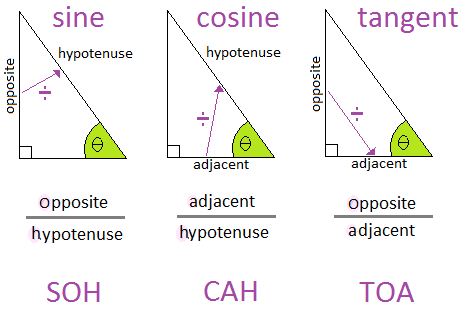
because of the way sohcahtoa is
slender mist
wintry tundra
but do you know what sohcahtoa means
opp of hypo