#geometry-and-trigonometry
1 messages · Page 317 of 1
 earnest echo
 somber coyoteBOT
MoeUsrof:
 upper karma
this is the original question
the question is $cosec^2=3cot-1$
somber coyoteBOT
MoeUsrof:
 mighty wharf
like snap it
earnest echo
I suggest you turn cosec(theta) into cot(theta) then solve the Quadratic
earnest echo
1+cot²(x)=cosec²(x)
somber coyoteBOT
MoeUsrof:
upper karma
tbh idk how to get the roots
so i'll leave it at that :)
@upper karma you sure you aren't interested?
We can help you through it
can it be done algebraically?
i mean if u can, then please help me learn
but i wont wait for 30 more mins to ping the helpers :/
@upper karma
yeah so simply substitute t:=cot(x)
and you'll have a quadratic in t
which you can throw the quadratic formula at it
so $t^2-3t+2=0$?
earnest echo
How did the minus before 3t become plus
somber coyoteBOT
MoeUsrof:
upper karma
my bad sorry
and also it is worthy first to indicate restrictions because the domain of cot isn't all reals
i got t=2 and t=1
how do i identify the restrictions?
if we want to be careful
or you could check later if those solutions work
the answers
what did i do wrong?
i got t=1 and 2
nothing yet
t isn't the same as x
you need to sub back
and solve for x
do you understand what i'm saying?
so will it be
cot(2)^2-3cot(2)+2
?
i did it on my calc and i got 736
no
you need to sub back
cuz cot(2)^2 is equal to 700+
wdumm
if you got t=1 and t=2, you need to remember that t isn't x, but instead t=cot(x)
so you have to solve
$\begin{cases}
\cot(x)=1 \ \cot(x)=2 \end{cases}$
somber coyoteBOT
Al𝟛dium:
upper karma
do you understand why?
yes
alright
then simply solve those eqns to get x
...
but
i dont get how im supposed to get x
you can either draw a triangle to help you get the angle
yea... im skipping
....
ngl none of this makes sense
then
can i do it algebraically
why don't ask instead of saying "yes i understand" you tell me your doubt when i'm asking you?
bruh
i get why we did this
so you have to solve
$\begin{cases}
\cot(x)=1 \ \cot(x)=2 \end{cases}$
@upper karma
somber coyoteBOT
MoeUsrof:
upper karma
but i dont get how im actually going to get x
ok we figured out that t is 1 and 2 using the quadratic equation
what next?
i can't help your demotivation against non-algebraic process
it's not demotivation, it's the lack of knowledge
you can either draw a triangle to help you get the angle
so then
i'm not prepared to do it, cuz i cant
i'm here to show you the way
alright, let's do it using the triangle way
okay
let me draw a diagram
alright
well first remind you that $\cot(x)=\frac{1}{\tan(x)}=\frac{\text{adjacent}}{\text{opposite}}$
somber coyoteBOT
Al𝟛dium:
upper karma
oh
that's what idk
but i can find a pic online that sums it up
that's what idk
do you know what tan(x) is
@upper karma yes i do
wait do you not understand why it is adj/opp
just making sure
i do
i just dont know how to convert those new trig functions to adj/opp
okay
by new trig functions i mean the cosecant, cot, and secant
okay now we are talking
so
$\cot(x)=\frac{1}{\tan(x)}=\frac{1}{\frac{\sin(x)}{\cos(x)}}=\frac{\cos(x)}{\sin(x)}=\frac{\frac{\text{adjacent}}{\text{hypothenuse}}}{\frac{\text{opposite}}{\text{hypothenuse}}}=\frac{\text{adjacent}}{\text{opposite}}$
somber coyoteBOT
Al𝟛dium:
upper karma
i see
let me know if you are confused with how the skycraper fractions got simplified
no i get it
what's next
we got cot(x) values
yeah so drawing triangle
$\cot(x)=\frac{1}{1}$
somber coyoteBOT
Al𝟛dium:
upper karma
it's our first case
we have 1/1, which if you remember cot is adj/opp
yes
so the triangle we want to draw has 2 legs of length 1
let me draw the triangle
so a and b will both be equal to 1
it'll take like 5 minutes so you may want to take a rest or make sure you understand everything we've said so far
so a and b will both be equal to 1
yes
alright
im sorry if im bothering u
i did all parts btw, a,b,c and d
i just need to know how to find the roots
not bothering at all
take a 4 min rest if you want
while i draw it
\begin{tikzpicture}
\draw (0,0) -- (3,3);
\draw (3,3) -- node[above=10pt, right=5pt]{$1$} (3,0);
\draw (3,0) -- node[left=10pt, below=5pt]{$1$} (0,0);
\node at (0.7,0.3) {x};
\end{tikzpicture}
somber coyoteBOT
Al𝟛dium:
upper karma
@upper karma
not a cool drawing but it suffices
oke im back sorry for being late
all good
ok so i get why the x is there, and i get why we have the 1s
and for the second part we can change them to 2s
can you recognise the angle x of this isosceles triangle
and for the second part we can change them to 2s
almost
yes
for the second one it's 2/1 not 2/2
45, 45, 90
exactly
so x=45 degrees is one solution
alright
wait
can you try with the 2/1
it's another special triangle
\begin{tikzpicture}
\draw (0,0) -- (3,3);
\draw (3,3) -- node[above=10pt, right=5pt]{$1$} (3,0);
\draw (3,0) -- node[left=10pt, below=5pt]{$2$} (0,0);
\node at (0.7,0.3) {x};
\end{tikzpicture}
somber coyoteBOT
MoeUsrof:
upper karma
30,60,90
yes
wait is it...?
ok what next dude
we didnt finish the first solution, did we?
we did
cuz the answer isnt 45
what is it
that's a
and that's radians
not degrees
we're doing a
,w 45 degrees to radians
somber coyoteBOT


 Requested by Al𝟛dium#4084
upper karma
Requested by Al𝟛dium#4084
upper karma
0.785
everything we did was correct
the book can be incorrect btw
i took you from here cot^2(x)-3cot(x)+2=0
that's fine
did i typo'd
wait
this is the IBDP Math AA HL book, it's brand new, and we already discovered loads of mistakes
yeah that seems like a book's mistake
wolfram gives me 45 degrees as a solution too
ok i just emailed my teacher
let's do the second solution
and i'll leave it to him
okay hold up a sec
ok
i think i confused one of your questions with another answer
dude
we spent 45 mins on one question
the second sol isn't an special triangle, i was saying yes to the diagram
yea i know that
??
is the rest correct tho?
we spent 45 mins on one question
so what
yes it is
oh that's fine then
ok so it's not a special triangle
what is it then?
either way, you shouldn't point out like that, humans make mistakes too
yup
what is it then?
it is an ugly solution which you can get an approx by your calc
or by the graph
,w arccot(2)
somber coyoteBOT
 Requested by Al𝟛dium#4084
upper karma
Requested by Al𝟛dium#4084
upper karma
...
what's arccot?
ohfwefef
my baddd
lol
dw
,w plot cot(x)
but can't we arccot (1)?
instead of doing the special triangle thing?
you can if you want an approximate answer
how do i arccot on my calc?
cot is 1/tan
cot^-1 is ??
just tan?
but i hope you agree with me that saying x=pi/4 or x=45 degrees isn't cleaner than 0.022222222222222222222222222222222...
lmaooo
it defo is
okay
wait why is it 0.0222222?
as i recall, i think we got 0.754342
yea 0.7853
did u arccot 0.7853?
i typed a random number ngl
bruh
lmaoooo
that's fine lol
but...
ok so solution no.2 is correct
but why is 1 incorrect?
and how do u arccot on a scientific calculator?
i don't think there is an specific thing for arccot
wait a second
,w arccot(1)
 wind shard
just do arctan(1/x(
somber coyoteBOT

 Requested by MoeUsrof#2087
upper karma
Requested by MoeUsrof#2087
upper karma
we need it to be 3.605...
why is it wronggggg
??
we established that the book was wrong
i mean yea
but one part of the solution is correct
so that's questionable
well, wolfram agrees with me
so it's very likely your book has that solution wrong
well
thank u v much
i'll proceed with the other questions
i already did them
and put them into quadratics
and then arcXXX them
yw, good luck with the rest!
we are here if you have any more doubts.
yup
thank uuu
<3
,w arccos(-2)
somber coyoteBOT
 Requested by MoeUsrof#2087
somber coyoteBOT
Requested by MoeUsrof#2087
somber coyoteBOT
 Requested by MoeUsrof#2087
earnest echo
Requested by MoeUsrof#2087
earnest echo
There is no solution in real values for arccos(-2)
upper karma
@upper karma is there another problem you need help on
nope im heading off to sleep
none of the questions worked
i did the arcXXX to them and none worked
if u want, i'll drop the questions and where i reached
Better suggestion: if you want i can help you tomorrow
nah it's fine
i'll submit it tomorrow
afternoon
in 14 hours
Okay well
yup
gn
thanks for ur help
Gn
really means a lot
Yw
 feral plank
Hey guys sorry to burst in here but basically, im in a pickle, I suck at math, I try and I just suck. Im doing a math test atm, and I got like maybe 6 or so questions I need help with if y'all wouldnt mind
last one
upper karma
IF someone can help me with geometry please dm me
 silent plank
@feral plank we are not allowed to help on tests. requesting help on tests may get you banned. #❓how-to-get-help
feral plank
😱
silent plank
why dm
upper karma
Good question
 agile socket
I am wondering about how the highlight applies to how you graph?
So far I have this
 vocal fog
Just a quick question, for a right triangle, are the 2 slopes congruent or opposite reciprocals?
silent plank
wdym by opposite reciprocal?
vocal fog
/when finding the slopes of right triangles are they consecutive sides?
like for perpendicular line slopes the slopes are opposite reciprocals as in 2 and -1/2
for example, triangle “ABC” is a right triangle. would the two slopes of triangle abc be congruent or opposite reciprocals?
silent plank
if you're referring to the legs, negative reciprocal would be better
(assuming they aren't horizontal /vertical)
vocal fog
so the hypotenuse (the longest side), opposite side, adjacent side is what a right triangle is composed of which means that the slopes are opposite reciprocals
 hollow raven
 calm umbra
Yes the numerical value of the slopes would be opposite reciprocals because that is a property of slopes of perpendicular lines
Usually triangles are just 3 segments floating who knows where so you may not usually think of them having a slope as you would for a line that you graph on xy axes
@vocal fog
This would be of course for the sides that join to make the right angle
 grim cairn
anyone know how to solve this and if this is the right answer?
 umbral snow
That's one of the answers. There is another
grim cairn
yeah how do I find it
umbral snow
grim cairn
lol
umbral snow
So tanθ is the slope of the terminal arm. Is there another position on the unit circle that causes the same slope?
grim cairn
5pi/6?
umbral snow
Almost, but you're on a good track. That's the negative slope. So that would be tanθ = -1/√3
umbral snow
You want 7π/6 haha
grim cairn
coool thank u
 pure cape
well tangent has some few different meanings, if you are talking about trigonometry then tangent is a function that can be represented by a ratios of sides in a right triangle
tan(theta) = op/adj
cotangent or cot is the reciprocal of tan
so cot(theta) = adj/op
 timber tartan
thanks for clearing this up for me! a huge help
And im guess that cosine and sine have the same relationship as tangent and cotangent?
 covert rune
Trig names barely make sense, don't worry
pure cape
wonder why they didnt name secant cosine and cosine secant
upper karma
Reciprocal of cosine
timber tartan
oh thanks
 hallow crystal
Someone please explain how I fucked up on number 1 💔
hallow crystal
75 is 5sqrt(3)
@west basin
Oh, right
But even then how do I get 2 locations
upper karma
Can someone tell how to do this Question
Q.) Find an acute angle whose Sine is 0.52
 west basin
can you use a calculator?
upper karma
yes i can use a calculator
upper karma
which calculator are you using
west basin
ti-84+CE
west basin
yeah yellow button and then that
upper karma
still error
west basin
did you add the ^-1?
upper karma
yes
 cunning salmon
saying ||FUCK|| is now banned (WARNING PRESS SPOILER AT OWN RISK)
 void wind
Hey yall! I need to calculate sin x, only thing given is tan 9/11. Any idea how can i approach to this problem? 😊
I was thinking maybe i can use “trigonometric one”, if thats a thing in english
upper karma
yes
void wind
Should i use trigonometric one?
I get this when i use it. Any ideas how i can simplify it from here?
I shouldn’t square it right? So it’s cos^2=1^2-(cos9/4)^2 and i could just divide both side with cos so i get. Cos=1^2-(9/4)^2
upper karma
$1 + \tan^2(x) =\sec^2 (x)$
somber coyoteBOT
HoboSas:
void wind
What is sec if i may ask?
upper karma
$1 + \tan^2(x) =\frac{1}{\cos^2(x)}$
somber coyoteBOT
HoboSas:
upper karma
you get this by dividing both sides of the fundamental formula by cos^2
void wind
Oh damn. It isn’t possible to use the trigonometric 1 formula? I haven’t learned this yet.
upper karma
$\cos^2(x)+\sin^2(x)=1 \newline \frac{\cos^2(x)}{\cos^2(x)}+\frac{\sin^2(x)}{\cos^2(x)}=\frac{1}{\cos^2(x)}$
somber coyoteBOT
HoboSas:
void wind
Aha
That makes sense
So basically i just shove in tan in there which is given. But how do i/ what should add to cos?
Or do i solve cos in the equation
void wind
<@&286206848099549185>
 paper vale
@void wind use cos(x)=+-sqrt(1-sin^2(x))
so u can just get a simple equation , but as it could be plus or minus u need to check 2 cases
wait why dont u just do tan^-1(7/11) and put that in sin
paper vale
no, u can literally find out x by doing inverse tan
then plug that into sin
also u cant rearrange the an equation and use that in the same equation
void wind
But i am not allowed to answer with decimals, they need exact answers
Also im not allowed to use inverse :D, maybe I should’ve said that before.
paper vale
yes so if u do what i said earlier then u can easily get the solutions
void wind
I’ll give it a try, thank you vm 🙌
 pastel anchor
yo can anyone help me with this question in finding the complex roots?
6x^2 -21x +24+=0
i got stuck on 21+-sqrt135/2
 rain holly
divide the equation by 3 first
pastel anchor
no im using the quadratic formula
now im stuck at that part of the quadratic formula
rain holly
@pastel anchor ya but if u simplify it then the calculations will be easier
pastel anchor
so u want me to simplify it and then do quadratic formula?
rain holly
yes
rain holly
thats correct
pastel anchor
but i need the compelx roots
rain holly
u can change sqrt(-15) to i*sqrt(15)
rain holly
yes
pastel anchor
i swear for some other questions the roots were like 3+1/2i
@rain holly why do we leave it as it is and not simplify it any further
rain holly
because u cant
rain holly
ya that counts as simplified
 main meadow
Help
earnest echo
,rccw
somber coyoteBOT
earnest echo
What have you tried?
 humble pulsar
solve for a, then plug it into AC
pastel anchor
heyo guys im sutck with another question like the previous one
x^2-6x+28=0
im stuck at 36+-sqrt-76/2
how can i simplify it any further
humble pulsar
are you solving over complex or real?
pastel anchor
im trying to get the complex roots algrebraically
pastel anchor
oh
humble pulsar
yeah, then to simplify it you see if there's a square # you can pull out of 76
pastel anchor
u cant
pastel anchor
ok i was thinking of a perfect square
so like 4sqrt-19
?
@humble pulsar so is the answer (6+- 2 radical 19)/2
humble pulsar
yeah, sqrt(-19) though
so then do you see the simplification? (Also if you're solving complex numbers you need to introduce the imaginary unit)
pastel anchor
yea i see it but i dont see where can i add the imaginary unit
humble pulsar
you know you can split square roots by multiplication of the radicand right?
sqrt(ab)=sqrt(a)sqrt(b)
pastel anchor
no i never learned that
humble pulsar
oh well it's true (try and prove it yourself if you know sqrt(a) = a^.5)
humble pulsar
behind the 2?
pastel anchor
like 6+-2isqrt19
humble pulsar
yeah it has to be sqrt(19)i
sqrt(-19)=sqrt(19)sqrt(-1)
and sqrt(-1) = i by definition
pastel anchor
so theres parentheses?
humble pulsar
no, you use parentheses in typing math to be explicit
the 19 would be under the square root sign
and the i, typically, to the right of the co-efficient
main meadow
Im confused help me please
somber coyoteBOT
silent plank
given those sides, x isn't equal to y
paper vale
yea in an isosceles triangle it is the angles on the legs which are equal
humble pulsar
equal sides => angles opposite them are equal
based on the idea that small sides "=" small angles
and vice versa
paper vale
what
humble pulsar
Law of Sines, but x would be 75 based on it being isoceles
paper vale
lol why would u use law of sines to show that isosceles triangles have equal angles
humble pulsar
Im not saying that, but the idea of small angles -> small sides comes from law of sines
 brisk holly
 bitter jetty
@storm sun i wud say yes
 storm sun
why so?
bitter jetty
cuz they share one side which shows equale length
and its showing the 2 others are also of equal length
storm sun
ah alright thanks
 sharp plume
A is the adjacent side?
 snow dove
i assume so
silent plank
@Argan#9381 by convention a is the side opposite A, etc...
bitter jetty
can someone help me, idk where to start
 deep iron
is it possible to find the height using 2 angles and 1 side?
 tawdry ruin
Help
 junior light
@tawdry ruin What have you tried/thought so far?
upper karma
It says "test"
sharp plume
👀
tawdry ruin
It’s a chapter review my teacher lists everything thing as tests
 polar wave
any ideas on wha to do?
 runic magnet
huh
earnest echo
What have you tried?
 glacial dawn
Find the point at which the line of (-3,12) and (6,0) intercepts the y-axis
polar wave
ohhhhhhhh
glacial dawn
If u have that u have the side lengths of the unshaded triangle
polar wave
yeah i can calculate those with the cords i got right
glacial dawn
Take the area of the whole triangle- unshaded triangle
polar wave
using distance formula
glacial dawn
Uh
Lemme see
So
Eqn of line is y=-4/3x + 8
Hence intercept is (0,8)
Side lengths of unshaded triangle are 8 and 6
Hence the area of unshaded is 24
Area of total triangle which is shaded and unshaded together
Would be
(1/2)bh
Are u following @polar wave ?
polar wave
yes
glacial dawn
So then
U have to find point where that (-3,12) line intercepts the x axis on the left
Since angle is perpendicular it will be opposite reciprocal of other angle
polar wave
yeah that makes sense now
glacial dawn
U got answer?
polar wave
im solving
glacial dawn
K
polar wave
thanks tho
polar wave
ok
glacial dawn
I got 126 un^2 btw @polar wave
polar wave
I got 126 un^2 btw @polar wave
@glacial dawn same, thanks
glacial dawn
Np
tawdry ruin
Can someone do 9 for me pls I have no idea how to
tawdry ruin
Pls
tawdry ruin
Pls
upper karma
This is not a "do this for me" server.
 blazing coyote
Hello
I desperately need help on this question
Can anyone help me, its a geometry question
A bit confused
 orchid perch
1, 2, 3, are angles
and 4
@blazing coyote the middle angels are all 90 degrees
because angles across from each other equal each other
and angles next to each other that make a straight like both equal 180
do you get that?
silent plank
you can't directly assert that the angles are 90° at this point
go through a few triangle congruency proofs
blazing coyote
ok ty
 rocky ether
https://media.discordapp.net/attachments/765715332069326868/766524760460230656/unknown.png?width=784&height=677 not expecting anyone to do this for me but does anyone have a yt vid that explains this shit
 humble pulsar
@rocky ether what question in specific do you need help w/?
humble pulsar
ok well question 2 is full of scaffold so i believe you can handle that lol
but for 1, what you want is to keep the perimeter of the rectangle at 44, but change the actual dimensions
so what's the general perimeter of a rectangle?
rocky ether
im an all a/b student lol i have an a in geometry but ive just cheated the whole way through to hold my gpa so
whats l and w
rocky ether
that looks liike eonofuihngeouigujg to me because im stupid 🙂
upper karma
desperate last attempt, i'm attempting to understand unit circles and figuring out the values of trigonometric functions
the ones where you evaluate a point unit circle for sine cos and tan
becase this is all slipping over my head
im sorry this is late also, attempting to figure this out before its too late for me
its getting late, any videos to recommend?
 willow kiln
im sorry this is late also, attempting to figure this out before its too late for me
there are people in different zones here lol (though here it's nearly 1 am and I should be studying)
anyhow 
upper karma
what
i mean i did, i aasked yous guys
It’s getting too late, I need to sleep
See yous
willow kiln
i mean i did, i aasked yous guys
ah I thought you had a question regarding a problem. Not sure if I'd recommend something other than the usual, e.g. Khan Academy
upper karma
My problem is that I’m just confused, end of grading period and I had to use class time to catch up on other stuff and the lesson completely flew over my head so,
I’m understanding radians and transferring them to degrees and back, it’s manageable but
Also I’d show work on what exactly I’m having trouble on but my handwriting is attrocious
Mainly this question
I do not know what values I’m being asked for
 high geode
they want all values of the six trigonometric functions by the looks of it
sin = y, cos = x, tan = y/x csc 1/y sec 1/x cot x/y
-15/17 is y and 8/17 is x
upper karma
my thick skull is just discovering about the other three
willow kiln
they're just fancy notation for $\dfrac{1}{\sin(t)}$, $\dfrac{1}{\cos(t)}$, $\dfrac{1}{\tan(t)}$
somber coyoteBOT
derivada.schwarziana:
willow kiln
they want all values of the six trigonometric functions by the looks of it
but yes, they're asking you this and you should use the definition of the trig functions (as ratios between sides of a triangle)
upper karma
i need to get some coffee to absorb this, be back in a second
upper karma
watching some of the khan academy vids because i'm still pretty lost
upper karma
idk why this still isn't clicking with me
im just trying to figure out the placements of these integers, where this video is even pulling them from and why
i think that;s what im trying to figure out anyways
im not so sure anymore
 signal swallow
what are you trying to do?
upper karma
id like to know that myself
upper karma
im just stuck currently, missed a lesson and now it seems like im facing a brick wall
question is up there a little
signal swallow
okay, so it gives you an angle t
and gives you both an x and y coordinate based on that angle
high geode
six trig functions
the formulas to find them are in the front of that chapter in the book
and i posted them before
upper karma
the theta would be easier to figure out of the coordinates made sense to me, and yeah, i searched up the 6 formulas and i'm taking note of them but, i'm starring at this image and im just drawing blanks
signal swallow
what exactly are you confused on
upper karma
the coordinates
upper karma
it corresponds to y when sin t
upper karma
x?
signal swallow
yes
so if it gives you P(-15/17, 8/17) you have cos and sin
what is tan in terms of sin and cos?
upper karma
that would be x/y
signal swallow
that's cot
upper karma
oh
upper karma
shoot, i got them mixed up
signal swallow
because you have both y and x
upper karma
cot and tan also correlate to being unable to correspond when x =0
well, because it cant, there;s no 90 degrees
well
cot would be for y, not x
signal swallow
yes
do you understand the problem now?
and do you know the other 3 trig functions that you must get?
upper karma
yea, csc and sec
signal swallow
yup
upper karma
i think my dummy thick skull is getting some of this in now
upper karma
isnt that why they put them on calculators
high geode
I think I have the same book as you
upper karma
i dont have a book
online lessons,
plus, i skipped alg 2
so im extra clueless this year
 narrow crag
describe a pattern for what types of conditional statements have a true inverse statement and what types of conditional statements have a false inverse statement.
 dark jacinth
i could use some help with c and d
i am not totally sure how vectors work in 3 dimensions
dark jacinth
anyone?
 odd plover
(c) since FG is parallel to AD D is (0,9,0) and F is (8, 0, 12), to find DF components find the difference of destination point and initial point coordinates (8-0, 0-9, 12-0)
(d) Two vectors A and B are perpendicular if and only if their scalar product is equal to zero. i.e Ax Bx + Ay By + Az Bz == 0
check for d
upper karma
You know books can be mistaken too
upper karma
@dark jacinth c) the "components" of a vector means x, y, z. If you translate the entire model so that point D is the origin, what are the coordinates of point F?
d) the dot product between the two vectors needs to be zero for them to be perpendicular
high geode
Okay I'm stumped on this problem. From a boat on a river below a dam, the angle of elevation to the top of of the dam is 10degrees38. If the damn is 845 feet above the level of the river, how far is the boat from the base of the dam(to the nearest foot)?
upper karma
The definition of Angle of Elevation: The upwards angle from the horizontal to a line of sight from the observer...
@high geode
high geode
we would have to use tangent to solve it wouldn't we
upper karma
in order to solve any triangle, you need to know 3 things: AAS, ASS, SSS, AAA
A - angle
S - side
high geode
ah but we don't know the adjacent side
upper karma
you have two angles and a side
and since you have two angles... you can find the other one, easily, since all angles from a triangle need to add up to 180 deg
you can use soh cah toa
you can also use the law of sines
high geode
so a sq + b sq = c sq to solve for a right?
upper karma
no
high geode
I tried 834.62/tan(10.38)
high geode
because i thought you had to use Pythagorean Theorem
845/tan(10.38) doesn't give me the right answer either
upper karma
,w 845/tan(10.38)
somber coyoteBOT

Requested by DSpider#6917
upper karma
that doesn't seem right...
high geode
the answer is 4501 but I can't seem to get it
I think my calculator is supposed to be in degree mode but I can't seem to get this answer
i get 4613
high geode
45001 is what the answer says
high geode
ya that's what I get
upper karma
"10degrees38" is 10.38, right?
maybe the base of the dam isn't a 90 deg angle?
are there any pictures?
upper karma
I think it's safe to assume 10.38
upper karma
,w 845/(tan(10.38 degrees)
somber coyoteBOT

Requested by DSpider#6917
 indigo chasm
anyone know how
upper karma
Smh don't multipost
upper karma
Don't put it in multiple channels
upper karma
@indigo chasm what result did you get?
humble pulsar
it says use a graph, so graph y=sec(x) and y=1
 paper vale
this is just notation
so u should probably learn that
there is no thinking involved
upper karma
i already got an answer but i'm not sure if it's correct
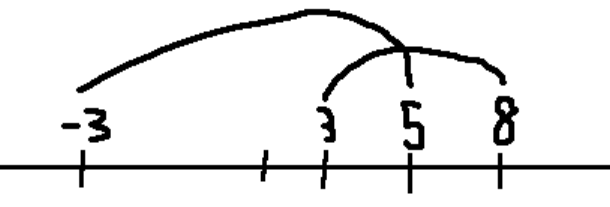
so the answer should be 3;5
right?
humble pulsar
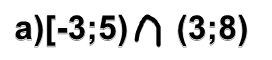
@upper karma what is the actual question? write out the [-3,5) intersect (3,8) as 1 interval?
upper karma
i guess so
paper vale
yea it is just (3,5)
humble pulsar
^ and your logic with the 2nd pic is right
paper vale
why are you using semi-colons btw
humble pulsar
that doesnt matter lol
humble pulsar
Like using a semi colon for intervals makes sense, as it mitigates confusion between points and open intervals w/ american notation
upper karma
i don't really like math, i'd rather master a programming language or something else
but well, i still gotta do my homework
upper karma
The radius of a straight circular cone is 9 cm, and the height of the cone is 12 cm. Get the slant height.
@upper karma it rhymes with Mythagora
yeah so how do i get the slant height
@upper karma it rhymes with Mythagora
what do you mean
oh
 narrow plinth
Hi could someone help me with this or give some hint I can't figure it out?
the lines connecting the midpoints of the opposite sides of the quadrilateral are 6 cm and 8 cm, and one diagonal is 10 cm. Calculate the area of the quadrilateral.
 worn folio
can someone help me identify these?
upper karma
have you tried anything or thought on any?
worn folio
@upper karma My bad i had a really big brain fart then i realized i was looking for definitions
I need help on this, my teacher said i got these wrong twice
upper karma
rip daniel do you know what vertical angles are
worn folio
yea
upper karma
and how they're equal?
worn folio
they are symmetrical
upper karma
no they're equal not symmetrical
ok so given that they're equal
and that x + 20, and 3x - 10 are vertical angles
you can conclude that
x + 20 = 3x - 10
understand?
worn folio
yes, looks similar to algebra
upper karma
so given x + 20 = 3x - 10. solve for x
worn folio
so same thing
upper karma
yes
worn folio
accept keep the same colors together?
upper karma
the pairs of colors, are vertical angles
upper karma
now for the red one
we know that since they're vertical angles
x = y - 2x
and you're also given that x = 28
so solve for y now
worn folio
y=84?
worn folio
thanks, i might need a couple more let me check
I think this is the last one i need help on i think i can do the others on my own
upper karma
well you know why it's true right
worn folio
they are equal?
upper karma
yea, if you make a line from P to U, and another from L to M. they'll be equal
you have to prove it now
worn folio
would i start with the givens?
worn folio
ok
 obtuse hornet
Would this be y= 2x+28?
upper karma
yes
worn folio
- If i bisect this segment perfectly in half you will see that pl = um
- Because they are equal i can take L and U and pair them with the farthest point and it will remain equal.
Is that good so far?
upper karma
it's okay
instead of saying "If i bisect this segment perfectly in half you will see that pl = um"
maybe say
if i cut this line in half pl is still equal to um
upper karma
for #2 if i didn't know i would ask why it works like that
i also don't see for #1 what cutting the line in half does
worn folio
bisecting mean perfectly cut in half right?
cause if you bisect the line you will see that they are the exact same
upper karma
i think a better explanation would be
if you removed the line LU
you would see that PU and LM both are the enitre line
upper karma
try explaning it by removing parts of the line
worn folio
ok
thanks
Thank you so much for all of the Help and i hope you have a great day or night
 sage sandal
Is there anyone willing to help me study for a trignometry test I have this Wednesday? I've been struggling a lot and according to my professor this is the hardest test out of all of his math classes. I'm not sure if this is the correct channel to be asking this, so I apologize if it isn't.
humble pulsar
@sage sandal do you have any questions you need help with?
sage sandal
as of right now I only have one question, I'd have to switch over to my pc to bring it up though.
silent plank
what have you tried?
silent plank
yes. x is 8
obtuse hornet
Ok for some reason i thought it couldnt be that easy so i confused myself lol
obtuse hornet
Yeah i was thinking the info was unnecessary so i thought there must be more to it or something
silent plank
unless you give all reasonable methods
(or do it anyway to confirm that the problem is actually consistent)
upper karma
https://gyazo.com/8d4481cd417311b44263628e85f63614 Need help asap

 jagged relic
upper karma
jagged relic
jagged relic
upper karma
- The two points E and F lie in the plane R, then the line m containing them lies in the plane R as well. Postulate: Flat Plane Postulate and If there are at least three points.....postulate: #9
- Two planes Q and R intersect, then their intersection n is a line. Postulate #11
- Two points E and F lie in plane R, therefore line m lies in plane R. Postulate #10
jagged relic
upper karma
- No, there’s only one line than contains A and B
- Yes, the two points aren’t on a single plane.
- No
jagged relic
 crystal marlin
Can anyone find the area and the perimeter?
willow kiln
do we suppose that the curved thing is a circle arc?
crystal marlin
Yes it’s a circle arc
upper karma
it's the arc of a quarter of a circle with radius 10
might be easy if you draw the whole circle inside a square to visualize
crystal marlin
Ok
paper vale
no, what u need to do is work out the area of the square and subtract the area of the quarter circle @crystal marlin
which is obviously 1/4 pi*r^2
and for perimeter do 1/4 2*pi*r +10
upper karma
That was for them to figure out after this hint
might be easy if you draw the whole circle inside a square to visualize
upper karma
@crystal marlin you know, if you put 4 of those together, you end up with a circle inside a square
it's easy to see the radius, and to calculate the area for the circle
then calculate the area of the square
and lastly, you subtract the area of the circle from the area of the square
oh, and divide by 4 as a final step 🙂
or else you'll get the area of all 4 corners, instead of just one
 quartz prism
I can see that you'll get sinxcos(100x) as the first term and sin(100x)cosx in the last term
so you get pairs of terms
which will give sin100x
wait
nvm
I got it
😅
this was the solution I saw after solving it and I thought doing the whole 2S part's redundant but wondered why they did it and wanted to see if any term didn't have a "mirror" term but I see why you'd do this now
 long vector
crystal marlin
long vector
crystal marlin
@crystal marlin you know, if you put 4 of those together, you end up with a circle inside a square
@upper karma yes I figured it out alr lol, but thanks a lot for your help
humble pulsar
@long vector which question do you need help with?
 dim gyro
So this is the formula for finding the distance between two pints, on the last step do i keep simplifying or does d=41 or does d=6.403
dim gyro
It says to leave answer in radical form btw
calm umbra
You can approximate that as a decimal or leave it as root(41) depending on what they ask
dim gyro
Forgot to include that part
calm umbra
Oh then leave as root(41) in that case
dim gyro
👌
calm umbra
Leaving them in square root is the only way to get exact answers for those
Unless you have a perfect square
Decimals will only give you a less precise approximation
dim gyro
Thanks
 coral frigate
Hello, I’m have trouble trying to Google this scenario.
I have a character in my video game that has a vertical velocity of (vy).
I want to calculate the horizontal velocity (vx) that is needed for the character to land (d) amount of pixels from it’s initial position.
So, I have:
Vertical velocity (vy)
Gravity (g)
Time (t)
Distance to travel (d)
I want to find:
Horizontal velocity (vx)
Thank you!
calm umbra
This depends on how gravity works in your game
The equations we use in physics problems / projectile motion problems rely on the earth's gravitational constant
 leaden pike

 calm umbra
What do you need help with
coral frigate
@calm umbra yea, the gravity in my game also works as a constant. We could say 1 pixel every frame.
I guess I just need help figuring out the formula to use.
calm umbra
Ok so im gonna assume then that acceleration caused by g = -1 distance/time
Where distance is pixels time is frames
The problem is jumoing from initial position to a position that is d units away horizontally?
Is that correct
coral frigate
That is correct
calm umbra
Ok so really what we need to figure out is how long you are in the air
As that will determine how much time our character has to move horizontally
Do you have a function for velocity from jumping?
Vertical velocity&
umbral snow
Gravity is a constant velocity in your game? That can work, but normally we see constant acceleration
calm umbra
I think its a constant acceleration on vertical velocity
We are gonna do like
vy - gt
So if vy, initial vertical velocity from a jump is constant and acceleration by g is constant:
Current Vertical Velocity: vy - gt
Current Vertical Position: (vy-gt)*t
Set vertical position equal to 0 and solve for t
coral frigate
Yes, constant acceleration.
So, for example:
velocity.y += gravity
As for the vertical velocity function, I might not understand the question, but the vertical velocity is set to some value once the user presses a keyboard key. So the only thing that changes the vertical velocity is gravity.
calm umbra
One choice will be t =0 the other choice will be the length of time youre in the air for the jump
Once you find the non zero value for t we go to our horizontal velocity
This one im gonna assume is constant after jumping and holding right:
Horizontal velocity has no acceleration component
So horizontal distance is xy*t
the t that you solved for earlier will tell you how much horizontal distance you cover in one jump
Set d = to that xy*t and you can solve for the horizontal velocity needed to clear thay distance in one jump
Hopefully that helps