#geometry-and-trigonometry
1 messages · Page 310 of 1
 oak citrus
 mental vessel
yeah
oak citrus
And you got 7.5
mental vessel
yeah
oak citrus
Then used pythagoream
oak citrus
Why is it sq root of 105
mental vessel
thats how they had it in the khan academy video
not really sure why lol
so should it just be 105.2 without the sq root?
mental vessel
yeah
oak citrus
You solve the left side
mental vessel
yeah which is 7.5
oak citrus
Yeah
mental vessel
okay
mental vessel
yeah which is 56.2 plus 49
oak citrus
Get a product
mental vessel
then that is 105.2
oak citrus
Aight aight
mental vessel
so it should just be 105.2 without the sq root ?
mental vessel
oh really lol
oak citrus
Dont remove it
mental vessel
okay
oak citrus
You good
mental vessel
may i ask why you put the square root over the hypotenuse?
i know i do it i just dont know why
oak citrus
Wdym
oak citrus
Give sec
oak citrus
It should be y= 105.2^1/2
Its just that its not simplified
So you can leave it that way
Or get
10.26
I rounded that btw
oak citrus
Yeah?
You will reach the point
Where you can either leave it as sq root
Or simplify it
mental vessel
ah okay
oak citrus
I recommend simplifying it
mental vessel
okay
oak citrus
Anything else?
oak citrus
Aight
oak citrus
Im ready 😉
mental vessel
if not i can do an upclose
oak citrus
Why is ur room so damn dark lmao
mental vessel
damn it hahaha
I’m guessing it’s asking me how to determine the opposite side of the angle and the hypotenuse from the angle
oak citrus
@mental vessel its askibg for the value of the ratio
mental vessel
i dont know what that means lol
oak citrus
Oki
mental vessel
thanks for the help
oak citrus
Np
 bitter jetty
...
oak citrus
Sorry cant help ya
bitter jetty
can someone else
mental vessel
i would but i can barely do what im doing lol
 next island
how do i do cosΘtanΘ = sinΘ?
 upper karma
Well you gotta start with your identites
this is literally an identity 😂
cos(x)*tan(x) = sin(x)
well, lemme look at it again -._-.
you can change the tan(x) to sin(x)/cos(x), which leaves you with cos(x) * sin(x)/cos(x)
you can then cancel out, sooo cos(x)* sin(x)/cos(x)
(remember all of this equals sin(x) )
so now you're left with sin(x)/1=sin(x), which proves that cos(x)tan(x)=sin(x)!
@next island, makes sense?
next island
ye
upper karma
alrighty! ^^
 dark sparrow
help with what exactly
how much progress have you made?
there are multiple points along the way where you could be having trouble, so i'll need to know what you're stuck on
@young hemlock
dark sparrow
ok, let's start with deciphering what the problem is talking about
the potentially confusing words here are "tangent", "unit circle" and "chord of contact"
do you know what these all mean?
if you don't, then that's the first thing i'm addressing.
also, will i have to ping you for every reply here
cause i'd like to avoid doing that if at all possible
@young hemlock?
 young hemlock
alright
sorry i replied late
@dark sparrow unit circle is a circle of radius 1 correct
dark sparrow
yes, but in your case specifically they mean the unit circle, i.e. the one whose center is the origin
young hemlock
oh ok
dark sparrow
ok, do the terms "tangent" and "chord of contact" require explanation?
dark sparrow
ok
so can you start this problem on your own now, or are there more doubts that need clearing?
young hemlock
i dont know how to calculate the perpendicular distance
dark sparrow
well presumably what's meant is the distance from P to the straight line containing the chord of contact
you know how to calculate the distance from a point to a straight line, right?
if you need a reminder on that, say so
@young hemlock
young hemlock
im good
upper karma
@proud gust i'm sorry i had to go sleep, have you learned vectors?
upper karma
guys i need help
 silk patio
dark sparrow
silk patio
dark sparrow
is this a 2D picture
 acoustic jungle
yes
dark sparrow
and i guess no vectors allowed?
 paper vale
yes, first BC is not w, it is a part of it; second even if it was you would use sin here. A way to do is call CD x and BC w-x, obviously CE=BC and BCA=ACE=90-θ, so ECD=2θ. hence EC=x/cos(2θ)=w-x, so x=wcos(2θ)/(1+cos(2θ)), hence w-x=w(1-(cos(2θ)/(1+cos2θ)). therefore AC is just that but divided by sinθ
acoustic jungle
koolmale is that from 101 trig questions book.
 brisk holly
@paper vale why does ECD = 2theta ?
 wheat swan
@upper karma yesss
wheat swan
sorta
upper karma
well
they are all relative to the angle
sin(theta) = (side oposite to angle theta)/(hypoteneus of the triangle)
for example
cos = (adjacent to the angle but not the hypotenuese)/((hypot)
so just look them up and there's a good vid on khan on them
wheat swan
ok i will
upper karma
did it help @wheat swan ?
wheat swan
havent worked on it yet Im doing other problems
upper karma
ok
wheat swan
I deleted the message saying I knew it because I thought I was wrong but I am right thanks I got the problem done
upper karma
no problemo\
wheat swan
<@&286206848099549185>
 versed river
by standard for do you mean acos(b(x+c)+d)?
if so, factor the 1/30 out of the 1/30x-pi
wheat swan
I think so, I just know that in the problem it stated that the equation needed to be in standard form
@versed river
oak citrus
nice profile picture @wheat swan
versed river
nope, easier than that
 little osprey
Sneaky
versed river
angles in a quadrilateral add to 360
and angle in a full circle is also 360
thats all ya need
yeah watup
dark sparrow
and angle in a full circle is also 360
 real star
oh wait would i do 72+30+25 which is 127 then 360-127 which is 233 so the 4th angle is 233 and h and the angle that is 233 degrees are vertical angles so they are congruent?
which makes h=233 right?
little osprey
where does congruent come from
little osprey
yeah
real star
and a quadrilateral is 360
little osprey
yeah
real star
so 233 is right?
real star
yeah ik the 4th angle in the figure is 233
little osprey
okay
then why did you say h=233
I'll ask again
how much does an angle at a point add up to
real star
how much does an angle at a point add up to
wym?
little osprey
if you have a point
and went all the way around it
what would be the total angle
little osprey
yes
real star
360-233=h
real star
for this problem im not sure if angle i is an alternate exterior angle with angle 115
i cant find how to start this problem
 pure cape
i would start with drawing from the point at i angle a line parallel to the other two lines
which then gives me pairs of angles to work with
Something like this
You can then continue to work the problem out from this point
real star
did you get 125 because of the alternate interior angle theorem?
real star
so then that angle would be 235 because angles at a point add up to 360
and 360-125=235
pure cape
no, that is unnecessary
real star
and from the same side interior angle theorem we know that this angle is 65 so if we do 125-65 we get left with 60 is i=60 right?
pure cape
lets start by giving names
and sorry for bad pic
we know that angle ABC is 125 right?
real star
yeah
real star
same side interior angle theorem?
real star
180-115=65
real star
so this angle is 65
pure cape
yes
real star
and since its 125 to find i alone we do 125-65 to get 60
pure cape
yes
thats how i would do it
but your way is good too
and there are also many other ways of doing this problem
oh wait sorry, i just realised you were doing the same thing, you needn't have found the 235 angle, you only need to care about finding i
real star
yeah i realized that the 235 angle was useless
upper karma
hi
This is kinda
Basic but
Can i adk
Ask
Why y=x^2
Is graph likr a parabola
I mean what's the y instercept and the x coordinate...?
upper karma
The y-intercept is where the function hits the y-axis, hence, it is found when x=0 y=(0)²=0 , y=0 is the y-intercept. This concept is similar to the x-intercept, the function contain it's x-intercept when y=0, this is because it's when the function will hit the x-intercept, by this same reason, it is found by setting y=0, 0=x², hence x=0 is the x-intercept of the parabola. This means we have both intercepts at (0,0) so it passes by the origin. And because a>0, both branches will go upwards, where the vertex is (0,0) as well, also x=0 is understood as the symmetry line for the parabola due to it's vertex.
@upper karma
,w plot y=x²
 somber coyoteBOT


 Requested by Al𝟛dium#4084
upper karma
Requested by Al𝟛dium#4084
upper karma
The y-intercept is where the function hits the y-axis, hence, it is found when x=0 y=(0)²=0 , y=0 is the y-intercept. This concept is similar to the x-intercept, the function contain it's x-intercept when y=0, this is because it's when the function will hit the x-intercept, by this same reason, it is found by setting y=0, 0=x², hence x=0 is the x-intercept of the parabola. This means we have both intercepts at (0,0) so it passes by the origin. And because a>0, both branches will go upwards, where the vertex is (0,0) as well, also x=0 is understood as the symmetry line for the parabola due to it's vertex.
@upper karma ohni get it now
much precise
Glad to hear
 peak mesa
Does anyone know how I can calculate the center of a circle(x,y) at the intersection of 2 points and a radius?
paper vale
you can use the circle equation and plug in the two points and then get some simultaneous equation thing
pure cape
Use the one with the (x-a)^2 + (y-b)^2 = r^2
You have two equations which then you can find a and b
peak mesa
what function is that?
pure cape
Circle function
pure cape
Do u have coords of two points?
pure cape
Plug it in x and y
paper vale
then plug them in to that
peak mesa
and i need to find the green point
paper vale
do u know that circle equation
pure cape
(a,b) is the coord of the center
paper vale
yea all u are doing is just translating it the the origin and using pythagoran theorem
that is how that equaion is derived
peak mesa
When you want to say to plug in x and y is to add the values of X with each other and the same thing with Y?
peak mesa
the red points is x,y too
pure cape
For exampl if the coord of the first point is (1;2), then plug 1 into x and 2 into y
Wdym?
There should be a number
pure cape
Yes
And then u have system of equation
Only then can you solve for a and b
You have 2 variables, which means u need 2 equations to solve for those 2 variables
peak mesa
but i dont have the values for the a and b, a and b are green coordinates?
paper vale
do u know that circle equation
pure cape
yet
But yeah, kane is right, do you know the equation?
What circle equation do u know
peak mesa
"(x-a)^2 + (y-b)^2 = r^2"
i want to put this on java, u know what equation i can put without having the equal
paper vale
what do u mean withuot the equal
pure cape
Wdym
paper vale
wtf
pure cape
Why do you need a program
peak mesa
i need to create a function(in my code) then i give two points (red points) and radius and it will give me one point(green point)
in programming u cant have the equal
u need to have like
x * 2
or "(x-a)^2 + (y-b)^2"
only
pure cape
Wait so are you trying to solve for the center?
Or are you trying to graph the function
paper vale
lol what are u actually trying to do
peak mesa
im not trying to graph the function
paper vale
also in coding u can defintely set equals bruh
peak mesa
also in coding u can defintely set equals bruh
@paper vale xD?
pure cape
If you are not graphing the function then what are u doing with java
peak mesa
I am trying to create code to implement in a game
So I need to give 2 points to any function and he has to give me a center
paper vale
lol the inputs are the two points here
paper vale
so in your code u just plug them into the equation we said
like the equation is not an input bruh
peak mesa
but i cant put this like that "(x-a)^2 + (y-b)^2 = r^2"
paper vale
yes we know this
peak mesa
i need to pass r to another side
paper vale
the input is the 2 points and the radius
peak mesa
yes
paper vale
so u already set this up before u input
paper vale
yea that is the equation, with x,y,r inputs and a,b outputs
peak mesa
but i need to add 2 (x,y)
not one
u said that i need to plug
but i need to solve two equations
paper vale
yea obviously u need at least 2 points
peak mesa
yes ik but how i can with two equations solve that
one equation for X axis?
and another to Y axis?
paper vale
the point is that with a given r, x is completely determined by the y value or vice versa
wait actually it could be plus or minus
peak mesa
 paper vale
it is like given a right triangle, if u have two sides the other one is compltelty determined
peak mesa
the normal?
 slow dove
wheat swan
slow dove
wheat swan
@oak citrus thanks bro
mental vessel
How do I use an angle to find out the length of a side

I’m guessing that’s what they mean right
upper karma
,rccw
somber coyoteBOT
mental vessel
I’m not really sure what to do tbh
upper karma
I guess you are supposed to measure the sides with a ruler
mental vessel
oh
 agile siren
how do i find the side length of the square that the ellipse is in?
assume we have "a" and "b" of the ellipse
btw id prefer an analytical solution but either is fine
 oak horizon
hey I have a bit of a weird problem from something I'm messing with
so you have those 2 rectangles
their sizes are arbitrary, so is the angle of one with respect to the other
upper karma

oak horizon
the pink edges are essentially the only information I have
and I was just wondering if it'd even be possible to figure out the area of the triangle just from those
so essentially I know the size and position of the rectangles
upper karma
How is triangle constructed?
oak horizon
you see the lines going through the rectangles?
oak horizon
yeah their intersection
now I understand, I could just use the pink edges as vectors
oak horizon
sum them to A, and with the line intersections figure out the length of the sides
paper vale
so u know the lengths of the rectangle and the angles between them?
oak horizon
you don't know any angles
oak horizon
it's not a problem, it's a physics engine thing I was attempting to make
essentially, would rather not have any approximation functions
no trig, no square roots
and I think that would just require somehow breaking that triangle into pieces based on those 3 pink edges
and more than anything I was just wondering whether that was actually possible
paper vale
so do u know the coordinates of these points?
oak horizon
you know A and C (the centers of the rectangles)
and you have the lines that go through the rectangles
as well as the dimensions of the rectangles
so you can pretty much get any vertex or edge of both rectangles
paper vale
well that is defintely enough information then
oak horizon
you can't use square roots or trig
paper vale
yea like hobosas said we know all the side lengths
what do u mean we cant use square root or trig?
oak horizon
computationally expensive
paper vale
?
oak horizon
as I said, this is for a physics engine thing I'm making
and it's part of an otherwise very fast collision checking algorithm
that I was trying to make up myself for fun
paper vale
so u want approximations or something? u can just approximate square roots
oak horizon
approximating requires iteration, which is slow
multiplications and sums are a lot faster
that's why the triangles were a good idea in the first place
a*b/2
simple and fast
divisions and multiplications by bases of 2 even faster
upper karma
If the answer involves the square root than the answer involves the square root
paper vale
lol u cant just say ab/2
first the area is equivalent anyway, second this is just an easy method of getting the same value
oak horizon
I could, because if I had the area with a and b squared
I could get an area for this with a and b also squared
and I wouldn't have to use the sqrt
oh shit
that's it
lmao
paper vale
although u could just use the distance formula form A to FD right?
as if u know the lengths of the rectangle and centres their intersection point is completey determined
oak horizon
I can just get the intersections of CR and CN to RN
and then I don't have to apply the sqrt in the distance formula
if I also don't apply it when calculating the other area I have to calculate (one I'll use to compare to this one)
I was just hoping I wouldn't have to do intersection here but eh
that's already better than what I had
I do think the best solution if possible would be to find some magical way to get the area of the triangle by breaking it into pieces based off those 3 edges
so for the sake of argument
something weird like that
thing is I don't actually know these lengths
the only ones I know are the ones I outlined initially
paper vale
pretty sure this isnt going to go anywhere, especially when ignoring trig
oak horizon
well those crazy dudes found approximations of pi by breaking regular polygons into like hundreds of pieces
and without pi, they didn't really have much in the way of trigonometry either
insane stuff really
but I think you might be right
cuz they at least knew what the sides were
here I don't even know the sides
not because I'm ignoring trig though, this is a right triangle I can totally ignore trig to find the area
idk if that helps but yeah, always a right triangle
upper karma
@low nebula unit circle does fine
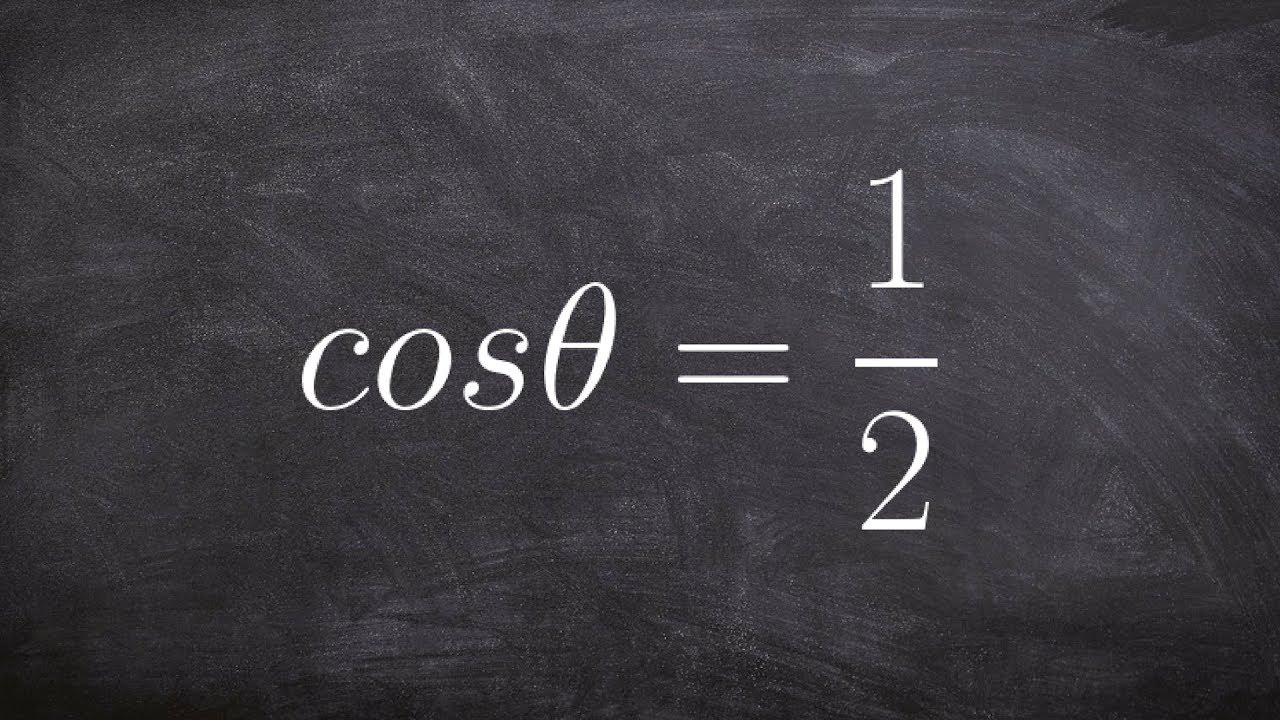
Learn how to evaluate inverse cosine function using the unit circle. When an angle is unknown but the value of the cosine function of the angle is known, we can evaluate the value of the angle using the inverse cosine function of the known cosine function. For instance, if we ...
This video explains what i mean
 low nebula
alright, I'll see, ty
low nebula
nvm, I'm just confused as to what its really asking me to do .-.
upper karma
Can someone send CLEAR INSTRUCTIONS to all the questions on this page, please?
Dm or @ me too
Q4-Q6
Please make the instructions CLEAR/BASIC
Preferably, step by step instructions
upper karma
well
What is getting you stuck? Like what don’t you understand?
@novel ginkgo
Is it just the question itself
Or a step
Or what
?
Well ping me when you’re back
@oak horizon what is the wikipedia article you pulled this from
the link
source
source
@upper karma the page is too far away to read the problems
I have a phone and can zoom in
Want me to take a few snapshots?
acoustic jungle
use similar triangles to prove a theorem
let the point where it is 3/10th away from A be (x1,y1), then find them in terms of the other points by using similar triangles
 next gorge
could someone help in question beta
oak horizon
In Euclidean geometry, a regular polygon is a polygon that is equiangular (all angles are equal in measure) and equilateral (all sides have the same length). Regular polygons may be either convex or star. In the limit, a sequence of regular polygons with an increasing number o...
you might also wanna check this out
https://www.youtube.com/watch?v=1-JAx3nUwms

Get 10% off Squarespace by following this link: http://squarespace.com/simonclark
Check out my new website here! https://www.simonoxfphys.com/
Note that there's a huge amount about pi that I didn't cover in this video due to time - I didn't even mention proofs of it being ir...
also within the context of what I said
I also think I may have found a solution, but I won't be able to mess about with it until later
@novel ginkgo look up linear interpolation
TL;DR: you already have a line, so multiply it's change in x by 3/10, and either apply that as the x to your line equation or function or whatever (what gives the y to your x) and then find the hypotenuse, or just do the same for y and sum the initial values to each
if you wanna think of it in trigonometric + line function terms (ofc the scale isn't right, I did it bigger because it was easier for me)
but otherwise you can think of it as rise over run
linear interpolation is just a generalized way to do what your problem asks
so essentially
( -3 + (3/10)*(11--3), -8 + (3/10)*(4--8) )
 vale nimbus
cant you also do this by setting up 2 equations with the distance formula
oak horizon
distance to what?
vale nimbus
from point A to B then
3/10 from that distance = distance formula from A to P
7/10 from original distance = distance formila from P to B
idk tho
havent written anything out that just came to my mind
(point P is the point you're looking for with P(x,y))
oak horizon
yeah but what you want is the middle point
the distance doesn't really give you a lot to go on
you could then get the unit vector and multiply it by the distance, but that's already more unnecessary steps
and from the middle point you can also get the distance so
 novel ginkgo
Oh ok I know what Lerp is @oak horizon
However I used the distance formula it gave to solve it yesterday
vale nimbus
@oak horizon huh? middle point?
arent you looking for a point 3/10 of the way from A to B on that line
so simply set up 2 equations for the 2 unknowns
oak horizon
I meant point somewhere along the line
or the segment I suppose would be the right word
vale nimbus
but it'd work right?
 keen goblet
Hey im so confused
What does Sinus, cosinus and tangent give you?
do they give you the length of a side on a right angle?
or does it give you the gradient/radius
no idea
pure cape
wdym?
 golden torrent
Sin cos tan is based on a triangle in a circle that has coordinates (1,0) (-1,0) (0,1) (0,-1)
And helps you find the length either adjacent/hypotenuse/opposite line of an angle
Usually its SOH, CAH and TOA
And can only be used for a right angled triangle
Also helps in determining the angle thru sin^-1 cos^-1 and tan^-1
upper karma
If we have a ray from A to B and this ray passes through point C, does this mean that point C must lie on the ray AB?
pure cape
yes, thats basically saying a line connects point A and B and the line also goes through C
tho actually, that does NOT mean C lies between A and B
upper karma
I asked this question a few days ago and didn't get any answers so when I chose my answer earlier in the week I chose "C must lie on ray AB"
It might be that I stated my question incorrectly but idrk
upper karma
Nvm I got it
agile siren
not necessarily @upper karma
upper karma
Oh since that would make the question false
Since c is able to be outside the ray
Thanks lmao
agile siren
the question isnt false though
the line passing through AB is an infinite line, which happens to pass through AB
there might be another point "C" that passes through that line
not necessarily in between A and B
upper karma
Yes but then the question begins asking ab a ray, meaning that now A is the endpoint and B is a point it passes through
agile siren
the difference between AB and $\vec {AB}$ is this
somber coyoteBOT
Hellfire!:
 azure turret
Did I do all the steps right for the first one? Was I supposed to add a 2 next to the c when I took the square root sorry for my bad handwriting
agile siren
that is one hell of a handwriting
azure turret
Lol
Are the steps right though? I don't have add a 2 after the c after I take the square root right?
 vale nimbus
yes
 fathom root
sweet ty
and ik im dumb but i forgot

whats the first step i can do here? I can see on the triangle on the right that i can see the 90 degree nagle
the whole thing has to be 180 yea? so what do i do first
 silent plank
determine angle ADC
upper karma
This is the proof how it looks in correction kley
silent plank
D is ambiguous and why would it be 30
upper karma
This is how I prove it
Do I need to prove something with all that text
or can I just do it simple like I did?
It's proving the sum of the angles of a triangle = 180°
silent plank
you need to provide justifications for which angles are congruent
silent plank
it sorta is
you can't just assert that the size of a certain angle is also y without anything to back it up
upper karma
It's the proof made by Khan Academy @silent plank
Proof of the sum of angles in triangles = 180°
so you're saying khan academy got it wrong
?
silent plank
do you have a link of what they did?
pretty sure they had the proper justifications
upper karma

Khan Academy
Learn the formal proof that shows the measures of interior angles of a triangle sum to 180°.
silent plank
they verbally acknowledged that they're applying properties of parallel lines
and if you're writing a proof on paper, you need to explicitly state that
which looking at the structure is what the proof in the key did
 crisp phoenix
so guys i need help with this question: Andrew hit's a baseball to right field. The ball was 4 ft above the ground when he hit it. Three seconds later, it reaches its maximum height, 148 ft. Write an equation in vertex form for the quadratic function expressing the relationship between the height of the ball and time.
silent plank
where are you stuck?
silent plank
are you familiar with vertex form?
silent plank
does this look familiar:
y = a(x-h)^2 + k
crisp phoenix
yes
silent plank
now, you are told the max height and the time when it happens
i.e your vertex will (3, 148)
crisp phoenix
okay
silent plank
which gets you:
y = a(x-3)^2 + 148
and the use the initial condition to determine a
crisp phoenix
4 right
silent plank
4 for what?
silent plank
yes
crisp phoenix
so its y=4(x-3)^2+148
silent plank
no
crisp phoenix
whats the next step?
silent plank
The ball was 4 ft above the ground when he hit it.
when x=0, y=4
use that to determine the value of a
crisp phoenix
-3?
silent plank
are you guessing?
silent plank
keep going
crisp phoenix
a=-12?
silent plank
show the rest of your work
crisp phoenix
im not sure what to do now
silent plank
this is solving a linear equation with 1 variable
crisp phoenix
ok?
silent plank
something that you should know how to do at your level
making those substitutions, you'll have:
$$4 = a(0-3)^2 + 148$$
and then continue to simplify and solve for $a$ from there
somber coyoteBOT
ramonov:
crisp phoenix
i got a = -16
silent plank
that's better
crisp phoenix
ok so now what
silent plank
now you pretty much have everything, just need to put it all together
silent plank
that's a true statement and is not the model for the relationship
y = a(x-3)^2 + 148
at that point all you needed was a
now that you've found a= -16
you just need to replace a with -16
silent plank
yeh,
crisp phoenix
ty
silent plank
h might be better suited for height
and t for time
(instead of y and x respectively)
crisp phoenix
ok thanks
 velvet minnow
can anyone help me with this?
little osprey
What have you tried
velvet minnow
well i dont understand what they mean by find the value of x and y, im not sure for what we are supposed to find it for
 earnest echo
They are basically asking you to find a point (x,y) such that it divides line segment AB in ratio of 7:3
earnest echo
Ever heard of section formula?
velvet minnow
not sure, but maybe i do i just dont remember rn
velvet minnow
ok
upper karma
i mean, the same as you did for a and b
i'm assuming the lines with the arrows are parallel
 solemn swan
yeah
upper karma
then simply do what you did for a and b, imagine the angle congruent to d next to c and basically apply what you did for b
earnest echo
👍
upper karma
yep
upper karma
So what exactly is being asked
Supplement of 87° knowing Supplementary angles are 180°
That means I need a angle of 93 correct?
Oh so b is the answert

 gritty sail
nice u just helped urself
upper karma
sometimes writing things out is extremely helpful
upper karma
Can someone help me on this? I did it I’m not sure if my equations are right
<@&286206848099549185>
 unborn bison
would just G be an acceptable answer for this? or does it need to be formated in a geometry specific thing?
since the line and plane seem to intersect at G
<@&286206848099549185>
new to this lol

 static gulch
Very confused on where to start
 grizzled cargo
oak citrus
grizzled cargo
oak citrus
<@&286206848099549185>
oak citrus
bruh really?
 junior light
@oak citrus Where are you stuck?
oak citrus
c
junior light
Hmmm, r certainly can't exceed the radius of the sphere itself, so r<sqrt(3). Makes sense?
oak citrus
yes
junior light
Furthermore, I can let it be as small as it wants but have to keep it non-zero. So 0<r. Thus, I guess the constraints on r are 0<r<sqrt(3).
junior light
Yep, makes sense.
Although maybe you could avoid including sqrt(3) as well
Because theoretically, that would reduce the height to 0, the cylinder will reduce to a plane and then Volume will not make any sense at all.
junior light
👍
vale nimbus

upper karma
A rhombus has sides of 1cm.
How do I find the sum of the quadratics of two diagonals?
What do I do now
Pythagorean or trigonometry
silent plank
wdym by sum of the quadratics
junior light
Pythagorean theorem sounds good, given that the diagonals of a rhombus intersect at right angles. (By quadratics, you mean sum of squares of diagonals length)?
silent plank
wtf is a sum of a quadratic of the diagonals
upper karma
junior light
So you're supposed to calculate x^2+y^2?
upper karma
Yes
But they're unknown
So i gotta find the slides
So lets make a triangle out of it
,rccw
somber coyoteBOT
junior light

silent plank
the diagonals of a rhombus are perpendicular
junior light
Do x and y denote the lengths of the entire diagonals, or just half of them?
upper karma
Diagonals
junior light
Then the diagonal lengths are 2x and 2y
junior light
And you're looking for (2x)^2+(2y)^2
So I'd suggest you to use Pythagorean theorem in this triangle
You already know the length of hypotenuse
junior light
You need to find the value of 4(x^2+y^2). Does it make more sense now?
silent plank
you don't actually have to determine the values of x,y
junior light
Huh?
silent plank
where's 2xy coming from?
junior light
This is a rather easy problem, I suggest you not to give up just yet.
The solution's literally a line away.
silent plank
you start with a rhombus with sides 1cm
and diagonals 2x and 2y right?
upper karma
Yes
silent plank
diagonals are also perpendicular and bisect each other,
and will split your rhombus into 4 identical right triangles
applying pythagoras will get you x^2 + y^2 = 1
@upper karma
and to determine the value of (2x)^2 + (2y)^2 = 4(x^2 + y^2),
you just need to perform a simple substitution
 pale cargo
X is the Missing side because Sine gives us Opposite and Hypotenuse
so we can just $4^2 - 1^2$ to get $\sqrt{15}$
idk how to input square root
but it should give x=3.8729
upper karma
\sqrt{}
somber coyoteBOT
Albot1288:
pale cargo
does it have something to do with the $\pi/2<\theta<\pi$?
somber coyoteBOT
Albot1288:
dark sparrow
then yes
dark sparrow
how did you get 14.9° @mighty wharf
 mighty wharf
Sin 70°= y/7 = 5.42
I named the opposite y
Then I did sin x
5.4/21
0.246 then arcsin = 14.9°
mighty wharf
7 * sine 70 = 5.42
dark sparrow
also, double-check that your calculator is in degree mode and not in radian mode.
dark sparrow
i wouldn't round so aggressively if i were you
or even round at all until you have an exact expression for the answer
how many decimal places does the problem ask you?
dark sparrow
does it say "round to the nearest degree"
dark sparrow
okay the answer is definitely not 72°
dark sparrow
are you sure you aren't looking at the wrong answer key
dark sparrow
100%?
mighty wharf
Maybe a mistake there at the textbook
It gives wrong answers sometimes which is very bad.
I'm guessing it subtracted 90° from the final answer.
silent plank
sum of angles around a point
 fluid galleon
What does that mean
silent plank
how many degrees in a revolution
fluid galleon
360
silent plank
and apply that
fluid galleon
Ok
 left zinc
 lament trench
Use the congruency to set up some equations and solve them 🙂
 untold tinsel
Whats the relationship between rotation angle theta and the lenth BC?
' represents new position thanks to rotating AB around A for theta compared to the original position
pale cargo
How would I start this?
 weary dock
so do you know how trig functions work when it comes to the unit circle?
pale cargo
no not really
weary dock
Sin(theta) is the y value, while the x value is cos(theta)
pale cargo
I have it with just triangles lol
weary dock
Because your radius = 1 since it’s a unit circle
And since sin = O/H and your H = 1, sin(theta) is just your y coordinate now!
So for P, what’s sin(theta) equal to
weary dock
quick maf?
pale cargo
like mental math
weary dock
Well anyway, “quick maf” is correct
weary dock
And this works all around the circle, so try using special right triangles (e.g. 30-60-90) to find important values such as sin(pi/6) and stuff
yeah exactly
pale cargo
so would these value also work for the other points?
weary dock
Sorry if I wasn’t clear, I meant that you can use this coordinate thing to find the sin/cos values of other angles
pale cargo
So would this be the basic thing for trig with unit circle because I just drew it and it seems to work
weary dock
Uh okay
So you always start with the terminal side on the positive x axis
And positive theta is measured from there going CCW
weary dock
Ok so
Remember the ASTC (all students take calc = all, sin, tan, cos) thing for which quadrants which functions are positive in
So what’s your question specifically?
Also, just from your guesses, keep in mind that your sin and cos functions are never going to give you anything greater than 1 or less than -1 without transformations
pale cargo
Hey sorry my laptop died
IDK how to get the U by itself to and Pi to it I tried using the inverse but it didn't seem to work
weary dock
Ok so sine and cosine are periodic functions
Their periods are 2pi
Pi radians = 180 degrees
You don’t exactly need to solve for an individual angle
pale cargo
what are periods?
weary dock
The function repeats itself after one period. In this case, it repeats itself every 2pi radians, or one entire circle if that makes any sense
pale cargo
kinda
but how can I use that to get my answer?
alright so I got it but it was weird
on my calculator I did the $sin^{-1}(3/5) and got 0.643501...$ then I added $\pi$ then hit ans into sin and it flashed -0.6 then gave me -0.5646
silent plank
are you familiar with the unit circle?
somber coyoteBOT
Albot1288:
silent plank
applying its properties you can get identities like:
sin(x + pi) = -sin(x)
cos(x + pi) = -cos(x)
tan(x + pi)= tan(x)
pale cargo
in retrospective I might have just hit enter twice
silent plank
this set of questions should be done without the aid of a calculator
you could also apply compound angle identities
 umbral tree
Pardon me but Im not sure
what equations to use. A rectangular room is 1.5 times as long as it is wide, and its perimeter is 40 meters.
(a) Draw a diagram that gives a visual representation of the problem. Let l represent the length and let w represent the width.
 lunar junco
silent plank
lunar junco
silent plank
@umbral tree show what you have so far
umbral tree
I managed to figure it out, but thank you for responding
 red aspen
i am trying to get angles from two lines, but need to smooth them a bit with a program i use that has built in function.
rad2degree = 180 / 3.14159265359 //pi
ang = rad2degree * atan(x - y)
Is there a way to smooth it a bit
 delicate laurel
hey guys, I need an interesting topic for a project in geometry. Something challenging and interesting in geometry, I was thinking of Euclids elements, but too many went for that and I dont know what to go for now
delicate laurel
I was thinking of convex sets
but what should I write about
projections in convex sets?
 upbeat sleet
 acoustic jungle
nothing on the picture makes sense
 junior ivy
 heady lynx
once you learn the stuff in trig, finding out what fun things you can do with it are fun!
 boreal adder
Don’t really know what it’s asking
 umbral snow
"What form displays the maximum value most clearly?"
boreal adder
so it would be A?
upper karma
umbral snow
@boreal adder
Yus
upper karma
Can anyone quickly check through these and help me with the ones that have a question mark
Ik it's a lot so it's alr if no one wants to help
I completed all of em I just need check
 viral estuary
Is anybody here available to answer 1 quick question for me?
How do i put the plane b into a form similar to the planes a
Or how else can i write it
<@&286206848099549185>
heady lynx
I am thoroughly confused by this question.
and the answers.
I can look at "The unit circle"
and see, where roughly that the angles would be
but
hmm...my calculator gives me one of the answers. by doing cos^-1(-.25)
but I'm still missing the other one, and not sure how that circle can help me.
 harsh cloud
if a textbook says sin^-1(x) should I always assume that they mean arcsin(x)?
heady lynx
yes.
harsh cloud
top left and bottom left
heady lynx
bottom left and top left, actually
harsh cloud
oops wrong one
heady lynx
because cos is X/r
heady lynx
@static gulch did you get 300?
nevermind
sorry, it says <270\
240
but I guess you are looking for why
if you look at the quadrants, you can see which quadrants have a COS that matches the cos of 60
(in this case 1/2)
and the quadrant that matches your requirements should be q3
then you can find which angle in that quadrant matches a cos of 1/2
(or -1/2)
static gulch
Ahh ty!
 cobalt birch
I have a question: Find the domain of this function
 hollow raven
The key here are the restrictions
12sin(x) canmot be = 0, nor can cos(x)
sqrt(cos^2(x) + 5) is fine because cos^2(x) absolute minimum value is 0
With all that in mind x can represent anything in the set of all real numbers
 nocturne thicket
hollow raven
nocturne thicket
hollow raven
If you want the lines to be perpendicular the angles must both be = 90
So if u set both equations to 90 you can solve for both a and b
90 = 3a - 27
3a = 90+27
3a/3 = 117/3
a = 39
90 = 2b + 14
2b = 90-14
2b/2 = 76/2
b = 38
nocturne thicket
ohhh i didnt see the perpendicular part
i was like how do you get only one variable xDDD
hollow raven
lol i get ya lol
nocturne thicket
ye i just thought 2(3a-27) + 2(2b+14)=360
hollow raven
Yeah thats a better way to model it cause its always true
 supple onyx
In degrees, supplement of x is 180-x and complement is 90-x
hollow raven
What he said
supple onyx
In radians, respectively pi - x and pi/2 - x
 whole carbon
Hey can someone help me with quantitative reasoning
dark sparrow
@whole carbon can you post the problem you're having trouble with
dark sparrow
wow that is a lot of stuff with subpar formatting
whole carbon
wym
dark sparrow
the document looks like crap is what i mean
anyway ok whatever
what is giving you trouble
dark sparrow
ok then where did those numbers in the venn diagram come from
was it not you who filled them out?
whole carbon
nah my teacher just wants me to do those bottom ones
and we go over it in class lol
dark sparrow
so #16 and #17?