#geometry-and-trigonometry
1 messages · Page 296 of 1
 upper karma
 wraith drum
I have a question:
Let S be a triangle on a co-ordinate grid with vertices (x_1,y_1),(x_2,y_2),(x_3,y_3) , and Q=(x_q,y_q) be a point inside the triangle. Let R=(x_r,y_q) be a point on triangle S such that x_r is maximum, let P=(x_p,y_p) be a point anywhere on the triangle, and let "theta" be the angle PQR, and the length of the line segment PQ be "d", if the function f(x) is defined such that d=f(theta), then what is this function?
 twin prawn
The way this question is phrased seems to suggest that there's an easy formula for the function, but I'm under the impression that might not be the case after drawing a sketch
wraith drum
it's okay
i worked on this for 6-7 hours now
i want to cry
https://www.desmos.com/calculator/bukr2zhy17
that is all i could do
i managed to work out point R
and the black bit at the top is the "d" value for the bit b/w P2 and the purple point
which is point R
that is correct
AA theorem is a valid answer
OMN=RPQ, and MON=PRQ
angles
so they are similar
 silent plank
2 pairs of corresponding angles will be equal
 arctic vortex
how much square feet do you need for a chicken
 dark sparrow
 wat
wat
dark sparrow
so your animal is a chicken?
dark sparrow
how many horses are you building your enclosure for?
arctic vortex
1
dark sparrow
okay, so you need an area of 4500 ft^2
arctic vortex
20250000 ft
upper karma
not really
dark sparrow
no
upper karma
it's not (4500 ft)^2 but 4500 (ft)^2
dark sparrow
i did not say (4500 ft)^2 and even that AREA would not be equal to a DISTANCE of twenty million feet and change.
dark sparrow
no what the fuck
arctic vortex
418.1
arctic vortex
yes
upper karma
it's the radius of the earth
dark sparrow
yes as in "yes i do not understand the difference"?
arctic vortex
no yes i do understand the difference
dark sparrow
anyway, #2 is asking you to sketch three rectangles which don't have the same dimensions but which each have an area of 4500 square feet
and to calculate the perimeter for each one
dark sparrow
the dimensions can be anything you want so long as the area is right
arctic vortex
so i just find stuff like x * y and y* z = 4500
dark sparrow
no. three rectangles, not three lengths.
for example, you could have a 1 ft by 4500 ft enclosure.
arctic vortex
oh
dark sparrow
or a 150 ft by 30 ft enclosure
arctic vortex
so i could do 2 * 2250
dark sparrow
sure
dark sparrow
how nice of you to label me a genius for essentially repeating what the problem states, almost verbatim
dark sparrow
uhhhhhh can you screenshot lmao
dark sparrow
if you really want me to make you check your own work
dark sparrow
then what's the issue
dark sparrow
is the area of this rectangle 4500 square feet?
dark sparrow
yes
arctic vortex
ok
for this one do i just find the perimeter and tell them the one with the least
o yeah i do
dark sparrow
see how you managed to answer your own question with just a little bit of thinking about it
arctic vortex
yay
arctic vortex
is this good
dark sparrow
4500 feet as its area
here we go again, with you seemingly still not understanding that FEET are for LENGTH while SQUARE FEET are for AREA
 meager rapids
Someone check my question above qurax
arctic vortex
i would help you but i dont know the midsegment formula
meager rapids
Ah ok
arctic vortex
isnt the midsegment the average between b and c | a
silent plank
x looks fine
what about your calculations for z
dark sparrow
okay so since when did we require that the dimensions of our enclosure be whole numbers
arctic vortex
i thought that it wasnt allowed
dark sparrow
you thought that what wasn't allowed?
arctic vortex
not having whole numbers
dark sparrow
why?
a square with sides 67.1 ft long will enclose the necessary area (even going a couple of square feet over) but have a perimeter of 268.4 feet, which is less than your 270.
arctic vortex
whats the formula to find it then
dark sparrow
ah here we go again, the "what's the formula" mindset
honestly ive had enough of this lol
arctic vortex
o
upper karma
Develop some intuition, figure out the formula on your own.
Doesn’t help you to learn how to eat if the other person is holding the fork.
Hence, your parents stop feeding you at a certain age.
So get some muscle
arctic vortex
ok i will find the formula
arctic vortex
p = 2x+2(4500/x)
upper karma
Is that a question?
arctic vortex
and to find the smallest perimeter using the area
square feet*
and the square feet is 4500
upper karma
Because if not then the smallest perimeter given the area is a circle
arctic vortex
youtube
arctic vortex
ok
upper karma
So the question is like: ‘find the smallest perimeter given x area’?
And it has to be a rectangle
arctic vortex
yeah
upper karma
Ok well...
If the perimeter you gave is in fact the smallest for the given area, how do you know it’s correct?
Like how can you trust the formula? Did they explain it?
arctic vortex
i watched that video
and i watched another one
and both of them use the same formula
upper karma
Ok, did they explain how it worked?
arctic vortex
no
upper karma
That’s sad
What’s the formula?
I need to know how it works before I am ok using it
arctic vortex
p = 2x+2y then i did y=4500/x then i removed that x then i did p=2x+2(4500x/)
then i did p=2x+900/x
then i did p=-900/x^2
9000*
then i did x^2=4500
arctic vortex
yes
upper karma
And given one side it’s a series of algebraic manipulations to find the other... not too hard then
Do you have a picture of the shape?
Or the question
I’m going to do it and then we compare answers
arctic vortex
ok
upper karma
It gave you the answers, you want to know how it got to them?
arctic vortex
no those are the wrong answers
i think its 67.08
for the size
can u tell me ur answer then we will compare
upper karma
they’re the wrong answers  ?
?
arctic vortex
yea
i put them myself
but they are wrong because i did not acknowledge decimals
so im asking if you could solve it
and then we will compare
upper karma
uhH decimals
perhaps
What are your dimensions?
For the rectangle after you gave decimals
arctic vortex
4500 square feet
and the smallest was 750 * 6
of my examples
but i need to make the smallest
upper karma
don’t think so
arctic vortex
bc i just submitted it lol
upper karma
Well idk m8
arctic vortex
but i think its right
upper karma
I do too
arctic vortex
:D
upper karma
 sorry
sorry
Today I am a dingus
Square root ensures all sides same length... long as they don’t give you a side length it’s good
upper karma
🙂
 hollow tiger
I'm having trouble with this problem:
A right pyramid SABCD (AB = 12) has an inscribed sphere in it with O as its center, and has an altitude of SH. M is the midpoint of AB. The pyramid OHMA has a circumscribed sphere around it, and its radius is equal to the previously mentioned one. Find SA
I feel like I'm so close to figuring it out but I just can't
I can send the geogebra thingy I made for easier presentation: https://www.geogebra.org/3d/evxdqqrj
(I chose an h that would be close enough to what I did with sliders, I didn't actually find it)
I figured out that the OAH angle should be 30° and found the radius
I also have an equation: h^2 = x^2 - 72 (h being the altitude, and x is SA)
I feel like I need to find the ratio of h and x using the angles or something, but I just can't seem to find how
arctic vortex
@upper karma what occupation would knowing quadrilaterals be important
upper karma
In general knowing them will benefit you I guess
 eternal crag
what have you tried?
upper karma
@finite vigil don't ghost ^ 
eternal crag
this is not chegg you lazy cow
 finite vigil
?
upper karma
That's not an honest thing at all
It will affect yourself negatively, mind your actions.
someone was just giving me answers
Damn
upper karma
I'm partly glad thay you decided to try understand instead of blusting it and pass the homework with a hole of knowledge
$s=r\cdot \theta$ where $\theta$ is on radians
@finite vigil
 somber coyoteBOT
Al𝟛dium:
upper karma
Pretty much it
finite vigil
I have no idea
upper karma
On what?
upper karma
@finite vigil you have the radius, you have $\theta$ on angles, all you have to do is put it in radians
somber coyoteBOT
Al𝟛dium:
upper karma
And plug it into the formula above
To put into radians basically, you should blatantly know what 90° is on radians, if not, $90° \cdot \frac{π}{180°}=$your desired $\theta$ on radians
somber coyoteBOT
Al𝟛dium:
upper karma
You don't know what? All good now? @finite vigil
 vale herald
@finite vigil copy and paste the question
finite vigil
ok
upper karma
Don't do it wtf
Are you really gonna post your pictures with no context again and i still don't know what you did on the one before?
finite vigil
no
upper karma
...
vale herald
so its asking for
upper karma
Are you really gonna post your pictures with no context again and i still don't know what you did on the one before?
.
finite vigil
......
finite vigil
I'm sorry..
eternal crag
i don't think they have the correct attitude to accept any help other than be guided through completely
upper karma
@eternal crag so that means you cant help
like how yall gon start helping
and if she doesnt understand
you just give up
what part would attitude be put into that
eternal crag
are you stupid or don't know how to read? al3dium gave a formula, she replied "I don't know", al3dium then ask for clarification on what she doesn't understand, to which she then replied: "idk i'm fucking stupif" and "kms"
what the fuck are we suppose to do?
you tell me
should al3dium try to clear any confusion without knowing what the confusion is?
should al3dium just give the answer?
that doesn't mean i can't help, that means i'm unwilling to, i think the other party is not trying hard enough because she refuse to tell us what she doesn't understand
eternal crag
someone should ask
al3dium did, and he is not going to do it again
i don't know what to tell you
are we suppose to chase people to work hard?
nobody has the time to do so, helpers don't get paid here
either they're going to do some think on their own and show some efforts, or there is no point to continue
 wind imp
i feel like if you do not wish to help, that's perfectly fine! however, i would say that insulting people and vehemently arguing against helping might be more the opposite of helpful and could prove detrimental to the atmosphere, especially if someone else is happy to try and reach out/be understanding
yeah i got mad respect for yall i think it's a really cool thing that you're doing (and people can def be hard to interact with sometimes)
oof that sucks
also i missed a comment and would like to add that if anyone feels bad they could consider helping instead of expecting others to do it for them?
wind imp
uh that was not at you at all, that was in response to the person who kind of started the end of the above conversation which made me realize i wasn't exactly very fair in my first message. now i admit i probably shouldn't have said anything in the first place. so i apologize for making this more messy than it already was
 gloomy slate
How would I solve this problem?
upper karma
@gloomy slate
Ok
Yes just search up a bunch of theorems
And watch YouTube videos
Or use google
Pretty easy
@gloomy slate
gloomy slate
oh nice thanks man
gloomy slate
lol
 fading zinc
hey
if nobody is in the middle of a question
Id like to ask one
Im not quite sure how I calculate the perimeter of this shape
 mossy plinth
How do you simplify,
tan(2t+pi) ?
somber coyoteBOT
Al𝟛dium:
upper karma
@mossy plinth yes.
mossy plinth
Oh, thanks.
upper karma
Np.
wraith drum
@mossy plinth if you want, you could use double angle tangent
fading zinc
what happens if i rotate a shape 180 degrees?
 glacial haven
if you rotate a shape 180 degrees then it’s rotated 180 degrees
glacial haven
not much to say
 finite sky
In this question, it is asking which lines are parallel
but im confused why isnt the 68 equal to 64?
I feel it might be a textbook mistake
cause answers are
DE ll GF ( alternate angles are equal)
DG ll EF ( alternate angles are equal)
:/
silent plank
only DE || GF
finite sky
Maybe textbook has mistake
silent plank
<DGE and <FEG are alternate angles but aren't equal thus DG and EF aren't parallel to each other
hollow tiger
hey um
I'm kinda having trouble with this equation
I feel like I know how to start but I have no idea what to do next 🤔
 cinder portal
let sin(x) = a, cos(x) = b
you might see something familiar
if you don't, ping me
hollow tiger
@cinder portal yeah that's the thing, I did something similar to this and got a simpler(?) equation, but I don't really see what to do next 🤔
now I have this:
2a/b = b^2 * (1 - (a/b)^2) * (9(a/b)^2 + 4 * (a/b) - 3)
 royal edge
upper karma
royal edge
upper karma
What is this
arctic vortex
can anyone help me with some geometry questions??
upper karma
What have you tried
arctic vortex
i dont know how to get the measure of triangles
arctic vortex
i still dont get it
upper karma
Properties of angles and parallels?
arctic vortex
no how to get bdc by parallel lines
silent plank
do you know how to identify stuff like:
alternate angles, (interior/exterior variants)
corresponding angles
vertical angles
upper karma
no how to get bdc by parallel lines
Opposite sides of a parallelogram are always parallel
arctic vortex
yes
upper karma
How are <ABD and <BDC called?
upper karma
Yes
arctic vortex
ok thank god
upper karma
Any properties of alternate angles?
silent plank
do some angle chasing, see what you can determine
upper karma
What does isosceles trapezoid mean?
upper karma
Do you even need our help
upper karma
which g?
arctic vortex
g=125
but its 55 and 7
70
what about this one
i dont understand it with the diagonals and variables
upper karma
Yes
arctic vortex
its 12.25
upper karma
,w 7x-6=3x+43
somber coyoteBOT


Requested by DSpider#6917
arctic vortex
a2+b2?
upper karma
it says solve for x
upper karma
rounded to one decimal place
arctic vortex
i know the diagonals are 12.3
upper karma
Aight then we done
upper karma
That's useless
The problem asks for x
that's the size of AB
it doesn't ask you to solve AB
upper karma
its 12.25
arctic vortex
the answer
silent plank
the "diagonals" aren't ~12.3
silent plank
you equated the two diagonals and solved for x to get a rounded value of 12.3
what do you know about the diagonals of a rhombus?
upper karma
Are you even thinking about those problems or you are immediately posting them?
upper karma
...
silent plank
don't round until the end
upper karma
im immediately posting them then im solving them
@arctic vortex
don't do that
upper karma
use your head
silent plank
rounding prematurely will lead to inaccurate answers
silent plank
using 16.76 is still rounding
arctic vortex
what how
silent plank
round at the end
silent plank
you shouldn't
arctic vortex
rounding at the end?
silent plank
yes
silent plank
specifically the length of a side is sqrt(281)
and you should enter 4*sqrt(281) into your calculator for the perimeter
silent plank
yes
arctic vortex
thats the answer correct
i dont understand this one bc its like the variable one
silent plank
how long have you thought on this problem?
arctic vortex
3 minutes
arctic vortex
ok
4.4 repeating is X
@silent plank i dont know
because its repeating
it could equal 35 or 36
x
silent plank
use fractions and/or don't round until the end
arctic vortex
ok
40/9
8 * 40/9
35.5 repeating
320/9
y = 64.4
repeating
@silent plank
silent plank
and round that to 1dp
silent plank
wdym?
silent plank
8x + y = 100
y = 100 - 8x
silent plank
yes
 charred zephyr
on what
charred zephyr
DE = 72 thus EB = 72
Then u know what to do
DE = 72 thus EB = 72
easy to "prove"
ok
arctic vortex
yes
charred zephyr
did u get the answer
arctic vortex
im solving it rn
 placid night
im sorry, but what the hell is this
am i just being stupid
how am i meant to work out PQ?!!!!
 azure reef
@placid night similar triangles
azure reef
haha i was first
 grave coral
xD
upper karma
upper karma
Seems awesome
meager rapids
Question asks to find ratio of TAN Z. Is it better if I leave it like that or should I further simplify to 3/4
 stone adder
Uhh idk, but I think both are fine
meager rapids
Ok
meager rapids
This look good?
meager rapids
Ok thanks
 wind vector
triangle definition of trigonometric functions got me slow
unit circle was easiest one to remember
but I don't think you should learn unit circle just yet though, since you're just starting out on trig
meager rapids
Yeah that’s why I’m practicing rn ahead of time I struggle with this part
How’s this
meager rapids
Ah ok
silent plank
what was your answer?
meager rapids
27.4
meager rapids
I just used h to represent missing side
silent plank
usually in the context of right triangles, h would be used to represent the hypotenuse
using it to represent something else can only cause confusion
although the question isn't phrased the best way, it seems they want you to find the side indicated by the variable x
meager rapids
I think I see where I went wrong I’ll re do and @ when done
I tried I’m not sure all I know is you use cos
silent plank
only just saw you stuffed your diagram too
relative to the 19° angle,
would x be adjacent or opposite to it?
meager rapids
Adjacent
silent plank
is x touching the 19° angle at all?
meager rapids
It’s not
silent plank
then it would be the opposite side right?
meager rapids
Yeah
silent plank
and then apply the proper trig function to find x
meager rapids
Ok
 versed river
no
meager rapids
To explain this I need help I know it can’t be sin as im given the adjacent side
versed river
so you have an angle, the side adjacent to it, and you want to find the hypotenuse
which trig function relates those 3 things?
meager rapids
Cos
versed river

silent plank
standard process:
location of the two sides relative to the angle you want to use.
which function relates those 3 things
 urban egret
@silent plank your a beast with math man you are goals
silent plank
as mentioned before:
although the question isn't phrased the best way, it seems they want you to find the side indicated by the variable x
NOT the blank unlabelled side
meager rapids
Gotchu
 rich mist
upper karma
rich mist
upper karma
That is vague, but yeah it has to do with that
upper karma
Yeah hold up
Btw the angle at the center has the same measure as its corresponding measure of the arc
Look
Click on it
Now that part is set up.
The visualising part, we will look at this theorem, do you agree that $\angle{CDE}=\frac12 m\angle{CAE}$
somber coyoteBOT
Al𝟛dium:
upper karma
@tropic tide
 tropic tide
O I see
upper karma
Now
Notice that CAE=CB+BAE
@tropic tide will you not answer if i don't tag or what?
Can you be more participative at least...
👻
upper karma
@meager rapids yes
silent plank
show work
meager rapids
silent plank
why are you using cos?
upper karma
HELP anyone ??
silent plank
you've even labelled opp and adj appropriately on the diagram
which trig function relates the angle, the opposite side and the adjacent side?
upper karma
can i ask ??
silent plank
find an open channel
meager rapids
Tan
silent plank
yes
meager rapids
I got 16.1
silent plank
x should be less than 14
silent plank
rounded to 1dp, yes
meager rapids
Aight thanks
 fading bramble
hello, is someone ready to help right now?
@rich mist hope this helps
i see youre supposed to keep it in terms of pi, when you do cos^-1, keep it in exact form then do 2pi- x to get your principle pair
 coral dagger
can someone check my math
I have to simplify the expression: 2(2sin(x)cos(x)) (2cos^2(x)-1)
So first I expanded the 2 into 2Sin(X)Cos(X) and got
8Sin(x)Cos(x)*2Cos^2x-1
From there I used distributive property and got
16Sin(X)Cos^3(X)-8sin(X)Cos(X)
But then apparently the answer is 8sin(x)cos^3(x)-4sin(x)cos(x) (I've used x as the variable for theta). Idk what I did wrong?
coral dagger
8*2=16
like I expanded (8Sin(x)Cos(x)) (2Cos^2 x-1)
So first I got
16Sin(x)Cos^3x
and then expanded into the -1
And got -8Sin(x)Cos(x)
so combining I got
upper karma
i don't get it
how'd you get the first expression
8 sin(x)
how'd you get the 8 in there
upper karma
yes
coral dagger
I expanded the two into sin and cos
upper karma
what does that even mean
coral dagger
so I got
coral dagger
4sin(x)2cos(x)
coral dagger
I did foil
upper karma
$2(2 \sin(x) \cos(x))$
somber coyoteBOT
polynomial:
somber coyoteBOT
polynomial:
coral dagger
why is it not
upper karma
what
coral dagger
4sin(x)2cos(x)
upper karma
$2(5\cdot10) = 2\cdot5\cdot10 = 5\cdot2\cdot10$
somber coyoteBOT
polynomial:
somber coyoteBOT
polynomial:
somber coyoteBOT
polynomial:
upper karma
$a(bc) = abc$
somber coyoteBOT
polynomial:
upper karma
not really? it's just a "math thing"
coral dagger
ok I think that’s where everything went down hill
upper karma
@digital perch which one?
 digital perch
First part
upper karma
cos(27)?
upper karma
Ig you aren't allowed to do it with a calc, and you have to do it with trigonometry, right?
Bc the instructions are unclear from what you cut off
 sleek thistle
upper karma
sleek thistle
upper karma
Yeah
sleek thistle
am i correct here?
upper karma
No ...
digital perch
No it a summer school homework
sleek thistle
mhm
upper karma
Are you familiar with the unit circle?
upper karma
Uhh how are you expected to do this? Bc i may not want me to drive you to a new method you don't know
digital perch
I just wanna know the basics to solving those questions and I will check in with my teacher for further clarification tomorrow
upper karma
Ok
Ig i should introduce you the unit circle
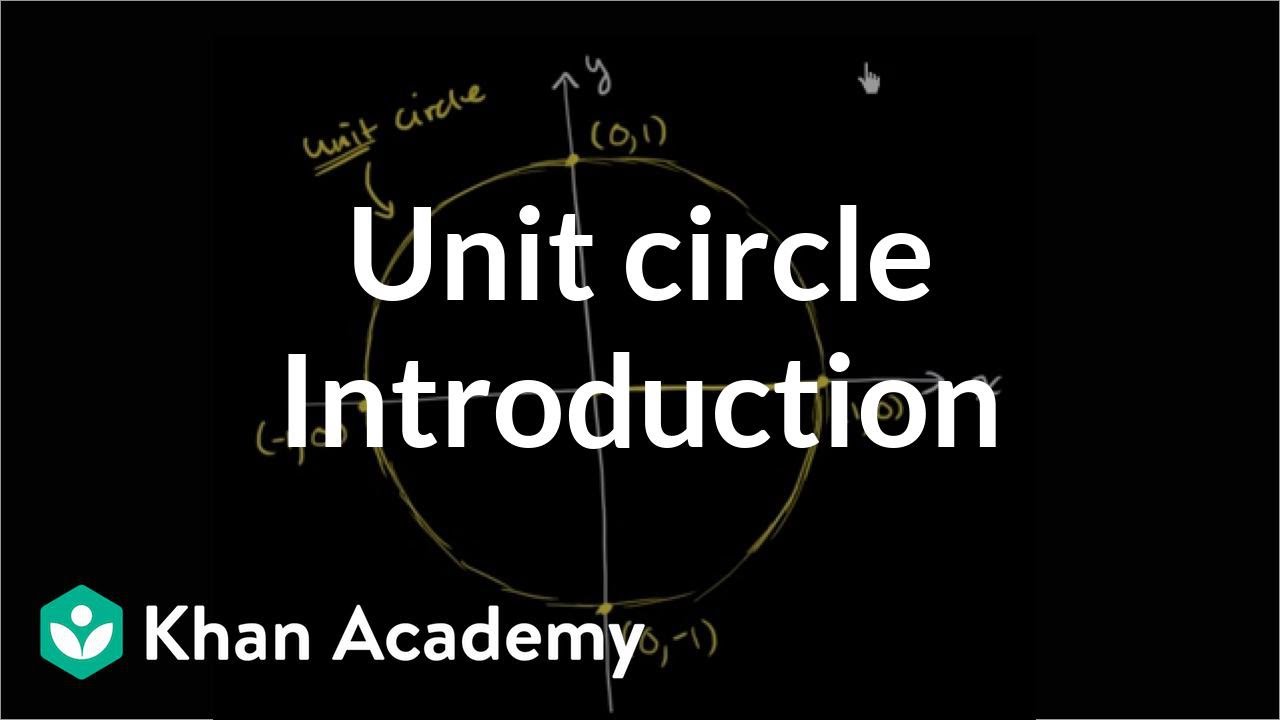
Extending SOH CAH TOA so that we can define trig functions for a broader class of angles
Practice this lesson yourself on KhanAcademy.org right now:
https://www.khanacademy.org/math/trigonometry/unit-circle-trig-func/Trig-unit-circle/e/unit_circle?utm_source=YT&utm_medium=De...
digital perch
K am ready
upper karma
Cool
The coordinates works like this (cos(x)), sin(x))
So you said you wanted the value of sin(60)
Look at the unit circle and find where it says "60°"
upper karma
Now to find the value of sin(60) after you found the 60°, just look at the coordinate
No, π/3 is 60° on radians
We are looking at the coordinates
The coordinates works like this (cos(x)), sin(x))
@upper karma so you should look at the second one as you are looking for the sine not cosine
digital perch
(1/2,square root 3/2)
digital perch
yep
upper karma
The coordinates works like this (cos(x)), sin(x))
@upper karma so which one should we take? ^
1/2 or $\frac{\sqrt{3}}{2}$
digital perch
sin(x)
somber coyoteBOT
Al𝟛dium:
digital perch
square root 3/2
somber coyoteBOT
Al𝟛dium:
upper karma
And you should leave it like that
digital perch
but the question said to solve to the nearest hundredth
upper karma
You didn't tell me that ...
digital perch
digital perch
Lol
upper karma
,calc (sqrt(3))/2
somber coyoteBOT
Result:
0.86602540378444
@digital perch ^
digital perch
yea
upper karma
The case on cos(27) is to get an approximation as it is what is asked, by typing it into the calculator
,calc cos(27)
somber coyoteBOT
Result:
-0.29213880873384
Approximate correctly and you are done
digital perch
ok thanks for you help (man/lady) idk but thanks
digital perch
have a great day bye
meager rapids
I did x=cos ^-1 (4/5)
upper karma
Correct but its not x, its theta. @meager rapids
meager rapids
👍🏼
silent plank
degrees to 1dp, yes.
meager rapids
I did 12/sin18
urban egret
@meager rapids your correct
meager rapids
Is that good?
silent plank
hyp is wrong
meager rapids
Hyp is 18
meager rapids
I meant like triangle would be similar by a shortcut
silent plank
yes. they will be similar
meager rapids
👍🏼
silent plank
the use of "the same" implies congruency, not similarity
so use the proper terminology
meager rapids
The error would be that he would need to multiply 1.5 to both 8.25 and 18 and then divide them?
This person only multiplied it to 8.25 and not 18
Right?
silent plank
no
the error would be with how they setup the ratio
the algebraic manipulation being performed was actually fine
they should be starting with
$\frac{\text{length}}{\text{height}} = \frac{18}{8.25} = \frac{x}{1.5}$
somber coyoteBOT
ramonov:
meager rapids
Ok I gotchu
silent plank
cross multiplication is excessive
you only need to multiply both sides by 1.5
no
$\frac ab \times c \not\equiv \frac ab \times \frac cc$
somber coyoteBOT
ramonov:
meager rapids
I did, I multiplied both sides by 1.5
silent plank
no
you didn't
you multiplied one side by 1
which was what i was trying to point out
meager rapids
Oh wait I think I understand now
silent plank
NO
well i mean technically that is mathematically valid though
but doesn't help you
$\frac{18}{8.25} \times 1.5 = \frac{x}{1.5} \times 1.5 $
somber coyoteBOT
ramonov:
meager rapids
Oh that’s much cleaner
silent plank
$\frac{18 \times 1.5 }{8.25} = \frac{x \times 1.5}{1.5}$
somber coyoteBOT
ramonov:
silent plank
$\frac{18}{8.25} \times 1.5 \neq \frac{18}{8.25} \times \frac{1.5}{1.5}$
somber coyoteBOT
ramonov:
meager rapids
So the answer was right before (2.2) I was just setting it up wrong
silent plank
no
did you understand how to get to:
$\frac{18 \times 1.5 }{8.25} = \frac{x \times 1.5}{1.5}$
somber coyoteBOT
ramonov:
silent plank
should probably use exact values unless specified
meager rapids
Usually it’s rounded just doing some practice to get used to it
silent plank
then its fine
dark sparrow
what's the question here
find the area of the grey region?
is there any more information given?
such as, do we know the big hexagon to be regular?
upper karma
i think it's probably hexagon is regular and semicircles
@upper karma do you know how to find the area of a hexagon
what is it
as opposed to irregular semicircles?
..so what's the area
uh
i am pretty sure that's not the area of it
yeah
yeah..
wait
so you already solved it
what's the problem then
lol
what does that even mean
"trig" is the study of triangles
you just said you broke it up into triangles
so you solved it using trig
lol
yeah no thanks, have fun tho
,w define trigonometry
somber coyoteBOT

Requested by polynomial#4757
somber coyoteBOT
A brief description and guide on how to use me was sent to your DMs! Please use ,list to see a list of all my commands, and ,help cmd to get detailed help on a command!
dark sparrow
aight so do y'all wanna clown around or do y'all wanna actually solve this problem
upper karma
but he said he already solved it
dark sparrow
@upper karma the area of a circular sector with radius $r$ and angle $\theta$ is $\frac12 \theta r^2$ (where $\theta$ of course is measured in radians)
somber coyoteBOT
Ann:
dark sparrow
you can do some trigonometry to write down the area of an equilateral triangle as $\frac12 a^2 \sin(\pi/3)$ where $a$ is the side length
somber coyoteBOT
Ann:
finite sky


How to find alpha
I know alpha is 50.
But i checked answers, and it says
alpha = 50 (co-interior angle, FI ll GH)
but its not co-interior..
cause 120 + 50 = 170
not 180?
help?
finite sky
gamma is 10?
versed river
120+50+gamma=180
finite sky
Yeah but isnt co-interior
just 2 angles?
cause co-interior angles on paralell are adding to 180.
or do both
:/
versed river
if your book used cointerior angles
finite sky
?
versed river
you know red and blue add to 180
finite sky
oh
versed river
so alpha+64+66=180
finite sky
Oh!!
versed river
you got it now?
versed river
nw
royal edge
Is it 240?
upper karma
Yep.
upper karma

royal edge
I believe I’ve gotten (x+3)^2+(y-6)^2=5
silent plank
something looks off
silent plank
specifically how did you get 5?
royal edge
I have to rewrite my work for it to be legible lol
dark sparrow
yes do that
dark sparrow
now that's much better
royal edge
Thanks guys
royal edge
No clue how to do this
upper karma
Right triangle?
royal edge
They didn’t specify
royal edge
Got it
upper karma
Show