#geometry-and-trigonometry
1 messages · Page 260 of 1
 dull remnant
subtract that number from 180
but one of the solutions in an answer was subtracting from the bottom number?
 dusky surge
Always use the positive ratio for reference
dull remnant
im sorry if im really unclear
o
so we are starting with positive ratios first
ok
dusky surge
And then use the table or the picture I gave you to Solve it
dull remnant
ok
dusky surge
That's how we do it :D
dusky surge
Sure
dusky surge
Pick the positive ratio for reference :)
dull remnant
so i got 104.9988703 from arcos(-.2588
then according to the graph
im supposed to add it?
which means it is 284.9988 but thats not in the 3rd
quad
dusky surge
Positive one, which means you put 0.2588 instead of -0.2588 in your calculator
Always pick the positive ratio for reference
dull remnant
so
it doesnt matter what the ratio is
just make it positive
so answer is 255.0011?
dull remnant
ok
so
i think i get it
for quad 3
for cos and sin
u add 180 to it
but if its tan
u subtract from 270?
and for quad 2, u add 90 to the angle for cos and tan but subtract the angle from 180 if its sin
dusky surge
According to that graphy table, there should not be 270 plus or minus something
and for quad 2, u add 90 to the angle for cos and tan but subtract the angle from 180 if its sin
@dull remnant
Nor 90 plus or minus something
dull remnant
ok
lemme try again
for third quadrant, for cosine and tangent, you add 180 to the angle, but if it's tangent you ?
for the second quadrant, for cos and tangent you subtract the angle from 180, but for sin you ?
for the fourth quadrant for sin and tan you subtract the angle from 360, but for cos you ?
i dont know what goes in the ?
dusky surge
Stays the same
q1, no change
Q2, 180-theta
Q3, 180+theta
Q4, 360-theta or just -theta
dull remnant
what
for all of them?
but there is a sign
after the equal sign thats negative for sin and cos in quad 3
dusky surge
That means
The ratio
If the ratio is negative blah blah blah
Sine is positive for Q1,2
Cosine is positive for Q1,4
Tangent is positive for Q1,3
dull remnant
@dusky surge OO
so at the END once u get the angle from 180-theta
then u change the positive or negative sign
depending on the stats
wait thatwouldnt work because if the angle is from 180-270 you cant change the sign right?
dusky surge
wait thatwouldnt work because if the angle is from 180-270 you cant change the sign right?
@dull remnant
Hmmmm..... I don't really get what ya mean, do you have an example
dull remnant
ok
im just confused
on why the 180+theta
applies for everything in q2
because in the graph
it says sin stays positive
but tan and cosine dont?
dull remnant
yea
ok
so lets say
i get a problem
that restricts to q3
ik its 180+theta
for all of them
would that work for all of them?
because in q3 tan seems to be psotive
dusky surge
Yep, you're right, so when you get something like arctan(1) on Q3, we will have to first find the 45° then apply 180°+45° to find the answer
dusky surge
It does something when you are NOT calculating the inverse trigonometric function
It's another big topic XD
dull remnant
ok
sure
alr
to finish the question
if the ratio is positive
u just enter in calc, and then do whatever the quadrant says
what if the ratio is negative?
dusky surge
Find the angle for positive ratio for reference.
dull remnant
i just turn it positive?
dusky surge
Do it in the draft.
dull remnant
wha tdoes that mean
dusky surge
Like for
sinθ=-√2/2 on Q3
Since for arcsin(√2/2)=45°
The answer will be 180°+45°
It means, we do not TURN it into positive, we just use the positive ratio FOR REFERENCE
dull remnant
ok
so for sin theta=-.45 on q3
arcsin(.45)=26.743
so 180+26.742=206.743
so that would be the answer?
 daring venture
The length of a chord is equal to its distance to the center of the circle. A second chord in the same circle is twice as long as the first one. How far is the second chord from the center.
dusky surge
Correct! @dull remnant
daring venture

dull remnant
that sintheta=.45 and sintheta=-.45 are the same?
dusky surge
Nope
dusky surge
One is positive one is negative XD
daring venture
how do u do this The length of a chord is equal to its distance to the center of the circle. A second chord in the same circle is twice as long as the first one. How far is the second chord from the center.
daring venture

dusky surge
The positive one is on Q1,2
The negative one is on Q3,4
@daring venture please use the questions channel :)
daring venture
ok
dull remnant
@dusky surge ok tysm for answering all of the questions
dusky surge
You're welcome!
 pastel zenith
sin(x)=/=x

 cmon now guys
 rich wolf
,w sin(0.01 deg)
 somber coyoteBOT
 Requested by AMD#4434
 vale nimbus
,w sin(0 deg)
somber coyoteBOT
Something went wrong!
An unexpected error occurred while processing your command!
The error has been reported to my dev team and should be fixed soon.
If the error persists, please contact our friendly support team at the support guild!
 somber coyoteBOT
Something went wrong!
An unexpected error occurred while processing your command!
The error has been reported to my dev team and should be fixed soon.
If the error persists, please contact our friendly support team at the support guild!
rich wolf
,w sin(1°)
somber coyoteBOT
Something went wrong!
An unexpected error occurred while processing your command!
The error has been reported to my dev team and should be fixed soon.
If the error persists, please contact our friendly support team at the support guild!
rich wolf
,w sin(1°)
somber coyoteBOT
Something went wrong!
An unexpected error occurred while processing your command!
The error has been reported to my dev team and should be fixed soon.
If the error persists, please contact our friendly support team at the support guild!
rich wolf
,w sin(1)
somber coyoteBOT
Requested by AMD#4434
 raw tiger
Sounds like we got an engineer
 eager kraken
How do I tell what these signs should be if they are plus or minus? Is it just flipped? If cos(x+y), then cosxcosy - sinxsiny ?
 devout harbor
Yes
eager kraken
I think the reason i struggle mostly in math is because there is so many small things like this that my trash teachers failed to teach me
 upper karma
<+ on left corresponds to - on right and vice versa>
eager kraken
aight
 tame ore
 silent plank
what have you tried?
eager kraken
this is an identity
that is cos(x/2)
so why does it can't plug 106 into x?
otherwise i am just not sure where to start solving this one
silent plank
,w (1+cos(106 deg))/2 = cos(106/2 deg)
somber coyoteBOT
 Requested by ramonov#0921
silent plank
Requested by ramonov#0921
silent plank
which specific identity were you trying to apply?
eager kraken
silent plank
whoops forgot the sqrt
,w sqrt((1+cos(106 deg))/2) = cos(106/2 deg)
you should be able to
eager kraken
oi vey
it was right it just didnt want it like that
it's asking for an exact value as a degree and yet the answer was cos53
thanks
 visual mist
anyone help
 dark sparrow
what are you asked for
 versed river
@tame ore f(x) is plotted on the y-axis, so where is the line in the negative part of the y-axis? (f(x)<0 implies that f(x) is negative, right)
dark sparrow
ok so
- why did it take you 45 minutes to answer that
- what's giving you trouble as far as finding angle ABC goes
 hushed bison
i have the coordinates of 1
i have the coordinates of 2
i have the distance x between the 2 coordinates
what's a formula i can use to calculate the coordinates of all 5 points of the star?
rich wolf
@hushed bison construct coordinate axes
Let point 1 be at the origin
Let the x axis go through the right most point
hushed bison
i dont study math, this is for a cs assignment
hushed bison
im looking for a formula
rich wolf
@hushed bison are you fine with polar coordinates
 tropic tide
Trying to find solutions of sin and the like but I got an imaginary number
rich wolf
Why not lol
hushed bison
because i dont study math
i study computer science
i just need a formula so i can write it into my program
somber coyoteBOT
Lσνιηg✧Sσνєяєιgη:
 hollow finch
$\cos^{2}y \neq 1-2\sin^{2}y$
somber coyoteBOT
Lσνιηg✧Sσνєяєιgη:
hushed bison
need a formula that can calculate all 5 vertices with the given information
rich wolf
Do u need exact answers or approximations
hushed bison
exact coordinates
hollow finch
$\implies (\sin{y}-1)(3\sin{y}-2)=0$
somber coyoteBOT
Lσνιηg✧Sσνєяєιgη:
hollow finch
@tropic tide
tropic tide
Oh, I got confused with double angle lol

 supple wedge
somber coyoteBOT
supple wedge
somber coyoteBOT
 Requested by Hmm#2554
dark sparrow
Requested by Hmm#2554
dark sparrow
no substitution is being made here
 jaunty ginkgo
well whatever this process is called
dark sparrow
 viscid ginkgo
I'm having trouble finding the horizontal shift of a cosine graph that's shifted -3pi/8 to the left from 0, ends at 5pi/8 so it's a cycle (or period?) of pi. The horizontal shift is apparently 3pi/4 and idk how
I tried doing 0 <= 2x - 3pi/8 <= pi (and 2pi)
but that's wrong
gets me -3pi/16 <= x <= 5pi/8...
<@&286206848099549185>
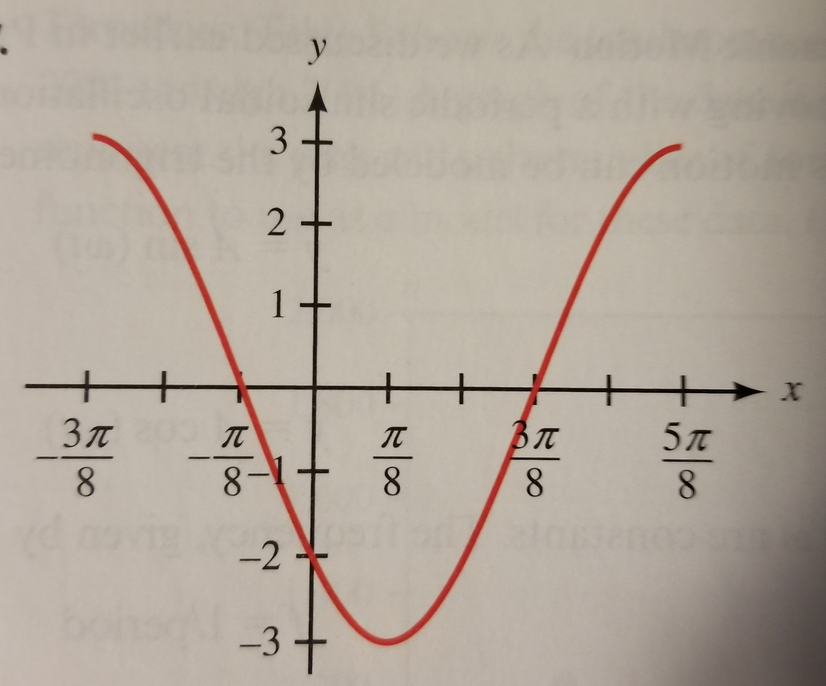
how do you get C when this graph is
-3cos(2x+3pi/4)
devout harbor
C?
viscid ginkgo
3pi/4
it's C right?
-Acos(Bx+C) + d
I believe it is
I'm supposed to get the equation from the graph
devout harbor
hm
one way is, you have 4 known points by looking at the graph, you can make 4 equations and solve for a,b,c,d but this is a long method
upper karma
What do you get from: (cos(20°)/cos(10°)) - cos(10°).
I get -sin(10°)^2
devout harbor
should be -sin(10)^2 / cos(10)
upper karma
Hmm. I did = (cos(10°)^2 - sin(10°)^2)/cos(10°) - cos(10°) = cos(10°) - sin(10°)^2 - cos(10°) = -sin(10°)^2
Is there a link to the bot script so i can illustrate?
devout harbor
you're forgetting about the denominator of sin(10)^2
viscid ginkgo
damn no one can help me with my problem I've been stuck on for 1 hour
upper karma
Ok. I got it. It's -sin(10°)tan(10°)
viscid ginkgo
Pretty confusing graph for 31 not sure where you find amplitude at
Or vertical shift
I know it's -3-3sin2x but it's a weird graph ends in a weird way
I see it intercepts at -3
can't tell if that's vertical shift or amplitude
and apparently 33 has a vertical shift of 3 now that's not intuitive
vale nimbus
amplitude is 3 since the graph is shifted down 3 units (so the line "about" which the values of y fluctuate is -3)
graph touches the x-axis at its peak aka goes up 3 at most
shifted down because theres a -3 outside of the sin() stuff
isnt vertical shift the moved down part or am i dumb
vale nimbus
@viscid ginkgo can you wait 10min? ill try explaining it better when im on pc
viscid ginkgo
ok
upper karma
One message removed from a suspended account.
One message removed from a suspended account.
One message removed from a suspended account.
One message removed from a suspended account.
One message removed from a suspended account.
One message removed from a suspended account.
One message removed from a suspended account.
One message removed from a suspended account.
One message removed from a suspended account.
One message removed from a suspended account.
One message removed from a suspended account.
viscid ginkgo
yeah but I'm getting the equation from the graph idk if I'm misinterpreting
upper karma
One message removed from a suspended account.
viscid ginkgo
I just didn't know where the amplitude is found
and where you find the vertical shift
since they're both the same number
upper karma
One message removed from a suspended account.
upper karma
One message removed from a suspended account.
upper karma
One message removed from a suspended account.
viscid ginkgo
and vertical shift lol
upper karma
One message removed from a suspended account.
viscid ginkgo
chapter is "Get equation from the graph"
upper karma
One message removed from a suspended account.
viscid ginkgo
so I'm looking at the graph and finding the properties of the graph
well I have the answer from the back of the book
but I want to find it out myself
upper karma
One message removed from a suspended account.
One message removed from a suspended account.
viscid ginkgo
that's B you get it from the cycle = 2pi/B
so pi = 2pi/B but
it's actually 3-3sin2x - pi/2
upper karma
One message removed from a suspended account.
upper karma
One message removed from a suspended account.
viscid ginkgo
yeah I still don't know hwo to find amplitude and vertical shift from that graph
spent like an hour on it
upper karma
One message removed from a suspended account.
viscid ginkgo
yeah
upper karma
One message removed from a suspended account.
One message removed from a suspended account.
One message removed from a suspended account.
One message removed from a suspended account.
One message removed from a suspended account.
One message removed from a suspended account.
One message removed from a suspended account.
One message removed from a suspended account.
upper karma
One message removed from a suspended account.
One message removed from a suspended account.
viscid ginkgo
like the wave goes half way
upper karma
One message removed from a suspended account.
viscid ginkgo
idk about amplitude though
upper karma
One message removed from a suspended account.
viscid ginkgo
well like the wave goes from -3 to 3 for example
upper karma
One message removed from a suspended account.
viscid ginkgo
yeah
upper karma
One message removed from a suspended account.
One message removed from a suspended account.
One message removed from a suspended account.
One message removed from a suspended account.
One message removed from a suspended account.
One message removed from a suspended account.
upper karma
One message removed from a suspended account.
One message removed from a suspended account.
viscid ginkgo
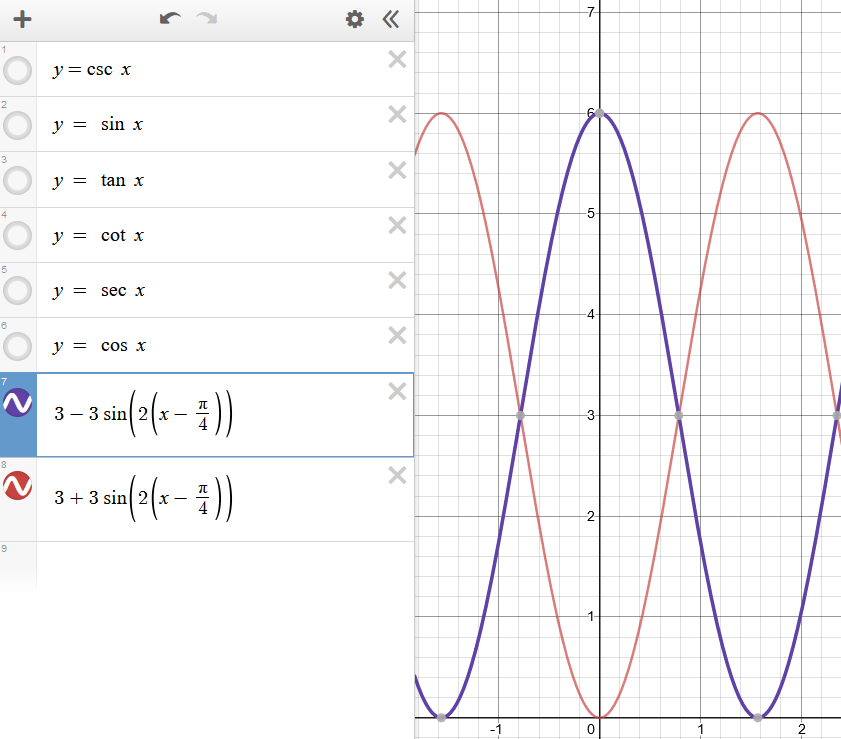
and I think the graphi is reflected about the x-axis whatever that means exactly
upper karma
One message removed from a suspended account.
viscid ginkgo
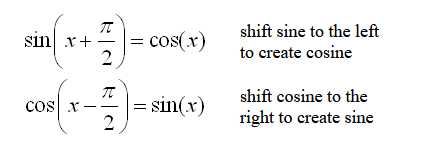
I think I read that sin equals cos when it's negative or someshit like that
lool
 upper karma
One message removed from a suspended account.
One message removed from a suspended account.
upper karma
One message removed from a suspended account.
One message removed from a suspended account.
 upper karma
One message removed from a suspended account.
viscid ginkgo
well it's upside down
upper karma
One message removed from a suspended account.
viscid ginkgo
you see it points upwards when negative amplitude
and starts from the bottom when positive amplitude
"baseline" sine I guess that's how I'm gonna think about it
upper karma
One message removed from a suspended account.
One message removed from a suspended account.
One message removed from a suspended account.
One message removed from a suspended account.
One message removed from a suspended account.
One message removed from a suspended account.
viscid ginkgo
yeah, thank you
 scenic scroll
rich wolf
scenic scroll
rich wolf
@scenic scroll if EAF is 45° what does that tell you about the two angles around it
If the whole angle of that rectangle is 90°
upper karma
Maybe you can use letters instead of numerical values?
upper karma
@scenic scroll think about the angle that you are given, and look that there are two equal triangles
And that they are inside a 90° corner
 bitter jetty
Can someone help me with this?
bitter jetty
no
vale nimbus
isoceles is what again? (not native  )
)
bitter jetty
ok
vale nimbus
and yeah drawing is a must
vale nimbus
wtf do you mean "tf"
bitter jetty
@vale nimbus its a triangle with 2 sides of the same length
upper karma
@bitter jetty have you drawn it
bitter jetty
im tryin
upper karma
I was helping lol
vale nimbus
wdym?
vale nimbus
bro i asked what an isoceles triangle is 😭 ur tripping
vale nimbus
no worries :p
upper karma
If O is the center of the circle and M is a point then the circle equation will be MO = ... right?
bitter jetty
i cant seem to draw it
upper karma
MO = ...?
vale nimbus
i'd just draw the triangle and then draw a circle around it
bitter jetty
how do i
upper karma
Like
bitter jetty
it only gave me endpoints for the inscribed traingle
upper karma
Yes
vale nimbus
they pretty much gave you the lenght for the hypotheneus
upper karma
MO = the rayon of the circle
upper karma
Have you drawn the axis
bitter jetty
no
upper karma
@vale nimbus dudeee
bitter jetty
how do I
vale nimbus
i just gave him a hint?
bitter jetty
o
upper karma
Uggh
vale nimbus
ima just go back to anime man ur 
bitter jetty
o ya i have that
upper karma
Okay sorry its rotated lol
bitter jetty
im drawing it on there rn
upper karma
Have you drawn the line of the hypothenuse
bitter jetty
yes
vale nimbus
P(4,4)
bitter jetty
the radius is root(32)
upper karma
Okay I just saw what a circle equation looks like
It tells us that the hypothenuse ...
vale nimbus
no it isnt
bitter jetty
im confused
bitter jetty
wth is MO=r
upper karma
So (x, y) , what does x mean in a parenthesis like these
We want that all the points of the circle has the same distance with the center
bitter jetty
how much u move on the x axis
bitter jetty
@upper karma ik that
vale nimbus
@upper karma just let al3dium explain he's doing a good job
vale nimbus

upper karma
I would gave a better explanation in French...
vale nimbus
je m'excuse 
upper karma
So if you know that its moving 4 to the right and 4 up
bitter jetty
so from the origin to (4,4) that's the radius right
vale nimbus
is it?
bitter jetty
so the length of the hypotenuse is sqroot(32)
upper karma
The radius its 4
I wanted him to say length and then get some coordinate geometry things
vale nimbus
no it isnt is it?
upper karma
But ig its same
vale nimbus
cuz they didnt say the center of the circle is the origin
bitter jetty
so how do u get the length of the radius
vale nimbus
@upper karma can i say how i'd do this?
upper karma
Yes
@bitter jetty it is the length
Of the radius
Do you know the distance formula
Wth is the hypotenuse of an isocele triangle?
bitter jetty
so sqr root 32
upper karma
That's why i wanted this
vale nimbus
draw a line from the origin to P(4,4)
draw a line from the origin to Q(0,4)
draw a line from Q(0,4) to S(4,4)
now u have ur triangle
construct a circle around the triangle
measure how long the radius is
or calculate the radius if it isnt easily measurable
upper karma
@bitter jetty yeah
vale nimbus
u could also make Q have cords (4,0) and do the same thing
upper karma
I dont know what piece is doing lol
upper karma
Oh the triangle is also right
vale nimbus
isoceles in a circle
how exactly are any of these sides the radius?
its not given that the center of the circle is on the hypotheneus either
vale nimbus
yes
upper karma
Lol
vale nimbus
XDD
the triangle aint right is it??
im being trolled heavy as fuck
@upper karma who knows maybe it looks like this even?
the sqrt(32) thing is the lenght of the hypotheneus
which can never be the radius of the circle since both ends of it have to touch the circle
at most it'd be the diameter
upper karma
Actually the triangle is right
upper karma
Yes
upper karma
Yes
vale nimbus
yes
 vale nimbus
pretty sure u can solve with area of a triangle in function of sin or whatever
upper karma
@upper karma okay
Did you saw my post?
I tried to set litteral values then solve an equation
Yes I saw it
I feel so dumb
upper karma
I didn't
 acoustic jungle
oh.
upper karma
I tried to solve an equation but that don't work
vale nimbus
it seems so tedious to solve wtf
acoustic jungle
if there is no big brain way to solve it and requires 10 different equations then it is not a very good question
vale nimbus
also @upper karma my bad i was wrong the radius is 4
acoustic jungle
maybe there is a less tedious way to solve it
vale nimbus
well not really tedious just
i cant actually draw the problem down on my paper properly
so thats tedious xd
upper karma
Geometry sucks
acoustic jungle
geometry is intuitive though
upper karma
Okay so
First
Calculate the third side of the violet triangle
@bitter jetty yeah, get the AC
bitter jetty
ok
upper karma
What you got
bitter jetty
1.89
upper karma
Okay so
bitter jetty
?
upper karma
Hmm
Okay, so draw a perpendicular line from C
(I haven't tried this so, i might be wrong)
bitter jetty
ok?
upper karma
Have you drawn it
bitter jetty
yes
upper karma
Okay so draw this, continue from C a line until the end of the violet triangle, so you get rectangular triangle
bitter jetty
u mean a triangle inside a recatngle
upper karma
Sorry, from C, draw a line to the right
upper karma
And stop when it gets to the perpendicular of the vortex of the violet triangle
bitter jetty
i have be and af
bitter jetty
no sry
upper karma
Idc if its horribly drawn
bitter jetty
im on computer
upper karma
Oh
bitter jetty
i dont have a phone
wait let me see
di u get the idea
sry lines arent straight
bitter jetty
idk
upper karma
Look at AF
bitter jetty
its 3.04 - cb
bitter jetty
= ba
bitter jetty
that doesnt rly help tho...
bitter jetty
yes kinda
upper karma
See how it helped
vale nimbus
@upper karma did u check my solution
upper karma
No xD
vale nimbus
then why'd you wanna see it dafuq
upper karma
Im dealing with this first
bitter jetty
its not a system
upper karma
@vale nimbus bc i thought i wouldnt be able to do it first lol
@bitter jetty why not
upper karma
What
Nonl
Sorry
Try doing pythagorian theorem
Idk if its written like that lol
With both triangles
With ABC and CEF
bitter jetty
hold on let me try using law of cosines
upper karma
Oh
bitter jetty
sins*
bitter jetty
ok so for ba i got 1.48 and for bc i got 1.18
does that seem righ
ok i think it is
this one is confusing
ive been working on it for like over 30 min
vale nimbus
@bitter jetty how are you going to use law of sin when only 1 angle is given?
upper karma
@vale nimbus idk what that is so
vale nimbus
a/sin(A) = b/sin(B) = c/sin(C)
bitter jetty
i used it to find the angles for acf and then i did it for abc
upper karma
@bitter jetty dang this one is weird af
upper karma
Oh got it
bitter jetty
so like de = ab/2
bitter jetty
k
i got it
this is my last q
the volume should be directly proportional to the side length right
but when i calculate it it oesnt add up
bitter jetty
?
acoustic jungle
it would be ^3 porportional
bitter jetty
rly
acoustic jungle
for example try similar triangles with area
acoustic jungle
lets say area of 1 triangle is 3 and the ratio between the lengths are 5
the other triangle would not have an area of 5
but rather 25
try the question and let x be the ratio
so $2x4.5x4x$
somber coyoteBOT
Fishraider:
acoustic jungle
then it should be pretty nice from there
bitter jetty
i dont think so
i think its supposed to be a clean number
i got it tho
@acoustic jungle thx
acoustic jungle
@bitter jetty did you remember to cube the x
viscid ginkgo
In order for sin^-1 (sin x) = x, x must be a value between () and ()
I don't really even get the question, I mean sin^-1 and sin x?
I really don't know maybe -pi/2 to pi/2
devout harbor
Yes that is correct
devout harbor
 viscid ginkgo
oh
devout harbor
It's arcsin(sinx)
 idle bloom
Sin has a range from -1 to 1
I think you meant to say you thought arcsin(x) had a range of 2pi
which it doesn't because it then wouldn't be a function
 slow tinsel
versed river
slow tinsel
versed river
try drawing a right triangle with PQ as its hypotenuse
then label its sides in terms of the length of ab
 ancient jacinth
ping me!
rich wolf
@ancient jacinth i want you to draw a picture of the complete circle
ancient jacinth
i just did.
rich wolf
send a pic
rich wolf
rich wolf
you know what to do?
rich wolf
intersecting chords theorem?
rich wolf
yeah lol
ancient jacinth
tysm
@rich wolf cani ping you, i feel like i will have more problems in about 15 mins lol
rich wolf
sure


 rich wolf
what is the formula for the area of a parallelogram
 solid topaz
hey guys pretty new here and i have an assignment due tonight and was wondering if anyone would spare some time to help? if not its cool, im just having a tough time with this
rich wolf
@solid topaz just ask
solid topaz
its more so algebra 2 w/trig
 crisp patio
#3
the angle is 60 degrees and i need to find the angle measure of z
wait is alright if i ask question shere instead of the question channel
rich wolf
@crisp patio find the other two anglws of that triangle
crisp patio
oh i got it figured out, thanks for helping though
amd as in advanced micro devices?
 fading stump
Hello peeps! 😉
I’m new to the server
May someone explain how I evaluate a logarithm of -> log (base of 10) 5
Thank you 🙂
versed river
generally you don't, you just leave it as log 5 because its irrational. sometimes it may be appropriate to use a calculator, or use some technique to estimate the value of the logarithm, but otherwise, theres no real way to evaluate it that im aware of.
 worthy oxide
upper karma
worthy oxide
upper karma
@worthy oxide the hint is really the answer here
worthy oxide
Ok
upper karma
Is this the answer?
The inner term has 2 raised to power of 1/2 raised to the power i
@Cliff#0001
@Cliff#0001
Cliff you son of a beach
versed river
@worthy oxide
dark sparrow
they left
visual mist
anyone help?
silent plank
what are you allowed to use?
assuming you can't simply state circle theorem(s), apply properties of isosceles triangles
silent plank
||radii||
visual mist
but still they intersect at different places
silent plank
what intersects at different places?
visual mist
the radiis
silent plank
the construction of the red dotted line OC creates 2 isosceles triangles:
triangle AOC and triangle BOC right?
visual mist
oh yeah i thought u were talking about the other ones
silent plank
can you continue from there?
visual mist
let me try
visual mist
okay
 leaden belfry
Not sure if this is the right place to ask, but does anyone know if there's software that can determine the length of lines in an image, if provided with known reference points?
https://puu.sh/FrGkE/e36311a1a2.png

This is an example of something I did manually and it's something that is quite time consuming in my job, so I'm looking for a way to automate it (in the image given I knew the total height/width/length of the table and used that to roughly calculate pixel:cm ratio)
 visual mist
i couldn't work it outtt
 surreal bolt
30 is the right answer
assuming it's a right triangle
oh duh it is.
cosine is a nice thought, but that's adjacent over hypotenuse. Sometimes at the beginning students have trouble deciding if a leg (cause adjacent is NEVER the hypotenuse) is opposite or adjacent.
Its adjacent if the leg and the hypotenuse form the angle.
if the leg in question does not form the angle (as it is in this problem) then it's opposite. (note that for ONE angle the opposite is the adjacent for the OTHER angle. Some identities later rely on this fact.)
yup np
yes.
your friend would be right. about X and the angle in the cosine would be 60 degrees.
silent plank
@visual mist
tri BOC is isosceles. determine angle OBC
then determine angle BOC
tri AOC is also isosceles. determine angle OAC
then angle AOC
what's the relation between angleBOC, angleAOC and the angleAOB?
visual mist
well OBC would be x+y? and BOC would be 180-2(x+y)
OAC would be x and OCA would also be x and AOC is 180-2x
silent plank
yep. just need that last part now
visual mist
the relation.. let me see
they r all the same
wait no
r they? im not sure abt their relation
silent plank
try not to overthink it. mark them on your diagram and it should be quite clear
silent plank
you've got quite a bit of notation issues
but how did you get 59.0° for your theta'?
 summer spire
@leaden belfry some computer vision library maybe? I don't know of any super reliable way myself, but I'm sure something exists
silent plank
mixing $\theta'$ and $\theta_2$ notation is not recommended. \
the equation: $\theta' = \text{TOA}$ \ doesn't make sense
and for some reason that $\theta_2$ became $\theta^2$ in your work.
somber coyoteBOT
ramonov:
silent plank
no it doesn't
upper karma
Its just to differentiate it from the other abgle
silent plank
depending on the context its ambiguous
upper karma
Like i didnt actually square it it just means second angle
silent plank
and may be interpreted as $\theta \cdot \theta$
somber coyoteBOT
ramonov:
silent plank
which is an issue
silent plank
if you want to use the same variable
you should be consistent
and use subscripts for both
upper karma
But what did i do wrong in my calculations
silent plank
i.e. $\theta_1$ and $\theta_2$
somber coyoteBOT
ramonov:
somber coyoteBOT
ramonov:
silent plank
that looks alright and is completely different from what you wrote down
upper karma
Yep must have done something wierd with my calculator before
What about my second calc
silent plank
same process, calculate it again.
silent plank
um what's that "x" doing there?
upper karma
I have no idea
rich wolf
dude it's not multiplication when you take a trig function of something
silent plank
how are you getting that?
upper karma
Very very confused
silent plank
what exactly are you entering into your calculator?
rich wolf
dude don't use android calculator it kind of sucks. you're probably not doing order of operations right either
silent plank
because the value you initially got for theta_2 was actually ok
upper karma
That’s some bad luck 👎
visual mist
sorry i went to shower c=a+b
silent plank
nfi how you got ~70 in the previous image
upper karma
He just had some bad luck that’s all
silent plank
sorry i went to shower c=a+b
@visual mist
yes. now apply that to what you have in your original question
upper karma
Idk im using my phone calculator its confusing compared to a normal one
visual mist
okya
upper karma
So 31 and 58 are the correct angles
Ya but what did you insert in ur calculatorrrr
Bro idek
Ok
silent plank
not 58
silent plank
no! its not
silent plank
,calc 31 + 58
somber coyoteBOT
Result:
89
its not either of those
visual mist
?
silent plank
read carefully
silent plank
,rotate
upper karma
Umm 31 plus 58 plus 90 is 180 right? Yeah it had a few decimals but teach said round it
somber coyoteBOT
silent plank
round consistently
upper karma
Ah yes
Soz
Running on no sleep equal big stupid
Thank u for all the help aha
Yes
silent plank
@visual mist not applying it properly
upper karma
Thank you too
silent plank
identify your smaller angles
visual mist
ok
silent plank
,rotate
somber coyoteBOT
silent plank
looks alright now
upper karma
im not sure what to multiply
 quaint sinew
the only two numbers in the question
upper karma
ah gotchu thanks
silent plank
AHKW is a cyclic quadrilateral
 strong pilot
so everything has to add up to 360?
silent plank
if by everything you mean internal angles, that would apply to all quadrilaterals
do you know any properties that are specific to quadrilaterals that are also cyclic
strong pilot
each pair of opposite angles = 180?
silent plank
um can you write a better description
strong pilot
for example: m<H + m<W = 180
silent plank
ok that's a bit better.
strong pilot
because they are opposite angles
silent plank
opposite angles add up to 180°
NOT each pair IS 180
anyway, consider applying that here.
strong pilot
alrighty ill try--how would i get the measure of the external angles with that though?
do i divided 180 by 5 to get H?
silent plank
you shouldn't need to apply external angles here
a quadrilateral has 2 pairs of opposite angles
m<H + m<W = 180
(is one of the equations you can get)
what is the other?
strong pilot
m<a + m<k = 180?
strong pilot
so should i add 8 (m<A) and 10 (m<K) and then subtract that value from 180?
silent plank
no.
i can't be bothered writing the degrees.
m<A = 8m right?
(i'm expecting quick yes/no responses for these)
strong pilot
mhm
silent plank
what's mhm?
strong pilot
yea, m<A does = 8m
silent plank
and m<K = 10m right?
strong pilot
yes
silent plank
can you make those substitutions into the equation:
m<a + m<k = 180
you wrote earlier?
strong pilot
8 + 10 = 180
silent plank
where the the ms go
m<A is 8m NOT 8
m<K is 10m NOT 10
8 + 10 = 180 is clearly a false statement
strong pilot
my bad hecc
dark sparrow
but ramonov don't you see that the lefthand side has a 1, and 8 and a 0 and so does the right and so they must be equal /j
strong pilot
1?