#geometry-and-trigonometry
1 messages · Page 227 of 1
 spark stag
if you just want to visualize "the circle", then the visualization at 11:38 is much better.
but changing height is done to capture changes in theta
so that when they rotate the thing to make it look like a sine/cosine graph
the height now serves as the theta axis
(also lmao, does that video use sonic music at 12:30)
 upper karma
@onyx sigil So... at http://demonstrations.wolfram.com/SineAndCosineIn3D/, does the cuboid represent an actual object in real life?
spark stag
sure
electromagnetic radiation
e.g. light, radio waves, etc
but for the most part, that's just a tool to visualize sine/cosine graphs
and how a change in an angle's value corresponds to the change of the value of sine/cosine on a graph
upper karma
I just need to know... the unit circle is supposed to be visualized as a flat circle on a table or a flat circle in the air being held up?
upper karma
on a table
spark stag
sure
on a plane
that plane can be a circle, or anything else flat
again, the point of the 3d visualization was a (convoluted) way to demonstrate
how the "cosine is the x value, sine is the y value" intuition
translates to the graph of cosine/sine
they graph the "distance around a circle", roughly speaking
[which is why they're periodic with period 2pi]
you don't need to worry about that specific visualization
as long as you understand how sine/cosine graphs are generated
upper karma
I don't understand anything about trigonometry, even from the basic triangle; sure, I know how to do formulas and whatnot but I want to be able to visualize why I'm doing it. What does it all mean. I'm simply memorizing things my teacher tells me. No explanations were given as to what this all means.
 small raptor
Have you been shown the unit circle?
A lot of the Trig concepts from from the unit circle
upper karma
Yes, but I have no idea why we use the unit circle. How does the unit circle help with measuring triangles? Is it just to measure the angles?
small raptor
Think less about it as a tool, and more of about it as a concept. Within angles, one of the measures are degrees of rotation. When you hit 360, you have come to a literal full circle. So, yes, the unit circle is what allows you to identify the angles, but this is where sin, cos, and tan gets their identities/properties.
the points of a triangle can also be seen as points on the unit circle, this allowing you to identify angle, and even a unit length of the sides.
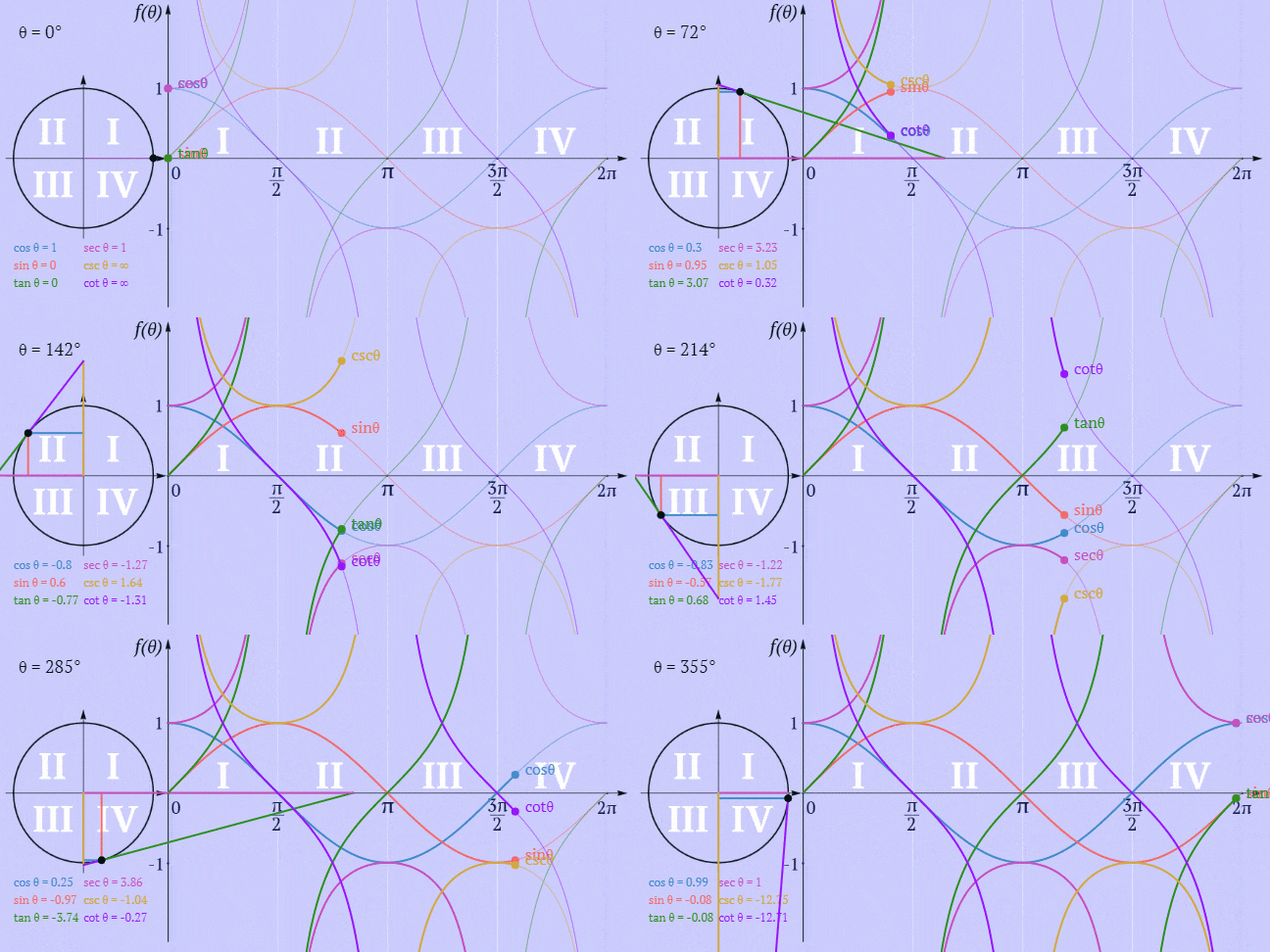
https://www.mathwarehouse.com/trigonometry/sin-cos-tan-all-graph/animated-gif/all-trig-graphs-gif_orig_large_optimized.gif - you can actually see the triangles form as the point rotates around the circle
 upper karma
So the unit circle can be used to measure real life objects and for things as small as radio waves or whatever?
small raptor
Technically, yes. Every time you use a trig function, you are utilizing the conceptual property of the unit circle
upper karma
my brain has never seen such math
 molten oracle
Sup guys, need some help figuring out the best calculations to use...
The situation is quite complex, with multiple objects receiving usage of the desired solution for themselves and multiple component parts per frame, in a computer simulation.
Simplified... Take a sphere, apply an arbitrary force to it, in the form of a vector. The force data contains only the magnitude, direction, and point of contact. The sphere itself possesses a mass, and in this case we are not computing those calculations. The centre of mass is done, we just need to find the calculation that can process the force, coming from any arbitrary direction, into its tangential component, and its non-tangential component, enabling the force to be split into the translational component and rotational component.
Short and sweet... A force hits the sphere at a contact point which is 45 degrees off the tangential plane, how do i split it into the tangential and non tangential parts?
@me if anyone responds :)
 sly marlin
@molten oracle
The net force gives the direction of the translational component.
The torque the force exerts wrt to the centre of mass gives the rotational component
molten oracle
Im programming an arcade simulation, i specifically need to calculate that tangential force.
@sly marlin
sly marlin
So, you need to calculate the tangential force for reasons other than calculating the rotational component?
molten oracle
It is for doing that...
But not in this way. It is to do with a force accumlator setup in a physics system, if i can seperate the force into tangential and non tangential components at the point they are read from the accumulator, it makes the total accumulations much easier.
If i could find an easy way to simply seperate the vector into the component parrallel to the radius vector between the centre of gravity and the contact point that would work too, and the remainder, that would work too.
@sly marlin (Ill @you when i reply, let me know if that is annoying tho :) )
(Also, im happy to put together the equations and stuff, what im after is the technique usually used - this must be a common problem.)
sly marlin
That's okay since I'll notice it
I jump around a lot in this server
So, you are given a sphere
And you have the position the force acts on the sphere
sly marlin
and the radius vector is just the vector from the position of the force to the centre of the sphere
molten oracle
Yes
sly marlin
then afterwards, all you need to do is some dot products
Let R be the unit radius vector and F be the force
molten oracle
slow down a sec...
sly marlin
Then the component parallel to the radius is (F dot R)R
sly marlin
The tangential component would be F-(F dot R)R
molten oracle
Oh, i see
my apologies for jumping ahead hehe
So, F is a vector and R is a scalar?
molten oracle
Ah, i see, the radius vector
sly marlin
if you can't get a unit vector easily, then (F dot R)R/(R dot R) would do
as well as F-(F dot R)R/(R dot R)
molten oracle
Ok, why specifically must it be a unit vector?
molten oracle
but if it is, you can simplify out some of the variables?
molten oracle
Ok, thats wonderfully helpful, thankyou :)
Would you like to hear what its for?
Im designing a space game, an mmo, which will be running an entity component system simulation on the server, and copying its data using monobehaviours on the clients, but, the game has a very cool feature, already put together, which is a ship editor. Part of what it does is balance the ship, offsetting the position of the origin to make an object whose balance is as perfect as possible given the shape. The intention therefore is to make a physics system which can be constrained through methods understandable to the layman, thereby allowing ship design to be tuned through planning how you think the parts will affect the ship's handling. During the balancing, it results in an object which can be treated like a sphere, with its simplified arcade physics causing it to act even more like a sphere. So, when a contact force is received at any point on the object, it will then be split, as mentioned here, and then accumulated to two seperate accumulators for translation and rotation, then as they are added they become two single forces. Those final forces are what gets applied to the object. It means i can divorce management of the force sources from the force management and application... Anything can add a force to the accumulator, and easily so.
I could have solved the problem with trig... But i didnt see that solution as being efficient. And... failing on research :)
Thanks @sly marlin
sly marlin
cool okay
molten oracle
Is there any particular reason its written with the scalar variable after? F-(F.R)R instead of F-R(F.R)?
Also, i guess that would suggest to calculate both of the components, you simply have
F-(F.R)R = Tangential
(F.R)R = Component parrallel to radius vector
sly marlin
@molten oracle No reason at all
molten oracle
Cool
sly marlin
You can write it F-(F.R)R or F-R(F.R)
molten oracle
I was just wondering if there was a convention :)
molten oracle
So is (F.R)R is correct for the radius parallel force component?
sly marlin
The component of force parallel to the radius
molten oracle
Im just deriving here - thats the part you remove from the force to get the tangent hehe
sly marlin
yes
Because F dot R is the length of the projection of F on R
and we want to multiply that by R to get the vector we get when we project F on R
molten oracle
Is there a particular topic of maths i could look up for this? I keep failing at finding anything more complex than basic stuff... I guess looking at vector projection?
I just dont know the right terms to search hehe
sly marlin
Hmm
molten oracle
I've got all the basics already researched and taken in, vectors in 3d, rotating vectors etc, dot products and cross products, now, im mostly looking through for slightly more complex stuff.
molten oracle
Hehe yeah, hence why im keen to read up - i did some stuff more advanced than this, but this was like a real hard topic to find anything for
Ok, cool, ill look at those, thanks again :)
upper karma
@small raptor I finally understand everything after watching 28 videos.
molten oracle
hehehehe
Videoz iz gud, seez?
respectfully salaams every youtuber who ever made a tutorial video to upload
 vague mantle
How much is the sine of 30 degrees?
 dark sparrow
,w sin(30 degrees)
 somber coyoteBOT
 Requested by Ann#0413
vague mantle
Requested by Ann#0413
vague mantle
thanks, but this is just the beginning & I have no clue about anything... praying to at least pass math class
upper karma
Someone help me with Geometry
 silent plank
do you have a specific problem you're struggling with?
 night drift
Does anyone know why there are cofunctions of sin, cos, and tan? Example: sec, csc, cot
From my understanding it’s literally the inverse of whatever it’s co function is.
It’s confusing to me because is tan-1 not the same as cot?
 upper moat
The difference is that csc, sec, and cot are the reciprocals of sin, cos, and tan, whereas sin-1, cos-1, and tan-1 are the inverses
cscx = 1/sinx, secx = 1/cosx, cotx = 1/tanx
silent plank
arcsin, arccos, arctan are inverse functions
csc, sec, cot are multiplicative inverses
upper moat
So what you end up with is cscx * sinx = secx * cosx = cotx * tanx = 1, and sin-1(sinx) = cos-1(cosx) = tan-1(tanx) = x (barring any undefined values)
silent plank
what ahve you tried
upper karma
wym
silent plank
where did you get stuck?
upper karma
okay so what happened was i was absent one day when i had a quiz and my teacher made me take the quiz instead of learning the lesson so idk how to do this
silent plank
i'll split this into 3 smaller questions
do you know how to find the gradient of a line?
do you know how to determine if lines are parallel from their gradient?
do you know how to determine if lines are perpendicular from their gradient?
silent plank
that should've been one of the first things you learned
upper karma
then yea ik slope
Ramonov, schools don't call it gradience until like Precalc+.
Or at least from where I'm at.
yea
silent plank
ah ic. i was taught both
upper karma
oo
silent plank
so, can you determine those properties from their slope?
upper karma
yes
upper karma
ok
dark sparrow
with what
dark sparrow
#4?
upper karma
Yeah
dark sparrow
but you've already written all your answers for #4
upper karma
Yeah I know but I don’t remember how I got that
Because when I sin2
I get a different number
dark sparrow
are you using a calculator
dark sparrow
are you getting something close to 0
upper karma
dark sparrow
is your calculator in degree mode
upper karma
Yes
dark sparrow
not 30 degrees, no
but you don't need theta itself
you're practically GIVEN cos(θ) and sin(θ), and everything else can and should be calculated from those.
upper karma
Ok
So to find tan
I just do opp over adj
Or just look on the unit circle because it looks to be 30 degrees on the circle
Meaning the tan would be sqrt 3 / 3
dark sparrow
no!
@upper karma theta is NOT 30 degrees and its tan is NOT sqrt(3)/3.
tell me
according to that picture
what is sin(θ)
 hybrid walrus
Anyone know how to do this


 sudden locust
Brand new video AND mini-series on my channel! This series will be all about The Vertical Angles Theorem. In Part 1 I will prove why Vertical angles are equal. Any feedback would be greatly apprecieted, I want nothing more than improving. 🥰 https://youtu.be/YDbfSTHXzLE

Welcome to part 1 of my Vertical Angles Theorem Mini Series. In this video, we are going to take a look at the proof, which shows why vertical angles are equ...
upper karma
Someone send me Geometry state practice test with example cuz idk anything about geometry I took it already but I need to practice. If you got a link for it please mention me and send me that link.
sudden locust
@bold terrace Thanks alot for the feedback.. Im thinking I rather go TOO in depth than TOO fast tho... Maybe I should tell the audience that its possible to speed up the video by 1.25x or 1.5x..?
 quiet mason
nope
that would be lame
just remake
i mean if you already have all thr work from the last vid arranged to be used
sudden locust
👌
silent plank
what have you tried?
silent plank
have you thought about how to approach the problem?
silent plank
you should still have at least some knowledge about what you need to do
like using a very famous theorem
 lone swift
Hey can somebody familiar with Desmos can tell me what theta actually represents in Desmos when graphing?
originally I thought Theta in Desmos was just a variable representing the values from 0 to 2pi
but thats definitely wrong
 zenith ember
Theta is usually an angle
Measured in radians, going counterclockwise from the positive x axis.
It is widely used in 2D graphing in Polar Coordinates
lone swift
Hmm
Is it accurate to say that theta is just a variable that holds every value from 0 to 2pi ? since 0 to 2pi is the full range of angles in radians?
zenith ember
Not really
Angles above 2Pi are possible.
And angles less than 0 are also possible.
They map to angles between 0 and 2 pi.
upper karma
@silent plank I’m slow so idk man I just wanna do that and I have to do Exam in 2 months
silent plank
what theorems do you know about right angled triangles?
 umbral snow
It's in the middle lol
So take the average of π/2 and π
That's 3π/4
Average of a and b is (a + b)/2
So (π/2 + π)/2
= π/4 + π/2
= π/4 + 2π/4
= 3π/4
silent plank
lcm of 2 and 4 is 4
different order of doing things
(π/2 + π)/2
=(π/2 + 2π/2)/2
=(3π/2)/2
=(3π/4)
 quick sage
how do you calculate this?
I can't remember the formula
is it just 1 regardless of theta?
 proven plover
Yes its 1
quick sage
alright cool
 idle bloom
hell you don't even need theta in there
you have literally anything in there
a function
multiple numbers
doesn't matter
as long as the argument of sin^2 and cos^2 are the same
it still equal 1
which is really cool
somber coyoteBOT
RokettoJanpu:
$\sin^2(\text{blah})+\cos^2(\text{blah}) = 1$
Negative what
silent plank
what's negative
quick sage
sin^2 + cos^2 =-1 in the second quadrant
silent plank
no
proven plover
that will never happen
quick sage
it's just always 1?
silent plank
yes
proven plover
Yes its a very important identity that you can derive other identities with
quick sage
When I want to calculate this do I calculate it as (-6/sqrt(13))(sqrt(13)/7) or do I need to change something in the postives/negatives?
I'm not sure if it being in the second quadrant is just stating that it's -6
or if i need to change something when inputing the values into cot
proven plover
Would you know how to draw that triangle?
proven plover
No
quick sage
hm?
proven plover
oh wait
nvm
lol
ok so do you know the identities for cotangent and sine for a triangle?
quick sage
yeah sin is opp/hyp and cot is adj/opp
proven plover
well figure them out and just multiply
quick sage
so I do not need to change any of the values to negative?
like
(-1)cot
since it's in the second quadrant
proven plover
well the final answer is cotangent * sine, what are the signs of the trig functions in the second quadrant
quick sage
negative for cot and positive for sin
proven plover
so your answer should be what sign?
quick sage
negative?
proven plover
Yes
quick sage
okay
so
Lemme get this straight
(-6/sqrt(13))(sqrt(13)/7)
this is cot*sin
is it like this |(-6/sqrt(13))(sqrt(13)/7)|*(-1)?
proven plover
Why would you multiply by -1
proven plover
Its already negative, I just told you that thing so you could make sure your final answer was the right sign
proven plover
But yeah the first thing you said is the right answer
quick sage
I see alright thanks
upper karma
How do I find inverse sin of radical 3/2 in radians?
Here is what I did so far: On my calculator I found the inverse of radical 3/2 and got 1.047197551. Sin is positive in the first and second quadrants. But, my teacher said we had to subtract 1.047197551 from pi.
Why do I have to subtract from pi? Why can't I use the first quadrant?
My question may not make sense because this is the first time learning this and I just am so confused.
silent plank
write it as sqrt(3)/2 instead of radical
on the domain of 0 <= theta <= 2pi
there are two solutions and you would need to provide both
sqrt(3)/2 is also the ratio in a special triangle.
and the answer should be left in exact form unless told otherwise
upper karma
I'm still very confused. My teacher said to use the value in quadrant two or something like that, so we subtracted from pi.
I just need to know why the second quadrant specifically.
I know how to do the problem.
silent plank
what was the original problem?
did it ask for quad2 specifically?
did it state a domain
silent plank
from what i'm seeing, assume they want the domain of 0 <= theta <= 2pi and list both solutions
do you know the special angle for
arcsin(sqrt(3)/2)?
silent plank
less than or equal to
upper karma
That’s what I thought, okay
silent plank
the special triangles/angles will come up a lot and you should definitely learn them
upper karma
The thing is, I’m in calculus and we get a reference sheet for all of that.
proven plover
Memorize from 0 to pi/2
silent plank
well you only really need the first quadrant and use ASTC to figure out the rest when needed
proven plover
Wait why are you doing those types of problems in Calculus
silent plank
its basic trig
proven plover
You sure its not precal?
upper karma
It’s a preliminary chapter
The thing is... the math department at my school asked everyone if they wanted to go into calc right from trigonometry — I’m in a class with a bunch of honors kids and don’t know ANY of this stuff.
silent plank
familiarise yourself with the unit circle posted above.
1st quadrant (which includes the special angles/triangles) and
when trig functions are positive/negative from ASTC
upper karma
@silent plank Yes I know all of that
I just don’t know why we’re choosing the second quadrant over the first
silent plank
i've said many times you need to put both
silent plank
whos writing is that?
upper karma
Mine
upper karma
Yes
It’s so unorganized because I’ve been trying to write down everything my teacher says during class haha
silent plank
based on the level your at, they probably only want the first quadrant for this question
your teacher wanting the 2nd quad was probably for something else
in the second section i can see that they want all solutions in [0,2pi]
proven plover
proven plover
Well what were you asking for
 worthy root
In my textbook i saw two equation . dont know if they are correct
$1^{\degree}=180/\pi$
somber coyoteBOT
Krishna:
Compile Error! Click the  reaction for details. (You may edit your message)
 weary drift
$360^{\circ} = 2\pi$
somber coyoteBOT
RokettoJanpu:
weary drift
then it follows that...
dark sparrow
$1^{\circ}$
somber coyoteBOT
Ann:
weary drift
$1^{\circ} = \frac{\pi}{180}$
somber coyoteBOT
RokettoJanpu:
dark sparrow
1° = π/180 radians
upper karma
How can I find the inverse function of this problem? The correct answers are in green. I know the first answer is .6155, but how do I manage to get 3.7571 for quadrant III? .6155-pi gives me a negative number...
spark stag
you should be adding pi, not subtracting
note that angles in quadrant III are a little more than pi
so we add them to pi
rather than subtract pi
spark stag
quadrant I is just the reference angle; we add it to 0, i guess, if you want to think of it like that
for quadrant II, remember that the reference angle is drawn from the x axis, so:
we subtract the referece angle from pi
the entire half-circle is pi, and the reference angle is the bit "taken out of" pi
to produce the blue line here
a similar argument applies to quadrant IV, but now we've went around a full circle, not a half-circle
so it's actually subtracted from 2pi.
upper karma
Thank you very much!
spark stag
arctan(-1) is the value theta such that tan(theta) = -1
that means we need $\frac{\text{opposite}}{\text{adjacent}} = -1$
somber coyoteBOT
Namington:
spark stag
if you prefer, you can think in terms of $\frac{\sin(\theta)}{\cos(\theta)} = -1$
somber coyoteBOT
Namington:
spark stag
this means that sine and cosine need to have opposite signs (i.e. quadrant 2 or quadrant 4)
and need to be equal to each other
(i.e. a refernece angle of pi/4)
so, on the unit circle, we have theta = 3pi/4 and 7pi/4
since we take pi - pi/4 and 2pi - pi/4
but wait! the domain of arctan is restricted to (-pi/2, pi/2]
it turns out, 7pi/4 = -pi/4
since clockwise rotations are negative
that fits within the domain, so there's the solution: -pi/4.
the value 3pi/4 doesn't correspond to a solution, as there's no way to make it fit in the domain (-pi/2, pi/2]
even if we make it negative, that's -5pi/4
which is still out of the domain
upper karma
I didn’t learn any of that...
In terms of restrictions
That is what I’m doing @spark stag
upper karma
My teacher said to do that whenever there’s a negative
I tested what I got and did tan (5.4978) and tan (2.3562) and got -1; I don’t know why she gave those answers that I showed you in pink @spark stag because when I test them they didn’t even give me -1
spark stag
ah yeah, it appears the answers in pink are incorrect
sorry, should've checked those
bizarre
spark stag
seems fine
(except for codomain issues, but i guess your class isnt too picky about that)
 grizzled zinc
I have no idea what I'm doing wrong for those 3. #6 I was thinking youd just subject but its not even so idk. #8 I keep getting two numbers that aren't evenly dividable and #10 is the same problem
silent plank
youd just subject
?
grizzled zinc
What
spark stag
what do you mean by "just subject"?
do you mean "subtract"? because yes, that's correct
you subtract
grizzled zinc
For #6 right?
spark stag
yes
grizzled zinc
Oh ok it just made me second guess myself because it wasn't even
spark stag
i'm not sure why it being even matterrs
grizzled zinc
idk I just thought it did
Then for #8 my equation was 9x-39+47=3x+10
But it ended up being 6x=22
spark stag
are you sure about that?
silent plank
you didn't add the lenghts properly
somber coyoteBOT
Namington:
somber coyoteBOT
Namington:
grizzled zinc
Oh
Oh wait okay
I see what I did wrong
So then I made the same mistake for #10
It should be 7x-27=3x-5+x-1
upper karma
@spark stag Thank you so much for helping me! I sat in math class for two days being so confused along with other students!
 zinc silo
Hello friends
ive been working on this problem for the last like hour
and dont know what to do anymore
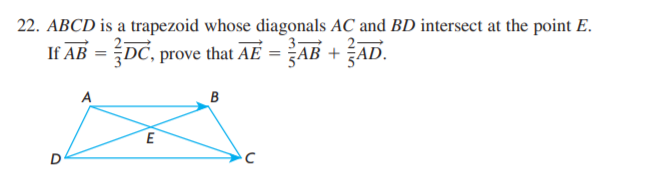 sudden locust
New Vertical Angles Theorem video is out! This is part 2 of my mini-series, and we will now start to solve some problems. Do you know your vertical angles or do you need some refreshment? 🙈😊🤓 https://youtu.be/8x5wY9EfBFQ

Welcome to part 2 of my Vertical Angles Theorem Mini Series. In this video, we are going to take a look at some examples of questions and problems regarding ...
 fringe dirge
Your advertising here is getting pretty annoying
worthy root
Lmao
sudden locust
😪
quiet mason
and the emotes
sudden locust
@quiet mason So sorry that you feel annoyed, Im pretty sure all my messages will disappear if you block me.. (want to put a sad emote here but I refrain)
quiet mason
holy shit
@sudden locust do whateved you want lol
it dosent matter to me
if it dosent affect me
also it dosent matter to me if you get banned

sudden locust
I will tone down for sure.. Appreciete your honesty Leonhard 🙏 👌
upper karma
sorry to interrupt, but what’s that topic called, where you have one triangle, it gives you 3 sides with variables, you need to find the length/angle of triangle using sine,cos and tangent?
#just-trigonometry
 distant bear
why am i bad at math
umbral snow
Because it's not internalizing for you - you likely see the symbols and aren't understanding "why" we use them the way we do.
umbral snow
And that's fair, many teachers aren't teaching that side
distant bear
my teacher doesnt teach the steps that throughly
umbral snow
A bit blurry, can that be better?
umbral snow
I don't think this is enough info to solve for x
Imagine that 21 line wasn't there, then it would surely not be enough info. Then, you can always add the 21 line in no matter the triangle
Troll question?
upper karma
Aren't you suppose to solve for the first triangle, then by similar triangles, use that to solve for the 2nd triangle?
Though I am not sure if this is enough information
upper karma
is pythagorus triganomitry?
 lavish void
Real talk anyone remember how to find the axis of symmetry given a focus and directrix
 astral torrent
Hi
 reef flower
Hey, I’ve been at this for a while and am a bit stuck. Question asks to find the exact value for: arctan(tan(2pi/3)), I know tan(2pi/3) is -sqrt(3) but I’m not sure where to go from there, should it be obvious to me? Thanks in advance.
spark stag
this should be fairly obvious from the definition of arctan, yes
recall that arctan "undoes" tan.
 next saffron
its like squaring a square root
spark stag
the catch is that arctan's range is restricted
specifically, you have to make $\frac{2\pi}{3}$ fit in the interval $(-\frac{\pi}{2}, \frac{\pi}{2}]$
somber coyoteBOT
Namington:
spark stag
(which can be done by thinking "clockwise")
reef flower
Thanks, I forgot about the domain of arctan. The way I got there was making tan(x)=-sqrt(3) and to make it easier I found sin(x)=-sqrt(3)/2 and used my knowledge of the unit circle from there to get x=5pi/3 but since its not on the domain I just took -Pi/3 instead. Is there an easier way of doing this (should arctan(-sqrt(3)) obviously be -Pi/3 to me) or is this approach reasonable?
spark stag
arctan is the inverse function of tan (if we ignore domain-range issues)
so $\arctan(\tan(x)) = x$, $\arcsin(\sin(x)) = x$, $\arccos(\cos(x)) = x$, $f^{-1}(f(x)) = x$, etc.
somber coyoteBOT
Namington:
spark stag
again, the only catch is that arctan's range isnt quite the same as tan's domain
so we have to "change" the value of x to fit in arctan's range
but besides that, yeah, it's just a property of inverse functions.
dark sparrow
arctan isn't the inverse of tan; tan doesn't have an inverse
spark stag
yes, hence why i mentioned that we're ignoring some issues
tan isnt invertible; arctan only has a codomain on some of tan's domain
but either way, arctan is defined specifically so that its relatively "easy" to make "look like" an inverse, by just accounting for domain/range issues
(like we did when "converting from" 2pi/3 to -pi/3)
distant bear
Idk
dark sparrow
:?
dark sparrow
i'll get back to you in like 10m
worthy root
Okay
dark sparrow
yes this is correct
worthy root

dark sparrow
all the work has been laid out
worthy root
Woops
dark sparrow
what part of it do you not understand
dark sparrow
what do you not get
worthy root
Can you rrphrase the question of i dont get it
dark sparrow
you have a circle, and a sector within that circle
the sector's perimeter is known to be equal to half the circle's circumference.
you're asked to find the sector's angle.
worthy root
If the sectors perimeter is half the 2pir then the anhle it forms with centre is 180°
worthy root
Why not?
dark sparrow
the perimeter is not just the arc. it includes the two radii as well.
upper karma
what is this type of math called
geometric model I think, but I'm trying to find videos about it khan and I can't
I have to find the area of a rectangle on the grid within the line of the equation
weary drift
@upper karma can you express the sides of the rectangle in terms of y or x?
upper karma
yes
upper karma
the point is P
zenith ember
Ok...
Please post an image or something of the whole question
Because as it stands, this is not a complete question.
upper karma
I completed the question already
I just need to know what kind of math this is called so I can understand it bette
zenith ember
Since we don't know what the question is, we cannot answer.
Is it an optimization problem? That'd be calculus. It might be geometry. Or trigonometry.
upper karma
"Draw a rectangle in the first quadrant as follows: Two sides lie on the coordinate axes, and the upper right vertex is a point P on the graph of y=12 - 2x, as shown in the figure. The shape of the rectangle depends on which point on the line y=12 - 2x is used as a vertex.
a) Find the area of the rectangle as a function of the x-coordinate of P. Call the function A(x)
b) What is the domain of the function A(x) ?
c) Graph the function A(x) on its domain.
d) What is the maximum value of A(x) ?
there is one point on the line where y=4 and x=4
The domain is (0,6) and the area of the rectangle is 18.
the point on the graph is (6,3)
 acoustic peak
I mean, just sounds like geometry to me.
worthy root
OAb is sector of a circle having centra at O and radius 12cm.If m(angle AOB)=45degree, find the difference between the are of sector OAB and sector AOB
Can anyone draw this with both sectors
upper karma
I cannot
upper karma
I haven't done this before, maybe someone else can help.
worthy root
<@&286206848099549185>
acoustic peak
Could you provide an image?
worthy root
Its not given
vague mantle
can somebody help me with trigonometry identities?
better said, with my homework
I'm given cos α = 7/25. I need to find sin, tg & ctg
<@&286206848099549185>
 chrome fiber
vague mantle
chrome fiber
vague mantle
this is my first time pinging
vague mantle
still don't understand what you mean but ok
fringe dirge
idk why people use that as an excuse
acoustic peak
When posting a question
You're supposed to wait at least 15 minutes before pinging the helpers.
acoustic peak
Your latest question was after Damanug, there was a 3 hour window from then to your previous help session, from what I see.
Not that I have anything to do with it.
Just pointing it out.
distant bear
is the answer 270 degrees counterclockwise and 90 degrees clockwise, just checking
 coarse bronze
technically there are infinite answers but yes those are the ones expected
distant bear
?
 olive solar
if you rotate something 360 degrees, then you get the same as when you started, so if you rotate that 90 degrees and then 360 degrees more, you get the same result
which is why you'd technically have infinite answers
distant bear
oh ok
 median crown

 wooden swift
How do you convert 6 radians to degrees?
zenith ember
How many degrees is Pi radians?
zenith ember
What did your teacher tell you about radians?
zenith ember
It's a measure of angle, like degrees.
In a similar way that feet and meters are both measures of distance.
zenith ember
But if you're learning radians, you should know -something- about them.
wooden swift
How many degrees is in a radian?
zenith ember
It's much easier to answer the question I proposed earlier.
I'm still trying to get a handle on what you've been taught.
wooden swift
Not a lot
We know like the unit circle and then minute second stuff and special triangles
zenith ember
Specifically about radians.
You haven't been taught that there are 2Pi radians in a full circle?
wooden swift
Just the like pie/180 stuff but I’m iffy on it
zenith ember
Yeah.
Ok.
that's what I was getting at earlier.
Pi radians = 180 degrees
That's the conversion factor.
wooden swift
So 6 radians would be 180x6
zenith ember
Not quite.
I'm not saying 1 radian = 180 degrees.
Pi radians = 180 degrees.
$\frac{6 rad}{1} \cdot \frac{180\degree}{\pi rad}$
somber coyoteBOT
samanthaCS:
Compile Error! Click the reaction for details. (You may edit your message)
wooden swift
So I’m the calculator do I put 1080/pi
 marble parcel
<@&286206848099549185>
 queen python
To get the help of helpers send a problem
marble parcel
Scroll up a little
marble parcel
Yeah
zenith ember
Do you understand what "Intersection" means in this context?
marble parcel
isnt it where line L intersects ABC
wooden swift
Samantha in the calculator do I put 1080/pi
zenith ember
It's helpful if you don't use the word when defining the word.
marble parcel
ok so like “passes through” figure ABC
zenith ember
Dimmed Light: I honestly don't know how much more assistance I can give you without literally doing the problem for you.
I can definitely say 1080 is the wrong numerator.
It may be more useful, toby, to think of these as sets of points.
So the triangle, ABC, is the set of points that make up the outline of the triangle.
wooden swift
Can you do a problem like it with a different number of radians? Like an example problem
zenith ember
No, I really don't think I can.
wooden swift
Why?
zenith ember
Again, I do not think I can give you more help without practically doing the problem for you.
wooden swift
But can you do it with different number of radians?
zenith ember
This is a simple conversion.
I've literally written the calculation you need to do already.
marble parcel
Still a bit confused samantha. So for 5a would the intersection be DE?
zenith ember
The way I interpret the question, it would be D and E, separately.
ie, the set of points that is common to both the triangle (but not the region inside it), and the line.
zenith ember
Yes, that's the right answer.
wooden swift
Okay thanks
upper karma
James runs a bicycle around a circular ring with equation $ x^2 + y^2 - 26x + 16y - 392 = 0$ at precisely $\frac{3\pi}{5} $units per minute. How many hours does it take for Iames to run around the ring 12 times?
somber coyoteBOT
rudy:
upper karma
So, I completed the square and got that the radius was 25.
Since r = 25, C = 50\pi
And so: 50pi/(3pi/5)
= 250pi/3pi = 83.3
So it takes 83.3minutes to run a full circle
Then the answer is:
83.3*12
999.96
Or almost a thousand
Lets approx to a thousand
Then it must take 16hours with around 40minutes to complete the 12 rides, right?
 terse leaf
"Prove that ab to bc is Phi, so |AB|/|BC| = |AB|+|BC|/|AB|
I tried everything, similar/congruent triangles
The only thing I know for sure is that trainglr AB and top is similar to the big triangle
 wise pawn
do you have more information
other than being parallel to the base, how high up is it
is it supposed to be cutting through the center of the other side?
terse leaf
A & B cuts the traingle in the mid
And all the sides are equal
So |AB| is the mid parralel of the triangle
terse leaf
All the side are equal
sly marlin
the triangle is equilateral?
terse leaf
Yes
sly marlin
solved it?
 obsidian wedge
what's the best software for geometric constructions
quiet mason
here phi is golden ratio? @terse leaf
sly marlin
yes
 willow oak
I’m having some trouble with this trig question. I know that sin(-7pi/8) = -sin(pi/8) but I’m unsure about the second part. I think that because sine is an odd cofunction the negative can transfer out and make -sin (pi/8) which would make the question true. However, I’m not sure if I’m misremembering that rule.
willow oak
I was confused on whether or not I was remembering the rule correctly. So the two functions are equal?
weary drift
These aren’t functions, each side is just some value. What we’re saying is sin is an odd trig function, so you can take the negative from -pi/8
And make the right side -sin(pi/8)
willow oak
Okay. Thank you very much!
weary drift
No prob
terse leaf
@sly marlin I solved the golden ratio problem yesterday btw. Thanks for your help
 sweet dragon
 primal lynx
,rotate 270
somber coyoteBOT
 tender iron
I need help with (a)
 latent galleon
Please help w/ question 9
sly marlin
okay, what did you try so far?
latent galleon
i just tried plugging values in my calculator so nothing really, i don't understand how to get the answer at all
sly marlin
Can you find |sin x| and |tan x|?
latent galleon
the answer suppose to be sinx= -√8/3 and tanx= -√8 i'm not sure how they got those
sly marlin
okay can you find |sin x| and |tan x| (without the sign)
latent galleon
no i'm not able to find sinx and tanx
sly marlin
$\sin^2x+\cos^2x=1$?
somber coyoteBOT
Element118:
sly marlin
@latent galleon
latent galleon
sorry, but how do i use this for the question?
latent galleon
it doesn't work when i rearrange it and calculate it
sly marlin
what happens?
latent galleon
so i calculated (cos(1/3)) ^2 then minus that from 1 and last square rooted the full thing and got ≈ 0.33
spark stag
to be honest
i'm confused why you're using the pythagorean identity for this
rather than just drawing a right triangle
 covert orchid
Hi guys, i have this exercise, but i have no idea what to do, PQRS is a rectangle and it has an area of 90cm^2, and ABCD is a square and it has an area of 36cm^2. The problem says that i have to find the perimeter of the whole figure.
spark stag
i mean, you have to use pythagorus either way
but this seems much more motivated than just identity-crunching
¯_(ツ)_/¯
silent plank
well the calculations are exactly the same
spark stag
yeah
silent plank
you didn't subtract it from 1 before taking the square root.
sly marlin
@covert orchid There's a number between P and Q?
covert orchid
Nope
sly marlin
There's not enough information
covert orchid
oh
spark stag
we need at least one side length of the rectangle
silent plank
we se a 0 between the p and q. Was that the question number?
spark stag
that parallelogram should be solvable
covert orchid
yes ramonov
spark stag
via angle-chasing
covert orchid
yes those are angles
spark stag
thats what i assumed
latent galleon
omg i got it now, i always forget the about using p.t for these questions thank you
spark stag
as a hint, note that the blue lines serve as transversals between parallel red lines
and that the internal angles of a parallelogram add to 360
and further, that consecutive angles are supplementary (add to 180)
you should be able to make some systems of equations based off that
sly marlin
x okay, but it really looks underdetermined
 flint pelican
Sorry guys I was afk
Tbh idek
What this is
I think it’s trig so I’m putting it in here
 jovial axle
do you what pi radians represents?
flint pelican
What the heck is a polar coordinates
primal lynx
look it up
flint pelican
It’s not hard? Say lesss
primal lynx
you need to know this later on so its a good idea to get it down
flint pelican
Ok so uh just search up on YouTube
primal lynx
yeah
primal lynx
organic
flint pelican
Ok
flint pelican
Yeah it’s act
primal lynx
nice i figured
i saw basic linalg below
so i was like hmmm what test does this
btw i never took ACT officially
flint pelican
Oh
flint pelican
You took a practice though
primal lynx
so easy questions come by a lot
flint pelican
Yeah that’s what people say because you get less time on act
flint pelican
Yeah ig the math isn’t that bad I mean when I finish a test and look back at the answers with no time pressure I can do majority
quiet mason
@worthy igloo hey uhm mind to link me platforms to do haskell on?
seems youve done it and i wanna start it with the best advice
 worthy igloo
why are you asking this here 
quiet mason
where would i ask
primal lynx
wut
worthy igloo
that's like your opinion man
quiet mason
the FP server?
worthy igloo
#computing-software if at all
primal lynx
fr
primal lynx
@flint pelican does the right side of the image say "bro what" lol
flint pelican
@primal lynx yes it does lol
sly marlin
Can you put that into a calculator?
do you know how to evaluate it? @tired totem
that wouldn't help with evaluating it
and pathetic at best
Just as well
We don't need a rude person here
<@&268886789983436800>
ah all should be well
 valid agate

sly marlin
yeah, that user has been rather rude
valid agate
Well if you're going to be like that
,hackban 362359282622267403 -r Joining and leaving just to be rude
somber coyoteBOT
Hackbanning...
✅ Successfully hackbanned Big Ounce (id: 362359282622267403) and purged 1 days of messages.
upper karma
Hello, I need help. I have to calculate the length between BD. Calculate both of the degree angles on DBC. And lastly calculate the area in ABCD.
sly marlin
@upper karma Any ideas how to start?
upper karma
Mhm, I think I should use the phytagorean theorem to calculate the length between BD.
sly marlin
but you need right angles
 proud mesa
Are approximations allowed?
It's easy to solve this by using any of the trigonometric laws.
You could either use law of sines or the law of cosines in order to solve this, I mean.
zenith ember
I think Element118 was hoping they'd come up with that themselves
primal lynx
i mean whatever right, if he knows then he knows and if he doesnt then he doesnt know any other way so its fine
wooden swift
What am I doing wrong?
primal lynx
even though to solve you root, you must go back
dark sparrow
none of these actually satisfy cos**^2**(s) = 1/2.
primal lynx
but i cant see what you put
wooden swift
So do I do that but with all the 45 degree angles instead cause that’d be 2/4 right?
zenith ember
Yes, that's the right idea
wooden swift
Alright thanks
 vague pagoda
um hey
zenith ember
👋
zenith ember
The most straightforward way is to draw a right triangle
Designate one of the angles beta, and then write the lengths of the opposite and hypotenuse
Use Pythagoras to find the unknown leg
And then write down the tan
vague pagoda
hmm how do i find the lengths of opposite and hypotenuse
zenith ember
You have sin
vague pagoda
yeah but only sin
zenith ember
That's all you need
zenith ember
Sin gives you the ratio
Tan asks for the ratio
So you can just do everything ratiometrically
vague pagoda
wut
zenith ember
You know SOH CAH TOA, right?
vague pagoda
yes-
zenith ember
So sin b = .23 means O/H = 0.23
We don't care about absolute distances, just the ratio, so we can say H = 1 to make this easy
zenith ember
👍
vague pagoda
smh i should know this ive tested into calc 2 level
zenith ember
It's easy to forget things you haven't used in a while.
vague pagoda
im only 14 so trig and calc is a fairly new thing for me
 mighty gull
which one
 cinder charm
Well on the first picture top left what do I put next to “by” on the end
mighty gull
well have you found angle
mighty gull
ACB and BCD
mighty gull
its given in the problem
cinder charm
My bad
Okay so would it be ABC is similar to BDC
Because that way they both match up
mighty gull
yeah, and the 2/3 ratio for sides
mighty gull
they want you to say like SAS similarity
mighty gull
well what do you think you should do
cinder charm
Match up the numbers that match with each other and cross multiply?
mighty gull
umm yeh
cinder charm
You sureeee?
mighty gull
try it
 jagged holly
cinder charm
jagged holly
cinder charm
Sorry bro idk either
 lunar crow

 forest shoal
can someone tell me how (sin ρ + µ cos ρ)mg/[(cos ρ - µ sin ρ)]= m (Vmax)²/R
simplifies to g(tan ρ + µ)/(1 - µ tan ρ) = (Vmax)²/R
mention me if anyone responds please
silent plank
b looks wrong
zenith ember
Agreed
 cerulean parcel
oops forgot to add the x
zenith ember
That's not the only issue.
silent plank
it would also be better if the X didn't look like it was in the denominator for a)
what's the relationship between the slopes of perpendicular lines?
zenith ember
It's both
 dreamy sequoia
Is it possible to say for A line AD with points B and C between them, that AB+BC+CD=AD?
dreamy sequoia
Is it possible to use double substitution in a proof
<————————————————>
A B C D
How do I do latex again
somber coyoteBOT
zbot473:
Compile Error! Click the reaction for details. (You may edit your message)
dark sparrow
oh god. two-col proofs? 
dark sparrow
no
dreamy sequoia
Oof
 surreal roost
How do I solve this?
worthy root
Me ? Or distance? @dark sparrow
dark sparrow
distance.
worthy root
Ok
Anyways i found solution on intwent 
Distance can you define linear pair of angles ?
surreal roost
Well I've tried 50 because ACE looks to be half of ACD which is one 100, but that's wrong so now I assume its somewhere near the 60 to 80 range but I don't want to randomly guess what the answer is and I assume there an actual thing you do to get the answer.
Also a linear pair of angles add up to 180 right?
weary drift
yes to your definition of linear pair
surreal roost
wait I see it now