#geometry-and-trigonometry
1 messages · Page 211 of 1
 brave kayak
im gonna assume it's a 4-sided polygon
and in a polygon with 4 sides, what should the total angle inside be?
 upper karma
The xs are blank numbers that have to be added in
brave kayak
yep
upper karma
But they must be the same and add to 360
brave kayak
if we add up all the angles (leave the x in)
it should be equal to 360
so you should have an equation that has x in it
 brave kayak
x gon give it to ya
 storm rover
I said 25%, it is asking “what percent of the figure is region a”
It’s clearly not 25 percent but we are given no other information
 twin prawn
Well one triangle is 20% because you can subdivide the entire pentagon in 5 identical triangles
And A is half of what's left after you remove two triangles
So... 30%?
brave kayak
but are we sure that it's the center?
 supple abyss
this looks relevant
 main spire

 idle bloom
Whoa how did those csc turn into sin
 fossil lotus
Your answer looks right but I’m confused about how you got there
Replacing csc with 1/sin gets you
$\frac{2(\frac{1}{\sin{x}})^2}{(\frac{1}{\sin{x}})^2-1}$
 somber coyoteBOT
GrandPiano:
 marsh crest
@fossil lotus why can’t u switch it
fossil lotus
Because csc isn’t sin, csc is 1/sin
marsh crest
YeAh so you can flip it over the fraction and turn it back to sin??
marsh crest
How do you solve that problem then smh
somber coyoteBOT
GrandPiano:
somber coyoteBOT
GrandPiano:
fossil lotus
And then you can turn that into
marsh crest
What if I multiplied both top and bottom by sin^4
fossil lotus
$\frac{2}{sin^2{x}(\frac{1}{\sin^2{x}}-1)}$
somber coyoteBOT
GrandPiano:
fossil lotus
And solve from there
marsh crest
Eh nvm
fossil lotus
Just multiplying the top and bottom by sin^2 as I just showed works
fossil lotus
Yeah looks good to me
Are you aware you switched the terms in the first step?
Not that it makes a difference
fossil lotus
The first term should be multiplied by cscθ-1 and the second by cscθ+1
The numerator and denominator of each term, that is
 vagrant umbra
Hello, how can I call this 3D shape? Is there a name for it ? 
marsh crest
Oh yeah whoops
@vagrant umbra maybe a truncated square pyramid?
It looks like this
vagrant umbra
thanks
 low tusk
actually, you can just call it "frustum" 
 slate coral
Could someone help me on this? https://gyazo.com/48060cabe0628034bc3828a6fd8ed89d
 upper karma
Hi
The book says that 140-3x+x+3x forms a straight line, so you can get the value of x by equating the equation above to 180
 royal crest
sum of angles = 180
upper karma
The thing is, why wouldnt the eq. be 40+140-3x+x+3x+50
Yeah, but...theres 2 whole angles left out?
royal crest
no, 50 is left out because it's not in forming the line
imagine yourself doing a rotation from A to E, first you go 140-3x then x then 3x
and that's a whole 180
royal crest
i'm not sure what you mean by forming but have it your way
you just need to think of a line segment AB as rotating from A to B, and that's a whole 180 degrees
royal crest
you're welcome :)!
upper karma
Wrong channel
 tired terrace
oh shoot ur right
upper karma
Mfw Ive been stuck on a problem and my issue was with summing 3+2+1
idle bloom
trust me it keep happening in harder math
there's a common saying in calculus that goes "calculus is easy algebra is hard"
I've gotten end results wrong many times because I can't add or multiply or anything
upper karma
any ideas?
 mossy vine
ok so
the hint in the question is that you have trig functions and something that looks like you can write it as a difference of two squares, because a lot of the basic trig identities involve squares
upper karma
How would i do that?
mossy vine
write as a single fraction
upper karma
i did
mossy vine
and you got?
mossy vine
ok, good first step
upper karma
Then subtracted
ohhhh because then you would make it csc^2(x)-1
difference of 2 squares
mossy vine
yeah
upper karma
makes sense
mossy vine
and then you should hopefully have an identity for that
upper karma
Yep
mossy vine
to make it "simpler", which is a bit ambiguous in this case imo but it's probably what they're going for
upper karma
csc^2(x)-1=cot(x)
upper karma
wait
But what would i do with the numerator?
It becomes (cscx-1)-(cscx+1)
all divided by cotx
upper karma
huh
mossy vine
(also make sure it's cot^2(x), that's what it should be)
upper karma
confused on the numerator
mossy vine
if you need, multiply out the -(cscx + 1)
it should hopefully become obvious what to do
upper karma
still confused
mossy vine
numerator should be ||-2|| (check after you've redone)
mossy vine
probably the best way to write it is ||-2 tan^2(x)||
upper karma
another question
How would I approach this?
The bottom one
I tried making secx times sinx=tanx
Didnt do much
made tanx= sinx/cosx and cot cosx/sinx
Made common denoms but didnt help either
mossy vine
secx sinx = tanx I think is a good idea - or at least htere is a solution using that
|| tanx/(tanx + cotx) = 1/(1+cotx/tanx) = 1/(1+cot^2(x)) = 1/csc^2x = sin^2x||
I think writing everything in terms of sin and cos should work though
 vagrant elk
you could multiply both the top and the bottom by the same factor and remain equivalent
in this case by ||1/tan||
which distributes across the denominator to give 1 + ||cot/tan||
mossy vine
divide top and bottom by tanx
vagrant elk
@eternal hare with which
 eternal hare
Do the top one first I got the bottom one
Do (a) first
I don't know what the relationship is
vagrant elk
Well, what theorems/rules does the class give you to solve these problems with?
vagrant elk
alright boyes, we got em
i guess i'll look them up since i ofc forgot them too
I believe this might be the one you need
@eternal hare
eternal hare
@vagrant elk Thanks
mossy vine
you want angle at the centre, angle at the circumference and then just some standard angle facts about straight lines and triangles @vagrant elk @eternal hare
although I guess it gives you the angles at the circumference :^)
so just angle at centre = 2 times angle at circumference
vagrant elk
i no circle good : )
mossy vine
:^)
upper karma
sorry for so many reposts, phone keeps lagging
How would I construct the bearing for this
What angle would I need to find?
anyone know what to do?
fossil lotus
65° + 25° = 90°
Since it’s a right triangle, you can use the pythagorean theorem
@upper karma
upper karma
@fossil lotus it’s looking for the bearing
fossil lotus
Oh I see
So the angle of the path directly from the airport to the final landing point?
Couldn’t you take the arctangent of 1/4 (from 120/480) and subtract 25° from that?
upper karma
,ask define bearing
somber coyoteBOT
 Requested by rudy#0446
 fleet lake
I can't figure out how fast upward or downward the graph of line goes.
I know the 1) graph is positive but can't figure out if it's <=> than 1.
 dark sparrow
lines with slope ±1 are at 45° angles to the axes
fleet lake
I dont know trig
dark sparrow
you don't need to know trig you just need to know visually what a 45° angle looks like
you're not supposed to calculate anything
alternatively, if you don't want to think of angles, you can look at the grid lines
fleet lake
I think the first graph is less than 1 because it moves rightward much faster then upward. Or $x_2-x_1$ is greater than $y_2-y_1$ this implies that the slope is less than one . Is my argument correct (
dark sparrow
if your line crosses more horizontal gridlines than vertical gridlines, then its slope is far away from 0 (i.e. greater than 1 or less than -1)
somber coyoteBOT
Krishna_The monkey boi:
dark sparrow
yes
fleet lake
I mean run is greater than rise hence proofed not grater than 1
fleet lake
I struggled with this yesterday but the concepts of graph are interesting .
I like it
dark sparrow
yes. and it's steep, too.
dark sparrow
yes
dark sparrow
yes to both
dark sparrow
it's exactly -1, actually.
dark sparrow
the line goes diagonally through grid squares
dark sparrow
why what
fleet lake
How you figured out that the slope is -1
dark sparrow
well ok consider two points on it that are the opposite corners of a grid square
run = 1 and rise = -1, so slope = -1/1 = -1
fleet lake

Let's come back to it later.
f) the slope is positive
And less than 0 because it's not sttep
???
Isn't it @dark sparrow ?
fleet lake
Ok so it's more than 1 as it's clswe the y axis
fleet lake
Just asking if I am right
So
Point Q is 8 units left and 3 units above the P
So the T must also be 8 units left and 3 units above the Q . If yes coordinates of T are (-11,9).
I checked my guess.
The slope formula and the distance formula show me a green flag so I am right
Also the midpoint formula showed me a green flag.
fleet lake
<@&286206848099549185>
fleet lake
@dark sparrow can u help me this problem
dark sparrow
uhhhh one moment i'm a tad busy rn
upper karma
@fleet lake for part a use
|| midpoint formula or (x1+x2)/2, (y1+y2)\2||
Forget how to do part b
I think you have to ||put variables in the midpoint formula and solve for a given point||
Like ||(x1-3)/2,(y1+6)/2=5,3||
fleet lake
I want help with 8.34 @upper karma
 wet ice
Ig everyone’s busy
 spiral dirge
on 10-4 problem 3 would be 42 i'm pretty sure @wet ice
on ones like that the angle is half the arc
so for #4 u would do 360-70-120
spiral dirge
no in 10-4
wet ice
Oh ok ty
fossil lotus
There doesn’t seem to be
If you search “trigonometric identities” you’ll find some lists
vagrant elk
I don't know of any in general, unless A and B happen to be cos(b) and cos(a) respectively
 thin slate
Lengths of the consecutive sides of quadrilateral ABCD are 12cm, 22cm, and 15cm. Circle O is inscribed in ABCD. Find the length of the fourth side.
thin slate
<@&286206848099549185>
dark sparrow
there's a certain property that a quadrilateral has if and only if it admits an inscribed circle
thin slate
oh yeah, im so dumb lol
ok wait
ill try now
im still stuck
if anyones here
@dark sparrow can you help
dark sparrow
there's a certain property that a quadrilateral has if and only if it admits an inscribed circle
what is that property?
thin slate
hmm
dark sparrow
if you're having trouble recalling it, maybe try setting the problem aside for a moment and just draw a quadrilateral with an inscribed circle. see if that makes it click
thin slate
okay
 rotund swan
I think diameter is equal to 35.5 , is it?
fleet lake
@dark sparrow Ann I figured out that problem
rotund swan
There is a theorem between circles’ chords
fleet lake
 dark sparrow
@rotund swan the diameter of the incircle is of no importance here
fleet lake
Yes nima
dark sparrow
nor can it be obtained from the information that is given
dark sparrow
no that's to nima
fleet lake
Oh
rotund swan
thin slate
oh I think, Ann thought you were talking about my problem
rotund swan
Yes that’s it
thin slate
I have another problem tho
:dd
Quadrilateral ABCD is inscribed in circle O. <C=160. Find degree measure of acute angle included between the bisectors of angles B and D.
rotund swan
Can you write it in peace of paper??
thin slate
wdym? do you want me to draw it? or
rotund swan
Yes draw it please 👍🏻
 broken wyvern
This looks circle theorem related help
rotund swan
@thin slate ok 👌🏻
thin slate
thank you
 jade lotus
@thin slate I cant understand your drawing. The quadrilateral is not inscribed in the circle.
rotund swan
Why not??🤔
jade lotus
Because the circle is inside the quadrilateral not the other way around
rotund swan
But you can draw it in paper, therefore it’s possible...
jade lotus
This drawing doesnt help, in my opinion. When a quadrilateral is inside a circle (inscribed in the circle), the opposite angles have an interesting property
rotund swan
🤷🏻♂️🤔
thin slate
ye ye its completely wrong, i figured it out
I was mistaken because, when I sent the first problem I thought it was this one and when Ann corrected me that the circle was inscribed in the quadrilateral I thought it was about this problem
rotund swan
So you mean that this is totally wrong?
rotund swan
But why?
thin slate
the quadrilateral was inscribed in the circle
just like that guy said
do you get it?
rotund swan
Vice-versa ???
thin slate
wait ill send a picture
rotund swan
✋🏻👍🏻
thin slate
thanks for your help btw
rotund swan
😉
 thorn kraken
anyone able to help me with some trigGraphing and equations, im quite stuck
thorn kraken
its a multiparter, should i post my attempts or just straight q
i feel like im super overthinking and making it hard for myself but i really dk
 cinder portal
did u do part a
thorn kraken
i plotted x1, found the amplitude, period and phase shift for X2
but then i wasnt sure what to do with the phase shift
its 0.5 but my x axis is ranging from 1/100 pi to 1/25pi
cinder portal
X2 is really just X1 shifted to the left by 0.5, with different amplitude
thorn kraken
or 0 to 1/25pi
"X2 is really just X1 shifted to the left by 0.5, with different amplitude" ik that but i dont know what im doing to convert that so its in terms of pi
if that makes sense
 trail minnow
what do you mean you don't know how to convert it in terms of pi?
like how to write 0.5 in terms of pi?
thorn kraken
give me a second to clarify my thoughts, im being a bit dumb rn
somber coyoteBOT
hegel:
trail minnow
for me when i was learning sin waves it was helpful to think of breaking them down into a bunch of composite parts or "modifications" to the original sin wave
and then moving from there
original sin wave meaning sin(x)
thorn kraken
okay so im moving it by pi/2 right, but that seems like a super high amount in comparison to the scale on my x axis
does that make sense
thorn kraken
my period is 1/25pi
trail minnow
ah
thorn kraken
and im plotting for 1 period
thorn kraken
no, im just not sure if im right because of the scale difference
trail minnow
hmm
thorn kraken
which is why i want someone else to confirm im doing the right thing
trail minnow
wait, are your functions supposed to be 300 sin(50 pi x)?
thorn kraken
300Sin(50 pi t)
thorn kraken
right?!
trail minnow
because that's... a really thin really tall wave
thorn kraken
i thought i was brain damaged
trail minnow
you aren't doing anything wrong mathematically
it's just fucking weird
i just checked on desmos its literally like that
thorn kraken
especially considering this is way beyond what we normally do
trail minnow
is there a typo or something lol?
thorn kraken
i have no idea
somber coyoteBOT
hegel:
dark sparrow
uh
trail minnow
goes from about -4 to 8 horizontally
cinder portal
what in tarnation
dark sparrow
yikes
thorn kraken
yeah ik, its like the crackhead of graphs
trail minnow
lmfao
cinder portal
what am i looking at HAHAHAHAHA
trail minnow
like
cinder portal
b r U H
trail minnow
the period is so tiny that it literally approaches a flat out just
thorn kraken
@cinder portal thats the graph i have to plot
thorn kraken
and rn we are trying to figure out if im brain damaged or my teachers are
trail minnow
you're fine lmao
this is just moronic
it makes sense that you are getting what you are
300 is an incredibly high amplitude
so your waves are going to be extremely tall
cinder portal
the important parts is where it intercepts or touches the x axis
trail minnow
50pi x is an extremely small period, so your wave is going to be really thin
thorn kraken
well the function was 300Sin(50 Pi t)
trail minnow
hahahahaha
trail minnow
cinder portal
you were right
trail minnow
look how thin it is
thorn kraken
i thought i broke my monitor when i put it into desmos
trail minnow
this is literally ridiculous lmao
thorn kraken
this in only have of pat a of the question boys and girls
trail minnow
a true galaxy brain
trail minnow
lmao day in the life of helpers on the mathematics server 😩
thorn kraken
is to move X2 to the left by 0.5
which in my opinion is by a quarter period
so in this case
1/100 pi
trail minnow
are you in 10th lmao???
are they giving this to 15 year olds to spite them?
or 16 idk how the fuck age works
thorn kraken
im 18
trail minnow
still this is so dumb
what a pointless problem >.>
@clear haven check out this fucking problem lmao
this is what happens when you plot it on desmos
 dusky pike
You sure thats not a fill function on ms paint @trail minnow
trail minnow
unfortunately lmao
thorn kraken
you guys dont know how relieved i am to know im not just stupid
trail minnow
this problem is too galaxy brain for us to comprehend lmao
thorn kraken
i drew the graph
huzzag
huzzah
@trail minnow do you know how to go about part iii.
upper karma
grrr struggling c:
I know the acute of Z + X = Y
Wait
Z = 180-97?
Is Y = 39? lol
somber coyoteBOT
Result:
40
Oh, yes, my bad.
Mental maths be bad
wow k
I was going a way...worse route
I was doing system of equations
lol
 eager pendant
assuming Q is the centroid works
 tepid rapids
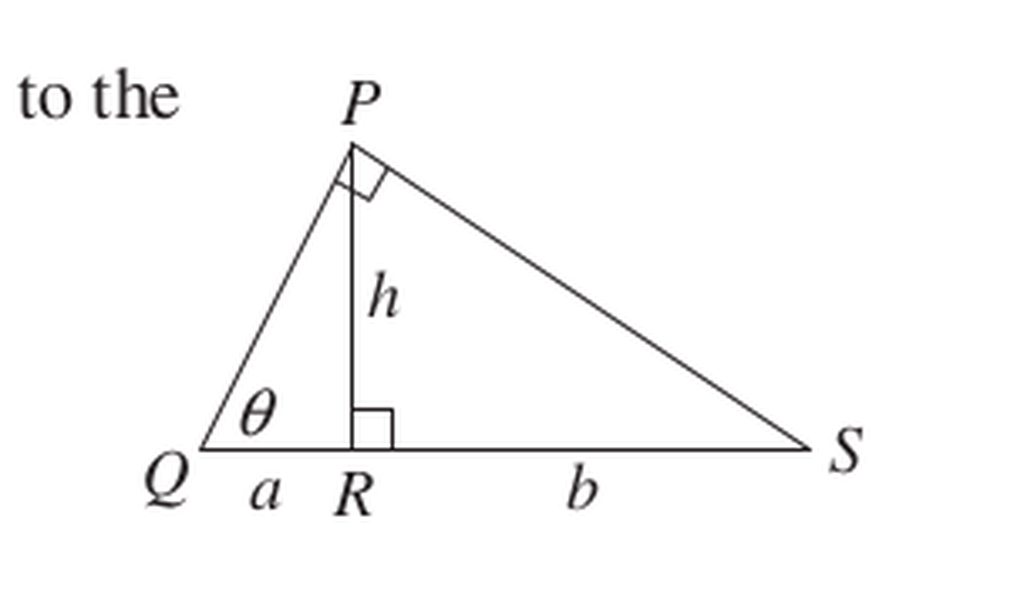
hey guys how do I show that angle RPS = theta?
actually i think i got it
oo thanks dude
the say I did it was QPR + SPR = 90 deg, and theta is the complement angle of QPR
*the way
is that incorrect?
dark sparrow
wrong channel @upper karma
tepid rapids
@timid imp thanks man
but I need help with another question
same triangle https://imgur.com/a/MWpv81Q
how to prove ab = h^2
actually i think this ties back to the other question
tan theta is h/a and also b/h
h/a = b/h
and cross multiply. huh
THANKS AGAIN! 😛
 keen glen
hey
 proper citrus
Are the faces of a pyramid, with a rectangular base, all isoceles triangle?
Other than the base itself, of course, that's not a triangle.
quick question
Anyone?
<@&286206848099549185> ?
okay fuck this
 fringe dirge
No they don't have to be
 heady juniper
feels bad man discords dinged me like 50 times in the past 10 mins
but still no reply SadPepe
<@&286206848099549185>
rotund swan
Does AB cross through the center??🤔
heady juniper
not necessarily
fringe dirge
Think power of a point
 iron saddle

 heavy crow
why is arccos(10/7^(3/2))/3=arccos(5/(2sqrt7)) and how can i prove that
dark sparrow
it might be easier instead to prove that $\arccos\left( \frac{10}{7^{3/2}} \right) = 3 \arccos\left( \frac{5}{2\sqrt{7}} \right)$
somber coyoteBOT
Ann:
dark sparrow
and that can be done by letting $\theta := \arccos\left( \frac{5}{2\sqrt{7}} \right)$ and then showing $\cos(3\theta) = \frac{10}{7^{3/2}}$
somber coyoteBOT
Ann:
 river vale
Could anyone explain to me how this is a line? I'm very confused atm
I need to show that the lines a and b form a plane, and then find the equation of that plane
Which appears to be this:
But seriously, how are a and b even lines to begin with?
Also, at the very start of the solution they start by saying this:
How could one come to that conclusion? I'm beyond confused
 heady acorn
what's r?
This is a kinda problemthat is solved using linear algebra tools, ont sure if you studied them
they are lines, since a is described by 2 equations with 3 variables, meaning dimension of a i 3-2 = 1 which means its a line
its rather linear algebra channel question overall, you would get more response if you posted it there
river vale
Well, I'm only in high school (last year), I don't think I've dealt with linear algebra yet
Why is a not a plane?
dark sparrow
it's the intersection of two planes pretty much
river vale
hmm I see
now, what I did to make a parametric equation of a, was take 2 random points that work in a
I took (0,0,4) and (0,-8,0), but then the vector would be (0,-2,1)
meaning the x value never changes
but the point (-16,0,0) seems to be perfectly fine
so I'm doing so much wrong
also Wolfram is saying it's a plane, did I type it wrong?
heady acorn
you wrote it wrong
these equations are not equal
its first equation AND second one
river vale
but both are equal to zero?
heady acorn
yeah but for example the first equation is 0 for vector (1,0,0) and the second equations is zero for (1,0,0) and (2,0,0). If you set these equations equal you won't get the (2,0,0) solution (becuas it doesnt satisfy first equation)
basically 'a' is intersection of two planes, so think about it, if you have two planes that are at different angles, their intersection will be a line
dark sparrow
@river vale but you didn't put =0 there lol
just because two things are equal to each other doesn't mean they're both equal to zero
river vale
ah true
so how could I get the equation of this line?
instead of having to use those two planes
fleet lake
Midpoint of segment BC is (-1,-2).
The slope of line passing through A and B is 9+2/5+1=11/6
Sorry I just realized that I made an arthimetical mistake
Ignore my question
 elfin ibex
I've been given a task to find out the maximum volume of a prism given a perimeter of 360cm and have no clue where to start. I've spent several hours on it so far but I'm not getting anywhere. Can someone please provide some pointers?
elfin ibex
Our class is covering algebra II
It seems like an optimization problem but our class hasn't covered calculus so I'm stumped.
 hot badger
@elfin ibex what type of prism
if its a rectangular prism
actually leme guide through the solution
basically
4x + 4y + 4z = 360
x+y+z = 90
maximize xyz
now let's just let z = z for now
x+y=90-z
and we need to maximize xyz, but we have an arbitrary value already established for z
so x + y = a, where a is the corresponding arbitrary value, 90-z
and we need to maximize
xy
basically let's say x+y = 40, which is not the actual optimal value, but anyways
just think about that simplified question
elfin ibex
I'm assuming its a triangular prism
hot badger
but only straight edges?
elfin ibex
Yes
elfin ibex
Thanks
hot badger
obviously the two bases have to be regular
so let's say the perimeter of one base is x
and the number of bases is n
side length is s
sn=x
elfin ibex
(360-2sn)/n for height?
hot badger
we'll get there later
elfin ibex
Ok
elfin ibex
They said to provide "justification". Our class hasn't covered any proofs yet so I'm pretty sure it just needs to be supported.
hot badger
oh ok
one sec
so
if x is the area of a base
then shouldn't the volume be increased by adding a side, albeit slightly shrinking each side length
elfin ibex
The more sides added, the more edges though
hot badger
yeah ik
but
the area of the circle is larger than the square
which is in turn larger than the area of the triangle
elfin ibex
Ah, that helps!
hot badger
but also a cylinder isn't a prism
did it ask for integer side lengths?
ohhh wait
nvm
this wouldn't work ic
yeah i think u were right about approaching the whole solid
ok so if n is number of sides per base, a equals base side length, and b is height
letting a = a and b = b, two arbitrary value
values
the volume is [a/(2tan(180/n)) * a/2 ] * n * b
brackets are each triangle in the base
so we need to maximize n/tan(180/n)
elfin ibex
Thank you
elfin ibex
Yeah, that's gonna be the easiest method. Thank you for your help?
Fuck did not mean the ?
I meant !
hot badger
yw
elfin ibex
!rep hogman
hot badger
oh there's a rep system?
 whole swift
Let u=1√3(1,−1,1) and v=1√6(1,2,1)
Find the two points of intersection on S2 of the spherical line L_u and spherical circle C(v,π3).
Any idea how to start this?
 dry glen
Can anyone solve this:
In quadilateral ABCD the measure of angle a = 60 the measure of angle c = 120, AB = 41m, DC = 22m. The length of AD is 2m longer than BC, find the perimeter
I get negative values for my answers and it's driving me crazy
 spark stag
Consider the line y=x
fleet lake
<@&286206848099549185>
 halcyon coyote
x intercept is where y = 0
y intercept is where x = 0
can this happen in the same point?
fleet lake
No I figured that out.
 zealous trail
Looking for some help with my trig homework if anyone is around
here is the first question, if you feel like helping a dood out!
 devout shell
do you remember the conversion from rectangular to Cartesian?
zealous trail
so polar coordinates are (r, Θ)
zealous trail
and r = sqrt((-5)^2 + (2)^2))
devout shell
that's a fair way to do it
zealous trail
yeah tan(Θ)= y/x, but to find the angle we need to find Θ = arctan(y/x)
devout shell
correct
zealous trail
or Θ=arctan(2/-5)
devout shell
yes
zealous trail
so then what's the answer
zealous trail
II
devout shell
correct, we are in quadrant II
it says you can use approximations as long as you denote properly so no idea what they want
zealous trail
yeah that's what stumps me, like should I put it in a calculator
devout shell
they want numbers or the numerical value of arctan(2/-5)?
zealous trail
it comes back as approx 338°
somber coyoteBOT
Result:
68
oops, overshoot
zealous trail
wait nevermind I did that math wrong
devout shell
oh lol
dark sparrow
yes
fleet lake
Ok then I am right 
 vivid yew
somber coyoteBOT
vivid yew
somber coyoteBOT
A brief description and guide on how to use me was sent to your DMs! Please use ,list to see a list of all my commands, and ,help cmd to get detailed help on a command!
fleet lake
fleet lake
@dark sparrow ?
dark sparrow
what do you expect from me rn
fleet lake
I think a line always hit with x or y intercept for even both .
There no such linear equation of form $Ax+By+c=0$ such that it does not intersect with x or y intercept.
somber coyoteBOT
Krishna_who likes geometry:
 tacit turret
can someone help me on how to find a vector perpendicular to a= [1,2,4] and b= [0,3,-2]
 dire rampart
cross product easiest
tacit turret
i did the cross product and it's -16, 2, 3 which are all supposedly the numerators of the answer but i don't get how to get the denominator sqrt269
devout shell
They wanted unit vector then
Take all the components, square them, add them together, then take its square root
Then divide all components of the vector by that number to get a unit vector
storm rover
What’s a sinh
somber coyoteBOT
⚡Amphy⚡:
storm rover
Lol
devout shell
that's what it is though
devout shell
that's just 1/sinh
storm rover
What about sec
storm rover
No just sec
devout shell
secant is 1 over cosine
tacit turret
how do i solve the tension of the shorter rope using cartesian components
tacit turret
no just the weight
devout shell
and no distances either, so seems like we have to assume tension in ropes is the same? I'm trying to solve this quickly as well lol
tacit turret
the question asked for the shorter rope tension so i assume that they're different
devout shell
using equations of equilibrium maybe we can get the force
ok, so we can definitely do this then
tacit turret
i know the force acting down is 98N
devout shell
we need to establish a coordinate system
tacit turret
and that the vector that connects to the 40 degree angle is the one i'm looking for
tacit turret
yes i assume that where everything intersects is 0,0
and that the force acting down is -98N
devout shell
to let's examine the force in the x direction
the tension in the left rope call that T1, tension in right rope, call that T2
so T1 and T2 are vectors
tacit turret
yeah
devout shell
we can decompose the vectors
using the angles
gather the x components and solve for T1 in terms of T2
then write the equation for all forces in the y direction, the total force is 0 because it's not moving
same thing for the x components, they sum to 0 since it is not moving
after you solve for T1 in terms of T2 then you can solve for T2 in the sum of forces in y equation
 keen aspen
devout shell
keen aspen
devout shell
not as easy as you would suspect 
devout shell
you'll never stop being in awe of it huh?
 restive fern
i joined this server for help because i have the eoc in two days and flvs is skipping over some stuff it should have covered. I am in the middle of a practice exam and I am not sure what to do with this problem. I understand that BC is 5 due to the 30 60 90 triangle thing and that DB is 10. Aside from that I have no idea what to do
cinder portal
my brain is forever traumatized from that
restive fern
cinder portal
horizontal length of helicopter to library subtract horizontal length of helicopter to zoo
restive fern
that was the wrong picture
cinder portal
o nvm
restive fern
sorry
cinder portal
find BC and find AC
AC - BC = AB
do you know how to find AC and BC?
if not I can show you how
restive fern
I found BC by the 30 60 90 right triangle thing
cinder portal
what is BC
cinder portal
correct
ok to find AC
what iwant you to do
is ignore BD, and ignore the 30 degree angle
redraw the picture if you have to
what you drew, you should be familiar with
restive fern
Im not sure what you mean
restive fern
so that angle D is 75?
cinder portal
look carefully
angle D isnt 75
its 45
don't worry, i thought it was 75 at first too
cinder portal
you got it?
restive fern
Yes
cinder portal
cool
restive fern
thanks man
cinder portal
ye anytime
dark sparrow
make a picture
i'm too busy being pissed off at god knows what to provide any more assistance
 sharp fern
are u doing ok?
dark sparrow
obviously not
sharp fern
did something happen/do u want to talk about it?
@fleet lake draw the two squares on a graph and then find the steepest line and get find the slope of that
cinder portal
$slope = \frac{\deltay}{\deltax}$
somber coyoteBOT
MemesPlease:
Compile Error! Click the  reaction for details. (You may edit your message)
cinder portal
whats latex delta
dark sparrow
v]b23hhhhhhhhhhhhhhhhhhhhhhhhhhhhhhhhhhhhhhhhhhhhhhhhhhhhhhhhhhhhhhhhhhhhhhhhhhhhhhhhhhhhhhhhhhhhhhhhhhhhhhhhhhhhhhhhhhhhhhhhhhhhhhhhhhhhhhhhhhhhhhhhhhhhhhhhhhhhhhhhhhhhhhhhhhhhhhhhhhhhhhhhhhhhhhhhhhhhhhhhhhhhhhhhhhhhhhhhhhhhhhhhhhhhhhhhhhhhhhhhhhhhhhhhhhhhhhhhhhhhhhhhhhhhhhhhhhhhhhhhhhhhhhhhhhhhhhhhhhhhhhhhhhhhhhhhhhhhhhhhhhhhhhhhhhhhhhhhhhhhhhhhhhhhhhhhhhhhhhhhhhhhhhhhhhhhhhhhhhhhhhhhhhhhhhhhhhhhhhhhhhhhhhhhhhhhhhhhhhhhhhhhhhhhhhhhhhhhhhh+
cinder portal
If you want to maximize slope, you want to find a HUGE y, and a VERY SMALL x
what the
sharp fern
uh

 somber coyoteBOT
π is Krishna's irrational friend:
fleet lake
@cinder portal I can't understand the problem can you draw me a picture or something
cinder portal
give me a second
here you have two squares
now
choose any random point on any of these two squares
choose a combination such that
the change in y is the greatest, while the change in x is the smallest
we can take this slowly if you want
lets say we choose two points, which two points, would give you the smallest x value?
sharp fern

cinder portal
.-.
sharp fern
are u gonna watch a show
cinder portal
r00d
 west moat
I got arctan[2/sqrt(5)]
I drew the base first then found the length from the centre of the pyramid to the corner
and then I drew the triangle from the slant edge to the perpendicular height
Anyone know what I did wrong?
twin prawn
Can you state those lengths you've found in the process?
west moat
so for the base and perpendicular height I made the length of it 2x
and from the corner to the centre the length i got was x*sqrt(5)
so my final triangle had base x*sqrt(5) and perpendicular height 2x
@twin prawn
twin prawn
I don't think you calculated the corner-center length correctly
Remember that, with your choice, the perpendicular distance from a base edge to the base center is x
twin prawn
As well as the distance from the corner to the midpoint of a base edge
So Pythagoras tells you it should be x*sqrt(2)
twin prawn
You're right, it's not; that's because the corner-center length is completely irrelevant lol
west moat
Wait what
twin prawn
You wanna have the apex-base midpoint and apex-corner distances
west moat
Mid point?
twin prawn
You have now calculated the angle between the slanted edge and the imaginary line connecting the base center and the corner
Ah I meant midpoint of a base edge
twin prawn
tepid rapids
@west moat ay u in Year 11?
west moat
Yes sir
tepid rapids
sydney?
west moat
Yes sir
tepid rapids
what a fuckin beast
west moat
same lol
tepid rapids
bruh i legit can't do 20) either. forget 'Enrichment' xo
west moat
i have 20 ill show u
tepid rapids
yes please
west moat
i had to ask same question last time
ahha 19b and 20
basically u draw a line from C to the other line
to make a rectangle
and then u solve the triangle CHB that u just made
and since u formed a rectangle CH = PQ
Im assuming u know how to find AP
west moat
Neither did I
tepid rapids
how do i figure this out by myself lol
tepid rapids
@west moat ok what about 19b
west moat
Yeah thats afucking joke
didnt do it lol
I legit copied the answers for 19a
hahaha
tepid rapids
nicely done
 honest bay
parallel triangles?
DE is Parallel to CB
we see angle A is a common angle between the two triangles
any idea?
 remote radish
Ac is 20