#geometry-and-trigonometry
1 messages · Page 197 of 1
 vapid condor
vapid condor
vapid condor
1 and 3 is equal to?
vapid condor
Oh okay.
 winged saddle
u know y?
vapid condor
y?
winged saddle
ok
so
lets say u have a line
like that i showed u
ok
like this
is 360 degree right
and lets say
there is a line
that travels through
so the lines
make a point in the middle
and that creat 4 angles
vapid condor
yessa
vapid condor
okayy
winged saddle
and 3+4 also = 180
vapid condor
yess
vapid condor
yess
winged saddle
so angle 1 = angle 3
becuz
1+3+2+4 = 360
ok wait
i need a better to explian
im bad at explain
wait wait wait
ok
vapid condor
okay
winged saddle
ok sorry
vapid condor
wait imma pic the actual lecture
winged saddle
i think its just one of those thing in math like 1+1=2 its just defined like that u cant change it
like natural
vapid condor
There are statements and reasons and i need to prove something
based on the given and illustration
Btw thank you it really helpedd me alott
winged saddle
oh ok
 rustic cairn
How do i solve this
 buoyant oasis
You wanna find all the inside angles of the triangle, then you can find "?"
buoyant oasis
- Find e and d
- Find c
- Find b
- Find a
- Find (?)
Things to remember : supplementary angles, vertically opposite angles, and angles in a triangle.
winged saddle
d is 30
e is 25
c is 125
b is also 125
a is 30
so ? is 150
@rustic cairn
rustic cairn
Thank you
 upper karma
No clue how to do today's math problem from my calendar. It goes:
The smallest n such that a regular n-gon cannot be constructed with a straightedge and compass.
 umbral snow
I don't know how you'd find that with a pencil and paper, lol
Galois theory covers this idea, and shows which n-gons aren't constructible with algebra
 slim needle
How would I find D. My latest step was to find slope MB
 tranquil wigeon
It's (2,8)
 little thistle
👀
 bleak sedge
there we go
little thistle
Seems fine
bleak sedge
well atleast it works now Thanks 😄
little thistle
Cool, tag me if any issue comes up
bleak sedge
Okidoki 😄
little thistle
Also, you might get your question answered sooner in #❓how-to-get-help
rather than here
bleak sedge
oO ook ill delete the question here and go over there
little thistle
Good luck 🍻
bleak sedge
😄

 gloomy python
<@&286206848099549185>
 jovial sierra
oh nice, this is fun
gloomy python
What's that lol
 raven relic
Sin[a]/A=sin[b]/B
jovial sierra
yeah, was helping someone else
okay, so you see how AEB is a triangle, and angle E is bigger than angle A
gloomy python
Yea
jovial sierra
that tells you that the segment AB is longer than the segment EB
you should have that as a theorem in your book
gloomy python
Whats a theorem again
gloomy python
I see
jovial sierra
you only need that fact to prove this proposition -- you might want to look at the recent things you studied in the book to find that fact
gloomy python
The thing is i don't have a book
raven relic
...
gloomy python
It's in my locker
raven relic
I feel like you're messing with him
raven relic
what no
He gave a pretty good answer
I mean the bigger the angle the bigger the line
This is something that makes intuitive sense if you have to prove it, you can look it up online
I'd just use law of sines if you've learned that
raven relic

This concept teaches students the relationship between opposite angles and sides in triangles and how to use this relationship to compare triangles.
 zinc grail
so I somehow got this right
but im not sure how to prove that (x+x)/2
would be the midpoint of h
jovial sierra
i'm not sure what you mean by x or h, since h is the x-coordinate of the center of the circle
jovial sierra
for this problem, you should draw the triangle
jovial sierra
so the triangle is isosceles, right, since both the legs are the radius of the circle
jovial sierra
an isosceles triangle is really just two right triangles put together which are congruent
jovial sierra
there are two triangles
 valid pike
Yes
valid pike
Well ok then
jovial sierra
you may not be looking at the right triangles
i don't want to give you too many hints since this is a challenge problem
valid pike
Ohh ok I get what your doing
I'll look at it again
Still no clue
Do I need a proportion
jovial sierra
i'd just try to find as many lengths and angles as i could
and eventually find out the altitude of the triangle you outlined
 golden nymph
Is this correct? Isn't the ratio tan(30)? How is he getting 1/sqrt(3)?
Oh I see... same ratio
My brain is permanently poisoned by the unit circle
 hexed birch
Remember, to show that two polygons are similar, the angles need to be the same and the sides have to be proportional
Since you're working with rectangles, all the angles are guaranteed to be the same
So you'd just have to check the ratios to show that the triangles are similar
So say for the first one, you'd check which of the ratios 5:7, 8.5:11, and 10:14 equal each other
 royal coral
So uh im new to this type of high schools im from venezuela and uh i dont understand alot this
Its also my first day so yeah i would like some help I'll still grab a book from the library and take it home with me to study
An explanation works too
Im in gym rn so I'll be out around 2:30pm
Also i never learned this in my high school in venezuela, what im showing here its just something new ive seen in life.
 hallow smelt
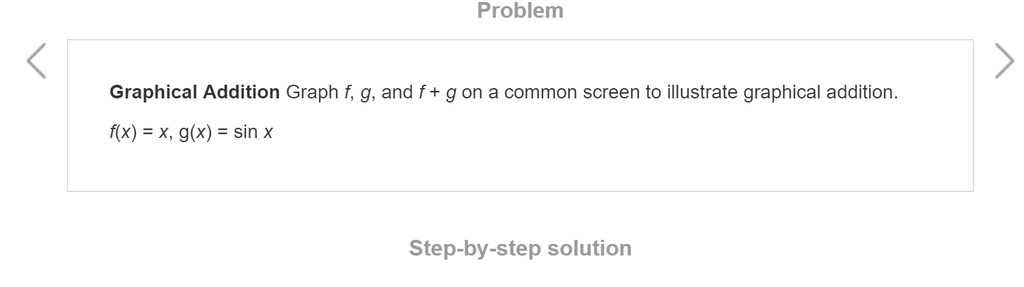
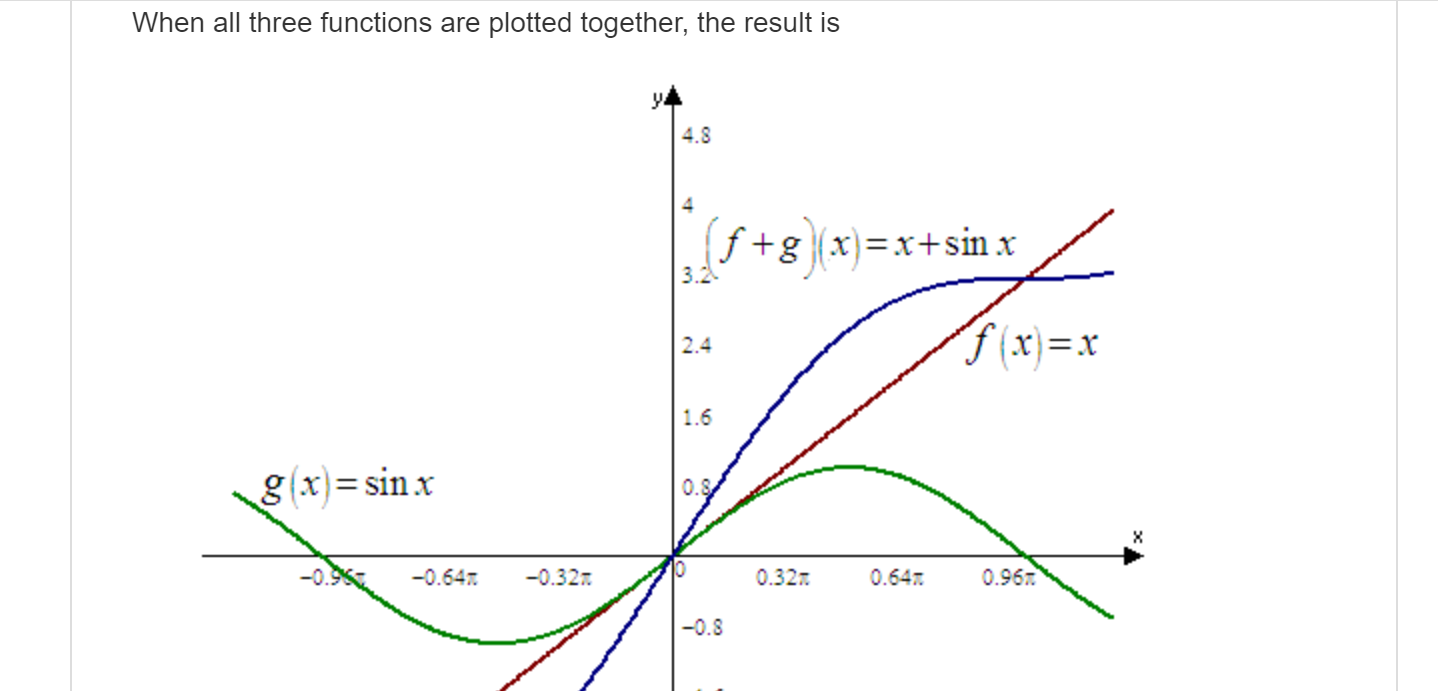
I can see that sin is just getting shift up, but i don't know how explain it numerically
 compact yew
I have a more general question. I hope I am not violating any server rules due to its generality but I was wondering what you guys find the best way to create geometry intuition. I am having a hard time visualizing and remembering graphs in my head of simple equations which I think are key to having intuition on more complex equations. While I found algebra to be some sort of a logic puzzle, geometry has always been one of my problematic fields of maths.
 twin ingot
I think trig is the least enjoyable class I have ever taken
twin ingot
Is there anything to make learning trig identities easier, mnemonics etc?
 glad ocean
hmm not sure about identities although you can use unit circles to solve for a few of them if that helps
If ur talking about the 3 main trig functions do:
SOHCAHTOA
Sine
Opposite (divided by)
Hypotenuse
Cosine
Adjacent (divided by)
Hypotenuse
Tangent
Opposite (divided by)
Adjacent
in which:
opposite is the side opposite to, let's say, angle x
adjacent is the non-hypotenuse side that touches angle x
Hypotenuse is the side opposite the right angle
@twin ingot ^
by divided by I mean the length of the numerator (side) over the length of the denominator (side)
twin ingot
@glad ocean those ones Ive got these other ones there are 25 of them
like (A+B) = cos(A)cos(B)-sin(A)sin(B)
glad ocean
oh
Yeah I guess it's just a matter of memorization often
honestly lots of students just get homework to memorize that ruins the point of learning
twin ingot
and it certainly doesn't make me enjoy math more
glad ocean
mood
twin ingot
this is also a half semester course so we just saw them today and I have to memorize them over the weekend
glad ocean
rip
just no life
start with memorizing one of them
And do two at a tine
time
Then three at a time
don't proceed until you've done it perfectly
twin ingot
well to make it worst we havent actually learned what we are even doing with them so I can't even apply them to anything
we get to use them monday and wednesday and test friday, I guess I will get to see what its like to try and eat an elephant
umbral snow
sin conserves the sign
cos conserves the grouping
sin(a + b) = sin(a)cos(b) + cos(a)sin(b)
twin ingot
its just a lot Im overrun
umbral snow
Needless to say sin doesn't conserve the grouping
cos doesn't conserve the sign
twin ingot
thanks that did help
umbral snow
Do you have to know tan²(x) + 1 = sec²(x)
twin ingot
I have to learn pythagorean , negative angle, difference of sin,cos, tan, double angle, half angle, and tangent half angle identities
umbral snow
You can get the double angle equations easily with the sum/difference equations
cos(2x)
= cos(x + x)
conserve grouping, not sign
= cos(x)cos(x) - sin(x)sin(x)
= cos²(x) - sin²(x)
twin ingot
interesting I see
twin ingot
haha I wish the rest of trig was that easy
hallow smelt
what is the proper notation for the domain of Tangent, CoSecant and Secant?
I know tangent of theta can take on any value except for multiples of pie/2
 timber hinge
1^2 👁
glad ocean
@twin ingot

In mathematics, trigonometric identities are equalities that involve trigonometric functions and are true for every value of the occurring variables where both sides of the equality are defined. Geometrically, these are identities involving certain functions of one or more an...
do you legit have to memorize all that (not the image, go to the link)
 atomic gull
hey guys i need help on my homework
how am i going to solve this without a graphing calculator
hallow smelt
its cot
the domain of tangent is all real numbers except for odd increments of pie/2
but i think co tangent is all real numbers except for increments of pie
anyone confirm?
@glad ocean You only have to memorze 2 pie/4 (root 2 over 2, root 2 over 2) and pie/6 (root 3 over 2, 1 over 2)
@glad ocean The rest of the radians are all reflections of those or in the inverse (pie / 3 is the inverse of pie /6) so (1/2, root3/2)
atomic gull
i really hate to solve this one without a calculator.
i can't remember the steps, period, amp
atomic gull
i don't get one thing at all. same to cos and sin.
this is tan and cot
i fail precalc class, gg
hallow smelt
do you know the formula and what the parts of the formula correspond to?
like do you know what B means and C and K etc.
atomic gull
yeah but i don't have the memory to remember all this
hallow smelt
y=aSink(x-b) you know each part does to the graph?
you're using tan so swap out sin for tan
atomic gull
well yeah. i don't even get all this useless trig
atomic gull
and even i barely have a hard time doing the trash unit circle
tru that. i only want to be bridge designer
hallow smelt
LOL
atomic gull
and the graph here is useless craps for me
atomic gull
POE is the only class i enjoy
hallow smelt
before you kill us
atomic gull
maybe i won't tbh. i don't have any interests
maybe not bridge designing
but now im currently designing the game with my friend.
fuck school
i want to drop out
smh
hallow smelt
im not an expert in trig im just barely taking it. 2 Weeks in
but chegg has helped a shit ton
chegg is god
you should use it
atomic gull
i don't have a debit/credit card
hallow smelt
oh dam
atomic gull
not everything is free
hallow smelt
well that sucks
atomic gull
but yeah bridge designing is not an interest for me anymore
idk man. im not that interest into school or choosing a career
 glad falcon
I have solved the first bit.
I need help with the equation of the horizontal bisector
What does that mean
tranquil wigeon
Since the bisector is horizontal it should not have any slope, so it should only intersect the point of intersection between the two lines.The bisector will then divide the two lines in two parts to give them the same length when dropping a pependicular to the bisector line. @glad falcon
glad ocean
^
i love how people are like "omg wikipedia isnt trustworthy assasfdaafsd!1!!1" when the actual concern is
how unnecessarily flawed their syntax is
 plucky marlin
is it about pi = e = 3
 mighty kayak
It will be very basic, but I need help to "prove" why this parallelogram is indeed right angles across the board
I've been out of geo-trig for a long time, but my friend, who is trying to pass an exam for work, struggled with this question for 2-3 hours.
I asked him to link it to me and I was able to arrive at the answer for the last question, area CDE
with his help with formulas... of course...
Anyway, he said I "assumed" that corner D was a right angle... we had a giant debate and eventually it ended with "if you can prove why you KNOW all corners are right angles, I'll believe you"
I don't care about being right or wrong, I truly want to help him realize why and prove they are right angles, given the information on the screenshot. He is upset, I think, because he didn't arrive at this answer and I glanced at it. Lets ignore feelings and arguments and focus on "how can I truly help him pass this test" -- How do I, mathematically, prove these are right angles, without "assuming?"
I would really appreciate any help. I apologize for the wall of text, but I had to google math discords, wait 10 minutes to post and here I am... I just want to help my friend pass his test. Thank you 😃
 nimble lynx
its just a regular n-gon with n = 4
plucky marlin
 nimble lynx
o
 plucky marlin
so what's the problem then ?
mighty kayak
Is there anyway to prove this without looking at the world "rectangle" in the problem?
He is saying that I can't prove it without the word problem.
I disagree
plucky marlin
u can try to show pythagorean theorem hold for the triangle
plucky marlin
does it hold ?
mighty kayak
Well sort of, right?
I was able to do p.theorm on the A to C triangle
BUT that doesn't subtract the E to A length
plucky marlin
A to C triangle ?
 glad falcon
Ok. I need some help understanding this @plucky marlin
I get everything and all.
but the thing that i dont understand is that why is it always TAN ?
 fleet wolf
remember sohcahtoa?
tan is opposite over adjacent
what the rise? thats the opposite side and what’s the run? well thats the adjacent side
glad falcon
Oh. ya true. Never thought of that. Thanks !
tranquil wigeon
@glad falcon my man Cymath 👍

 glad falcon
@tranquil wigeon Ye bud ! I gotchya. 👋 😎
@wind trail There are pretty good ones here https://www.amazon.com/Trigonometry-Mathematics-Science-Books/b?ie=UTF8&node=13991
Online shopping for Trigonometry - Mathematics from a great selection at Books Store.
Books are not the only resources to learn trig. There are many great VIDS online that are very helpful.
tranquil wigeon
Khan academy is all you need
winged saddle
lol ikr khan academy=god
 lyric gorge
I never learned anything out of khan academy
winged saddle
oK wEll i sTarT3d LeanrNIng ALgnegra 1 this summer and now i finished algebra 2 USING KHAN ACADMEY AFJ;ADSLFJDSKLFJ
lyric gorge
gordon would be proud of u
 steady sleet
could we not
 vital frost
how to you find an apothem?
glad ocean
Um Khan academy is useful excuse me?
It's just for review questions for, let's say, an exam
That you would want something else
Cause Khan academy doesn't give that many questions
 past siren
Could anyone tell me the difference between cos and sin graph? Got this question wrong because of this 😭
 somber coyoteBOT
A brief description and guide on how to use me was sent to your DMs! Please use ,list to see a list of all my commands, and ,help cmd to get detailed help on a command!
glad ocean
@past siren
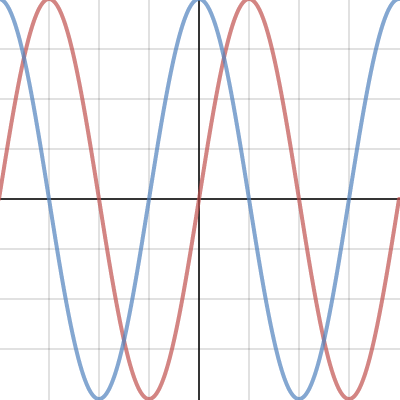
Desmos Graphing Calculator
sin(x) or the red line is increasing at x = 0, and cos(x) of the blue line is decreasing at x = 0
Also @past siren did you have a graphing calculator?
that may have helped
past siren
@glad ocean I do
Not very familiar on plugging them in though. Trying to self learn trig
glad ocean
ah
ok I'll figure out how to do it later but remember
If you don't know how to do it, just use a calculator
a graphing calculator
 wind trail
@glad falcon  thank you.
wait. those are normal books
normal books 🤢
🤢 💩 😩 🤢 💩 normal books
for normies 😫
Im a visual learner. I need all the flashy stuff
Im gonna look at Khan ty
 opaque folio
Hey folks...
so I'm a graphic designer...got me some equations I barely understand that deal with hypertrachoids...
I understand them..barely..but yeah...plug them in, I get the pretty circle pattern I want....
but then someone says, if you apply those same equations but in polar coordinates, you get them on a straight line...

TeX - LaTeX Stack Exchange
One of my last questions talked about certificates and I got great answers. Now my questions is, can one recreate a guilloche in TikZ like the one shown below:
or may be a border like
now, I remember vaguely that polar coordinates is just plotting the cartesian coordinates that would give me teh circle, but instead of x,y, we're giving it in terms of radians & angles...
I think...
where am I best starting out trying to brush up on my maths here...
(probably not articuting this very well)
opaque folio
how you think I feel? I'm 35. Hacen't done any real maths since i was 16
timber hinge

Polar coordinates are (r,theta)
where r is the length of the line, and theta is the angle to the positive x-axis
polar coords are typically not taught alongside trig
Khan Academy probably has the basics you want @opaque folio but hypertrachoids are probably something you'll need to dig around for explicitly, I found a formula but its pretty darn ugly even in polar form
opaque folio
thanks...I've just about gotten to grips with the formula in cartesian form...
(I have a script open in adobe illustrator that draws it for me)
but transposing it to a polar form eludes me presently...
timber hinge
x = r cos(theta), and y = r sin(theta)
then a lot of
fiddling
to see if it simplifies nicely
Some stuff gets really nice in polar form
Other stuff 🤢
opaque folio
well this is for guilloches;
they look very pretty, hence my interest...I know that they turn from a rosette to, well, basically a sin wave when expressed in polar
I've literally just worked out how the script (written by someone else) us using the actual equation...
timber hinge
Don't most programmers just hijack other peoples code lmfao
opaque folio
i certainly do lol
I'm not really a programmer...I'm a designer, but there is literally nothing on the market that does what I'm wanting that costs less than $1000
glad falcon
@opaque folio I can code for ya. For free
timber hinge
yea software is pricey, esp specialist stuff
hallow smelt
-2+cos(4pix) https://www.desmos.com/calculator/3mqdzddv6o
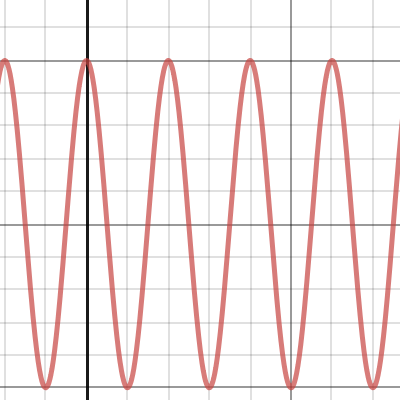
Desmos Graphing Calculator
can someone explain how I interpret what is happening to the amplitude? I know cos should normally be at 1 and the way i want to read this is its 1 shifted up 2 and reflected down, but thats not whats happening
timber hinge
Amplitude is unchanged for this graph
timber hinge

hallow smelt
in the Function F(x)= -4 Sin 2 ( X + Pi/2)
do i distribute the 2 into the X and Pi/2 ?
so it becomes 0 < 2X < 2(Pi/2)
wait nvm 0 < (2X+ Pi) < 2Pi
 dire rampart
first one
hallow smelt
its the last one i posted
cause look here https://www.desmos.com/calculator/dwu2i16kme
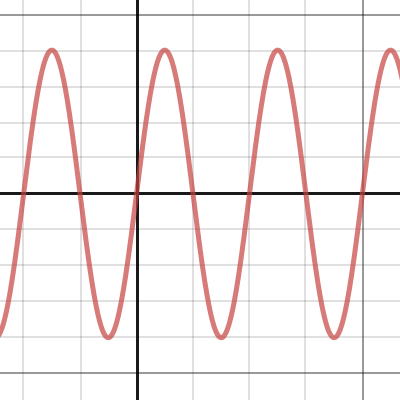
Desmos Graphing Calculator
0 < (2x + Pi) < 2Pi you subtract pi from all 3 sides -Pi < 2X < Pi then divide everything by 2 and -Pi/2 < X < Pi/2
given -Pi/2 < X < Pi/2 the Period should be Pi and the spacing should be every Pie/4
upper karma

 finite river
@upper karma use the cosine rule after working out the angle A
 hard gale
or pythagoras twice
upper karma
How would I work out |AC| though?
This problem is melting my brain lol, I suck at math
 zealous kiln
I guess these guys don’t answer very simple problems
hard gale
,calc sqrt(63)/2
somber coyoteBOT
Result:
3.9686269665969
so you get 27-ish ?
upper karma
Was that the correct answer?
hard gale
i get sqrt(63)/2
upper karma
I did not write that. My older cousin attempted it. Could you help me formulate solid proof of a correct answer?
hard gale
so if you apply pythagoras in BCD you get BC²+CD² = 7²
in ACD you get AC²+CD² = 8², or (BC+3)²+CD²=8²
two equations
two unknowns
upper karma
Hmm
hard gale
(and the area of BCD is just BC*CD/2)
 lament bay
opaque folio
lament bay
opaque folio
@glad falcon very kind, and i'd take you up on that, but then I wouldn't have learned...
tho I may ping you for tips/advice
glad falcon
@opaque folio no worries
timber hinge
👁
glad falcon
Aight socthis question is pretty easy but I don't know how to approach this
Like it could be ab the CD at the bottom
Or ac and the bd at the bottom
 astral hornet
well, for a parallelogram, do diagonals bisect?
opaque folio
@glad falcon I've almost got the code doing what I want now...I have a hypertrachoid and a epitrochoid...
now it's just putting in repetition steps and working out whether I want to write a plugin for Adobe Illustrator in C++ which I don't know very well, or an extension in JavaScript...which I also don't know very well lol
glad falcon
@opaque folio sorry ma dude I can't help rn. I am on Android and my laptops gone to the manufacturer department
glad falcon
Beautiful
opaque folio
only help I need now is advice from seasoned Adobe plugin folks as to which route I should take
tranquil wigeon
@opaque folio what are you trying to achieve?
opaque folio
I'm trying to build a guilloche generator inside Adobe Illustrator (I'm a graphic designer)
there's only one plugin suite to do them, and it's only sold ot governments/large design studios, for tens of thousands....there are 3 external programs that do it, but the cheapest is $500, and all 3 are shite and only run on windows, and 2 are now completely unsuported
guilloches are essentially repeated curve forms
eg the one on the left above there I just did...it's manually repeated cos I haven't coded repetition in yet...
opaque folio
Javascript running in Adobe Illustrator's script function
I have a JS script someone else wrote that did a simple guilloche, but only one, with limited paramters etc, and I'm slowly editing/building on it
but I am unsure if I should abandon JS and go for a full-on C++ plugin, for better IO
zealous kiln
Idk my English not too good can someone vaguely explain what is going on in this question cause i find it wierd and something missing
It’s the last slab on the page
upper karma
the one about desert tank?
zealous kiln
Yeah
I’m finding it hard to follow what they are saying...due north due east? Idk
Don’t need it solved just need vague guide on what they are directing me to draw
upper karma
hold on im trying to draw it!
im not that good at math but ill try and see if i can help
here you go! @zealous kiln
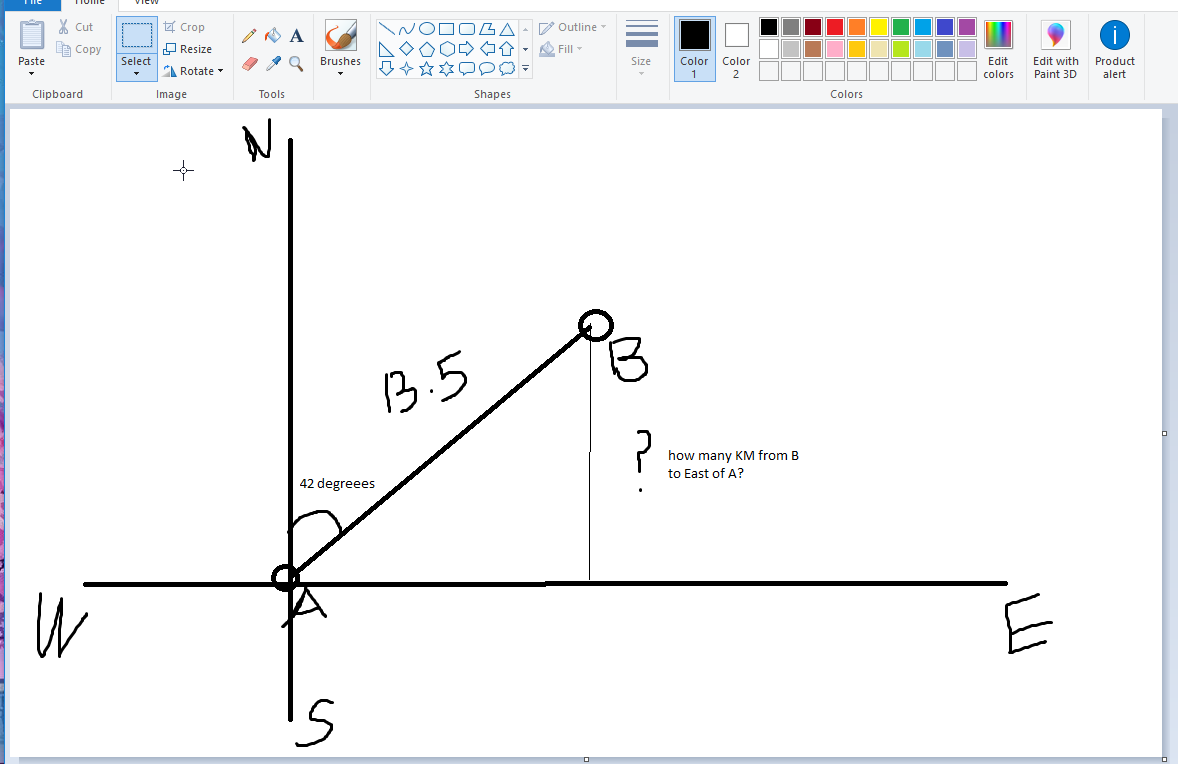
so basically, it says "13.5km from A to B"
so i first started with a point A
then a point B
I drew a line, 13.5km
zealous kiln
Oh my god I need sleep
upper karma
you know what true bearing is right?
i pretty much jsut googled all this and drew it
zealous kiln
Ok thnx for making me remember directions of a compass lol
upper karma
okay no problem
and because it asks for "due east"
im assuming directly east of where it was originall on A
is what you have to calculate for from Point B!
zealous kiln
I made a huge mistake omg yeah thnx u actually cleared a lot of space in my head now
Ok so due east ok I get it
upper karma
no problem!
zealous kiln
There was but now I guess there is “no problem “
tranquil wigeon
@opaque folio what parameters do you have on your epitrochoid?
opaque folio
erm...
hypertrachoid at the moment
tho I think I drew an epitrochoid by accident by making the radius of the secondary circle negative
it's in the javascript...
but essentially i'm drawing by using a for loop to iterate theta by a small amount
changing all the parameters manually, but I want to integrate a control to allow for discrete changing...
the equation is the hypertrachoid one
tranquil wigeon
i'm trying to achieve the same design as the one you have, but it would be impossible to guess
tranquil wigeon
damn looking good
opaque folio
I have the r set to be R/3
so it will always be one third the radius of the major
d (distance from centre of the smaller circle to the point being drawn...I'm sure there's a term for this) is set to 60
and then to make that pattern I just replicated the script 9 times, varying the major radius (R) from 60-140
zealous kiln
Umm...please tell me I can still solve this regardless of the fact tht distance of B from the rock is missing?...
 real sparrow
Yes.
zealous kiln
Hmmm
real sparrow
Use tan function to get the height and use tan again to get the distance
zealous kiln
But what distance do I have to work with here
I need one of B distance right?
But I only given A
real sparrow
Coz the perpendicular distance will be the same for both the tan functions and that gonna fetch you the distance of B
zealous kiln
I’m sorry I don’t know what you meant by perpendicular tan function
I visualised the two triangles but I don’t find any equal depistances betweeen them on any side of triangle
real sparrow
Well both the triangles gonna share a common side ? And you can use the tangent/tan of the different angles to get that value of the base of the largest triangle and then for the smaller triangle ?
zealous kiln
But they dont have a common side
Isn’t tht a rule when I increase angle the H increase, O increase and A decrease
real sparrow
What's O , A or H tho ?
zealous kiln
Hyp adjecent, opposite
We r using standard right angles that meet at the origin or in this case Group a and b
real sparrow
Oh umm there's a variation in the angle coz of the distance tho
zealous kiln
Yes yes which is why the question has something missing which is distance of group b from rock
So still leaves my question if It’s still possible to solve the uestion
Idk imma skip it
Ping me if someone knows a way to get around not having a single side of b triangle given
 stark bluff
@zealous kiln I'm not english, what is a bearing
real sparrow
stark bluff
I only know what a Bearing 9 is
real sparrow
shrugs
real sparrow
Well just apply the similar triangle concept in triangle AFB and triangle EDM where M is the point where line AE intersects line CD.
buoyant oasis
will try, thanks!
real sparrow
👌
zealous kiln
Sigh...dead nvm man the questions isn’t solveable
real sparrow
The rock one ?
 simple mica
I'm with dead. It's supposed to, nothing missing. Line OP in dead's diagram is the common side you're looking for, @zealous kiln
*It's solvable, nothing missing
real sparrow
🐷
opaque folio
@glad falcon hey man you around?
upper karma
It's not
This identity works fine when the tangens is defined and nonzero
,wolf sin(900)/tan(900)
somber coyoteBOT
Requested by Xaositect#5991
upper karma
yeah
steady sleet
you get 0/0
upper karma
that's because $\tan(900^\circ) = 0$
somber coyoteBOT
Xaositect:
steady sleet
:S not good enough
upper karma
I'm surprised worfram does not count in radians by default
steady sleet
== sind(180)/tand(180)
oof right
no MathBot
but sin(180) and tan(180) are equal to 0
 stuck jewel
sorry i have a quck question
cos^2(2x)
if you expand, you get (1+cos(4x))/2
but my question:
cos(4x) = cos(2x +2x)
and so that becomes cos^2(2x) -sin^2(2x)
what am i doing wrong here?
,wolf cos^2(2x)
somber coyoteBOT
 Requested by nova_n#3799
stuck jewel
Requested by nova_n#3799
stuck jewel
,wolf (1-cos(2x +2x))/2
somber coyoteBOT
Requested by nova_n#3799
 exotic meteor
how do you calculate the length of $\vec{AB} = 3\vec{p} - 4 \vec{q}$ where $|\vec{p}| = |\vec{q}| = 2$ ?
somber coyoteBOT
Autistic Hoodie:
exotic meteor
Usually if it were $\vec{i}$ and $\vec{j}$ you would just do
somber coyoteBOT
Autistic Hoodie:
exotic meteor
$|\vec{AB}| = \sqrt{3^2 + 4^2}$
somber coyoteBOT
Autistic Hoodie:
exotic meteor
But I believe this doesn't apply here...
 gritty siren
$|\vec v| = \sqrt{\vec v\cdot\vec v}$
somber coyoteBOT
Tuong:
somber coyoteBOT
Autistic Hoodie:
somber coyoteBOT
Autistic Hoodie:
somber coyoteBOT
Autistic Hoodie:
somber coyoteBOT
Autistic Hoodie:
exotic meteor
I've been taught this for the length of a (x,y,z) vector...
@gritty siren Does $|\vec v| = \sqrt{\vec v\cdot\vec v}$ always apply?
somber coyoteBOT
Autistic Hoodie:
gritty siren
it's kind of a definition
the definition of the euclidean norm
(with the usual dot product)
you could work with a fancier dot product, and it would still be a norm
somber coyoteBOT
Autistic Hoodie:
exotic meteor
I assume it's not but I've seen it being done like this...
dire rampart
yes it is
astral hornet
yes, and opp angs are just part of it
zinc grail
@astral hornet
so just for clarification
since we know the lines are all parallel
we know the angle on the other side is gonna be the same?>
astral hornet
bcd is composed of bce and ecd
abc and bce are linear pairs, so bce can be found
and b is opposite aec, so aec is found
using aec, ced is linear pair so that is also found
ced is isosceles so cde is found
through angle sum ecd can be found
and angle addition of bce and dec gives bcd
 tropic shard
Que pasa
tropic shard
Um.
 tropic shard
Hm.
 paper minnow
:/
tropic shard
Man, that's a tough one to word out.
tropic shard
oof
tropic shard
Okay so imma guess on this explaination..
Ok so we know that For the left vertice it starts at (0,0)
paper minnow
yes
tropic shard
The top left vertice is at (a,b)
paper minnow
how do u know that
tropic shard
A and B are dummy variables
paper minnow
ok
tropic shard
Meaning we just define them as so.
paper minnow
kk
tropic shard
So we know that midline means in between (0,0) and (a,b),
paper minnow
yes
tropic shard
So it'd be ([a+0]/2,[b+0]/2)
(let me check to see if that's right, I'm a little tired)
tropic shard
Oh okay, so we go by the same thinking for the right side
tropic shard
Just instead of starting at (0,0) for the bottom, it'd be (c,d)
paper minnow
i know what this person did
like they did 2a, 2b on the top
that was not me @tropic shard
i dont get it but i know they put it as 2b
2a
tropic shard
I know how I'd explain it, but I'm not sure if they'd let you put it my way lol
tropic shard
19 xD
tropic shard
Handwriting really doesn't get better with practice xD
They're asking you for some deep stuff
tropic shard
Good job making it this far
paper minnow
hahah
exotic meteor
What is the trick when finding the line where two planes intersect?
I know how to find the vector of the line but how do I find a point where they intersect?
$2x-y+5z-5=0 \ 7x+14y-24=0$
somber coyoteBOT
Autistic Hoodie:
exotic meteor
Okay I realized it
upper karma
how would i do this problem?
i'm really confused
i know how to get the center, just not the radius
tropic shard
x²-2x+y²+4y=20
(x²-2x+1)+(y²+4y+4)=20+1+4
(x-1)²+(y+2)²=25
5 would be the radius.
@upper karma
winged saddle
no
mathlyfe
u keep doing that lmao
its
(x-1)^2+(y+2)^2=25
so 5 is radius
@tropic shard
@upper karma
cuz u complete the square there but u forgot to square the term
the constant
u did +2 its +4
tropic shard
?
winged saddle
u completed the square wrong
tropic shard
You sure?
winged saddle
yes
tropic shard
xD
somber coyoteBOT
Autistic Hoodie:
dire rampart
prove what exactly
exotic meteor
That if Re(w) is 0 |z| will always be 1
gritty siren
express z in term of w
dire rampart
do you have to?
should be able to reach that by setting the real part of the fraction to 0
upper karma
sec^2 = 1+tan^2
 upper matrix
is that each side simplified?
upper karma
Plug it into sec
and you have tan everywhere
then u get = tan^4 - 2 - tan^2 - 1 -tan ^2
tan^4 - 2*tan^2 -3 = x
tan^2(x) = t
t^2 - 2t - 3 = 0
4 - 4 * -3 * 1 = 16
2+-4 / 2*1
t = 3 or t = -1
tan^2(x) = 3 or tan^2(x) = -1
tan^(x) = +-sqrt(3)
upper matrix
alright thank you so much
upper karma
np
 outer aspen
i am incredibly lost.
so all im given is acb = 40 deg, and the theorem that "two triangles drawn on the same side of a chord will have the same angles where they touch the circle"
and i'm trying to find the measure of BDC. i got 50 degrees on my first attempt, but it feels wrong. if someone could break this down, i would greatly appreciate it
astral hornet
50 is right 
since bca and bda intercept the same arc, the angle measures are equal
and sicne adb is inscribed in a semicircle, adc is 90
and do some angle addition and you'll find bdc to be 50 🐱
glad falcon
if there was a triangle inside of a circle
and the points were given for the triangle in coordinates
I would have to look for the centroid right ? to get the coordinates of the midpoint ? of the circle
@astral hornet 😃 ^ ??
I am pretty sure I am correct
astral hornet
the circumcenter is equidistant to the vertices of a triangle
glad falcon
But this is what confuses me
astral hornet
being equidistant, circumcenter is the center of the circle that includes the vertices of the triangle
the special property of a centroid is the 1:2 ratio
glad falcon
Hmm. So the I can say that the center of the circle = centroid of the Triangle ?
astral hornet
no. did you even read what i wrote?
glad falcon
Yes.
but i dont understand it
If u could make it a bit simpler it would be great thanks
astral hornet
glad falcon
Woah.
astral hornet
equidistant
glad falcon
Is the drawing of scale due to mouse drawing Or is that other line meant to be out side of the triangle
That means If I calculate the centroid of the triangle. That is not equal to the center of the circle
Ok. I think I understand
astral hornet
in the drawing assume the circle is a true circle, triangle vertices on circle and tick marks mean congruent
the only time centroid would be useful is for 1:2 ratios, not circumscribing
glad falcon
Oh.
Ok. So one more thing

Subscribe Now: http://www.youtube.com/subscription_center?add_user=ehoweducation Watch More: http://www.youtube.com/ehoweducation Finding the circumcenter of...
Why does she call the Medians, " perpendicular bisector "
A perpendicular bisector is whole differnet level isnt it ?
tropic shard
Nice basketball.
glad falcon
What.
astral hornet
for the circle parts just find circumference of circle, then circumference if radius is decreased by 8
the rectangle its subtracting diameter from length of field
astral hornet
2 semi circles (or just one circle) + rectangle
 patent echo
@astral hornet sorry for pinging but the circle circumference would be 76pi
but how would u find the other side lengths for the rectangle
tropic shard
The length of the field is 60ft, the track is 8 ft, so the total height is 76 ft.
 patent echo
ye
tropic shard
r=38
patent echo
ye
tropic shard
Diameter = 76, 136-76
tropic shard
Yup.
tropic shard
It'd be the distance between the two dots
patent echo
wait
so all the sides
are the same
then?
for the smaller
the circle inside
i mean
tropic shard
Yeah, seems so
patent echo
how much farther would someone running a lap on the outside lane travel than someone running a lap on the inside lane
tropic shard
Hmm.
patent echo
this question is weird af
tropic shard
I gotta work it out, so it may take me a minute lol.
patent echo
how do u get that? wait wut
wait
did u do
76pi - 60pi
don't u need the perimeter of the rectangles
@tropic shard
tropic shard
Nah, the horizontal distance of the rectangles are the same regardless if you're close or far from the center
It's when you're doing those curves that distance piles up.
patent echo
so all u need to do is subtract the diameters
tropic shard
No, you'd only subtract the circumferences.
So the large circumference is 76π, the small one is 60π, 76π-60π=16π
plucky marlin
drop an altitude from E on BC
plucky marlin
y not ?
plucky marlin
use pythagorean theorem on both triangles
glad falcon
wdym
glad falcon
Oh yea Thanks Man 😃


 glad falcon
Love ya ( no homo ) 😃 Thanks for the help @plucky marlin
plucky marlin
np
glad falcon
@plucky marlin Ok what did u get for the final value
plucky marlin
i didnt do it
glad falcon
oh. 😦 Ok 👋
plucky marlin
,w solve (10 - x)^2 + h^2 = 64 and x^2 + h^2 = 36 and h > 0
somber coyoteBOT
 Requested by soap#7503
plucky marlin
Requested by soap#7503
plucky marlin
so the area is 24/5 * 10 = 48
exotic meteor
How would one prove that $\overline{(\frac{z_1}{z_2})} = \frac{\overline{z_1}}{\overline{z_2}}$
somber coyoteBOT
Autistic Hoodie:
glad ocean
wtf is this
exotic meteor
@glad ocean What?
dire rampart
algebra
glad ocean
Ok so the proof
exotic meteor
conjugated complex number
glad ocean
No
Just since both at positive
Wait
I'm an idiot so forgot what the overbar means
exotic meteor
its conjugate
gritty siren
maybe work with the re^(iθ) form to make things easier
exotic meteor
You mean like
Prove that
$\line{(\frac{x+iy}{a+ib})} = \frac{\line{x+iy}}{\line{a+ib}}$
somber coyoteBOT
Autistic Hoodie:
Compile Error! Click the  reaction for details. (You may edit your message)
exotic meteor
Extend it'
Sot aht it looks the same
I think that would work yeah
Cool
$(z-\frac{1}{2})^4 = (1+i\sqrt{3})^6$
somber coyoteBOT
Autistic Hoodie:
exotic meteor
What is the simplest way to solve this?
exotic meteor
Hmm
real sparrow
Yes.
somber coyoteBOT
Autistic Hoodie:
exotic meteor
Since the right side does not have an imaginary unit
The equation is actually
$(x-1/2)^4 = 64$
somber coyoteBOT
Autistic Hoodie:
exotic meteor
If we get the 4th root of every side
Hmm
We get
$(x-1/2) = 2\sqrt{2} \ (x-1/2) = -2\sqrt{2} \ -(x-1/2) = 2\sqrt{2} \ -(x-1/2) = -2\sqrt{2}$
somber coyoteBOT
Autistic Hoodie:
somber coyoteBOT
Autistic Hoodie:
gritty siren
$64^{1/4}=2\sqrt 2$
somber coyoteBOT
Tuong:
exotic meteor
Hmm
How do I solve it then
I believe I am correct till the part
$(x-\frac{1}{2})^4 = 64$
somber coyoteBOT
Autistic Hoodie:
gritty siren
but the set of fourth roots of 64 is\
${2\sqrt2, i2\sqrt 2,-2\sqrt 2,-i2\sqrt2} $
somber coyoteBOT
Tuong:
exotic meteor
I don't understand that
If we are talking about complex numbers than that applies?
real sparrow
$_(x-1/2+iy)^{4} = 2^6 \ (x-1/2+iy) = 2^{3/2} / <=> x-1/2 = 2^{3/2}$
somber coyoteBOT
DEAD.: