#geometry-and-trigonometry
1 messages · Page 186 of 1
 vital frost
 keen aspen
Not sure how to calculate CD if you dont have an angle value
Also you can use Law of Cosines to find LW
vital frost
Yeah and did u get 4.3?
keen aspen
LW^2=5.1^2+5.1^2-2(5.1)^2cos(50)
Or better yet law of sines because of isoceles
== sind(65)
 charred spearBOT
sin(13×π/36) = 0.90630778703665
vital frost
Ye I used sine
keen aspen
==sind(65)/5.1
charred spearBOT
10×sin(13×π/36)/51 = 0.177707409222873
keen aspen
==sind(50)/(0.177707409222)
charred spearBOT
500‚000‚000‚000×sin(5×π/18)/88‚853‚704‚611 = 4.3107062697763
keen aspen
Yeah 4.31
keen aspen
Look at the triangle with 50° in correlation to LW
vital frost
Which im not sure what to do
keen aspen
What's the max value for LW if you were to make the angle as big as possible
vital frost
🤷
 chrome fiber
cant you just use the triangle inequality
and the reverse inequality
to find the range
vital frost
I'm pretty sure
chrome fiber
instead of whatever ur doing, pjs
vital frost
@chrome fiber yeah I asked other people and they said they used sine
Which we have not learned about
chrome fiber
yeah no
vital frost
Yet
vital frost
yeah so what do I do to find it without sine
chrome fiber
for a triangle with sides $a, b, c$, the range of any side is given by $|b - c| < a < b + c$
 somber coyoteBOT
june:
chrome fiber
triangle inequality basically says that the length of any side of a triangle is always going to be less than the sum of the other two sides
chrome fiber
reverse inequality says that the length of any side of a triangle is always going to be greater than the absolute value of the difference of the other two sides
idk pjs, you were confusing the poor guy
vital frost
And she just went over it fast because it was going to be thanksgiving break
chrome fiber
so suppose you have a triangle of sides a, b, c
take side a
triangle inequality says its going to be less than sum of the other two sides
vital frost
So I'm shaky on how to get CD, DL, and LW
chrome fiber
which is b + c here
so you have a < b + c from that
reverse one says
any side will be greater than absolute value of the difference of other two sides
so take a
absolute value of difference of other two sides is |b - c| or |c - b| (order doesnt matter here)
so a > |b - c|
you can combine those two inequalities
$|b - c| < a < b + c$
somber coyoteBOT
june:
vital frost
uh brain is hurting
keen aspen
Notice that if you were to make that angle of 50° all the way out to 180°(but not yet 180 due to it still being a triangle), it would approach a line segment of the two sides added together
keen aspen
And vice versa with making your angle approach 0 will allow LW to be the two side lengths subtracted
 jade solar
So, In ACD 4.2 - 2.5 < CD < 4.2+2.5
 vital frost
The answer would be nice
keen aspen
0<LW<10.2
vital frost
Is that for the ABC part?
keen aspen
Well C as a compound inequality
keen aspen
Upper bound for length of LW is 10.2 so LW<10.2 for a
vital frost
Ok
keen aspen
And LW>0 for lower bound
vital frost
So how would you find CD and LW without Law of sine and cosine, and what are the answers @keen aspen
keen aspen
You cant really
Unless the triangles were right
You could use pythagorean theorem but nope
vital frost
so u do nothing?
keen aspen
Well you can find the length but not without trig
vital frost
Yeah how do u find that
Or is sine the only way?
We got another one to do also
But it doesn't have more steps to it
It's just solve
vital frost
PR also 1.9
keen aspen
Yes
vital frost
I'm guessing RJ 1.7
JM and MV not sure
@chrome fiber could probably help on this one?
keen aspen
Yeah maybe June can find the lengths, idk if its possible
chrome fiber
which ones?
keen aspen
Oh wait maybe I'm stupid
vital frost
Recent Post for JM and JV
chrome fiber
its asking for a range
vital frost
Yes
chrome fiber
just use what i told you
keen aspen
KMJ could be 28° maybe?
chrome fiber
$|b - c| < a < b + c$
somber coyoteBOT
june:
chrome fiber
for both of those triangles
keen aspen
Oof range lol nvm okay yeah
vital frost
That's what I'm supposed to use for the 1st too lmaoo
Answers would be nice like I said
keen aspen
Wow I need to read questions better
keen aspen
Look at PR
vital frost
Uh huh
vital frost
So MV the longest ranglr would be 4.8 and the shortest would be 0.6
@keen aspen yes?
For rj idk what to do
vital frost
Ok
keen aspen
And now JM
vital frost
And JM?
keen aspen
Now add up all the lowest bounds
And add up all the highest bounds and thatll be your range
keen aspen
Lol
vital frost
I really appreciate y'all helps @keen aspen @chrome fiber
chrome fiber
np
vital frost
life savers lmao
jade solar
@clear haven I ended up doing something like this
Does your method with vectors do something like this?
 left folio
"Show that x^2 +y^2 = r^2 is orthogonal to y = mx. Conclude that the family of circles centered at the origin is an orthogonal trajectory of the family of lines that pass through the origin. Note that there is a technical issue when m = 0. The circles fail to be differentiable when they cross the x-axis. However, the circles are orthogonal to the x-axis. Explain why. Likewise, the vertical line through the origin requires a separate argument."
Do i just plug in some numbers for x and y and graph it or is there a formula i don't know of?
left folio
Please some help
 patent robin
wait wat
so what's the question
do they want you to prove that the circles are orthogonal to x axis
chrome fiber
@left folio you have to show that the slope of x^2 + y^2 = r^2 times the slop of y = mx is -1
left folio
Since y'=-x/y i understand that but how
chrome fiber
an intuitive approach would be to think of all y = mx as all every straight line passing through the center and since the circle is centered at the origin, every single line must be a radius to the circle
which is always tangent to any point on the circumference
from (I)
$y' = -\frac{x}{y}$
somber coyoteBOT
june:
somber coyoteBOT
june:
chrome fiber
what's the product of those two?
left folio
Sorry but the product of what exactly
chrome fiber
the two slopes
left folio
@chrome fiber I see that m is the slope in the equation y=mx but i don't see any other slope in the equation y'=-x/y
Sorry if i sound stupid but i don't know
chrome fiber
@sick veldt use another question channel below
@left folio well yeah
so, the slope for the circle is y' = -x/y, right?
left folio
Yeah
left folio
Do i count them both as functions?
chrome fiber
so m = y/x
left folio
And multiply using the function's rules and so on?
chrome fiber
not the circle
left folio
ok
chrome fiber
but anyway
so for
slope circle = -x/y
slope of line = m = y/x
you need to prove that slope of circle times slope of line = -1
for orthogonality
left folio
Mmmh i understand
 vagrant bolt
in terms of tan x
vagrant bolt
how does cos(90-x) = sin(x) go to 1/tan(x)
vagrant bolt
thanks what about the 4d)
 last pollen
well you know sin and cosine are periodic functions
so you can subtract 360 from the functions argument
vagrant bolt
is the arg the brackets rihgt
last pollen
the argument is what's between parentheses
vagrant bolt
so sin(540-x)/cos(540-x) --> sin(180-x)/cos(180-x)
last pollen
right
vagrant bolt
what now
vagrant bolt
ill try but im pretty retarded on this topic
last pollen
lol
well it's just about applying formulas
do you have some formula in your notes
that could help?
vagrant bolt
is 4d tan(-x)
the book says -tanx but im assumin tan(-x) is the same thing
yea thanks a lot i finally understand this shit
tbh the topic is acctually fine its just those questiosn which confused me the fuck out
jade solar
As a visual person I find answering questions like this easier when I look at the graphs and try to figure them out
vagrant bolt
yea i plot them on desmos
@last pollen the -360 thing for the last one, does that work for the
would that work for them all
last pollen
yes
all of them are periodic functions
and yes tan is an odd function
so tan(-x) =-tan(x)
this comes from tan being the product of two functions
one is even the other is odd
so you get an odd function
sin(x) is the odd one
cos is even
vagrant bolt
ok so the first one is 1/tanx , but if i minus 360 from sin(90-x)/cos(90-x) --> sin(-270-x)/cos(-270-x)
and then do tan(-270-x) --> -180 --> tan(-450-x) --> ?
@last pollen
last pollen
that doesn't help much
it's not wrong, but won't help you with this excercise
you should follow blah's advice and make a drawing
 somber crane
I see you cardi 👀
 clear haven
@jade solar my method with vectors is slightly related but is very very different
just dw about it haha
vagrant bolt
how is tan(270-x) --> 1/tanx and tan(360-x) --> -tanx!
 glad ocean
mostly but right AC = AC
because cf is an extension of ac
but AC is the actual sides of the triangle
@lament bay
 lament bay
Oh my bad thanks!
glad ocean
and DAC and BAC should be congruent by substitution
lament bay
Really?
glad ocean
yes
lament bay
How and when should I use substitution property?
glad ocean
ok so (this might take some time to type):
After vertical angles
<BAC ~= <CAD
~=*
by that I mean congruent
lament bay
Can you help me on #2?
lament bay
So if shapes connect within each other via lines? It always means reflexive ?
glad ocean
yes for the segment that is on both triangles
vital frost
Wait @keen aspen how do u her CD DL and LW again?
glad ocean
@lament bay after Ef = Ef:
De + ef = cf + ef
vital frost
Add what and what
lament bay
Segment addition postulate?
lament bay
I still don’t get when you use substitution
glad ocean
let's say for example:
keen aspen
@vital frost your range
vital frost
Yes
keen aspen
LW is from 0 to 10.2
lament bay
How do I know on a triangle tho?
glad ocean
Use it after you use addition property to combine shorter segments into a longer segments
lament bay
So it almost always comes after segment addition postulate?
vital frost
So DL and CD @keen aspen ?
glad ocean
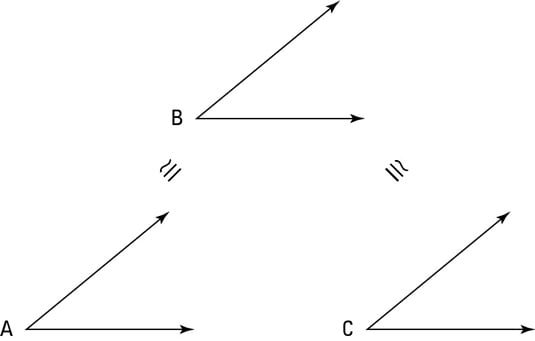
You’re probably already familiar with the Transitive Property and the Substitution Property from algebra. If a = b and b = c, then a = c, right? That’s transitivity. And if a = b and b < c, then a < c. That’s substitution. Easy enough. Below, you see these theorems in g...
vital frost
Would it be 4.8+3.1 and 4.8 - 3.1
glad ocean
@lament bay use the article above
keen aspen
Yep
lament bay
Ok give me a sec
keen aspen
Yep!
glad ocean
brb
vital frost
Ok cool, thanks
lament bay
@glad ocean I’m really bad at this 😦
 reef inlet
lament bay
reef inlet
lament bay
I always never know the next step after given lol
Like I don’t see the angles or theorems I guess haha
@glad ocean so what should I do for the next step?
 alpine solstice
I don't think you technically need the rest of that to prove AB = CD
B and D are both given to be right angles, so A and C must be right angles as well
Which makes this a rectangle, and we know opposite sides on a rectangle are equal in length
Or, since BF and ED are equal, that means the hypotenuse for the 2 right triangles are the same, which means the lengths are going to be the same as well
 nocturne gate
wh
nocturne gate
So 140
keen aspen
Yes
nocturne gate
thank you, I’m helping my friend out with their math work.
I just didn’t understand it cause it’s work for a couple grades above me
keen aspen
And you decided to agree to helping him?
nocturne gate
well like I don’t want her to get bad grades cause they’re cool as heck, they asked the server I’m in and I decided to step in and help.
 eternal root
chrome fiber
eternal root
chrome fiber
what have you tried?
 hazy granite
meme question?
keen aspen
Well you can, but you have to use protractors and stuff
hazy granite
you cant find the value of the angle opposite of x
keen aspen
hazy granite
actually maybe you could make a simultaneous equation
unless the one im thinking of are equal
okay actually neverind
40+x+50+y+(20+60+50+30)=360
x+y+70=180
welp nevermind
these 2 are equal
left folio
@chrome fiber " For k ̸= 0 and c ̸= 0 show that y^2 −x^2 = k is orthogonal to yx = c. In the case where k and c are both zero, the curves intersect at the origin. Are the curves y^2 −x^2 = 0 and yx = 0 orthogonal to each other?" Sorry for the @ but i'd like to know if i can just say that they're not orthogonal because their product can't be -1 or what else?
chrome fiber
If the product of their slopes is not -1, then they’re not orthogonal
Assuming ofc that both slopes are defined
left folio
Thanks again, sorry for the @ again 😃
 versed wagon
someone please help me, i have no idea how to do this
A 8,-6 and B 5, -2 are 2 points in what retion does the line 6x - 8y - 71 = 0 divide [ab]
plsss :(
 hard gale
yes iirc what a centroid is
hard gale
yes 96$
hard gale
yes maybe consider trusting yourself also
hard gale
k
hard gale
yas
hard gale
ye
 sick veldt
kk ty
jade solar
Use the sin(a+b) formula, find sin x using sin^2 + cos^2 =1?
keen aspen
Can I use trig
keen aspen
B is bisected from BF, that means if you were to extend BC and AD into transversals, you can say that EBF and AFB are congruent from alternate interior angles
 stable tusk
sinx=0.40
i get 0.41 for the first
how can i find the other angle
apparently the answer is 2.73 but how do i do it
 dire rampart
$\sin(x)=\sin(\pi-x)$
somber coyoteBOT
lemon catto:
stable tusk
How do i make this 1-2sin(x/2) equal to 1-sinx
 torn linden
Someone help me on 5-7
 signal hemlock
sure @torn linden
so do you know what the angle of elevation as opposed to angle of depression means?
i believe the wording is what causes the problem for you right?
@torn linden
torn linden
No no
So I think #5 is correct
I know that I'm using the correct function on #6, but whenever I set it up I get 0.65
Which is wrong
I'm also confused on #7
torn linden
Wait lets start with 6
torn linden
Ok 7
torn linden
So far I have this?
 torn linden
Yeah
 torn linden
Yes
 signal hemlock
yeah
torn linden
ok can we do 6?
torn linden
ok
torn linden
yes
signal hemlock
and angle?
signal hemlock
and you want to solve for x?
torn linden
yes
torn linden
yes
signal hemlock
then what is the question?
torn linden
but when I solve I get 0.65
torn linden
yes
signal hemlock
and that angle is 72 deg?
torn linden
yes
signal hemlock
and which trigonometric expression combinds opposite and nearby?
torn linden
tan
torn linden
so its tan(72) = 2/x?
signal hemlock
you need to read up on SI prefixes
torn linden
Yeah
torn linden
ok
signal hemlock
ok?
torn linden
yes thanks
torn linden
lol
 loud cedarBOT
 signal hemlock
well
you dont have to involve the hypotenuse
which means to fastest way is to use tan
the hypotenuse is just a vector in this case
of the shortest distance
torn linden
So it is tan right?
signal hemlock
well you have nearby
thats the distance between the buildings
nearby = that length u got (forgot what it was)
and x is the delta in height between the buildings
signal hemlock
which means
tan the angle of depression
= x/distance between buildings
then solve for x
torn linden
ok thanks
 quaint ruin
 meager lantern
9 Lie (?)
meager lantern
ah It's 9
I doubted my answer for a second
You can actually take the ratio between the two segments and not the full sides if I recall correctly
 upper karma
this is equivalent triangles right
somber coyoteBOT
omar23:
meager lantern
If you would like, you can solve it by cross multiplication after simplifying 12/8 to 3/2:
upper karma
wouldnt that be assuming the hypotenuse is the same as that base
quaint ruin
Oh thanks
upper karma
still is 9 though apparently
somber coyoteBOT
omar23:
meager lantern
Viola!
But you have a good point
When I was his age I was taught that this is a stupid idea, yet it works in some cases.
or so I remember
upper karma
20/(6+x)=12/x
meager lantern
I initially deleted my answer of 9 because I did this and I remember it might be stupid
quaint ruin
Thank you so much!
quaint ruin
oof
meager lantern

meager lantern
What year are you in
quaint ruin
9th
quaint ruin
lol
I’m taking stats next semeter
semester*
I wonder why I don’t take algebra 2
🤔
meager lantern
You didn't take algebra 2?
quaint ruin
nop
quaint ruin
meager lantern
ABD
quaint ruin
Tf
meager lantern
wait
quaint ruin
But ABD is only half
meager lantern
I think that's a lie
quaint ruin
Lol
quaint ruin
Lol
meager lantern
Oh wait we're not bound by the smaller triangle
quaint ruin
Nope
meager lantern
I support BDC
quaint ruin
LOL
meager lantern
Which isn't even an answer choice
LOL
pair of idiots working on something so simple
quaint ruin
Yeppp
I wonder how I even got into this class
Everyone in my class has taken geometry A
I’m stuck learning geometry b without learning any of part a
meager lantern
I support that idea
I was looking for the same thing
instead of my useless mental alignment
 torpid horizon
you just have to see which letters correlate with which one
quaint ruin
Lol
upper karma
distributive property
fundamental to your success in math

(a+b)(a-b) = a^2-b^2
@supple haven
upper karma
no
you shold get 1-cos^2
distribute the 1
1*1 is 1
-cos
then distribute cos
+cos - cos^2
the + and - cos cancel
1-cos^2
hence (a+b)(a-b)=a^2+b^2
charred spearBOT
Wolfram|Alpha didn't send a result back.
Maybe your query was malformed?
upper karma
t!yt How to foil binomials
loud cedarBOT
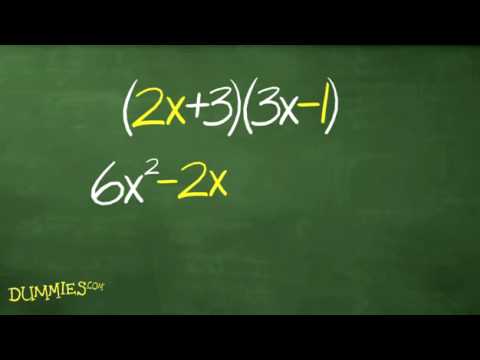
Use FOIL to distribute two binomials. The FOIL method — which stands for first, outer, inner, and last — takes two binomials and multiplies them for a single...
 languid lodge
@quaint ruin What does HL mean?
quaint ruin
HL means hypotenuse leg
quaint ruin
It’s HL
torpid horizon
i misread the leetters
quaint ruin
bcuz it correspond
quaint ruin
lmaooo
 supple haven
ohhhhhhh crap I see what I did wrong now
torpid horizon
i keep looking at the picture wrong
supple haven
I forgot to include the 1 like a big doof
languid lodge
@quaint ruin Isn't a and b the same thing?
upper karma
learning  @supple haven
quaint ruin
no
bcuz it has to correspond with ABcy
ABC
To be similar
Help with this
I forgot
how to do this
torpid horizon
i believe you use pythagorean theorem for that one
torpid horizon
ok i need to domy hw
 lament lantern
Similar triangles I think
quaint ruin
I got 8
languid lodge
Yes it is B
torpid horizon
i read ur picture again and i dont think you use pythagorean theorem
idk how u do that
languid lodge
Use the ratios for both triangles.
supple haven
multiply by 5
the dumb way (my way) was to add 3.5 until I got to 17.5 then count the amount of times that took
so that way I found out 3.6 times 5 = 17.5
so if thats the case then
wait I might be dumb
quaint ruin
And this
upper karma
looks like law of sines/cosines
quaint ruin
oof
upper karma
ez pz
quaint ruin
oh shit
torpid horizon
i think
quaint ruin
ughh
supple haven
torpid horizon
you could also guess and check
since they should equal eachother if they are the correct x and y's
supple haven
what are the sidelengths for a 45 45 90 triangle?
I know that two of them are rad 2
upper karma
isosales ?
supple haven
i have the iq of a small child, you'll have to be a bit simpler
i just dont remember the 3rd sidelength
upper karma
a^2 + b^2 = c^2
supple haven
thanks im dumb
lament bay
<@&286206848099549185>
meager lantern
To prove that both (1) and (2) we have to prove that the angles 1 and 2 are 90 degree angles, since doing so would prove they are perpendicular.
one way I devised to accomplish this is to prove that both triangles are congruent.
- RC = AT (Given.) By subtracting middle segment TC, we can deduce that RT = CA
- SR = AB (Given)
- ST = BC (Given)
From this, we can conclude that for both triangles all the sides are equal, and that they are congruent triangles.
For them to be congruent triangles, all their angles must be equal. Which would mean that 1 = 2, let us label 1 or 2 x.
Since 1 and 2 are supplementary angles, 1 + 2 = 180. Since 1 = 2, We can write this as 2x = 180 or x = 90. Proving that both 1 and 2 are each 90-degree angles. Which would make the sides required to be proven perpendicular.
There you go @lament bay Tell me if you spot a mistake in my work or something you don't understand
lament bay
@meager lantern yo thanks so much
meager lantern

hard gale
you can factor that
hard gale
yas
 wise halo
After that?
hard gale
when you're solving for x in x(x-1) = 0 (as an example), what do you do?
hard gale
yus
hard gale
solve idk?
we actually simplified our bad ass equation with squares with 2 more basic trig eq
hard gale
if you want yes
hard gale
seems roight yes
hard gale
yus
sick veldt
Not sure about this one
I just graphed the ones that the lines touch on
hello
only this and one more left 😛
hard gale
yas is correct
sick veldt
Last one
This one I'm lost on
Ik I have to use midpoint formula again
but Idk how to find the x's and y's this way
its DF
and DE
I think
halp
hard gale
how do you find the midpoint of a segment?
sick veldt
use the triangle midpoint segment theorem ?
sick veldt
yeah its jsut Idk how I find it
so lemme guess
for DE
would the x be 1 and y be 4?
hard gale
that's the coords of D
vagrant bolt
is the anwser just the midpoints of ef and df
sick veldt
Its on the question
you add them and divide them cause they are endpoints
and we need the midpoints
what do i do lol
add them or no
is it 1, 2.5???
vagrant bolt
fe midpoint= (-1,2) and df = (-1,3.5)
 grim sorrel
Looks like (-1,2) and (-1,3.5) to me
vagrant bolt
midsegment is a line joining 2 midpoints and the endpoints are the coordinates at either end so that must be the anwser
i think
vagrant bolt
the question said parallel to DE
vagrant bolt
in the midsegment theorem the midsegment is joining the midpoints of the 2 lines and the 3rd line is paralle which they stated was De
its also 1/2 in length
sick veldt
yeah you got it write
upper karma
guys i need help
inmediatly
i have a window of a x y dimensions (600 x 400 i think)
and i wanna create 3 random points
what are the conditions to generate those points in order that the circle made by those 3 points isnt bigger than my window size?
 cold plaza
@upper karma isn't the largest circle possible a circle with radius 200?
upper karma
yes it is
cold plaza
well i found something of use: u can directly find the equation of the circle (hence it's center and radius) from the determinant of a fancy matrix

Mathematics Stack Exchange
Get the equation of a circle through the points $(1,1), (2,4), (5,3) $.
I can solve this by simply drawing it, but is there a way of solving it (easily) without having to draw?
its the second or third answer
 valid abyss
would anyone want to make some questions for me in preperations for my math test tomorrow? it's about surface area and volume
 serene field
Have you searched google for practice questions with solutions?
last pollen
have you tried applying the cos(a+b) Formula?
 pearl otter
yes i got zero as my answer but im not sure
pearl otter
ok thank you very much
torn linden
Can someone tell me why sine can never go over 1?
 dense bison
@torn linden well, sin(ax-b) (where a, b are constants) can't because geometrically, sine is the ratio of opposite to hypotenuse of a triangle
And the leg of a triangle can't be longer than its hypotenuse
 tranquil trout
is this right
lament bay
<@&286206848099549185>
upper karma
Well you know CF = BF, right?
lament bay
<@&286206848099549185>
 silent sparrow
 lament bay
lmfao
upper karma
Nah. Thanks though
lament bay
Help me coach


 keen aspen
Law of Sines
silent sparrow
yes i remember
silent sparrow
sin what
keen aspen
sin of that angle
 chilly cave
θ
silent sparrow
where did you get 15.3333
silent sparrow
ah ok
where did you get 356
i thought its 60
cause mins
isnt 356 for seconds
or no
keen aspen
119.2m
keen aspen
Yeah
silent sparrow
ty
keen aspen
Np
silent sparrow
its better to use them in decimal form
rather fractions

same thing add A and C
then take that answer
180- ?
keen aspen
sin(37.7)/200
That's the common ratio
You can set that equal to each other parts to find what you need
silent sparrow
how did you get 37.7
keen aspen
37+(42/60)
keen aspen
Yes
 spare garden
I need help with my Nicolas Cage pong game, I need help finding an equation to find y (I only know soh-cah-toa)
spare garden
how do I find tan(angle) * dist?
keen aspen
tan(x)=opp/adj
spare garden
so tan(angle) = y/dist?
keen aspen
Yeah
spare garden
so y/dist * dist = y?
 long sapphire
yes but that's not the point
if you did y/dist * dist = y, that ruins the point; you already know what y is and there's no need for this
what you need is to use tangent and plug in your angle
spare garden
but tangent is y/distance
long sapphire
yes it is
but in y/dist * dist, there is no point in dividing then multiplying dist since you already have y
what i'm assuming is that you have the angle so to get y, you need to multiple tan(angle) by dist
is this programming? if so then your lang's math lib probably has tan