#geometry-and-trigonometry
1 messages · Page 159 of 1
 dark sparrow
 fleet rivet
ok
dark sparrow
so i'm going to draw a line and give some points names
fleet rivet
mhmm
dark sparrow
brb
dark sparrow
@fleet rivet i'm back
so
QA = 1, since it's a radius of our circle
is that clear?
@fleet rivet
fleet rivet
yep
dark sparrow
thus, by the old definitions, we have cos(θ) = QB/QA = QB and sin(θ) = AB/QA = AB
fleet rivet
Wait what, QB/QA = QB?
dark sparrow
yeah ok
fleet rivet
What about tan?
fleet rivet
Ahhh ok!
dark sparrow
there is a geometric representation of tan though!
dark sparrow
yup sure does
dark sparrow
if you make this blue line (the tangent axis, as my highschool math teacher called it) a number line, with its 0 aligned with that point where it meets the circle and its 1 the same size as the radius of the circle, then the point where your angle's side and this line intersect is precisely tan(θ)
fleet rivet
Thanks!
 steady lake
how many sides does a sphere have
steady lake
what shape is a human
 surreal bolt
depends on if it has spherical chicken pet.
steady lake
ok
dark sparrow
how many sides does a sphere have
define side?
 upper karma
A human can be said to be a composite shape.
made up of complexed shapes, and the human is formed from DNA, which we can mathematically analyze and look at how the human being will develope into (assuming no outside factors inhibit growth) and even still
We can use parametric equations and even zero-product property to make a sketch of a human being @i am cheese#5604
 visual jacinth
or we could assume our human is spherical and frictionless , less forces to compute
 celest quartz
can someone help me for an exercise please
 keen aspen
sure
celest quartz
in English it must be why the points "B,E,O and D are aligned"?
*"why the points B,E,O and D are aligned ?"
you understand?
 pseudo turtle
why is it a straight line if you connect the 4 points I guess
celest quartz
yeah exactly
keen aspen
It wouldn't be a straight line
celest quartz
the exercise asks why would it be a straight line if you connect these 4 points
pseudo turtle
why wouldn't it though
celest quartz
you gotta prove why it does that
keen aspen
Because if you made a diagonal out of B O D it would contain all points except for E
pseudo turtle
do you say that from what you're seeing?
celest quartz
yeah found for B O D but but don't know for E
pseudo turtle
if we are assuming that the 4 points would make a straight line if connected
keen aspen
You are trying to prove that they ARE ?
keen aspen
But they aren't..
 copper valve
but they are
pseudo turtle
^
keen aspen
Ok I don't see the straight line
pseudo turtle
the page is bent
keen aspen
Yes I know that doesn't include E
pseudo turtle
it does?
copper valve
E is between the circled points
pseudo turtle
E is on there mate 😄
celest quartz
circled points ??
keen aspen
Is E the circle ?
keen aspen
Oh shit lmao
pseudo turtle
no E is the small line
celest quartz
no e is just a point
celest quartz
yeah ok no it's not the circle sorry not being clear 😂
copper valve
BI is half the length of AD, EI is half the length of AE
BEI is similar to AED
something something geometry
😛
celest quartz
didn't understand :///
copper valve
sorry im not good at this stuff so im even worse at explaining :c
celest quartz
yeah know that
celest quartz
oh yeah i understood all that
but
why does it prove that E is aligned with B O And D
celest quartz
ok if you find please say it to me
copper valve
ok
celest quartz
so nobody found?
keen aspen
Haha i'm afraid not
it's a difficult question
The only thing I can think of is that if you made a triangle out of ABC, the centroid would be E, because A goes to I (The midpoint of BC) and B goes to O (In this case is the midpoint of AC)
So with that, the intersection of those lines form the centroid, at E meaning why E is on that same line
celest quartz
@keen aspen what is centroid
keen aspen
The center of the medians
celest quartz
oh ok
keen aspen
medians of a triangle is the line from one point to the opposite side, half way
Bisecting the line
celest quartz
yeah i know but I'm french so not the same words
keen aspen
haha ok
keen aspen
No problem
celest quartz
i had a second exercise if you can help me that would be very kind but if you don't want to no problem
celest quartz
(MH)//(RE)
and there's LR which is i don't know how to say it English but the line from R which is perpendicular to (EC)
keen aspen
ok
celest quartz
and the triangle REC rectangle in R
keen aspen
?
celest quartz
ehmm it means REC is a triangle and the angle ERC is 90°
and that's all there is no more informations
celest quartz
MR and CH
keen aspen
Ahhh ok
keen aspen
A bit
It's difficult
What grade are you in?
Yeah I don't see it for this one, it's a bit too hard for me and I was never good with proving stuff 😦
celest quartz
I'm in France soo I don't exactly know for England but I'm 15
keen aspen
Wow that's pretty difficult
but yeah I don't see how you can prove that sadly, someone else might, i'm by no means the most intelligent lol
celest quartz
no that's very kind for your help thank you very much
it's 1 am i gotta sleep right now so good night
keen aspen
gn
 tropic stirrup
That's the same as proving the existence of an orthocenter
Let P be the foot of perpendicular from M to BC, and let Q be the intersection of RM and CH
Then since C, P, H, L are concyclic LCH = LPH
And since R, M, L, P are concyclic LCM = LRM
This proves that LCQ = LRQ, proving that L, C, R, Q are concyclic
This is sufficient to determine that CQR = CLR = 90°.
copper valve
concyclic!?
tropic stirrup
Ye, concyclic owo
surreal bolt
Eh bored:
Theorem: The distance between (a, b) and y = x is |a - b|/(root(2)).
Likely pointlessly long but imho cool proof: (a, b) is the same distance away from y = x as (a + d, b + d) ... we are sliding along a line parallel to y = x.
Lemma: When y = -x, the coordinate (x, y) becomes (x, -x) and
the distance between (x, -x) and line y = x is the same as the distance between (x, -x) and (0, 0) or |x|(root(2)).
Let d = -(b + a)/2. (a + d, b + d) becomes ((a - b)/2,(b - a)/2). Distance = |x|(root(2) = |a - b|/(root(2))
Reason: Reddit.
https://www.reddit.com/r/calculus/comments/7jbuoq/help_attempting_to_find_the_volume_of_a_solid_of/

reddit
Alright, so, here's the skinny. I'm doing an extra-credit project for my Calculus 1 class, wherein you do the math for a solid of revolution and...
 brisk root
I have this two part question on a maths assignment that I need to get done by Monday else I will really badly affect my final grade for the course I’m on.
The functions for x1 and x2 are from the prior question, I wrote them in the space below to avoid needing to take more photos. If my writing is bad I can post better versions of said functions.
dark sparrow
 but yes
upper karma
no
dark sparrow
👀🔨
brisk root
I’ll upload the digital version of the functions for you. I’m sorry I couldn’t photograph the question any larger
Oh dear
That should be better
upper karma
um no
brisk root
The ways to find R and alpha for the second part I have on a formula sheet so I should be ok for the second part
brisk root
Only the first part if anything, and with formatting working out.
upper karma
for the first part just expand it out
upper karma
every pentagons sum of interior angles is the same which is 54
upper karma
just woke up
copper valve
ok
 waxen gorge
Ik this is dumb but how to find the slope of the tangent line formed by a point on a circles circumference
dark sparrow
it's perpendicular to the corresponding radius
 gritty flare
😐
upper karma
the slope of the tangent line is opposite to the slope of the radius in the sense that it's -1/m if the slope of the radius is m
dark sparrow
that's called perpendicular
upper karma
lol
waxen gorge
But like
That's not what I'm asking
Cuz if the point is 1/8 up the circle the slope is -x
But if it's 1/6 up it's not
waxen gorge
No but I mean like 45°
dark sparrow
of the problem, preferably?
waxen gorge
it's not a problem I was just wondering cuz in a competition thing I didn't know what to do
Nvm
dark sparrow
okay but do you have a picture of the setup you're trying to describe?
waxen gorge
No it's fine
So do I use trig to get the slope of the radius?
NVM u get the coordinates of the point
gritty flare
Slope is rise over run right?
waxen gorge
Ye my brain is ded rn
gritty flare
What is Circumference of the circle
C = PiD
How do you find the slope of a tangent line?
- Find the first derivative of f(x). 2) Plug x value of the indicated point into f '(x) to find the slope at x. 3) Plug x value into f(x) to find the y coordinate of the tangent point. 4) Combine the slope from step 2 and point from step 3 using the point-slope formula to find the equation for the tangent line.
dark sparrow
tangent line to the graph of a function
 paper yew
dark sparrow
paper yew
dark sparrow
fuck i'm not in a good state of mind right now
i've got two lines in R^3, L1 and L2, and i have their direction vectors
u and v respectively
u is for L1, v is for L2
copper valve
me neither xd
dark sparrow
i want to find the eq of the plane that passes through L1 and is perpendicular to L2
i've got n = u x v calculated from previous parts of this assignment
copper valve
u mean L1 is on the plane? completely
copper valve
they always are
dark sparrow
they
aren't
 umbral snow
No wait, maybe I was right
upper karma
nx+uy for scalars x,y is every pt in the plane
dark sparrow
hhh
okay wait
i think i figured it out
the vectors n and u have to be in the plane
yup
upper karma
that spans the 2D space
dark sparrow
so i can just compute n x u
and use that as my normal, and that point i had on L1
thanks y'all
i think i just needed a place to talk this out
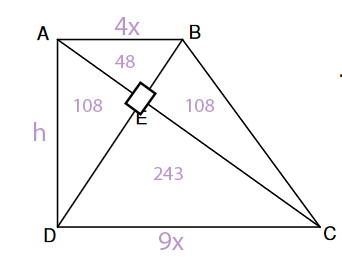 upper karma
find h in terms of x?
 brisk crystal
I had to convert it from English so if you need any other/better explaining I'm here
upper karma
whats asked by the question
brisk crystal
I need to find the diagonals
upper karma
which one
upper karma
i mean what is the question asking
brisk crystal
I need to figure out the length of the diagonals
upper karma
both AC and BD?
brisk crystal
yeah, in an actual number
copper valve
well |BE|×|EC|=|AE|×|ED|
brisk crystal
the problem is I can't seem to produce any isolated equations
brisk crystal
I can give the diagonals 4y+9y and 4k+9k values
but I have messed around with it and couldn't get anything from it
waxen gorge
Cheeze ur disappointing me :/
upper karma
sryyy, what am i doing
brisk crystal
I've messed around trying to do similar things for quite a while
and couldn't find anything useful
waxen gorge
Look at shared sides
waxen gorge
Ec(Be) = 216 and ec(de) = 486 so we found a relationship for one diagonal
Alsoo
That is not rly useful
And I'm dumb
And I need to use my brain
243 triangle is 279 and 108 is 274
upper karma
ikrrr
waxen gorge
Times
Be is 4
Ed is 9
Bd is 13
Ec is 27
Wait lemme retry
Wait
That's wronf
upper karma
BC^2 = 97x^2 - h2
waxen gorge
How bout
waxen gorge
Ok so top triangle is 2^5(3)
Bottom is 3^5(2)
Left and right are 3^3(2^3)
Right and bottom share one side.
Bottom and left do too
upper karma
man this is like unsolvable
waxen gorge
Pretty sure there's a way to do in like 10 seconds
upper karma
ahahaha
brisk crystal
its so bizarre
waxen gorge
Like all problems smh
upper karma
can u like
brisk crystal
I don't really remember math
upper karma
translate the entire question
brisk crystal
but it seemed easy
upper karma
there must be something that we missed
waxen gorge
Wait I'ma write it on a piece of paper so I can think
brisk crystal
sure 1 sec
In a trapezoid ABCD the diagonals AC and BD meet at point E (see picture).
- It is given that the bases of the trapezoid are ratio'd 4:9 and the surface of BEC is 108. What is the surface of the trapezoid?
upper karma
oh the area
brisk crystal
X*H/2
for a triangle
😄
- It is given that the tapezoid is a right trapezoid (90 degrees) and the diagonals are perpendicular. What are the diagonals length?
and the given drawing is http://prntscr.com/hod6cp
 upper karma
AE^2 + BE^2 = 16x^2
DE^2 + CE^2 = 81x^2
AE^2 + BE^2 + CE^2 + DE^2 = 97x^2
AE^2 + DE^2 = h^2
BE^2 + CE^2 = 97x^2 - h^2
BC^2 = 97x^2 - h^2
BC^2 = (DC - AB)^2 + AD^2
BC^2 = 25x^2 + h^2
97x^2 - h^2 = 25x^2 + h^2
72x^2 = 2h^2
h = 6x
area of ABD = 0.5(4x)(h) = 0.5(4x)(6x) = 12x^2 = 156
x = sqrt(13)
i finally solved it
upper karma
is that guess and check?
upper karma
oh
waxen gorge
Found shared stuff
upper karma
thats a simpler way i guess
brisk crystal
damn nice
but that is insane
It has nothing to do with the given new information
Maybe there is something wrong with this question
anyhow thanks a lot guys @b l e h.#5296 @upper karma
@b l e h.#5296
@waxen gorge
upper karma
theres nothing wrong with the question
brisk crystal
Wait cheeze
sqrt(13) doesn't really work
you then have BD^2=4sqrt(13)+6^2sqrt(13)^2
waxen gorge
Lol
brisk crystal
what did you do @waxen gorge?
upper karma
what doesnt work there
waxen gorge
I found the prime factorizations of the areas
And then linked them
To ones that share sides in the triangles
It's pretty slow and there must be a faster way to do it in like a minute
upper karma
it gives BD^2 = 16x^2 + 36x^2 = 52x^2
BD = sqrt(52)x = 26
what do u mean sqrt(13) doesnt work?
upper karma
idk how to mention u cos its difficult to mention but what
copper valve
oooooooooooooooooooooooooo
 harsh idol
youre probably gonna need to prove that angle bfe is congruent to angle bef
waxen gorge
Notice it's a bisector
copper valve
angle AFD = 90 - o = angle BFE
angle AEB = 90 - o = angle BEF
so angle BEF = angle BFE
so triangle BFE is isosceles
and BF = BE
seems legit enough to me
waxen gorge
Ya
tropic stirrup
👍🏼
waxen gorge
Lol
harsh idol
looks like we're gonna use isosceles triangles again
gotta prove that angle dah = angel dha
tropic stirrup
mmhm
upper karma
i extended BM until it cut AD extended at P and got BCM congruent to PDM
tropic stirrup
mhmm!
upper karma
no idea how to continue
tropic stirrup
You're almost there though x'D
upper karma
let angle DAH = x, angle DPM = CBM = 90 - x
if i assume DA = DH id be able to do it lol
tropic stirrup
So close qwq
upper karma
yeah u know what i mean
lol
how do u do it help
Where did u get P
i extended BM until it cut AD extended at P and got BCM congruent to PDM
Ah
upper karma
yeah that
surreal bolt
analytic geom will always get this kind of stuff right 😃
tropic stirrup
D is the midpoint of AP
"And therefore D is the circumcenter of APH, proving that DA = DH"
upper karma
OH MY GOD
tropic stirrup
that's all you needed xd
upper karma
AAAAAAAAAAAA
tropic stirrup
ikr x'D
copper valve
a
upper karma
im super close
my god i knew it it has sth to do with a circle
man these geom problems are always fun
copper valve
really?
surreal bolt
nah >)
copper valve
if only i knew enough geometry to make decent problems on them xd
surreal bolt
Like Erdos says problems are fun only if you know how to do them or if the Devil isn't asking you for the answer 😃
upper karma

tropic stirrup
Here, a famous problem
find the red angle without using trigonometric ratios and pythagorean theorem
 lofty stratus
Define trigometric ratio
surreal bolt
oof. Couldn't find the Erdos quote.
harsh idol
sin, cos, tan, and their inverses?
surreal bolt
It is in N is a Number though
harsh idol
kinda reminds me of this problem: https://www.youtube.com/watch?v=m5evLoL0xwg

Three Square Geometry Problem More links & stuff in full description below ↓↓↓ Featuring Professor Zvezdelina Stankova. Extra footage1: http://youtu.be/TIwSs...
surreal bolt
It is a documentary from 1993 and I think I got the video and the clip on youtube. Ramsey numbers.
 upper karma
@tropic stirrup is it 45
tropic stirrup
Ye
upper karma
let the squares (from left to right) be ABCD BEHC and EFGH
i extend the line FH until it meets point J when FJ = 2√2
the red angle is angle CDF + angle HAF = arctan(1/2) + arctan(1/3)
from triangle DFJ: DJ = √2 and FJ = 2√2, so angle DFJ = arctan(1/2)
from triangle DFJ, angle JDH + angle HDF + angle DFJ + angle FJD = 180°
45° + arctan(1/3) + arctan(1/2) + 90°
arctan(1/3) + arctan(1/2) = 45°
tropic stirrup
Fokkin hell
 main sluice
what the fork
upper karma
i was drawing lines after lines and kinda found a way to do it
i guess gurls geom problems always need auxiliary segments to solve
 mossy vine
how do you show that's 45 without pythagoras?
upper karma
its isosceles
mossy vine
congruent to what?
tropic stirrup
Gah
tropic stirrup
Tiredness doesn't justify your oblivion of basic congruence
those two blue triangles are congruent
(SAS congruence, if you ask)
mossy vine
o ok
tropic stirrup
uwu
mossy vine
I thought you were saying the 45-90-45 triangle was congruent to something
tropic stirrup
lol
mossy vine
so I was very confused :^)
tropic stirrup
Shush you got the point across
tropic stirrup
Just
shhhhush
waxen gorge
Lol
 rare talon
Do you know what is the sum of the interior angle of a triangle?
 fierce tide
180?
rare talon
Ok
fierce tide
wait wait
rare talon
Now divide that polygon to 2 triangles
I hope you know how to divide it (there's 2 ways, either way is fine)
rare talon
👌
waxen gorge
@fierce tide the sum of the interior angles of a polygon with n sides is (n-2)(180)
upper karma
why is that true?
fierce tide
got it
copper valve
exercise
waxen gorge
Because
(n-2)(180) is the sum of the interior angles
Where n is the number of sides
copper valve
by above formula given by bleh
angles of a 6 sided figure will add up to (6-2)(180) = 4*180 = 720
we have two right angles, so thats 90+90=180 degrees
180 + 4x = 720
4x = 720-180 = 540
x = 135
copper valve
6 sides
x + 3x + 45 + 45 + 135 + 135 = 720
4x + (45 + 135) + (45 + 135) = 720
4x + 180 + 180 = 720
4x = 720 - 360
4x = 360
you can do the rest 😛
copper valve
x times 3
fierce tide
upper karma
that looks like some
nonagon
sum of interior angles = 180(n-2)
since nonagon is 9 sided, 180(9-2) = 1260
1260/9 = 140
upper karma
what 3+?
fierce tide
3 or more
fierce tide
2160?
fierce tide
ok
fierce tide
so 12-2*180?
upper karma
(12-2)*180 yes
upper karma
that is the sum of the interior angles of a 12 sided polygon
upper karma
so whats the measure of each interior angle?
fierce tide
150
upper karma
yep
fierce tide
thx
upper karma
no problem
 west dune
Hey there!
I got the next problem
ABCD is a Trepeze
A + C = 180
I need to prove that the Trepeze's DA = CB```Yea
west dune
I don't know that D + B = 180
dark sparrow
i said beta + delta = 180°
dark sparrow
it follows trivially that α = β and γ = δ
west dune
I need to prove it tho
dark sparrow
alpha + gamma = 180
alpha + delta = 180
alpha + gamma = alpha + delta
gamma = delta
west dune
How do you know that alpha + delta = 180?
dark sparrow
you're given that, no?
west dune
I said A + C is 180, that's it
dark sparrow
yes
and on your picture, you marked A and C with the letters alpha and delta respectively
west dune
ohhh I got you now ok
alpha + gamma = 180 (cause trepeze)
alpha + delta = 180 (given)
alpha + gamma = alpha + delta / alpha goes away cause algebra and
gamma = delta
Thanks!
 real remnant
does anyone know how to do proofs
waxen gorge
Ya
 ideally in
dark sparrow
ideally in
dark sparrow
just post your problem
 restive void
hey anyone here, if anyone can help me dm me please?
copper valve
we cant help you on a test though =p
restive void
as part one of my finals is tomorrow
and
i need help with my review packet
as i dont know half the shit im doing
 thorn talon
Post it here
restive void
well
i dont know where to start
okay heres one - point q is the interior of <ROS. S is in the interior of <QOP. P is in the interior of < SOT. m<ROT = 127, m<SOT = 71, and m<ROQ = m<QOS = m<POT
and i have to find ROS and QOT
 topaz valley
did you get a diagram with this?
restive void
nope, i can draw one
topaz valley
yes that might be useful
restive void
cuz im still confused on this same question, i got m<ros, im stuck on how to get qot
topaz valley
ping @help and if someone can help you, they will
 vale kraken
 past mantle
I hope I did good on my geometry exam
copper valve
i hope so too!
waxen gorge
Lol
past mantle
the only thing i was confused on was when i use CPCTC
past mantle
Anyone able to help me find a way to use CPCTC
tropic stirrup
@drifting wigeon
Ehhhh
......wait a min
Well if ya don't want the answer, fine shrugs
past mantle
I just want to know when to use CPCTC in a proof @tropic stirrup
tropic stirrup
The hell even is a cpctc
copper valve
i think it is short for "Congruent Parts of Congruent Triangles are Congruent" @tropic stirrup
tropic stirrup
:disgust:
past mantle
Basically, you use it after you prove the required, then you get the rest
dark sparrow
"congruent things are congruent"
what kind of tautological formalized statement is that
.-.
past mantle
Idk, we learned it during congruent triangle proofs
It's not used alot, that's the problem
dark sparrow
the other 2 what
 haughty prawn
if you don't do a resolution proof with constructive tarskian geometry can it be called real geometry 🤔
 royal oyster
Someone please help me
upper karma
ok
royal oyster
Okay
So I rotated a triangle clockwise 90 degrees
Do I need to add more marks to it?
Compass marks or something?
upper karma
I don't know what you're trying to do
if you have grid paper then you don't need to use a compass to rotate 90 degrees
if you used the compass to do the rotation by 90 degrees, then you'd just end up with some compass marks
you don't just add them in after the fact or something
that's why your question is nonsense
royal oyster
Thanks a lot.
upper karma
lol you're very welcome
royal oyster
Here's another way of saying it
Is there anything I'm missing from this?
Or is it correct with all of its markings and whatnot
 crude kraken
There're proof other than paragraphs and 2-column?
dark sparrow
2 col needs to die
 final prairie
copper valve
final prairie
copper valve
same lol
when i really dont feel like deriving something, I'll just be like
i claim this:
here's the proof that it works:
crude kraken
gg
Come to think of it, how is 2 col surviving anyways?
Like, aside from school, is there any use for it?
"A particular way of organising a proof using two parallel columns is often used in elementary geometry classes in the United States." Welp
mossy vine
there's not really any use to it
although I suppose it could be useful for those who don't know how to read paragraphs
haughty prawn
I recently saw a 2 column proof for solving some topology thing, was funny.
past mantle
Shoe me
haughty prawn
 slender gyro
Is this style bad? It has advantages but it seems rowned upon
past mantle
What does the big U mean?
past mantle
So like...?
dark sparrow
"combination" is a bad way of putting it
but basically the union of two sets A and B is the set of all things that are either in A or in B (or perhaps both)
haughty prawn
Aye, many combinations out there. Hard to tell which would be the right one based on just that knowledge.
Like. How would you define union categorically 😈
 green marsh
halp
I don't know anything about geometry
but the last topics of a platform i use to learn math are about geometry
is there any resource you can recommend to learn about geometry?
 tight totem

Khan Academy
Learn for free about math, art, computer programming, economics, physics, chemistry, biology, medicine, finance, history, and more. Khan Academy is a nonprofit with the mission of providing a free, world-class education for anyone, anywhere.
waxen gorge
@green marsh Art Of Problem Solving - Introduction to Geometry
copper valve
mitch is doing that already :P
mossy vine
has anyone here used the book "plane euclidean geometry" by gardner and bradley?
dark sparrow
(sec(a) - tan(a))(sec(a) + tan(a)) = 1, so sec(a) - tan(a) = e^{-x}
thus 2sec(a) = e^x + e^{-x}
=tex \cos(a) = \frac{2}{e^x + e^{-x}}
 charred spearBOT
dark sparrow
charred spearBOT
dark sparrow
@rugged moat
dark sparrow
try expanding out sin(x+y) and sin(x-y), then dividing the numerator and denominator by cos(x)cos(y)
 rugged moat
We haven't learned expanding the ratios yet
dark sparrow
ahem?
sin(x+y) = sin(x)cos(y) + cos(x)sin(y)? you can't not have learned that
you... kind of need it here lol
rugged moat
Is there any other method?
dark sparrow
don't think so
upper karma
would it be sin(x)cos(-y)+cos(x)sin(-y) for sin(x-y)?
dark sparrow
sure, or you could rewrite that as sin(x)cos(y) - cos(x)sin(y) 😛
since cos is even and sin is odd
rugged moat
Last question: sin^6(A) - cos^6(A)/ sin^2(A) - cos^2(A)
dark sparrow
=tex \frac{\sin^6(a) - \cos^6(a)}{\sin^2(a) - \cos^2(a)}
charred spearBOT
dark sparrow
this?
rugged moat
yup
dark sparrow
x^3 - y^3 = (x-y)(x^2 + xy + y^2)
charred spearBOT
upper karma
but that would result in sin^8 no?
upper karma
yeah ok soz mb
I get it now
also what's the point of writing \sin if the difference is pretty much nothing?
dark sparrow
it looks better
upper karma
$$\sin=sin$$
charred spearBOT
dark sparrow
=tex a\sin(x) \text{ vs. } a sin(x)
charred spearBOT
upper karma
typing sin for me is just faster since negative slash is all the way to the right
upper karma
I thought it would make sense like
dark sparrow
it's usually called a backslash 😛
upper karma
If the slash is a linear function having a negative slope
I'll call it backslash then
dark sparrow
the other slash is accordingly called forward slash when it needs to be distinguished
upper karma
not just slash?
dark sparrow
"slash" is fine but when you need to clarify you can say forward slash
upper karma
ah
I think i start to realize my mom is waking up soon and I haven't slept that drinking coffee at 20:00 wasn't the greatest idea
and that my grammar is bad
upper karma
"negative slash" is so genuine
 ornate orchid
Help plox im stuxk
Stuck*
ABCD has equal sides
We need to calculate AE CE
Pls pls hel0
upper karma
how can ABCD have equal sides
waxen gorge
Wait wut
upper karma
trapezoid with equal sides= square
 untold tinsel
at 53 a they want me to explain why the area of the ring net is s/h bigger than the area of the net of the cilinder with h as hight
the two templates are right next the question
<@&286206848099549185>
upper karma
hello
for the first one
the area of the ring net is like finding the area of rectangle
the width is s
the length is curved but the length is given which is 2 * pi * a
so the area of that net is width * length = 2 * pi * a * s
the area of the cylinder net is simply width * height which is 2 * pi * a * h
the ratio of those areas is simply s/h
untold tinsel
alright thanks
upper karma
no problem uwu
untold tinsel
is the area of a sphere with radius r the same as the area of a cylinder with radius r and hight 2r?
<@&286206848099549185>
upper karma
ah do u know how to find the area of a sphere?
untold tinsel
with 4* pi *r^2right?
untold tinsel
2 * pi * r * 2r
upper karma
are they the same?
untold tinsel
yes
upper karma
yay u did it
untold tinsel
it felt like a cylinder in this case would have a bigger area than the sphere
untold tinsel
true
untold tinsel
@upper karma Their asking to prove that the area of a cylinder is equel to the area of the sphere at 58 haha
I guess I now know the answer
 proper sequoia
halp
proper sequoia
nvm
upper karma
i just learned about hyperbolic trig functions, which is just x^2-y^2=1 , is it possible to get trig function values as they are in hyperbolic functions but for any function?
upper karma
yeah
upper karma
but instead of hyperbola, what if i replaced it with any other graph
how to determine the trig functions then?
upper karma
but arent hyperbolic trig functions related to a hyperbola?
mossy vine
yeah
the unit hyperbola, x^2 - y^2 = 1 can be parametrised by x = cosh(t), y = sinh(t)
copper valve
wow sneaky, asking in more than one channel at once
upper karma
lol i am just curious
upper karma
multitask isnt really good for the brain i heard
humans do better when their focus is on one thing
mossy vine
the same way that the unit circle x^2 + y^2 = 1 can be parametrised by x = cos(t), y = sin(t)
copper valve
aye
upper karma
so is there something like a unit triangle
copper valve
🤔
upper karma
or unit hexagon
copper valve
ya just take a regular polygon :P
mossy vine
but they'd probably have to be defined by a limit or by piecewise functions
upper karma
like if there is a line with angle theta shooting out to infiny right
and where the line touches the triangle, is there any possible way to determine the point of intersection of the line and the shape?
copper valve
wouldn't that be given from the equation of the shape ;o
same way as the circle and hyperbola
upper karma
i made something really quick to demonstrate what i mean https://www.desmos.com/calculator/gwojtynqna

Desmos Graphing Calculator
mossy vine
the easiest way would just to be to convert the shape to polar coordinates
dark sparrow
AOB is isosceles
copper valve
ya
dark sparrow
ye so
copper valve
i see the 2 theta but hows that the same shape ;o
dark sparrow
well i'm about to show you how to reduce the general case to this one
upper karma
^
dark sparrow
copper valve
OK
dark sparrow
the red line here is a diameter
this is what you can do if your 1θ angle contains the center
copper valve
are u drawing this now?
copper valve
😮 !!
dark sparrow
and this is what you can do if your thing doesn't contain the center
BAC = BAD - CAD
BOC = BOD - COD = 2(BAD - CAD) = 2BAC
upper karma
makes is sense
tropic stirrup
That's called 중심각과 원주각의 관계 here :p
copper valve
how is BOC = 2(BAD-CAD)
tropic stirrup
BOC = BOD - COD
BOD = BAO + ABO = 2BAD, COD = CAO + ACO = 2CAD
BOC = BOC - COD = 2BAD - 2CAD = 2(BAD - CAD) = 2BAC
dark sparrow
1π
upper karma
in rad?
dark sparrow
ofc
copper valve
AOB=π-2(θ+φ)
tropic stirrup
squints
copper valve
then BOD = π-(π-2(θ+φ))=2(θ+φ)
then u can do the same thing for just theta
wait then how do we go back
dark sparrow
define "go back"?
you've got the 2(φ+θ) and 2θ angles
now it's obvious that BOC = 2φ
which is what we were trying to prove in the first place
copper valve
maybe im a little lost on how this picture was drawn in the first place 😮
how does this theorem work
we have the quadrilateral to start?
or do we pick 3 points and the center
dark sparrow
what quadrilateral
copper valve
OABC
copper valve
ya
dark sparrow
we know that ABC doesn't contain O
because we already covered the cases when it does
and we want to show BOC = 2BAC
copper valve
ohh okay
tropic stirrup
Hey woog
copper valve
hello!
upper karma
hi!
copper valve
thank you @dark sparrow !!
dark sparrow
@tropic stirrup lol those are good names
tropic stirrup
x'D
dark sparrow
so jeongri is the word for theorem
tropic stirrup
mhm
upper karma
Triangles in butterfly theorem must be proportional right?
dark sparrow
no
copper valve
just has to be a butterfly
upper karma
so it can be completely different triangle?
tropic stirrup
mhm
copper valve
oy
copper valve
im slow ok T.T
upper karma
Because a+b+c
tropic stirrup
Try and prove the star theorem