#geometry-and-trigonometry
1 messages · Page 129 of 1
 daring cedar
Nope its a line hello?
daring cedar
A tangent is a line that touches exactly one point
 daring sierra
daring cedar
Nope its a line hello?
daring sierra
daring cedar
Nope its a line hello?
he is ragebaiting why are you falling?
daring cedar
the tangent isnt imaginary, it’s just a reference direction the same way level or horizontal is you dont need a physical line, you just need a direction, instruments like the sextant use gravity to define horizontal, which is exactly that tangent???
 sage wren
You are not just measuring an angle, you are measuring an elevation angle for navigation. We are navigating earth surface using that angle measurement.
Therefore part of the angle is the earth surface
daring cedar
daring sierra
he is ragebaiting why are you falling?
I know hahaha
sage wren
not an imaginary line
daring cedar
Im so bored
the tangent isnt imaginary, it’s just a reference direction the same way level or horizontal is you dont need a physical line, you just need a direction, instruments like the sextant use gravity to define horizontal, which is exactly that tangent???
sage wren
daring cedar
the tangent isnt imaginary, it’s just a reference direction the same way level o...
so the lets measure 2 imaginary lines in space the what we do with that angle?
daring cedar
Its not in space thats the point
sage wren
what if i measure an angle from my kitchen table to the light in the ceiling, can i use that measurement to navigate earth?
 spiral relic
How this maj sense
 sage wren
horizon is where the sky appears to meet the surface
daring cedar
spiral relic
How this maj sense
Rearrange, you get y=x-4 and thats what the line is representing
daring cedar
sage wren
horizon is where the sky appears to meet the surface
So is light showing where the sky meete the surface?
Lol
Thats all i need to see ^
sage wren
when you use a sextant to measure the elevatio angle yo a star. You align the horizon lense to the star
spiral relic
daring cedar
Rearrange, you get y=x-4 and thats what the line is representing
How this make sense
 sage wren
you are also calculating the dip angle from eye level to sea level
eye level and sea level has to be paralel in order to calculate a dip
daring cedar
spiral relic
How this make sense
Its the exact same line you just rearranged it around, typical line form is y=mx+c where c is the y intercept and m is the gradient
sage wren
sea level is the elevation angle baseline
do you understant that we calculate a dip angle from eye level to sea level?
daring cedar
 sage wren
eye level and sea level is required to be paralel
spiral relic
daring cedar
Its the exact same line you just rearranged it around, typical line form is y=mx...
What is gradient
daring cedar
spiral relic
What is gradient
How steep something is
Same as the slope of the line i think
Thats how we call it in england
spiral relic
how do i know how steep it is if I need gradient to know how steep it is to do the equation
daring cedar
Well you need two points that lie on the line in order to find how steep it is
spiral relic
daring cedar
Well you need two points that lie on the line in order to find how steep it is
How find two points
daring cedar
Idk read them off the graph if you have one
spiral relic
What
daring cedar
You need the coordinates of each point
spiral relic
How know the point I use
daring cedar
(x,y)
daring cedar
spiral relic
How know the point I use
You can use any two points
So long as they lie exactly on the line
daring cedar
Someone wanna help him
 pine zinc
spiral relic
Ok 0 and 0
pine zinc
spiral relic
Ok 0 and 0
U need coordinates...not just two numbers..
daring cedar
pine zinc
U need coordinates...not just two numbers..
I think he saying (0,0)
pine zinc
Well 0,0 can be coordinate
spiral relic
Ok now what do with that
daring cedar
Find another point?
spiral relic
Ok 1 and 0
pine zinc
Now apply
Y2 - y1 / x2 - x1
pine zinc
Yup
daring cedar
0/2
spiral relic
u cant divide 0
spiral relic
Ok what do i do with 0
pine zinc
Uhh...that's the slope u wanted..
spiral relic
??
pine zinc
Gradient
spiral relic
how
pine zinc
Wot do u mean how
spiral relic
How is slope 0
pine zinc
That means the line is horizontal
Plot it on desmos or something
Wolfram wotever u use
spiral relic
What
 spiral relic
O
daring cedar
C is y intercept
daring cedar
Yeah thats the line
spiral relic
How it slanted
daring cedar
Its not
pine zinc
spiral relic
Y =-4
That's the horizontal line
spiral relic
 spiral relic
so then how is y = x - 4 slant
sage wren
the diagram of how a tangent works is they extrapolate the angle from earth center to a tangent plane touching earth surface at a point in order to measure an angle. But the problem is that if you do this you will just have an angle from an imaginary plane thatnis not earth surface. You cannot do anything with that angle, you vannot navigate earth using that measurement. Also nobody went to the center of earth to measure from there.
Earth surface/sea level is part of the angle baseline.
 pine zinc
For slanted line u need m ≠ 0
daring cedar
sage wren
the diagram of how a tangent works is they extrapolate the angle from earth cent...
sage wren
daring cedar
https://tenor.com/view/dono-wall-gif-24048347
still failed to adress the issue
you have an issue using an imaginary tangent plane
spiral relic
sage wren
still failed to adress the issue
Shut up idot
pine zinc
spiral relic
how do i know what m is
My bad dude
sage wren
the you got no measurment of earth that you can use
spiral relic
Go talk somewhere else we r discussing something important..
spiral relic
pine zinc
My bad dude
What
daring cedar
Chewnah
sage wren
well how earth is measured is important
spiral relic
daring cedar
Chewnah
yes
daring cedar
In order for a slanted line m cannot be zero
spiral relic
sage wren
well how earth is measured is important
Good thing diogenes did it like 4000 years ago then
Now shut up
sage wren
spiral relic
Good thing diogenes did it like 4000 years ago then
Did what?
spiral relic
daring cedar
In order for a slanted line m cannot be zero
how do i know m
daring cedar
Chewnah do not reply to him
sage wren
Any evidence you can aquire an elevation angle measurement from a curved baseline?
spiral relic
daring cedar
Chewnah do not reply to him
How find m
daring cedar
spiral relic
How find m
Change in y over change in x
spiral relic
daring cedar
Change in y over change in x
Huh
daring cedar
Two sets of coordinates that both lie on the line
spiral relic
What line
daring cedar
Y2-y1/x2-1
daring cedar
spiral relic
What line
Any line
spiral relic
??
sage wren
so funny you dweebs started randomly spamming to hide the truth you cannot adress
Meanwhile Earth is measured flat without exception
daring cedar
spiral relic
What line I measure
sage wren
you failed to provide any measured curvature of earth
daring cedar
spiral relic
What line I measure
Any line brother
spiral relic
daring cedar
Any line brother
what
sage wren
you failed to show how an elevation angle can be aquired from a curved baseline
spiral relic
This line is infinite
 daring cedar
sage wren
you failed to show how an elevation angle can be aquired from a curved baseline
daring cedar
spiral relic
This line is infinite
daring cedar
sage wren
you failed to show how an elevation angle can be aquired from a curved baseline
daring cedar
spiral relic
This line is infinite
Yes ok? So is any line
spiral relic
daring cedar
Yes ok? So is any line
How I measure infinite line
spiral relic
Ok 1 and 1
daring cedar
Doesnt matter if its infinite the gradients stays the same thats the point
daring cedar
spiral relic
Ok 1 and 1
Bro pick two sets of coordinates
?????
(1,1) is one point yes
spiral relic
daring cedar
Bro pick two sets of coordinates
Ok 1 and 1 and then 2 and 2
daring cedar
Okay apply the rule then
pine zinc
@spiral relic do u know basic trigonometry?
daring cedar
Y2-y1/x2-x1
spiral relic
1 - 2 / 1 - 2 = 1
spiral relic
pine zinc
<@1484563529498624200> do u know basic trigonometry?
yes
daring cedar
spiral relic
1 - 2 / 1 - 2 = 1
Okay its 1
sage wren
 pine zinc
So u know tangent of angle right?
daring cedar
So the gradient of the line is one
spiral relic
daring cedar
So the gradient of the line is one
no it not
 spiral relic
pine zinc
So u know tangent of angle right?
spiral relic
pine zinc
So u know tangent of angle right?
What
pine zinc
This might help
 spiral relic
daring cedar
Yes it id
spiral relic
daring cedar
Yes it id
There no line there
daring cedar
spiral relic
There no line there
Bro
spiral relic
pine zinc
This might help
no calculator
daring cedar
Leave the server
spiral relic
daring cedar
Leave the server
ok
daring cedar
Go back to kindergarten
daring cedar
 tiny acorn
U dont seem to understand geometry
tiny acorn
U dont seem to understand geometry
Dont entertain it
Pls
Hes ragebaiting
tiny acorn
daring cedar
Dont entertain it
Ok imma block that guy
tiny acorn
daring cedar
Yeah block him
Good night and cya
daring cedar
Goodnight
sage wren
tiny acorn
U dont seem to understand geometry
you claimed we use a tangent plane to measure from. A tangent plane is imaginary then you got no measurements of earth
circles of equal altitude intersecting to give you a fix position cannot work on a curve
 tiny acorn
sage wren
tiny acorn
sage wren
Theres fridging curves on it, alr im not arguing with a blind person
Look back at the diagram buddy
 daring cedar
 daring cedar
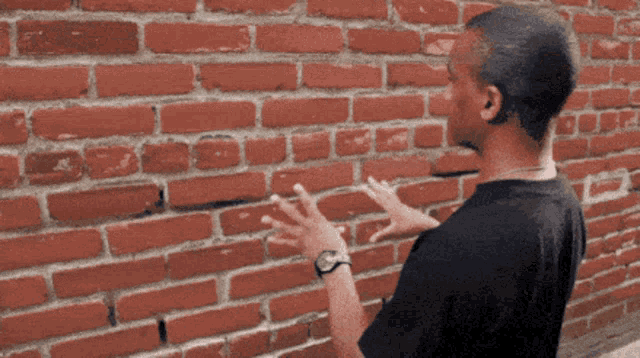
Keep talking to the brick wall brother
sage wren
you cannot aquire an elevation angle measurement from a curved baseline buddy
and if you are claiming a tangent plane is used then you dont have measurements of earth that can be used to navigate it
tiny acorn
daring cedar
Keep talking to the brick wall brother
Yea no blocked him, the diagram blud posted literally has a round earth on it
sage wren
tiny acorn
Yea no blocked him, the diagram blud posted literally has a round earth on it
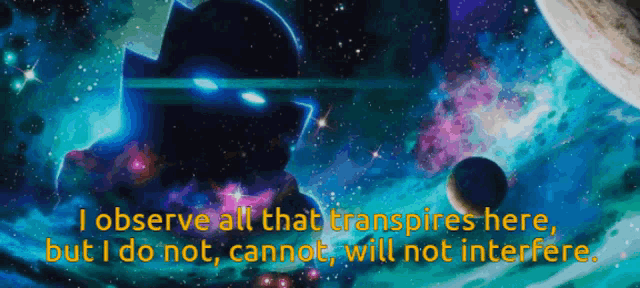
thats the celestial sphere
you know what the celestial sphere is?
tiny acorn
sage wren
and if you are claiming a tangent plane is used then you dont have measurements ...
Counterpoint: get a really tall stick and move far enough from it, now get off b4 i explode
 upper karma
 sage wren
tiny acorn
Counterpoint: get a really tall stick and move far enough from it, now get off b...
sage wren
tiny acorn
Counterpoint: get a really tall stick and move far enough from it, now get off b...
so whats the point?
tiny acorn
daring cedar
tiny acorn
Just dont say anything anymore
daring cedar
Okay
sage wren
you are taking the elevation angle measurement from earth surface
in order to navigate earth surface
is not just an angle is an elevation angle
 sharp pilot
sage wren
sharp pilot
sage wren
a 45 degree elevation angle measurement form a right angle triangle with Polaris Ground position and observer view at the position from where the angle measurement takes place and the 2 lines of sight to Polaris
daring cedar
tiny acorn
sage wren
is not just an angle is an elevation angle
<@&268886789983436800> posting crank theories in math channel and not stopping
sharp pilot
tiny acorn
Mods might get us
Mods forgive us , its fun
daring cedar
sage wren
is not theories im talking about geometry, measuremenrs
a 45 degree elevation angle measurement forms a right angle triangle with Polaris Ground position and observer view at the position from where the angle measurement takes place and the 2 lines of sight to Polaris
does a right angle triangle have a curve baseline?
daring cedar
tiny acorn
sage wren
a 45 degree elevation angle measurement forms a right angle triangle with Polari...
Your "geometry" doesnt make any sense yet you keep spamming this bs
Now stop
 coarse saddle
sage wren
does a right angle triangle have a curve baseline?
coarse saddle
sage wren
does a right angle triangle have a curve baseline?
are you having a stroke or smth?
tiny acorn
daring cedar
Darq dont get ragebaited
Hes a mod bruv
coarse saddle
daring cedar
Just observe how this guy waffles all day
unfortunately I am a mod
tiny acorn
daring cedar
Unemployed mfer
Chill out bruh
coarse saddle
so I need to act like an adult 
sage wren
 daring cedar
Bro king just let it go
 visual dawn
Please stop spamming this gif
coarse saddle
please stop with gif spam
tiny acorn
I wish i had pen and paper to debunk this @sage wren guy rn but im too eepy bye
daring cedar
Alright darq have a cheeky debate with king here
coarse saddle
sage wren
is there a question here orr... did you just wake up and wanted to talk about antiquated navigation methods?
daring cedar
daring cedar
Alright darq have a cheeky debate with king here
Have fun
Essentially he thinks the earth is flat and gravity doesnt exist
sage wren
coarse saddle
is there a question here orr... did you just wake up and wanted to talk about an...
the latitude system was developed with this method
coarse saddle
daring cedar
Essentially he thinks the earth is flat and gravity doesnt exist
oh cool lmao
sage wren
GPS uses x y z coordinates from latitude longitude elevation
so a cartesian grid system
mapped from measuring elevation angles to Polaris
and other 57 main stars
you cannot aquire an elevation angle measurement from a curved baseline
angles dont curve
visual dawn
I can see you're very interested in discussing this, but maybe we could leave this channel to schoolkids who need help with their geometry.
Maybe you could move to #discussion or #serious-discussion?
coarse saddle
I'm just gonna ask you to stop ig
sage wren
and a tangent plane is imaginary, therefore not an earth measurement to navigate it
daring cedar
😂😂😂😂
tiny acorn
sage wren
angles dont curve
This shows a lack of understanding of basic geometry 
daring cedar
Take your theory somewhere else
coarse saddle
sage wren
and a tangent plane is imaginary, therefore not an earth measurement to navigate...
one more message and you're getting muted
this is your final warning
visual dawn
Ryze, maybe move on. There's no point in antagonising this person
daring cedar
Okok sorry goodbye
sage wren
coarse saddle
one more message and you're getting muted
this channel is called geometry and trigonometry, is exactly what im talking about too. elevation angle measurements are part of geometry subject
 blazing thistle
4 dimesional means a space where there is 4 directions, instead of 3 (like our world). In 3d we have foward/back, up/down, right/left. however 4d would have a completely new direction to travel to (often called ana/kata). 4d space is inherently more spacious than our 3d world, so things can exist in 4d which cant fit in 3d, like the tesseract. (We usually represent 4d objects as a 3d projection, similar to how we can project a 3d apple to a 2d screen).
The tesseract is a generalization of the 3d cube. If the cube's surface is made of 6 squares which connect at their edges, the tesseract's surface is made of 8 cubes which connects at their faces
 lunar hull
One thing that I found confusing about 4d space but recently figured out: in 2d, you can make a polygon and each side is a line segment and they meet at a point, so you can imagine the construction of this shape by "bending" a line at points. In other words, in 2d hinges are points.
In 3d, you can take a net, a subset of 2d space. And fold it along lines up into the 3d dimension to make your polyhedron. So 3d hinges are lines.
In 4d, you take your volume net, which is a subset of 3d space, then you fold it along 2d surfaces up into the 4d dimension to make your polychora. So 4d hinges are 2d surfaces.
blazing thistle
In 4d there are types of shape called duoprism which have completely unique structure that can only work in 4d. These shape's surface are usually made up of 3d prisms, which connect to form rings, 2 of them to be exact, which are orthogonal in 4d space. (One ring of prism will be alligned in xy plane, and the other zw plane).
there are duotegums, which are related to duoprisms (dual of duoprisms). They are basically 4d shapes made of tetrahedra, which connect on their face similar to a ring, however they do it in 2 different directions at once so the tetrahedra connect like a 2d surface rather than a ring. (Its not easy to explain). The resulting shape is a "double conic-like" shape which amazingly has 2 rings of verticies which stick out the shape.
There are the 4d platonic solids. The pentachora (5-cell), tesseract, hexadecachora, 24-cell, 120-cell, 600-cell. These have names but too long to remember. 4d platonic solids are basically 4d shapes with what i would consider maximum symmytry. Theres a formal definition for platonic solids you can look up though.
And there are way more, way way more
 marsh marlin
coarse saddle
let's just move on
marsh marlin
coarse saddle
let's just move on
lmao w ref
marsh marlin
sage wren
this channel is called geometry and trigonometry, is exactly what im talking abo...
syfau you insuferable arrogant flat earther
blazing thistle
lunar hull
One thing that I found confusing about 4d space but recently figured out: in 2d,...
Yeah term for hinges are called ridge. The ridges connect facets of shapes, ridges are like the glue of facets for shapes
coarse saddle
marsh marlin
syfau you insuferable arrogant flat earther
I would hate to be a dead horse around this guy
marsh marlin
that guy just ignores everyone and just yaps
blazing thistle
blazing thistle
Yeah term for hinges are called ridge. The ridges connect facets of shapes, ridg...
An example of this, the ridge of a 4d duocylinder is a 2d clifford torus.
lunar hull
Are duotegums analogous to antiprisms?
blazing thistle
lunar hull
Are duotegums analogous to antiprisms?
Not quite they analogous to tegums, or the more familiar term bipyramids
Aka duals of prisms
duotegums also contain 3d crosssections which are bipyramids
duoprism and duotegums also have curved shapes they converge to
The duoprisms converges to the duocylinder as you add more sides
And the duotegum converges to the duospindle as you add more sides
 brisk atlas
 humble drum
UNIT CRICLE I HATE IT I HATE IT I HATE IT
I HATE UNIT CIRCLE GRRRRR
AHHH
MMMM
HRRRRRRR
upper karma
humble drum
UNIT CRICLE I HATE IT I HATE IT I HATE IT
What’s cos pi/4
humble drum
leave me alone
upper karma
🙁
upper karma
I’m crying
humble drum
youre bullying a 13 year old child
upper karma
Oh no
humble drum
YOURE BULLYING A 13 YEAR OLD QUEER FEMINIST OR
WHATEVER
THIS HAS TO BE SOMETHING ISM
upper karma
Unit circulism
 upper karma
?
upper karma
I don’t like it either
humble drum
why do i do this to my self
upper karma
I hate trig identities so much
humble drum
i didnt have to be in alg 2
i didnt have to
im in 7th grade i should be in pre algebra
upper karma
DAMN
humble drum
i couldve had an easy life
why did i have to be an over achiever
grrrr
hrrrr mmmm
 upper karma
Wait are you the guy who knew set theory
upper karma
My ahh took alg 2 last year in 10th🫣
upper karma
But I’m planning to learn calc 1-3 by graduation
upper karma
humble drum
i dont fully understand
Me neither, I have no idea what it is
humble drum
i know its got like elements and it groups them in to sets
right?
oh curly brackets
i like the curly brackets
upper karma
humble drum
youre a junior?
☹️
humble drum
oh em gosh just let me drop out of school
upper karma
Noooo😭
 minor heron
humble drum
UNIT CRICLE I HATE IT I HATE IT I HATE IT
minor heron
humble drum
UNIT CRICLE I HATE IT I HATE IT I HATE IT
nununu its okay... when i got to that in 7th grade icl... i rage quit ... (until i had to learn it in 8th. rah) just remember, look at one quadrant and see it's really the same all around just with different signs
and, really, from 1 to 0 in quadrant 1, it just cycles through, sqrt4, sqrt3, sqrt2, and sqrt1, sqrt 0, over 2with sqrt4 and 1 being 2 and 1
soon, you might start memorizing common values

i js worked with it a lot in 8th grade (against my will) until i grasped it 🥀
 dawn pond
It's a beautiful concept
And a great thing about trig is, its uses aren't as abstract as the concept itself
Especially if you're good with circle formula x² + y² = c
Actually no, Pythagorean theorem does the job
dawn pond
minor heron
soon, you might start memorizing common values
Also on π/3, it's (√1/2 ; √3/2) prolly a typo
 summer oxide
humble drum
UNIT CRICLE I HATE IT I HATE IT I HATE IT
summer oxide
humble drum
UNIT CRICLE I HATE IT I HATE IT I HATE IT
same here brother....
minor heron
dawn pond
Also on π/3, it's (√1/2 ; √3/2) prolly a typo
Oh yeah mbmb
dawn pond
I'm still not sure how they got that 2 in the denominator tho ngl
 winged plinth
Unit circle is not bad
 spiral lodge
Indeed
winged plinth

 hazy harbor
what a truly RATIONAL distance to walk
 winged oyster
hazy harbor
what a truly RATIONAL distance to walk
winged oyster
hazy harbor
what a truly RATIONAL distance to walk
Is it always though?
 dusk jewel

irrational if it's a unit square
||unit because theres a military unit and... i'm not funny||
hazy harbor
winged oyster
Is it always though?
the joke is that pythagoras thought every number is rational
winged oyster
oh
hazy harbor
and that it's the most rational distance to walk through
 queen juniper
nadat fix ur server
hazy harbor
double pun
hazy harbor
queen juniper
nadat fix ur server
bro shut up
queen juniper
fix it
hazy harbor
no
 oblique gull
hazy harbor
and that it's the most rational distance to walk through
oblique gull
hazy harbor
and that it's the most rational distance to walk through
Looks like 30° right triangle to me
queen juniper
winged oyster
how do i join MO servet
oh uh
i searched up "mo server"
and i got in
winged plinth
No the joke is √(2) < 2
It’s a unit square so walking diagonally across would be faster
 edgy moss
am i allowed to ask general questions abt math and stuff here
not just a specific problem
 exotic yarrow
edgy moss
am i allowed to ask general questions abt math and stuff here
exotic yarrow
edgy moss
am i allowed to ask general questions abt math and stuff here
This is a discussion channel, so as long as it pertains to geometry or trigonometry, then sure  Just don’t do this in the help channels.
edgy moss
exotic yarrow
This is a discussion channel, so as long as it pertains to geometry or trigonome...
okay thanks a lot
exotic yarrow
edgy moss
okay thanks a lot

edgy moss
how can i study for angles, triangles, and prisms im doing it for a unit in math soon and it looks kind of annoying and idrk how to study, any tips?
 vast gust
edgy moss
how can i study for angles, triangles, and prisms im doing it for a unit in math...
vast gust
edgy moss
how can i study for angles, triangles, and prisms im doing it for a unit in math...
angles: learn fundamental theorems/formulas etc
triangles: same as angles
prisms: assuming its algebra only, know your formulas
 plucky crag
edgy moss
how can i study for angles, triangles, and prisms im doing it for a unit in math...
plucky crag
edgy moss
how can i study for angles, triangles, and prisms im doing it for a unit in math...
honestly just do practice questions, as many as you can. ask for more practise tests more challenging questions. familiarity with questions helps you understand concepts a lot quicker and helps when introduced to unfamiliar questions
 plush flint
hello, im trying to learn the unit circle
but i never learned what rationalize the number 1/ √(2) means or why its √(2)/2
in what textbook/subject can i learn this process
 grave pond
Do you agree that 1/sqrt2 ad sqrt2/2 are in fact the same number, just written differently?
plush flint
yes
but why not put a number over 1 as a denomenator
what does it mean to rationalize
grave pond
"Rationalize" in this context just means write it such that the denominator is an integer and the less-nice stuff goes on in the numerator instead.
plush flint
isnt 1 also an integer
and i probably need to learn what intergers, real numbers, whole numbers and all of that shit is. lol
grave pond
Yes, 1 is an integer, but you cannot write sqrt2/2 such that the denominator is 1 (and there are no other fractions hiding somewhere in the expression).
It's not particularly deep, just a practical convention for which of many different forms of the number is "nicest" when there are several to choose among.
plush flint
grave pond
Yes, 1 is an integer, but you cannot write sqrt2/2 such that the denominator is ...
i need to understand what youre saying here better, will probably take some time for it to click
"nicest" is subjective lmao, but maybe im just not understanding something which is probably the case
thats what i tried to do
 dawn pond
The denominator doesn't have to be 1
plush flint
dawn pond
The denominator doesn't have to be 1
i want to know why
lmao
is there somewhere i can learn this? what subject is it called in math and in which unit
dawn pond
plush flint
i want to know why
It's much easier to deal with numbers that don't contain commas and so because they clutter your formulad
plush flint
i know rationalizing that is √(2)/2
dawn pond
Also, some numbers cannot be expressed like that
plush flint
can i have an example of those some numbers
plush flint
ok
dawn pond
So the form (0.3333...) has 1 in the denominator
But it's not accurate
It's just an approximation
Which we don't want, because we seek precision
Now that's a general rule, keep things compact
That's why we write π instead of 3.1415... or √2 instead of 1.41...
Now another thing is rationalizing denominators
That's just a good practice to have because it's less ambiguous
A good example I gave someone earlier was $\frac {2} {\sqrt2}$
 somber coyoteBOT
ScoobySnacks
 plush flint
$\frac {2} {\sqrt2}$
somber coyoteBOT
level1machinist
 dawn pond
Which admittedly looks funky
 dawn pond
But if you just rationalize the denominator by multiplying both by \sqrt{2} so $\frac { 2\sqrt{2}}{\sqrt{2} . \sqrt{2} }$
It becomes much clearer that this is just \sqrt{2}
dawn pond
plush flint
It just happens to be the case that 0.3333 has a compact form
Try something like √2 tho
dawn pond
It's almost impossible to have accurate results with 1 in the denom

 hasty stump
plush flint
hasty stump
plush flint
1/root 2 divided by 1 is just 1/root 2
because anything divided by 1 is the number itself
plush flint
yes i know that xD
grave pond
plush flint
why isnt that acceptable lmao
It's not that it's "not acceptable".
Its value is the number we're talking about.
It's not a matter of being "correct" here -- there's nothing more to it than there are several ways to write this number which look different, and it's practical to choose one of them to be the form we write it in, such that it's easier to recognize when the same number shows up in a different context.
plush flint
ok
grave pond
The convention is that, when possible, we choose a form that has just a single fraction bar, and prefer for "complicated" things like square roots to appear in the numerator instead of the denominator.
(One reason to pick this is that it is more convenient in case of adding fractions, because the addition rule for fractions leads to stuff from the denominator infecting several parts of the results, whereas stuff in the numerator stays somewhat contained).
grave pond
No, $1\sqrt{2}$ means $1\cdot\sqrt{2}$ (which is a bit silly to write because it is the same as $\sqrt{2}$).
plush flint
so its 1 and √(2)
somber coyoteBOT
Troposphere
 plush flint
omg
grave pond
You're being confused by mixed fractions, but mixed fractions are an extremely special convention that only applies when what you see is
$$ digits\frac{digits}{digits}$$
plush flint
ok
grave pond
As soon as there's anything else than decimal digits in front of the fraction, or above/below the bar, there's no possibility of an "invisible + sign".
plush flint
you know what man, ill just learn roots all over again on youtube, ill be back if i need help, thanks for your time anyway lmao
mixed factions? or fractions?
grave pond
Fractions, sorry, will edit.
somber coyoteBOT
Troposphere
 plush flint
i never heard of a faction before but that means i might need to learn something new
grave pond
plush flint
you know what man, ill just learn roots all over again on youtube, ill be back i...
It sounds like what confuses you the most here is notation rather than the actual underlying computations, which is good. Don't get too dispirited because the accumulated centuries of notation can be a bit hard to navigate at first.
plush flint
tysm
notation......
i definitely know my fractions
photo is taking forever to upload
 shrewd berry
somber coyoteBOT
shrewd berry
somber coyoteBOT
Atri

 slim plinth
somber coyote
**Atri**
slim plinth
somber coyote
**Atri**
Then you add sin/cos/tan/csc/sec/tan
 cold lava
can someone explain to me how to solve this
 exotic yarrow
cold lava
can someone explain to me how to solve this
exotic yarrow
cold lava
can someone explain to me how to solve this
AT is perpendicular to the radius AP.
 celest fjord
Yh I think that’s correct
cold lava
exotic yarrow
AT is perpendicular to the radius AP.
wait so
uhhhhh
i constructed a segemnt from P to A
idk how to continue from there
 woeful flower
triangle of 37/2º
exotic yarrow
cold lava
idk how to continue from there
what is the relationship between slopes/gradients of perpendicular segments/lines
That’s basically all you need
cold lava
exotic yarrow
what is the relationship between slopes/gradients of perpendicular segments/line...
OH theyre reciprocal
exotic yarrow
cold lava
OH theyre reciprocal
negative*, but yes.
exotic yarrow
cold lava
thx
celest fjord
Guys if I have to graph log 10x how wld it be
exotic yarrow
celest fjord
Guys if I have to graph log 10x how wld it be
tbf you can just do log rules here
$$\log (10x)=\log(10)+\log(x)$$
somber coyoteBOT
Civil Service Pigeon
 exotic yarrow
celest fjord
Thx
exotic yarrow
celest fjord
Thx
marsh marlin
exotic yarrow
<:catthumbsup:614540188747563008>
bros pfp is that one pascal contest question

 limber dagger
can somebody help with this?
 hasty stump
limber dagger
can somebody help with this?
hasty stump
limber dagger
can somebody help with this?
Hmm what is the sum of angles on a straight line?
 heavy quarry
limber dagger
can somebody help with this?
heavy quarry
limber dagger
can somebody help with this?
I'll try to answer it
I already solve it
 vocal sentinel
limber dagger
can somebody help with this?
vocal sentinel
limber dagger
can somebody help with this?
PRU is subtending arc UP, right?
If an angle at the centre, says A, subtending an arc. Also, if there is another angle on the circle (not inside circle), also subtending same arc, let this angle be B. then B = A/2
Looks like you already got UAP = 40, then URP>
heavy quarry
The answer I got it's (310°)
limber dagger
vocal sentinel
Looks like you already got UAP = 40, then URP>
uhh
im afraid i dont really understand
vocal sentinel
limber dagger
uhh
this


 silent plank
you mixed up angles TAU and UAP in your long equation (answer is wrong)
also you can get m_arcPRU directly from UAP and angle in a revolution/full circle
@heavy quarry
heavy quarry
Yes? sorry
heavy quarry
silent plank
also you can get m_arcPRU directly from UAP and angle in a revolution/full circl...
Oh, okay sorry, I was just enjoying solving, that’s why I did that.
silent plank
ok. But you still need to fix what I mentioned
 silent plank
 heavy quarry
It says that PR and QT are diameters of circle A. Find mPRU. So I focused on finding mPRU.
silent plank
that's supposed to be <TAU
you ended up with <UAP = 50° when thats 40° in the diagram
determining every angle is a valid approach, but you made a mistake in setting up your equation
 echo egret
Where should I start when learning geometry
 loud geyser
echo egret
Where should I start when learning geometry
loud geyser
echo egret
Where should I start when learning geometry
depends on what you want/need
Is it for school maybe a test? or just for fun
idk who in their right mind would learn geo for fun tho
~~ That's right, I'm talking to you Carbonite~~
 orchid brook
loud geyser
idk who in their right mind would learn geo for fun tho
orchid brook
loud geyser
idk who in their right mind would learn geo for fun tho
I would
I would love it
But I am too dumb to understand it, will try harder though.
loud geyser
I would suggest you study combinatorics instead
orchid brook
loud geyser
~~I would suggest you study combinatorics instead~~
Good idea
slim plinth
Who thought of sum of the angles of the circle is 360 degrees
echo egret
loud geyser
depends on what you want/need
A test
loud geyser
echo egret
A test
What you would want to do is find all the materials, if possible, from your school website or your teacher. there are many types of geometry, but they are the same, you can always find video of them on youtube, I would advice you to watch this youtube channel. After that, do problems, a lot of them
I can't tell you anything specific cuz idk what's your test about
echo egret
loud geyser
I can't tell you anything specific cuz idk what's your test about
Similarity
Triangles
Pythagoras’ Theorem
Cartesian coordinates
Polygons and circles
Solid figures
Volume of curved-sided solid figures
Geometric transformations
Congruence.
Geometry and measurement, my bad
And some word problems included
I don’t think there’s enough time to get through it all; what do you think is the most important part of it?
loud geyser
echo egret
Similarity
Triangles
Pythagoras’ Theorem
Cartesian coordinates
Polygons and circ...
yk what, that's pretty close to what the playlist I sent you have
loud geyser
echo egret
Similarity
Triangles
Pythagoras’ Theorem
Cartesian coordinates
Polygons and circ...
You can just watch anything you need, order from top to bottom is suggested
plush flint
the unit circle is something you memorize?
 fallen comet
heavy quarry
This is I got
fallen comet
heavy quarry
This is I got
You didn't have to do all of this ... The question asked about the angle subtended by PRU which is just 360° - 40° = 320°
 sudden talon
Why is tan sin/cos?
grave pond
It's a definition.
sudden talon
grave pond
It's a definition.
ok well why does it work out to be that?
Im not really talking about the function itself but why the distance that is labelled tan happens to be sin/cos

like can that triangle OEF there explain why its that
 snow karma
sudden talon
like can that triangle OEF there explain why its that
snow karma
sudden talon
like can that triangle OEF there explain why its that
do u mean OPF
OEF isnt rlly a triangle
sudden talon
sorry OPF yeah
snow karma
well the line (PF) is tangent to the trigonometric circle
at point P
so OP and PF are perpendicular this OPF is a right triangle
sudden talon
alr
snow karma
in that triangle itself, try expressing tanθ in terms of the sides of that triangle
since its a right triangle
somber coyoteBOT
Quinn
 snow karma
in OPF, theta isnt the right angle
sudden talon
but the tangent segment PF is perpendicular to the radius of the circle OP
sudden talon
I said that
snow karma
theta is angle POF
sudden talon
Yes.
snow karma
then
sudden talon
sudden talon
in terms of angle POE?
.
sudden talon
Its congruent to POF alr lets not be pedantic
snow karma
i thought of triangle sorry
sudden talon
anyway the opposite is the tangent and adjacent is the radius I.E 1
sudden talon
uhhh no you misunderstood it a bit
snow karma
o
sudden talon
i was asking as to why that line segment which is the tangent
happens to be sin/cos
snow karma
the tangent happens to be sin/cos?
snow karma
u cant question it either lol
sudden talon
like that segment is always sin/cos
why is it
like there must be a explanation for that consistency right
snow karma
i dont understand what u mean by that line being sin/cos
a line is something
and sin/cos is smt else
sudden talon
no it is
it is sin/cos
the sine of the angle theta over the cosine of the angle theta
its always gonna be that tangent length
i want to know why
sudden talon
sine is the y coordinate of a point on the circumference of the unit circle
cosine is the x
snow karma
yes
snow karma
so the distance PF u mean?
sudden talon
atleast the distance between the tangent's point of intersection with the circle and the x axis
sudden talon
wait maybe i read your justification wrong
sudden talon
snow karma
tanθ= PF
no see look you are using the tangent function to define it
like
ya cant do that
i'll ask math discus
snow karma
sudden talon
no see look you are using the tangent function to define it
if we will talk abt tanθ we ought to have a definition for it
whats ur definition for it
sudden talon
well we know the definition for it
snow karma
which is the distance PF?
sudden talon
yeah
but im not talking about the definition
im talking about like the geometric explanation as to why the length of the sine divided by the length of the cosine always give that segment from the point of intersection to the x axis
like there must be a geometric explanation for that
snow karma
sudden talon
like there must be a geometric explanation for that
perhaps u mean triangle similarity
sudden talon
maybe?
sudden talon
 sudden talon
snow karma
sooo sin/cos = tan/1
sudden talon
snow karma
sooo sin/cos = tan/1
Oh damn yeah
you're right
See that's intuitive!
Thanks don
sudden talon
again im not talking about that
i just want to know like why its consistent
i want a better grasp on the function
snow karma
okayy
sudden talon
and why that geometric object has consistent length
marsh marlin
sage wren
this channel is called geometry and trigonometry, is exactly what im talking abo...
flat earther is still muted
 neon iris
marsh marlin
flat earther is still muted
neon iris
marsh marlin
flat earther is still muted
I wish I could afford a flat piece of earth but the granite table I want costs 6 figures.
Seriously though thank fuck I wasn't around to read all that.
marsh marlin
neon iris
I wish I could afford a flat piece of earth but the granite table I want costs 6...
lmao
 gusty geyser
marsh marlin
flat earther is still muted
gusty geyser
marsh marlin
flat earther is still muted
wait til that boy learns himself some differential geometry
marsh marlin
gusty geyser
wait til that boy learns himself some differential geometry
i aint waiting for shit
That
Idiot
All he needs to do is read proof of gravity
neon iris
bro's definitely homeschooled
marsh marlin
neon iris
bro's definitely homeschooled
 plush flint
neon iris
bro's definitely homeschooled
plush flint
neon iris
bro's definitely homeschooled
i dont know who youre talking about but im definitely homeschooled
i had to dropout at 8th grade due to family issues lmao
neon iris
plush flint
i dont know who youre talking about but im definitely homeschooled
oh I meant this in that homeschooling has no quality control, you can have a pretty good teacher if you're homeschooled but quite often very shitty parents use homeschooling to be shitty teachers to their kids (ie not teach evolution/etc because it's contradictory to the parents' beliefs)
plush flint
oh yeah those are a problem too
my parents are just straight up uneducated vietnamese/cambodian immigrants
neon iris
they should not have homeschooled you then
plush flint
my dad failed at everything his whole life, couldnt get a job or a wife, my dad sucessfully immigrated to america, and my grandma bought him a house and got a wife because she wanted a greencard
my dad projected his insecurities at me and yelled at me intensely until i blacked out, so i dropped out before 9th grade
i thought i was going to kill someone lmao, didnt want to project my issues onto others
neon iris
this is depressing ngl, I'm in the math server because math for me is an okay antidepressant
can we talk about math?
plush flint
i should delete my shit lmao
neon iris
nah
plush flint
and yes
im trying to figure out the unit circle
i have a very shallow understanding of it
neon iris
ok so the unit circle is as follows
you make a circle with a radius of 1
plush flint
yes
2(pi)r is 360degrees
pi is 180 degrees
pi/2 is 90 degrees
pi/6 is 30 degrees
radians
neon iris
if the latter numbers are in degrees I don't see the problem
plush flint
yes
neon iris
radians work in that going 1 radian around the unit circle is the same as travelling 1 unit in a straight line
plush flint
i dont get what that means
unless youre saying that if you unroll the circumfrence into a straight line
its the same distance?
neon iris
yes
plush flint
ok
neon iris
so you know the circumference of a circle is 2pi*r, that's why 2pi is 360 deg
plush flint
yes
neon iris
is there anything else you would like help understanding?
plush flint
there still is more to the unit circle
if you draw a radius to 45 degrees, the hypotenuse is always 1 with a unit circle, but the x,y values are root2/2
the a + b legs are the same with the 45 degrees radius when you draw them out on the cartesian coordinate system
neon iris
a^2+b^2=c^2
a=b
c=1
2a^2=1
a^2=1/2
a=(1/2)^(1/2)
therefore x and y is root(1/2)
root(1/2)*root(1/2) is 1/2
multiply both numerator and denominator to get root(1/2)/2
plush flint
yeah i was missing that a bit
2a^2=1
i get it easily
is there an easy formula for root3/2 and 1/2 for 30degrees
neon iris
and for pi/6 or pi/3, one of the two sides is 1/2
both angles are related to the equilateral triangle, where all sides are 1
cut the triangle in half, then try to substitute a and c using this info
what do you reckon
neon iris
of the equilateral triangle, all sides are one
but you cut it in half from one of the angles to the middle of one of the sides
plush flint
you cut the equilateral triangle to get a 90degree triangle
neon iris
yes
neon iris
use one of the two resulting triangles, don't use them both, because you just want information for the angle you're looking at
marsh marlin
.
neon iris
plush flint
dang i got no idea where to go from here though
what are the known lengths of the sides of that right triangle?
plush flint
ok
yeah youre right
i dont understand it enough here
the known lengths are just 1,1,1
when you cut it in half, the bottom is 1/2th
the hypotenuse on the outsides are still 1
neon iris
yes, now how does this fit into the pythagorean theorem?
neon iris
I'll have to catch you a quick sec
a =/= 0.5 ^ 2, a = 0.5
you then put it into the formula so you get 0.5^2+b^2=...
you should be vigilant about the small stuff like this because you can end up making mistakes and be unable to track them later if you don't
plush flint
ok
neon iris
you'll get good at it with practice though, so don't be discouraged
so how does the formula look now?
plush flint
i was pretty good at math in 8th grade
i hope ill get this
good
and youre right to be more specific
1-0.5^2=b^2
1-0.75=.25
.25=b^2
b= sq root of .25
plush flint
1/4
neon iris
and 1/4 is?
plush flint
.25
neon iris
plush flint
1-0.75=.25
so why did you say 0.5^2 = 0.75?
plush flint
lmao oh crud
leave the mistake there, its good to know where i made my mistakes
1-.25=.75 or 3/4
b^2=.75 or 3/4th
b= sq root of 3/4
neon iris
do you know the distributive property? wrong principle whoops
plush flint
yes
(a+b)(a+b)= a^2+ab+ba+b^2 = a^2+2ab+b^2 and you can use that knowledge in reverse to factor polynomials
im not tooooo confident with it yet though
i really want to get into calculus
so i should be
a(b+c) = ab+ac
ab+ac= a(b+c)
neon iris
I set you down the wrong track
neon iris
plush flint
b= sq root of 3/4
return here
plush flint
i want to understand more about rationalizing roots though
i have a lot of question marks in my head but i know how to do it
my understanding of it is there, but it isnt solid
i used to have a question
why cant the denominator be 1
and i know its because anything with a denominator of 1 is just the number on top lol
im super confused on what rational , real , numbers are
integers
neon iris
plush flint
i have a lot of question marks in my head but i know how to do it
nth roots are 1/n exponents, and can be distributed as exponents are

and square roots are 2nd roots
plush flint
i need to learn the last one lol
winged oyster
is the easiest way to learn the unit circle just to find the 15 degree and 30 and 45 and 60 and 75 and 90 and then set the results to negative
neon iris
rational numbers are quotients of two integers, the denominator of a rational number can be 1 therefore all integers are rational numbers
real numbers are scalar, in that they have no "imaginary" component, where "imaginary" numbers are generally defined as (-1)^0.5
another definition for real numbers is that they are one-dimensional, they exist on only one dimension
plush flint
winged oyster
is the easiest way to learn the unit circle just to find the 15 degree and 30 an...
set the results to negative depending on the quadrant
winged oyster
plush flint
set the results to negative depending on the quadrant
ye
ok
still dont know the 15 and 75 degree stuff tho
or any way to derive them 😭
neon iris
winged oyster
still dont know the 15 and 75 degree stuff tho
you need to learn cos/sin laws
neon iris
there's a specific rule I remember but can't name that defines what sin2x is and cos2x
winged oyster
neon iris
you need to learn cos/sin laws
do you mean law of sines and cosines or soh cah toa
plush flint
law of sines, i want to understand what the fuck that is
how do people calculate 99degrees or 103 degrees and solve for the missing length? not with the unit circle right?
do they all just use the calcuator for that
neon iris

In trigonometry, trigonometric identities are equalities that involve trigonometric functions and are true for every value of the occurring variables for which both sides of the equality are defined. Geometrically, these are identities involving certain functions of one or more angles. They are distinct from triangle identities, which are identi...
if you want 15 or 75 degrees this is where to look
neon iris
use these identities to turn one of the other angles you know about into one you don't
plush flint
i dont really know how to read that yet
lmao

what is the first one saying
sin(2theta)= 2sin(theta)cos(theta)
is it just saying the full length of the bottom of the triangle + the length upwards?
minor heron
plush flint
sin(2theta)= 2sin(theta)cos(theta)
the sine and cosine are function returning a value that takes theta, an angle, as input
so like
sin(2times a certain angle) = 2 sin(that certain angle) cos(that certain angle)
might be a bit advanced for u idk
minor heron
plush flint
is there a good video on it
umm idk
ill try googling double angle formulas on yt
minor heron
plush flint
is there a good video on it
organic chem tutor pr good https://youtu.be/SE5SBTgrwH8

This trigonometry video tutorial provides a basic introduction to the double angle identities of sine, cosine, and tangent. It explains how to derive the double angle formulas from the sum and difference identities of sin, cos, and tan and how to use the double angle formulas to find the exact value of trigonometric expressions using right tria...
also see videos proving it if you want that as well
sage wren
Any evidence you can aquire an elevation angle measurement from a curved baseline to a star and measure the angle and use the measurements to navigate earth? Any evidence you can aquire 3 circles of equal altitude with the elevation angle measurements of 3 different stars to give you a fix location Latitude and Longitude from a curved baseline?
been a while, yet nobody was able to prove that an angle curves
Let me guess? an imaginary mathematical concept of a tangent extrapolated from the center of a presuposed sphere earth that was measured with elevation angles in the first place to be constructed?
You are not navigating a tangent plane here, you are not on your mathematical notebook in real life, we are navigating earth
baseline of the elevation angle is the earth surface itself
At least even you globies understant that you need a flat baseline to measure angles. But this is an "Elevation" angle measurement in celestial navigation. Elevation from sea level, Angle measurment.
2 straight lines meeting at a vertex
this measurment also forms a right angle triangle with the opposite side of the 90 degrees that can be used to calculate distances using the degrees measured

 alpine garnet
flat earther
sage wren
alpine garnet
flat earther
Thats how its measured
Im not the one who came up with this, this is how latitude system was measured and how Cel Nav works
 sly urchin
Let $ABC$ be an acute scalene triangle with altitudes $AD, BE, CF$. From $A$, drop perpendiculars to the lines $EF, FD, DE$, and denote the feet by $X, Y, Z$, respectively. Let the line $BZ$ intersect the circumcircle $(BDY)$ again at $P$, and let the line $CY$ intersect the circumcircle $(CDZ)$ again at $Q$. Prove that the point $X$ has equal power with respect to the two circles $(YFP)$ and $(ZEQ)$.
somber coyoteBOT
Nerdyasianguy
 sly urchin

I'm denoting the intersection of EF with (YFP) and (ZEQ) as M,N and trying to prove XE/XF=XM/XN, idk if that's the right approach
Here's the GeoGebra link if anyone would like to see for themselves, some points are kind of close to each other
slim plinth
sly urchin
Is this bearing
sly urchin
slim plinth
Is this bearing
Uhm... Wdym
 sturdy remnant
any efficient ways to help me learn the laws of sine/cosine? how come there is no law of tangent?
marsh marlin
Be civilized and ping once
celest fjord
hes my friend irl
 celest fjord
he doesnt respond to dms
 dry jungle
Hi
sly urchin
sturdy remnant
any efficient ways to help me learn the laws of sine/cosine? how come there is n...
You can totally derive the law of tangent (you can probably look it up online too), but it's not easily applicable so no need for that
orchid brook
 viral tusk
is ths ur fav server
viral tusk
is ths ur fav server
Yes.
orchid brook
viral tusk
tf u even learn here
You will not understand.
 deep kiln
heyy
 fallow palm
sly urchin
fallow palm
sly urchin
ooh vietnam tst
fallow palm
 scenic cove
How does one get better at geometry
scenic cove
How does one get better at geometry
do more
silent plank
scenic cove
Particularly spatial reasoning and deducing?
wdym by spatial reasoning and deducing
can you give specific examples of the type of questions you want to improveon?
scenic cove
silent plank
wdym by spatial reasoning and deducing
can you give specific examples of the typ...
Reducing tunnel vision n training critical thinking
silent plank
in general, experiment
apply what you know
see for yourself what works / doesn't work in certain situations
if ur still stuck, then seek assistance as you may have a knowledge gap or missed a certain approach
can add more to that without a specific question and details on how you approached/would approach it
marsh marlin
silent plank
can add more to that without a specific question and details on how you approach...

 regal drift
So i am really bad at geometry and the next year’s math competition has a lot of trig
And that type of stuff
How should i re-learn everything from the start
marsh marlin
regal drift
So i am really bad at geometry and the next year’s math competition has a lot of...
what math comp
marsh marlin
regal drift
How should i re-learn everything from the start
relearning is pointess
pointless
just practice weak areas
orchid brook
viral tusk
ok solid liquid and gas
This is not a Physics server, bro. dk what you're talking about.
marsh marlin
orchid brook
This is not a Physics server, bro. dk what you're talking about.
I mean noone rlly cares
orchid brook
marsh marlin
I mean noone rlly cares
I know
But I know this guy
He is a friend of mine
He joined this serv to annoy me or js make fun of me, I hope that is not true.
marsh marlin
Why would he make fun of you
 spring drift
Guys
Should I assume that two trig functions next to each other are nested? like tanxcosx - should i interpret it as tan(x)cos(x) or tan(xcos(x))?
minor heron
spring drift
Guys
Should I assume that two trig functions next to each other are nested? like...
tan(x)cos(x)
spring drift
minor heron
tan(x)cos(x)
Thanks (have to redo a worksheet at this point)
spring drift
Sure thing!
daring cedar
spring drift
Sure thing!
yeah it should be tan(x)cos(x)

 silent plank
what are you being asked to do with that
 strong owl
finding line PQ
silent plank
what have you tried?
 karmic olive
strong owl
karmic olive
strong owl
sorry if i cant explain it properly, but i think the simplest explanation is:
In triangle OO'H
OH = OQ+QH
QH=OP (OPQH IS A RECTANGLE)
OH = 9 + 6
OH = 15 UNITS
USING PYTHAGORAS THEORUM,
OO'^2 = OH^2 + O'H^2
400 = OH^2 + 225
OH^2 = 175
OH= 5 ROOT 7 UNITS,
OH = PQ (RECTANGLE)
PQ = 5 ROOT 7 UNITS
strong owl
tyyyyy
 rustic turtle
Hey everyone, I'm a 12th grade student (Biology) who derived a set of geographic formulas completely from scratch — covering distance between coordinates, time difference between places, and an equirectangular approximation for straight-line distance. Starting point was just the fact that Earth rotates 360° in 24 hours. Sharing my handwritten notebook — curious what you think, what I missed, or how it compares to standard methods.


 warm salmon
help me i thought the angle of depression will be like this diagram but idk why it isnt working tan18*x40 is wrong

 silent plank
angles of depression/elevation are angles made with the line of sight and the horizontal (not vertical)
silent plank
warm salmon
help me i thought the angle of depression will be like this diagram but idk wh...
^
viral tusk

 dawn creek

 grave pond
<@&268886789983436800> mrbeast spam
 somber pendant
warm salmon
help me i thought the angle of depression will be like this diagram but idk wh...
somber pendant
warm salmon
help me i thought the angle of depression will be like this diagram but idk wh...
angle of depression will be like this (angle DAC) it's the angle between line of sight and horizontal
 orchid brook
marsh marlin
Why would he make fun of you
orchid brook
marsh marlin
Why would he make fun of you
Because he does, sometimes. But it is a joke (mostly), so yeah.
 edgy jacinth
Can someone give me a Equation for 8th grade.
somber coyoteBOT
Civil Service Pigeon
 exotic yarrow

edgy jacinth
#teXit is that for me??
minor heron
edgy jacinth
Can someone give me a Equation for 8th grade.
(I see you were already supplied an equation, but also btw, this is the geometry channel, this would be better in #prealg-and-algebra )
regal drift
marsh marlin
relearning is pointess
Yeah but i mean im really terrible at geometry
Like dont know anything terrible
marsh marlin
regal drift
Like dont know anything terrible
Hm
Like are u shit at like analytical geometry or just geometry in general
 quaint chasm
is it possible to parametrize the implicit approximation for a gyroid in terms of, say, z?
i.e the implicit form of it is sin(x)*cos(y) + sin(y)*cos(z) + sin(z)*cos(x) = 0
i've tried rearranging it, taking the arcsine or arccosine, but ive only managed to extract one z term - i imagine it would go about the same for the other axes as well
z = -arcsin((sin(x)/cos(x)*cos(y)) + (sin(y)/cos(x)*cos(z))) is about as good as i've gotten
i thought of taking the arcsin and then just canceling out the sin terms but you can't do that since arcsin(sin(x)) != x
minor heron
quaint chasm
is it possible to parametrize the implicit approximation for a gyroid in terms o...
ah... this is kinda complex
is this calc?
queen juniper
ye
minor heron
oh
minor heron
quaint chasm
is it possible to parametrize the implicit approximation for a gyroid in terms o...
maybe move to #calculus or other early uni channels
queen juniper
quaint chasm
is it possible to parametrize the implicit approximation for a gyroid in terms o...
and i think it's possible
but i'm genuinely too lazy to try rn
quaint chasm
i dont think its calculus
maybe it requires it but i figured it would be able to be done without it
minor heron
quaint chasm
i dont think its calculus
oop i js realized i read it wrong lmao
idk cus i think this channel is like more hs geo
hmm
queen juniper
hmmm
winged oyster
somber coyote
**Civil Service Pigeon**
not even geometry
 graceful moon
any good resources to self trig i am kinda lost in my trig unit of precalc
tiny acorn
graceful moon
any good resources to self trig i am kinda lost in my trig unit of precalc
Khan academy
 summer lion
quaint chasm
is it possible to parametrize the implicit approximation for a gyroid in terms o...
summer lion
quaint chasm
is it possible to parametrize the implicit approximation for a gyroid in terms o...
the answer is probably not infinity
tiny acorn
How do i prove the volume of a pyramid is V = Sh/3
loud geyser
Using calc ?
tiny acorn
loud geyser
Using calc ?
Havent learned that yet 
plush flint
guys how do people calculate missing side length of a triangle when a side is like 78 degrees? do they all use a calculator?
silent plank
whether this is even possible depends on what other info you're given
plush flint
in a right triangle
the angles are 78 90 and 180-both
and there is like 1 length given for the length of abc
silent plank
ok, it's a right triangle
you'll need a calc for a decimal approximation
there's no other nice exact value representation
plush flint
so you need soh cah toa sin cos tan?
there is no easy way to manually do it on paper?
silent plank
it'd be very tedious
grave pond
Since 78° is a multiple of 3°, in principle there would be a way to write the answer exactly by combining a few dozen square roots with basic arithmetic. But sensible people just use a calculator (or a trig table) already. You'd want a calculator for those square roots anyway ...
(Though, thinking more about it, you won't need even one dozen square roots, as 78° = 90° + 60° - 72°, and those three angles are simple to construct. Still, use a calculator instead).
plush flint
grave pond
Since 78° is a multiple of 3°, _in principle_ there would be a way to write the ...
i wonder what that looks like on paper
grave pond
You have
cos(90°) = 0, sin(90°) = 1 (duh!)
cos(60°) = 1/2, sin(60°) = sqrt(3)/2
cos(72°) = (sqrt(5)-1)/4, sin(72°) = sqrt(1-cos²(72°))
Then apply angle addition/subtraction formulas to 78° = 90° + 60° - 72°.
As you see, this is not a uniform procedure that one can go on to apply to arbitrary angles.
What I had in mind first was to derive sine and cosine of 3° first (by bisecting 12° = 72°-60° twice, though in hindsight using 3° = 45° + 30° - 72° would be easier) and then work my way up from there using addition formulas. Somewhat more general, also more work, and still only applies to multiples of 3°.
viral tusk
(x+3) (x+7) is x squared plus 10x plus 21