#internals-and-peps
1 messages · Page 54 of 1
 boreal umbra
 cloud crypt
eh I just need to keep track of insertion
basically working on new enums implementation
 peak spoke
That seems to be more about the compile constants rather than the interning it does at runtime, none of the strings I'm handling are defined anywhere in the code and are all valid identifiers
cloud crypt
because current one is written in a sophisticated way and it also uses sunders (ew)
peak spoke
(at least the first few messages for the compile consts)
Nevermind I misread that, but the strings pass the content checks I know of; the only difference I can see between the strings which are interned and which aren't on the attribtues is that the first attribute exists in the aforementioned dict
 clear coral
@peak spoke maybe this could help https://docs.python.org/3.2/library/sys.html?highlight=sys.intern#sys.intern
ah, as usual google returning old docs :|
@shy belfry i saw your question about having the properties with an on_change method the other day and wrote a gross hacky version that looks ahead in the bytecode to decide what to return from __get__. it works but with the usual cpython dependent caveats. let me know if youre interested in having a look.
 shy belfry
I actually have a solution at the moment... I'm unsure what the status was back when you saw my message but I'd definitely like to chat with you about your solution! Do you mind DMing me?
clear coral
sure
peak spoke
Yeah that works when wrap the generation in the string; but have no idea how it works in the background where these strings aren't interned but the other attribute strings all are. Tried defining a dict with the strings to see if it was that affecting it but it didn't do anything
clear coral
did you keep a reference to the interned strings alive
Interned strings are not immortal; you must keep a reference to the return value of intern() around to benefit from it.
peak spoke
Yeah this works now by just doing my_val = sys.intern(string_generator) and they're all shared; just that my dict hypothesis was probably wrong
 unkempt rock
hello can anyone link me any free course websites for python for beginners please?
 narrow kettle
!resources has some links
 fallen slateBOT
Resources
The Resources page on our website contains a list of hand-selected learning resources that we regularly recommend to both beginners and experts.
https://pythondiscord.com/pages/resources
unkempt rock
k ty
 true ridge
ah, as usual google returning old docs :|
@clear coral there are extensions to auto redirect and pretty useful for this kind of jobs. This is what I usedocs\.python\.org\/(\d)\.\d+\/=>docs\.python\.org\/\1/
clear coral
which extension do you use for that?
also what if i WANT to visit the old docs, or beta docs, at some point
peak spoke
I have bigger problems with completely outdated docs like this https://docs.python.org/2.4/lib/typesseq.html
clear coral
an even bigger question: why does this actually happen? misconfiguration on the python site?
 wide shuttle
@hearty crystal That seems like a topic for #python-discussion. This channel is meant for more abstract conversation about Python itself, from a higher-level perspective.
unkempt rock
How different the python virtual machine differ from the lua virtual machine?
clear coral
cpython vm is stack based whilst lua vm is register based
thats the most notable one i think
there used to be a register based fork of cpython
dunno what happened with that
unkempt rock
@clear coral how would a register based vm work? Don’t u still need stack frames?
clear coral
@unkempt rock the main difference is in how the bytecode instructions access operands. register based uses a fixed number of 'slots' to move things about and access them, whereas stack based pushes and pops things off a stack. this is a different stack to the call stack which is where stackframes would be housed.
unkempt rock
does anyone use type contracts when they make their functions cuz functions dont need to specify return type?
Functions don’t need to specify argument types either 🤨
Although PyContracts does look cool
 steep mango
I got a silly question
f"{header_data}\n{'\n'.join(rows_data)}"
Expression fragments inside f-strings cannot include backslashes
Care anyone explain to me why?
it sounds very counterintuitive, as you can easily do that inside a .format() but not inside a f-string
(v3.8 btw)
Is not like it's an issue, I'm just using f"{header_data}\n" + "\n".join(rows_data). I just want to understand why f-strings don't allow that
 north root
@steep mango this is not a help channel. please either ask in #python-discussion or see #❓|how-to-get-help
clear coral
the question seems to fit this channel imo
falls under the 'overall design of the language' purview
steep mango
that was my though, why python does that xD
north root
hm alright, i guess so
clear coral
probably some legacy restrictions in the parser preventing it
would be my first guess
iirc with python 3.10 there's going to be a new PEG parser so maybe this will be adressed
steep mango
oh I didn't know that, got any source? nvm, found it, reading https://www.python.org/dev/peps/pep-0617/

Python.org
The official home of the Python Programming Language
clear coral
!pep 617
north root
!pep 617
fallen slateBOT
**PEP 617 - New PEG parser for CPython**
Status
Accepted
Python-Version
3.9
Created
24-March-2020
Type
Standards Track
**PEP 617 - New PEG parser for CPython**
Status
Accepted
Python-Version
3.9
Created
24-March-2020
Type
Standards Track
north root
lol
clear coral
jinx :p
steep mango
we 3 rock xD
 tropic herald
 raven ridge
The PEG parser is in 3.9, not just 3.10 - though 3.9 also retains the old parser and gives a way (a -X flag IIRC) to use it instead, in case some bug is found in the PEG parser that needs to be worked around
3.10 plans to remove the old parser
raven ridge
Not from what I've heard, nor from what the PEP says
Starting with Python 3.9 alpha 6, include the new PEG-based parser machinery in CPython with a command-line flag and environment variable that allows switching between the new and the old parsers together with explicit APIs that allow invoking the new and the old parsers independently. At this step, all Python APIs like ast.parse and compile will use the parser set by the flags or the environment variable and the default parser will be the new PEG-based parser.
clear coral
so you have to use the flag to enable the old parser?
raven ridge
Yep, last I heard, and unless the PEP is outdated
clear coral
Between Python 3.9 and Python 3.10, the old parser and related code (like the "parser" module) will be kept until a new Python release happens (Python 3.10). In the meanwhile and until the old parser is removed, no new Python Grammar addition will be added that requires the PEG parser. This means that the grammar will be kept LL(1) until the old parser is removed.
In Python 3.10, remove the old parser, the command-line flag, the environment variable and the "parser" module and related code.
why are they keeping the old parser around
what benefit could there be if theyre just gonna switch to the new one as default
raven ridge
Like I said - to mitigate risk in case some bug in the new parser is found
This way someone affected by that hypothetical bug has an escape hatch, a way to revert to the old parser
raven ridge
Well - it's not testing in the sense that users can opt in to testing a new feature ahead of schedule, nor in the sense of A/B testing. I suppose you could argue that it's testing in the sense of burn-in testing.
I'd say it's more accurate to say that it's being released under a feature flag than that it's being tested, since it's not as though there's any process for gathering data from that "test" other than bug reports.
It's a fully released feature that's enabled for everyone by default, but with an opt-out that it's expected no one will need or use
 dry grove
For the longest time, having one of the dumbest parsers has, perhaps counter-intuitively, been such a strong point for Python.
I’m both excited and terrified for the future
 true hollow
What do you think about introducing constants on python (not typing.Final)?
 flat gazelle
What would be the merit?
true hollow
wdym?
i think it would be a good idea
for example, imagine you are creating a module that has some data that mustn't be modified externally, nor accidentally nor intentionally
a const qualifier would be a good idea
typing.Final can't prevent intentional modifying of a variable
 brave badger
Immutability by convention works out just fine in most cases imo
flat gazelle
if someone is intentionally breaking a contract of your variable, they probably have a reason
SCREAMING_SNAKE_CASE already tells programmers "do not modify"
 undone hare
Some major IDEs will warn you if you reassign those ^
true ridge
SCREAMING_SNAKE_CASEalready tells programmers "do not modify"
@flat gazelles/tells/yellshahahaha
true hollow

flat gazelle
😄
true ridge
The only good side I can think of such constants, is compiler optimizations, which I suspect won't be very effective. Introducing such qualifiers for default python variables would mean that every interface that interacts with them needs to rewritten for handling that conditions.
true hollow
consts also would be good for code protection
imagine overwriting accidentally a variable that mustn't be modified 
true ridge
as @brave badger and @flat gazelle said the convention just works fine.
true hollow
well okay
flat gazelle
and python generally does not let accidentally modify things. You need explicit global to be allowed to modify those
true hollow
i just wanted to hear your opinion 
undone hare
Python decided to let the developer do whatever they want, including modifying constants, passing wrong types...
It has its upsides and downsides
I'd say the major upside is that you can wrote code faster than languages that check every operation like kotlin, and the major downside is that every operation are technically unsafe
true hollow
yeah
true ridge
Python decided to let the developer do whatever they want, including modifying constants, passing wrong types...
@undone hare and it actually brings fast development for small projects and prototypes. For big, production grade projects there are many static analysis tools that can cover the major amount of bugs normally could be inferred in other language compilers.
undone hare
MyPy to the rescue!
 radiant fulcrum
I would agree tbh
you can build something so much quicker by just put stuff in python and prototyping compared to something like rust etc...
true hollow
simple prototypes in c 
radiant fulcrum
just because you havent got to worry about any of that just to get a basic idea
true hollow
yeah
thats a big advantage of python
compared to another languages
for example c
clear coral
you can kind of already do constants using properties
for modules something like this could work maybe:
import sys
from types import ModuleType

value = 'CONSTANT_VALUE'


class Module(ModuleType):
    @property
    def value(self):
        return value

sys.modules[__name__] = Module(__name__, __doc__)
but i wouldnt recommend it
also might be possible to monkeypatch the module's __setattr__ by retrieving it using sys.modules[__name__]. though last time i tried it wasnt successful. for modules it seems __setattr__ is bypassed completely. so i must have missed something
ok this seems to work
import sys
from types import ModuleType

value = 'CONSTANT_VALUE_DO_NOT_CHANGE_THIS'

constants = {
    'value'
}


class ModuleProxy(ModuleType):
    def __getattr__(self, name):
        return globals()[name]

    def __setattr__(self, name, value):
        if name in constants:
            raise AttributeError('Constant attribute.')
        else:
            super().__setattr__(name, value)


sys.modules[__name__] = ModuleProxy(__name__, __doc__)
 languid dagger
@bitter belfry This channel is not for help, and we will not spoon feed you answers
 bitter belfry
Oke, my fault
 worldly pebble
What is factory pattern in python?
 zenith topaz
It's using classes to construct objects yes.
wide shuttle
@unkempt rock This is still not the appropriate channel. We have up to 32 help channels and this project clearly involves d.py; I'd say our #discord-bots channel is on topic for that. Also, I can't find that screenshot you posted; I don't think it's from this server.
 north vector
its faster than regular python, while being fully compatible with it (so long as its pure python)
thats its main problem, is its python written in python (just as C was written in C), so you can't use libraries that utilize C along with it
so some libraries won't work, if theyre not pure python
radiant fulcrum
PyPy is faster if your tasks are longer
north vector
however, for all pure python tasks, its lovely
radiant fulcrum
and providing its compatible which it can be relevant as things like dockerized pypy are very awkward
PyPy is also slow for short tasks
north vector
Guido, the creator of Python said if you need speed, use PyPy
so theres your endorsement
radiant fulcrum
eh sure, if you can get away with using PyPy use it by all means but it is very hit or miss with compatibility
north vector
yeah, not perfect. its why i still use cPython mainly, i just use too many different libraries that PyPy doesn't support
radiant fulcrum
mhmm
north vector
indeed
radiant fulcrum
it should be pointed out it is possible to use C libs with pypy
but they need to have seperate pypy distributions because of how PyPy works
so some libs which use C are compatible with pypy because they have a separate section for pypy
north vector
depends on the task IMO
peak spoke
It all depends on what you're doing, if it's some heavy matrix math you're better off with cpython and numpy directly
Then there's also numba's magic for math functions
north vector
a while ago when i wrote my own genetic programming framework for AI, python ran it quite slow. pypy sped it up by quite a lot
however i eventually wrote it in cython which compiles to C, and now its at peak performance
if its pure python, then i always prefer pypy, simple as that. but most of the usage of python isn't pure
 minor sinew
you can also just directly use the functions from the c dll directly
but there is some setup involved as far as making function prototypes in python
nothing too complicated though
 smoky ginkgo
def start_dynamic(case, aspen, act_doc):
    print("start_dynamic")
    """checks if integrator is running and if not, starts dynamic simulation"""
    case.AppActivate(aspen.Caption)
    case.SendKeys('{F9}', 0)
    time.sleep(1)
    if act_doc.Solver.Integrator.IsRunning:
        return None
    else:
        time.sleep(1)
        case.AppActivate(aspen.Caption)
        case.SendKeys('N',0)
        time.sleep(1)
        case.AppActivate(aspen.Caption)
        case.SendKeys('N',0)
        if act_doc.Solver.Integrator.IsRunning:
            return None
        start_dynamic(case, aspen, act_doc)
im trying to better understand what .Caption means in this instance ik the purpose of AppActivate is to take an open window and bring it into focus like say clicking on a minimized chrome window and that the application it wants to focus on is aspen but why would you need .Caption i can't find any documentation on this anywhere
(formatting got screwed by discord)
 tacit hawk
Does tracemalloc shows all the memory allocated by the Python's process?
smoky ginkgo
doesnt seem to give me any useful information
ik this is some sort of win32 syntaxical stuff but idk exactly whats up
 lean mica
Am I the only one who thinks that with open(filename, 'r') as reader: for line in reader: print(line) should return the lines without the \n in the end?
I remember seeing codes that does line.strip()
unkempt rock
i think ur escape chars r still gonna come out
peak spoke
You can easily parse them out, and cases where you are just changing the ontents for dumping back or processing are more likely than working on the stripped input
 torpid narwhal
https://github.com/pyhandle/hpy
What are people's thoughts on this project? I know there was talk about maybe making the C-api easier to use and hpy being a decent alternative or maybe just pushing new ideas.

GitHub
HPy: a better API for Python. Contribute to pyhandle/hpy development by creating an account on GitHub.
 left sluice
with open(filename, 'r') as reader:
    for line in reader:
        print(line.strip("\n"))
You could just do this
fallen slateBOT
:incoming_envelope: :ok_hand: applied mute to @burnt stag until 2020-07-07 22:23 (9 minutes and 59 seconds) (reason: duplicates rule: sent 5 duplicated messages in 10s).
north root
!ban 730183111375061054 joined to spam chainmail
fallen slateBOT
:incoming_envelope: :ok_hand: applied ban to @burnt stag permanently.
 ripe pier
is it possible to cross reference files? like I have 1 python file that imports annother python file, but this second python file needs something in a portion of the first first file. Is it possible to have python files interact that way? I would assume no, but this is based off the knowledge i have in c++
north root
it is not possible to have circle imports
one way to approach it is to have a third file with what you need to import
another way is to combine the two files together
ripe pier
okay, that was what I was thinking. Thank you f1re :D
 magic python
how come i can do dict( zip([1,2], [3,4] ) ) instead of {a : b for a, b in zip([1,2], [3,4])}.
I get that it works, but i don't know what is happening in the former to coerce it to the latter
I'm not sure how I'd find this out either - presumably there's some __xxxx__ attribute or something that means this is a possibility? How would I go about answering this?
 red solar
dict has multiple possible arguments it can take
one is an iterable of 2 element tuples
Each item in the iterable must itself be an iterable with exactly two objects. The first object of each item becomes a key in the new dictionary, and the second object the corresponding value.
boreal umbra
I forgot. When you make a module is the init file run first or last?
shy belfry
First.
north root
initialize
boreal umbra
Makes sense
When you import from a submodule of the module represented by the init file, can that ever cause errors? I thought it did in the past but I may have misunderstood what the error was. It was the better part of a year ago.
 vivid vector
I posted the code in #help-croissant
shy belfry
When you import from a submodule of the module represented by the init file, can that ever cause errors? I thought it did in the past but I may have misunderstood what the error was. It was the better part of a year ago.
@boreal umbra do you mean something like havingsubmodulewith__init__.pyandfile.pyand then doingfrom .submodule.file import SomeClass?
boreal umbra
@shy belfry Yes
shy belfry
It shouldn't cause any issues. In fact, I tend to do that within packages instead of importing from the __init__.py since to me that's more about exposing the API to the end user / documentation framework (i.e. Sphinx).
Cyclic imports shouldn't be an issue either given that either way you'd be importing the same files.
boreal umbra
Huh. I remember deciding that I hate relative imports because pycharm didn't refractor them automatically when I moved stuff. Though it did for the ones that were absolute.
shy belfry
Yeah... PyCharm's refactoring stuff is kind of weird. Sometimes it works for me and other times I have to correct it on my own.
But it's not like that's the luxury you expect from Python.
Java and C# don't have cyclic imports period.
shy belfry
Why does this channel keep getting marked as unread?
wide shuttle
This channel has a very strict topic, namely discussing Python itself, from a more abstract and higher level perspective (as described by the channel topic). It's one of the only channels that we try to guard and moderate closely, as we really want to have a place in this community where advanced concepts are discussed and we have plenty of other channels to serve the needs for other types of conversation. Still, a lot of people go off topic here and those posts are then removed, leading to the unread status, as that doesn't get cleared after all new messages were removed.
 drowsy mortar
Hi all. I'd like to know if there are any places that show how to use PYSNOW. The main site is a little hard to understand for me so far.
 open trout
If you have googled for other places and haven't found any, odds are none of us will know any alternatives either
(besides, this is the wrong channel for such a question, #❓|how-to-get-help)
drowsy mortar
I'm still learning my way around here so I will go post over there. I was hoping someone might know something as it's sometimes a question of knowing what to search for when you start on an unfamiliar topic.
open trout
Ah, I see. Well, good luck!
 brazen jacinth
Does the python compiler do any optimizations that aren't exactly peephole optimizations, or does the vm handle most if not all of the optimizations?
brave badger
iirc one optimization that it does is constants
peak spoke
I don't think there's much beyond peeophole optimizationd
You get immutable literals turned into constants, simper dead code it excluded etc.
boreal umbra
Seems like python would be hard to optimize because lots of expressions could secretly be something else.
brazen jacinth
yea it makes sense given everything is performed in the runtime
boreal umbra
The dot operator is looking something up from its hash table, except for when it's actually a function call with property.
Etc. I'm not an expert in this though.
I've wondered, if you made a subset of python where type annotations were required and everything was statically typed, would it be easier to optimize?
brazen jacinth
was wondering the same thing hehe, probably yes
peak spoke
You could partly call cython that
brazen jacinth
that's different because it straight up transpiles to C and then compiles it (iirc)
boreal umbra
Doesn't Cython only give you any benefit if your types are c types?
So you get zero benefit from using classes that you made?
brazen jacinth
easily tune readable Python code into plain C performance by adding static type declarations, also in Python syntax.
you're right @peak spoke
While Cython can compile (most) regular Python code, the generated C code usually gains major (and sometime impressive) speed improvements from optional static type declarations for both Python and C types.
apparently for both
 smoky torrent
is there someone here who can help me out?
brazen jacinth
true ridge
Does the python compiler do any optimizations that aren't exactly peephole optimizations, or does the vm handle most if not all of the optimizations?
@brazen jacinth for the generated bytecode there are 2 steps of optimizations. When the parser outputs an AST, it gets optimized with in thePython/ast_opt.c; and after the code generation, the generated bytecode optimized in the peephole optimizer. The first step applies to you raw code, but on the other side the second step makes sure there are no redundant code out there.
true ridge
The VM optimizations are mostly about stack manipulation and jumping on the right target. Like one optimization is that, branch prediction for pair instructions. When there is DICT_MERGRE, there is a high possibility of CALL_FUNCTION_EX, so python has some little optimizations to do branch pradiction.
brazen jacinth
Very iluminating, thanks 🙂
shy belfry
Wow, that's an interesting topic! The discussion on static typing made me think of Js and Ts where I don't think there are many performance benefits so I do find it interesting that in Python it possibly could have a greater impact.
brazen jacinth
the purpose of my mypy and TS are preety much the same are they not? static type checkers
well, nevermind, typescript also compiles straight down to javascript, but other then, preety much the same
shy belfry
Right... I know too little about MyPy to comment but there's barely a technical advantage to using Ts. Except being forced to use the right types which is less prone to errors. Lol.
brazen jacinth
to be honest in a language like javascript, TS is a godsend (imo)
shy belfry
Absolutely agreed. It forces you to be more wary.
brazen jacinth
what if someone just took the grammar from Python, made mypy non-optional, created a parser generator, and shoved it all down llvm's throat
that would be interesting
i guees nim is close enough without the llvm part
true ridge
There was seperate attempts / projects regarding LLVM+Python, but I don't remember if any of those made type checking mandatory.
cloud crypt
hey, isidentical :D
In my opinion, python is way too dynamic to fully implement mandatory typing to be honest.
cloud crypt
numba is like Cython + PyPy approaching
brazen jacinth
Cython transpiles then compiles C code, PyPy does have a JIT compiler though just like numba
Then again haven't used numba much
true ridge
any more notablee llvm py projects?
@brazen jacinth I have a few here speakerdeck.com/isidentical/llvm-and-python
that slides also includes a simple (and very very tiny) llvm compiler for annotated python source code
brazen jacinth
awesome, i'll take a look
open trout
We talked about bools in #python-discussion and I remembered one of my pet peeves with python
why is '' not falsy?
brazen jacinth
it is
open trout
??
true ridge
indeed
open trout
Am I braindead?
peak spoke
In [13]: bool('')
Out[13]: False
Oh my god all this time
true ridge
it is a general concept, emptiness is just falsy
brazen jacinth
it would be everyone's pet peeve if an empty string was true ;P
open trout
yeah oh my god
I've been thinking of it all this time
I tried it once a long time ago and somehow it was truthy
so all this time I've worked around it and as such the truth never dawned on me
oh god
brazen jacinth
Oh my, Unalden Swallow
Bytecode to Intermediate llvm code
that's exactly what i meant
shame it was discontinued
i imagine the costs of changing to this implementation would outweigh the benefits of it, so there wasn't much interest for it
noone uses python for performance intensive code anyway
Still quite a shame
true ridge
Indeed it is, check out also this http://qinsb.blogspot.com/2011/03/unladen-swallow-retrospective.html
I wrote this while I was at PyCon, but I kept revising it. Anyway, here goes. :) As is apparent by now, no one has really been doing any ...
brazen jacinth
Thanks, i'll give it a look
Most Python code at Google isn't performance critical. It's used mainly for tools and prototyping, and most user-facing applications are written in Java and C++.
yea probably a big factor
why swap the entire python runtime and implementation
if you can just write a microservice for performance critical sections in Rust/Go/C and be done with it
thanks for your slides, a nice source 🙂
unkempt rock
can someone explain to me what a init is im new to python
boreal umbra
@undone birch @unkempt rock take a look at #❓|how-to-get-help
unkempt rock
@unkempt rock ur talking about __init__ right cuz thats how u define ur constructor
@unkempt rock yeah
its how u define constructor
for ur class
that u made
@undone birch a possible way is to first define x as an empty array
 undone birch
@unkempt rock Thanks!!
shy belfry
I was just enjoying a good night's read on how @open trout was unaware of empty string falsiness when I came over this. 😄
Luckily I come from Js so I can finally feel good about saying that. Where everything and their mother can be subtracted from a string.
unkempt rock
ya know i never really appreciated python's simplicity until i moved to c++ and i was like damn thats a lot of typing
shy belfry
Typing is one of the things I like about other languages though...
It just gives you better tooling than Python's best IDEs ever could and it's better with performance too.
Especially considering Python doesn't do on the fly type concersions like Js. Better just to strong-type IMO.
flat gazelle
I mean, quite a few languages have god awful tooling. Haskell, which is a lang with really good types has very mediocre type based autocomplete
same with elm
shy belfry
Yeah of course but I just mean I consider Python to be one of those higher level languages that so many people use and it makes it disappointing that PyCharm, a super capable IDE is limited by the language itself.
flat gazelle
dynamic typing in python is quite powerful, because safe, flexible polymorphism is extremely difficult. The two leading approaches are typeclasses, or java style OOP with typeclasses, but slightly more complicated (generics)
also, it makes it metaprogramming quite simple, and frameworks can make use of that much better than in something like java
 pseudo cradle
I was going to say
How much type coercions does Python actually do?
I generally just get typeerrors
flat gazelle
Things get converted to bool
And under some specific circumstances to int IIRC.
class A:
	def __index__(self):
		return 2
 def __bool__(self):
   return False
print('Hello'[A()]) # l
print(A() or 'l') # l
It happens less than it does in JS
 drowsy canyon
hello everyone, I was wondering if this is the right channel to ask some questions about python's coding standards?
 sacred tinsel
perhaps yeah, you can review the channel topic and if you feel like the question fits, you are welcome to ask here
 patent isle
I don't know if this fits for the channel, but is it any more computationally efficient to reduce the amount of digits in a float by rounding them off if I'll be dealing with the number a lot?
 raven pike
try it. creato two variables with rounded and float then check their memory usage
i guess it won't matter but I don't know
int vs float is a thing, but rounded may not be the case
i believe mypy gonna be integrated into python via a pep. Just a feeling
pseudo cradle
My vote is on less computationally efficient
Although if you're dealing with the number a lot, I recommend sympy to avoid those kinds of things
magic python
@pseudo cradle you'd recommend sympy for numeric rather than symbolic?
I mean, I've only heard it suggested for symbolic, rather than to make numerics more efficient
pseudo cradle
I'm making assumptions about what they're using it for/implementation, I guess
magic python
What are your assumptions
pseudo cradle
I'm assuming that they're performing multiple calculations with the same number and will thus run into compounding float errors
 near coral
magic python
near coral
magic python
Interesting, so I guess using sympy could avoid floating point errors there
pseudo cradle
Yeah, or at least not have them compound
magic python
Hadn't thought of that usecase before
pseudo cradle
As for which is computationally more efficient, your float is already using x bits, rounding down digits doesn't necessarily reduce the amount of bits being used
But it probably makes little to no difference in practice
Actually... maybe it would always reduce the amount of bits, I'm not entirely sure and I'm kind of high so can't figure out atm
 karmic fiber
north root
karmic fiber
north root
that's off-topic here
you could try asking in #python-discussion or an off-topic channel
or even #web-development
 visual shadow
One thing to mention, reducing the bits of a number for the sake of computation sounds like premature optimization to me.
Revisit the actual work you're doing and see if there's any real bottlenecks present or not. Depending on what you are doing, perhaps vectorization is what you actually need, perhaps not. However, manipulating bits shouldn't really be necessary nor should it really be contributing to a bottleneck
flat gazelle
All floats are equally large. If you need so much precision that float math is an issue,do not use floats, use Fraction
raven ridge
Or possibly Decimal
 nocturne wadi
Hey everyone. I'm new here 🙂
 stuck compass
hey
 void thorn
Hey Pythonite
languid dagger
This channel isn't for introductions.
 charred wagon
This also isn't the channel to discuss chat bots. #python-discussion is more appropriate. And I agree it's nice to say hello before a question, but they never asked a question 🤔
 oblique crystal
hey guys. I have a question/discussion that might or might not fit this channel but I don't know where it is better to be put...
I have a class with a really huge init it terms of number of args: it has n20 args. This start to be annoying for me for two reasons:
- almost all of them are them assigned as instance attributes so I have bunch of
self.param1 = param1 - instantianting the class takes really lot of spcae in terms of lines, so is init (and I haven't even add yet type annotations) and, obviously the docstring might be huge (although most parameters have very descriptive names, so with type hint they won't really need a description)
is there any nice and or pythonic way to avoid these 2 things?
cause right now the class instantiaing is about 15 lines, as I pass all params as keywords rather than positional
true ridge
is there any nice and or pythonic way to avoid these 2 things?
@oblique crystal dataclasses can help you
(if you are willing to type all that parameters)
!d dataclasses
fallen slateBOT
Source code: Lib/dataclasses.py
This module provides a decorator and functions for automatically adding generated special methods such as __init__() and __repr__() to user-defined classes. It was originally described in PEP 557.
The member variables to use in these generated methods are defined using PEP 526 type annotations. For example this code:... read more
oblique crystal
@true ridge I'll take a look. This should solve 1 right?
but anything on point 2? like to avoid that every time I instantiate the class writing 20 keywoards + 20 corresponding params?
as it looks kinda ugly 🤷♂️
flat gazelle
well, you could set default values to the args
true ridge
- to the defaults, I dont know about general context of your program, but I don't advise you to write a class that takes 20 parameters. Maybe you should group 4-5 parameters into 4-5 different classes and have a class that takes the constructed ones?
oblique crystal
defaluts won't really help as most of those params come from DB
charred wagon
There can be legitimate reasons to have many args and in that case, splitting them up into dataclasses just makes things more cumbersome.
true ridge
@oblique crystal maybe write a classmethod, like Obj.create_from_db(db)
charred wagon
If you need a lot of args, then you need them, and there's no better way to do it if you want to keep them explicit and typed. If not, then simply use **kwargs.
flat gazelle
maybe get them as a dict and do class(**{'name': 'peter', ... })
oblique crystal
ok this last idea is interesting
so while pulling data from different tables instead of writing them to own var to write them in one param dict?
and then unpack it
flat gazelle
ye, at that point you are making a very rudimentary ORM essentially
oblique crystal
 tawdry gulch
Yeah but then you’d have to do **obj.dict and you wouldn’t even have control over special behaviour
oblique crystal
well this works for function
flat gazelle
you need to be a mapping
languid dagger
If you want to support ** you need a keys and a __getitem__ method
!e
class A:
    def __iter__(self):
        print('iter')
        yield 0
        yield 1
        yield 2

    def keys(self):
        print('keys')
        return ('a', 'b', 'c')

    def __getitem__(self, key):
        print('getitem', key)
        return 'hello'

print([*A()])
print('-' * 5)
print({**A()})```@languid dagger :white_check_mark: Your eval job has completed with return code 0.
001 | iter
002 | [0, 1, 2]
003 | -----
004 | keys
005 | getitem a
006 | getitem b
007 | getitem c
008 | {'a': 'hello', 'b': 'hello', 'c': 'hello'}
the python interpreter eval switch case is so big, it breaks some C compilers 
languid dagger
You can read up on it here https://docs.python.org/3/reference/datamodel.html#emulating-container-types
 sterile kernel
If you want to support
**you need akeysand a__getitem__method
@Wattle
How come.keys()isn't a special method, if it's used internally by Python ? 🤔
languid dagger
You'd have to ask a Python core dev.
sterile kernel
@Core_devs Question for you here !
😄
I guess there is some historic reason, .keys() goes with .values() and .items(), but it's never too late to change, is it ? Someone (I) should submit the idea…
brazen jacinth
probably backwards compatibility
seems unnecesary given it doesn't add any benefit
sterile kernel
Well, it does, imo. Otherwise special methods wouldn't have a different pattern in naming + a conventionnal signature
languid dagger
You only need keys if you want to support ** for your classes which I can't see being a common case
flat gazelle
for example file-likes also use non dunders afaik
sterile kernel
Well, special methods are not about the frequency, it's about the possibility, I belive : I seldom write __getnewargs_ex__, but there it is, all the same, because it may be useful, someday
brazen jacinth
any promising active projects working on removing the GIL?
brazen jacinth
im guessing not since it's practically engraved in the implementation 🤷♂️
fallen slateBOT
**PEP 554 - Multiple Interpreters in the Stdlib**
Status
Draft
Python-Version
3.10
Created
2017-09-05
Type
Standards Track
 tawny shoal
If I recall correctly that was the latest effort in that regard
brazen jacinth
😋
 sturdy timber
You have IronPython and Jython, I think neither of those use a GIL
flat gazelle
removing the GIL is not difficult, neither is replacing the locks. The issue is the fact Python becomes unworkably slow as a result
brazen jacinth
true, but only as 2.7
tawny shoal
I'm pretty sure it's about as much of an issue for py3
brazen jacinth
i don't think the result is unworkably slow afaik
then again, python is not built for speed, theoretically speaking, so what if single threaded programs suffer a 30% speed hit
does it really matter?
flat gazelle
it was more like 16 times from the talk I heard on the subject
brazen jacinth
oof, ok fair enough
flat gazelle
and really, the GIL is only a problem for problems that
- are CPU bound and benefit from being performed 4-32 times faster
- would have large IPC overhead when multiprocessing
which is extremely narrow
brazen jacinth
wouldn't exactly call the cpu-bound problem set narrow
but you're right in that regard, it doesn't really matter in py
brazen jacinth
meh, large overhead and ipc is a pain
flat gazelle
which has almost no overhead
brazen jacinth
shmat() maps the local process virtual memory to the shared segment. This translation has to be performed for each shared memory address and can represent a significant cost, relative to the number of shm accesses
no overhead, is very relative
flat gazelle
and well, it is probably easier to write it in java/C/haskell/pony/go/rust/kotlin/nim/... in a single thread than to try and parallelize things.
brazen jacinth
yea
flat gazelle
or use something like numba
brazen jacinth
like i said, not trying to argue as you're right, there exists many alternatives that are simply easier to use
still, the concept of the GIL interests me
tawny shoal
I've gotten used to using PyO3 if I ever run into situations where I need IPC
sometimes Kafka as well
or Redis
brazen jacinth
yea, openmp and other distributed frameworks exist or GPGPU if it's embarasingly parallel
redis is basically a cache, don't know if that fits well here
peak spoke
Processing libraries can also utilize thread parellelism in the non python code, which usually is present for anything that takes more time
tawny shoal
@brazen jacinth I specifically mean Redis' Pub/Sub feature
peak spoke
keeping locks on everything to accomodate the removal of the gil would hurt most of python's uses
brazen jacinth
pub/sub?
tawny shoal
It's fairly lightweight and gets the job done well for simple IPC
publish/subscribe channels
brazen jacinth
ahaa
tawny shoal
basically interprocess messaging
I wonder if asyncio.ProcessPoolExecutor supports shared memory
brazen jacinth
never used redis for anything more then a polished memcached
flat gazelle
channels seem to prefer it as a way to communicate across websocket connections from possibly multiple server workers
tawny shoal
Yeah, I personally have used it to connect different machines on the same local network that were doing different parts of a big SaaS
It worked well, but I did move on to Kafka at some point
felt more comfortable to handle the growing complexity with Kafka
brazen jacinth
!pep 554
fallen slateBOT
**PEP 554 - Multiple Interpreters in the Stdlib**
Status
Draft
Python-Version
3.10
Created
2017-09-05
Type
Standards Track
brazen jacinth
interp = interpreters.create()
print('before')
interp.run('print("during")')
print('after')```holy guac, free isolated code?
this is an amazing pep
unkempt rock
Is this as inteneded?
peak spoke
Yes, assignment doesn't copy. This may be more suited to an another channel but when you do b = a you tell b to point at the exact same object a is pointing at, so modifying that object through one name will reflect when accessed through the second name
unkempt rock
Oh but if i do the same thing like
a=1
b=a
b=2
print(b) #returns 2
print(a) #returns 1
 fathom harness
Hi
Im a new programmer
I just need help to fix the problem with my Fibonacci generator
true hollow

peak spoke
That's because you're creating a new object to be assigned to b, instead of modifying the the object that already exists. the lists would have the same behaviour you did b = a.copy(), beacuse that creates a new list with the same contents
true hollow
please visit #❓|how-to-get-help @fathom harness
fathom harness
ok
flat gazelle
a=1  # label a labels object 1
b=a  # label b labels object labeled by a -> 1
b=2  # label b changed from labeling 1 to labeling 2
print(b) #returns 2
print(a) #returns 1
```vs
```py
a = [1, 2, 3] # a labels a list object
b = a # label b labels object labeled by a -> the same list
b.remove(1) # remove the element 1 from the list object labeled by b, which is the same list object as the one under a
Is this as inteneded?
@unkempt rock not sure if it was mentioned but a lot of classes implement a copy method. list has one, for instance
unkempt rock
@unkempt rock not sure if it was mentioned but a lot of classes implement a copy method. list has one, for instance
@tawny shoal oh thx
tawny shoal
but yeah whether to create a new pointer to point to the original variable or to copy it instead is a consideration to always keep in mind
The lack of pointers as an explicit concept in Python can unfortunately lead to unexpected behavior for beginners
especially since it's different for object and object subclasses (/ "custom" classes) compared to other builtins (with some exceptions)
Immutables vs Mutables, basically: https://medium.com/datadriveninvestor/mutable-and-immutable-python-2093deeac8d9

Medium
Have you ever modified a variable without knowing it or wanting to? Read on to understand why mutable and immutable objects matter…
tawny shoal
What are your thoughts about Kite? It looks really promising and useful to me https://medium.com/kitepython/kite-announces-intelligent-snippets-for-python-10e3205318c
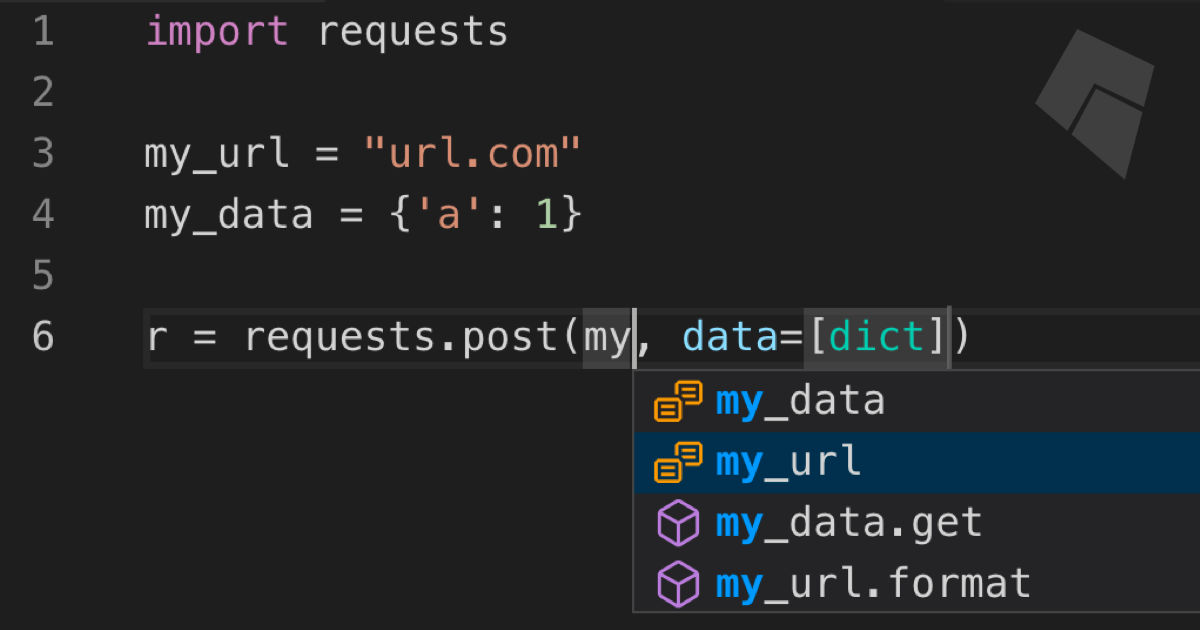
Medium
Kite releases Intelligent Snippets for Python, a new way for users to swiftly complete multi-token statements with relevant code snippets.
 buoyant skiff
how to convert from [[10,20,30,40,50]] to [10,20,30,40,50]
 full jay
@buoyant skiff
wrapped_list = [[10,20,30,40,50]]
inner_list = wrapped_list[0]
Although next time you might want to either ask in #python-discussion or using our help system #❓|how-to-get-help. This channel is for more detailed discussions about the future of the Python language and more complex topics
brazen jacinth
kite is nice at first glance, but it's a real resource hog
afaik, maybe that's changed
full jay
Yeah I remember trying Kite when it first came around since @gray mirage was going on and on about it at the time. I didn't really care for it, and it didn't feel like it had many advantages over current intellisense tech
 gray mirage
I don't feel like it adds anything over what PyCharm provides when it comes to completion
full jay
Do you still use it, g?
full jay
That's fair. Although most of the time I'd prefer to have the websites themselves open, since I'm more than likely going to need to look up additional stuff
gray mirage
That's often useful too yeah
 karmic slate
Best graphics library for python?
karmic slate
Like gui not pure graphics
tawny shoal
Depends on personal preference and what you intend to do with it, this is not the right channel for that though, try #python-discussion
karmic slate
I did try in there but it was way off topic then the admin muted the channel
 shy vine
That doesn't mean randomly post in other channels
 prime charm
[issubclass(bool, int)]
magic python
GitHub
Is your feature request related to a problem? Please describe In my experiments W1202 is misleading as f-strings performance is virtually equivalent to %-operator formatting in practice. Describe t...
"f strings are almost always a bad idea' 🤔
narrow kettle
wut
magic python
i just bumped into this whilst getting annoyed by W1203
narrow kettle
As @chdsbd said, string interpolation is happening at run-time in a way that can lead to exceptions. And while it's abundantly clear what the potential side effects of log.debug("%s", a.thing()), it's less clear that log.debug(f"{a.thing()}") is the same thing.
i dont understand what this is saying
can someone explain what im missing here
magic python
idk but i'm getting E1205: Too many arguments for logging format string instead now
so it's pissing me off too 😄
 fair mesa
hey just a quick broad question, how many loops can be nested in other loops?
like how many layers down of loops would I be allowed to go before python goes 'nah son'
boreal umbra
@fair mesa I'm not aware of a limit imposed by the language
boreal umbra
But if you are going that many levels deep, you might want to take a step back and look at your design.
fair mesa
it's about 4 layers deep
peak spoke
They should be limited to around when the 80 char limit becomes not viable (even with a higher line limit used in the project)
fair mesa
it's basically getting data inside of a list, inside of another list, and inside of another list.
boreal umbra
Recursion might make this easier to read.
unkempt rock
oh lol ive done sth similar with big tables and ur gonna experience some slowness
fair mesa
oh yea I know, and I'm gonna have to implement some pauses in it because I'm getting the tables from websites, so at minimum I'm expecting the program to take like, 25 minutes to run
it's pulling a bunch of reports from what's basically every single county in the US on this site, and I've counted every single county that has data and it's like 1500. And each of those counties has at least 1 report to track, so double that number. Basically, in order for me to not flood the site with html requests I gotta put pauses in between each request. And even at a second per request that's like, a lot of minutes.
so just because of trying to prevent accidentally ddosing I already know the code is gonna take a while to run, regardless of how many loops I use lol.
brazen jacinth
Ur scraping or calling an api?
fair mesa
scraping
brazen jacinth
And each country has its own page?
fair mesa
yea, and each county has its own reports in the county that also have their own page.
it's an older website, and I think it's meant to be more of an archive than anything active
peak spoke
got SyntaxError: too many statically nested blocks after 20 indent blocks
fair mesa
huh, so 20 is my limit
brazen jacinth
If youve got 20 nested loops you are doing something wrong
fair mesa
least I don't come close to that
noo, I would have 1 loop and 3 nested loops inside it max.
brazen jacinth
.thats fine
peak spoke
I assume it's restricted because of how the blocks are then executed, but the real limit is the limit where readability starts getting worse
fair mesa
and the code isn't so big to where it's hard to track, it's basically just repeating the same function on the site within the last site.
so scraping first site to get all links, going into all those links to scrape links from each link, and then within next one, and then last one has data.
so 4 layers
states > Counties > Reports > data
And I'm doing this this way, because doing this manually would've taken me like a week and a half. I even timed myself trying to speed through about 3 or 4 states worth of data, and took me 2 whole days
so I've been learning python in the last 3 days now just to do this thing, and I think I'm only a day or two from completing it
but even if it takes me a while learning it, once I've learned it, if I do something similar in the future it would take even less time, because I wouldn't have to learn it again.
 oblique oxide
what's the best place to learn python, assuming no programming knowledge at all?
charred wagon
Wrong channel. Please ask in #python-discussion
oblique oxide
oh my mistake, sorry
 livid herald
hi, what channel do i get help in? sorry im new
 swift imp
I bet there's a nested list limit
I know it Matlab I've clocked it at like 126 nested for loops
I bet other languages have similar limitations
Oh missed Numerlors response
red solar
you could compile python3 yourself and change the limit 😉
perfect recipe to end up with code that only works for you lol
pseudo cradle
Oh god
I had FIVE nested loops in a complex algo and I felt bad as hell
like I was a dirty rotten developer of the worst kind
Iirc python recursion depth limit is relatively shallow but you can extend it without too much trouble
 grave jolt
I think you can go up to ~50000 or so without getting a segmentation fault. But at that point, it'd really be better to rewrite your solution without using recursion.
pseudo cradle
I had a program that extended the recursion depth for a specific algorithm. I'm going to double check what I did
red solar
sys.setrecursionlimit(n)?
pseudo cradle
Pretty sure that's wht it was, lol
red solar
why tho, that just seems like a bad idea 😂
pseudo cradle
I'm just curious as to what I set it to and why
sys.setrecursionlimit(10**7) # max depth of recursion
grave jolt
Well, you can't set it to any amount you want.
pseudo cradle
Looks like I was doing some tree traversal and an iterative solution would have been more complex
grave jolt
I mean, you can, but it will just give you a segfault.
pseudo cradle
ah
red solar
https://github.com/lihaoyi/macropy#tail-call-optimization unrelated but found it while i was looking at recursion, and seemed cool 🙂
grave jolt
!e
import sys
sys.setrecursionlimit(10**7)
def f(): f()
f()
@grave jolt :warning: Your eval job has completed with return code 139 (SIGSEGV).
[No output]
1000
pseudo cradle
Ah, gotcha
grave jolt
Well, you can emulate a recursive solution by maintaining your own call stack.
But that probably belongs to #esoteric-python already :)
pseudo cradle
haha fair
Here's what I don't get
Why does a python compiler let you redefine a function in the same file?
boreal umbra
I don't really get what collections.ChainMap is for
charred wagon
It's a way to merge dictionaries
Yes, you can do it with unpacking into a dict literal. This is just an alternative
That's how I see it anyway
I've never used it for its dynamic feature
boreal umbra
won't we also be getting | for dicts anyway?
charred wagon
I don't know
They would not remove this if the pipe got added
Breaking change. And it's not quite the same thing
 lost nexus
would it be preferred to use ChainMap over d |= (d1 | d2)
fair mesa
hey quick question, is there another way of doing large commenting out of stuff other than the # for each line?
lost nexus
a docstring
fair mesa
ah nevermind I figured itout
 storm elk
Question: Is it allowed to call a class method as a "static" method by manually passing in a class instance as self? i.e. collections.OrderedDict.get({1: 'a', 2: 'b'}, 1) instead of collections.OrderedDict({1: 'a', 2: 'b'}).get(1)
It absolutely works, both with user-defined and built in classes, but I'm wondering if it's "supposed" to work or just an unintended use case.
north root
normal methods take self as the first parameter
if you don't instantiate the class, that means this is no self, so you have to pass it yourself
there's no black magic 😄
north root
no problem!
 mighty hound
Hey there , I am new to python 🐍
unkempt rock
hi
mighty hound
I use vscode editor with jupyter extension
unkempt rock
cool
mighty hound
Just started a week ago ,,I am taking python course from Udemy from Jose
north root
hey chinz, this type of discussion would be better suited in #python-discussion
unkempt rock
is it a free one?
unkempt rock
im assuming so
mighty hound
Ok
raven ridge
This channel is more for advanced topics about the Python language itself, as opposed to getting help or learning the basics
pseudo cradle
@red solar Because if you're redefining a function in the same file the first one just gets completely replaced
Idk, imo it shouldn't even compile
It makes sense in C when you're creating a template/overloading a function
unkempt rock
c, templates... 🤔
Actually I shouldn’t say that, someone’s probably implemented templates with macros
 brazen quarry
Does it make any difference to use self.attr = attr vs self._attr = attr in the __init__ when @property is implemented?
Because both seem to work just fine
wide shuttle
It does not make a difference, but _ is an indicator that the attribute itself is not part of the public API of the object and that you should access it using the property
A common pattern is to give the property the name you'd normally use for the attribute (e.g. def attribute) and the internal attribute it's managing access to the same name with a leading slash.
mighty hound
In this pic I have two functions and I want to call them inside another third function .
How to call a function inside another function in python ?
shy belfry
The same way you would call any other function, shuffle_list().
#python-discussion is more suited for these questions though.
mighty hound
Ok @shy belfry now I will post these questions in #python-discussion
raven ridge
Why does a python compiler let you redefine a function in the same file?
@pseudo cradle because functions aren't special, they're variables like any other.def foo()is not fundamentally different from afoo = ...assignment. Functions are allowed to be assigned to multiple times for the same reason as any other variable can be assigned multiple times. This is how decorators work, after all - a decorator is syntactic sugar for
def foo():
    ...
foo = some_decorator(foo)
Looks like something I'll need to read up on. I've never really come across it in C++.
raven ridge
In Python's object model, everything is an object, including functions and classes. It would be strange and inconsistent if the variable created by a def or class statement couldn't be assigned a new value. That would require creating a whole new type of variable that behaves differently from all the other variables. It would make it so that whether assignment succeeds is conditional on whether the variable being assigned to already exists and refers to a function. It would really have horrific implications for the object model.
tawdry gulch
Yeah, everything is first class iirc
Which is cool because you can do stuff like:
def make_class(ctor, string, bleh):
  class Ret:
    __init__ = ctor
    __str__ = string
    bleh = bleh
return Ret```Ok people, docstrings. reST or Google? I wanna hear your preferences.
shy belfry
Ok people, docstrings.
reSTor
@open trout NumPyDoc so essentially reST.
I want to use Google but I prefer doing this:
name: type
description```Vs this:python :type name: description
Also the Sphinx setup is easy AF.
@pseudo cradle because functions aren't special, they're variables like any other.
def foo()is not fundamentally different from afoo = ...assignment. Functions are allowed to be assigned to multiple times for the same reason as any other variable can be assigned multiple times. This is how decorators work, after all - a decorator is syntactic sugar fordef foo(): ... foo = some_decorator(foo)
@raven ridge technically you could even make class Foo and assign the __call__ method to recreate what you were saying.
Which is cool because you can do stuff like:
def make_class(ctor, string, bleh):
  class Ret:
    __init__ = ctor
    __str__ = string
    bleh = bleh
  return Ret```
@tawdry gulch or do stupid shit like ReactivePy: https://github.com/Dan6erbond/ReactivePy

GitHub
Reactive properties and owners for Python classes. - Dan6erbond/ReactivePy
pseudo cradle
That's so bonkers
That doesn't exist in C, I'm pretty sure
Or if it does, I have 0 idea how to implement it
tawdry gulch
C isn't even object orientated though
can't really compare
Personally I prefer a structural form of programming, but thats just me
wide shuttle
The most important point is that "functions" are just objects in Python and you can pass them around, create them on the fly, and return them from functions.
tawdry gulch
^
wide shuttle
The def statement "hides" it a little bit, but in essence:
def some_name():
    # some function body
just does:
some_name = Function(# some way to define parameters and function body)
This more obvious in the R programming language:
some_name <- function() {
    # function body
}
You may replace <- with = (it's even valid in R, just not the generally accepted style)
 gritty sequoia
That is a great point, I always thought that made so much more sense intuitively, how that syntax was used in R.
wide shuttle
I think def statements increase readability, but they do hide this a bit
undone hare
You could do the same as in R with Python using lambdas
some_name = lambda: ... ```This is actually pretty close to what the compiler does, as ves saidThere's (at least) one thing that's different
gritty sequoia
I agree with that as well, Nim has an interesting take on that syntax and calls them procs, which is more in line with the contrast between pure functions or functional languages mathematical strict definition and procs that more so are just clusters of procedural code.
wide shuttle
Normally, when you do something like this:
name = SomeClass()
When you construct SomeClass, you don't have access to name. If the name is a class attribute, the __set_name__ hook will be ran during the assignment process, but, in general, you don't have access to it during the object construction process.
When you're defining a function using the def statement, that name is available (and actually stored with the object)
That's why the repr of a function object shows the original name that was assigned to the function object
undone hare
That's why we call functions created through lambdas "anonymous functions", because they don't have a name
gritty sequoia
That is another good point about that as well. Also, further justification of the object nature of functions, although you would probably not maybe use this in reality, is the ability to define attributes on them as well so something like func.a = "spam" isn't going to throw an error.
 dense wraith
hello every one, I am using linsolve to solve an system of linear equation, If it has infinitive solutions, the function return a set of symbols, how can I get the independent variable and assign it a value to get all value of dependent of the other variable? My english is not good, sr
true hollow
i think you should visit #❓|how-to-get-help @dense wraith
please read the topic of this channel
undone hare
Well, the fact that functions are an object came from how cpython is implemented : (almost) everything can be casted to a PyObject, and then is an object, which mean that it can be referenced, has a type and a reference counter https://docs.python.org/3/c-api/structures.html#c.PyObject
 worldly venture
saw this on python-ideas
class _Generic(object):
    Specializations = []

    @classmethod
    def __getitem__(cls, *args):
        name = f"Generic_{len(cls.Specializations)}"
        Specialized = type(name, (cls,), {"specials": tuple(args)})
        cls.Specializations.append(Specialized)
        return Specialized

    def __init__(self, value = None):
        self.value = value

    def __str__(self):
        if hasattr(self, "specials"):
            return(f"[{type(self)} - " + ",".join(str(special) for special in self.specials) + f"] - {self.value}")
        else:
            return(f"[{type(self)} - GENERIC" + f"] - {self.value}")

Generic = _Generic()

#g = Generic() - fails because of no specialization is given
s1 = Generic[12]()
s2 = Generic[42]("Hi!")

print(s1)
print(s2)
kinda cool example
also saw a proposal for a clamp built-in which is a nice idea
val = 100
>>> clamp(10, val, 50)
50
>>> val = 3
>>> clamp(10, val, 50)
10
>>> val = 25
>>> clamp(10, val, 50)
25
shy belfry
Oh yeah I liked the clamp suggestion.
When you're defining a function using the
defstatement, that name is available (and actually stored with the object)
@wide shuttle in Js everything is the opposite way, you have classes that are just syntactic sugar for functions with state, but the syntax you mentioned in R reminds me of the() => {}arrow function.
gritty sequoia
JS "classes" are interesting, you are right @shy belfry. Essentially, they are really just constructor functions under the hood, and then methods are loaded up into their prototypes and linked into these prototype-based chains of inheritance. I honestly think that is the most beautiful aspect of all languages, and sort of their approaches to that fundamental question of how similarities should be encapsulated, to what those features are owned by, and then how does one share such features to other similar constructs, whether that sharing comes via extending or implementing, inheritance or mixin-based approaches, or via composition of smaller functions to produce patterns of repeatability, but yet still be able to maintain some sort of integrity to their own data and characteristics, either encapsulating it in classes or tucking it from outer scopes inside inner execution contexts which may take advantage of a closure. Eek, I think it's time for bed, I've been writing code too long and I'm getting whimsically grandiose ... LOL
LOL
brazen jacinth
if you need it, meh
>>> def clamp(val, lower, upper):
...     return max(val, lower) if val < lower else min(val, upper)
then again, if we have max and min, why not
5head solution
>>> def clamp(val, lower, upper):
...     return max(min(upper, val), val)
I prefer the normal if solution, which I think is more readable and should be faster
Wouldn't hurt to have it in the stdlib with all the edge cases taken care of, but not sure if it's worth it as a builtin
brazen jacinth
is it really faster though 😉
dis.dis(clamp)
  2           0 LOAD_GLOBAL              0 (max)
              2 LOAD_GLOBAL              1 (min)
              4 LOAD_FAST                2 (upper)
              6 LOAD_FAST                0 (val)
              8 CALL_FUNCTION            2
             10 LOAD_FAST                0 (val)
             12 CALL_FUNCTION            2
             14 RETURN_VALUE
>>> def clamp(val, lower, upper):
...     return max(val, lower) if val < lower else min(val, upper)
...
>>> dis.dis(clamp)
  2           0 LOAD_FAST                0 (val)
              2 LOAD_FAST                1 (lower)
              4 COMPARE_OP               0 (<)
              6 POP_JUMP_IF_FALSE       18
              8 LOAD_GLOBAL              0 (max)
             10 LOAD_FAST                0 (val)
             12 LOAD_FAST                1 (lower)
             14 CALL_FUNCTION            2
             16 RETURN_VALUE
        >>   18 LOAD_GLOBAL              1 (min)
             20 LOAD_FAST                0 (val)
             22 LOAD_FAST                2 (upper)
             24 CALL_FUNCTION            2
             26 RETURN_VALUE
>>>
(probs is)
peak spoke
    def clamp_value(value: float, min_: float, max_: float) -> float:
        """Keep `value` between `min_` and `max_` inclusive."""
        if value < min_:
            return min_
        if value > max_:
            return max_
        return value
rather than using the builtin functions
the builtins have some overhead because picking out from 2 values is not really their purpose, and then there's the function call which takes up some time
 deft pagoda
i use the max(min(... construction all the time, i think it's perfectly readable, if only because i read it a lot
unkempt rock
I just learned about the "binary tree" data structure through pypi package anytree. Are there other data structures I should not be neglecting to learn in python?
Those that are not in the basic crash course.
peak spoke
You can take a look at collections which has some, a deque for example can come in handy
unkempt rock
Im familiar with most of those.
 terse pivot
@unkempt rock Queues and stacks are required when ur using threads
and hashing for data storage
flat gazelle
finger trees are amazing
though in python you can mostly use lists/deque for the same purpose
 slim island
Graphs and the different ways of representing them don't have quite so many practical uses, but are worth learning about @unkempt rock
swift imp
Has anyone ever used descriptors to restrict the value of an input argument to a class init or function ?
Kinda the way this person does it https://foss.heptapod.net/openpyxl/openpyxl/-/blob/branch/default/openpyxl/descriptors/base.py

GitLab
Heptapod FOSS public service
unkempt rock
Hello everyone.
Are you also feel frustrated with Python's idiotic errors such as
"can't multiply sequence by non-int of type 'float'"
wide shuttle
Having programmed in a lot of languages, I must say that I really like Python's error messages
This tells you exactly what's up. You've got some kind of sequence and you're trying to multiply it using a float, which isn't possible
unkempt rock
I'm not a programmer. Just a guy from academia. But sometimes I feel I'm lost somewhere. I need to use Spyder. I used a regex to read an analysis file. Somehow Python assumes a group of numbers as it's a list rather than arrays.
I hate lists. I don't need them. All I want to use Numpy arrays of floating numbers.
wide shuttle
I'm just a guy from academida as well, but I think you're more running into that you're still learning the fundamentals of Python
Python isn't just a tool for doing analyses and/or data science, which means that the language isn't designed around it as something like R is
list is one of the built-in data types in Python and the syntax for a list literal is [1, 2, 3]. You can use numpy's ndarray, but you have to make sure that you're using it. It's not one of the built-in types (although it's a very popular type provided by a third-party package).
Still, there's no issue in using them; it's just that the default [1, 2, 3] in Python is a list
unkempt rock
Pythons error messages are bae until theyre coming from something like SQL Alchemy.
A syntax error is my favorite error to get. It means that I will see the problem fairly quickly.
Probably my lead favorite is... "x thing cannot be indexed" or "x thing is not hashable"
Usually from long lists (not python lists) of nested deep json
wide shuttle
One you deserialize JSON-formatted text, you are working with Python lists and dictionaries
unkempt rock
yeah, but sometimes whoever structured the data chose to do so in a way that requires a crypting sequence of random keys and indexes to get at
lol
its not difficult but irritating
@wide shuttle After your first comment I realized I was dealing with list instead of numpy arrays.
 hazy anchor
is that actually true.
peak spoke
python is python, but numpy is mostly a C module
wide shuttle
Python has array.array and numpy ndarrays are not Python lists
It's just that if you use the syntax [1, 2, 3], you get a Python list, not a numpy.ndarray
unkempt rock
@unkempt rock Wow. It is weird. I assumed/guessed we have numpy arrays to calculate fast.
wide shuttle
No, that's not true
Numpy arrays are laid out as arrays in memory
They're not slight modifications of Python lists
red solar
laid out as arrays in memory, as opposed to contiguous python lists which aren't? 🤔
wide shuttle
Yeah, I haven't expressed myself that clearly
peak spoke
numpy uses normal homogenous arrays most of the time, unlike python lists which will contain pointers at the actual objects giving any operation overhead. Then there are optimizations for multi dimensional arrays
unkempt rock
I figured out: numpy.asarray(mylist) solves problem.
wide shuttle
no, you'd typically use regular Python types when defining a user-defined class (which is called composition)
But, if you dive down into the C-API, you can do a lot more
peak spoke
you could imitate some of the behaviour with the aforementioned array.array
wide shuttle
I'm simultaneously trying to find the relevant parts of the numpy source code
red solar
oh no :/
peak spoke
But numpy also keeps things like iteration in C exposed to python through methods, allowing it to be a lot more performant
hazy anchor
see you next week fella
wide shuttle
It's not actually that bad; there's just a lot of it
But, basically, instead of using Python lists, numpy creates its own type of objects to interact with
And by laying out the data in memory in a specific way, you can used optimized procedures in a way that's not possible with regular Python lists
swift imp
How hard is it to write C level stuff and make python bindings for it?
unkempt rock
Depends what you want to do
Generally not that hard
More tedious
#c-extensions is there if u wanna try it 🙂
terse pivot
@swift imp it's easy but u need to know how both languages communicate like wrappers
pseudo cradle
I need more practice with it, seems like an incredibly useful tool
swift imp
I find it quite amazing that we can use a compiled language like that in python
radiant fulcrum
In what cases should we use abc.ABC based classes?
swift imp
When u r making an api
Like pandas allows array extensions, and they have an ABC class
It has methods and properties that they require you to define it else it errors
 burnt wind
I'm trying to understand the importing stuff
django.http
it finds the django files and .http calls the class of http and then you import HttpResponse from it right?
I do know it had something to do with classes though (at least I think I do know)
flat gazelle
django is a package, http is a module, HttpResponse is a class in the http module
slim island
burnt wind
well I didn't wanna take up 20 mins for a question that can be answered easily
brave badger
Again, this is not the appropriate channel to get help from.
wide shuttle
Hey, @burnt wind, I appreciate that, but you don't really have to worry about taking up a channel. Our help channel system dynamically scales up to a max of 32 channels and we rarely get close to that. For quick questions, #python-discussion is the channel you'd want; this channel is specifically a discussion channel to talk about Python itself from a higher level and more abstract perspective. It's not a help channel in that sense, but we have up to 32 channels that are help channels.
burnt wind
ah alright got it
 formal musk
Hey guys
I’m a python developer specializing in Django, machine learning, deep learning and cyber security
 sullen widget
sup, u do any ctfs?
 coral relic
@sullen widget what about changing your profile pic ?. i think you should respect others religion!
coral relic
but with that image there is no respect i think. i know you are free to put any image. but if you are muslim. i think you will be so sad when you see this.
sacred tinsel
Let's please try to keep this channel on-topic
sacred tinsel
if you'd like to speak to our moderators, feel free to send a DM to @summer lichen
sullen widget
agreed
 crisp prawn
But, if you dive down into the C-API, you can do a lot more
@wide shuttle I have a question, generally, I am new here, and I am looking to include into my tech stack -the C programming language, am I in the right path with learning python first, then C later down the line? Should I explore other languages like C++?
or C#?
terse pivot
python and then if u need like super optimized code learn C++
 astral lark
Hello can anyone introduce me with namespaces in python ?
terse pivot
C++ is used when python is compiled and if u likkme need more control over that process u can
astral lark
i am new here
terse pivot
be specific
true hollow
@astral lark I think you should go to a help channel (read #❓|how-to-get-help)
This channel is, as the topic says, for discussing PEPs, the Python language and the future of this language
 lime dagger
I am giving a interesting python project challenge. Would all of you like to solve it?
Type "yes" if you want to
terse pivot
yes
true hollow
I think you should contact the admins or owners if you plan to host a user event here @lime dagger
cuz this is not the appropriate channel
idk
lime dagger
No, by typing only i am giving the challenge
I will give you the input, output every details
Its just a challenge for refereshment
After some days, I will host a event and there i will discuss the answers
boreal umbra
@lime dagger I would suggest taking this to another channel
shy belfry
Who else here has a love-hate relationship with descriptor protocol?
wide shuttle
I mostly have a love-love relationship with it
shy belfry
Well, I just had to implement a proxy so that I could use the descriptor protocol magic for instance attributes and it feels weird. Also having to take care of edge-cases by implementing __call__ and extension_func() which just call the main class' members.
unkempt rock
hey I needed some help with creating a .py file into an exe could anyone help?
shy belfry
#python-discussion though the short answer is to use Py2Exe or PyInstaller.
unkempt rock
when I tried to do it
 thick bay
Any good resources to learn Python? I’m new to programming
unkempt rock
Can anyone help when I try to convert my .py file into a .exe file it comes up with this error Fatal error in launcher: Unable to create process using '"c:\users\user\appdata\local\programs\python\python37-32\python.exe" "C:\Users\User\AppData\Local\Programs\Python\Python37-32\Scripts\pyinstaller.exe" '
 stable grail
looks like you have a python installation that is not setup correctly for this Jack. is python in your Path?
!resources
fallen slateBOT
Resources
The Resources page on our website contains a list of hand-selected learning resources that we regularly recommend to both beginners and experts.
https://pythondiscord.com/pages/resources
stable grail
@thick bay here you go
unkempt rock
looks like you have a python installation that is not setup correctly for this Jack. is python in your Path?
@stable grail yes it is
wide shuttle
This channel is specifically for discussing Python itself, not for help questions. For short questions, we have #python-discussion, and for longer help converations, we have help channels.
We want to keep this one channel to discuss Python itself, from a higher-level perspective.
 wary epoch
hello friends, I have a dumb issue 😅 , I wanna use StringVar but I don't know where it is located, what should I import to get it ??
stable grail
this is not a help channel @wary epoch please use #python-discussion or pick a help channel to ask your question. look in #❓|how-to-get-help for more info about how to claim your own help-channel
 pliant rover
stable grail
pliant rover
stable grail
so how would i use this @fickle minnow ?
 fickle minnow
@stable grail same as in C, for language development and making virtual machines
stable grail
im not sure i see my need for this, but this chart looks very much like python to me. but if its useful and not already implemented into python, sure, go for it 😄
pseudo cradle
Looks like Python probably because smart pointers are already taken for granted in Python
 spice pecan
The contents of the image look like a standard dynamic array, akin to python's list, Java's ArrayList, C#'s List, etc
In fact, that's exactly how C#'s List works, doubling the underlying array's capacity when out of space
pseudo cradle
I was about to say, sounds like any dynamic array
yay computer science
Well, not any ofc
You can custom make a dynamic array if you know the general behavior
spice pecan
Usually the difference is how the array reacts to running out of space
C# doubles the capacity, CPython increments by 1 iirc
spice pecan
I expected that to be the case as well, but when I dug into source code I was surprised to say the least
unkempt rock
Really? Does it just reallocate to one more?
pseudo cradle
That's so interesting
peak spoke
Incrementing by 1 would be too expensive overall, https://github.com/python/cpython/blob/master/Objects/listobject.c#L61-L70
unkempt rock
Because that sounds awfully slow :P
pseudo cradle
lol what is this
unkempt rock
userbot
pseudo cradle
@unkempt rock Agree
raven ridge
That's not correct.
pseudo cradle
There's no way you're getting an amortized cost anywhere near O(1) with single increments
Or even fixed increments
raven ridge
incrementing by 1 wouldn't give amortized constant time, and Python's list does.
yep, you need a fixed percentage.
spice pecan
My bad, missed a part of it
 /* This over-allocates proportional to the list size, making room
     * for additional growth.  The over-allocation is mild, but is
     * enough to give linear-time amortized behavior over a long
     * sequence of appends() in the presence of a poorly-performing
     * system realloc().
     * Add padding to make the allocated size multiple of 4.
     * The growth pattern is:  0, 4, 8, 16, 24, 32, 40, 52, 64, 76, ...
     * Note: new_allocated won't overflow because the largest possible value
     *       is PY_SSIZE_T_MAX * (9 / 8) + 6 which always fits in a size_t.
     */
    new_allocated = ((size_t)newsize + (newsize >> 3) + 6) & ~(size_t)3;
    /* Do not overallocate if the new size is closer to overallocated size
     * than to the old size.
     */
    if (newsize - Py_SIZE(self) > (Py_ssize_t)(new_allocated - newsize))
        new_allocated = ((size_t)newsize + 3) & ~(size_t)3;

    if (newsize == 0)
        new_allocated = 0;
num_allocated_bytes = new_allocated * sizeof(PyObject *);```They dealt with it in resize rather than the function responsible for appending
pseudo cradle
I was really impressed with timsort
unkempt rock
Ah, good to know
pseudo cradle
Amortized memory cost of O(1) and worst case time complexity of O(nlog(n))
But still capable of O(n) when list is presorted
It's kind of genius
I can think of usecases where it's suboptimal, but I have to really think about it
raven ridge
It's the default sorting algorithm in quite a few languages these days.
pseudo cradle
I think the only "downside" is that it's not trivial for the average person to create from scratch
spice pecan
static int
app1(PyListObject *self, PyObject *v)
{
    Py_ssize_t n = PyList_GET_SIZE(self);

    assert (v != NULL);
    assert((size_t)n + 1 < PY_SSIZE_T_MAX);
    if (list_resize(self, n+1) < 0)
        return -1;

    Py_INCREF(v);
    PyList_SET_ITEM(self, n, v);
    return 0;
}
The call to list_resize(self, n+1) was a little misleading, but I guess it does make sense to "hide" the overallocation
pseudo cradle
Yeah, looks like a pretty solid replacement over quicksort
spice pecan
timsort is just plain amazing
pseudo cradle
I would need to know a lot about the data set or implementation to choose anything else
Or if I had literally 0 additional memory to play with
But I can't really think of real world issues where that matters. Only for like... leetcode questions/academia
How bad of an idea would it be to fold numpy into stdlib?
spice pecan
I don't think it would be all that unreasonable, it's used extremely widely and I believe some of the features were added specifically for it
ellipsis and __matmul__, iirc
pseudo cradle
Oh, what? matmul is std lib?
raven ridge
it's part of the language, though not really used by the stdlib
pseudo cradle
Oh
spice pecan
No built-ins implement matmul I think
pseudo cradle
I guess it lets you create your own objects that can be matmul'd I guess
raven ridge
right.
It's proxied by a few things - MagicMock, etc - but no builtin types implement it in a meaningful way, AFAIK
spice pecan
... literal
raven ridge
~>python2 -c "print(type(...))"
  File "<string>", line 1
    print(type(...))
               ^
SyntaxError: invalid syntax
~>python3 -c "print(type(...))"
<class 'ellipsis'>
It's used as an "autofill" kind of thing for numpy slices and it also has some use in the typing module I think
 somber halo
never used that literal I believe.
pseudo cradle
Yeah, same
raven ridge
type stubs use it regularly, and it's used by the @typing.overload decorator
somber halo
well, you're into Python for some months now
raven ridge
it doesn't have to be - all the typing use cases can be replaced with pass, AFAIK - it just looks cleaner.
somber halo
I've been using Python for years and years now.
pseudo cradle
Haha, gotcha
spice pecan
Some people also use it in roughly the same contexts as pass
def func():
    ...
Although I think these should really just use pass
raven ridge
how long 3-only? Cause you couldn't have used it when writing 2 or 2/3 code.
spice pecan
I haven't seen many examples of this, it's one of those things that gets mentioned as a "Python fact you might not have known!" more often than it is used
peak spoke
pass is a statement so you can't replace ... with it in thinkgs like Tuple[str, ...]
spice pecan
IMO using ... in place of pass only makes sense in .pyi stubs, since it draws... less attention I guess
peak spoke
I like it in abcs or as a placeholder for code
pseudo cradle
What would Tuple[str, ...] do?
peak spoke
From typing, it specifies a varialble length tuple of the specified type
pseudo cradle
placeholder for code sounds legit
gotcha
So it's a way to code when you don't know what's going to go in there but you don't want to cause syntax errors?
pseudo cradle
Got it. Handy
spice pecan
But since those are two different literals you can give them distinct meanings in your projects
As in "pass means nothing should be done, ... means the code just isn't quite there yet"
spice pecan
Though I think something more explicit, like NotImplemented, should be a better option, at least IMO
shy vine
Or, in Guido’s words:
Some folks thought it would be cute to be able to write incomplete code like this:
class C:
  def meth(self): ...
  ...
and have it be syntactically correct.
raven ridge
I mean, it is cute. 😄
pseudo cradle
haha
raven ridge
and in the case of typing stubs, ... makes more sense than pass. If you used pass it would read as "and the implementation does nothing", whereas ... makes it clear that it's "and the implementation isn't shown here".
pseudo cradle
Right
I'm a little confused on how numpy inspired this, though
or how it relates to folding numpy into stdlib
 remote trench
with selenium is driver.switch_to.frame(0) related to z-index or frames themselves?
peak spoke
I don't know if numpy influenced that, but it's used to signify recursive containers
raven ridge
I think that's been there since the very early days of the language - I'm sure that predates numpy
containers have always been able to be recursive, and there's always been a need for every object to have a repr
raven ridge
not in general, but in numpy.
spice pecan
In case of recursive containers it's just three dots, not really ellipsis
pseudo cradle
Okay, cool
raven ridge
yeah. it's an ellipsis in the punctuation sense, not ellipsis in the Python object sense.
shy vine
I think numpy leveraged it more than inspired it, the Ellipsis object has been around for a long time
But it’s hard to do history on a phone
raven ridge
only since 3 - so sometime in the last 10 years...
wide shuttle
Yeah, it was there in 2.0 as well (https://docs.python.org/2.0/lib/bltin-ellipsis-object.html)
raven ridge
ah, TIL.
pseudo cradle
Dumb question, what's a literal?
raven ridge
a way of constructing an object without calling that object's constructor.
pseudo cradle
Got it
raven ridge
int("5") is equivalent to 5. 5 is an integer literal.
pseudo cradle
Okay, that makes sense
raven ridge
likewise for {x:y} for dict literal, "x" for str literal, etc.
pseudo cradle
TIL
stable grail
[] and list()
pseudo cradle
Yeah
stable grail
and so on
pseudo cradle
Never knew what that was called
raven ridge
0xFF and 0b0100 for other types of integer literals.
pseudo cradle
Can you make a literal for a class that you make?
Can't think of a usecase, just curious
raven ridge
C++ supports that, but Python doesn't, AFAIK.
pseudo cradle
Okay
raven ridge
it has been suggested as a possible future feature - https://mail.python.org/pipermail/python-ideas/2015-June/033871.html
pseudo cradle
Oh, nice
spice pecan
You can get creative in some cases
Someone I know used slice literals for a Time class
Time[20:35], because why not
zenith topaz
Pathlib uses division for concatenation, always like that one.
spice pecan
Yeah, I've always found these kinds of things pretty neat
fickle minnow
Damn
spice pecan
Reminds me of how << and >> are used for streams in CPP
raven ridge
I've always found / in pathlib to be just as gross as << in C++ streams, heh. Too clever by half.
Using the left shift operator to mean "stream insertion", or the division operator to mean "path concatenation", is exactly the sort of thing that every OOP design book tells you not to do with operator overloading.
spice pecan
peak spoke
Can't speak about << but I think it's pretty natural for paths (except the whitespace maybe) for example base_dir / "file_name.ext"
spice pecan
I don't really mind it personally
peak spoke
I'd probably use joinpath for something longer but for 2-3 it looks fine and behaves as expected imo
spice pecan
If an operator is rarely used and/or has little to no literal application for the class, it's tolerable
zenith topaz
Like matmul I guess, that one is very limited in use.
spice pecan
matmul, bitwise operators in most contexts, etc
zenith topaz
The way bitwise operators are used for sets and dicts are okay with me.
raven ridge
/ is hardly a rarely used operator, but it's true that it doesn't have a natural application to paths.
I'd argue that's not a good enough justification to give it an unnatural application, heh
spice pecan
I think it's fine as long as it's not the only way of doing it
zenith topaz
Using / for a path seperator is a very natural application imo
 inland acorn
the natrual application for paths is to join them, but that is my opinion
raven ridge
There should be one-- and preferably only one --obvious way to do it.
the natural application of the division operator for any object is to divide a numerator by a denominator.
inland acorn
list_a += list_b vs list_a.extend(list_b)
remote trench
"Poll the DOM for a given time tying to locate an element" does polling mean to keep checking if a resource is available?
zenith topaz
Check #❓|how-to-get-help for info on how to get your own help channel @remote trench
peak spoke
It's a nice thought but there aren't all that many cases it applies to except on the overall logic of something
zenith topaz
I honestly don't care if you for example use the @ operator for something else than matrix multiplication.
pseudo cradle
You can use @ for matrix multiplication? TIL
peak spoke
It wraps the same method as joinpath does for convenience and to some nicer looking syntax, but using it to chaing a lot of paths together won't be as nice and will have worse performance
inland acorn
use them in a way that makes sense is my opinion, and using / to join paths makes sense
peak spoke
Not in python directly (as in on the builtin)
zenith topaz
Yes, @ is the matrix multiplication operator in python.
raven ridge
the magic method for the @ operator is __matmul__
 paper echo
i kinda wish they didnt call it matmul
just call it "unassigned custom binary operator" or something, __binop__ idk
and believe me i am a major beneficiary of @ existing
idk i guess you can use it for anything if you want to
pseudo cradle
I have a salt rock lamp in my room 🙂
paper echo
nice
unkempt rock
anyone know if python have anything to a struct in c or is tuples the only way to group datatypes?
 spark magnet
@unkempt rock you could use a dict, or define a class
unkempt rock
seems kinda excessive with a class with just variables
spark magnet
attrs or dataclasses are good for simple value classes
unkempt rock
ima look into dataclasses
dataclasses seem pretty promising on doing what im trying to do
tx
boreal umbra
@unkempt rock in my opinion named tuples are the most similar to C structs. They're tuples for which each index is associated with an attribute name.
unkempt rock
apparently dataclasses r very similar too
boreal umbra
Data classes are more substantial than C structs. They can have methods.