#cybersecurity
7 messages · Page 20 of 1
 hollow moth
As a counter to brute force
(Everything after the 6th login attempt in a minute gets served 429 Too Many Requests)
 thorn obsidian
per account, or per IP?
 tranquil basin
anyone have any experiencer on sqli injections
hollow moth
@thorn obsidian per IP
Using werkzeug proxy_fix to get the correct IP out of the Forwarded-For headers
thorn obsidian
!ask @tranquil basin
 past starBOT
ask
Asking good questions will yield a much higher chance of a quick response:
• Don't ask to ask your question, just go ahead and tell us your problem.
• Don't ask if anyone is knowledgeable in some area, filtering serves no purpose.
• Try to solve the problem on your own first, we're not going to write code for you.
• Show us the code you've tried and any errors or unexpected results it's giving.
• Be patient while we're helping you.
You can find a much more detailed explanation on our website.
thorn obsidian
@hollow moth so if I attack cycling through my ipv6 subnet, I get 2^64 * 6 attempts a minute? ;)
hollow moth
@thorn obsidian no, I don't think Werkzeug's proxy fix cares about your subnet
thorn obsidian
werkzeug's proxy fix doesn't do a thing if I don't supply any forwarded-for headers
or, rather
there's no NAT happening on my end
if you pass the request to your backend with the X-Forwarded-For header, the specified host will be different for each attempt
 lusty flare
that's interesting
what would be a method to handle it for more obscure things like that?
first thing that springs to mind for me is an nginx reverse proxy with a fail2ban rule
thorn obsidian
So, you'd do it based on account
6 attempts per 10 minutes is a good idea, and then temp ban the account login for 24~ hours
Though, setting it to new logins would be a good idea. Otherwise you have a DoS
 cold fossil
I found a brute forcer that take an input that is in the code then attempts...
Takes forever if there is a capital letter tho...
password is Hello. found in 651397311 guesses.
This just finished
 olive lark
you ran a program that did 600 million somethings? Geez
cold fossil
I got it up to 1 bil after...
I can post the code if you want because it can't be used maliciously
it does about 2 mil a second... I think
 daring sedge
1ghz is 1 billion cpu cycles per second
I think that's a good point of comparison for how muck work is done
olive lark
I imagine "check one password" would be thousands, tens of thousands, or even hundreds of thousands of CPU cycles
cold fossil
I don't want to dedicate my whole computer to testing a brute force program...
thorn obsidian
that's why people build dedicated machines for that :) at work, we have a "crackstation" with 6x2080Ti cards in them solely for cracking hashes
lusty flare
:D
it's also why you wouldn't start by brute forcing @cold fossil
you'd have a list of dictionary words, most common passwords, etc, etc that you'd run through first
cold fossil
ya...
I need to find one...
thorn obsidian
Passwords are interesting in that sense. UPPER [26] + lower[26] + digits[10] = 62. Make a 32 character password, and you have 32 ** 62 - or you know, only 2085924839766513752338888384931203236916703635113918720651407820138886450957656787131798913024 possibilities. 😄
cold fossil
exactly...
lusty flare
but all it takes is single correcthorsebatterystaple and your possibilities are massively narrowed
bet that's in a few rainbow tables
 nimble isle
But you cant determine a part of the password of a larger password through a hash
lusty flare
no but the length of your password is irrelevant if it's commonly used
which is kinda what i meant
thorn obsidian
Password databases!
lusty flare
i'm a big fan of the HIBP api
the breached passwords database is an excellent filter
thorn obsidian
@lusty flare How would you use it?
lusty flare
i want to use it on active directory for a customer
but they're a grumpy guts and wont pay for it
thorn obsidian
I mean more, how would you implement it? Packages? Etc
thorn obsidian
I mean more, implementing https://www.troyhunt.com/ive-just-launched-pwned-passwords-version-2/
lusty flare
probably compare on password creation and regular checks on existings
thorn obsidian
hash locally and send the first n bytes of the resulting hash to hibpasswords
that's how the browser client does it
@thorn obsidian Sure, that's what that link talks about. Just curious if there's an easy way to implement this into a site.
aye, there's an API if i recall correctly
lusty flare
yeah
thorn obsidian
can just plug it into the password creation/modification routine
lusty flare
it costs moniz now though
thorn obsidian
orly
lusty flare
like $3 a month iirc
thorn obsidian
oh that's decent
lusty flare
yeah
he was fed up of it being abused by people checking addresses etc that'd been in breaches
clearly malicious usage
so he put a low fee on it
still haven't managed to sell my HIBP service to any customers :|
thorn obsidian
@lusty flare You sure? https://api.pwnedpasswords.com/range/90910 works just fine
lusty flare
maybe it was just the email address part
Edit: Just to be crystal clear, this doesn't impact Pwned Passwords. Cloudflare picks up pretty much all the costs for running that so the service is still freely accessible.
ahhhh
thorn obsidian
Surprised they're doing a SHA1 lookup..
lusty flare
well it's not like they're actually storing passwords
i suspect it's for performance reasons
thorn obsidian
It's more that, you'd need to take in the user's input and then sha1 it to do the check. Then if it was good enough, using argon2 to store it in the DB.
lusty flare
yeah
lusty flare

It's 2020 and pre-auth, superuser command injection is still a thing
The devices' weblogin.cgi program fails to sanitize user input
niiiiiice....
10/10 in severity
and no back patching for out of support devices
thorn obsidian
what
i have literally found and reported this bug before in a pentest
but that was a different zyxel device type
it was SO bad
thorn obsidian
it got a "not ready for production" warning
their web server (which runs as root btw) crashed so much (due to memory corruption) that they decided to simply run it in a while true loop
god i wish i was joking
lusty flare
haha
i've rocked up to a few sites that've had them as routers
straight in the bin
replaced with drayteks
thorn obsidian
Zyxel in general is trash. Even as residential devices, they're trash.
 inland palm
Hey
i am new
so, how much do u guys think that Python is likely to be the shield for Computer Security algorithms and security matters?
 orchid notch
if you mean cryptography with computer security algorithm
you dont want to write those in python
but python is used for lots of automatisms etc in cyber securiy for sure
 blissful raven
I think python is mostly used to run security check programs, or audit
 warm fossil
which is a better lang to learn for a beginner in cybersecurity? python or c++
cold fossil
python... easier to read but c++ is more powerful
daring sedge
Really depends what your goal is I think. Cyber security is a vast field
warm fossil
thanks
nimble isle
try and at least grasp C/C++ as a lot of exploits are written in them
cold fossil
how secure would you say using GitBash to make a chat room would be?
I have my ways of doing it but what would you say?
orchid notch
What you said above there doesn't make sense
You don't use git to make software you use git to version it
And that's always a good idea
cold fossil
pretty much it would take input from a user and update a github file.
Then the terminal would print updates to the file.
This would let people who are watching it to see the terminal and talk
in theory
but it was a bad idea
hollow moth
@inland palm you should never ever ever write your own crypto, regardless of language
That said, there are very good libraries out there
Use those
inland palm
That said, there are very good libraries out there
@hollow moth Oh ok, i will from now onwards. Thanks for the tip 🙂
hollow moth
@inland palm for example, werkzeug (which comes with flask) has a function that salts and hashes a password with one function call
inland palm
So, i kinda need clear something hashes
inland palm
abt*
hollow moth
Ok ask
inland palm
So, basically the question is on what level is Hashing a password important?
hollow moth
@inland palm very. Passwords should never be stored in plaintext
You don't need to know what the password is, only that the entered pw matches the pw from signup
That way, if the db is ever leaked, it is very very difficult to determine what someone's pw is
@inland palm make sense?
inland palm
Yeah. That does it.
 south seal
I am creating a JWT and I am getting a ValueError because it cant deserialize key data. I have created a private.pem file and I read it each time I want to create a key
This is a part of the pem file
    headers = {'alg': 'RS256'}
    payload = {'userId': str(User.username), 'iat': time.now()}
    key = read_file('private.pem')
Why would you show us your private.pem?
lusty flare
to be fair it's only like 10% of it
south seal
^^
thorn obsidian
does anyone know anything about IPv4 addresses and subnet?
 tight abyss
Just ask your specific question. If somebody knows, they'll respond.
 regal stone
is secrets.SystemRandom().random() recommended for salt?
thorn obsidian
@regal stone For a password?
regal stone
Yes
thorn obsidian
I'd personally use https://passlib.readthedocs.io/en/stable/lib/passlib.hash.argon2.html
regal stone
ok I will see it
thorn obsidian
>>> from passlib.hash import argon2

>>> # generate new salt, hash password
>>> h = argon2.hash("password")
>>> h
'$argon2i$v=19$m=512,t=2,p=2$aI2R0hpDyLm3ltLa+1/rvQ$LqPKjd6n8yniKtAithoR7A'

>>> # the same, but with an explicit number of rounds
>>> argon2.using(rounds=4).hash("password")
'$argon2i$v=19$m=512,t=4,p=2$eM+ZMyYkpDRGaI3xXmuNcQ$c5DeJg3eb5dskVt1mDdxfw'

>>> # verify password
>>> argon2.verify("password", h)
True
>>> argon2.verify("wrong", h)
False
Pretty good docs, and great package in general. I use it in production.
south seal
Yup werkzeug is very very good
thorn obsidian
argon2 is a better algorithm, considering sha512 wasn't designed for passwords in mind.
lusty flare
yaaaay
letsencrypt bugs

Ars Technica
Let's Encrypt users will need to manually force-renew once to avoid downtime.
time to go find out which of our customers have been hit
not supposed to be working today but urrrgghh
thorn obsidian
I got an e-mail yesterday about that
Sent some messages out to a few contacts who I knew would be affected. Lack of sleep yesterday made me forget about posting it here.
lusty flare
i don't check my work mail outside of work hours
aint gonna be no digital work slave
 mystic hawk
how would a discord token be fetched programmatically
before it used to be stored in local storage which could just be parsed on the filesystem, but it's not that clear anymore and everyone only finds it now through the authorization headers
thorn obsidian
why do you need this?
mystic hawk
so i know about potential attack vectors that malware can utilize for pc defense reasons
thorn obsidian
... or you could be using this knowledge to make malware (or even if you had a legitimate reason to fetch the token, I don't see what you'd use it for that doesn't break the ToS)
seems shady
mystic hawk
ya but that's not my intent
i am just genuinely curious
how a malware would do it
because ive had my token stolen before
somehow
thorn obsidian
maybe it isn't your intent, but it might be someone else's in this server who happens to be reading this channel
yeah i wouldn't help with stealing tokens
mystic hawk
just because it can be used to break the tos doesn't mean that talking about how it would be done is breaking the tos itself
anything can be used to break the tos
the way i see it, the more ppl know about it then the more awareness it spreads as well so it balances itself out in the end
thorn obsidian
!rule 5
past starBOT
5. Do not provide or request help on projects that may break laws, breach terms of services, be considered malicious/inappropriate or be for graded coursework/exams.
thorn obsidian
may breach terms of services, may be considered malicious
mystic hawk
ya but it doesn't
thorn obsidian
token stealing definitely fits in that category
mystic hawk
it's not stealing
who said i want to steal
i asked how it could be scraped off my own pc
thorn obsidian
i don't see how "scrape off my own pc" is any different from "scrape off someone else's pc"
mystic hawk
i still think your point is moot
you can use any knowledge maliciously
how do you know someone asking for help recording keystrokes
isn't using it for malicious reasons?
it "may" break the tos too
thorn obsidian
<@&267629731250176001>
thorn obsidian
I don't see how scraping tokens can be used for any legitimate purpose
mystic hawk
just ping the mods and dodge my reasonable counter argument, i have no malicious intent as i said, my token was stolen before and i was wondering how a program would do that since it's not as clearcut as it was before
have you read anything i said
you are just assuming my intentions
 narrow laurel
they're correct, we don't allow discussions about anything easily put to malicious use and we don't care about intent
mystic hawk
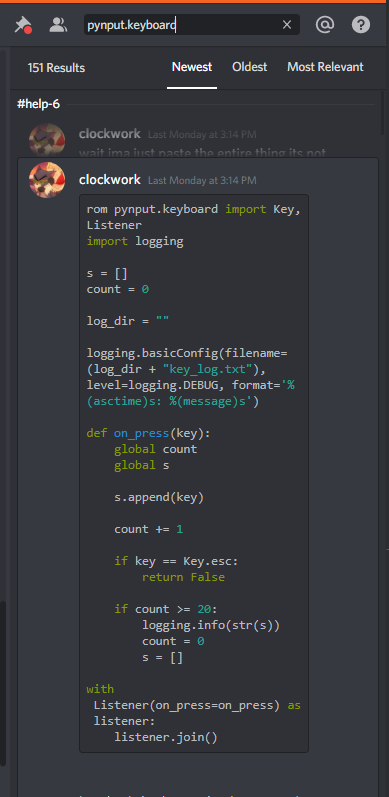
what about these 150 messages?
a keylogger is far more likely to be used for malicious reasons
narrow laurel
we agree. we don't allow keyloggers either
mystic hawk
that's weird because there's tons of legitimate programs that would want to record keystrokes
mystic hawk
may as well just ban all programming topics then
since anything can be used maliciously
are you going to delete those 151 messages
narrow laurel
yes, welcome to the slippery slide argument
narrow laurel
i'm discussing your own messages
mystic hawk
so i guess you don't really care
ya but
now i am talking about those messages
you should clear them
thorn obsidian
very nice "whataboutism"
mystic hawk
if you really care
i mean
if you care about ppls security
and your own rules
its not a good example then
narrow laurel
!tempmute 368959108826529802 1D Seems you don't really care about what staff is indicating isn't allowed, you just want to argue your point. Go away for a while.
mystic hawk
to leave them up
past starBOT
:incoming_envelope: :ok_hand: applied mute to @mystic hawk until 2020-03-06 11:08 (23 hours and 59 minutes).
 magic rain
It's beyond me that such a rule exists
Anything in infosec would break rule #5
There go all the malware research ever
thorn obsidian
if you read any of the regular chat history of this channel you'll find this is not the case, no
and there's a distinction between "protecting yourself against X and Y" vs "being able to pull off X and Y" - ie, "how do I protect against SQL injection" (use parametarized statements) vs "how do I perform SQL injection"
magic rain
But don't all "write-ups" fall into the latter category?
thorn obsidian
uh, yeah, they do.
magic rain
Should I not share write-ups here?
thorn obsidian
i generally wouldn't see an issue with sharing write ups on specific vulns, i've posted my write ups before with no issues, the issue arises when you're helping someone who has asked to do something which can be considered malicious, ie "how would I programmatically steal tokens"?
magic rain
I had to do that for a bug bounty report recently, so I don't think it's exclusively malicious
Yet, I get your point
Btw, @thorn obsidian, mind sharing your blog/write-ups?
thorn obsidian
sure! I've removed some of them due to reasons, but https://neonsea.uk/blog, security related writeups are the ones with the CVE tags (and some without any)
i haven't posted anything recently due to being actually employed as a pentester
just haven't had the time to research things in my free time and I obviously can't post work-related findings on the 'net
thorn obsidian
have you posted anything publicly? @magic rain
magic rain
I've done some guest-blogs and collaborations
I was a part of https://edoverflow.com/2019/ci-knew-there-would-be-bugs-here/

EdOverflow
When it comes to bug bounty hunting and finding exciting areas to explore, it is vital to familiarise yourself with the technologies vendors, and companies rely on. One particularly interesting environment that caught our eye was popular integrations used by various open-sourc...
Currently waiting on a vendor to fix a vulnerability so I could publish its write-up
thorn obsidian
that post is very interesting.
 young zinc
thorn obsidian
young zinc
thorn obsidian
usually you'd do it with something like openssl
lusty flare
and if you're after something that's not self-signed, letsencrypt is always an option
olive lark
I use letsencrypt; after spending quite a while searching for helper code, I found one that's easy to use
thorn obsidian
cool
any advantage of lego over certbot other than ease of use?
i've got certbot managing my nginx shit using plugins and stuff (so it automagically reloads the sites when ssl is renewed), can lego do something similar or will I need to script it?
lusty flare
i still have a shell script managing letsencrypt
set it all up before there was proper support for nginx
magic rain
Speaking of nginx
Learned this the other day
Had no clue nginx would just apply your first configuration if the host header was random
"Why why why why why why" — Chandler from Friends
lusty flare
"random"?
magic rain
If it's one you've not specified to capture
lusty flare
ah, undefined
yeah, quite often you can slap in the IP address of a host and get the default server
the bit that frustrates me the most is not being able to blackhole the host IP on HTTPS
lusty flare
yeah
magic rain
Cloudflare everything, my friends
lusty flare
i think they used to use nginx to handle requests
magic rain
Interesting
lusty flare
read a thing about it a while ago
magic rain
I'd be scared af if I had nginx running on a huge infrastructure
Day by day, I learn new quirks
But that's probably with everything
The Internet was a mistake
magic rain
Oh god.
lusty flare

The Cloudflare Blog
Six years ago when I joined Cloudflare the company had a capital F, about 20 employees, and a software stack that was mostly NGINX, PHP and PowerDNS (there was even a little Apache).
that was the thing i read
magic rain
Does it have tips on how to not mess up?
I have a proof-of-concept server running on nginx that is worth more than gold
lusty flare
what'd you have trouble setting up in particular?
magic rain
Nothing really. It's just the surprise aspect of learning the "host" quirk
20 employees
Jesus! That's not enough to manage nginx
😆
lusty flare
sure it is!
all their stuff is done programmatically
i manage an nginx server for work
not that tricky
magic rain
Did you know about the default_server business?
What do you people read to discover that?
magic rain
Classic.
lusty flare
apache has this "problem" too.
magic rain
Yes, I was told by a friend
I mean, if nginx has it
then apache must too
With Apache's complexity (or attack surface), I'd be even more paranoid
lusty flare
the only reason apache has a higher attack surface is the vast amount of mods you can bolt into it
at this point in time there's very little reason not to use nginx
magic rain
Agreed
I suppose I should try launching a "test" Apache server just to learn things
Virtualization is a good way to learn
lusty flare
nothing beats fucking it up in virtual first
fuck. you.
3 uppercase, 3 lowercase, 3 numbers and 3 symbols?!
thorn obsidian
must be at least 8 characters long
3 + 3 + 3 + 3 = 8
thorn obsidian
yo
idk if this is the right channel
but
i wanna do cybersecurity but im not great or big into programming
i wanna do pen testing
should i just change my degree
thorn obsidian
generally, pentesters also know and do programming on the side
without programming knowledge, you will feel a bit lost
thorn obsidian
How does STIR/SHAKEN deal with text messages? Because I feel like it doesn't do anything with SMS/MMS, and that'll be the next step for malicious parties. 🤔
lusty flare

Contact info and more, perfect for phishing
womp, as they say, womp.
marketing database – containing names, home and email addresses, and phone numbers, and some dates of birth, plus other info – had been left open since mid-April 2019.
mother fuckers
hah, their response is gold too
We have put all of the latest information on our website, including some advice on how to stay safe online, such as:
[...]
- How to be vigilant by not providing your personal information to anyone suspicious online, by phone, email or text.
also telling people to use strong passwords when their own password policy has a 10 character limit and doesn't support symbols
magic rain
Lmao
I mean, if they couldn't manage locking a database up, how are they giving such advice?
lusty flare
well, they all have to have a password policy
it's just most of them never follow NIST guidelines
thorn obsidian
fuckin' reminder

@Freakyclown Posting it to you is secure, as it's illegal to open someone else's mail. ^JGS
Retweets
1429
Likes
2204
 Twitter
lusty flare
Twitter
lusty flare
their twitter is a gold mine for security lol's
this is an old write up, but it's gold.
Paul Moore
Avid followers will know, I've long been an advocate of password managers... specifically 1Password. So much so, I'm often criticised for treating it as a panacea. With that in mind, it's about time I outlined another risk which isn't immediately obvious; one which allows me...
dob in password recovery page (secret question + dob) being stored in source
security question was "Its A SeCrEt" or something but lower case and no spaces was accepted
that's from like 2014, but still
lusty flare
Let's Encrypt has halted its plans to cancel all three million flawed web security certificates – after fearing the super-revocation may effectively break a chunk of the internet
thorn obsidian
think you pasted that twice
 thorn obsidian
Joke's on you, I already re-did my certs!
lusty flare
same, i didn't even get the heads up email either. just thought it better safe than sorry
thorn obsidian
https://security.googleblog.com/2020/01/say-hello-to-opensk-fully-open-source.html Another thing they'll abandon in 6 months

Google Online Security Blog
Posted by Elie Bursztein, Security & Anti-abuse Research Lead, and Jean-Michel Picod, Software Engineer, Google Today, FIDO security...
lusty flare

Fiddle with some numbers and voila
nord VPN having a shit one this past...
uhhh.
a while
that's a staggering fuck up
thorn obsidian
That's pretty bad, yeah.
lusty flare
"Such reports are one of the reasons why we have launched the bug bounty program. We are extremely happy with its results and encourage even more researchers to analyze our product. This is an isolated case that potentially affected only a handful of users, due to the implemented rate-limiting. Theoretically, only email addresses could have been seen by a third party."
that is not how you respond to a failure like this
potentially and theoretically are doing some heavy lifting there
thorn obsidian
this was an isolated case
doubt it
99% of the cases, if it's possible to read data unauthenticated from one endpoint, there are also other endpoints like it
lusty flare
i also scoff at the idea it only hit a small number of users because of rate-limiting
"oh no, i've been rate limited... better wait for a bit before i siphon off more data."
said no malicious actor ever
 north fern
Is sha256(email+timestamp+sha256(password)) secure ? Given that the attacker knows the value of the whole expression, email and timestamp, is it easy for him to guess the password ?
 wraith violet
Well sha256 is not secure anymore for passwords because it's too fast for computer to calculate, no matter what you put into it.
Just use a proper password library like argon2 or something.
 north fern
I thought so. I'm not implementing anything, I was examining an API I might have to use
thorn obsidian
Oh, ew.
wraith violet
Given it's via https it's probably not the worst. I mean whenever you login to a website you're sending your password just like that.
north fern
It's an URL param
thorn obsidian
@wraith violet There are levels to https though
Totally different from TLS 1.3 with strong ciphers, as opposed to SSL 2
north fern
north fern
To be sure I understand.
SHA256 is quick to compute, so it makes it easy to bruteforce anything, right ?
In that case, attacker brute the first whole expression, he knows he has the right guess when the email and timestamp that he knows are correct and then he most probably has the password hash in a dictionary (rainbow table) ?
thorn obsidian
SHA256 is also used in Bitcoin, so there's a lot of processing power used toward it as well.
So it'd be pretty easy to find something cheap designed specifically for SHA256
north fern
And you would do something like that ?
for nonce in all_256_bits:
    hash = sha256(email + timestamp + nonce)
    if hash == digest:
        break
password = rainbow_table[nonce]
some of those ASIC devices are insanely fast
north fern
Well, we won't use that provider xD
lusty flare
i mean, it's academic to talk about breaking a hash that contains a butt load of combined information i think
oooh, the attacker knows the email and timestamp
my bad
north fern
I typed it directly in Discord ^^
thorn obsidian
The if is off as well 😛
north fern
I'm not actually trying
thorn obsidian
But I'm curious where they're pulling the nonce if they're winging their hashing
Considering setting up argon2 is pretty easy. You verify the user's input is what you have hashed with your sha256 hash, and then replace it with the new algo.
north fern
I use industry standards and trust them. I hope Django has my back.
Anyway, thanks for the answers
thorn obsidian
No problem
magic rain
I wouldn’t be comfortable inputting a timestamp and email into the hash
It serves no good purpose
thorn obsidian
It's very much why you don't wing it
north fern
Now that I think about it, isn't it pretty much how JWT works (https://jwt.io/) ? And there it's even worst as you guess the server secret, not just one user.
thorn obsidian
that is not how jwt works at all
and i don't see how you're going to "guess the server secret" seeing as it's usually 4096 long
north fern
I was about to say it ^^. It's much harder because server uses a really strong secret.
thorn obsidian
you're not supposed to send sensitive data (such as a password) via jwts
jtws are simply signed tokens to prove authorisation
you pass it to a server which can check that the token is valid (and not forged by the user) by seeing whether the cryptographic signature matches
north fern
but I do think it's similar:
response = request(user=my_own_username, pwd=my_pwd)
header = response.jwt.split('.')[0]
payload = response.jwt.split('.')[1]
digest = response.jwt.split('.')[2]

for nonce in all_256_bit:
    hash = sha256(header + '.' + payload, nonce)
    if hash == digest:
        break
server_secret = nonce
No ?
thorn obsidian
Right
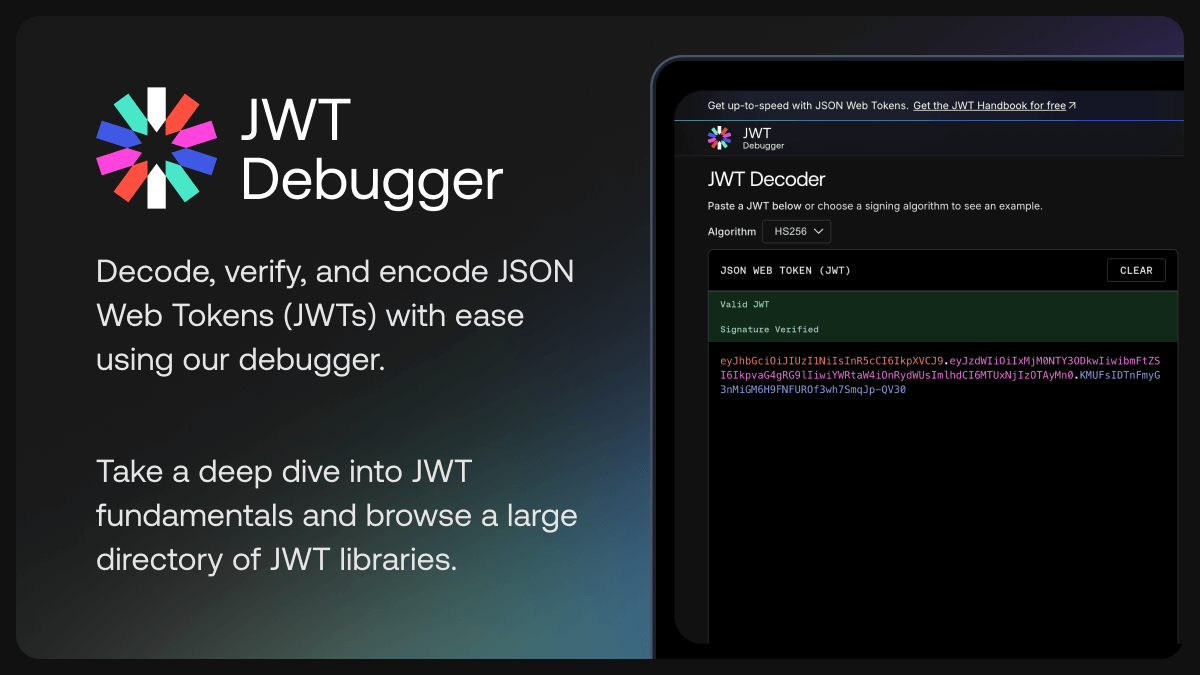
JSON Web Tokens are an open, industry standard RFC 7519 method for representing claims securely between two parties.
north fern
I read this but I didn't understand apparently
let me read again
@thorn obsidian I didn't mean to create a JWT, I meant to break it. Above, I make a legit request to a server with my own credentials, I receive the response which contains a JWT and using that JWT I try to guess the server secret.
thorn obsidian
You're not going to guess a server secret. It's 4096 characters.
north fern
I agree, it would take too much execution time, but the above code is correct, isn't it ?
I knew it wouldn't work, or else we'd be many to be screwed, I wanted to know if my reasoning was correct.
lusty flare
ah sweet
just noticed a fail2ban IP
CIDR:           52.224.0.0/11
NetName:        MSFT
NetHandle:      NET-52-224-0-0-1
Parent:         NET52 (NET-52-0-0-0-0)
NetType:        Direct Assignment
OriginAS:
Organization: Microsoft Corporation (MSFT)```nice.
magic rain
Read the following if you don't want to get pwned using JWT: https://research.securitum.com/jwt-json-web-token-security/

JWT (JSON Web Token) is a mechanism that is often used in REST APIs it can be found in popular standards, such as OpenID Connect, but we will also encounter it sometimes using OAuth2. It is used both in large companies and smaller organisations. There are many libraries availa...
Also lol
@north fern How the heck will ya crack a JWT token?
impossible
north fern
@magic rain I don't want to, just wondering stuff about the theory
magic rain
Gotcha
thorn obsidian
something to note here: tokens themselves, in their current state, can be considered "uncrackable" with most algorithms
however, certain implementations can be broken
for example, there was very common implementation issue where most implementations blindly trusted the user-supplied alg parameter, which meant you could in practice spoof signed tokens
you can learn a bit more about this here: https://auth0.com/blog/critical-vulnerabilities-in-json-web-token-libraries/
 plain crown
what is a secure webserver implementation in python that is most similar to the simplehttpserver ? I am having trouble finding the right search terms it seems. I am trying to re-write an old game from php to python and I need a way to handle web requests simply. once I have a first draft re-written I plan on refactoring it to use a more robust system, but I need to be able to test it on the open internet and I want multiple layers of security so server authentication is just one of many options I want including a secure python server
orchid notch
youd want to go for a framewokr like flask or django with something like nginx and gunicorn infront of them
plain crown
thank you lol, I seem to be the person everyone ignores when they ask a question! I am planning on using nginx and mitmproxy with snort and have the application running in a debian VM. I just don't want people using any tricks I'm not aware of and accounting for in the higher levels of the service
I'm not a web app security person lol... well t least not on the production side rofl
@orchid notch what about twistd?
orchid notch
twistd is for twist applications
i dont thing you want to write a webapp in twist unless twist has changed in the last 2 years
thorn obsidian
Twisted is great, but I don't believe they have a web server: https://twistedmatrix.com/documents/current/
Like Nix said up above, you'd want to use flask/django with nginx/apache and gunicorn
Oh, looks like they do have one. Never used it myself though:
https://twistedmatrix.com/documents/current/web/howto/web-development.html
https://twistedmatrix.com/documents/current/web/examples/index.html
thorn obsidian
hello
any ctfs ?
django + apache = goals
flask is one underpowered web framework
orchid notch
it is designed to be minimal and easily extensible
if your critisizing flask for not being a fully fledged thing like django you havent understood it @thorn obsidian
thorn obsidian
It's disappointing there isn't a system like STIR/SHAKEN that can handle SMS/MMS 😦
 radiant thistle
how do I handle collisions in https://docs.python.org/3/library/secrets.html#secrets.token_hex ? Try again? Use something like uuid instead?
orchid notch
Let's see
If you get yourself 64 random bytes the probability of a collision is 1/2^64
radiant thistle
I need to generate refresh tokens for my app, I'm planning to use 48 bytes
orchid notch
That's round about
Okay 48
The probability of a collision is 3.5527137e-13%
So
If you don't happen to really create a lot of tokens you should be fine
Actually no
That's bs
The probability is 1/(2^48)*8
radiant thistle
yeah
so do I retry if collision happens?
or add 1 to value and try to push it to db again
orchid notch
You can be very much sure a collision never happens so retry
radiant thistle
but isn't that a probability of 2 tokens colliding
what if I have 100 000 saved tokens and 1000 of them are regenerated every day
orchid notch
Yeah that's a much higher probability then
But still in the millionsth of a percent
lusty flare
virgin lied about their 900k breach

Infosec biz that found the database spill raises eyebrow at UK ISP's advisory to subscribers
they said it was "limited contact information"
Full names, addresses, date of birth, phone numbers, alternative contact phone numbers and IP addresses – corresponding to both customers and “friends” referred to the service by customers.
Requests to block or unblock various pornographic, gore related and gambling websites, corresponding to full names and addresses. IMEI numbers associated with stolen phones.
among other information
olive lark
well, it's "limited" because, in theory, it could also include their pets' names, but didn't.
 random peak
if anyone wants to help me develop a EH system, DM me
thorn obsidian
@random peak EH system?
"ethical hacking" is the only phrase i know of that the acronym "EH" stands for
but I have no idea what an "ethical hacking system" would be
random peak
yeah a ethical hacking system, it would be a python program that has hacking abilities, but would only be used for ethical puposes
past starBOT
5. Do not provide or request help on projects that may break laws, breach terms of services, be considered malicious/inappropriate or be for graded coursework/exams.
random peak
It wont be used to break the law. Its ETHICAL hacking my guy
thorn obsidian
@random peak Doesn't matter, rule 5 still applies here
just because you slap the word "ethical" on it doesn't mean it suddenly can't be used for illegal purposes
random peak
It Could be used for illegal purposes, but im not selling it. Its for my use only. If you dont want me to advertise for help thats fine.
thorn obsidian
again, the rule doesn't care about intent, it specifically states "projects that may break laws", not "projects that will"
random peak
True true. Ill stop advertising it.
thorn obsidian
thanks dog
random peak
Np
lusty flare
hey @thorn obsidian wanna help me with the development of my ethical missile?
it'll only be used to deploy bananas to people who need them
🙄
random peak
I get your point
 winged crest
hey guys I have a question about https and vpn. When I make a get request to web server over ssl, can a vpn provider see data content?
a friend of mine needs to connect a to vpn server to file a tax return online. He is afraid of sharing his credit card information with the vpn provider
tight abyss
with https (which should use a sufficiently high version of TLS, the successor of SSL, which is now considered insecure), the content of your requests (and responses) is encrypted. Your ISP or VPN provider would only see the target IP of the web server (and your own), as well as metadata like the transmitted size and timestamps. The actual URL and content should theoretically be safe.
winged crest
but vpn provider makes the request on behalf of me in this case I would assume vpn is more like a father that needs to know everything to make the request since I cannot do it directly. If vpn server and the web server talk TLS then VPN provider can also decrypt the response To my knowledge web server doesn't know about me.
@tight abyss How come ISP would see the target IP of the webserver?
tight abyss
Somebody needs to know the ip to route your connection. Normally this would be your ISP. If you use a VPN, the VPN provider would get to know your target IPs, whereas your ISP only sees you connecting to the VPN server.
The VPN server does (should/must) not intercept and decrypt your https traffic.
That would be a man-in-the-middle attack. And unless they have installed a root certificate on your machine, you would notice that when you visit any https site, because only the original web server has the correct private key for its certificate. Any man in the middle can not re-encrypt traffic and make it look like it came from there.
thorn obsidian

CVE-2020-0796 - a "wormable" SMBv3 vulnerability.
Great...
😂
Retweets
671
Likes
1020
 Twitter
aw shit, here we go again
lusty flare
sigh
orchid notch
Recommended workaround according to Microsoft is to block any connection to your SMB server from outside the network and enable some option that disables compressed packets
However they do note that smbv3 client is vulnerable as well^^
And there is no workaround for that so a vulnerable server should be able to take windows 10 machines over
Yay
lusty flare

Plus thousands of laptops on unloved Windows OS used by Ministry of Justice, it admits
woah, this latest patch round is stuffed with stuff
CVE-2020-0852, a remote code execution flaw in Word.
viewing a specially crafted file in the Preview Pane could allow code execution at the level of the logged-on user
SAP's just patched a shit load of +9 rated ones too
thorn obsidian
more deets

Today Microsoft accidentally leaked info about a new wormable vulnerability (CVE-2020-0796) in the Microsoft Server Message Block (SMB) protocol. Today Microsoft accidentally leaked info on a security update for a wormable vulnerability in the Microsoft Server Message Block (S...
lusty flare
deeeeeeeeeeeeets
wonder how easy it'd be to get people to click on a samba share link
guess not
 carmine wraith
Does this paragraph mean scan files with antivirus?
The application should perform filtering and content checking on any files which are uploaded to the server. Files should be thoroughly scanned and validated before being made available to other users. If in doubt, the file should be discarded. - https://owasp.org/www-community/vulnerabilities/Unrestricted_File_Upload
thorn obsidian
yes.
carmine wraith
Thanks.
thorn obsidian
this is easy to test with the EICAR test string
carmine wraith
Thanks! That's very helpful.
carmine wraith
Should I read all that?
thorn obsidian
no, it was just for reference, can do CTRL-F "12.4.2"
carmine wraith
Oh, ok 🙂
thorn obsidian
the stuff in there is useful to know, though
a lot of the things there you don't normally think about
 mint crescent
lets say that I have my credentials (like a google api key, postgres password, discord token, etc) - outside of environment variables what would be the best way to store them securely?
i thought about hashing + salting but would those not require me to also store the hashkey and salt to be able to decrypt them thus making it irrelevant.
P.S. I am very new to this subject matter so I would be grateful for any input :)
orchid notch
There is no such thing as a hash key
Hash functions do not have an inverse function
If you want to use your passwords inside a program use environment variables, it's the simplest way
At the point where an attacker can start reading your environment variables they do most likely have access to the user account that has the env variables set anyways > they control the process that's using the passwords and could probably take it over with a little effort
So
Wether they just read the passwords from the environment vars or your program is not really something that matters at this point
mint crescent
do environment variables persist across sessions. so that if i had a power outage or whatever, i could just start back up the process without having to enter 3-4 api keys
orchid notch
Well you can just put them in certain files that get sourced when something logs into your account like your .profile or .bashrc or whatever
mint crescent
and those files are secure?
orchid notch
Point of env vars is not to hide the passwords from attackers but rather avoiding to commit them into a public repository
Security is always relative
mint crescent
secure unless someone gets access to my pc
orchid notch
If you set permissions on them so nobody except your user can read and write it's kinda secure unless the attacker gets access to your user account / an admin account
mint crescent
okay, that beats having them in a json 🙂
lusty flare
you could still have them in a json, just restrict who has rights to that file.
but env vars is best practice
carmine wraith
I have to set a minimum size of file to prevent denial of service attack? It doesn't specify a size.. and I don't understand why it would matter, so can't pick one myself (for image file upload). https://owasp.org/www-community/vulnerabilities/Unrestricted_File_Upload
thorn obsidian
i personally wouldn't pay much attention to that
carmine wraith
Ah ok. I won't either then. Thanks!
thorn obsidian
it depends on your application
carmine wraith
It's a facebook clone for learning purposes 🙂
thorn obsidian
if your application or server doesn't mind a ton of small files, it's fine
carmine wraith
Well I plan to put them in images/year/month/day/hour/hash.png like here https://stackoverflow.com/questions/2648664/image-upload-storage-strategies
So should be fine I guess.
thorn obsidian
sure, why not
olive lark
use GMT times plz
thorn obsidian
UTC or bust
orchid notch
@thorn obsidian well technically a ton of small files could consume all inodes in the file system and cause a DoS attack no?
lusty flare

900 million records detailing country, interests and more left in full view
oh hay, more breaches
that's a lot of meta fields
thorn obsidian
@proper sedge ?
 icy saffron
olive lark
icy saffron
olive lark
can't imagine what that would be
 tardy linden
I am trying to figure out how these things called "snipe bots" work. Basis of the type of script is that it constantly checks the price of an item through an api then makes a post request to another api in order to purchase it. In the current marketplace I've seen it used, its gotten pretty competitive to the point where people are having 2 ms response time to the market's server.
What I am trying to figure out though is how come with most of the top players using the same vps to run their script meaning they roughly have the same response times are able to beat someone else using the same server.
I've been just running a loop that makes get requests to price check using requests's session and when the price is low, make a buy request.
I've timed the total request time to roughy .04 seconds to make the price check, a second get request to grab seller information, and the last post request to make the purchase. The time it takes for just getting seller info and making the purchase is .02 seconds
Is there something out there that is faster than requests's session? Would running multiple threads along side each other help at all? Is python limiting the speed? The vps I have has the possibility to setup multiple ips, with this could I force requests made to originate from those ips instead of all on the main ip?
I've tried C++ using curl to the best of my ability and its within margin of error in terms of speed but can run more threads. More threads however seem to make the requests overall slow down / "stutter" in speed.
thorn obsidian
this sounds like it's against the marketplace's terms of service
lusty flare
yeah, that does sound a wee bit dodgy
 silent pier
Can Bs4 & aiohttp download and run a trojan?
Mostly asking as windows defender popped up saying it detected a trojan after scraping a site, aand deleted my script
 noble kraken
if bs4 is saving anything to filesystem, yes
thorn obsidian
it can save malicious shit, yeah, but it shouldn't execute anything
but regardless, any files saved to disk are scanned by defender, which even picks up on shit like cryptominer js scripts, i think
Defender is great
thorn obsidian
What was the warning?
silent pier
I forget
lemme find teh google search i had of the trojan
Trojan:Script/Oneeva.A!ml is what it found
silent pier
I forget, i can see if there are any logs
I just know my .py file was gone when i hit remove
Yeah, it's targeting the script
thorn obsidian
Huh, interesting
silent pier
There's not much to go by
And given it deleted the file.. Can't really show the code
I forgot to commit it :(
actually, found a recover option
Did my research first, couldn't find anything disallowing scraping of the site 🤷♂️
https://paste.pythondiscord.com/agudajivav.py
Is the file it quarantined
thorn obsidian
Nothing out of the ordinary it looks like
silent pier
Yeah, i can't quite seem to figure out anytihng either
Do you recon its safe to just ignore then??
thorn obsidian
I'd break it down into smaller chunks and try and get the smallest bit that still triggers it
See which part does it
thorn obsidian
Huh, weird
silent pier
Huh it found the "trojan" again 🤔
Ok what...
I saw it deleted the file again, so i backed it up into a seperate file named backup.py, and windows defender instantly snatched it. This file isn't running anywhere
silent pier
It started happening after the unsubscribe part i believe 🤔
silent pier
I scanned a file with URL = "https://www.worldometers.info/coronavirus/#countries", and one without and windows tripped up on the one with the URL
It's a weird mix of the url being present, and the structure of the code
Any other url wont trigger it
thorn obsidian
Huh. That's weird
 teal bone
how can I write a test case for this one? I have already a interoverflow with the proof of concept , but I would like to know how can I write a oob r , and oob w for win32 bug c++
Out-of-bounds Read

Integer Overflow or Wraparound

Out-of-bounds Write
Doyensec's Blog :: Doyensec is an independent security research and development company focused on vulnerability discovery and remediation.
VSCode code execution via the bundled Python extension.
 languid quartz
when i try to install kali linux on virtualbox, my anti virus keeps coming up with detected malware. is kali infected or is my antivirus just being very cautious?
I’m trying to do penetration testing
tranquil basin
anyone here
how can i use the foramt string specifier to read the contents of a specific memory address
i tried to brute force using this thus far but to no avail
python2 -c 'print "xxxx" + "%1$p"' | ./medium
nvm i got it
tranquil basin
i did this python2 -c 'print "\x60\xa0\x04\x08 %14$s"' | ./medium
i had a eureaka moment lol
im so happy rn
what is protostar
dw
thorn obsidian
@tranquil basin
protostar is light weight linux based distro to run in VM
it has about 20 exercises
for buffer overflow
the system doesnt have security measures in place nor any other stuff installed
on purpose
for practicing privilege escalation
tranquil basin
tyy
 crisp belfry
who can help me with pyarmor?
thorn obsidian
!ask
past starBOT
Asking good questions will yield a much higher chance of a quick response:
• Don't ask to ask your question, just go ahead and tell us your problem.
• Don't ask if anyone is knowledgeable in some area, filtering serves no purpose.
• Try to solve the problem on your own first, we're not going to write code for you.
• Show us the code you've tried and any errors or unexpected results it's giving.
• Be patient while we're helping you.
You can find a much more detailed explanation on our website.
crisp belfry
i want to encode a python file, but if i do that there comes a whole map named 'lib' along but if delete that map the file exe file doesn't run
can anyone help me with that
 strange locust
@languid quartz Windows and any antivirus it contains often pins down pentesting tools as unwanted.
I would recomend checking your downloaded files hash if you are unsure - if it matches then fine. If not then you may have a interfered with file
Also is the AntiVirus annoyed at the Virtualbox system or the .iso ext of kali linux itself
languid quartz
figured it out @strange locust they were just being extra cautious
strange locust
OK
thats rather normal
If you want to keep learning pentesting then I would recomend installing both nMap and Wireshark in windows. Observing your home network is very interesting
olive lark
I wanted to nmap my home machine from the outside, so I ran nmap on my ec2 instance. I soon got a stern letter from AWS telling me how I could reactivate my account 😐
thorn obsidian
have nmapped plenty from my digitalocean instance with no issues whatsoever
lusty flare
AWS have a strict policy on using network security tools
i think usually if you're getting smacked by them it's because you're running it too aggressively
lusty flare

Bank info, driver's license copies and more found, report researchers
... the app stored documents like bank statements, photocopies of driver's licenses, credit checks, and even tax and social security information – all in an unsecured AWS S3 storage bucket. Though the app was defunct, that bucket remained online and configured for public access.

From Belafonte Returns to Carnegie Hall
is it me or are big breaches up this past month?
lusty flare
oh and hey someone finally did a proper audit of that US electronic voting app

Voatz allows voters to cast their ballots from any geographic location on supported mobile devices. Its mobile voting platform is under increasing public scrutiny for security vulnerabilities that …
even the blurb of failures is worrying
seventy-nine (79) findings: forty-eight (48) technical and thirty-one (31) in the threat model.
Sensitive API credentials are stored in the git repositories (TOB-VOATZ-001).
hah
thorn obsidian
Ouch
thorn obsidian
yikes
lusty flare
yeah doesn't look great
they were critical of a report by MIT and said "well they didn't have backend access"
and then this comes out when the testers do have access
thorn obsidian
could anyone clarify reasons for me why kali isnt a good choice for a daily driver except for root being a default user in previous versions
i tried other distros, but as far as routines for daily usage are concerned, i only need linux file system and gnome
i prefer debian based distros overall
i tried ubuntu myself, but still choose to use kali as daily driver with very limited usage of root privileges
 icy agate
Are reasons on the web not strong enough?
thorn obsidian
things are changing fast so old articles or messages on forums are of no use
i suppose i could pay official kali forum a visit
but i'd rather someone explained here
or at least engaged in a convo
thorn obsidian
i see that the second section is questionable security wise
what i just dont like is the idea of too many distros, and from what i've heard, many experienced linux people say what distro you are running doesnt matter much
my mindset is that all the functionality i need, everything im doing for work and daily stuff can both be achieved on kali, ubuntu or even non debian based distros, if it wasnt the case i would've switched already
"Kali is made exclusively for pentesting, with a modified and insecure kernel specifically for running certain pentesting apps better."
but is this really enough of a reason to just stop everything and forcefuly switch to another distro 😔
i dont want to be stubborn though, it's just that from some people i hear "dont use kali as daily driver", and from the others "it doesnt matter what distro you are using"
im just a confused fella
cold fossil
how secure would you say this is?https://paste.pythondiscord.com/cukatoyalo.py
This is for personal use btw
cold fossil
Kind of both...
I am making it as a self project and want to know
thorn obsidian
i do not see any features which would imply any sort of security
 mortal perch
well it's good practise not to echo passwords back (let alone print them!)
use getpass.getpass
for your Y/n you can use .lower and check once
can also condense the logic to one line like username = input("Confirm action (Y/n): ").lower()
you should break your code down in to functions that do specific actions
i would recommend having functions for create_account and log_in
you are storing passwords in memory which is fine, but not very useful if you restart the program. youll need to use a text file or database to store usernames and password hashes. do some research on password hashing if you're interested about how that works
thorn obsidian
no hashing (credentials stored in plaintext), no lockouts, passwords are echoed back etc
re: why you shouldn't use kali
it's literally just debian with most popular pentest-related tools preinstalled and some patches which aid with that
shit will break down the line, and you will have no idea why or how to fix it
cold fossil
I use my functions the way I have it because it is a part of a computer system I am making
thorn obsidian
there's really 0 reason to use it
cold fossil
I will work on updating it but wanted some feedback
thorn obsidian
@cold fossil Is this for some kind of password database?
cold fossil
No just something I started working on I’m my free time.
I still need to hash or something and add some brute forcing protection but I am not giving it to anyone but me
thorn obsidian
What are you hashing if not passwords?
cold fossil
Nothing but I am mostly using this for a learning experience
thorn obsidian
Ah, gotcha
magic rain
Re: Kali
I think the tools available in Kali are indeed popular but not the right ones necessarily
New infosec tools emerge all the time
Probably as a consequence of the bug bounty boom
For instance, many tools such as Hydra can be replaced with ffuf
Kali will only box you into what's popular
It's too bloated anyway
thorn obsidian
as a counterpoint, there's nothing wrong with not using "new" tools if the old ones work fine
not as a defense for kali, just as a general thought
thanks
for answers
thorn obsidian
question regarding web sec
GET /file.js HTTP/1.1
...
Connection: close
Result: 200 OK with js content generated by node.js
GET /file.js HTTP/1.1
header manipulation
Connection: close
Result: 404 despite same endpoint, html generated by nginx itself
back end is running node.js which generates its own html for 404, which is not the one im getting here
you're not fucking with Host, are you?
no i am not
can you post the full headers for both requests? can omit sensitive stuff
i am messing with x-name-correlation-id, where name is a literal name of the brand that owns the domain, so its definately something thats being processed on the back end code
ah
GET /file.js HTTP/1.1
x-name-correlation-id: milk
x-name-correlation-id: cow
Connection: close
produces x-name-correlation-id: milk, cow in response headers
since its just 2 header duplications it still returns 200 and js
content
but when i make it an X amount it throws 404
but its attached to this exact header name
if i provide same number of duplicated headers with just different name but same value
its 400
from front-end
🤷♂️
how could it possibly throw 404 when yes i am messing with headers, but still request a valid resource
🤔
and how is it nginx thats throwing 404 not node.js
without knowing too much about the system in question, i'm something in between gets confused and shelves the request, and it gets lost in transit
just technically
nginx is offered a 404 from whatever load balancer, and generates its own 404 for the client
domain is using AWS front-end
but it doesnt have much to do with anything
i just dont get why would throwing /404 from nginx when i am requesting a valid resource
would be a default behavior
when i manipulate that very parameter name, and none other
you're sure that's default and not configured that way?
i couldnt know, i am the one assessing, basically a black box
can you reliably produce a 500 internal error otherwise?
thorn obsidian
@thorn obsidian what if i could
what would that grant me
nothing, i was just curious whether 500 responses are being rewritten as 404
i've seen that configuration in place quite a few times
olive lark
:headdesk:
 eternal veldt
Hi, I'm using a digital ocean mysql droplet that comes with phpmyadmin, and it's currently configured to where the login can be accessed by anyone (you need credentials, of course). Should I make it so that you can only access the login page with my IP address or is it fine to leave it the way it is?
noble kraken
i prefer to keep it only with username and password
ips are a tricky thing
but keep the password as long as possible
lusty flare
if you're going to be the only person accessing phpmyadmin, you're on a static IP and you have other means to access the server
sure, why not
you could even put up an nginx / apache based login screen in front of phpmyadmin
thorn obsidian
Passwords + TOTP ( something like https://pyotp.readthedocs.io/en/latest/#module-pyotp ) + https://api.pwnedpasswords.com/ + Fail2Ban is a good idea 👍
thorn obsidian
i usually just only let things like that listen on the wireguard interface
that means that if i do need access to it (from any IP), i just click a button and it beams me up and i can access whatever
while not having it running on public-facing interfaces
lusty flare

didn't see where that one was going before i posted it.
was just going for a general up beaming
 bronze grail
light-year, `how long it takes for light to travel in a year
it's time
actually.. it can be used in both ways
scientifically, it's used in distance
Like oh planet x is y light years away from planet z
lusty flare
you could say "and many miles later"
thorn obsidian
light-year, `how long it takes for light to travel in a year
@bronze grail that makes no sense
it takes light a year to travel a year
relative to us anyways
lusty flare
it's also not really a constant for measuring distance either because gravity fucks with it
 frank cloak
Is the approach of using a settings.py module for application configuration insecure? I don't mean cases where secrets have been added to settings.py (e.g. instead of into env vars), but rather whether the approach itself is somehow inherently insecure?
 elfin tree
@frank cloak That's a perfectly acceptable way to do things especially if they are internal developer settings. If they are things you want users to edit, you might look at INF files or JSON or something they're familiar with that which will depend on your audience. I'll also mention that Python 3 does have a Config parser library, but that doesn't mean its the "right" or "only" way you should do this.
With the big caveat about you saying these are not secrets... 😉
frank cloak
@elfin tree Thanks for the response, much appreciated. On the note about secrets, I'm not adding them literally into settings.py, but I am assigning them in the following manner: SECRET_KEY = os.environ['secretKey']. Assuming that that is ok. What about the mutability of the settings.py module attrs? Of course, them being mutable can be problematic in the sense that a developer might break something unintentionally, but is it a problem from a security perspective? I'm assuming if an attacker can somehow access the Python internals there are already bigger problems than them being able to mutate settings? Is that line of thinking correct?
thorn obsidian
@frank cloak yep, you're totally right
frank cloak
@thorn obsidian Thanks, appreciate the feedback.
 worthy moss
@carmine merlin ask away
 carmine merlin
alright
when the white hats do what they do
how do they find the breaches
do they use the language of the source they're trying to find breaches for?
how does it work
worthy moss
Depends what you mean by breaches
carmine merlin
well
bugs in the code that can be used in order to access the data you are not supposed to get, and change things
worthy moss
If someone's trying to find security flaws in a website or something, the first step is normally recon to find out what processes are running, etc
Yeah if someone has access to the code that makes it a lot easier to try and find things
worthy moss
I'd say no
I could be wrong but I'd doubt it, because most of the time it's closed source
carmine merlin
I'm trying to understand
worthy moss
If they can find a way to get the code and then use that, sure
carmine merlin
what is the programming next to the hacking
the programmer is the one who writes a code
a hacker is a person who exploits vulnerabilities in that code?
worthy moss
Programming is just a tool to do things
carmine merlin
or in a network which brings us to a new dimension
alright
so all of the network stuff and hacking stuff are based on it
but programming languages
worthy moss
Well it really depends
carmine merlin
how can a person know what he should use
worthy moss
The hacker?
carmine merlin
if a person says "I want to get access to the data of a company"
how can he know what language he needs
worthy moss
Any language would work
carmine merlin
what are the differences of the languages except for the syntax. Why aren't all of them the same?
I mean
some are faster and some have more libraries
worthy moss
Generally speaking there's not really any specific things that you'd need that can't be done in other languages
carmine merlin
some have better GUI stuff and some don't
the internet usually compares between languages as of what they are capable of doing
worthy moss
It's just a matter of preference and stuff
carmine merlin
when people compare anything to python the first thing they say "easy"
worthy moss
Yeah, and that's because python is very high level and simple to pick up
carmine merlin
uhm
there's a big question I'm trying to ask but I don't know how
it's a complicated question
worthy moss
Alright
carmine merlin
it's like
this world of hackers, programmers, network
it all starts from the basic of the mechanical stuff?
I mean
does a hacker need to know how each computer part works? I mean, you don't need to know how a nuclear reactor works in order to make a toast
you just put it in the toaster
worthy moss
Definitely for most things someone will need to know how computers operate on a low level
carmine merlin
when you say low level
you mean the same thing they mean when they say "high/low-level programming language?"
worthy moss
Yeah basically
In C, you have to deal with where things are stored in memory
Which makes it 'low level' because you are much 'closer' to the actual hardware in a way
In python it does it for you behind the scenes
It's much more abstracted
carmine merlin
so it's a high-level
worthy moss
Yeah
carmine merlin
now I get it
but I still don't get
how a person gets to a place where he is a white-hat, gray-hat you pick the color
where does that person start in order to become what he is, or even greater
carmine merlin
it's a complicated question
I'm trying to ask questions in order to get into my big question and build-up an answer
I already got an answer for a part of it from you explaining to me what the high-low means
what I basically try is to pick a programming language
to learn
forget the easy syntax of python that every beginner should know
I already know the basic syntax of many languages
within the years I decided that what I want to learn is related to the internet
the networks
so I tried to find out which language is the best for it
worthy moss
A language that you know well is the best language to use
carmine merlin
but
more languages are easily accessible to more things
so let me see if I got it right
when a "hat" tries to get access into something, how does he pick the language?
if that guy knows all the languages very well
worthy moss
I think generally there's not all that much python can't do another language can, so it's always a safe bet
carmine merlin
another thing
many sources say that python is great for robots and stuff
I think I kind of got it
I remember the olympic games virus
I learned a bit about it years ago
it is usually known as "stuxnet"
worthy moss
yea
carmine merlin
so
as I know
they tried to affect the matter world by controlling their data and stuff
to make the robotic system
do things
so
it was coded in C
and my guess is that it's because C is a low-level language which is probably the reason
it's like more related to the matter world, of knowing how memory system works and stuff. Did I get it right?
worthy moss
Yeah I'd assume so
carmine merlin
alright
I think for now I'll go for python as it'll be easier for me to access information
worthy moss
👍
carmine merlin
I have only one question left
the GUI's of python are terrible
for example in order to make a sorting algorithm I would have to use something like pygame
wouldn't I?
worthy moss
to make a sorting algorithm or to visualise one
carmine merlin
is there a way to easily access the GUI and actually have fun coding with stuff related
rak I have another question now
are you there?
worthy moss
Alright
carmine merlin
all of the things like metasploit
etc.
they were created in that language they are made of because of the creators that are probably better and more experienced with those languages?
or because they are the most compatible for their purpose
for example
worthy moss
Probably a bit of both
carmine merlin
I know you know
I was about to continue the sentence but accidentally sent lol
I meant to continue with saying that since it's a password cracking tool it means that it's probably for speed
yeah
worthy moss
right
For something like that speed matters lots
For other things that you do once, not so much
carmine merlin
and
the world of security
the public things
I've seen that people can very easily access cameras
one of the easiest things
people consider it simple
for example shodan
how does it work?
worthy moss
Most of the time things like that are just from badly configured stuff with open ports/default passwords
carmine merlin
I see
now I think I got to a better decision
python or c/c++
also I've noticed that ruby is never talked about
people don't really mention ruby
why is that?
worthy moss
¯_(ツ)_/¯
carmine merlin
alright
so what makes a person decide whether if to choose python or c/c++
I shall look over the fit
I will go for python vs C++
alright thanks
I'm going for python
I got an answer
thanks a lot
 covert panther
depends what you are doing to be honest. python can write things fast but is interpreted generally speaking which means it uses late binding. Where as C++ amongst many things is compiled which is early binding so generally speaking it is extremely faster than python. This is a vague overview but if there are specific points you are looming at let me know. For ruby don't bother in my opinion and do golang instead because that is extremely relevant now.
 quick oracle
 eternal veldt
pycryptodome
but that question generally depends on what method of encryption you want to use
 timid forge
Hm pycryptodome is interesting so far and looks to be useful.
I wish I could figure it out completely though 
thorn obsidian
What are ctfs
worthy moss
Capture the flags, online competitions
thorn obsidian
capture the flags, a game mode in multiplayer shooter games, like Doom 1993 and Quake
worthy moss
lol
thorn obsidian
im a doomer and thats how i roll
 safe bear
@thorn obsidian CTFs are competitions where you solve problems to earn points, with each problem having some amount of points based on it's difficulty. The problems involve finding some "flag" to solve them, in most cases a string you then enter into a box that checks if it's the correct flag. Problems can vary widely and touch almost all areas of security, from network traffic analysis, binary analysis, malware RE, mathematics and cryptography, and even language.
lusty flare
i started doing OTW again recently
 rose sparrow
hi, am i allowed to post a small security puzzle on here for people to solve ?
worthy moss
Probably