#cybersecurity
7 messages · Page 9 of 1
 chilly elk
is that sarcasm
 safe bear
No
I really do like good "readline" (I don't know what the actual term is) interfaces, like Metasploit, Empire, etc.
safe bear
Yes
Many interactive CLI interfaces use GNU Readline so I've taken to calling them "readline" interfaces
But that's probably the wrong term
chilly elk
oh i didnt know that haha
safe bear
Yeah
TBH it's a poor description
But dunno what the heck to call them
Because a "CLI" is really general
safe bear
ye
chilly elk
\
 glass pumice
@chilly elk yes
glass pumice
The trash at the right of pickle is not recognized
chilly elk
is gone thot
safe bear
BEGONE!
glass pumice
Welp
safe bear
👀
glass pumice
@chilly elk I got gdude all that behind my back for using ret&#&#arded
So don't say thot or he's gonna to follow you
Shit I said thot
Hello gdude
BTW where did the people at tech went? @safe bear @chilly elk
And don't act surprised
safe bear
"where did the people at tech went"
glass pumice
Yeah
safe bear
Wut
glass pumice
/tech/
safe bear
What's that
glass pumice
:thonk:
safe bear
You know the tool is legit when the author is a weeb
 thorn obsidian
weeb masters
safe bear
That's a bad thing?
chilly elk
what is?
safe bear
Python 3
chilly elk
twitter information
yeah
it will have other Social networks as well
shows common hashtags and user interactions
going to add common keywords as well
safe bear
Have you heard of https://github.com/SpiderLabs/social_mapper

GitHub
A Social Media Enumeration & Correlation Tool by Jacob Wilkin(Greenwolf) - SpiderLabs/social_mapper
Are you planning to open-source?
chilly elk
@safe bear yes ive seen that it was on OSINT top 10 i think
safe bear
Probably
chilly elk
and we dont know yet. We might make it into a paid program
safe bear
Mmm
chilly elk
i will make one myself
with most of the tools
that will be OS
you can have this code if you want
https://gist.github.com/M4cs/8f761e4df6ce7921fac56efd1d51f81a @safe bear here is the gist

Gist
Twitter Info Grabber. GitHub Gist: instantly share code, notes, and snippets.
safe bear
Oh awesome
glass pumice
@safe bear Do you have the part of Defcon 26 where he presents it? Sorry, I'm on the car right now
found it

“Performing intelligence gathering on targets is a time consuming process, it typically starts by attempting to find a persons online presence on a variety o...
 velvet isle
@chilly elk Great to see the new stuff
Known savaged you for a while
"Have you heard of" 😂
safe bear
I wasn't intending to be savage, just wanted to point out a related work
But hey I'm alright with being accidentally savage 
 upbeat palm

Mirai Bot, best-known for exploiting IoT Devices has recently been attacking Linux Servers through the Hadoop YARN Vulnerability. Reportedly, many
upbeat palm
Guess so @thorn obsidian
Unexpected comeback?
Unfortunately, that include majority of users.
What type of project should I be aiming for as a cyber security enthusiast?
 orchid notch
@thorn obsidian the thing is that mirai attacks webcams and usually people dont really care about the update status of their webcams. Interestingly enough a research team actually wrote a worm to attack the webcams the same way, take them over, delete the mirai bot and then secure the cam against further attacks but as that still counts as hacking they werent allowed to use it
velvet isle
@thorn obsidian Whats new?
 granite harbor
Posting this here because it's relevant to the topic. Been eyeballing this, but I'm reading negative things about Packt books. A few of these are actually full course videos. Can anyone tell me if this would be worth it? https://www.humblebundle.com/books/cybersecurity-packt-books

Humble Bundle
Pay what you want for awesome ebooks and support charity!
upbeat palm
@granite harbor Do you want book recommendations on cyber security?
I heard about this topic though, I prefer O'Reilly media.
granite harbor
Not really looking specifically atm, but that slapped me in the face so I figured I'd ask. lol
upbeat palm
Oh, still some of them are good.
granite harbor
I'll dig around a bit more, it's still up for 12 more days, so I've got some time if I decide to pull the trigger.
chilly elk
@thorn obsidian just because jha is locked up doesnt mean all those IRC skiddos wont keep it alive
thorn obsidian
is there a way to make a python file unreadable
thorn obsidian
oh well time to learn a other languag e
 simple orchid
this kind of idea is usually misguided, tbh
even if you were using a language that compiles directly to machine code, it's not possible to stop a determined person from reverse engineering it
they can disassemble it, run it in a virtual machine, step through one instruction at a time, etc
in general just trust that most people will follow the rules, and, like, if someone steals your product to sell a competing version you can sue them
thorn obsidian
- it should be a python script that downloads an file then executes a executeable? 1. i dont know who steals it 2. im not over 18 to even sue 3. sueing would cost more then i would probaly get back
velvet isle
🤔
 silent pier
All 3 of these are true right?
Well, 2nd one is a maybe. I'm not sure of the relevance of it matters or not, but it is an abbreviation
orchid notch
they are true yes
orchid notch
aw
 native edge
second one is the MAC of a pc iirc
silent pier
Would you consider the statement true in a security exam?
(I'm not actually taking one now, just revising old exams in preparation)
simple orchid
mac is short for macintosh 😛
anyway, I'd say they're all relevant to security, too
depends on if it's a security exam where other network related or crypto related topics are in scope
silent pier
Crypto-y
simple orchid
message authentication code is a crypto topic
simple orchid
i'd be inclined to say they're all true and try to challenge them if they mark any wrong
it'd be the worst kind of trick question
silent pier
Thank you nontheless, Time to re-read the aspects of Scalability, maintainability and recoverability for software resilience 
Yeah, I'd probably do the same knowing that they all represent something
simple orchid
if i saw any of the questions in isolation i'd answer true without a thought (well, I didn't actually know Media Access Control before today)
silent pier
Me neither
But given that I know about it now..
Well, let's hope the questions dont come up
upbeat palm
7&8- Network related
9- Cryptography related
velvet isle
👌
safe bear
@silent pier All three are correct.
Mandatory Access Control is a general concept that is applied in many areas of security. The main competitor is Discretionary Access Control, which is what you see in Linux and Windows filesystems. Real world example is SELinux, which implements Mandatory Access Control (fun fact, SELinux was originally an NSA project, and they open-sourced in 2000.)
Media Access Control purely a networking term (it's a OSI Layer 2 technology). Real world example: run arp -a. The ARP table maps IP addresses (Network layer) to MAC addresses, aka physical addresses. They're unique to a physical interface, and used to address devices on a local switched network. (Also, I'm the developer of the only [AFAIK] Python module for MAC addresses...so probably know a bit too much about this).
Message Authentication Codes are actually commonly used in networks ("checksum") to check message integrity, e.g. prevent your neighbor turning on their microwave and making your bank transaction is 2^4 times larger.
(NSA reference for those curious: https://www.nsa.gov/news-features/press-room/Article/1637367/national-security-agency-shares-security-enhancements-to-linux/)
National Security Agency | Central Security Service
Recognizing the critical role of operating system security mechanisms in supporting security for critical and sensitive applications National Security Agency (NSA) researchers have been investigating
ARP is a bit complex...
Short version is that when you want to talk to another computer(1), but your computer doesn't know the MAC of that computer, then an ARP broadcast is used to discover the computer. Essentially, your computer sends a packet to every device in the LAN(2) "hey where can I find 192.168.0.1". 192.168.0.1 then responds with it's MAC address. There's also gratuitous ARPs, where devices can proactively broadcast their IP address. Either way, your hosts ARP table gets updated, and used for future requests.
As you can imagine, this is horribly insecure. The attack is known as "ARP spoofing", and it's the most common (and effective) form of a Man in the Middle attack. Ever wonder why public Wi-Fi is dangerous? Your data is often unencrypted. However, the higher risk is a man in the middle attack using ARP spoofing, since the attacker can not only read your data, but send you where-ever and what-ever they want, like malware instead of Google.
- When I say "wants to talk to another computer", I mean by IP address. This is often known from configuration information (your default gateway), or a hostname lookup (usually on corporate/business networks).
- LAN is a loaded term here. Really, it's any "broadcast domain". These are usually subnets, but could also be a VLAN (Virtual LAN), or a physical broadcast space (like wi-fi, or hubs if you're old).
tl;dr I know
This is helping me refresh a few things, going to teach this and much more to high school students in a few days...
silent pier
Nice explanation, thank you
upbeat palm
Very well explained.
safe bear
Thanks.
This stuffs getting refreshed in my mind right now, so if you have networking questions now's the time lol
upbeat palm
Lol, mind is blank now.
chilly elk
@safe bear https://pepy.tech/project/babysploit 3.7k downloads in 3 days...
babysploit was downloaded 3,724 times. Get more download
stats about any Python package.
LOL
safe bear
Aren't you fancy
chilly elk
im just surprised it hit that many on pip
i dont remember posting anywhere
¯_(ツ)_/¯
safe bear
hn?
chilly elk
hn?
ohh
hacker news?
they posted before it was on pip
i only put it on pip 3 days ago
safe bear
Mmm
thorn obsidian
Im making a loader for a cheat
Basically getting a file (dylib) then using osxinj (dylib injector) to inject it
Yeah
 because I don't wanna get banned
It's signature checking (anti cheat)
No
Im Talking about cs go
I can show u that injecting a dylib is perfectly fine
And won't be checked
Alright
Im making this for a special game Mode
where hackers play vs hackers
 quiet viper
Yeah no. We're not going allow that here. It's an obvious ToS violation
You should know better
!warn @thorn obsidian Attempting to make a hack for CS:GO, which would violate their terms of service and rule 5 of our server
 past starBOT
:ok_hand: warned @thorn obsidian (Attempting to make a hack for CS:GO, which would violate their terms of service and rule 5 of our server).
quiet viper
No but you're advocating it and saying you'll even demonstrate.
Don't even act surprised
quiet viper
I mean I can make it something more drastic if you prefer, but that's why I went with a warning
quiet viper
For an intent we don't support. Drop it.
thorn obsidian
Yeah I got it
velvet isle
lmao fire
quiet viper
@velvet isle If you've got nothing helpful or useful to contribute, don't bother saying anything.
safe bear
@thorn obsidian Sorry if it wasn't clear when you joined, our rules and new user propaganda could use improvement. Basically this is not the server to discuss "cheats" and such things, since we have a fairly strict rule against helping with anything that's a violation of any Terms of Service or laws.
 quiet patio
Does this channel only include security involving python?
I’d like to ask a question about web application security.
upbeat palm
@quiet patio You can ask anything related to security.
quiet patio
Okay, thanks.
I’ve recently been testing a web application for a bug bounty. I noticed that input wasn’t validated in the user description input field. I used the classic payload <script>alert(1)</script>
It should have worked fine as the payload was being injected between <h1> and </h1> tags. (This is a stored XSS btw)
Anyway I went to the view user profile page and didn’t get an alert box. I went ahead and inspected the HTML and sure enough my payload had been injected between the h1 tags. After looking at the requests in Burp Suite I noticed that the x-xss-protection: 1; mode=block header was present in the requests. This meant that the browser will block XSS payloads from executing. However, this is only meant for reflected XSS right? In a persistent XSS situation the browser has no way to distinguish the XSS payload from the actual source of the page. So how is my payload not getting fired? It’s injected perfectly... could there be something else preventing it from firing? Thanks, I’m new to web application hacking so forgive me for any mistakes. Thanks!
safe bear
I'm not experienced with web app security, but yes, that's for reflected xss
If you're actually injecting into the HTML, maybe try and run the attack locally?
Also, have you tried using a variety of browsers
thorn obsidian
@safe bear I never intended to do that and was searching help in making a python unreadable
thorn obsidian
@tight sentinel u shouldnt do ctfs if you dont know that
thorn obsidian
@quiet patio is the output being html encoded when you view the page source?
 gentle heron
@quiet patio I believe that certain security headers disable code in <script> tags
thorn obsidian
Anyone has experience with objection and frida here ?
thorn obsidian

A video about the discovery of the BootROM bug, based on the talk given by Andy "Glitching The Switch". We talk about how the Switch boots, how the hardware ...
quiet patio
@thorn obsidian no
I believe my problem has something to do with the websites CSP security policy
velvet isle
Web app pentesting is something I wish to return to someday
Gotta ask perms before I play with whoever it is
upbeat palm
@quiet patio If you're still confused I know a guy, he's a web application pentester you can ask him.
upbeat palm
Same.
velvet isle

 ripe vigil
Speaking of CSP - I just posted a security headers project in #303934982764625920 - would love any feedback
upbeat palm

GBHackers On Security
Android Application Penetration Testing After web applications more concern area is mobile application penetration test Let’s start with some basics-
thorn obsidian
can anyone make a better download checker for ios please as every time i get sent something on WhatsApp it downloads to my phone without asking and i want it to stop
upbeat palm
TCP is 3 way handshake communication so it sends firstly 1) SYN by end system then 2) SYN-ACK by server 3) ACK by end system. So doing a nmap scan like $nmap -sV -p "port" "IP address"
So we receive a ACK packet that port is open(TCP scan), but how we receive a ACK packet when doing a UDP scan as it connectionless afaik. I searched on it but still confused.
As far as I know UDP does not return ACK packet.
safe bear
It would be nmap -sS btw
-sV runs the version detection scripts, -sS is SYN
As far as I understand it, nmap is basically shooting in the dark with UDP
It has a bunch of scripts for known UDP services, like SNMP
A review of the Nmap docs confirms that
Table 5.3. How Nmap interprets responses to a UDP probe

Probe Response    Assigned State
Any UDP response from target port (unusual)    open
No response received (even after retransmissions)    open|filtered
ICMP port unreachable error (type 3, code 3)    closed
Other ICMP unreachable errors (type 3, code 1, 2, 9, 10, or 13)    filtered
It will try all of the scripts for UDP services (e.g. DHCP, SNMP with common community strings, etc.)
If it gets any sort of response, it will be marked as open
thorn obsidian
@thorn obsidian this is for any security questions even on iOS
orchid notch
if whats app automatically downloads files that is not a security problem?
at least not as long whats app didnt make a big mistake
orchid notch
neither
thorn obsidian
 orchid notch
thats not binary
orchid notch
hex
thorn obsidian
are we able to decode it
orchid notch
its just numbers
its like 1 2 3 13 3434
but with a different system
if its inside an executable or something it represents certain opcodes for the CPU
orchid notch
well then it is some sort of binary format maybe a jpeg or something like that somebody decided to store inside the db
orchid notch
its just file content
there is nothing to decode about it if its part of a binary file format
orchid notch
but as its a BLOB it can be anything
there is not enough context for me to find out what to do with it
thorn obsidian
well i know what it is
orchid notch
then tell me
thorn obsidian
the key name? its just id
orchid notch
what
thorn obsidian
its an ID used for identify users and its stored in there
thorn obsidian
yea idk
i know the actual id
but it has another layer im guessing
my id like MzE1OTE1ODE1O... and the decoded is NDI2MDUxODkz....
OH
I FOUND IT
oh im stupid jesus christ
yeah u do hex decoder first
then they rot 13 encoded it
or not
i did it but lost it
quiet patio
@thorn obsidian yea it is. I was inspecting it which didn’t show the HTML being encoded. The page source did though. My bad.
upbeat palm

GBHackers On Security
The most popular and widely used network protocol analyzer Wireshark released a new version Wireshark 2.6.5 fixes number of security vulnerabilities.
thorn obsidian
all good @quiet patio glad you got it figured out
safe bear
@chilly elk looks like a gui based on settings button...what'd you do it in
chilly elk
pysimpleguiqt
chilly elk
yeet
velvet isle
@chilly elk Woah can't wait to see whats new
upbeat palm

There is a dire need to constantly innovate to protect sensitive information. Here is a list of top Python libraries to dodge and detect cyber attacks
@chilly elk Still confused..you made a GUI for it or a website?
 chilly elk
@upbeat palm GUI
upbeat palm
Why GUI?
CLI gives the feeling and a good practice for new user since it mainly designed for the beginners.
chilly elk
@upbeat palm Just as a side project
velvet isle
@chilly elk Im hyped for it, so continue
upbeat palm
Make it primary, it's damn good for beginners.
 lusty flare
yes
yes it is still used
there is a major credit checking agency in the UK that requires Flash AND ActiveX support
"Major" being like in the top 50 or w/e in the country
somewhere.
upbeat palm

Malwarebytes Labs
New Mac malware is using the EmPyre backdoor and the XMRig cryptominer to drain processor power—and possibly worse.
safe bear
So they grab one off the shelf
Except Empire is really really well known and has a ton of IOCs
Definitely stealthy 🙄
 hexed basin
ioc?
safe bear
Wow, lost internet just as I was about to respond for over an hour
Indicator of Compromise
hexed basin
ah
safe bear
Generally it's used to refer to any traces of malicious activity
What that generally looks like are Yara rules (for network Intrusion Detection Systems), file signatures, and host artifacts (e.g. process names).
There's actually a special file format for sharing IOC information, but I don't know a whole lot about it beyond US-CERT sending them out sometimes
upbeat palm
That was just bad practice, remember how some group made ransomware with PyCrypto.
orchid notch
so i just visited my optician and they had two devices where you could sign with a pen on a touch pad and from that it would digitally sign a document using that signature but without putting the written signature into the document
1st question: How can they be sure that if i sign there again i am actually the same person, nobody can perfectly dublicate his own signature its gonna be a tiny little bit off for the touch screen every time you sign so whatever public/private key they derivate from that signature is gonna be different every time too -> as a matter of fact the digital signature on the document should be different too
2nd question: How would one now verify that i actually signed the document if the computer doesnt get the signature in writte form (and doesnt get the private key too obviously as that would compromise the whole process) and the only way to prove i actually wrote my signature is to check if the private key equals my written signature (which i cannot replicate 100% accurately every time i sign)
upbeat palm
Optician?
orchid notch
guy who makes glasses
but thats not important
its about the signature
god i must get one of the devices to check how they work.....
upbeat palm
Only KnownError can know about this afaik.
orchid notch
i actually do have two ways worked out in my head
upbeat palm
Why not to tell then?
orchid notch
first way, they somehow managed to derive the same key from the written signature every time
second way, the device saves an image of the written signature and the private key
when you then want to verify that a document is actually signed by somebody you check the signature on the thing using a public key you got from the written signature, then you send that public key to the device which then checks which private key corresponds to the public key and shows the image corresponding to that private key
and then you would see the written signature
upbeat palm
Much more like Google lens work mechanism?
orchid notch
i am sure a guy who fakes signatures could trick the first mechanism
upbeat palm
Performing image recognition.
orchid notch
image recognition based on one example image is not realiable enough for this
upbeat palm
Then how it performs signature verification?
orchid notch
read my second way
upbeat palm
Oh.
That might be a way to sum it up.
But I really wanna know about the mechanism of that device.
upbeat palm
Next time?
upbeat palm
(-_-)
orchid notch
@safe bear you got any idea about the written signature to digital signature thing i asked above?
safe bear
Honestly I don't know
When I've signed PDF documents, it seems like it takes my written signature, and encrypts it with my digital signature
orchid notch
ok i must have one of these thingies
safe bear
That or it's just security theatre and the physical signature is the same as clicking a button
orchid notch
thatd be funny
 haughty mica
where do yall find resources to write cyber security scripts for py
safe bear
GitHub

GitHub
A collection of awesome software, libraries, documents, books, resources and cools stuffs about security. - sbilly/awesome-security
"awesome-*" repos are a great starting place if you want to learn what's out there
There are also a lot of repos that professionals use to collect their scripts
Just do some searches on GitHub and filter by Python language
safe bear
np
thorn obsidian
Hey, the proper way to encrypt AES with a string is to hash it's hash as the key, right?
orchid notch

GitHub
:sunglasses: Curated list of awesome lists. Contribute to sindresorhus/awesome development by creating an account on GitHub.
What you just said doesn't exactly make sense
The proper way to encrypt anything with AES using any key is certainly not to use just a key
You'll have to use something like CFB AES if you want to encrypt it properly
And how you shrink the key string down to 128 192 or 256 bit doesn't matter in the end as long as it's at the correct size
thorn obsidian
so I have a string, run it through scrypt, and then use that hash AS the key
is that ok?
sorry if I was unclear before
orchid notch
No that is insecure as it's using the default mode
You must use another AES mode like CFB to properly secure whatever you encrypted
thorn obsidian
scrypt uses a salt too, that still isn't enough?
orchid notch
The key is not related to the modes
If you use the default mode the blocks don't depend on each other CFB achieves that
That is a lot more secure
(that is btw the reason companies like Google build libraries which provide secure cryptographic functions because you can make so many mistakes even if you don't implement the algorithm behind it yourself (like using default mode with block ciphers))
thorn obsidian
yeah, I didn't know there was more too it than I initially thought
orchid notch
That is the exactly the problem these libs address
thorn obsidian
I'm using pyaes for my project
thorn obsidian
it's unfortunate these things aren't clarified in the actual documentation
thorn obsidian
very
https://github.com/ricmoo/pyaes#stream-feeder this is what I am using

GitHub
Pure-Python implementation of AES block-cipher and common modes of operation. - ricmoo/pyaes
orchid notch
Ah good
The example code is already using CBR
So your code actually does stuff to avoid the vulnerabilities of the default mode you just don't know that
thorn obsidian
well that's definitely a relief, you honestly had me worried for a moment
orchid notch
The modes thing is a huge problem in for example java
thorn obsidian
how so?
orchid notch
Java doesn't use secure modes per default, you have to specifically tell it to, so there is so much code which uses insecure modes
thorn obsidian
I wonder why it wouldn't be so by default
orchid notch
Somebody (I think Google) even wrote a linter to find such issues
thorn obsidian
from a novice perspective, that doesn't seem like good design
orchid notch
One would wonder about lots of things java does
thorn obsidian
that's one thing I like about python
after learning quite a bit about it through documentation and pycon videos, everything seems to be very well thought out
lusty flare

Equifax report megathread while I'm on lunch! https://t.co/vkjj2QfxOm
 Twitter
great twitter thread on Equifax breach
upbeat palm
Seems good.
upbeat palm
Some cert?
safe bear
SSL certificate
 cedar wasp
anyone good with assembly/binary files and willing to help me out?
upbeat palm
Learning these days, not good enough to help.
Maybe LappySheep can help you. @cedar wasp
safe bear

Smallstep
Certificates and public key infrastructure (PKI) are hard. No shit, right? I know a lot of smart people who've avoided this particular rabbit hole. Personally, I avoided it for a long time and felt some shame for not knowing more. The obvious result was a vicious cycle: I was...
upbeat palm
Many posts have pointed out that a malicious MySQL server can use the LOAD DATA LOCAL command to read arbitrary files from MYSQL clients. According to this article (chinese) phpMyAdmin开启远程登陆导致本地文件读取, We can read arbitrary file on phpMyAdmin server ...
safe bear
Another week another critical vulnerability
Just read the weekly US-CERT vulnerability summary email :)

United States House Committee on Oversight and Government Reform
WASHINGTON, DC – House Oversight and Government Reform Committee Republicans released a staff report after the Committee’s 14-month investigation into the Equifax data breach, one of the largest data breaches in U.S. history. Through the investigation, the Committee revi...

Ars Technica
Last year, over 29,000 travelers had their devices searched at the US border.
 frank stirrup
Is it dangerous to show a MAC address?
orchid notch
no
frank stirrup
alright
so if I was to send it to like 2 billion people no one could do anything
hypothetically
orchid notch
i mean they could assume that if they see that mac in a network it is you (although people can fake macs so that might not always be true)
also sending MAC addresses around is a necessary part of the process of routing packages through the internet
frank stirrup
Reason I'm asking is that I'm working on a game for a gamejam and want to make it a psychologically interesting game
and your character is your MAC address
and I'm just worrying that I'll get into trouble as I'm sure the Youtuber who's hosting it is gonna upload a video of him playing the games
and if he leaks his MAC address it'll be all on me
orchid notch
in general other people cant really do anything if they know your MAC afaik
well as long as you arent on the same network that is
and if you are they can usually easily figure it out themselves
so no additional risk
frank stirrup
alright, thank you
safe bear
Just keep in mind they're not necessarily universally unique
In other words, don't use it for a unique player ID or anything
thorn obsidian
very nice lmfao cough cough skid @frank stirrup
frank stirrup
What
 leaden blaze
Yoy can ignore them, @frank stirrup; they're no longer on the server.
velvet isle
@frank stirrup the game is gonna be like hacknet?
Sounds good
In hacknet, they use random ip's
frank stirrup
More like doki doki literature club
In the sense that it looks at your data and files
And uses that to alter the story
@velvet isle
frank stirrup

upbeat palm

Quanta Magazine
Digital security depends on the difficulty of factoring large numbers. A new proof shows why one method for breaking digital encryption won’t work.
native edge
sealed a backdoor that was never there 🤔
orchid notch

if its mathematically provable that something is not possible it doesnt start getting impossible the moment somebody proves it
 teal hemlock
what about good old Shor's algorithm?
orchid notch
quantum computers arent good enough yet
and apart from being able to factor primes these two dont have anything to do with each other
thorn obsidian
So the article is bs?
wow
remote code execution in CISCO packet tracer 10 minutes after I started investigating it
What is dat?
cisco's network emulation tool
simulation, even
however, it's pretty good
quite accurate, devices work sort of almost exactly like their irl counterparts
it even includes scripting (in the form of Scratch modules haha)
Lol
orchid notch
@thorn obsidian well they are mathematically right but their talking about how people fix vulnerabilities in equations etc is just bs
thorn obsidian
oh ok
thorn obsidian
Oof
 pale mountain
guys i have a question. lets say i wrote a keylooger, or a backdoor program in python that allows me to download or upload file from the device that i inject my program. if that device is android, is it still possible to run these programs? or they would only work on pc? if they would work only on pc, how do people hack phones?
i dont know if this is a silly question, but i wonder
quiet viper
I would actually consider it an inappropriate question and not the kind that we field here. @pale mountain
I would advise you to not ask about this kind of question in this server again
pale mountain
@quiet viper well, im sorry then. just wondered how do people actually hack phones
quiet viper
Again, not something that is discussed here
pale mountain
@quiet viper do you mind if i ask why? i mean the purpose of my question is actually understanding how to run programs on phone, and how can we protect ourselves from these kind of actions
quiet viper
Because while you personally may have pure intentions, the next person who comes around might not. As a rule, we do not discuss things of an illegal nature or give assistance on projects that would violate the terms of service of any other service.
See Rule 5
!rules
past starBOT
Rules
The rules and guidelines that apply to this community can be found on our rules page. We expect all members of the community to have read and understood these.
https://pythondiscord.com/about/rules
pale mountain
@quiet viper alright, sorry for bothering. thanks
quiet viper
Thank you for being understanding about it
safe bear
@thorn obsidian Can you elaborate on the RCE in Packet Tracer?
Also I had no idea you could script it using Scratch...lol
thorn obsidian
@safe bear not before I write it up, disclose it to CISCO and get the okay to publish it 😬 sorry
 tepid venture
Is hashing a password or something once enough to keep it secure?
safe bear
@thorn obsidian No worries, I wouldn't expect you to share details, was just curious how you could even get RCE since it doesn't have any real external network stuff AFAIK
silent pier
@tepid venture if youre doing it correctly, id say so
Salt and up to date hashing algorithm should suffice
thorn obsidian
@safe bear with the scripting included in 7.2, it sure does
thorn obsidian
@sick trail ask away and someone who can help will be sure to answer
silent pier
!t ask
past starBOT
ask
Asking good questions will yield a much higher chance of a quick response:
• Don't ask to ask your question, just go ahead and tell us your problem.
• Try to solve the problem on your own first, we're not going to write code for you.
• Show us the code you've tried and any errors or unexpected results it's giving
• Keep your patience while we're helping you.
You can find a much more detailed explanation on our website.
 sick trail
Hey there
Anyone willing to help with some server security/devops?
I'm receiving a bunch of requests from a certain IP in my flask application deployed using docker
185.224.134.225 - - [20/Dec/2018:15:30:33 +0000] "POST /xmlrpc.php HTTP/1.0" 404 164 "-" "Mozilla/4.0 (compatible: MSIE 7.0; Windows NT 6.0)"
185.224.134.225 - - [20/Dec/2018:15:30:36 +0000] "POST /xmlrpc.php HTTP/1.0" 404 164 "-" "Mozilla/4.0 (compatible: MSIE 7.0; Windows NT 6.0)"
185.224.134.225 - - [20/Dec/2018:15:30:37 +0000] "POST /xmlrpc.php HTTP/1.0" 404 164 "-" "Mozilla/4.0 (compatible: MSIE 7.0; Windows NT 6.0)"
How do I block this mf?=
Tried IP tables, Cloudfare blocking, but still recienving this WP vulnerability attack
sick trail
So, I'm using an ubuntu server on digital ocean
I'm using docker containers inside it
No, I'm pretty sure it's an attack on some sort of WP vulnerability. (which I'm not using)\´
However, I would still like to block this IP somehow
Any ideas?
velvet isle
No idea. Im doing some searches
 mortal perch
it's quite normal to get requests from random ips trying common exploits on your server. but usually they aren't persistent as they give up after they find that your host isnt vulnerable
velvet isle
Yeah I had something similar in mind
Like how you can use shodan to find open s3 buckets
It works by sending requests
mortal perch
i have a server on scaleway and it gets all kinds of crap
id say that more than 98% of the requests are bots trying exploits
velvet isle
😄
mortal perch
nice little sample
0 genuine requests in here 😂
most of them get a 301 redirect to https and dont follow it
silent pier
Just keep good practices in mind, and don't do silly stuff and the common exploit attempters will go away
silent pier
There are many silly request stuff one can do
mortal perch
it's just automated ip range searching usually so theres not much you can do anyway?
silent pier
like query based of request body / url.
parse input from user etc
mortal perch
ahhh as in protection yeah
velvet isle
The future is cybersecurity is weird
Imagine, we can relay messages from our command line to slack then to discord
😏
sick trail
I know, but I wanted a way to have control over the ips that visit my container as well.
velvet isle
Or write code that excludes certain things from the logs based on some condition
sick trail
I mean, is it to much to ask that when I block an IP on CF it just works
Yeah, but that doesn't solve my original problem
Bloking this little fucker
velvet isle
Hmm welcome to the future man
sick trail
Nope, I refuse the future
That's how I just managed to block him
sudo iptables -I DOCKER-USER -s 185.224.134.225 -j DROP
Done.
I'm don't have to accept these guys pinging my server because they want
And I should have access to tools to block them.
For future reference, if you want to manipulate the iptables (firewall) of a docker container, make sure to use the -I DOCKER-USER flag
 verbal python
@sick trail try fail2block.
sick trail
@verbal python thanks but I managed to solve it. See my previous message
orchid notch
@verbal python isnt it Fail2Ban?
 tropic bay
How could a hacker get my IP if i use a VPN? Let's say that they can't do it legally through a warrant, get me to install malware or find anything about my location through my social medias.
thorn obsidian
they probably can't unless they try to get on your network
 dry sand
i know that you can trace people using Tor by looking at the sizes of the data packets going through the Tor machines and if you see a data packet sent to a Tor machine with the exact same size of one that has just left the same machine and been sent over to www.shadywebsite.com then they can probably discern that it was you going to that website.
its probably the exact same with any vpn
i could be wrong however
tropic bay
does tor encrypt your traffic? or does it just bounce you around nodes such that it'd be a pain in the ass to track you?
dry sand
iirc both
it uses onion routing which basically means it adds a layer of encryption everytime it goes to a different node
but the size of the data stays the same so you can still track it
tropic bay
so even tho youre intercepting encrypted data, you'd still know the size of that data
tropic bay
isnt it possible that 2 people could have the same data size?
tropic bay
and isnt there a thing called packet lost?
dry sand
tbh im not an expert on this so i probably dont know all the details - i just got the basics from a computerphile video
lol
heres the video if you want to watch it yourself

What goes on TOR stays on TOR, or so we hope. Dr Mike Pound takes us through how Onion Routing works. EXTRA BITS: https://youtu.be/6eWkdyRNfqY End to End Enc...
it mainly talks about encryption in that video tho
tepid venture
Also, someone told me scrypt is better than bcrypt but I wasn't so sure, anyone can confirm or know which is the best and most efficient hashing algorithm?
velvet isle
@tropic bay Im glad to explain such thing to you
There are VPN's with different protocols and settings...
velvet isle
By default, some VPN apps encrypt your traffic and forward it over a secured connection through their servers and so on
However
Your real IP can be exposed via stuff like DNS leaking and WebRTC if the vpn app does not cater for security at these levels
No wait
f.vision is the site
tropic bay
refused to connect
velvet isle
I'll show an example
velvet isle
Im using psiphon vpn
See my real ip is exposed still ?
Because of webrtc
The psiphon vpn app was not programmed to cater to fix that
tropic bay
so.. a gud example would be my picture then?
velvet isle
So don't look at vpn as a overall secured thing
Your pic shows one ip for both
Is it ugh?
velvet isle
😀
Yeah to conclude
It matters which vpn provider you use for security
Do read up stuff on them before you feel comfortable about your security
tropic bay
welll i thought they were all the same. i bought nord for 3 years cause it was cheap LOL
velvet isle
Lol
They are not all the same
They make us feel like that to make the explanation of the term vpn simple for non technical people
velvet isle
Um
Doesn't need an explanation
Just refer to info about the vpn you use
But I don't know much about the dns part besides your isp can be exposed
Like how f vision showed us
Its just another kite paper security thing
😂
^
Plus you don't even know if free vpn services log your data
lol
All I do is bypass blocks to game sites
Or protect myself from mitm
tropic bay
well yeah. if you're actually trying to hide from the likes of the FBI, you'd need a lot more then that. mitnick talked in his book about how you'd need to run a lot of barriers infront of your pursuers. something like paying the vpn via prepaird credit card, buying a new computer and only use that computer at a public wifi etc..
o yeah?
sounds like youre rather strong on that stance
velvet isle
I don't need to hide from FBI
Them cyber stuff ain't that big in my country
Except that parliament got hacked more than twice
🙄
We have cybersecurity laws and people still get off with stuff
because we don't have the technology to catch cyber criminals
Im speaking of my country
We do have maybe but wth are they doing with it
Guyana
Neighbor of Brazil and Venezuala
lol
The physical security at our parliament sucks
tropic bay
well seems like we got guys run ning around encrypting their stuff with "password, "ilovemydog" or"12345" as their password. no wonder they get hacked lolol
velvet isle
Someone once came in dressed as Santa to give a politician a dictionary while he was arguing
Next time. I tell the security I used to do internship here and I want to see x person..
I get to go in their office while they are not there
Where the server room is
What even guys?!
Get better security
tropic bay
wow
velvet isle
yeah ikr
velvet isle

RED ALERT
- The Home Ministry has issued a notification authorising 10 agencies to tap, intercept and decrypt all personal data on computers and networks in India. #SaveOurPrivacy
Retweets
1836
Likes
1340
 Twitter
 tight abyss
that's nuts
safe bear
@chilly elk Hydra in chapter 2? Maybe a bit early.
Should cover tcpdump and/or tshark if you have experience with them
safe bear
It's 0200 why are you awake
safe bear
Oh yeah you're a eastie
chilly elk
im so confused with your hours of operation
safe bear
That is by design my good sir
chilly elk

 upbeat palm
@velvet isle Darn it...(-_-)
But how are they gonna do it, sudden rise in cyber security won't help much, it will take more than 5 years just to get it accordingly.
upbeat palm
While cybersecurity firms and government agencies have issued multiple warnings about the Cloudhopper threat since 2017, they have not disclosed the identity of technology companies whose networks were compromised.
orchid notch
"according to five sources"
which sources, bloomberg buisness news was also talking about having sources when they published their super micro stuff but never listed them
safe bear
Gem from last year I just discovered: https://blog.0patch.com/2017/11/did-microsoft-just-manually-patch-their.html?m=1

And They Did an Absolutely Stellar Job by Mitja Kolsek, the 0patch Team [Update 11/21/2017] Today Embedi published their proof-of-con...
 alpine kite
@thorn obsidian why would it not be a good choice? From what I hear its viable, People just dont tend to use it because its not standard and some feel it needs further testing
thorn obsidian
My first assumption was it being cost effective, I would think that he was talking about proprietary hashing
if it's not a cost issue, hell. Go for your advice
alpine kite
Y(yeah) sure but you can alter how cost effective it is. And its not recommend ed to give up security for speed, to some degree ofc u can.
chilly elk
Are there any groups trying to update old Python 2 tools to Python 3 so that frameworks and what not could be updated?
orchid notch
i know about a group of people in fedora updating all the python stuff as they are kicking out python 2 before EOL, basically what they do is find python2 libs and the applications depending on them and then remove them / force the package maintainers to tell upstream to update their applications to python3
chilly elk
@orchid notch thats what i want to do aswell
since i see a lot of offsec tools using py2
its time.
new years resolution: update all py2 offsec tools to py3 lmao
safe bear
@chilly elk There are some that can't be converted because they're relying on a target node's Python, notably Empire.
Since OSX system python is 2.7
And they need it to work on old versions of OSX and Linux
chilly elk
true
fair point
i want to use faraday since their BM head keeps bothering me about it
and asking to help
but i dont wanna write py2
 hazy nymph
Is anyone familiar with Paramiko library? I'm having issues authenticating due to a pre-login interactive banner while trying to ssh into a firewall
upbeat palm

GitHub
The x86 processor fuzzer. Contribute to xoreaxeaxeax/sandsifter development by creating an account on GitHub.
velvet isle
thorn obsidian
@ocean timber what's your VNC username
 ocean timber
I think anonymous or whatever the default is
thorn obsidian
well, I haven't come across botnets that scan for VNC servers yet, however at least choosing a strong username would be way more beneficial
thorn obsidian
test VNC but stay far away from telnet 😂
 wispy igloo
Has anyone had issues with setting up https://mitmproxy.org/ transparent proxying on macOS, it doesn't seem as if the rule set from https://docs.mitmproxy.org/stable/howto-transparent/ in the macOS section are being applied.
To be honest, I have no idea how to approach enabling transparent proxying on macOS Mojave.
thorn obsidian
What is VNC @thorn obsidian??
Basically RDP
but safer ig, since exposed & open RDP's get scanned for, however VNC I'm still yet to see anything like that 👀
 signal kernel
@thorn obsidian its basically when you share a graphical interface of a computer/server over the internet through some kind of protocol
thorn obsidian
I don't understand it cuz i'm new here
do you know what SSH is? and how you connect to a shell remotely?
Nope
.
do you know when u open cmd
Yes
and u get a black terminal
Yes
SSH is the same, but remotely
and you log into it
VNC is the same, but it provides you with the computer's screen instead of a terminal
So SSH is the dame as CMD?
well it's usually a bash terminal but yeah, you gotta log into it tho
its a protocol
also
Secure Shell (SSH) is a cryptographic network protocol for operating network services securely over an unsecured network. Typical applications include remote command-line login and remote command execution, but any network service can be secured with SSH.
SSH provides a secur...
But i don't need to log in cmd but SSH u need to log in?
well yeah cause if you don't set a password your server will get swooped within a day
signal kernel
ssh you need to log in with the credentials of the server you are trying to access
signal kernel
Do you know what a server is?
thorn obsidian
Nope
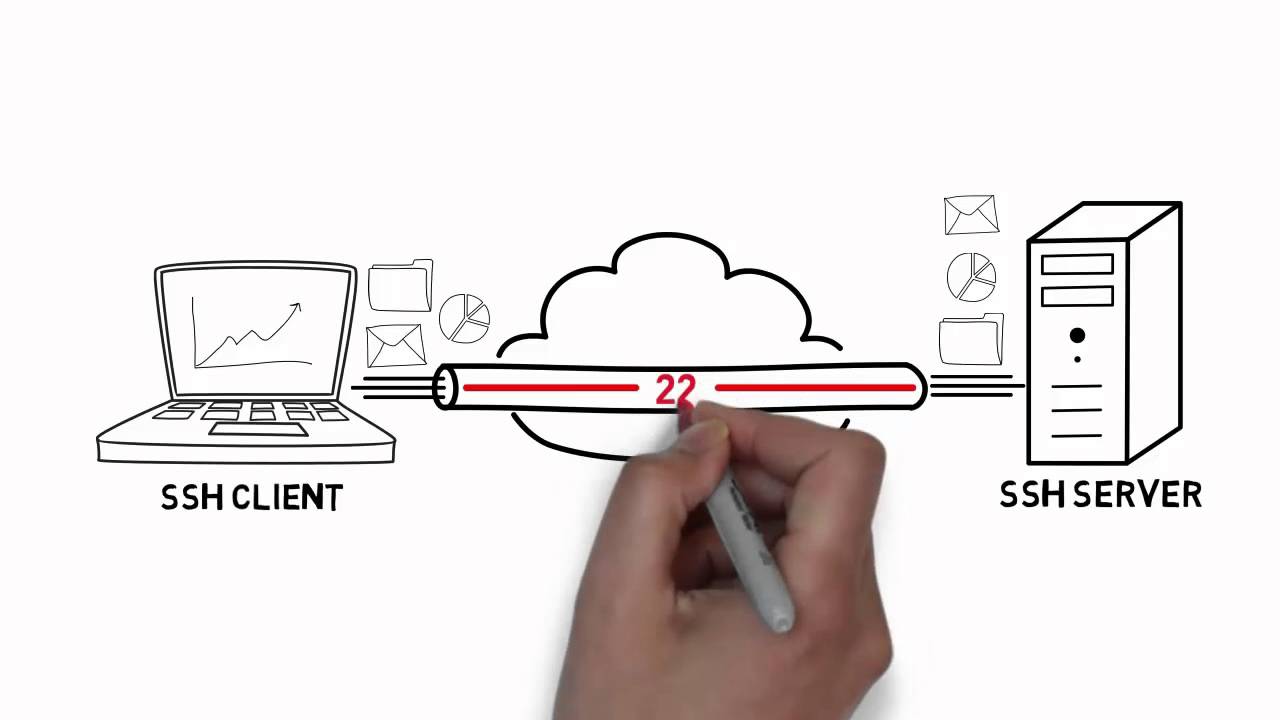
A whiteboarding animation about secure shell protocol.
+vouch
😂
Ahh thank u
It uses easy words to understand
signal kernel
A server is basically a computer
signal kernel
yw
signal kernel
@thorn obsidian https://www.youtube.com/watch?v=SwLdKeC8scE

Best course to learn programming in just 2.5 hours: http://mardox.media/learn-programming Want to build profitable mobile Apps without programming fast: http...
wrong ping
thorn obsidian
😂
signal kernel
they explain it
upbeat palm
You may wanna check pinned message.
signal kernel
^
thorn obsidian
Ahh okay
signal kernel
in some cases you can have a server thats a client to another server
thorn obsidian
Oj
Oh*
good point, for example, when you visit a website, the website will be hosted on a server, however it might request information on an external database server.
upbeat palm
Yup.
thorn obsidian
or since we're in 2018 it'd be you -> CloudFlare -> Your website -> Possibly an external image CDN and a database
signal kernel
2019*
 hexed onyx
Hello guys. Who of you is interested in threat modeling presentation that'd contain notes and whatnot? It'd be based on a thread modeling book. If any of you are interested, kindly let me know if you might want anything in specific to make sure to tackle it or answer you on it. Please tag me if you send a message where you are targeting me.
hexed onyx
Threat Modeling: Designing for security.
velvet isle
send on...
velvet isle
 teal hemlock
thanks KGB but I'm not going to install your plugins
thorn obsidian
Is Dashlane or LastPass more secure? (I'd use KeePass, but I'm on a Mac :/)
silent pier
Don't know much about LastPass or KeePass, but Dashlane has served me well so far
thorn obsidian
I've been using 1Password, and I don't really like it.
silent pier
Based on what I know about dashlane, it has a master password that is not stored or transmitted over the internet. It does not store authentication hashes for new devices, so that you have to enter a token from a valid device to verify a new one. It stores your passwords locally and on their servers using AES-256 where your masterpassword is the key, that again is never stored anywhere.
Their services are hosted on Amazon AWS, and regularly audited by security experts. They provide the use of 2FA. They have a password generator. The functionality of it on desktop is super simple and makes life easy, it gets a bit more difficult on mobile, but probably because I have not enabled the auto fill in stuff there.
To get the full benefits you need the premium feature which costs a bit, but you can "cheat" it by recruiting people. Where if you recruit someone to register you both get 6 months of premium i believe it is.
That's about what I can think of on the fly about dashlane
silent pier
I'd compare it to whats out there about the others and make the decision about it youself
thorn obsidian
I will, but thank you!
thorn obsidian
Haven't really found any Catches within lastpass
safe bear
Does Dashlane publish the results of their security audits?
 north rover
@thorn obsidian been in the same boat. Used 1Password but didn‘t really like it apart from the design. Also paying money to host my passwords on someone else‘s computer felt a flight bit wrong. I‘ve been using KeepassXC for quite some time now and I love it, its super great to organize everything with. There‘s also a browser plugin for firefox and global autotype for everything else. The only issue I have is finding a decent iOS app. Would highly recommend
orchid notch
Unsurprising
tight abyss
I'm a bit surprised that "penis" isn't on that list...
Maybe people are afraid of getting an error message like "Sorry, your password is not long enough"
orchid notch
😄
 half spade
badum-tss
velvet isle
If you don't wanna install fancy GUI stuff use vault for password managing
Its made in python

GitHub
Python password manager. Contribute to gabfl/vault development by creating an account on GitHub.
info about sqlcipher
thorn obsidian
I am trying to use Violent Python to learn/do more stuff in Python regarding Pentesting but quick question: isnt crypt a default even in 3.x?
like I cant call the module in a function.
it gives me ModuleNotFoundError: No module named '_crypt'
orchid notch
_crypt is not part of stdlib
thorn obsidian
no like the book uses Python 2.6.5 if I recall right
thorn obsidian
so crypt is still a part of Python's library
orchid notch
OH
orchid notch
you have to compile python with specific options so it compiles the _crypt c extension so it works
thorn obsidian
I dont think I can work it
orchid notch
thats the reason
thorn obsidian
so turn crypt to _crypt?
thorn obsidian
I dont understand what that is suppose to mean
orchid notch
so apparently its only available on POSIX which explains why i on windows cant do it
thorn obsidian
Mmh
orchid notch
mac is only partly POSIX so it might be that it doesnt have this crypt lib
thorn obsidian
Let me ask this then
cryptWord = crypt.crypt(word, salt)
Not sure which type of hashing is this
salt was defined as salt = cryptPass[0:2]
but yea
orchid notch
lets ask the posix crypt standard
http://pubs.opengroup.org/onlinepubs/9699919799/functions/crypt.html
(have to go now not sure if this helps ill be back soon)
thorn obsidian
well I am trying to make this work both on Windows and Linux so by best bet might be hashlib
orchid notch
yup
orchid notch
everything is bruteforcable
velvet isle
lol
orchid notch
and tbh its just a matter of time until somebody finds a collision attack on SHA512 but for now its secure
thorn obsidian
technically true
velvet isle
PBKDF2 is a modern and great hashing algo tho
And argon2
and bcrypt
Situation matters for choice
You don't always need the best
thorn obsidian
    client.send("GET / HTTP/1.1\r\nHost: google.com\r\n\r\n")
TypeError: a bytes-like object is required, not 'str'```
import socket

target_host = "www.google.com"
target_port = 80

# Create a socket object
client = socket.socket(socket.AF_INET, socket.SOCK_STREAM)

# Connect the client
client.connect((target_host, target_port))

# Send some data
client.send("GET / HTTP/1.1\r\nHost: google.com\r\n\r\n")

# Recieve some data
response = client.recv(4096)

print(response)```Don't get why its string
I followed what my other book said
(changed my book to Blackhat Python)
I didnt do anything different or wrong
but yea
thorn obsidian
Anyone could help me? I could write .encode() but its not what I want afaik
thorn obsidian
oh...
oof
but if I do .encode()
import socket

target_host = "www.google.com"
target_port = 80

# Create a socket object
client = socket.socket(socket.AF_INET, socket.SOCK_STREAM)

# Connect the client
client.connect((target_host, target_port))

# Send some data
client.send(("GET / HTTP/1.1\r\nHost: google.com\r\n\r\n").encode())

# Recieve some data
response = client.recv(4096)

print(response)```
b'HTTP/1.1 301 Moved Permanently\r\nLocation: http://www.google.com/\r\nContent-Type: text/html; charset=UTF-8\r\nDate: Fri, 04 Jan 2019 19:55:58 GMT\r\nExpires: Sun, 03 Feb 2019 19:55:58 GMT\r\nCache-Control: public, max-age=2592000\r\nServer: gws\r\nContent-Length: 219\r\nX-XSS-Protection: 1; mode=block\r\nX-Frame-Options: SAMEORIGIN\r\n\r\n<HTML><HEAD><meta http-equiv="content-type" content="text/html;charset=utf-8">\n<TITLE>301 Moved</TITLE></HEAD><BODY>\n<H1>301 Moved</H1>\nThe document has moved\n<A HREF="http://www.google.com/">here</A>.\r\n</BODY></HTML>\r\n'

Process finished with exit code 0```I get this
not exactly what I am suppose to get, right
@orchid notch
orchid notch
@thorn obsidian maybe try connecting to another page whihc doesnt use ssl
i could imagine google doesnt allow http access anymore so it says document moved
thorn obsidian
hmmm which site would you suggest me to try
cause all the sites I tried are giving a similar string
orchid notch
http://example.com/ maybe
however the server responds with valid http so it apparently understood you are doing an HTTP request so the encode fixed your problem
thorn obsidian
Like I changed google to example
import socket

target_host = "www.example.com"
target_port = 80

# Create a socket object
client = socket.socket(socket.AF_INET, socket.SOCK_STREAM)

# Connect the client
client.connect((target_host, target_port))

# Send some data
client.send(("GET / HTTP/1.1\r\nHost: example.com\r\n\r\n").encode())

# Recieve some data
response = client.recv(4096)

print(response)```still same
b'HTTP/1.1 200 OK\r\nAccept-Ranges: bytes\r\nCache-Control: max-age=604800\r\nContent-Type: text/html; charset=UTF-8\r\nDate: Fri, 04 Jan 2019 20:29:58 GMT\r\nEtag: "1541025663"\r\nExpires: Fri, 11 Jan 2019 20:29:58 GMT\r\nLast-Modified: Fri, 09 Aug 2013 23:54:35 GMT\r\nServer: ECS (dca/24D5)\r\nVary: Accept-Encoding\r\nX-Cache: HIT\r\nContent-Length: 1270\r\n\r\n<!doctype html>\n<html>\n<head>\n <title>Example Domain</title>\n\n <meta charset="utf-8" />\n <meta http-equiv="Content-type" content="text/html; charset=utf-8" />\n <meta name="viewport" content="width=device-width, initial-scale=1" />\n <style type="text/css">\n body {\n background-color: #f0f0f2;\n margin: 0;\n padding: 0;\n font-family: "Open Sans", "Helvetica Neue", Helvetica, Arial, sans-serif;\n \n }\n div {\n width: 600px;\n margin: 5em auto;\n padding: 50px;\n background-color: #fff;\n border-radius: 1em;\n }\n a:link, a:visited {\n color: #38488f;\n text-decoration: none;\n }\n @media (max-width: 700px) {\n body {\n background-color: #fff;\n }\n div {\n width: auto;\n margin: 0 auto;\n border-radius: 0;\n padding: 1em;\n }\n }\n </style> \n</head>\n\n<body>\n<div>\n <h1>Example Domain</h1>\n <p>This domain is established to be used for illustrative examples in documents. You may use this\n domain in examples w'
orchid notch
no?
not the same
thats exactly what you want????
it gave you your html page packed inside an http response
@thorn obsidian
thorn obsidian
so TCP Client should do that?
orchid notch
this is the perfectly valid http response to your request
everything is behaving as expected when looking at the code and the result
velvet isle
reddit
105 votes and 37 comments so far on Reddit
safe bear
@thorn obsidian Why don't you just use requests?
Thanks for the share Jason
March 5th mark yer calendarz
Will be awesome to have another solid open-source competitor to IDA
The comments from hash_define make me excited
upbeat palm

GitHub
Common User Passwords Profiler (CUPP). Contribute to Mebus/cupp development by creating an account on GitHub.
safe bear
What does cupp do?
upbeat palm
It's basically made a word list for dictionary attack with the given inputs like Name, DoB etc.
If you're making a wordlist for specific person.
safe bear
Ahhh
I was just using something like this a few months back while doing some OSINT stuff
can't remember the tool
upbeat palm
Nice.
thorn obsidian
@safe bear Hemlock told me to ask such in #cybersecurity and not in Help channels
thorn obsidian
Such questions; from my book
safe bear
I was asking why don't you just use the requests library?
safe bear

GitHub
Python HTTP Requests for Humans™ ✨🍰✨. Contribute to requests/requests development by creating an account on GitHub.
thorn obsidian
What is an application banner grabbing or application banner?
I am a bit unsure what that means or is
upbeat palm
There's a lot of articles about it, check out the wikipedia one or documents.
safe bear
IIRC it's grabbing the response from connecting to a network service e.g. the MotD when you login to SSH
velvet isle

GitLab
There are some papers and technical explanations about (in)security in general.
safe bear
I use Signal
I never saw Telegram as being any better than Facebook or Whatsapp
Interesting discussion nonetheless
The crypto discussion good as well
 left pecan
I really don't like that phone number shit though
upbeat palm
Signal is best, no doubt.
thorn obsidian
What do you people think about Wire? https://wire.com/en/

 safe bear

The bill covers a lot, and includes a number of election security measures that were proposed and failed in 2018.
left pecan
cause if I give you my phone number, you get my phone number. I can't as easily disassociate with that.
maybe I want to Signal message you but not get SMS from you. oops, can't, same ID.
 safe bear
@velvet isle https://gitlab.com/edu4rdshl/blog/issues/2 https://twitter.com/Edu4rdSHL/status/1081730231797510145
GitLab
There are LOTS of things wrong with this paper. I will point out everything I find here. > Telegram use phone number Signal as well only works with a phone...

Why @telegram is insecure? Please see the following paper about the Telegram security considerations: https://t.co/LqXX3cjNaM if you not agree any of the considerations, please make a comment arguing why you don't accept.
Twitter
velvet isle
Some companies try their best to give us what they think is great while our desires are wild.
Just my opinion
¯_(ツ)_/¯
orchid notch
(note from the FSF, free software does not have to be free as in free beer)
quiet viper
Does make it easier to sue for damages when you have a receipt
 old flax
Hey, im trying to do a super simple example of a SQL injection on my own localhost server and im wondering what's the easiest way to set up a input field to be vulnerable to it?
Tbh im looking for a completely unrealistic example lol
silent pier
id = input()
f"SELECT * from table WHERE id = {id};"```Thanks c:
velvet isle
@safe bear did Macs leave here ? Not finding his @
upbeat palm
@velvet isle Nice!