
#data-science-and-ml
1 messages · Page 63 of 1
 plain jungle
There’s a cool concept in discrete math where you can find a formula for a poly functions given you have N (equal to the greatest exponent + 1) size to train on. Let me see if I can find a good link talking about it
Here it is https://discrete.openmathbooks.org/dmoi2/sec_polyfit.html
Hope it helps!
I don’t have too much experience on the topic, but iirc deep fakes make people pronounce how the letters sound. Such as A = “ah” B = “buh” etc… I would guess that to detect words you’d do something similar to getting samples of just the letters on their own, then in a word and try to tokenize the word with the sounds; however, please don’t take this advice as gospel, I am unfamiliar with anything other than Amazon transcribe when it comes to this topic
 umbral charm
plain jungle
I don’t have too much experience on the topic, but iirc deep fakes make people p...
umbral charm
plain jungle
I don’t have too much experience on the topic, but iirc deep fakes make people p...
Haha mine isnt for words, its for a 'splosh' sound
actually it would be to detect any sound at all
I just need it to hear anything
than do something
plain jungle
If you just want to detect general sound. A threshold of amplitude could work.
librosa may be a good start if you don’t have any direction just yet
umbral charm
plain jungle
If you just want to detect general sound. A threshold of amplitude could work.
...
I was thinking librosa
But problem is it detects the audio from my microphone (audio input)
i want to do it from a video playing from my computer
so from my sound output basically
plain jungle
Oh hrmm… yeah that’s a little bit too far past my knowledge and I’d hate to give ya bad info
 night kernel
hey guys, i just recently got the source code for an NLP that will help me for an iOS app that im building. it's a question generator. i know this is a broad, naive question but how can i go about implemented this into my iOS project?
this might be the wrong thread for this question but the python code is data science/ai
 past meteor
How do you guys deal with this?
The data we have is cleaned etc. and now in a DB, we just have one big table for this.
We're multiple people working on the same data and potentially making features, all in different programming languages.
How would you go about making new features and making them accessible for everyone? I'm not a fan of alter tabling every time we make a new feature because the upstream code that fills the DB is "unaware" of this. The way I'm dealing with it for now is essentially making smaller tables (that contain the features) that I join with the big one whenever I read from the DB....
What I'd dislike even more is just version controlling Parquet / CSV's because that's the beginning of the end of serious projects imho.
In general the solution is to make the features at train/inference time instead of storing them in a DB but that's not so obvious for a lot of things we're dealing with.
 somber pollen
past meteor
How do you guys deal with this?
The data we have is cleaned etc. and now in a D...
somber pollen
past meteor
How do you guys deal with this?
The data we have is cleaned etc. and now in a D...
this is the like one case where NoSQL sounds like it would be a good fit
https://pypi.org/project/pymongoarrow/ have all the queries output a csv using something like this
but you could just do a projection, and then each "version" would just be assigned a projection which would show or hide certain fields
past meteor
We also have a mongo and minio (approx. S3 bucket but on-prem)
somber pollen
Well if you ever are adding new features a lot then Mongo would be pretty decent
past meteor
But I don't think NoSQL solves this, can you elaborate?
somber pollen
As I understand it you basically want one large database, where each row of the database is some set of features. You can use a projection to provide a specialized view of this database depending on which features you want to use, and then it will be the same database, but missing the features you exclude (like new features that old models can't use)
But this would allow you to have one large database, incrementally add features as you go, and then you can just export to CSV whenever you need to actually train something with it
let's say you have features a, b, c = 0, 0, 0, then if you want all the rows but just with just a, b then you could do projection={"a": 1, "b":1}
and if you want to add a new feature you can by just append it to each document in the db
but that old projection will never change which features it has
then managing the different projects is just a case of managing their projections
past meteor
I see - this is quite interesting and quite close to what I want indeed! Adding fields to Mongo is also way less of a hassle compared to SQL.
somber pollen
Yeah Mongo is kinda designed for web applications where you similarly have to constantly update your schema
(boss wants you to add a new button toggle, etc)
I am biased tho bc I worked there tho haha
past meteor
I'd have to check with the rest of my team if they're willing to move what we have back to Mongo (this is our upstream DB, together with minio) but you've got me sold
somber pollen
past meteor
I'd have to check with the rest of my team if they're willing to move what we ha...
yeah definitely think about it especially depending on exactly what the types of the features are
past meteor
In principle the barrier is low because we already used it, but we have SQL-lovers so it might be a tough sell
somber pollen
that's fair--you can also use the PyMongoArrow package to kinda type-check your db
Ooh wait one other thing you could try is I think a bunch of sqls now support a json field
you could just store all your features in one column
or a few of them, but regardless, less churn on the db
past meteor
Yeah, our most downstream DB is postgres so I could have a bunch of the features in a JSON column
Your suggestions make a lot of sense, I don't know why I didn't think about it 😄
night kernel
hey guys. i have a new question that i believe to be more relevant than my last. as i mentioned i have a question generator that takes texts and can create quizzes for me.
i want to be able to transcribe youtube videos and then take that text and put it automatically in the question generation ai
so im basically wondering if anyone knows about video transcription ai, how hard it is to make, etc
 earnest widget
Is there any specific model format which is preferred on handheld devices which is memory efficient? .pth, tflite or .onnx?
 night prawn
have you a solution ?
 proven kelp
Hello!
I was doing some research in denoising Hyperspectral images using RNNs.
I saw a GitHub repo that's doing the same thing, but I'm not that much experienced with MATLAB.
I've downloaded all the prerequisites libraries and set up the coding environment. I just need a head start in understanding how the code is being implemented and sequencing.
Could anyone please help me?
I'll DM you the repo link!
proven kelp
Here is the repos link:
https://github.com/Vandermode/QRNN3D

GitHub
3D Quasi-Recurrent Neural Network for Hyperspectral Image Denoising (TNNLS 2020) - GitHub - Vandermode/QRNN3D: 3D Quasi-Recurrent Neural Network for Hyperspectral Image Denoising (TNNLS 2020)
night prawn
how tu use gpu with tensorflow on WSL ?
earnest widget
Isn't this strange that the model gets 100% training accuracy in the first epoch?

With a pretrained model.
 tired cargo
Can anyone tell me what algorithm would be best to train an RNN algorithmic trading system ?
 pastel tiger
earnest widget
With a pretrained model.
pastel tiger
earnest widget
With a pretrained model.
Lmao
 mint palm
to convert video embedding (batch, frames, embed_size) aka "sequential embedding" to single embedding(bs, embed) aka "non-sequential embedding"
is this correct?
class TransformerEncoderWithCLS(nn.Module):
    def __init__(self, config: Config):
        super().__init__()
        self.embed_dim = config.embed_dim
        self.num_layers = 2
        self.num_heads = 16
        self.feedforward_dim = 2048
        self.cls_token = nn.Parameter(torch.randn(1, 1, self.embed_dim))
        self.transformer_encoder = nn.TransformerEncoder(
            nn.TransformerEncoderLayer(self.embed_dim, self.num_heads, self.feedforward_dim, dropout=0.3), self.num_layers)

    def forward(self, video_embed_sequential):
        # input batch_size x frames x embed_size

        # Add the cls token to the input sequence
        # batch_size x frames+1 x embed_size
        CLS_video_sequential_embed = torch.cat((self.cls_token.repeat(video_embed_sequential.shape[0], 1, 1), video_embed_sequential), dim=1)

        # frames+1 x batch_size x embed_size
        CLS_video_sequential_embed = CLS_video_sequential_embed.permute(1, 0, 2)

        # Pass the input through the transformer encoder
        # frames+1 x batch_size x embed_size
        output = self.transformer_encoder(CLS_video_sequential_embed)

        # Extract the embedding corresponding to the cls token
        # batch_size x embed_size
        non_seq_video_embed = output[0, :, :]

        return non_seq_video_embed
 hardy depot
guys im tryina use dlib for image classification and i need help, like i made the code to get facial landmarks, but i need to incorporate it into a model, first the image should pass through this dlib face landmark program and then use that image which has the landmarks on it to be passed into the model
if anyones kinda enough could u maybe dm me ill share the programs i have
 long zephyr
Hello guys, I might need some help 😦
I have this model which takes 60 samples and makes 3 predictions per batch as follows:
X_train = []
y_train = []
for i in range (60,training_set.shape[0]-PREDICT_PERIOD):
    X_train.append(scaled_training_set[i-60:i, 0])
    y_train.append(scaled_training_set[i:i+PREDICT_PERIOD, 0])
X_train = np.array (X_train)
y_train = np.array (y_train)

print(X_train.shape) # (1047, 60)
print(y_train.shape) # (1047, 3)

X_train = np.reshape(X_train, (X_train.shape[0], X_train.shape[1], 1)) # (1047, 60, 1)
(here i have my training set construction, where PREDICT_PERIOD is 3
Then i have my regressor defined like
regressor = Sequential ()
regressor.add(LSTM(units = 50, return_sequences= True, input_shape = (X_train.shape[1], 1)))
regressor.add(Dropout (0.2))
regressor.add(LSTM(units = 50, return_sequences= True))
regressor.add(Dropout (0.2))
regressor.add(LSTM(units = 50, return_sequences= True))
regressor.add(Dropout (0.2))
regressor.add(LSTM(units = 50))
regressor.add(Dropout (0.2))
regressor.add(Dense (units=1))

regressor.compile(optimizer = 'adam', loss = 'mean_squared_error')
regressor.fit(X_train, y_train, epochs=100, batch_size=32)
But when I make a prediction:
print(X_test.shape) # (1, 60, 1)
y_test = regressor.predict(X_test)
print(y_test.shape) # (1, 1)
y_test = scaler.inverse_transform(y_test)
print(y_test.shape) # (1, 1)
And I am expecting my shape to be (1, 3) instead
 thorn swift
long zephyr
Hello guys, I might need some help 😦
I have this model which takes 60 samples ...
thorn swift
long zephyr
Hello guys, I might need some help 😦
I have this model which takes 60 samples ...
regressor.add(Dense (units=1)) to regressor.add(Dense (units=3))
 mighty orchid
is there a way to parallelize a UDF in polars? i have about 2.2 million strings that i want to run through an NLTK lemmatizer
 dreamy phoenix
https://gyazo.com/c9e648f3acc269664a45aaedca5368bb
Is this normal?
 hardy depot
guys im tryina use dlib for image classification and i need help, like i made th...
hardy depot
hardy depot
guys im tryina use dlib for image classification and i need help, like i made th...
hey?
 subtle knot
If I have the writing score and parents education for a number of students in a dataset then is doing this correct?how does it decide what value to take of the writing score for each value of the parent education?

 agile cobalt
subtle knot
If I have the writing score and parents education for a number of students in a ...
agile cobalt
subtle knot
If I have the writing score and parents education for a number of students in a ...
seems about right
how does it decide what value to take
always check the documentation when you have questions about how the a library works, for example in that function's documentation https://seaborn.pydata.org/generated/seaborn.barplot.html you can see that it allows for you to specify some parameters like
estimator='mean', errorbar=('ci', 95),
it is also usually checking the tutorials / user guides / quickstart / alike if the library provides one, for example https://seaborn.pydata.org/tutorial.html
subtle knot
agile cobalt
seems about right
> how does it decide what value to take
always check the docum...
Oh thanks I understand it now 👍
 severe dune
Anybody know a good website for Datasets?
 lapis sequoia
hey, im trying to make a OCR solver so i asked chatgpt about how to make one he told me somethings i dont remember the name of what i need to do but the first thing he told me is to make a script that recolor the OCR image in white (background) and let the ocr text showen in black that what i did and its working but the problem is i have some straight lines i cant remove in the image

so please someone help me with this
 delicate apex
that looks more like a captcha solver, which is against most place's ToS
lapis sequoia
delicate apex
that looks more like a captcha solver, which is against most place's ToS
yeah thats what im trying to do but its not something popular i just want to upgrade my skills by doing this
i tryed alot of ways nothing works
can u help me with that ?
 serene scaffold
lapis sequoia
yeah thats what im trying to do but its not something popular i just want to upg...
serene scaffold
lapis sequoia
yeah thats what im trying to do but its not something popular i just want to upg...
Thank you for stating your intentions explicitly. This is something that is clearly against the rules you agreed to when you joined this server.
lapis sequoia
serene scaffold
Thank you for stating your intentions explicitly. This is something that is clea...
i just want to upgrade my skills by doing this
serene scaffold
There are other ways to upgrade your skills.
lapis sequoia
serene scaffold
There are other ways to upgrade your skills.
🙂
but this is not something popular
serene scaffold
If someone doesn't want bots interacting with their website, that's their prerogative
lapis sequoia
my friend has an api that generate this
serene scaffold
If you keep asking about this, you'll be kicked out.
lapis sequoia
severe dune
is big yikes
🙂
serene scaffold
OCR is a fine thing to learn about. But not in the context of bypassing captchas.
lapis sequoia
serene scaffold
OCR is a fine thing to learn about. But not in the context of bypassing captchas...
oh no
im not to make a bypasser 😂
im just trying to detect this image only
serene scaffold
You already said that you are.
lapis sequoia
serene scaffold
You already said that you are.
i mean by that image
not all the images
this is the first image before i did what i said
 lapis sequoia
hey, im trying to make a OCR solver so i asked chatgpt about how to make one he ...
lapis sequoia
lapis sequoia
hey, im trying to make a OCR solver so i asked chatgpt about how to make one he ...
now its like this 🙂
and i want to remove those straight lines
and detect the numbers
i dont know how to do all of this btw i just wanna begin learning AI
@serene scaffold can u help me please 🙂
serene scaffold
I'm busy rn. At a graduation actually. That's why I'm on my phone
lapis sequoia
serene scaffold
I'm busy rn. At a graduation actually. That's why I'm on my phone
okey np goodluck 🙂
@delicate apex can u help me with that i saw u reacting
delicate apex
i'm not helping with a captcha solver, and i have no experience with OCR
 hasty mountain
To make an OCR algorithm, you could try something around object detection. Or image segmentation.
I don't know how to make one either, I gave up trying before. But I'd try something around that. Detect objects that are characters and then try to make the model understand which characters they are
Applying thresholding to remark those objects may help greatly
 steep echo
Hey guys, I'm still having trouble with this thread if anyone is available to help. I think I've made progress but I'm still not sure whats going on
 violet monolith
@hasty mountain hello
hasty mountain

hasty mountain
Nah. I didn't make it at all. It was just a model to try to extract scores from a game
For Reinforcement Learning
But then I just figured out that it was better to just make a model to directly receive as input a screenshot with the said score and output a reward
violet monolith
yes. you can upload the game screen as example
yes. please show the screenshot as input
hasty mountain
Why?
violet monolith
I can extract the score
 dusty bay
anyone knows how to recognize header position and extract header info. on pandas?
 dusk aurora
dusty bay
anyone knows how to recognize header position and extract header info. on pandas...
dusk aurora
dusty bay
anyone knows how to recognize header position and extract header info. on pandas...
Are you referring to the column names?
dusty bay
dusk aurora
Are you referring to the column names?
No, column names can change
lapis sequoia
I want to practise my data analysis skills and become better in pandas. Does anyone know a project I could do or where to find small projects that I can do? I would love to do something with physics or companies.
 odd meteor
lapis sequoia
I want to practise my data analysis skills and become better in pandas. Does any...
odd meteor
lapis sequoia
I want to practise my data analysis skills and become better in pandas. Does any...
You can check https://Kaggle.com/learn you'll find resources to practice Pandas therein
Practical data skills you can apply immediately: that's what you'll learn in these no-cost courses. They're the fastest (and most fun) way to become a data scientist or improve your current skills.
lapis sequoia
odd meteor
You can check https://Kaggle.com/learn you'll find resources to practice Pandas...
Thanks! However, I already exhausted Kaggles learning courses. Do you mean there are other sources I could use on Kaggle that allow me to do some research about it?
odd meteor
dusty bay
anyone knows how to recognize header position and extract header info. on pandas...
The header is usually the first row in the dataframe. There are several ways to extract the header / columns.
https://stackoverflow.com/questions/19482970/get-a-list-from-pandas-dataframe-column-headers

Stack Overflow
I want to get a list of the column headers from a Pandas DataFrame. The DataFrame will come from user input, so I won't know how many columns there will be or what they will be called.
For example...
past meteor
lapis sequoia
Thanks! However, I already exhausted Kaggles learning courses. Do you mean there...
Doing kaggle competitions is a fast way to upskill on the practical side because you can make a notebook first (without looking at what others did) and then look at their solutions to see how they solved it conceptually
Do note that a lot of code on Kaggle isn't great imo
dusty bay
If in one csv file has many headers, for example like this
name;age
robert;19
steven;25
.
.
name;country
andi;indonesia
albert;singapore
Yes.
-
If you've exhausted the practice exercise on Kaggle on Pandas, you might wanna try picking a dataset, study the columns in the dataset, then write down 10 different things you'd want to explore on the said data with Pandas.
-
You could go to the notebook session and check other people's code. How they used pandas to manipulate their dataset. (you'll learn a lot more from this)
-
Alternatively, you can use YouTube or ask ChatGPT to generate Pandas questions for you to practice.
lapis sequoia
past meteor
Doing kaggle competitions is a fast way to upskill on the practical side because...
I am happy with what Kaggle did and I agree with you that doing Kaggle competitions helps build skills. However, I want something more. 🙂
lapis sequoia
odd meteor
Yes.
1) If you've exhausted the practice exercise on Kaggle on Pandas, you mig...
Thank you for these tips! I will do that
past meteor
lapis sequoia
I am happy with what Kaggle did and I agree with you that doing Kaggle competiti...
What I did years ago was export all of my own social media data (Fb etc.), wrangle it and visualise it
lapis sequoia
past meteor
What I did years ago was export all of my own social media data (Fb etc.), wrang...
That sounds interesting! What kind of interesting things were you trying discover about your own behaviour on social media?
past meteor
I was interested in general usage patterns, what days was I sending a lot of messages, what hours, how did the evolution look through time, in what languages (very basic NLP), to what gender (very basic ML predicted that classified someone's gender based on their name), ...
This was my first Python project / the first project I did basic ML outside of the classroom afaik. Good stuff.
 spark nimbus
what's the best way to optimize large dataframe merges with pandas? I have to merge a table of only a few hundred thousand rows (monthly records) onto a table with daily records since ~1980, and timing the merge it takes ~1 hour to do. It doesn't seem bottlenecked by memory usage, so it's really just the slow performance. Is there any way to make this faster in any way?
past meteor
spark nimbus
what's the best way to optimize large dataframe merges with pandas? I have to me...
Run it in polars instead of pandas.
spark nimbus
past meteor
Run it in polars instead of pandas.
unfortunately our codebase is too big to migrate to another framework (~300k LOC), but if you have other suggestions for optimizing merges they're more than welcome :)
past meteor
spark nimbus
unfortunately our codebase is too big to migrate to another framework (~300k LOC...
If you're running Pandas 2.0 everything is arrow under the hood so you can keep all of your code in pandas and just do a few of the high performance stuff in Polars, don't need to refactor all 300K LOC
Otherwise, merging by index is faster than by columns but I'm sure you know that already
spark nimbus
unfortunately their indices don't line up nicely, as the record dates are part of the columns we merge on :(
I could filter it with comparing to its MonthEnd, but that's an incredibly expensive operation.
As for pandas version, we're currently on 1.5.3
past meteor
spark nimbus
unfortunately their indices don't line up nicely, as the record dates are part o...
DuckDB could work for you as well if you want better performance and are comfortable writing SQL on top of your DF. https://duckdb.org/2021/05/14/sql-on-pandas.html

DuckDB
TLDR: DuckDB, a free and open source analytical data management system, can efficiently run SQL queries directly on Pandas DataFrames. Recently, an article was published advocating for using SQL for Data Analysis. Here at team DuckDB, we are huge fans of SQL. It is a versatile and flexible language that allows the user to efficiently perform a w...
From personal experience scaling pandas can be a bit of a pain and so are modin, dask etc. These are 2 great ways to easily get way way better performance
spark nimbus
I see. We're currently trying to move away from SQL and SAS and the like, but I'll see if I can get my superiors to look into these in case the performance becomes necessary :)
 gloomy saddle
past meteor
From personal experience scaling pandas can be a bit of a pain and so are modin,...
gloomy saddle
past meteor
From personal experience scaling pandas can be a bit of a pain and so are modin,...
able to give some insight on this? about to scale up from working with millions of rows to near a billion, and needing to think about this kind of stuff
past meteor
spark nimbus
I see. We're currently trying to move away from SQL and SAS and the like, but I'...
I can understand moving away from SAS but I think gracefully combining SQL and Python is a great way (that's what I do)
past meteor
gloomy saddle
able to give some insight on this? about to scale up from working with millions ...
For me the main draw of Polars, Spark, DuckDB, SQL, ... is that you write a sequence of operations that are then shoved through a query rewriter and optimizer
That is not the case with Pandas, if you're running 5 operations they'll be done sequentially even though there may be a more optimal way of arranging them and exploiting parallelism
gloomy saddle
I've already been looking at sqlite as most of its going to be pretty flat and simple queries, its kind of instead of being a dataframe per group, I'm trying to have all the groups in 1 place
spark nimbus
I see. Does DuckDB support SQL's CREATE FUNCTION as well? Our code is very complex, to the point where most things can't be written as proper SQL queries while remaining readable
past meteor
gloomy saddle
I've already been looking at sqlite as most of its going to be pretty flat and s...
DuckDB is more or less sqlite (an in-memory DB) but it's made for this kind of thing (analytical queries)
past meteor
spark nimbus
I see. Does DuckDB support SQL's `CREATE FUNCTION` as well? Our code is very com...
There's macros but yeah, I agree with that being a drawback of pure SQL.
I think you could keep writing everything in Pandas and then you just swap out the places that are bottlenecks with either polars or DuckDB tbh.
Example: I inherited a codebase that heavily used SQLalchemy (ORM) + Pandas. The code was very clean but just didn't scale. They'd use loops that emit tons of queries at the ORM level and then turn a list of dicts (the query results) into a pandas dataframe. I can't say exactly what I do but imagine it's predictive maintenance on washing machines, we installed a bunch of washing machines over time in a bunch of homes to the point that at some point the total memory of the list[dict] we had (before it goes out of scope in a function) plus the creation of a pd.dataframe made us go OOM. Even before we went OOM this pipeline was taking 1-2 hours. Yes, I could have made it faster by loading more and not doing 1-by-1 queries in the ORM but then I'd have been OOM even faster 💀.
I removed all the SQLalchemy + Pandas, added proper indexes on the DB. I do a few more filtering before I load the data into Python as well. Now with Polars this pipeline is taking ~15 seconds.
Doing everything in SQL might've scaled better even but just like you the code is imo too complex to do in SQL and it'd be spaghetti. We need to resample a lot of the sensors we're measuring etc etc. If not for that I'd just have done it with DBT (https://www.getdbt.com/product/what-is-dbt/) + DuckDB (https://duckdb.org/why_duckdb) and dagster/airflow (https://dagster.io/platform)
 round parrot
Hi guys! I have created a data viz chart before i train my machine learning model. For the categorical data i have used mapping to change the values into integers, is this a good way to visualize and understand my data or is there something better i could do?

 wooden sail
round parrot
Hi guys! I have created a data viz chart before i train my machine learning mode...
wooden sail
round parrot
Hi guys! I have created a data viz chart before i train my machine learning mode...
this looks very nice, first of all. very clean. i think the mapping to integers is fine, but here you could do a couple of extra things. you can change the x ticks so that there are only integers (right now you have stuff like married status 0.25 which doesn't make much sense) and you can also remove the smooth curve you put on top. i think the bar chart is enough for categorical data. that's just my take though
 tall tulip
Hello everyone, I'm working on a dataset which contains timeseries data of 3 months with 5 min time stamp, which contains the daily and 12 days seasonality I want to train the model which predict the next week. I've tried different ARIMA, SARIMAX and now using LSTM, but don't know how can I make my model better. I need your help if any one help me it'll be better for me.
somber pollen
wooden sail
this looks very nice, first of all. very clean. i think the mapping to integers ...
or maybe only keep the smooth curve for the ones that have a lot of bins? idk it's somewhat useful there
wooden sail
somber pollen
or maybe only keep the smooth curve for the ones that have a lot of bins? idk it...
maybe that works after removing the extra ticks, sure
somber pollen
wooden sail
maybe that works after removing the extra ticks, sure
oh yeah my comment was an addendum
 prime prawn
hello! somebody here? i need a little bit help with something
guys, i have a small problem here and i can't found the andswer... i've a df with 'Order Date' and i want a new column with the months, so i'm trying to use ''' df["Month"] = df["Order Date"].dt.month '''.. but it throws me in float type and i can`t convert them into int
i already cleaned the data, any Nan value, and when i trying to conver into integer, trow me this error: IntCastingNaNError: Cannot convert non-finite values (NA or inf) to integer
 sullen kernel
I'm doing a machine learning project from school,
i found the "best k" i think its called like that. and i think I need to run the test again but with the best k this time how do i do that?
round parrot
wooden sail
this looks very nice, first of all. very clean. i think the mapping to integers ...
Omg thanks so much for the input, im new at this so im not sure what's best, Ill do that as i think its a good idea Thanks a lot!
 sharp vale
ahh I see probably better to make a thread for my question cause there's probably many ways to do it, 1sec
odd meteor
sullen kernel
I'm doing a machine learning project from school,
i found the "best k" i think i...
It's probably a clustering task where you need to use KMeans to figure out the right number of clusters (K) for your dataset.
lapis sequoia
nvm
 mild dirge
Only one training/test cycle?
past meteor
Small tip: when hyper parameter tuning random forest you could just tune the cost complexity hyperparameter
past meteor
I'd tune only that one and call it day
lapis sequoia
past meteor
Small tip: when hyper parameter tuning random forest you could just tune the cos...
Oh what's that
past meteor
Too much effort to tune all the other ones tbh. The ccp_alpha parameter has the biggest impact.
lapis sequoia
where is it even
past meteor
https://scikit-learn.org/stable/modules/generated/sklearn.ensemble.RandomForestClassifier.html CTRL+F "ccp_alpha" and also read this page https://scikit-learn.org/stable/modules/tree.html#minimal-cost-complexity-pruning
lapis sequoia
I have never seen it
oo
SO i like have gigantic loop
Just doing ccp_alpha
nice
I think the deafault param in gridsearchCV used to be 5 fold. because that's what I saw in the video I learnt it from
Then I never checked my own function
Rip
past meteor
Yeah, just give ccp_alpha as the only parameter of grid search tbh
lapis sequoia
nice bro
we should be besties
Zestar and kolv
How sweet
It did that again though. Decreased the accuracy
 past meteor
It could be that your default is not inside the parameter grid
lapis sequoia
what does that mean
btw guys, I had to do some feature selection as a task in my assignment. I selected some features. But The first 2 algos I will be using will be random forests and a neural net. Both of which I think can select their own features? So can I just use the feature selction in logistic regression?
Or using the feature selection will affect the other 2 algos as well
 timid grove
Hey folks,
I want to make a conversational chatbot i am facing an issue , please help !
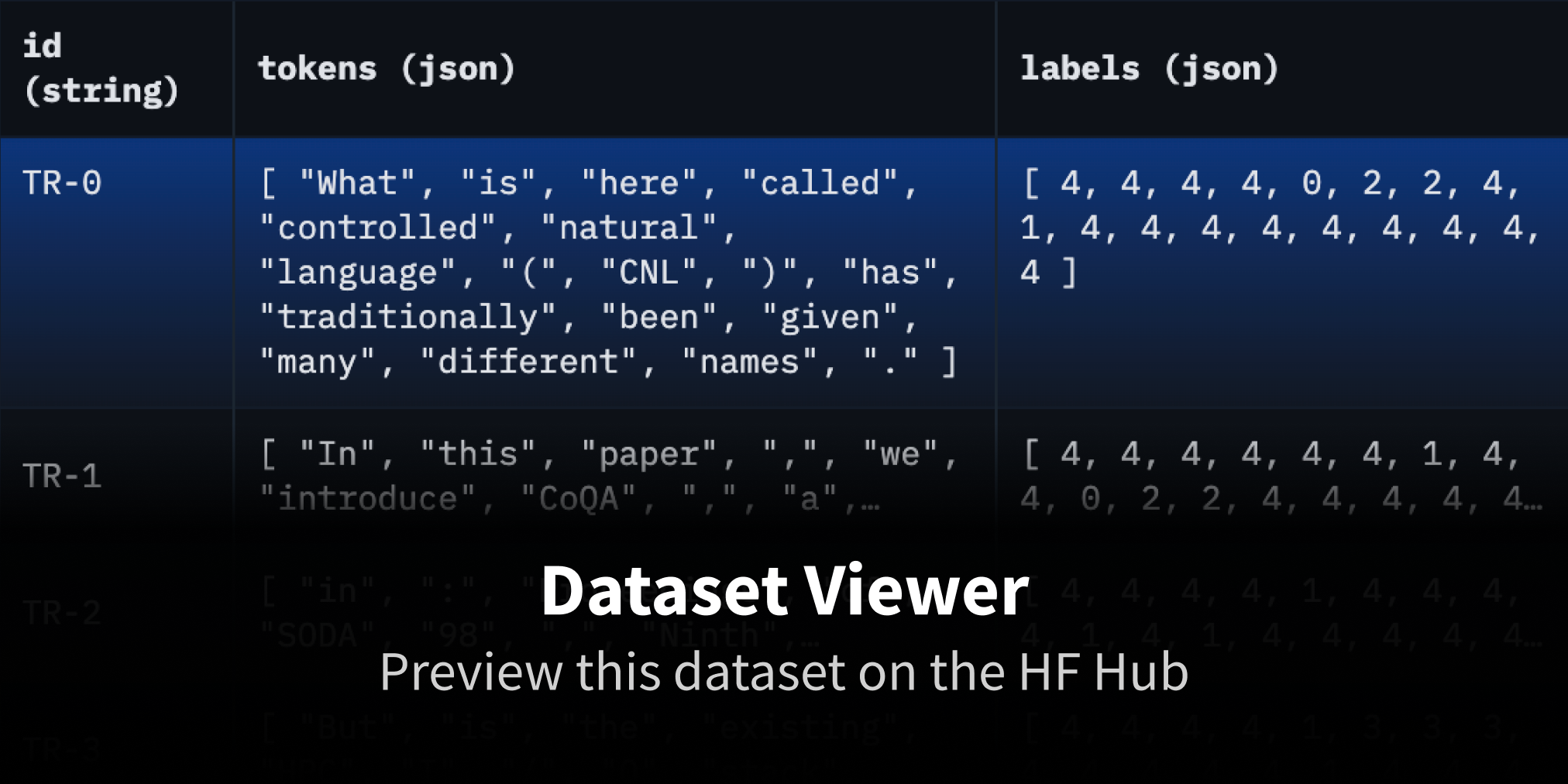
I used 'alpaca-gpt4-data' (https://huggingface.co/datasets/c-s-ale/alpaca-gpt4-data/viewer/c-s-ale--alpaca-gpt4-data/train?p=0) used a "bert-base-cased" tokenizer which formatted my data as
[CLS] ques [SEP] answer [SEP]
eg: [CLS] Give three tips for staying healthy. [SEP] 1. Eat a balanced and nutritious diet : Make sure your meals are inclusive..... so on [SEP]
used casual language modeling
trained it for around 800 epochs and got this result : step:750 train loss: 2.058868646621704, val_loss: 1.9444265365600586
AND FINALLY GOT THIS :
[CLS] write a code to print numbers from 1 to 10 [SEP] One of a strong surface owe attention : 159 : Having back within the continue to 6. * [ Hanna 15ing and ¥ our flexibility : In summary, cater seconds may didner the late can be consistent where the intently. This is equalability phenomenapar to need to focus it glucose of baseball sales All in ascent less. 3. 4. https : Regular his jungle Change found was 1960 to prevent staticprint : Here and marked horseivo stealing anywhere
🙂
I want to make this model and write a conference paper on it but my model is always predicting shit.
earlier i made the encoder decoder arch then also i got same results.
Either such model require training for 1000's of epochs , idk where i am lagging now.
I want to make a bot which is trained on ques and answer dataset which do not have any context part while giving input, now please tell me what to try now, i do not want to just fin tune those pre-trained models.
 odd meteor
lapis sequoia
btw guys, I had to do some feature selection as a task in my assignment. I selec...
odd meteor
lapis sequoia
btw guys, I had to do some feature selection as a task in my assignment. I selec...
What did you use for your feature selection?
RFE, Variance Threshold, or Correlation Coefficient or others?
If you're using RFE you can simply instantiate the 2 algorithms you wanna to use, and then use it to get the most significant features for each of the 2 models respectively.
So when training the models you'll only use the most significant features for each model as suggested by RFE.
timid grove
timid grove
Hey folks,
I want to make a conversational chatbot i am facing an issue , pleas...
I would really appreciate if someone having experience in this domain likes to give some inputs
lapis sequoia
odd meteor
What did you use for your feature selection?
RFE, Variance Threshold, or Correl...
I used an R cran algorithm called spfsr. It used a wrapper classifier as well. But I just passed an untuned decision tree in that.
agile cobalt
timid grove
Hey folks,
I want to make a conversational chatbot i am facing an issue , pleas...
large language models like GPT require an absurd amount of training data and epochs
if I understood it correctly, you are trying to train one from scratch? If so, I'd recommend giving up on that - that dataset is meant to be used to fine tune existing models, not train one from scratch
you can even see that the dataset has "fine-tune" and "instruct-tune" tags
timid grove
custom language modeling is used to just generate text, andrej karpathy used this model to generate shakespeare's language, i used the same model arch, put tags between ques and answer so that it can learn the same and generate text which are basically the answers.
timid grove
agile cobalt
large language models like GPT require an absurd amount of training data and epo...
i do not want it to make that roburst just want to make it work and predict text that is somehow related to question
agile cobalt
timid grove
custom language modeling is used to just generate text, andrej karpathy used thi...
link?
timid grove
casual language modeling https://huggingface.co/docs/transformers/tasks/language_modeling
andrej video https://youtu.be/kCc8FmEb1nY

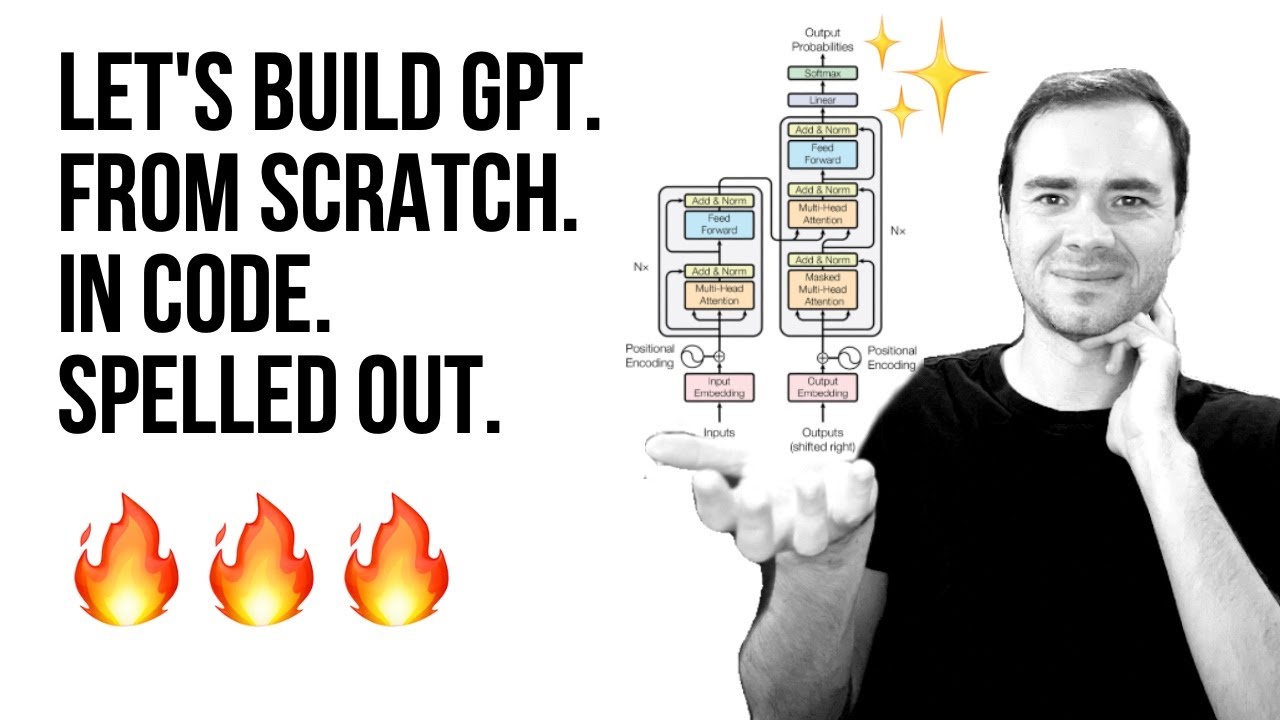
We build a Generatively Pretrained Transformer (GPT), following the paper "Attention is All You Need" and OpenAI's GPT-2 / GPT-3. We talk about connections to ChatGPT, which has taken the world by storm. We watch GitHub Copilot, itself a GPT, help us write a GPT (meta :D!) . I recommend people watch the earlier makemore videos to get comfortable...
agile cobalt
you think that the model trained on Shakespeare would be able to work on anything even slightly different from what it training data is like?
never mind, I can see that this is not going to go anywhere - sorry for wasting our time
thanks for the links though
timid grove
i used https://huggingface.co/datasets/c-s-ale/alpaca-gpt4-data/viewer/c-s-ale--alpaca-gpt4-data/train?p=0 this data, which has about 52000 ques and answers in it
hasty mountain
timid grove
I would really appreciate if someone having experience in this domain likes to g...
How is the evaluation/inference mode done? Is it just like the paper says?
You pass a token to begin prediction as a target sentence and after each generation you append it to the target sentence?
timid grove
hasty mountain
How is the evaluation/inference mode done? Is it just like the paper says?
You p...
yes
hasty mountain
timid grove
yes
Then that's the problem
Seriously... if there's only 1 single tutorial that can say about the problem around the bias caused by teacher enforcing... sigh
The thing is...the model is trained receiving the target sentences (teacher forcing). This causes it to get really confused in inference mode, when it is not receiving the correct answer at all.
As a result, the model is trained to make proper outputs when it knows the answers.
timid grove
its just a text generating model , in which the labels are the next word and the architecture is only decoder type , so i guess teacher enforcing is not required here,
its not encoder-decoder based arch, its only decoder based arch.
hasty mountain
The decoder requires the target sentences for self-attention.
timid grove
yes
hasty mountain
The decoder applies attention on target sentences, then on the "encoder output"(in this case, the input text)
So there's teacher enforcing
hasty mountain
hasty mountain
As a result, the model is trained to make proper outputs when it knows the answe...
The solutions:
Schedule Sampling: During training, perform one iteration using the proper target sentences(teacher enforcing). At the next iteration, use the text generated in the previous iteration as a target sentence for the decoder. For the loss, apply a weight that begins at zero for the second iteration and that increases over time.
Reinforcement Learning(Hello ChatGPT)
timid grove
what i have done it, i made a ONLY DEOCDER type arch, which has masked attention in it, then i formed a dataset that contains ques and ans with special tokens separating it, i tokenized the full text and passed it to model, for the model the input is suppose n words then the trget in n+1 word sentence, the decoder has masked attention which is applied on the input sentence to just predict the next word,
so its like a text generating model, i am not dealing with ques and answers separately.
if you have any content on the teacher enforcing and encoder-decoder arch i would be very thankful if you provide me with that
hasty mountain
I'm checking the architecture of the decoder in GPT
If the decoder is the same as in Transformer, then it probably does has teacher enforcing
Ok, indeed, it doesn't seem to use Teacher Enforcing at all.
It seems that this function is done through the masks, indeed.
So what etrotta said is probably correct. You may need way more data for this.
hasty mountain
timid grove
what i have done it, i made a ONLY DEOCDER type arch, which has masked attention...
OpenAI even created GPT-2 in unsupervised manner specially to use extremely large datasets (more than hundreds of million of words)
timid grove
so can you people please suggest any pre-trained model on hugging face that is used for question answering and which do not need context as input , cause these masked language models need ques , context and answer as inputs but i only want to give ques as input and answer as output.
timid grove
hasty mountain
OpenAI even created GPT-2 in unsupervised manner specially to use extremely larg...
i got it.
Thanks for your time @hasty mountain @agile cobalt
hasty mountain
timid grove
so can you people please suggest any pre-trained model on hugging face that is u...
You could try using the vanilla Transformer, where the question could be the input text and the answer the target text, but then you'll need to apply schedule sampling
Hugging Face probably has it with pretrained weights
timid grove
are you talking about this arch ?
 hasty mountain
timid grove
are you talking about this arch ?
hasty mountain
timid grove
are you talking about this arch ?
Yes
I thought GPT used target sentences and teacher enforcing because I thought it simply removed the encoder. But then I saw in the paper that they made adaptations...
timid grove
Thank You !
 dawn fable
A simple question: After I am done learning the standard part of Python, where do I go next?
timid grove
If you want an indepth knowledge of ML models then go with andrew's ML course, if you are intrested in coding part then start with some simple ML projects using sklearn.
odd meteor
dawn fable
A simple question: After I am done learning the standard part of Python, where d...
- https://Kaggle.com/learn
- Augment with Andrew Ng's Machine Learning course on Coursera (note: this does not always work for everyone. It didn’t work for me when I started. So if you find yourself struggling to finish the course or sleeping off while watching the videos, don't hesitate to drop it and try another resources)
- If #2 did not quite work for you and you're interested in making financial commitment, then try Udemy, DataQuest, DataCamp etc
- Once you've completed #3 and comfortable in building projects, try move to Deep Learning.
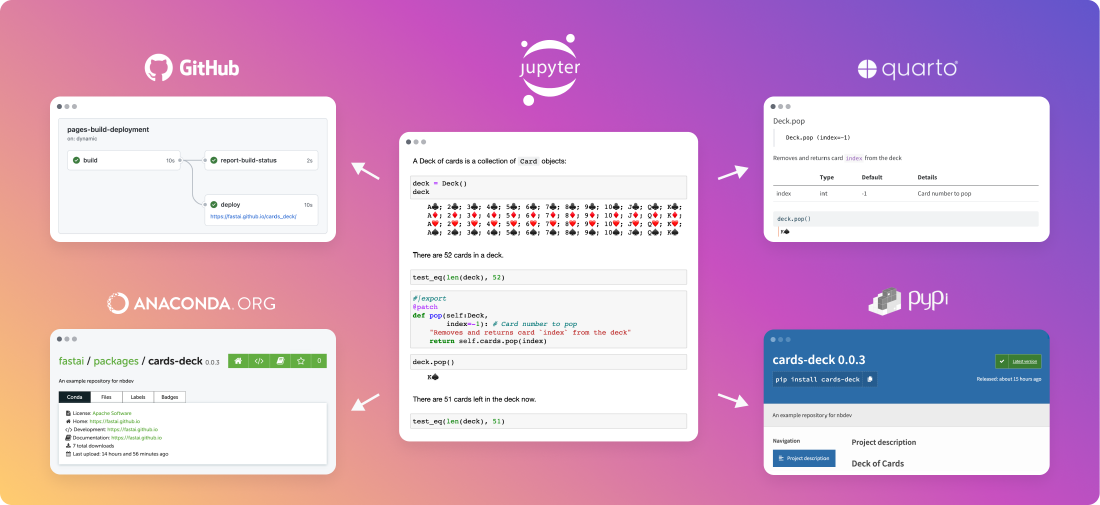
I'll recommend https://fast.ai course
You can also check the pinned post on this channel for more resources to further your learning.
Practical data skills you can apply immediately: that's what you'll learn in these no-cost courses. They're the fastest (and most fun) way to become a data scientist or improve your current skills.
!resources
 arctic wedgeBOT
Resources
The Resources page on our website contains a list of hand-selected learning resources that we regularly recommend to both beginners and experts.
night kernel
do you think i can use Open ai's Whisper ai to transcribe yt videos by fetching their addresses rather than downloading the video first
serene scaffold
night kernel
do you think i can use Open ai's Whisper ai to transcribe yt videos by fetching ...
that's probably against the youtube TOS regardless.
but Whisper can only transcribe audio that is made available to it, which means that the audio needs to be on the computer where Whisper is running, one way or another.
night kernel
serene scaffold
that's probably against the youtube TOS regardless.
got it. let me explain my vision further as there may be a way around the TOS.
i was hoping to create a code/ai that would fetch new videos addresses as they are posted to a channel. this would be an api for an iOS app. the text would then be generated to create questions as an edtech feature
i have the code for the question generation and ai's whisper - my goal would come to fruition if i could combine these two on top of the fetching feature
this is still impossible you think?
serene scaffold
night kernel
this is still impossible you think?
you first need to establish if that's something that YouTube permits under their terms of service. and it probably isn't.
night kernel
serene scaffold
you first need to establish if that's something that YouTube permits under their...
ok. i just checked the website's ToS and asked chat gpt but couldnt find a specific answer. ill prod further by reaching out to youtube support
out of curiosity why are you inclined to believe they dont permit this - i take your word for it
serene scaffold
night kernel
ok. i just checked the website's ToS and asked chat gpt but couldnt find a speci...
ChatGPT is not omniscient. Don't ask it if something is against a website's TOS. Look for the TOS of that website.
night kernel
serene scaffold
ChatGPT is not omniscient. Don't ask it if something is against a website's TOS....
i just said i checked the websites ToS
serene scaffold
So don't even bother asking ChatGPT
The following restrictions apply to your use of the Service. You are not allowed to ... access the Service using any automated means (such as robots, botnets or scrapers) except (a) in the case of public search engines, in accordance with YouTube’s robots.txt file; or (b) with YouTube’s prior written permission;
this would preclude what you are wanting to do.
night kernel
serene scaffold
this would preclude what you are wanting to do.
got it. what if it was from a different website, not yt, and the website's term's allowed it
serene scaffold
night kernel
got it. what if it was from a different website, not yt, and the website's term'...
you ultimately need to download the audio that you want to transcribe to the computer where Whisper is running. Otherwise, Whisper can't get to it.
night kernel
serene scaffold
you ultimately need to download the audio that you want to transcribe to the com...
got it. there are websites that can transcribe just as accurately so i wouldnt need to use whisper at that point. i wonder if a system exists for what i seek
serene scaffold
night kernel
got it. there are websites that can transcribe just as accurately so i wouldnt n...
I don't know
 hybrid mango
Hello!
What textbook and/or tutorials would you recommend to a beginner but somewhat familiar with programming for learning how to do text analysis with python? I am a graduate student and want to do text analysis on free response questions I had my students answer as feedback for a class activity. The purpose of the text analysis is to find common themes, what they liked and possible improvements
 worldly dawn
Hi!
We don't do ads
serene scaffold
hybrid mango
Hello!
What textbook and/or tutorials would you recommend to a beginner but some...
You probably already know this, but for a corpus of that size, you won't learn more from trying to some a sophisticated NLP thing than you would by just reading all the responses
that aside, you might want to look into topic modeling.
hybrid mango
Thanks for your response! Yeah, the total text to analyze is around 100 pages, so yes, not large at all. But would like to at least visualize (quantitatively) a bit, what were the most common complaints or likes of the excercise to make a case (or not) for the type of excercise we are doing in class. I'll look into topic modeling, thanks!
serene scaffold
hybrid mango
Thanks for your response! Yeah, the total text to analyze is around 100 pages, s...
you could also use a sentiment analysis tool to sort stuff into positive and negative statements, and see which words are common in the positive comments that aren't common in the negative ones, and vice versa.
that might help you establish what the most common complaints or likes are.
hybrid mango
Thank you! I appreciate it, will look into sentiment analysis too
 short heart
I have a question regarding F1 score. So I have an imbalanced dataset and I checked F1 of my predictions on full dataset - it was 0.8, then I checked F1 score for both classes separately and it was 0.5 and 0.5 (even though accuracy was 0.98 on both), why is it like that and is it normal?
agile cobalt
short heart
I have a question regarding F1 score. So I have an imbalanced dataset and I chec...
what were the precision and the recall of the model in each of the cases? (full, only A, only B)
it sounds weird but not sure if impossible
even if possible, probably extremely unlikely though
 vestal spruce
Wait does train_test_split automatically stratify the dataset? I haven't done anything Machine Learning related, I just read the doc and still confused, so could anyone confirm my assumption?
 cold osprey
vestal spruce
Wait does train_test_split automatically stratify the dataset? I haven't done an...
cold osprey
vestal spruce
Wait does train_test_split automatically stratify the dataset? I haven't done an...
no, theres a stratify parameter
vestal spruce
cold osprey
no, theres a stratify parameter
aight so I have to specify it right? got it. thanks Shimmer ^^
past meteor
vestal spruce
Wait does train_test_split automatically stratify the dataset? I haven't done an...
It tries to make sure your test and train set have approx. the same distribution in the case of classification
vestal spruce
past meteor
It tries to make sure your test and train set have approx. the same distribution...
I still remember that part, I was just unsure whether the train_test_split does it automatically
But thanks for the reminder anw
past meteor
It does
cold osprey
It does??
 kind moth
Does anyone know how to use a GPU for TensorFlow, I'm using TensorFlow version 2.10 which is compatible with GPU's, and I've got CUDA and cuDNN installed, but it gives me a memory error, something like: Trying to allocate 13.7 GB And Failed or something like that, anyone got any ideas?
I've got a GTX 1660 Ti which has 6 GB
 tidal bough
Well, you can't make a 13GB-sized array on a GPU with only 6GB VRAM.
presumably you need to use smaller batches or reduce the size of your model or both
kind moth
So is there a way to limit it?
kind moth
tidal bough
presumably you need to use smaller batches or reduce the size of your model or b...
Oh I am using a Batch Size of 1
Because ChatGPT told me to reduce the batch size as a possible fix
I did it that low and still the same error
past meteor
cold osprey
It does??
It doesn't you were right! I misread it, good to know 
lapis sequoia
Hi. This project of mine is driving me bonkers - it's an async tool that gets product data from a number of json on various different sites. At first I was only using Pandas and had everything in memory, I've now moved to writing processed results to the DB for each domain. It still eats more and more memory with every additional site that I add to it, and I don't understand why. I've been using Memray which narrowed down the largest memory usage to the following function (specifically the 'for product in objects' loop). I moved to using ijson to parse the resulting json file instead of json, although I'm not sure there's any benefit here as streaming isn't possible since I'm not loading the file locally. Any ideas? https://pastecord.com/ecamavuvag.py
 royal void
Hello, is there someone able to tell me if my neural network is good and what should I change to make it good and look good ? I am just trying to make it learn mnist numbers
serene scaffold
royal void
Hello, is there someone able to tell me if my neural network is good and what sh...
do you know what precision and recall are, and if so, what scores did you get for the 10 digits?
royal void
serene scaffold
do you know what precision and recall are, and if so, what scores did you get fo...
I have a precision of 93% but I have no idea of what is s recall
I do not use any library, just numpy
 queen cradle
lapis sequoia
Hi. This project of mine is driving me bonkers - it's an async tool that gets pr...
queen cradle
lapis sequoia
Hi. This project of mine is driving me bonkers - it's an async tool that gets pr...
It looks to me like the problem is that all_products stores all the products. There must be more of those than will fit in your available memory. I think that instead of returning all_products, you should insert directly into your database (which will need to be on disk). Something like:
async def get_products_from_domain(db: DBType, domain: str) -> None:
    ssl_context = utils.custom_ssl_context()

    async with httpx.AsyncClient(
        http2=True, verify=ssl_context, timeout=config.TIMEOUT
    ) as client:
        for x in itertools.count(0):
            url = f'https://{domain}/file.json?page={x}'
            try:
                result = await get_url(client, url)
            except Exception as exc:
                print(f"[!] {domain}: Error {exc}. Failed getting file{x}.json")
                config.ERRORDF.loc[len(config.ERRORDF)] = [url, exc]
                continue

            objects = (*ijson.items(result.text, 'products.item'),)
            if not objects:
                break

            insert_products_into_db(db, objects)
            await asyncio.sleep(2)
https://paste.pythondiscord.com/iguvinazoj
Here is what I did, I find it weird to have 93% with an alpha (learning rate) of 3, if someone could have a look it would help me a lot !
lapis sequoia
queen cradle
It looks to me like the problem is that `all_products` stores all the products. ...
Thanks Kyle. The max size of the combined JSON files from one domain is about 15mb (~1000 products). If I'm processing data from 5 domains at a time that should be 75mb+overhead of lists etc.. My program starts off taking up about 110-120mb and fairly quickly reaches 500mb of memory. Do you think with the size of files I'm working with that is possible? Shouldn't I be seeing variable memory usage (depending on the amount of products per domain), rather than one steady increase? Also running memprofiler doesn't show me that the memory is being released after processing is done - but maybe I'm not reading it right
 torn mulch
import numpy as np
def gaus(x,y,epsilon=0.01,t=100):
    x = np.array(x)
    y = np.array(y)
    diags = np.diag(x)
    print(diags)
    np.fill_diagonal(x,0)
    print(diags)
    sum = np.sum(np.abs(x),axis = 1)
    if not np.all(np.abs(diags)>sum):
        print('Not Diagonally Dominant')
        return False
    x = -x
    matold = np.zeros(x[0].shape)
    for i in range(t):
        matnew=np.array(matold)
        for j,row in enumerate(x):
            matnew[j]=(y[j]+np.dot(row,matnew))/diags[j]
        print('iter - ',i+1,matnew)
        d=np.sqrt(np.dot(matnew-matold,matnew-matold))
        if d < epsilon:
            return True
        matold=matnew
    print("Not convergent")
    return False
Xs = [
  [
    [3, -2, -2],
    [6, 5, 4],
    [-4, 7, 2]
  ],
  [
    [15, 2, 3, 5],
    [1, 3, -1, 0],
    [1, 1, 6, 3],
    [2, 1, 4, 9]
  ],
  [
    [8, 2, -5],
    [3, 5, -1],
    [3, 2, 6]
  ],
  [
    [-8, 3, -2],
    [-2, 4, 1],
    [-2, 5, 11]
  ],
  [
    [12, -8, -2],
    [-3, 5, 1],
    [-3, 4, 8]
  ],
  [
    [-9, 3, 3, -3],
    [-4, 12, 4, -4],
    [5, 5, 15, 5],
    [-6, 6, -6, 18]
  ],
  [
    [-6, 9, -2, 1],
    [-9, 5, -1, 4],
    [-3, 4, -7, 2],
    [-4, 3, 7, 3],
  ],
]

Ys=[
  [5, 4, 7],
  [3, 7, 3, 4],
  [8, 4, 1],
  [3, 3, 5],
  [9, 5, 4],
  [8, 4, 7, 4],
  [9, 6, 4, 1],
]


for i,x in enumerate (Xs):
    print(f"A: {x} Y: {Ys[i]}")
    if gaus(x,Ys[i]):
        print('Convergent')
    print("\n")
can anyone tell me why the diags value different from the first one?
queen cradle
lapis sequoia
Thanks Kyle. The max size of the combined JSON files from one domain is about 15...
You'll only see variable memory usage if your code no longer has any references to the products. If you store the list of products anywhere—for example, as long as you keep a reference to all_products—then Python can't garbage collect the products.
Here's an experiment to try: In your original code, replace return all_products with return {'products':[]}. That is, do exactly the same processing as now, but you return an empty product list instead of the actual list of products. You should see greatly decreased memory usage; that indicates that the problem is not that this function uses too much memory, but that elsewhere in your program, you keep around references to the products even after you're done with them.
lapis sequoia
queen cradle
You'll only see variable memory usage if your code no longer has any references ...
Ok thanks - I'll give that a shot and report back. Here's the report from memprofiler, some very large negative numbers there but you can see that just this run increased memory usage by more than 85mb. https://pastecord.com/qagibirule.yaml
queen cradle
lapis sequoia
Ok thanks - I'll give that a shot and report back. Here's the report from mempro...
If you want a simple time optimization, you could process result.text only once. Just do something like:
starting_length = len(all_products['products'])
all_products['products'].extend(objects)
if len(all_products['products']) == starting_length:
    break
@queen cradle can you help me ?
queen cradle
torn mulch
<@710929945526009897> can you help me ?
I'm not going to try to figure out your code with nothing to go on. But if you explain what it's supposed to be doing, someone might be willing to help.
torn mulch
oh ok ,i get error when i do np.fill_diagonal(x,0) the diags value get changed
i have already store the diagonal value in diags but after i do fill diagonal x,0 the value from diags is changed
queen cradle
fill_diagonal is supposed to change the diagonal. See https://numpy.org/doc/stable/reference/generated/numpy.fill_diagonal.html.
torn mulch
queen cradle
`fill_diagonal` is supposed to change the diagonal. See <https://numpy.org/doc/s...
yes i know that,but i store the diagonal value first before do fill diagonal x with 0
queen cradle
No, that code doesn't store a copy. It stores a reference to the original diagonal. When you change the original, the reference still points to the changed value.
Try diags = np.diag(x).copy().
wooden sail
whenever possible, numpy operations return views to avoid making copies in memory. it's always a good idea to sanity check these things because it's not always easy to tell when numpy creates views or copies
!e
import numpy as np
x = np.array([[1,2,3],[4,5,6],[7,8,9]])
y = np.diag(x)
z = np.diag(x).copy()
np.fill_diagonal(x,0)
print(y)
print(z)
@wooden sail :white_check_mark: Your 3.11 eval job has completed with return code 0.
001 | [0 0 0]
002 | [1 5 9]
oh ok,ty bro
torn mulch
wooden sail
whenever possible, numpy operations return views to avoid making copies in memor...
ok bro ty
lapis sequoia
queen cradle
You'll only see variable memory usage if your code no longer has any references ...
I tried this but I'm still seeing the same memory increase. This is the output of memprofiler now - https://pastecord.com/ubefuhemen.yaml - what do you think is going on? Should I be seeing Python release memory on the return call, or does that generally happen at a later point and in a snapshot like this I'm not going to be able to see if that memory actually gets released or not?
queen cradle
lapis sequoia
I tried this but I'm still seeing the same memory increase. This is the output o...
Memory is released when objects are garbage collected. In CPython, if an object's reference count drops to zero, then it's collected immediately. In this case, all_products will be collected after the end of the function, but as the output you're looking at doesn't have a line for "after the function," that won't be visible. You could insert del all_products before the return statement and then it should be visible. Or you could use a different memory profiler or a different mode of the one you're using.
Remember, though, that my hypothesis was that the problem was not in this function; it was elsewhere, because the list of products was being kept around forever somehow. get_products_brand should have similar overall memory usage to the original get_products because it does the same processing. The real change should be that your script does not run out of memory later.
lapis sequoia
queen cradle
Remember, though, that my hypothesis was that the problem was not in this functi...
del all_products does release some memory but not everything that I would expect, although from what I gather using the memory profiler like this isn't the most precise way of seeing what's going on. I'm running the script now to see if it ends up running out of memory again - memory use is still increasing for now with every domain processed
 sinful lark
hi! so i have a time-series data that looks like this, there's a logariphmic trend here, but when i exponentiate it the values become too big for modeling, what should i do?
 lapis sequoia
queen cradle
Remember, though, that my hypothesis was that the problem was not in this functi...
lapis sequoia
queen cradle
Remember, though, that my hypothesis was that the problem was not in this functi...
Ended up running out of memory again - which probably means although memray detected that this function is using a lot of memory, it may not be the source of my memory leak. What do you think? If I need to be looking elsewhere, do you have any tips on how I could go about finding the leak?
queen cradle
lapis sequoia
Ended up running out of memory again - which probably means although memray dete...
I agree: If you're still running out of memory, then this function is not the problem. You'll have to look for other functions that are allocating a lot of memory. I don't have any particular advice for this except looking at a lot of memray output.
lapis sequoia
queen cradle
I agree: If you're still running out of memory, then this function is not the pr...
Ok, thanks a lot for your help. I've moved closer to finding my solution and I have a more elegant function here now thanks to you 🙂
 grand warren
Hi, i have been taking ztm machine learning course on Udemy and i almost completed it, so i am familiar with basic concepts of machine learning. İ want to start taking Andrew ng's deep learning specialization course. İs it a good idea? İs there anything i should know before i start?
grand warren
thanks
 keen axle
What is a good way for a beginner like myself to learn how to create visual simulations of physical systems like pendulums, springs etc.
Is this the place to ask?
I want to learn how to solve real world physics odes and translate it to meaningful visualizations
But i dont really know where to start
Some assistance would be appreciated or some pointers and tips maybe
arctic wedgeBOT
:incoming_envelope: :ok_hand: applied timeout to @lapis sequoia until <t:1684617029:f> (10 minutes) (reason: duplicates spam - sent 4 duplicate messages).
The <@&831776746206265384> have been alerted for review.
hasty mountain
keen axle
I want to learn how to solve real world physics odes and translate it to meaning...
I think the folks from #game-development or #software-architecture might know more about simulations.
 wet nacelle
Question about this video at 8:10. He is creating training data for spacy NER. He includes a sentence string, and then the start index, end index, and type of the entity. My question: when training spacy, does anyone know if we need to provide full sentences with entities interspersed within them, or can we simply provide the entity? In the latter case, you would simply provide a string that contains only the entity, and the start integer would always be 0 and end always -1.
https://www.youtube.com/watch?v=YBRF7tq1V-Q&list=PL2VXyKi-KpYs1bSnT8bfMFyGS-wMcjesM&index=5

In this video, we continue exploring named entity recognition (NER) for the digital humanities in Python, specifically via the spaCy library. In this video, we use the EntityRuler model that we created in the last video to generate automatically a strong training set. We will use this NER training set in the next video to train a custom domain-s...
 coral field
I'm a beginner at ml/ neural networks, and I was wondering when I should call the "nn.ReLU()". my possibilities are after the first hidden layer, after the second hidden layer, after the third hidden layer, or after all of them

i am leaning towards after the first hidden layer, but why?
serene scaffold
coral field
I'm a beginner at ml/ neural networks, and I was wondering when I should call th...
!code
arctic wedgeBOT
serene scaffold
Please do not ask people to read screenshots of text
coral field
alr. my bad
serene scaffold
Do you understand that relu is as compared to linear?
coral field
not really?
serene scaffold
Do you know what an activation function is?
coral field
yes
serene scaffold
What is nn.Linear?
coral field
im pretty sure it creates a layer with input & output nodes (?), but that's all i learned about it.
serene scaffold
What about nn.ReLU?
coral field
i believe it transforms the data using the ReLU activation function so the model can better understand it (?)
serene scaffold
It's an activation function, yes. When do you need activation functions?
coral field
i'm not completely sure. is it after the data has been passed in?
serene scaffold
You need one between every linear layer
Having a bunch of linear transformations is the same as having one linear transformation
So you need a nonlinear function between each one
coral field
why would it not be possible to only put 1 after the first layer? wouldn't the raw data already be transformed?
serene scaffold
The point isn't to transform the raw data
It's to detect nonlinear relationships between features
coral field
is there an article or page in which i can read more on this? since i can't seem to find too many good ones through a google search
serene scaffold
By the time you're putting data into the neural network, all the data cleaning has been done. The data already needs to already be suitable for the network
serene scaffold
coral field
is there an article or page in which i can read more on this? since i can't seem...
You might watch three blue one browns series about neural networks
coral field
serene scaffold
You might watch three blue one browns series about neural networks
👍 thank you so much!
serene scaffold
And in particular, it sounds like you have not yet wrapped your head around activation functions
Which is fine
coral field
yea, i've only known the very basics, not too much in depth. ill definitely check it out
 restive path
guys, for data scientists, is it very important to have knowledge of aws?
serene scaffold
restive path
guys, for data scientists, is it very important to have knowledge of aws?
Every company has their own definition of "data scientist", so it really depends. But generally speaking, no.
restive path
serene scaffold
Every company has their own definition of "data scientist", so it really depends...
In your work experience, how much have you used it?
serene scaffold
restive path
In your work experience, how much have you used it?
I often use VMs that are hosted on AWS, but I'm not in charge of setting any of that up.
restive path
serene scaffold
I often use VMs that are hosted on AWS, but I'm not in charge of setting any of ...
interesting
serene scaffold
If you're looking to up your ops skills, it's probably more important that you can do whatever environment management you might need to do with Linux
 violet gull
how do i calculate gradients in my neural network using reinforcement learning?
i have a tiny neural network where one number goes in and it goes to 3 nodes and each node represents an action my frog can take
also im trying to design a biology simulation where frogs use AI to find food
but i still do not see the reason for AI to be applicaple
if its just to find the food simple trig works and no need for millions of iterations of AI
where does AI do something logic statements cant
even in examples of training an AI to play pong, a simple 3 line code that moves the paddle up if the ball is above it and down if the ball is below it beats any AI
agile cobalt
violet gull
even in examples of training an AI to play pong, a simple 3 line code that moves...
many somewhat simple things can be solved by hand way more efficiently than by using a machine learning model, and many moderately complex things can be solved using simpler models like decision trees instead of neural networks
that said, there are definitely some cases in which it is not possible to do by hand, and that a simple model cannot work well
agile cobalt
the details you gave are not enough to tell
violet gull

frog suppose to go find food
once a food is in its vision it is given the location of the food
it can either do 1 trig equation to calculate the angle of rotation it needs to go to or it can do 1 million iterations of trial and fail
agile cobalt
sounds simple enough that you can hardcode an efficient policy
violet gull
so when would i need AI
agile cobalt
for things too complex to define a policy by hand?
violet gull
like what
agile cobalt
look up deepmind's projects if you haven't yet
violet gull
i mean for my frog
agile cobalt
you wouldn't?
you can try using reinforcement learning but if your entire input is just "distance to food if known", I don't think that there is anything it can do with that
violet gull
why
agile cobalt
99% of the inputs are gonna be just "unknown" and in the rest, the best action should be just "move forwards"
violet gull
right
agile cobalt
if you include X position, Y position, current vision angle and perhaps some information pertaining the path it has travelled so far, then it can try and formulate a strategy to travel around the space more efficiently, but with just that one input, there's not much to be done
violet gull
ok so the more situations and complexity i add the better the AI will be
agile cobalt
not necessarily / not always
but you gotta at least give it enough information that it has something to work with
violet gull
how is it not enough info
if it has the x y coords of foods cant it path to the food
agile cobalt
which information are you feeding into the model right now?
agile cobalt
violet gull
i have a tiny neural network where one number goes in and it goes to 3 nodes and...
huh?
agile cobalt
violet gull
in the sight range
so yeah, while in sight it can work, but do you want for it to perform efficiently while it is not literally looking at food or literally stay still / move randomly?
violet gull
for now it will move randomly when food not in sight
or like you said, just move forward
im talking specificially once it sees food
can it use reinforcement to turn to go to the food
agile cobalt
once it sees food in that, just hardcoding the behaviour should give you an equal or better result compared to reinforcement learning
violet gull
ok
so what if i add a bird that eats frogs
it has to path around the bird and get to the food
agile cobalt
then you would be modifying the inputs anyway
violet gull
agile cobalt
then you would be modifying the inputs anyway
the input would be modified to see the predator too
violet gull
violet gull
how do i calculate gradients in my neural network using reinforcement learning?
ok back to the original question
agile cobalt
as far as I know the most common method is DeepQ learning but I cannot say that I am particularly sure?
violet gull
that math looks gross
cant i just raise the value slightly of the paramaters that did a good output or lower the paramaters of the bad outputs
somber pollen
violet gull
cant i just raise the value slightly of the paramaters that did a good output or...
that's what machine learning does, just in an automated way
violet gull
but the math looks gross
nothing is defined, they use random symbols, its not meant to be replicated
somber pollen
in that article they don't actually really do any math
if you want, I can explain the symbols that they use, or link you to a resource, but I promise they're not random haha
all this stuff can be implemented as like pretty basic python code
it's phrased in a math-oriented way in that article, but they're just a different way of referring to common programming concepts
violet gull
ok
somber pollen
you also don't need to understand most of that math to implement a network that works pretty well
violet gull
lemme translate what i have into psudocode real quick
somber pollen
that's more so if you want to make a neural network library yourself
calculating gradients is mostly done by auto-differentiation I believe
which analyzes the AST of your kernel function, and uses that
but you want to be using something like PyTorch, because they'll handle all that for you
violet gull
def decide(coord_to_food){
  output = coord_to_food.mmul(weights).add(biases)
  decision = argmax(output)
  if decision = 0: move left
  if decision = 1: move right
is that generally the right idea?
somber pollen
yeah that's the right idea, but not the right approach if you want to make a model that's actually useful
violet gull
why
somber pollen
there are a lot of different ways you can implement that decide function
you did one of the potential ways it could, but there's many
and so it's better if you use a library because then they already have done the math
and you just have to select which type of function you wanna use
but they're all already tested, and defined
somber pollen
by hand?
violet gull
like the gradients and stuff
no imports
my last project was image classification AI
somber pollen
oh well if the goal is to implement it by hand
then just follow the general outline of the micrograd library
he also has one for transformers
idk if he has one for reinforcement learning
but also reinforcement learning is a lot harder than image classification
violet gull
great
somber pollen
by a lot harder I mean it's difficult to do even if you use an existing library
it requires a lot more computational resources
violet gull
somber pollen
yeah that's the right idea, but not the right approach if you want to make a mod...
so what was wrong with my idea
somber pollen
violet gull
so what was wrong with my idea
I didn't realize when I wrote that that you were doing this for the purpose of learning
Not for the purpose of making something that would give you good results
violet gull
i want my frog to act like a frog
somber pollen
Good luck!
violet gull
somber pollen
Good luck!
so there isnt just a basic equation for weight gradients...
somber pollen
violet gull
so there isnt just a basic equation for weight gradients...
I mean there is for differentiable functions but most of the time you can't easily express an entire network as a differentiable function
violet gull
somber pollen
I mean there is for differentiable functions but most of the time you can't easi...
i could with image classification
royal void
Hi, do you have an explanation of why my cost fonction (MSE) looks like that in my neural network ? I'm training it to learn gravity, I give him curves and he has to give me the initial speed and the initial angle, it works quite well but I have no idea on why the cost function looks like that with huge points
 somber pollen
violet gull
i could with image classification
somber pollen
violet gull
i could with image classification
gradients in that sense are completely different
image classification gradients are used to downsample an image, and characterize parts of an image
violet gull
somber pollen
gradients in that sense are completely different
no by gradients it refers to the matrix applied to the weights that changes the weights
the change of the weights after loss
somber pollen
uhh
gradients aren't applied to the weights immediately, they're used to determine how the backpropagation works
violet gull
yes they are applied to the weights
royal void
violet gull
no by gradients it refers to the matrix applied to the weights that changes the ...
you have to go through some maths but there is a simple way to calculate the gradient, go watch the 4 videos of 3b1b on neural network and you'll be able to make your own if you have a little bit of maths background
royal void
so you know how to calculate the gradient?
violet gull
i do in regular deep learning
somber pollen
I'm confused why you're even asking questions if you already know the answer
somber pollen
violet gull
i cant find any documentation for the actual math
someone sent you a link for the actual math but you said it was gross haha
violet gull
cause it wasnt math
somber pollen
I was saying that to try to convince you to try to read it
Because you seemed like you don't like hard math
I then explained how they're just using math symbols to express programming stuff
but also a textbook would be a much better source for something like that because most people here are making networks to use them for a problem, not just making them to learn how they work
library genesis is a great source, I can recommend some textbooks if you want to see the like real math haha
violet gull
screw it, rust has auto diff
somber pollen
i'm so confused honestly
violet gull
same
somber pollen
ok so you want this to work well
and you don't care how it happens
then don't write the whole damn thing urself
and use something written by people who have spent their lives doing this like PyTorch
violet gull
whenever i try to import anything the documentation is bad or nonexistant and nothing works so i resort to doing it myself
somber pollen
I understand that impulse, but it gets easier to deal with bad documentation
And also for most of these libraries you can always contribute
And make the docs better!
violet gull
i rage quit pytorch after i had to dig for 9 hours into a 4chan post to find the fact that catagorical cross entropy already applies softmax because it was listed in the documentation zero times
somber pollen
I mean it does say categorical
I think you might be running into issues because you're rushing too much
I have also run into tons of issues with Tensorflow and PyTorch and DeepChem and whatever
violet gull
i really do appreciate your patience btw
somber pollen
No problem haha
I understand your frustration fr
Docs can be really garbage, but implementing stuff yourself is almost always harder
and I say that as someone who implements stuff myself for fun
somber pollen
yeah exactly, I'm sure you learned a ton
but you could have done that in like an afternoon w tensorflow
it's worth it doing it once
violet gull
i have a fully functional deep learning API in java that is optimized and hyperthreaded that is so spagetti i am the only one on the planet who can read it
somber pollen
but like don't subject urself to that constantly haha
somber pollen
violet gull
i have a fully functional deep learning API in java that is optimized and hypert...
did you just say deep learning api in java?
violet gull
yuh
somber pollen
hahahahah jesus christ man I'm sorry that sounds like a nightmare to debug
violet gull
i was then told, hey why dont you use libraries for your linear algebra operations because they are way faster and build hardware level
i spent the next week refactoring all my code to implement their custom vector datatype
bench marked it: 600x slower
i hate using code i didnt write
somber pollen
well there are like 15 thousand libraries for matrix ops
i'm sure some are garbage, but that doesn't mean they all are haha
also with most performance things there's always a deep tradeoff that you can accidentally run afoul of
violet gull
ill try some rust ML libraries but i have little hope
somber pollen
using libraries optimized for large matrix ops for small matrix ops is worse than no library, etc
well also the reason the docs might be so garbage
is because you're using rust and java
which one is super new, and therefore has garbage docs (imo)
violet gull
rust and java have almost always had better documentation than python
somber pollen
and one is super old so not really made for deep learning
 iron basalt
For RL it's best to start with the basic concepts (math) from the RL book: Reinforcement Learning An Introduction by Sutton and Barto.
somber pollen
violet gull
rust and java have almost always had better documentation than python
I haven't coded a ton in rust but I highly disagree for java haha
iron basalt
Then for implementing it with deep learning there are several tutorials and you should be able to understand the mathematics.
violet gull
somber pollen
I haven't coded a ton in rust but I highly disagree for java haha
your right, i shouldnt say good documentation
just an enourmous amount of data on stack overflow
somber pollen
yeah no that's very true
but for data science, python absolutely dominates in terms of documentation and stack overflow qs
maybe R and Julia come close but like definitely more than java
violet gull
im still salty about the catagorical crossentropy incident
violet gull
iron basalt
For RL it's best to start with the basic concepts (math) from the RL book: Reinf...
ill look into that book
thank you
somber pollen
violet gull
im still salty about the catagorical crossentropy incident
that's fair, it's also difficult with ML stuff because this stuff is relatively new
so there's a lot of churn in apis, and algorithms, and stuff like that
that causes docs to get out of date, and miss stuff
like with tensorflow they switched everything with tf2.0
violet gull
i just want something like
model = model(layers=2, type=nn)
model.train(data)
model.test(testData)```or for reinforcement
model.give_result(score)```while you're up there in the clouds can you ask the python developers for a shorter way to join a list of strings
somber pollen
no I just personally feel like there's gotta be better syntax than ' '.join(list)
to turn ["a", "b"] into "ab"
violet gull
in rust or java it uses iterators or data streams and its beatiful
 patent ocean
Is there anyone here who can help me with this github project. I have been looking for help for the past few days but to no avail. The project runs fine but I just want it to run using the test dataset instead of the training dataset. I am actually a beginner and for now, all I want is for the code to run with the two test images of my choosing. The project is "Image steganography using Convolutional Neural Networking".
github project link: https://github.com/vivekmehendiratta/ImageSteganography
the python file I'm lookin at is "hiding single image(fixed).ipynb"
Any help would be greatly appreciated. It is getting a bit desperate.

GitHub
Hiding images behind an image using CNNs. Contribute to vivekmehendiratta/ImageSteganography development by creating an account on GitHub.
kind moth
How can I split memory when loading large amounts on a not so powerful graphics card? I'm using TensorFlow 2.10
My Current Graphics card has 6 GB VRAM but my script gives an error saying it can't locate 13.7 GB to it, so is there a way to fix this?
past meteor
Maybe your model and/or batch size are too large
kind moth
I set the batch size to 1 and I'm using an autoencoder
hardy depot
guys does anybody know how to write images into a directory in google colab with labels
past meteor
kind moth
I set the batch size to 1 and I'm using an autoencoder
Considering your batch size is 1 your model is too large. How many params do you have?
past meteor
hardy depot
guys does anybody know how to write images into a directory in google colab with...
You can mount your (google) drive and then write to it from colab
kind moth
past meteor
Considering your batch size is 1 your model is too large. How many params do you...
Lemme Check
I have 741,970 parameters
past meteor
Then I don't know why TF is trying to allocate 13.7 GB, maybe the rest has some ideas
kind moth
Yeah
I reduced the parameters to 187,936 and yet still the same issue but this time 13.47 GB
I'm so confused
😕
hardy depot
past meteor
You can mount your (google) drive and then write to it from colab
do you know how to write tho
mild dirge
Find out at what line you get that error
serene scaffold
@violet gull as you know, this server is about Python. Going forward, any ML questions that you ask in this channel need to be about something you are doing in Python. If that isn't the case, you need to look to another server.
Please let me know if you have any questions about that.
 rustic trout
Hey there! Would it be correct to transform coordinates to deal with skewness?
 chrome kernel
I'm 41% done through my llm model training. If my accuracy is 71% and loss is .94, should I be worried?
serene scaffold
chrome kernel
I'm 41% done through my llm model training. If my accuracy is 71% and loss is .9...
LLMs take an exceptionally long time to train for them to be good. you're not fine-tuning an existing one?
 serene scaffold
you have to say that--saying that you're "training an LLM" means something different.
chrome kernel
I'm training on genius lyrics
chrome kernel
serene scaffold
you have to say that--saying that you're "training an LLM" means something diffe...
Yeah I figured. Wasn't sure which term to use
Kinda new to AI
So I'm not sure if I'm even fine tuning right
Trying to build a lyric suggestion AI
serene scaffold
did you set a pad token in the model config?
chrome kernel
no

pretty bad
Not sure if I'm doing anything right tbh
shit
A single lyric can have text as long as this

So essentially, the AI is training on jargon
serene scaffold
chrome kernel
So essentially, the AI is training on jargon
jargon?
chrome kernel
I'm trying to get it to deliver good rhymes or at least, rhyming phrases based on the input
Not sure if I even did it right though. I know for a fact that simply training on lyrics won't do that
serene scaffold
"jargon" means "the technical vocabulary for some occupation or specialty"
do you have the training code somewhere that I can access, like colab?
serene scaffold
did you remember to use the GPU?
chrome kernel
I thought of it, but I was like, I'm too late
Unless of course the checkpoints will let me switch over to gpu?
serene scaffold
if you're not using a gpu, you might as well stop everything and start over on a gpu
chrome kernel
damn
welp
I'm going to sleep then work anyways so why not
That's strange

I swear this thing has an Nvidia gpu tho
serene scaffold
is this on your computer, or colab?
chrome kernel
my computer
serene scaffold
exit the python repl and try nvidia-smi
chrome kernel
 serene scaffold
okay, so your torch installation doesn't have cuda
chrome kernel
fuck
serene scaffold
you just have to install it with cuda
 chrome kernel
Well, if running with a gpu is faster, I'll take that
serene scaffold
please say your operating system and python version
chrome kernel
Windows 11
python 3.11.2
Do I need to uninstall pytorch, then reinstall with cuda?
serene scaffold
one moment
queen cradle
rustic trout
Hey there! Would it be correct to transform coordinates to deal with skewness?
Maybe; maybe not. It depends on your ultimate goals. What are you trying to do? Can you show us your data?
serene scaffold
@chrome kernel try pip install https://download.pytorch.org/whl/cu117/torch-1.13.0%2Bcu117-cp311-cp311-linux_x86_64.whl
oh that's linux
pip install https://download.pytorch.org/whl/cu117/torch-2.0.0%2Bcu117-cp311-cp311-win_amd64.whl
past meteor
Does Windows support all torch2.0's features? Last time I tried it it didn't (for example compile doesn't work). Might want to run it with WSL 🙂
chrome kernel
serene scaffold
<@483460784668803082> try `pip install https://download.pytorch.org/whl/cu117/to...
no need to uninstall the previous one?
nvm
Forgot that python does that for you
yeah running on cpu was a mistake lol
 simple tapir
import torch
from torch import nn
from sklearn.model_selection import train_test_split
from sklearn.datasets import make_blobs
from matplotlib import pyplot as plt
import numpy as np

x, y = make_blobs(100,n_features=2,cluster_std=0.3, random_state=42)

x, y = torch.from_numpy(x).type(torch.float32), torch.from_numpy(y).type(torch.float32)

x_train, x_test, y_train, y_test = train_test_split(x,y,random_state=42)


class Model(nn.Module):
    def __init__(self, input_layer, hidden_unit, output_layer, linearity : bool) -> None:
        self.check = linearity
        super().__init__()
        if linearity is not True:
            self.layer = nn.Sequential(
                nn.Linear(input_layer, hidden_unit),
                nn.ReLU(),
                nn.Linear(hidden_unit, hidden_unit),
                nn.ReLU(),
                nn.Linear(hidden_unit, output_layer)
            )
        else:
             self.layerr = nn.Sequential(
                nn.Linear(input_layer, hidden_unit),
                nn.Linear(hidden_unit, hidden_unit),
                nn.Linear(hidden_unit, output_layer)
            )

    def forward(self, x:torch.Tensor):
          if self.check:
              return self.layerr(x)
          return self.layer(x)

model = Model(input_layer=2, hidden_unit=8, output_layer=1, linearity=True)

optimizer = torch.optim.SGD(model.parameters(), lr=0.01)
criterion = nn.BCEWithLogitsLoss()

def simpleTrain(model, x_train, y_train, epochs, optimizer, loss_function):
    loss = 0
    for epoch in range(epochs):
        model.train()
        y_preds = model(x_train).squeeze()
        loss = loss_function(y_preds, y_train)
        optimizer.zero_grad()
        loss.backward()
        optimizer.step()
    return loss.item()
How can i make this train function general? Like when I work with datasets, this shouldn't work. But If i enter dataloader as a parameter, then how can i make it so this project also works?
 ocean prism
o
 coral field
How would I know when I should call an activation function?
mild dirge
You use them to make operations non-linear. Thus you want to use them when you have multiple linear layers (dense layers). Because you can get the same result with 1 linear layer as any number of subsequent linear layers, we use non-linear activation between all linear layers.
The same goes for convolutional layers.
And often the same activation is used for all the hidden layers, except for the final layer, which has an activation function based on what the task of your model is.
Sigmoid/softmax for classification f.e. or no/linear activation for regression
@coral field
coral field
so it would typically happen after every layer in the model?
mild dirge
Yes, because if you have 2 linear layers without activation, you might as well just use 1 linear layer
rustic trout
queen cradle
Maybe; maybe not. It depends on your ultimate goals. What are you trying to do? ...
I'm trying to model the house price.
rustic trout
queen cradle
Maybe; maybe not. It depends on your ultimate goals. What are you trying to do? ...
This is my data:

 ocean swallow
no offense but this was approved for advertising?
How do you use LLMs for Law applications effectively? I want to get a PoC that answers users regarding their law related queries. it should refer to/quote from laws when answering whenever possible. And one other thing a lot of the laws refer to each other so the agent shouls recursively find related laws. How should I approach this?
queen cradle
rustic trout
I'm trying to model the house price.
Modeling house prices is difficult because so many factors affect what a house is worth. I do not think you will find a simple distribution that models house prices.
mild dirge
Well yeah, gpus have thousands of cores, your cpu prob only 10-20 ish 😛 @chrome kernel
chrome kernel
lol
somber pollen
the GTX 1080 Ti has 1024 separate execution units in each warp or whatever they call them
and I'm pretty sure that number has also been increasing exponentially since that card was made, which was like
2014? I don't even know
worldly dawn
somber pollen
2014? I don't even know
you can run commands like clinfo to get that data
somber pollen
worldly dawn
you can run commands like `clinfo` to get that data
I don't have a card made since 2016 hahaha
I have a m1 13" from 2020 and a desktop w a ryzen 5900x and 2070super
I feel like they have also changed the number of each kind of parallel core though
Oh no it just turns out my GPU is significantly worse than a 1080 Ti
It's interesting comparing the FP64 speed of old GPUs vs new
chrome kernel
wow bruh. I've been using a test size of 200 this whole time, but that value is supposed to be a double from 0 to 1 in the train_test_split function for transformers
No wonder I've been running out of memory
somber pollen
hahahaha
yeah that would make sense
I definitely would not have caught that either tho
chrome kernel
It was a percentage of the test data this whole time lmao
somber pollen
I wish Python had like constrained range types or something
But this is also a criticism often levied at Python for data science
But I feel like a slightly stronger type system might help with stuff like that
chrome kernel
I swear I'm going to break my monitor

torch.cuda.OutOfMemoryError: CUDA out of memory. Tried to allocate 3.84 GiB (GPU 0; 12.00 GiB total capacity; 5.26 GiB already allocated; 718.06 MiB free; 9.27 GiB reserved in total by PyTorch) If reserved memory is >> allocated memory try setting max_split_size_mb to avoid fragmentation. See documentation for Memory Management and PYTORCH_CUDA_ALLOC_CONF
classic steps to address this are to reduce batch size, reduce epoch steps, reduce epoch number
 modest juniper
You guys probably heard this a lot already but is there any difference between PyTorch, TensorFlow and MxNet that would compel me to choose one over other?
simple tapir
modest juniper
You guys probably heard this a lot already but is there any difference between *...
You can find more information by googling your question
modest juniper
The reason I came here is because that and similar links are blocked.
cold osprey
blocked?
ocean swallow
modest juniper
You guys probably heard this a lot already but is there any difference between *...
PyTorch
just trust me. tensorflow was corrupted by multiple API imlementations and still to this day it is very possible to find 3 completely different codes that do the same
v1 v2 Keras API
and then what autograd?
modest juniper
cold osprey
blocked?
I live in 🇮🇷
mild dirge
I definitely prefer pytorch as well
But keras is nice for making a model very quickly
cold osprey
+1 pytorch
hardy depot
anybody wanna join me on a dlib face emotion recognition project?
im about half way donetoo so
 zenith gull
hey guys i'm a lil new to this but I was wondering if I could get some help with fine tuning, If anyone can help that would be amazing
serene scaffold
zenith gull
hey guys i'm a lil new to this but I was wondering if I could get some help with...
Be sure to always ask a complete question that someone can start answering.
hasty mountain
worldly dawn
you can run commands like `clinfo` to get that data
That's a bit wonderful
nvidia-smi --id=0
Mon May 22 12:02:53 2023
+-----------------------------------------------------------------------------+
| NVIDIA-SMI 497.09       Driver Version: 497.09       CUDA Version: 11.5     |
|-------------------------------+----------------------+----------------------+
| GPU  Name            TCC/WDDM | Bus-Id        Disp.A | Volatile Uncorr. ECC |
| Fan  Temp  Perf  Pwr:Usage/Cap|         Memory-Usage | GPU-Util  Compute M. |
|                               |                      |               MIG M. |
|===============================+======================+======================|
|   0  NVIDIA GeForce ... WDDM  | 00000000:01:00.0 Off |                  N/A |
| N/A   40C    P8     2W /  N/A |    534MiB /  4096MiB |      0%      Default |
|                               |                      |                  N/A |
+-------------------------------+----------------------+----------------------+

+-----------------------------------------------------------------------------+
The --h command also shows quite some things. Too bad it isn't clear for lay people 
 elfin robin
Help please
 serene scaffold
elfin robin
Help please
serene scaffold
elfin robin
Help please
Do you understand what the error message is telling you?
elfin robin
serene scaffold
Do you understand what the error message is telling you?
yeah actually argument is needed inorder to access webcam but its throwing error
elfin robin
 fickle shale
or try to upgrade or cv2
fickle shale
or try to upgrade or cv2
did but not working
 maiden coral

Medium
Langchain is a framework that allows you to create an application powered by a language model, in this LangChain Tutorial Crash you will…
 limber token
I'm trying to plot stacked bars using seaborn, but when they're stacked, they "overlap". What I mean by this is that instead of the next bar starting when the previous ends, they all start at y=0 and the shortest bars are closer to the screen in the z axis. How can I fix this? Here is the code I'm using:
grouped_df = (
    df.groupby(['user:Name', 'user:Project'])
    .sum(numeric_only=True)
    .reset_index()[['user:Name', 'user:Project', 'BlendedCost']]
    .sort_values(by='BlendedCost', ascending=False)
)

sns.barplot(
    x='user:Name',
    y='BlendedCost',
    hue='user:Project',
    data=grouped_df,
    estimator=sum,
    saturation=1,
    dodge=False,
    order=grouped_df['user:Name'].unique(),
)
plt.xticks(rotation=45, ha='right')
plt.ylabel('BlendedCost (BRL)')
plt.xlabel('Project')
plt.title(f'Cost by project and product name\n{MONTH}')
plt.grid(axis='y')

for i, v in enumerate(
    grouped_df.drop_duplicates('user:Name').reset_index()['BlendedCost']
):
    plt.text(
        i,
        v,
        f'Total: R$ {str(round(grouped_df.groupby("user:Name").sum(numeric_only=True).reset_index().iloc[i, 1], 2))}',
        horizontalalignment='center',
        verticalalignment='bottom',
    )

plt.axhline(y=cost_project[:, 1].mean(), color='k', linestyle='-', linewidth=1, alpha=0.5)
plt.text(
    x=len(cost_project[:, 1]) - 2,
    y=cost_project[:, 1].mean(),
    s=f'Mean: R$ {str(round(cost_project[:, 1].mean(), 2))}',
    horizontalalignment='center',
    verticalalignment='bottom',
)

plt.savefig('cost_by_project_and_product_name.png', bbox_inches='tight')
plt.show()

Basically I want to get rid of the "Total" annotation since the information itself would be contained in the y axis
 earnest moat
Quick Question here (since I kept getting closed in the help channel 😅) :
So I’m currently trying to covert this sample pdf to text in excel using TABULA. I want to see if I can extract the first part starting from REVENUE to TOTAL revenue. (made up numbers for fake company)
I started my trying to import the pdf and pull text out but didn’t have much luck? I thought at first maybe the pdf was unstructured (but it looks like the text is in a table kinda format??) any tips?
what i have so far...
import tabula
df = tabula.read_pdf("Invoice.pdf", pages='all')[0]

# convert PDF into CSV
tabula.convert_into("Invoice.pdf", "Invoice_text.csv", output_format="csv", pages='all')
print(df)
I could be wrong but have u tried
grouped_df .plot(kind='bar', stacked=True)
mild dirge
What does it print? @earnest moat
earnest moat
mild dirge
What does it print? <@623166473149480981>
Right now it prints:
[ ]
mild dirge
Can you send me the pdf in dms?
 faint mist
for experts in timeseries forecasting, I have an LSTM model that takes the past 21 values and predict the next value. I set the supervised dataset in a sliding window fashion of step 1. Example x1 = [t1, t2, .., t21] and y1=[t22], then x2 = [t2, t3, .., t22] and y2=[t23]. Now, I want to use ARIMA to compare the performance. Not sure how to train such a model. Given that I have a 80:20 split. I know I can use ARIMA to fit on the 80 split but how to test and compare on the 20 split ?
If I have 4000 timesteps, I would allocate 3200 steps for training and 600 for testing
lapis sequoia
past meteor
I was interested in general usage patterns, what days was I sending a lot of mes...
Nice! 🙂
I think it is amazing that you motivated yourself into doing that
 regal vault
i have some raytracer code i want to run on the gpu
can anyone hlep
i looked into numba
but with me using diffrent classes is makeing it thorw errors
past meteor
faint mist
for experts in timeseries forecasting, I have an LSTM model that takes the past ...
Check out Nixtla's statsforecast package
Imo they have the most comprehensive set of time series models in python that aren't just horrible wrappers of pdarima and statsmodels (both are slow)
past meteor
faint mist
for experts in timeseries forecasting, I have an LSTM model that takes the past ...
A specific answer to your question, you can "unroll" your model and predict the last 20 % all at once in an autoregressive fashion or you can use y_true after it's available. They support both but the latter is a bit hidden in the docs
 wintry crag
anybody have knowledge of 1/n modelling?
limber token
earnest moat
I could be wrong but have u tried
grouped_df .plot(kind='bar', stacked=True)
Yup, the output is them stacked on the "z" axis and not on the y axis
 candid tiger
I have an interview tomorrow for a research assistant position working on natural language processing with additional desire for knowledge on using multi-modal data, rumour verification and explainability of NLP models. Can anyone think of anything essential I should probably be prepared to discuss technically?
night kernel
noob/novice here
is it possible to recreate some of the features of chat gpt easily? for instance - i want to generate questions from amounts of pasted text (create multiple choice and true or false). so- only 2 small features
since cgpt can be costly, could i make my own api with my own code for the two small features? would it cost the same amount?
serene scaffold
night kernel
noob/novice here
is it possible to recreate some of the features of chat gpt ea...
looks like this does that: https://github.com/asahi417/lm-question-generation

GitHub
Multilingual/multidomain question generation datasets, models, and python library for question generation. - GitHub - asahi417/lm-question-generation: Multilingual/multidomain question generation ...
 old hornet
anyone familiar with detectron2? Pls check out my question in the python-help section.
https://discord.com/channels/267624335836053506/1110390271948107866
dusty bay
How do I read line by line and test each line in a csv file whether it starts with a number or a letter in pandas?
serene scaffold
dusty bay
How do I read line by line and test each line in a csv file whether it starts wi...
if you're doing it with pandas, you don't do it line by line. you do it all at once.
dusty bay
serene scaffold
if you're doing it with pandas, you don't do it line by line. you do it all at o...
How? please explain to me
serene scaffold
dusty bay
How? please explain to me
did you already open the csv as a dataframe?
dusty bay
yes i did
serene scaffold
dusty bay
yes i did
please show the first few lines of the CSV in the chat.
(no screenshots)
dusty bay
"RMS Level",
Ch1,
X,Y
Hz,dBSPL
18.75,-1.1629900192681
18.8593510765948,-0.695322155711976
18.9693398949471,-0.227654292155845
19.0799701744034,0.240013571400276
 tulip wyvern
I'm trying to do a binary classification task with images but my loss is just -0.0 and I get the RuntimeError "Expected floating point type for target with class probabilities, got Long" after 1500 batches. Here's the link to my colab: https://colab.research.google.com/drive/1IHt6P9M57Sh3xaZp5OhaeXpLaAdJJNwk#scrollTo=fHVmZ0o3EPTs&uniqifier=1

I'm so confused
dusty bay
dusty bay
```
"RMS Level",
Ch1,
X,Y
Hz,dBSPL
18.75,-1.1629900192681
18.8593510765948,-0.69...
@serene scaffold this
serene scaffold
dusty bay
<@253696366952316929> this
and you need to split it into dataframes where the rows are text, vs numbers?
tulip wyvern
Stel do you think you could help me
serene scaffold
tulip wyvern
Stel do you think you could help me
I'm going to go to sleep after I finish helping phd-fauzan; sorry
tulip wyvern
oh okay no worries
dusty bay
serene scaffold
and you need to split it into dataframes where the rows are text, vs numbers?
I want to separate header (text) with data (Number)'
serene scaffold
Suppose you have this
                  0                   1
0         RMS Level                 NaN
1               Ch1                 NaN
2                 X                   Y
3                Hz               dBSPL
4             18.75    -1.1629900192681
5  18.8593510765948  -0.695322155711976
6  18.9693398949471  -0.227654292155845
7  19.0799701744034   0.240013571400276
you can do this
In [7]: df.iloc[:, 0].str[0].str.isalpha()
Out[7]:
0     True
1     True
2     True
3     True
4    False
5    False
6    False
7    False
And that tells you which rows start with a letter.
dusty bay
serene scaffold
Suppose you have this
```py
0 1
0 RM...
And how do you separate ?
serene scaffold
dusty bay
And how do you separate ?
In [8]: starts_with_letter = df.iloc[:, 0].str[0].str.isalpha()

In [9]: df[starts_with_letter]
Out[9]:
           0      1
0  RMS Level    NaN
1        Ch1    NaN
2          X      Y
3         Hz  dBSPL

In [10]: df[~starts_with_letter]
Out[10]:
                  0                   1
4             18.75    -1.1629900192681
5  18.8593510765948  -0.695322155711976
6  18.9693398949471  -0.227654292155845
7  19.0799701744034   0.240013571400276
And if a csv file has many headers, does that code also apply?
serene scaffold
dusty bay
And if a csv file has many headers, does that code also apply?
not sure what you mean by "many headers"
dusty bay
wait
"Level and Distortion",,,,,,,,,,,,,,,
"Ch1 (F)",,"Ch1 (H2)",,"Ch1 (H3)",,"Ch1 (Total)",,"Ch2 (F)",,"Ch2 (H2)",,"Ch2 (H3)",,"Ch2 (Total)",
X,Y,X,Y,X,Y,X,Y,X,Y,X,Y,X,Y,X,Y
Hz,Vrms,Hz,Vrms,Hz,Vrms,Hz,Vrms,Hz,Vrms,Hz,Vrms,Hz,Vrms,Hz,Vrms
20,0.00772013164376534,20,5.60982648239952E-05,20,0.000389709733151927,20,0.011492581958802,20,0.00699792689186063,20,0.000151471712877565,20,0.000389940899485093,20,0.010080448380793
"THD Ratio",,,,,,,,,,,,,,,
Ch1,,Ch2,,,,,,,,,,,,,
X,Y,X,Y,,,,,,,,,,,,
Hz,%,Hz,%,,,,,,,,,,,,
20,83.009797319554,20,82.1460991930652,,,,,,,,,,,,
21.1179638886716,85.3656629417084,21.1179638886716,82.0338466400102,,,,,,,,,,,,
22.2984199401618,90.6674826441566,22.2984199401618,85.7190774666039,,,,,,,,,,,,
If I have a csv file like this to separate text and number
dusty bay
serene scaffold
```py
In [8]: starts_with_letter = df.iloc[:, 0].str[0].str.isalpha()
In [9]: d...
does this code work?
dusty bay
serene scaffold
tempus est dormienda.
Tibi gratias ago pro subsidio tuo
serene scaffold
Did you use Google translate
tulip wyvern
I'm trying to do a binary classification task with images but my loss is just -0.0 and I get the RuntimeError "Expected floating point type for target with class probabilities, got Long" after 1500 batches. Here's the link to my colab: https://colab.research.google.com/drive/1IHt6P9M57Sh3xaZp5OhaeXpLaAdJJNwk#scrollTo=fHVmZ0o3EPTs&uniqifier=1
Is anybody available to help?
dusty bay
serene scaffold
Did you use Google translate
that right hahah
 magic dune
hi
tulip wyvern
@magic dune
magic dune
yes
tulip wyvern
BY PERCHANCE COULD YO HELP
tulip wyvern
My loss keeps coming up as -0.0 becuase my pred is a super small value (~10^-10)
and then it crashes at batch 1500
with "RuntimeError: Expected floating point type for target with class probabilities, got Long"
magic dune
tulip wyvern
<@555944200047296513> are u still here
ya
looking at it should work
@tulip wyvern https://stackoverflow.com/questions/63383347/runtimeerror-expected-object-of-scalar-type-long-but-got-scalar-type-float-for
Stack Overflow
I'm running into an issue while calculating the loss for my Neural Net. I'm not sure why the program expects a long object because all my Tensors are in float form. I looked at threads with similar
tulip wyvern
I have the opposite error of that stack overflow
magic dune
tulip wyvern
I have the opposite error of that stack overflow
what are you setting dtype too?
tulip wyvern
float32
 lapis sequoia

dusty bay
dusty bay
```
"Level and Distortion",,,,,,,,,,,,,,,
"Ch1 (F)",,"Ch1 (H2)",,"Ch1 (H3)",,"Ch...
@serene scaffold If using the code you sent it doesn't work. Please help me after you wake up
 fiery grotto
I'm not sure if this is the right channel to request help but I had an old nvidia jetson nano and I wanted to try running some pytorch code on it. I don't have much experience with linux which made installing python and pytorch on it a pain. So far I have installed python 3.8 which the jetpack version im running isn't meant for but I installed it anyway and it seemed to work fine, also i needed that version or higher for the application im making.
I'm have downloaded and installed pytorch manually from the binaries available on https://forums.developer.nvidia.com/t/pytorch-for-jetson/72048 and it seemed to go fine apart from a few bumps that I was able to solve. I then tried downloading and installing torchvision which didn't go as smoothly. I downloaded it using
git clone --branch v0.12.0 https://github.com/pytorch/vision torchvision
and installed it using
cd torchvision python3.8 setup.py install --user```
and its the correct version of torchvision for the version of torch I'm using.
I ran into this error while installing
`OSError: libmpi_cxx.so.40: cannot open shared object file: No such file or directory`
I found on google that I had to run the command `sudo apt-get install libopenmpi3` which said it is unable to locate the package libopenmpi3

Can someone help me out with this? If this is the wrong channel, please direct me to the correct one.
NVIDIA Developer Forums
Below are pre-built PyTorch pip wheel installers for Jetson Nano, TX1/TX2, Xavier, and Orin with JetPack 4.2 and newer. Download one of the PyTorch binaries from below for your version of JetPack, and see the installation instructions to run on your Jetson. These pip wheels are built for ARM aarch64 architecture, so run these commands on your...
past meteor
fiery grotto
I'm not sure if this is the right channel to request help but I had an old nvidi...
My recommendation is to really really read the manual well. I didn't do the installation part but I remember one of my colleagues managed to flash the Nvidia machine we had. I think we ended up running containers on them.
fiery grotto
past meteor
My recommendation is to really really read the manual well. I didn't do the inst...
I did flash my jetson multiple times and even tried other versions of jetpack and it didn’t help. I read through multiple articles about running pytorch on the jetson nano and I didn’t seem to be missing anything. One reason I feel it isn’t working is because of the jetpack version. The fact that the latest version for the jetson nano wasn’t made for python3.8 could be a reason. I don’t think it will work but I will try to use l4t pytorch instead
 potent pollen
Hello! I've wanted to create an IA playing tetris using machine learning. I've tried to create his neural network but after 1000 generations of 12 agents (I konw it's really low but I don't have the choice since I'm making this IA on a calculator) they won't play any better : I've made the conclusion that the problem was in my neural network itself : on the input layer was I giving to the agent the display of the tetris piece in binary (so an array of dimensions 4x4) (if there is a block, there is a 1 on the display and if there is no block at this place there is a 0). The other input I was giving her was the distance from the bottom of the piece to ground. I've thought that the IA could understand what the display means but it's seems I was wrong since all of them keeps failing. The other idea I got was to give her, instead of the distance to the ground, the whole display of all the tetris grid, an array of dim 10x20, but this is really a lot and I would like to keep it as small as possible. Does anyone have an idea of the inputs I could give to the neural network please?
faint mist
when I run this code:
from statsforecast import StatsForecast
from statsforecast.models import AutoARIMA

sf = StatsForecast(
    models=[AutoARIMA],
    freq='B',
    n_jobs=-1
)

sf.fit(train)
I get this error:
---------------------------------------------------------------------------
TypeError                                 Traceback (most recent call last)
Input In [12], in <cell line: 1>()
----> 1 sf.fit(train)

File ~\miniconda3\envs\thesis\lib\site-packages\statsforecast\core.py:579, in _StatsForecast.fit(self, df, sort_df)
    577 self._prepare_fit(df, sort_df)
    578 if self.n_jobs == 1:
--> 579     self.fitted_ = self.ga.fit(models=self.models)
    580 else:
    581     self.fitted_ = self._fit_parallel()

File ~\miniconda3\envs\thesis\lib\site-packages\statsforecast\core.py:72, in GroupedArray.fit(self, models)
     70     X = grp[:, 1:] if (grp.ndim == 2 and grp.shape[1] > 1) else None
     71     for i_model, model in enumerate(models):
---> 72         new_model = model.new()
     73         fm[i, i_model] = new_model.fit(y=y, X=X)
     74 return fm

TypeError: _TS.new() missing 1 required positional argument: 'self'
not sure what I am doing wrong here?
 boreal gale
example from https://github.com/Nixtla/statsforecast
shows:
from statsforecast import StatsForecast
from statsforecast.models import AutoARIMA

sf = StatsForecast(
    models = [AutoARIMA(season_length = 12)],
    freq = 'M'
)

sf.fit(df)
sf.predict(h=12, level=[95])
note the (...) after AutoARIMA, you are meant to pass instances of AutoARIMA not the class of AutoARIMA into models (it doesn't have to be AutoARIMA - it could be any other time series model)
boreal gale
nah, this sort of thing happens to everyone 😉
the library looks interesting, so i learnt something as well heh
faint mist
Suggested by @past meteor
faint mist
I am still reading through the source code and docs.
past meteor
boreal gale
the library looks interesting, so i learnt something as well heh
Yup! I got tired of packages just wrapping either statsmodels or pdarima which are horribly slow, at least this one implements everything in pure Python. Means I don't need to go back and forth between Python/R
faint mist
Since I am only interested in the AutoARIMA class.
I see that I can insatiate AutoARIMA() directly and fit my timeseries
but I don't see how can I view the best ARIMA order
boreal gale
past meteor
Yup! I got tired of packages just wrapping either statsmodels or pdarima which a...
that's fairly surprising, actually pure python?
am wondering how they get that sort of performance in terms of training speed
past meteor
boreal gale
that's fairly surprising, actually pure python?
am wondering how they get that s...
Numba
boreal gale
oh right ha
faint mist
past meteor
A specific answer to your question, you can "unroll" your model and predict the ...
I am trying to implement the second option here.
past meteor
You can use the forward method
past meteor
It's actually SARIMAX so I'd switch off whatever terms you don't want
For example, a dataset I was working with didn't have any seasonality or trend so no point in going beyond an "autoARMA" for me
faint mist
I see.
in my case I am looking at a dataset of gold prices
I did the timeseries decomposition and I can see the seasonal component
past meteor
I wouldn't know a priori if it has seasonality and trend, you can plot the data / do a unit root test if you want
faint mist
but not sure how frequent is it.
past meteor
But this is @boreal gale 's territory moreso than mine 😅
past meteor
There is also ljung-box etc.
I'd closely read exactly what they do because they trip me up as well. Hypothesis testing isn't my forte aside from when I was actively taking statistics/econometrics classes
faint mist
I hate statistics and here I am
faint mist
when running this code:
from statsforecast.models import AutoARIMA
arima = AutoARIMA(
    max_p=21,
    max_d=2,
    max_q=21,
    seasonal=False,
    trace=True,
    stepwise=False,
    parallel=False,
)

arima_fitted = arima.fit(train['y'].to_numpy())
I get this error:
File ~\miniconda3\envs\thesis\lib\site-packages\statsforecast\arima.py:1337, in search_arima(x, d, D, max_p, max_q, max_P, max_Q, max_order, stationary, ic, trace, approximation, xreg, offset, allow_drift, allow_mean, parallel, num_cores, period, **kwargs)
   1335 else:
   1336     raise NotImplementedError("parallel=True")
-> 1337 return best_fit

UnboundLocalError: local variable 'best_fit' referenced before assignment
def search_arima(
    x,
    d=0,
    D=0,
    max_p=5,
    max_q=5,
    max_P=2,
    max_Q=2,
    max_order=5,
    stationary=False,
    ic="aic",
    trace=False,
    approximation=False,
    xreg=None,
    offset=None,
    allow_drift=True,
    allow_mean=True,
    parallel=False,
    num_cores=2,
    period=1,
    **kwargs
):
    m = period
    allow_drift = allow_drift and (d + D) == 1
    allow_mean = allow_mean and (d + D) == 0
    # max_K = allow_drift or allow_mean

    if not parallel:
        best_ic = np.inf
        for i in range(max_p):
            for j in range(max_q):
                for I in range(max_P):
                    for J in range(max_Q):
                        if i + j + I + J > max_order:
                            continue
                        fit = myarima(
                            x,
                            order=(i, d, j),
                            seasonal={"order": (I, D, J), "period": m},
                        )
                        if fit["ic"] < best_ic:
                            best_ic = fit["ic"]
                            best_fit = fit
    else:
        raise NotImplementedError("parallel=True")
    return best_fit
am I missing something here ? from the error it seems it returns best_fit before doing the assignment ?
It seems the error is related to stepwise=False
quick question on how to use the forward() method
 merry ridge
I use a fair bit of statistics but I haven't used Python in a long time. At a glance you are never satisfying that final if statement that assigns best_fit.
faint mist
merry ridge
I use a fair bit of statistics but I haven't used Python in a long time. At a gl...
I believe that too, I am actually using a library and I think it is a bug when setting stepwise=False
faint mist
faint mist
quick question on how to use the ```forward()``` method
# create empty array for predictions
predictions = []
# loop through test set
for i in range(len(test), len(df)):
    # predict next value
    prediction = arima.forward(df['y'].iloc[:i].to_numpy(), h=1)
    # append to predictions list
    predictions.append(prediction)
does this make sense ?
merry ridge
What does ic mean in this context
merry ridge
Oh okay. I would at least print each IC score it produces on each iteration and see what it is producing first. I assume it's producing none or something.
The other possibility without reading any documentation is that you define a variable ic to be the string "aic" but later write fit["ic"]. That doesn't look like you want to do that.
But I've written maybe 100 lines of code in the last 6 months so I can't recall that much syntax off the top of my head.
 orchid cargo
Hey for making some AI in python, what package that i have to installed?
 wild sluice
So i have a question. I'm new to machine learning but in every tutorial I watch all they do is import a library after teaching a model and it just does all the work for them. Is this how machine learning looks like for the average or it much more complex?
mild dirge
Well there is multiple levels of complexity for libraries. Some allow you to get really low level and define stuff really specific, whereas others have preset models and premade layers.
There is a lot of repeatable concepts in machine learning, so making it from scratch for every project would not be needed.
But understanding how the model works is a whole other concept, you can make a very complex model with incomprehensible concepts with a few lines in Python while not understanding any of it, and sometimes still be succesful.
But it is mostly when it doesn't work from the get go that you need to understand how it works. @wild sluice
wild sluice
thnx
wild sluice
mild dirge
But it is mostly when it doesn't work from the get go that you need to understan...
but doesn't that mean machine learning is easy to pick up on?
mild dirge
Practically maybe, but theoretically I wouldn't say so no.
past meteor
Just like programming, it's very easy to start but there's a million rabbit holes
mild dirge
But again, if you don't understand it, and it doesn't work from the start, you will have a hard time fixing it.
Because you don't understand why it does not work
And especially the fine tuning of a model, and those last few % of accuracy are hard to get
past meteor
wild sluice
but doesn't that mean machine learning is easy to pick up on?
Imo it's worth it to just start/keep going. Over the years (and books) more and more stuff will make sense
wild sluice
So if I'm learning machine learning do I also need skills like web app dev, cloud computing or networking?
serene scaffold
wild sluice
So if I'm learning machine learning do I also need skills like web app dev, clou...
not really
wild sluice
huh
past meteor
You can get by without those but knowing more than 1 thing is generally a good idea in my humble opinion (this applies for every subdomain)
serene scaffold
past meteor
You can get by without those but knowing more than 1 thing is generally a good i...
if that's your humble opinion, what is your arrogant opinion?
past meteor
serene scaffold
if that's your humble opinion, what is your arrogant opinion?
On this topic, none! 😄 But I guess I have a bunch of hot takes on other ones though
serene scaffold
past meteor
On this topic, none! 😄 But I guess I have a bunch of hot takes on other ones th...
share the hot takes
I wanna feel this channel burn.
past meteor
The one I get the most flak for saying is that Pandas is unintuitive as hell
faint mist
I have compared three deep learning models for timeseries forecasting using one step ahead, and multi-output forecast
Compared to ARIMA, ARIMA did outperform all of them
The deep learning models are LSTM, MLP and LSTM-MLP
LSTM being the worst
past meteor
Arima ❤️
faint mist
This is confusing to me
because i read many literature that deep learning outperforms ARIMA
not sure if I am doing something wrong
past meteor
No, there's a bunch of papers that back up that specifically for forecasting traditional methods can outperform neural ones (see: https://www.sciencedirect.com/science/article/pii/S0169207019301128 )

The M4 Competition follows on from the three previous M competitions, the purpose of which was to learn from empirical evidence both how to improve th…
It really depends on a bunch of factors tbh, ARIMA has its own drawbacks
lapis sequoia
guys
If I need to compare two models performance using paired t-tests, can I use validation accuracy for that? Since test accuracy is only one
but using validation to compare is bad
so idk\
 valid heath
numpy question:
how do i convert an array from this [[ 2. 4.], [ 4. 8.], [ 6. 12.]] to
[[[2, 2, 2], [4, 4, 4], [[4, 4, 4], [8, 8, 8]], [[6, 6, 6], [12, 12, 12]]]
agile cobalt
reshape then repeat I think?
valid heath
yes
agile cobalt
probably something like np.repeat(arr.reshape(...), ...) experiment a bit
valid heath
okk, i'll try, thanks
mild dirge
!e
import numpy as np

arr = np.array([[ 2.,  4.], [ 4.,  8.], [ 6., 12.]])
new_arr = np.repeat(arr.reshape(-1, 1), 3, axis=1)
print(new_arr)
@mild dirge :white_check_mark: Your 3.11 eval job has completed with return code 0.
001 | [[ 2.  2.  2.]
002 |  [ 4.  4.  4.]
003 |  [ 4.  4.  4.]
004 |  [ 8.  8.  8.]
005 |  [ 6.  6.  6.]
006 |  [12. 12. 12.]]
Hmm, oh actually not the right shape
!e
import numpy as np

arr = np.array([[ 2.,  4.], [ 4.,  8.], [ 6., 12.]])
new_arr = np.repeat(np.expand_dims(arr, axis=-1), 3, axis=-1)
print(new_arr)
@mild dirge :white_check_mark: Your 3.11 eval job has completed with return code 0.
001 | [[[ 2.  2.  2.]
002 |   [ 4.  4.  4.]]
003 |
004 |  [[ 4.  4.  4.]
005 |   [ 8.  8.  8.]]
006 |
007 |  [[ 6.  6.  6.]
008 |   [12. 12. 12.]]]
 weary vigil
Hi, is there currently a tool that allows you to chat with a website?
 raven summit
Everything You Need to Know About Microsoft Fabric https://medium.com/@pratapakshay096/microsoft-fabric-everything-you-need-to-know-522667ee493d

Medium
If you are interested in data and analytics, you have definitely heard of Microsoft Fabric, a new end-to-end data and analytics platform…
serene scaffold
weary vigil
Hi, is there currently a tool that allows you to **chat with a website**?
what does it mean to chat with a website?
serene scaffold
raven summit
Everything You Need to Know About Microsoft Fabric https://medium.com/@pratapaks...
Please don't "drop and run" links here. if you want to have a discussion about it, start by saying why you think it's interesting.
dusty bay
i have separated header with data in csv file next i have to do multilevel using pandas. Does anyone know the steps?
this is the data and headers after I separated them

 serene scaffold
@dusty bay please only ask your question in one place, to prevent duplicated effort. you can cross post a help thread in a topical channel by linking to it.
#1110755910466404462 message is the thread.
regal vault
im trying to run code on the gpu useing numba but am running into problems due to using classes ("that i made and consist of pure python code or code from other classes ive made which have pure python code")
idk how to get past it
serene scaffold
regal vault
im trying to run code on the gpu useing numba but am running into problems due t...
please show code and error
regal vault
from point import Point
from ray import Ray
from color import Color
from numba import jit
class RenderEngine:
    @jit(nopython =True)
    def render(self, scene):
        width = scene.width
        height = scene.hieght
        aspect_ratio = float(width) / height
        x0 = -1.0
        x1 = +1.0
        xstep = (x1 - x0) / (width - 1)
        y0 = -1.0 / aspect_ratio
        y1 = +1.0 / aspect_ratio
        ystep = (y1 - y0) / (height - 1)

        camera = scene.camera
        pixels = Image(width, height)

        for j in range(height):
            y = y0 + j * ystep
            for i in range(width):
                x = x0 + i *xstep
                ray = Ray(camera, Point(x,y,0) - camera)
                pixels.set_pixel(i, j, self.ray_trace(ray, scene))
        return pixels
    def ray_trace(self, ray, scene):
        color = Color(0,0,0)
        dist_hit , obj_hit = self.find_nearest(ray, scene)
        if obj_hit is None:
            return color
        hit_pos = ray.origin + ray.direction * dist_hit
        color += self.color_at(obj_hit, hit_pos, scene)
        return color

    def find_nearest(self, ray, scene):
        dist_min = None
        obj_hit = None
        for obj in scene.objects:
            dist = obj.intersects(ray)
            if dist is not None and (obj_hit is None or dist < dist_min):
                dist_min = dist
                obj_hit = obj
        return (dist_min, obj_hit)
    def color_at(self, obj_hit, hit_pos, scene):
        return obj_hit.material


```this is the engine class
here is the main class
from image import Image
from color import Color
from point import Point
from Sphere import Sphere
from vector import Vector
from scene import Scene
from engine import RenderEngine


def main():
    WIDTH = 1920
    HEIGHT = 1080
    camera = Vector(0, 0, -2)
    objects = [Sphere(Point(0,0,0), 0.5, Color.from_hex("#FF0000"))]
    scene = Scene(camera, objects, WIDTH,HEIGHT)
    engine = RenderEngine()

    image = engine.render(scene)
    with open ('result.ppm', 'w') as img_file:
        image.write_ppm(img_file)


if __name__ == '__main__':
    main()
```here is the error
  File "c:\Users\siddu\Documents\raytracer\main.py", line 25, in <module>
    main()
  File "c:\Users\siddu\Documents\raytracer\main.py", line 18, in main
    image = engine.render(scene)
            ^^^^^^^^^^^^^^^^^^^^
  File "C:\Users\siddu\AppData\Local\Programs\Python\Python311\Lib\site-packages\numba\core\dispatcher.py", line 468, in _compile_for_args
    error_rewrite(e, 'typing')
  File "C:\Users\siddu\AppData\Local\Programs\Python\Python311\Lib\site-packages\numba\core\dispatcher.py", line 409, in error_rewrite
    raise e.with_traceback(None)
numba.core.errors.TypingError: Failed in nopython mode pipeline (step: nopython frontend)
Untyped global name 'Image': Cannot determine Numba type of <class 'type'>

File "engine.py", line 20:
    def render(self, scene):
        <source elided>
        camera = scene.camera
        pixels = Image(width, height)
        ^

This error may have been caused by the following argument(s):
- argument 0: Cannot determine Numba type of <class 'engine.RenderEngine'>
- argument 1: Cannot determine Numba type of <class 'scene.Scene'>```@serene scaffold
ican send the project folder over a drive linl=k
or send the files over discord
serene scaffold
regal vault
ican send the project folder over a drive linl=k
I don't know how to help with this one. I was just encouraging you to unpack your question, to increase your chances of getting an answer.
regal vault
ah
 dull flare
hlo, how do i check my gpu with tensorflow
when i ran
tf.config.list_physical_devices('GPU') its not showing anything instead of [] these brackets
i started learning tensorflow just yesterday
cold osprey
Windows?
cold osprey
U need WSL
Tensorflow doesn't run on gpu natively on windows anymore
There's always pytorch

 wheat snow
i want to change a column in my df to be replaced by teh backup because i made some errors:
df['ID']= df_backup['ID']
would that be correct?
ID ol d e.g:            Backup
93562                    ID:93562
01292                    ID:01292
32570                      ...
32048                      ...
 potent garnet
Hi everyone I have question. I'm working on some dataset and some columns has 50K or 60K missing values, my dataset has 99K row, How can I handle with so much missing values I would be very happy if someone could help
cold osprey
Depends on the data but drop the column I guess
 steel dagger
How can I fine tune word embeddings with gensim? can anyone help?
 keen gust
currently have a function that I've tweaked several times to either return a dataframe, variable, or even made some errors so that it should not work. This function is called in another file that displays a df within a streamlit page but when calling the function on this page, the output never changes. Whatever first loaded on that page is what persists no matter what changes are made to the underlying code. Is this just a streamlit bug? The function itself is just cleaning up a df based on the api key passed.
 potent sky
wdym by "changes are made to the underlying code"?
While you have a streamlit app running, you make some changes to the code and you want those to reflect in the app?
keen gust
potent sky
wdym by "changes are made to the underlying code"?
While you have a streamlit ap...
yes, while I have the page open (or close it and reopen), if I edit the function that is in one file and then import & call it in another file/streamlit page, it never returns anything different than what originally loaded the first time. I could break the code and it will still function, it's as if those changes never reach the function call.
at this point I'm just coding within the individual pages which is fine since it isn't time consuming, mostly copy & paste, but I'd like to understand why the above didn't work as I thought it would.
potent sky
I suspect the issue you're facing is not a characteristic of streamlit but python itself. When importing a module, it is loaded into memory for that "runtime". If the import statement is encountered again, it doesn't make much sense to load the same code in again (with associated overhead). So python loads imports only once.
If you want to reload a module explicitly, maybe this will help:
https://docs.python.org/3/library/importlib.html#importlib.reload

Python documentation
Source code: Lib/importlib/init.py Introduction: The purpose of the importlib package is three-fold. One is to provide the implementation of the import statement (and thus, by extension, the__i...
!d importlib.reload
arctic wedgeBOT
importlib.reload(module)```
Reload a previously imported *module*. The argument must be a module object, so it must have been successfully imported before. This is useful if you have edited the module source file using an external editor and want to try out the new version without leaving the Python interpreter. The return value is the module object (which can be different if re-importing causes a different object to be placed in [`sys.modules`](https://docs.python.org/3/library/sys.html#sys.modules "sys.modules")).

When [`reload()`](https://docs.python.org/3/library/importlib.html#importlib.reload "importlib.reload") is executed:^^
keen gust
potent sky
^^
thank you very much, makes sense. Just not something I was aware of!
 burnt pond
i want courses or tutorials on ml and ai for python
also what is this tensorflow playground how to use it what is this neural network concept
potent sky
keen gust
thank you very much, makes sense. Just not something I was aware of!
No problem!
potent sky
burnt pond
also what is this tensorflow playground how to use it what is this neural networ...
https://youtube.com/playlist?list=PLZHQObOWTQDNU6R1_67000Dx_ZCJB-3pi
Maybe this will help

YouTube
Learn the basics of neural networks and backpropagation, one of the most important algorithms for the modern world.
If you like 3b1b (who doesn't xd)
As a starting point
Tensorflow playground is an interactive graphical tool to visualize, tinker with, and understand the behavior of basic neural nets
potent sky
burnt pond
i want courses or tutorials on ml and ai for python
Depends on what kind of math/code balance you want and how deep you want to go.
But Andrew Ng's courses should be a good starting point
Oof it's been a while since I've been active here ^-^
plain jungle
burnt pond
i want courses or tutorials on ml and ai for python
https://youtu.be/x2YmEX1XzGI hopefully this helps getting your feet wet
Automate algebraic problem solving with this comprehensive tutorial, where you'll learn how to implement a neural network to effortlessly tackle math questions. In this in-depth guide, we'll build a neural network from scratch using the powerful NumPy library, enabling you to create a dynamic model in Python.
Take your skills to the next level...
I do have other videos on the channel and plan to release more soon
 somber panther
having a bit of trouble understanding axis in numpy, what does axis 0 represent in an n-dim array?
mild dirge
!e
import numpy as np

# Make a 2d array
arr = np.arange(1, 17).reshape(4, 4)
print(arr, '\n')

# Take sum of axis 0
print('axis 0:\n', arr.sum(axis=0))

# Take sum of axis 1
print('axis 1:\n', arr.sum(axis=1))
@mild dirge :white_check_mark: Your 3.11 eval job has completed with return code 0.
001 | [[ 1  2  3  4]
002 |  [ 5  6  7  8]
003 |  [ 9 10 11 12]
004 |  [13 14 15 16]]
005 |
006 | axis 0:
007 |  [28 32 36 40]
008 | axis 1:
009 |  [10 26 42 58]
@somber panther
axis 0 is the most outer dimension, so going from top to bottom
axis 1 is the inner dimension, going from left to right
somber panther
mild dirge
<@664732808404664320>
ty, this is similar to code i've looked at, if this were one layer in a 3d array would the outputs remain the same?
mild dirge
If it was a 3d array, and you sum over a single axis, the result would be 2d
somber panther
hmm, nvm the other layers would be added
mild dirge
It reduces the specified dimension*
somber panther
i see
mild dirge
You can also sum over multiple axis though
You can think of a 3d numpy array as a cube of values. Each value in the 3d array has an x,y,z position
And summing over 1 axis, compresses that dimension, flattening it in that dimension
summing over 2 axis compresses both dimensions, in whatever order
somber panther
sum axis 1 would return a 2d array representing the sums of each row, with each "layer" on a new row, correct?
used on a 3d array
mild dirge
If you have a 3d array, and sum over axis 1, and you consider the axis 0 is x, axis 1 is y, axis 2 is z, so each value has (x, y, z) position. Then summing over axis 1 (y) means that you sum all values with the same x and z position.
mild dirge
Can think of it as multiple images stacked together
One image is a rectangular grid, and we stack multiple on top
Thus making a 3d "cube" of data.
 errant lake
Hi, I'm fiddling with pandas and I get unexpected results. How to explain this?
Script is comparing the execution time of apply, np.where, list comprehension, str.contains on a column of string (which is one of my frequent use-cases)
import pandas as pd
import numpy as np
import time
from tqdm import tqdm
import matplotlib.pyplot as plt

# Create a dataframe with random strings
np.random.seed(0)
df = pd.DataFrame({'column': np.random.choice(['char', 'other', 'random', 'words', 'for', 'test'], 10_000_000)})

methods = ['apply with lambda', 'np.where', 'list comprehension', 'str.contains']
results = pd.DataFrame(index=methods, columns=[f'Test {i+1}' for i in range(5)])

for i in tqdm(range(5), desc='Running tests'):
    # apply with lambda
    start_time = time.time()
    df['column'].apply(lambda x: 'thing' if 'char' in x else 'some')
    results.loc['apply with lambda'][f'Test {i+1}'] = time.time() - start_time

    # np.where
    start_time = time.time()
    np.where(df['column'].str.contains('char'), 'thing', 'some')
    results.loc['np.where'][f'Test {i+1}'] = time.time() - start_time

    # list comprehension
    start_time = time.time()
    ['thing' if 'char' in x else 'some' for x in df['column']]
    results.loc['list comprehension'][f'Test {i+1}'] = time.time() - start_time

    # str.contains
    start_time = time.time()
    df['column'].str.contains('char')
    results.loc['str.contains'][f'Test {i+1}'] = time.time() - start_time

# Plot results
results.mean(axis=1).plot(kind='bar', ylabel='Execution Time (seconds)')
plt.show()
 wooden sail
np where and str contains performing the same makes sense, since you use str contains inside the np where
i'm not sure how apply handles stuff internally
errant lake
Hmm any other way to test np.where() while not using str.contains?
wooden sail
try with in
idk, this is a weird example because ideally you wouldn't do this this way either, you can just use == instead
errant lake
True, I'm often replacing part of a string with another, and I tried to generalize this
wooden sail
keep in mind what np where does is take an array of bools and use that to conditionally return the other 2 params