#databases
1 messages · Page 76 of 1
 sweet nebula
when looking through the database i just want to see whether a certain solver is available to the user
if so then a button will be usable
otherwise it wont
i hope that explains it?
 rich trout
That is one of the reasonable ways to do that kind of thing, yes
Generally, though, it's User <-> SolverAccess <-> Solvers
Where SolverAccess is a link between a User and a Solver, so a solvers name and details are only in one place
You also would take advantage of the fact that a missing entry could mean no access
 toxic rune
I have the following tables (I also added example data which is not from that table but equal design.) they're the smallest and simplest ones I have but the same methodology should apply to all the tables in that schema.
https://hastebin.com/iwikometav.sql
What's a good design/approach to have these tables UPDATE when I have new local data rather than just DELETE the entire table and INSERT again? (Which in theory, isn't possible because I'd need to drop the entire schema first because other tables depend of Game.Zodiac for referential integrity.)
Any projects or example code where I can see how this is done?
To explain how these works if needed: zodiac_id is the unique ID identifier of a Zodiac sign which is generated in insert order (based on the local data order, I'm not sure if there's a proper approach for this.) and zodiac_identifier works as the text unique identifier of that zodiac sign.
The second table should be self explanatory I guess, I can have multiple translations for one zodiac_id and that table holds the translations.
rich trout
You can INSERT into live tables, or UPDATE WHERE to edit records
toxic rune
Oh yeah I'm aware of that, just not sure any proper method because I'd need to be comparing all the rows from the live tables vs data I have (which isn't a database)
rich trout
Well, that depends on what the differences between your local data and the database are
You could use upsert to "update or insert" a record, given that you can tell which it is
 rain wagon
Dimbreath, do you mean new locale date, as in, new translation?
From what I see, these are only translations, they should never change as such
toxic rune
No, more specifically if let's say a zodiac_name is changed (i.e. there was a typo or something)
Probably most basic example but it can happen
rain wagon
Simply use an UPDATE statement to update the text
rich trout
You'd need something consistent from which to identify your rows
If you store the id's a simple UPDATE will do wonders
toxic rune
^ Yeah that was mostly my point I failed to explain
rich trout
If you don't store something consistent, it's not clear on what each row references, and you really do have no option other than rebuilding everything
this is one of the reasons why so many applications have a "Key" string they attach to things
You do have the option of "nearest-text" search via textual distances, but that's rather expensive and likely overkill, depending
rain wagon
UPDATE Game.ZodiacTranslation SET zodiac_name="new text" WHERE zodiac_id=X AND locale_id=X;
SHouldn't this work?
rich trout
Another option is to keep "migrations" -- that is, whenever you change something, write in instructions that update from the old to the new, and run them in order. That way there's no confusion on what gets turned into what
rain wagon
maybe I am thinking too simple here
toxic rune
How does the key string they attach to things work?
Yeah that works, but as Bast said I need a proper way to identify rows because the application I have to insert/update the data doesn't really have knowledge of which row is what, since as of now it just simply inserts
Because since I'm testing I just drop entire schema and rebuild it (not live yet)
But this isn't feasible on live because even if it takes less than a minute, 0 minutes downtime is better than 1 lol
rich trout
If you're wondering what to do on live, I suggest migrations
You'll only need to do them once, and they're fairly simple to write
toxic rune
And also the application doesn't have knowledge on if there's data on the table, of if the table even exist (at least now)
rich trout
Well, there is a reason almost all applications have downtime. But an easy way to avoid that is to simply live-swap the running application and databases, instead of trying to update them at-the-moment. And if you are updating them in the moment, you should probably be using migrations to make sure they go properly
toxic rune
Here I'm mainly talking about data update, in the case there's a schema update (unlikely for now) then yeah I'd deal with downtime
rich trout
WSGI, Nginx, and etc use that technique. They keep a running list of "workers" that work with a specific version of the data, and whenever the data changes they add in new workers with the old data, and remove older workers, until only the new are left.
toxic rune
Well they're bigger projects, this is a discord bot and only one person working on it rip
rich trout
Yeah, in your case you'll probably just want to do migrations
It's what I use for my bot, anyway
sweet nebula
bast should i pm u about my thing now saying ur talking to someone else about something else now?
rich trout
Grab a help channel, maybe?
Here's an easy migration for a typo:
UPDATE zodiacs SET zodiac_name = fixed WHERE zodiac_name = typoed
I wonder how this would look with tables that hold over 15 columns or more lol
long lines
rich trout
You don't have to update every property at once
The idea of a migration is you only change what you have to
toxic rune
In that case wouldn't I need to check every row in the table to see what differs from the data I have vs what's in the row columns?
rich trout
Well, no, provided you keep a little bit of information on what you've got in the database
If you're generating the data based on some input it might be more complicated, but if you're fixing a typo, writing a quick snippet to fix the typo database-side is easy enough
toxic rune
It's data from another database (but different since it's SQLite)
rich trout
hm
toxic rune
Except that I filter out since that SQLite database has lot of stuff I don't need/care about
And grab what I need for my own database
rich trout
right
Well, part of your issue is that you don't have a proper "key" in mind. Something that identifies a row from the others. If you did, this would all solidify easily based on that key. It's the fact that there isn't one that's causing the mess
But in the case where you're transcribing over an externally-controlled database, then you could abuse levenshtein distance to act as your "key". If you don't do it manually, which is unfortunately a popular option
The problem is, in your tables, you're using integer primary keys to relate them. That's the only attached piece of data. If your input changes, there's no way to determine what the change was--they could have swapped the Knight and Warrior classes for all you know. Since that's indeterminate, the amount of work that the computer can do is quite limited.
Which is the ultimate purpose behind migrations: "differential based updating of schema", or to put it non-pretentiously, "changing what changed in the way that matches how they changed it". If you can't determine what the changes were, then you can't do that, and simply have no choice but to accept the side effects.
But, if you have a clear way to view your external database in a way that lets you visualize what has changed--say, they have an integer primary key id column available that you can map across, then you can update--by mirroring their updates.
UPDATE zodiac SET zodiac_name = new_name WHERE remote_id = changed_remote_id
Hopefully that wasn't too dense >.>
toxic rune
Some tables can have a proper key (a text string) that can act as a unique identifier for these rows, at least for non translation tables.
Sadly the SQLite database (which I generate) is data that doesn't come from nice files so there's not really any relation unless I set them up manually when querying the values
rich trout
If you can squeeze out a proper key for everything, you'll be golden
otherwise the computer can only do it's best, and you can use levenshtein or some other technique that's only "mostly right" to do some work, but you're stuck making sure everything is proper manually
It's the pain of unmanaged data
toxic rune
Well I've been trying to work with integer primary keys since as far as I'm concerned they're faster to index and work it
Sounds like a drawback I'm having with them right now heh
rich trout
Yeah, it is a weakness of deduplication
If you remove all the extra data, you lose the ability to correct based on it
toxic rune
I was thinking
Actually not sure if it'd work...
https://hastebin.com/ilenaboquh.sql
If I store locally on the updating tool the id for both of these tables and map them to the unique identifier I have from the other database.
I can do the following checks at least:
- If the unique identifier from the SQLite database doesn't have a ID, it means it's new data.
- If the unique identifier from the SQLite database has an ID, it means it exist.
Still doesn't help with data comparison to check if anything was updated
But it at least sorts the issue of if there's new data
rich trout
Updating to the same data doesn't actually count as a change
toxic rune
Wouldn't there still be some delay/latency if I update (even if there's nothing to update?)
rich trout
That latency will always be there unless you manage a second copy elsewhere
Either you have a list of differences to apply, at which point you're doing minimal work, or you have a desired end state, where you do more work but don't have to manage another copy of a database
Regardless, I do not see the queries of the type you're working with here taking very long at all
toxic rune
Well they're fast if I do them sitting next to the server, if I do them from my PC then it takes quite a bit. Latency sucks...
toxic rune
Yeah D:
Yeah sadly having a list of differences to apply is probably too hard / impossible with this data
That method will probably work, I check if there's an id or not, update or insert if needed
as long as i dont lose a copy of the id mapping it shouldnt be a problem
and if i have a schema update for some reason then in this case i dont mind regenerating everything again i guess
rich trout
👍
toxic rune
now if i lose that mapping im fucked i guess
I'll see how I do it later, thanks for the help!
Hmm sadly executemany() ignores the result of the operation so I can't return the row id...

GitHub
With the following query INSERT INTO people (name) VALUES ($1) RETURNING id and values to create [('anne',), ('ben',), ('charlie',)]. I believe there...
rich trout
F
 jade ice
||I think that is a #cybersecurity question|| <response to deleted post>
 trail epoch
It's mixed, but yeah, I'll move it.
jade ice
It could be both
trail epoch
Yeah is about storing in the db, but... who knows, I really dont have that much hope to get an answer. Maybe I'll end trying both.
sweet nebula

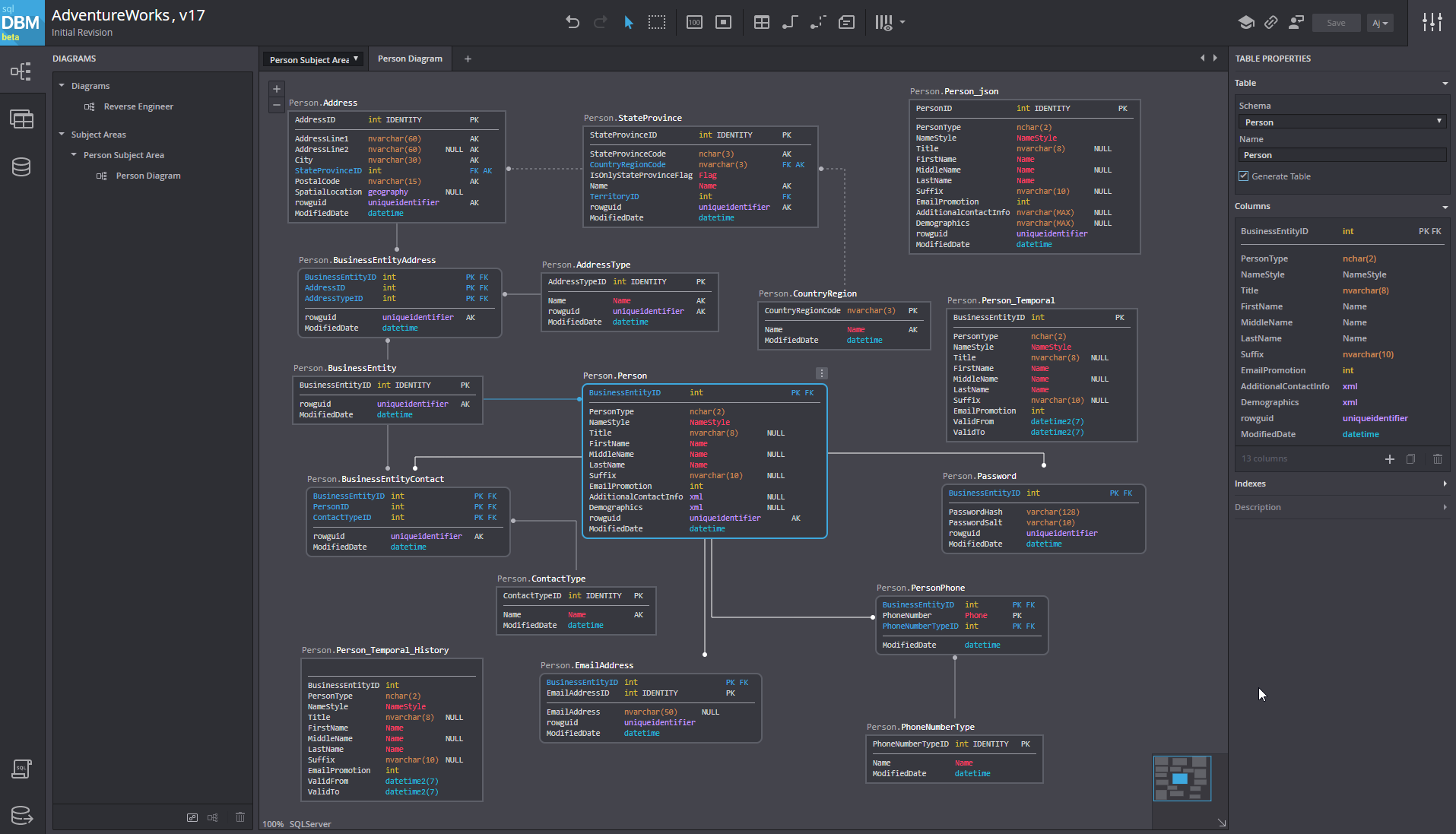
if this was what i had before
ive changed it to this
does this work up to 3NF?
trail epoch
I see the normalization.
sweet nebula
?
trail epoch
Database normalization is the process of structuring a relational database in accordance with a series of so-called normal forms in order to reduce data redundancy and improve data integrity. It was first proposed by Edgar F. Codd as part of his relational model.
Normalizatio...
It means that I see that on the law, bru. No Models referencing others directly, all are using an ids to identify the values for relations, like separating the Models to have their "own business", like I did from my family, I am now a FK.
sweet nebula
so its all good 🙂
trail epoch
Where did you did the graphic, @sweet nebula ? I like that bg.
 trail epoch
Thanks, keep hacking.
 lofty summit
Hi, how to store lists in a table? And specifically lists of dates? Do I have to use JSON?
 silk lava
anyone able to help with sql queries?
rain wagon
@lofty summit Never, ever store lists in databases and especially not json. Use at least normal form 3 to fill a database.
Otherwise the performance will be piss poor and you lose all powers a db gives you
@silk lava Sure, if you ask a question containing one
silk lava
ive got this database setup
What is the card number and the name of the borrowers who did not have a loan on September 1st, 2005?
select distinct lo.cardno, bo.fname||' '||bo.lname as "Borrower Name"
from borrower bo,loan lo
WHERE bo.cardno = lo.cardno
and lo.datein not in (select lo.datein from loan lo
    where lo.datein not between '1/SEP/2005' and '1/SEP/2005')
UNION ALL
select distinct lo.cardno, bo.fname||' '||bo.lname as "Borrower Name"
from borrower bo,loan lo
WHERE bo.cardno = lo.cardno
and lo.dateout not in (select lo.dateout from loan lo
                    where lo.dateout not between '1/SEP/2005' and '1/SEP/2005')
                    order by cardno;
this is what i have but not getting the desired result @rain wagon
rain wagon
is this mssql?
silk lava
orcale
rain wagon
ugh 😄
silk lava
not familiar with it?
rain wagon
I don't really know it, no. Sorry. For example that: ||' '||. NEver seen this.
silk lava
thats a way of concatenate
rain wagon
I know standard sql
silk lava
yea i've got that query made about ^^ but not exactly returning the right data

this is what i currently returns

desired outcome
with 60 rows
currently does return the 60 rows but not correct data
rain wagon
Hmm, you only query if they returned a book on the specific date or brought one in
but you don't query if there is a book not brought back
So, if someone has borrowed a book on Aug 31 and didn't bring it back, this won't be in this query
rain wagon
But if I get a book on 31 Aug and bringt it back on Sept 2nd, I did have a loan, or not?
what value does DateIn have when the book is still loaned? NULL?
silk lava
they are all dates in the "datein"
rain wagon
It is the date the book is returned, right?
silk lava
yes, im pretty sure
rain wagon
That is one tough query, but anyway, you need to make sure nobody has a book loaned on that date, then it should be ok
It would be helpful if the DateIn Date would be null if the book is still loaned
lofty summit
@rain wagon Hey, if lists are ineffective, if I want to stock an unknown list of dates I need a new table?
rain wagon
@lofty summit What is a tab in a database for you?
 graceful nimbus
Hey, I'm kind of stuck rn.
I have 2 lists. 1 List with the existing database column names. And a list with their values. Both are ordered in the same way. So the first item in list number 1 is the column name for value number 1 in the other list.
So I'm trying to find a way to put all the values in the database. In 1 line
lofty summit
@rain wagon table sorry
rain wagon
Database tables are literally lists. One table is what you know as an excel sheet. Each page of an excel sheet is a table.The file is the database.
You wouldn't write it all into one field, would you?
Each date into one cell
@graceful nimbus I can't follow you
can you show sample data?
graceful nimbus
So this data, I want to import into my DB
So the keys, like intro1 etc
Are the column names, and each value has to join their column
Even if it's empty
rain wagon
why are there 28 columns named introX?
make one table, containing rows
1 column named intro should be enough
graceful nimbus
I'm creating a financial web app. Each value a user fills in, will need to be saved indivual
rain wagon
You need to resolve the n:m relation in a third table then
graceful nimbus
Yeh but, how would I export all those values in the database
So it will end up in 1 row
rain wagon
So, you have many users, that enter many things, right?
what exactly do they enter? Bids?
Stock prices?
graceful nimbus
From company name to investments, ....
rain wagon
Don't worry about the export for now, bring the data base into the third normal form first. I can't give you a solution without knowing the whole purpose, but you probably need a table company, then a table investments and investments being the table that resolves that which users enters for which company which is referenced with foreign keys.
When your database in the third normal form you can write a python script to sort the data over
Database normalization is the process of structuring a relational database in accordance with a series of so-called normal forms in order to reduce data redundancy and improve data integrity. It was first proposed by Edgar F. Codd as part of his relational model.
Normalizatio...
graceful nimbus
I'm not planning on exporting each value in their own catogory
because I have like 120 input fields a user has to fill in
I'm just searching for a way to do this:
INSERT INTO x (%s) VALUE (%s)
Much more simplystic
Because writing 240 %s isn't really the best way
 inner pecan
Hi, I want to use fetchmany/fetchone to process a SELECT statement in chunks for all my data but I then try and do an execution on that data so my fetchmany stops too early. Like this:
c.execute("SELECT * FROM table1 JOIN table2 USING(Symbol)")

while c.fetchmany(1000) != []: # keep going untill all rows processed
    do stuff
    if condition is met:
c.execute("INSERT INTO table3 VALUES(?,?,?),[values]" # this makes it so my next fetchmany = [] due to it fetching the NEW execute I guess? how do i fix so it keeps looping?```is this possible?
lofty summit
@inner pecan what about using multiple cursors?
inner pecan
oh, I didn't know that was a thing
I'll try that.. thanks!!
so I can just define cursor2 = conn.cursor() for example?
yeah that fixed it, perfect, thanks!!
lofty summit
you're welcome
 late ingot
connection = db.connect('db.sqlite')
cursor = connection.cursor()
cursor.execute('CREATE TABLE msgcount (count INTEGER)')
connection.commit()
connection.close()

client.message_counter = 0

connection = db.connect('db.sqlite')
cursor = connection.cursor()
cursor.execute('INSERT INTO msgcount (count) values (f"{client.message_counter}")')
connection.commit()
connection.close()```

this should work right?
basically im creating a database for a few things and since i've never used sqlite before im trying something simple (just one item named message_count)
but do f-strings work in this?i used it when i executed `'INSERT INTO msgcount (count) values (f"{client.message_counter}")'`im gonna go afk soon so ping me with an answer thx
rich trout
That won't work, because the f"{ is part of the string, because f-strings require you to start them at the start of the string and not inside
I would point you towards passing parameters:
cursor.execute("insert into a (b) values (?)", value)
Is it possible to create multiple PREPARE statements using execute_batch using psycopg2? Their example uses one excute to prepare and then batch execute but was curious if I can batch PREPARE multiple statements.
http://initd.org/psycopg/docs/extras.html#psycopg2.extras.execute_values
rich trout
There is a chance but I very much doubt it
toxic rune
Doing every one separately kills performance when I run it from a place not close to the server heh
rich trout
You can always use ; to run multiple, you could see if the result set stays normal
toxic rune
Oh I can try that I guess yeah
 true skiff
Any suggestions for best python libraries for connecting to mySQL database via Azure? I'm using pyodbc but it doesn't seem to support CREATE IF NOT EXISTS for table creation nor INSERT IGNORE for data.
 torn sphinx
quick question how can i insert one column from another table with some values from the psycopg query?
something similar to this but that works
insert into mytable(col1, col2, col3, col4)
values(%s, %s, select col3 from mytable2 where condition = %s, %s)
 patent glen
@torn sphinx not sure but try sql insert into mytable(col1, col2, col3, col4) select %s as col1, %s as col2, col3, %s as col4 where condition = %s
torn sphinx
nope i tried that and i also tried with named parameters like:
insert into mytable(col1, col2, col3, col4)
select %(col1)s, %(col2)s, t2.col3, %(col4)s
from mytable2 where condition = %(condition_value)s
but it's not inserting anything in the case condition is null
not sure how i'd solve t hat (this is postgres)
 glad spear
Having some trouble determing if what I want to do makes sense to do in a relational DB.
For the large majority of the data I'm handling for this application, I can easily wrap my head around getting it to conform to either the 3rd normal form, or with one of the more exceptional tables, the 6th normal form.
However, I have 2 groups of data which are not strongly related to the easy cases, but which the application still needs to handle. The problem with this particular data is that I have a relation which is slightly harder to express.
The closest I've gotten, would still require an unordered set of integers of unknown size to serve as a composite primary key.
That, or I'd need a table describing the relationships there, but that would still require a variable number of entries, or remove any of the performance I'd have from a unique index which isn't just an incremental counter.
lofty summit
Without example it's hard to help I think
glad spear
Okay, at the highest level, I'm looking for a decent way to be able to stick a relation which looks like:
{1, 2, 3} -> values
{3, 8, 2, 4} -> other values
{2, 1, 3} -> values from first example
into a relational DB in a reasonable manner. I don't expect that it would be as performant as more normal data, but lowering the complexity around engineering the application would be what is gained by finding a good way to do this.
The problem is that the values which arent part of the key cant be made into an index, they wont be remotely unique, holding only a handful of boolean values, and a number.
rain wagon
I have a similar bad boy in my current ap
It is a table holding settings, only one row is needed and it does not fit in the normal forms, but alas, need to save it somewhere
it also requires some encryption, so it just safer in the db
has no relations with anything
glad spear
Well the numbers in the example might appear to be out of nowhere, but this is intending to describe characteristics of a grouping. All of the numbers used as part of the key have other meanng, but data describing groups of variable size doesnt seem to be easy to fit into a relational DB
the numbers are all used as a primary key in a different table.
but the data for {1, 2} would be different than to {1,2,3} so, I'm having some amount of issue with finding a way to not need more tools tacked on.
Keeping this at a higher level than any specific DB's handling since I'm not neccessarily beholden to any solution right now.
Best solution I've come up with so far is still having a table with an autoincrementing index as the primary key, storing the numbers in an array, and storing the data I'd want associated with that array next to it, with a constraint that the arrays be unique and possibly having some preprocessing function to ensure the array was always arranged the same way.
There's clearly an easier way to handle this particular data by not using a relational db, but with how much of it does work extremely well with one, I'm having trouble judging if that solution is fine, or needs other handling.
lofty summit
How to add a CHECK CONSTRAINT with value from another table? I saw on StackOverFlow to use a function, but it would have some side-effects
 ionic pecan
whats your usecase
torn sphinx
I am looking to fetch data from a collumn and make it into a variable
f.e if collumn numbers has the data 1
number_variable = c.execute('SELECT numbers from data').fetchone()
print number_variable and then it prints [(1,)]
how can i make it just print 1
without the [()]
 indigo dawn
when creating a foreign key do i always use the id of table b or do i use the column i'm interested in if it's got more than one column?
torn sphinx
do yk anything ab my question ? @indigo dawn ^_^
indigo dawn
ahhh i think it's returning a tuple right?
torn sphinx
how would i do that ?
sliced_numbers = numbers[-1]
and now it prints (1,)
@indigo dawn
indigo dawn
print(type())
torn sphinx
int() argument must be a string, a bytes-like object or a number, not 'tuple'
late ingot
https://paste.pydis.com/cafisutiri.py
whenever the person sends a message, it prints result (the amount of messages the client has seen) but it always prints [] instead of a value
rich trout
You need to call con.commit(), I suspect
 primal valve
is there a reason to use a pool over a connection in asyncpg?
lofty summit
@rich trout Would not it be con.commit() instead?
rich trout
yes
 magic swallow
How can i open php lite admin on pycharm?
 fringe tiger
I keep getting 2003, "Can't connect to MySQL server on 'localhost'" when trying to connect to local database. My original problem:
https://discordapp.com/channels/267624335836053506/342318764227821568/639817363944112138
@urban cradle tried but all I saw under user and host were values I already used.
Basically I can connect with console no problem, but on the same system running the Python script to connect to local database, using the same data as connecting from console, fails!
I even tried following tutorials like this https://www.tecmint.com/fix-error-2003-hy000-cant-connect-to-mysql-server-on-127-0-0-1-111/
all of it works, my service is up and running I checked every step and my Python script still refues to connect
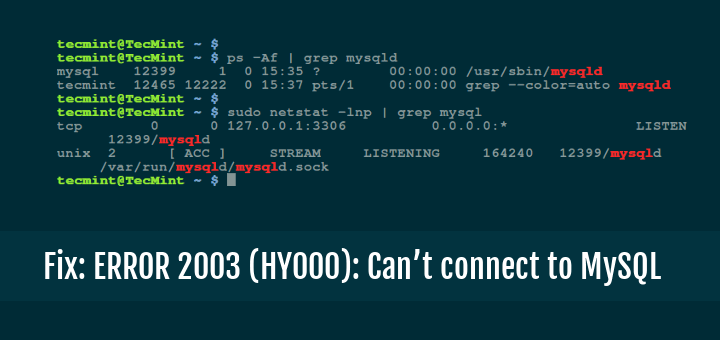
This tutorial will explain how to solve "ERROR 2003 (HY000): Can't connect to MySQL server on '127.0.0.1' (111)" which occur when you try to access the MySQL.
 cobalt cipher
What lib are you using to connect to MySQL, and how did you connect via it?
fringe tiger
I posted the link to original problem, it has the code https://discordapp.com/channels/267624335836053506/342318764227821568/639817363944112138
It works on my local PC, but on VPS it just won't connect
database is created btw, and yes I'm using password and did secure connection. It all works on my home PC but on vps it wont connect
like sudo mysql -u root -h localhost -p works and if I do show databases; it works
and I just don't know for the life of me why it won't connect using the python script
the lib is aiomysql
cobalt cipher
Yes I just went over it, hmm, so the only error you get is the 2003?
This sounds crazy, but did you try to do show databases; via subprocess?
fringe tiger
no, I did it directly with mysql, wym subproces?
I don't even know what I'm doing I'm trying everything 
cobalt cipher
You run show databases; from a terminal, right?
Try to run that same command via subprocess in python
fringe tiger
yes from terminal. But how do I do it from python if I can't connect to it
I'm looking it up online, never used subprocess. How will it make a difference?
toxic rune
@primal valve A pool is a set of connections, since connecting to a database is expensive, what you do by pooling is to have standby connections to be used.
I think some libraries like asyncpg lets you decide after how many queries that connection from the pool will be discarded and generate a new one.
cobalt cipher
It's more of a test, if you can show databases; then from the script it should at least be able to ping to the host / show the databases
Then we can narrow down the error to aiomysql being weird or smth
if you cannot ping / show db altogether when using the exact same cmd from python, we need to check if something else is blocking python process
 hidden basin
Hey everyone! I am trying to practice SQL at home and I have SSMS downloaded. What do I do for the connect screen to just connect to a databse I create on my machine?
Additional info: I have done this before so I have the server software somewhere, but I forgot how I connected to the database before.
Please ping me if you have an answer. Thank you.
fringe tiger
@cobalt cipher ok after googling a bit I think I made a working script
I get ERROR 1698 (28000): Access denied for user 'root'@'localhost' when using this
from subprocess import Popen

cmd_array = ["mysql", "-u", "root", "-p", "-e",  'show databases;']

p = Popen(cmd_array)
raw_data = p.communicate()[0]
yes
if I prefix it ith sudo it works
meh i give up for today I've got no idea wwhat I'm doing
hidden basin
Fyi I am still awaiting a response.
 tawny sail
u will need to download mysql too
not sure how SSMS works but i assume its similar to workbench and once u have mysql downloaded on ur machine and configure root pass, the connection should popup there, if not then add it with host=localhost and port=3306(mostly) with username and pass
@hidden basin
silk lava
Hi, I've made a sql view with a check option but I cannot currently insert any new data into that view.
CREATE OR REPLACE VIEW NATIONAL_ITEMS (ITEMNO, ITEMDESC, iTEMPRICE) AS
select item.itemno, item.itemdesc,item.itemprice
from invoiceitem,item
where item.itemno not in (select invoiceitem.itemno from invoiceitem)
and item.itemdesc like '%National%'
group by item.itemno, itemdesc, itemprice
WITH CHECK OPTION;
I get this error message when trying to insert into that view
INSERT INTO NATIONAL_ITEMS VALUES ('123-456', 'National TV', 100);
The SQL statement trying to insert
 urban cradle
@fringe tiger
did you try creating a new user, rather than using root
also, why are you using subprocess to open the db connection?
rich trout
You're trying to edit a View. You can't do that you either need edit the underlying tables directly or use a temporary table. In your case, that would be setting item.itemno, item.itemdesc, and item.itemprice in item, with a check to make sure that it matches invoiceitem
torn sphinx
@fringe tiger
I have found this in my notes for mysql/mariadb on debian. Not sure if its the same problem, but it could be.
- if mariadb is installed from debian repository, normal users can't login as root
- to fix this (in terminal):
mysql -u root -p
use mysql;
update user set plugin='mysql_native_password' where user='root';
flush privileges;
quit
fringe tiger
@torn sphinx tried it no luck
@urban cradle idk first time using subprocess idk what do I do and yes I tried with another user
oke I got it working
I want to burn it but it would be a waste of my hard work
urban cradle
well if you're accessing / handling the database you're probably better off using a sql module rather than using subprocess to do it
fringe tiger
I didn't do that, I did it because Shirayuki wanted me to test something @urban cradle
 proper copper
Anyone have experience in concurrency when dealing with a "get_or_create" action (i.e. find objectA, if objectA doesn't exist, create it). I'm attempting to "get_or_create" 100 items at a time, but am running into concurrency issues where two transactions will attempt to create an object that is shared between them.
This will throw an IntegrityError, but I still want the transaction to continue or at least know how to restart it gracefully in for a better user experience. This is all in Postgres.
inner pecan
I have a table ComparisonEvent which I want to have an auto increment EVENT_ID primary key column.
I want a ComparisonResult table, which has auto increment RESULT_ID primary key. I want this tables foreign key to be EVENT_ID.
E.g each EVENT_ID can have multiple RESULT_ID's belonging to it in the second table.
My problem:
I insert my ComparisonEvent details with my python script so I get:
EVENT_ID OTHER_IRRELEVANT_COLUMNS
4
I then want to insert data into the ComparisonResult table, but I want to insert with EVENT_ID 4 into this table. What is the best way to do this?
(I could grab the most recent EVENT_ID row after I do my ComparisonEvent insert, to get the EVENT_ID - but there is a chance if I have multiple versions of the script inserting at once I could get the EVENT_ID for another script's run by mistake doing this, due to timing?)
probably a very noob question,. sorry
inner pecan
connection.insert_id() is what i want. Nvm.
silk lava
select distinct bo.cardno, bo.fname||' '||bo.lname as "Borrower Name"
from borrower bo,loan lo
WHERE bo.cardno in (select lo.cardno from loan lo where dateout < '1/SEP/2005' and datein > '1/SEP/2005')
order by cardno asc;
Hi, I've got a SQL problem. I want to get all borrowers who did not have loans where it was on the 1 september 2005
But I currently have this but it return not the correct data
This is the database basically.
torn sphinx
Umm hello.. I want to store a possibly big list of discord members for every server - which react on a message,but I also want to clear the reactions - to make it anonymous - the list so that people can not vote more than once..
My question is.. what do you recommend to hold that list? I use postgresql,or could I just store them in a text file or something,what do you recommend? Thank you
Please @ ping me
lofty summit
@torn sphinx Depends on how big your list is and what operations you want to do with it. To be safe if you think your list could be very big use Postgres. It also provides tools to make sure that your entries are well formatted. But if your list won't be huge, and you don't have already a database, a file should be fine.
torn sphinx
On wikipedia you can edit certain articles,
if you just click the edit button, it opens a window on the same page and it inputs a copy of the article you want to edit.
and you can just write whatever you want and publish the changes
i want to create something similar for my website
I don't know how i should search for it on google that is why i am asking here
 full lintel
torn sphinx
full lintel
torn sphinx
👀
oh please. what is wrong with your profile photo
you know its no nn november right?
Off-topic - ok
i'll copy paste this .in case people don't see it
if you just click the edit button, it opens a window on the same page and it inputs a copy of the article you want to edit.
and you can just write whatever you want and publish the changes
i want to create something similar for my website
I don't know how i should search for it on google that is why i am asking here``` fossil leaf
rub rub rub
torn sphinx
content staging.. some CMS would support that
 gleaming loom
Hi. I'm trying to do something similar to FlickChart, and I'm trying to think of how the database would look
Flickchart is a site where users build up a list of their favorite movies. They're presented with two movies, and have to pick which one they like more. through doing that over and over, a ranking can be formed
I'm wondering how the database would be structured. I would need a Users table, and I'd want a table to store the results of every comparison
beyond that, I'm not sure. How would I, for instance, keep track of the different movies each user has compared?
rain wagon
https://en.wikipedia.org/wiki/Relational_database https://en.wikipedia.org/wiki/Database_normalization
A relational database is a digital database based on the relational model of data, as proposed by E. F. Codd in 1970.
A software system used to maintain relational databases is a relational database management system (RDBMS). Many relational database systems have an option of...
Database normalization is the process of structuring a relational database in accordance with a series of so-called normal forms in order to reduce data redundancy and improve data integrity. It was first proposed by Edgar F. Codd as part of his relational model.
Normalizatio...
In the article about normalization, read only until 3NF
you can skip the rest
But in the end, it all depends on how detailed you want your data to be. Do the movies have all actors listed or only title and starring? DO the actors have a page?
etc
gleaming loom
no. the movie might have the IMDB id, so it can be looked up using that
I guess one thing I was struggling with is, how would I store my list of ranked movies separate from your list of ranked movies?
rain wagon
Resolve the n:m relation. Many users vote on many movies.
That is a n:m relation, so you need a third table to resolve it
  int id_movie FK references t_movie.id
int id_user FK references t_users.id
} ```quick pseudo sql
gleaming loom
so in that, each movie would be in there several times, but it's ok, because the combination of user id and movie id should be unique? and that record would also include the current rating (maybe last time it was voted on or something as well?)
rain wagon
you can add any data there you need. And yes, the two foreign keys can be the pk.
Well depends on your DB, but most should allow it
you can also use a separate id
the point is, you have a reference to the user and a reference to the movie
that is how you resolve n:m
gleaming loom
ok, thanks
rain wagon
And of course user_id and movie_id must be unique
gleaming loom
and then, to hold each comparison, it'd be something like this?
table battles {
    int id_user FK references t_users.id
    int id_winning_movie FK references t_movie.id
    int id_losing_movie FK references t_movie.id
}
Whatever you see fit, but yes, that could be done this way
BUt wouldn't it be better to give it a score insteadn?
scratch that
gleaming loom
this is to build up. a personalized list
so your list will be different from mine, even though we may have voted on the same movies
rain wagon
yeah, I need my coffee first. It is too early 😄
gleaming loom
that's fine. thanks for your help
I want to keep track of all the comparisons. however, I don't think I want to go through the whole comparison table every time the user wants to view their list, so I think I also want to have a table that is just a list of what they've compared, and the derrived score
or I guess, as it would be, it'd be like your earlier example, with the one table that has a combo of movie id and user id to identify it
 final plinth
Hi! Im trying to run .exe file which i converted from a .py code using pyinstaller. The code is working fine but when im executing the .exe in cmd its giving me an error"
Fetchall raise errors. InterfaceError : no result set to fetch from.
Failed to execute the script"
Please ping me if anyone got a solution or wanna know more about this!
rain wagon
The queries are empty, what do you expect? @final plinth
In a nutshell, this is horrible code. No error handling, wrong prints etc pp
And I wouldn't show screenshots where one can make out usernames either
Furthermore,shipping this as an executable, you will have your database filled with garbage in no time
Please learn security principles first, before you convert python scripts into binaries
final plinth
Thank you for all that but I'm new to programming
rain wagon
Which is why I am being candid with you, to save you from mistakes
final plinth
I guess you didn't read above that the code is working fine when it ran on pycharm
rain wagon
It didnt, because .... is not a valid sql statement
final plinth
All i was doing was creating two data frames using two queries
I guess you have never used pycharm then?
It shortened those queries inside quotes
lofty summit
converting a .py into .exe is a bad idea
rain wagon
The + chars are kind of badly visible, my bad I guess
lofty summit
especially if you're a beginner
final plinth
@lofty summit i was trying that if i can convert it when im using MySQL db
rain wagon
The first step here is to build in proper error handling, so you can actually see an error message
a try catch block goes a long way
Here is an example from my database code: ```python
#------------------------------------------------------------------------
def db_get_all_stations():
#------------------------------------------------------------------------
try:
cursor = get_database().cursor(cursor_factory=DictCursor)
cursor.execute("""
SELECT id_stations,
url,
name,
format,
image
FROM t_stations
ORDER BY name ASC;
""")
return cursor.fetchall()
except psycopg2.Error as err:
print(err.pgerror, file=sys.stderr)
@rain wagon better to use logging module
rain wagon
In this case, no, since I want it to show up in the apache error log
final plinth
Ok... I'll work on this but i just wanna know why am i getting an error during execution and not when im running that code?
rain wagon
The IDE may be masking the error, you are using some paths that are not available etc pp
which is a reason why I prefer simple editors like VSCode
I don't know all of the environment you are using there
lofty summit
or no IDE at all, just you, your code and the terminal/console
rain wagon
An IDE is a big beast, use a simple editor until you are familiar with the language
And always check return values, use try except etc
final plinth
I just started learning like last week and i have an assignment which requires some statistical tests to be done
rain wagon
Based on the result, the script is unable to fetch from the db. This can have multiple reasons. Connection is not working, typo in the sql statement etc
So, first thing to implement: Check if the connection succeeds
final plinth
Idk really because everything works when im running .py it fetches data and merge the results which then i use for statistics
rain wagon
Also, in the mysql connection, the host is empty
rain wagon
host isn't a credential, it is the IP of the server
final plinth
Yeah i mean whatever is required to connect to the db
rain wagon
Are you using a hostname or an IP?
final plinth
IP
final plinth
160
final plinth
Ooo
rain wagon
It's not in your home, is it?
final plinth
Nope
rain wagon
Then my only advice remains to put in more error handling to see where the actual error occurs.
and then go from there
But as @misty lava said, learn the language first before you dabble with executables
Just run the script in a terminal by using python scriptname.py
lofty summit
^
final plinth
Well my whole project is to connect to a Mysql db then do some statistical tests and results for which should be printed in PDFs dynamically for all cases
Thanks for the advice!
That's why i was focussing more on stats area than making the code more error free
😐
rain wagon
Doing proper error handling saves more time down the road than typing it
lofty summit
@final plinth Don't try to make a .exe then, it'll be easier! 😉
final plinth
@lofty summitheheh yeah...but still i just wanted to know why it wasnt fetching during execution when its working otherwise?
Thanks both of u
rain wagon
my first guess would be Windows Firewall. MySQL is on port 3306 by default and WIndows may not like that.
lofty summit
We can't help your more without a more complete traceback
rain wagon
Although, if the connection is established from the inside, it should allow it
scratch that
router shouldn't be an issue
Windows FIrewall because you allowed Python, but the exe you created is a new program
So Windows Firewall says nope, screw you
final plinth
Ooo...i will look into that!
So should i use vscode as editor?
Or something else which helps me learning better?
rain wagon
No. You should use what you want. I am just saying that IDE can make things easier or more complicated. I was once screwing around with pyVCL in PyCharm and it complained about not finding VCL libraries. I have reinstalled VLC in different places, tried different code, was pulling my hair out for 3 hours. Ran the script on a Terminal and it worked.
gleaming loom
@final plinth : In PyCharm, if you click the ... that it added, it should expand it out to the full statement
PyCharm is fine, but like all JetBrains IDEs, sometimes it collapses things like that to make it easier to scan over
final plinth
I haven't tried others and pycharm was the first thing that pops up in google so i sticked with it
final plinth
I'll keep that in mind scorcher
Anything else which might be better for learning this language?
Im a rookie
gleaming loom
practice
final plinth
With no programming background but i am really liking this data science field
rain wagon
Read about basics, before you tackle the hard stuff.
I know, you want to do what you like, but having basics under your belt really makes things easier.
Humble Bundle is often selling Book Bundles with Data Science in Python, maybe get one of those
final plinth
O'reilly ones?
final plinth
Ooo
 delicate fieldBOT
Resources
The Resources page on our website contains a list of hand-selected learning resources that we regularly recommend to both beginners and experts.
https://pythondiscord.com/pages/resources
lofty summit
Hey, I'd like to add a check constraint on tab_2, so that you cannot have more than number_not_to_exceed value items with the same id. Should I use a Sql function for that?
rain wagon
@lofty summit You can only have one item that has an id. What you mean is probably not exceeding the number of lines
If your db can do contraints, and seeing this is psql, which supports it, it is not a bad idea
lofty summit
@rain wagon different rows of tab_2 can have the same id because they're linked with a one to n relationship.
rain wagon
Well, id is marked serial, I don't think it is a good idea to have duplicates there, but if we are talking about a combined PK then I am afraid I don't have much experience to draw from.
but generally, SERIAL is used for PK and should never produce doublettes
lofty summit
@rain wagon It's a Pk, but in tab_1 in tab_2 it's a FK
I'll check with a Trigger function then, though I don't have any experience with them. https://stackoverflow.com/questions/27107034/constraint-to-check-values-from-a-remotely-related-table-via-join-etc/27107221#27107221

Stack Overflow
I would like to add a constraint that will check values from related table.
I have 3 tables:
CREATE TABLE somethink_usr_rel (
user_id BIGINT NOT NULL,
stomethink_id BIGINT NOT NULL
);
CR...
rain wagon
BIGSERIAL is a PK in tab_1, so doublettes should never occur. But maybe my database knowledge is too limited here, so I am not going to start something 😄
All I know: ID's have to be unique if they are a PK
lofty summit
@rain wagon There are unique in tab_1 but not in tab_2 😅 do you know what's a foreign key?
rain wagon
I do know that. A FK is a reference to a key in another table. BUt it has the same value. So if that value is a PK in another table, there is no chance of getting doubles.
I always assume I am the one that is stupid, but I do know some shit.
rain wagon
I know that
lofty summit
Ok, let me give an example it'll be clearer I think 😅
#Tab 1

id | number_not_to_exceed
------+-------------
1     | 2
2     | 4


#Tab 2

id |
------+
1     |
1     |
1     | #RAISE ERROR because `number_not_to_exceed` == 2
2     |
2     |
2     | #No prob, `number_not_to_exceed` >3
postgres=# create table test.discord(id BIGSERIAL PRIMARY KEY);
CREATE TABLE
postgres=# insert into test.discord VALUES(1);
INSERT 0 1
postgres=# insert into test.discord VALUES(1);
ERROR:  duplicate key value violates unique constraint "discord_pkey"
DETAIL: Key (id)=(1) already exists.```You don't understand what's foreign key, I'm sorry.
rain wagon
if you say so
lofty summit
Do I really need to put in your hand a fully valid Sql code? I was the one to search for help at the beginning
rain wagon
There is no need to be rude. Your id column is a PK and as FK, it will have the same value on your second table. If you cannot insert doubles on the first table, there won't be a double when it is a FK. If you think otherwise, then maybe I am missing something, but the console output speaks for itself. Anyway, just wait for someone more enlightened than me. No hard feelings.
lofty summit
one second
CREATE TABLE tab_1(
id BIGSERIAL NOT NULL PRIMARY KEY,
n INT NOT NULL CONSTRAINT CHECK (n > 0)
);

CREATE TABLE "tab_2"
(
 "date"        date NOT NULL DEFAULT CURRENT_DATE,
 id BIGSERIAL NOT NULL,
 CONSTRAINT "from_tab_1" FOREIGN KEY ( "id" ) REFERENCES "tab_1" ( "id" )
);

INSERT INTO "tab_1"
(n)
VALUES (10) RETURNING tab_1.id;

INSERT INTO "tab_2"
(id)
VALUES (2);

INSERT INTO "tab_2"
(id)
VALUES (2);```@rain wagon Surprise, two rows with the same id ;)
X=# SELECT * FROM tab_1;
 id | n
----+----
  1 | 10
  2 | 10
(2 rows)

X=# SELECT * FROM tab_2;
    date    | id
------------+----
 2019-11-07 |  2
 2019-11-07 |  2
(2 rows)
I hope it's clearer now! Never meant to be harsh 😉
toxic rune
Since with around ~2m rows count gets a bit slower already
 rustic grove
with sqlalchemy i get this error sqlalchemy.exc.OperationalError: (sqlite3.OperationalError) table user has no column named username
 noble kite
Hi. Anybody have experience with flask-migrate and sqlite?
torn sphinx
thank you, @lofty summit , I just made another table in postgree,I was confused when I asked that question 😂
 west lark
Hey. If I have the following tables/relationship "city">"state">"country" and another table "address" is it OK for me to link "address" to "city", "state", "country" or should I only create a relationship with "city" ? Using Django ORM
rich trout
you should only link it to city, and you can fetch the country through address.city.state.country
But be aware that not every address has a city, nor a proper street
patent glen
@west lark what is the key structure of the tables?
anyway, I would be hesitant to normalize address data to that extent - for example, does a PO Box always have a city (in the US they do, but I don't know about other countries)?
I would probably have country and state IDs as part of a compound key in the city table, which makes it easy to link to everything without worrying about it linked to the wrong state for the city it's linked to
 hollow stream
what does the "address" table have, like unit number and street address?
silk lava
from loan ln1 left join
     book
     on ln1.isbn = book.isbn
having MIN(ln1.dateout) < date '2004-01-03' or
       sum(case when book.yearpublished < 1920 then 1 else 0 end) > 0
group by ln1.cardno
order by ln1.cardno asc;
Anyone know of a different way of writing this?
 empty harness
Hey guys, i came here to ask what's the best / fastest solution for the following task:
Used technology: MySQL database + Python
I'm downloading a .sql file. It's format:
INSERT INTO `table` VALUES (int1,int2,int3,int4,int5,'txt1',int6,'txt2',int7,'txt3',int8);
INSERT INTO `table` VALUES (int1,int2,int3,int4,int5,'txt1',int6,'txt2',int7,'txt3',int8);
.
.
Values in each row differ.
I need to split these data in 3 tables. And i will be updating data that are already in the tables and if not then i will create new row.
So i came up with 2 solutions:
#1
Split the values from the file via python and then perform for each line 3x select + 3x update/insert in transaction.
#2
Somehow bulk insert the data into temporary table and then manipulate with the data inside database - meaning for each row in the temporary table i will perform 3 select queries (one to each actual table) and if i find row i will send 3x (update query and if not then i run insert query).
I will be running this function multiple times per day with over 10K lines in the .sql file and it will be updating / creating over 30K rows in database.
Which option would be faster and why and/or are there any other better options on how to do it?
Thanks in advice, popcorn 🙂
torn sphinx
how do you get a table with data from a sql file?
i did this in my command line
\i \Users\user\PycharmProjects\PlayGround\sqlfile.sql
on my computer i did that
but it says that i am missing a required argument
i am using windows with PostgreSQL
what am i doing wrong?
torn sphinx
and when i do this: \i USERS\user\PycharmProjects\PlayGround\sqlfile.sql
it still doesn't work
ionic pecan
"how do you get a table with data from a sql file?" you mean execute a sql script on the database?
ionic pecan
hm it seems like \i is parsing the file you pass it a bit oddly
torn sphinx
    id BIGSERIAL NOT NULL PRIMARY KEY,
    first_name VARCHAR(50),
    last_name VARCHAR(50),
    email VARCHAR(50),
    gender VARCHAR(50),
    favcolor VARCHAR(50)
);
insert into people (first_name, last_name, email, gender, favcolor) values ('Esme', 'Rantoul', 'erantoul0@angelfire.com', 'Female', 'Aquamarine');
insert into people (first_name, last_name, email, gender, favcolor) values ('Corine', 'Braams', 'cbraams1@w3.org', 'Female', 'Teal');
insert into people (first_name, last_name, email, gender, favcolor) values ('Rosalie', 'Turbern', 'rturbern2@nsw.gov.au', 'Female', 'Orange');
insert into people (first_name, last_name, email, gender, favcolor) values ('Robert', 'Scoyne', null, 'Male', 'Teal');
insert into people (first_name, last_name, email, gender, favcolor) values ('Rachele', 'Ellacott', 'rellacott4@paginegialle.it', 'Female', 'Turquoise');
insert into people (first_name, last_name, email, gender, favcolor) values ('Thaddeus', 'Sergison', null, 'Male', 'Violet');
insert into people (first_name, last_name, email, gender, favcolor) values ('Karylin', 'Raspel', 'kraspel6@fema.gov', 'Female', 'Red');
insert into people (first_name, last_name, email, gender, favcolor) values ('Stephannie', 'Sisse', 'ssisse7@earthlink.net', 'Female', 'Fuscia');
insert into people (first_name, last_name, email, gender, favcolor) values ('Nahum', 'O'' Donohue', null, 'Male', 'Blue');
insert into people (first_name, last_name, email, gender, favcolor) values ('Kandace', 'Goggin', 'kgoggin9@home.pl', 'Female', 'Maroon');
insert into people (first_name, last_name, email, gender, favcolor) values ('Alyda', 'Liffe', null, 'Female', 'Green');
insert into people (first_name, last_name, email, gender, favcolor) values ('Baxy', 'Simonnin', null, 'Male', 'Khaki');```yeah i don't know what's going on
ionic pecan
from my testing it seems like if you don't add any \ into the path it opens it properly
maybe move the sql file to the directory where you execut e the psql and from the psql you can then include it directly from the current directory
just \i sqlfile.sql
oh wait, I think I know why
Anything starting with a backslash is interpreted as a psql command
try single quotes
ionic pecan
naw i think you can use the original path you used with \ in the beginning
torn sphinx
that
ionic pecan
what
oh you edited
not sure if windows is sensitive to case in path
original was \Users\user\PycharmProjects\PlayGround\sqlfile.sql
so users just titilecased
torn sphinx
i don't think windows is case sensitive
this doesn't work either:
\i '\\USERS\\user\\PycharmProject\\PlayGround\\sqlfile.sql'
ionic pecan
whats the error
torn sphinx
/USERS/user/PycharmProject/PlayGround/sqlfile.sql: No such file or directory this is the error when i run: \i '\\USERS\\user\\PycharmProject\\PlayGround\\sqlfile.sql'
ionic pecan
what about single backslashes?
torn sphinx
even worse
i get this error USERSuserPycharmProjectPlayGroundsqlfile.sql: No such file or directory
ionic pecan
what the hell
okay, then the only other idea i have is the current directory one
you can change working directory in psql
'\cd'
torn sphinx
and then
is that the command?
cuz nothing happens
I don't know in which directory my SQL Shell is
ionic pecan
you mean psql or the script?
torn sphinx
psql
ionic pecan
i don't think that matters since it should be in your PATH
torn sphinx
😩
torn sphinx
can anyone help me
torn sphinx
What a Cruel World
 spare umbra
How do i connect my python application to an online database (e.g. MySQL)
So i can access it from any python application on different pcs?
fringe tiger
You just connect to it as usual
you state host, port, user, password and database name
iif it's a online database the connection has to be open for your user and IP
spare umbra
And how do i make it open for only one ip and user? And what is the user specified by?
fringe tiger
user aka username
I'm not sure how to allow outer connections to users / IPs, I googled that when I needed but not knowleadgable about it
 floral mason
@spare umbra you need to configure your SQL server to serve a connection at 0.0.0.0 - that’s the internal IP address which routes to your host’s external IP
In order for your app to connect, you need to connect to your SQL server host’s external IP and specify the port (Servers all come with a default port specified, you can look it up.)
Ideally, you have a DNS alias (domain name, i.e. my-sql-server.prod.net) masking the specific IP address
Since your database will be publicly accessible, you want to make sure you’ve set up access control and defined what users/groups have access to what data and at what level
You probably also want to limit access to your server to a specific IP-range so that you don’t get spammed
lofty summit
To sanitize my datas input, using psycopg2, is parsing the inputs as parameters sufficient?
maybe it's more #cybersecurity related though...
 pure scroll
sanitize in terms of being safe from sql injections or what do you mean?
lofty summit
yes, avoid sql injection
Even if most of my inputs are not direct input from users (using an API), I don't want to take any risk. Currently I generate SQL dynamically (I know it's very bad lol)
 void otter
If you want to protect yourself from sql injections is to use other people's libraries
Someone here said if you think there is not better regex solution, it is
Your best bet is to take a look at pypi
lofty summit
I think psycopg2 module already have some checks against sql injection, it's the reason why you execute queries like that cursor.execute("INSERT INTO %s;", (my_data,))) instead of cursor.execute("INSERT INTO"+my_data+";") I was asking if this protection is sufficient or not.
fringe tiger
placeholders are sufficient yes
lofty summit
@fringe tiger Ty!
torn sphinx
Hey guys
i wanted to include Databases to my webpage
but when i launched it to heroku, i got an internal server error
I used PostgreSQL
Why ?? did i get that error
TBH, i saw it coming because the SQL engine that i am using is not installed for the user that's going to access my website
i am basically connecting to my database from my Python application
getting that data and displaying it on the webpage
but all of that is on the local host
So i need serious help on how i am going to fix thus
this
because i promised my teacher that my website will be fully functional when she visits again.
Please man
I need serious help here
 craggy jackal
So is is Postgres actually running on your server?
torn sphinx
Localhost yea
craggy jackal
Can you do psql with your DB user and login with the terminal client?
torn sphinx
?
craggy jackal
Have you made a database yet?
torn sphinx
I am using Windows so i use the command line
Yeah man! I got the database with all the data in it
A lot of data
craggy jackal
Alright
So from python it is failing to connect?
Are you using psychopg2?
Or sqlalchemy or what?
craggy jackal
So can you do psycopg2.connect without error?
craggy jackal
What do you mean launch to heroku
torn sphinx
But not in the process
I have made the website with flask
And i launched it to the heroku server
craggy jackal
Are you developing it on your laptop and then pushing it to the heroku server after when you're ready?
Like via git or something?
As for as the DB goes, make sure you are doing localhost and port is 5432
Other than that it sounds like a flask error
craggy jackal
Do you have a traceback you can show?
torn sphinx
And yeah when I'm ready i push the changes to heroku
I didn't get an error
I mean yeh
I got an error but not in my python application
Its showed up on the website itself
I'm serious about this. I really need help here
torn sphinx
Internal server error
void otter
do you have full trace
torn sphinx
the full error:Internal Server Error The server encountered an internal error and was unable to complete your request. Either the server is overloaded or there is an error in the application.
Ok i'll search for it
Oh yeah. I'll run the command ```heroku logs --tail
This is it

this is the website
its for school
so this is serious
void otter
man repeat the error locally and find the bug source
repeat the error with all production config
 torn sphinx
the error happened when i tried to connect to the postrgre database
 feral cipher
Could anyone tell me something?
I'm in the mood to "cache" in my web project.
I saw some people talking about ** Redis ** would it be advisable to use it or would have another? 
hollow stream
why do you need caching?
experiencing performance issues or just to learn caching?
 steel plover
Does different database use different language or same sql?
void otter
It depends, most of today's databases today use sql but there are some that don't
hollow stream
did you use raw SQL in your setup?
note different database have different features
although they're all SQL, they're slightly different SQL
void otter
Yes i have used sql before
hollow stream
no i asked @steel plover
steel plover
I havent setup anything yet but planning to use posgres for database
hollow stream
if you use raw SQL query just gotta make sure they run in a postgres dB
if you use some ORM libraries however, should be ok
steel plover
I checked their web and looks like raw SQL
 swift hamlet
I’m using python3.6
I'm getting a “2006 MySQL server has gone away” operational error and would like some help
I have a discord app on a relational mysql database, using sqlalchemy and mysqlclient. The app works perfectly, but after about 8 hours I get the above exception, as I presume a connection in the pool has become stale. When I run the command a second time the app is fine again for another 8 hours
I have created the engine as follows within a singleton:
engine = create_engine('mysql+mysqldb://COC:COC@localhost/COC?charset=utf8',pool_use_lifo=True, pool_pre_ping=True)
db_session = scoped_session(sessionmaker(bind=engine))
My understanding is “pool_pre_ping” will retry and re-establish the connection, but perhaps its too late as part of a singleton
In my main file I have the following:
from config import db_session
session = db_session()
.... some code ....
This then takes a connection from the pool and makes it available for the code.
What is the best way to re-establish the connection?
torn sphinx
ok guys
i have made a website with a postgresql database
but for the development
i want to turn it into production by
using SQLalchemy
 icy shore
can someone tell me why my for loop is not print out all the rows? I have 14 rows in my table and the print Total and printing each row shows on the screen but the for loop is not printing the 14 rows.
code:
with connection.cursor() as cursor:
sql_select_query = """SELECT * from tbl_user"""
cursor.execute(sql_select_query)
records = cursor.fetchall()
print("Total rows are: ", len(records))
print("Printing each row")
for row in records:
print("Id: ", row[0])
print("Name: ", row[1])
print("Email: ", row[2])
print("password: ", row[3])
print("\n")
torn sphinx
ok i want to do something else
when you create a hobby-dev database with the heroku command,
how do you actually insert data inside of it
rain wagon
INSERT INTO tablename(rowname1, rowname2) VALUES(dataforrow1, dataforrow2)
torn sphinx
so i am using SQLAlchemy now
with this commanddb.session.add()
i can add data to my database
which command do i use to get data from the database
so i can print it out in my python file
or display on a webpage
 tropic kindle
you use the model you specified: MyModel.query.filter_by(columnName="name")
sqlalchemy is an ORM object-relational-mapper around your db data
torn sphinx
hmm ok
so if my model is this
    __tablename__ = 'hele_boekverslag'
    id = db.Column(db.Integer, primary_key=True)
    sentence = db.Column(db.Text())

    def __int__(self, sentence):
self.sentence = sentence```i do:
Xala_Boek.query.filter_by(columnName='sentence')
right?
@tropic kindle
tropic kindle
almost columnName was a placeholder since i didnt know your columns. Use the actual name of the column:
Xala_boek.query.filter_by(id=id)
or Xala_boek.query.filter_by(id=id, sentence=sentence)
torn sphinx
i see
ok here we have a problem
def xala():
    db_data = Xala_Boek.query.filter_by(id='1')

return render_template('Xala-Sembene_Ousmane.html', para=db_data)```when i display the para variable on the webpage
i see this
SELECT hele_boekverslag.id AS hele_boekverslag_id, hele_boekverslag.sentence AS hele_boekverslag_sentence FROM hele_boekverslag WHERE hele_boekverslag.id = %(id_1)s
but when i print it in the python file, i get the actual sentence
do you know the cause @tropic kindle ?
tropic kindle
sorry no clue
torn sphinx
oh man
tropic kindle
ah wait, maybe its because filter by returns a list of your model obejcts!
so it would be something like [Xala_Boek, Xala_Boek], which you can access again by their respective fields db_data[0].id, db_data[0].sentence
torn sphinx
ok just one more question @tropic kindle if you are willing to answer
how do i get the id of the last row in the table
tropic kindle
i think when you do something like this
Xala_Boek.query().all()
this returns everthing in a list, which you can get the len of
torn sphinx
did you mean table or list?
tropic kindle
i think all() returns a list of all rows in the table as your model object
torn sphinx
and then get the id from that?
this commandXala_Boek.query().all() gives me this errorTypeError: 'BaseQuery' object is not callable
I just want the largest id from the table
I want the largest id from the table rows
I have so little knowledge about querying data with SQL alchemy, so that's why i ask
torn sphinx
Hello
hollow stream
try .query.all()
torn sphinx
What comes before the dot is my db.Model right?
@hollow stream
hollow stream
um yea
torn sphinx
Ok
man
it returned a list of these```<class 'main.Xala_Boek'>
but yeah now i have a solution
on how to get the id from that
torn sphinx
help me understand licenses.. when do you actually need an enterprise version of a db that's open source..
torn sphinx
what if I'm deploying on my own datacenter
hollow stream
when do you actually need an enterprise version of a db that's open source
you don't
torn sphinx
really.. it's not like winrar that annoys you into getting enterprise version if you run it within a company?
hollow stream
https://opensource.org/faq#commercial
is this your situation?
In particular, copyleft-style Open Source licenses require that, in at least some cases, when you distribute the software, you must do so under the same license you received it under.
torn sphinx
ok.. so if I host a service on something open source running on my resources.. I'm selling the service, not the s/w
so that should be ok.. iiuc
 toxic cedar
What the heck NoSql
Is there a way i could get it working with django
Because aws is generously giving away 25Gigs free forever
hollow stream
it's not relational anymore
mongo is nosql - document storage
you can call redis nosql - key value storage
void otter
@toxic cedar
You could but you'd need an orm that supports nosql
toxic cedar
So. I can't use the django orm. Would traditional queries work.
Because last time i checked it was all visual based .
void otter
Nosql doesn't have queries like sql
That's why it's called nosql
Medium
MongoDB is an open-source document oriented database that provides high performance, high availability, and automatic scaling.
hollow stream
i take you mean "traditional" query as in relational data query
sql DB and nosql DB have different ways to store and query data
 eager sparrow
Hey I am in first year in CS, does anyone know a website where i can train sql requests ?
torn sphinx
Well a very good question which almost every individual faces when he/she start learning SQL.SQL is easy to learn but the problem is how to practise.And yes,it’s really important for interviews. 1)Have basics cleared from HeadFirst SQL book. It is...
eager sparrow
Thanks a lot
 rugged sluice
I can say: Youtube 🙂
 subtle flax
My redis pubsub channel always closes after ~5 minutes, message is Connection has been closed by server.
This only happens on 1 server and only inside docker. It does not happen anywhere else with the same redis server.
I am using aioredis library. How I could debug this?
I added a simple reconnect loop and it loses connection every 5 minutes
floral mason
I imagine you need to have a heartbeat in order to maintain a long-lived connection. I’m afk, but what do the aioredis docs say about connection lifetimes with pub/sub?
Most tcp connections will eventually be closed by the server if it’s been a significant amount of time.
It may be that the connection timeout set for the specific server is lower than the others you’re testing against
subtle flax
I'm testing against 1 redis server
problem occurs only on 1 machine and only when I use docker. Using same docker version on other machine does not reproduce issue
floral mason
i don't know enough about docker networking voodoo to help you diagnose that, unfortunately. i don't believe this is an issue with redis itself or the aioredis client, if the issue is only observable when running in docker from a specific machine
i'd advise you to look at how docker is managing the networking layer on each machine and try to find differences there
subtle flax
if it is redis server that closes connection, can this be logged somehow?
 proven wagon
in postgreSQL, what does the LIKE part do?
CREATE TABLE public.tablename
(
    LIKE public.other_tablename

    ExampleColumn int
)```What i want to do at least, is have 2 tables, one for users, and one for messages.
When i fetch a user from that table all of the messages with the same author_id as the id of the user im trying to fetch are also fetched 🙂
lofty summit
I would say you would need to use WHERE
proven wagon
So there is no way i can make a column for users that relates to the messages table?
lofty summit
smth like (pseudo-code)
SEARCH into messages WHERE "author"= author_id
You don't need to make a column in users
proven wagon
well thats basicly what i want though 🙂
But ofc i can make 2 fetch queries, one from users and one from messages
lofty summit
You will need to, I don't understand how can a column solve that?
proven wagon
Neither do i 🙂
lofty summit
I'm pretty sure you can't then 😉
floral mason
@proven wagon what you want is a foreign key
CREATE TABLE users (
    id BIGSERIAL PRIMARY KEY,
    username TEXT NOT NULL,
    created_on TIMESTAMPTZ DEFAULT current_timestamp
);

CREATE INDEX idx_username on users(username);

CREATE TABLE messages (
    id BIGSERIAL PRIMARY KEY,
    content TEXT,
    author_id BIGINT REFERENCES users(id) NOT NULL,
    created_on TIMESTAMPTZ DEFAULT current_timestamp
);

CREATE INDEX idx_author_id on messages(author_id);
then your query would be something like
SELECT
    messages.id as message_id,
    messages.content,
    messages.author_id,
    users.username as author_username,
    message.created_on
FROM messages JOIN users on users.id == messages.author_id
WHERE
    ...
and your WHERE clause can be the filters you want
i.e., a user.id
proven wagon
Man you took the time to write this, i feel bad that i already kind of solved it in a different worse way
floral mason
haha, this is my bread-and-butter (plus IDE help)
hollow stream
@subtle flax are you possibly reaching maxclients ?
or buffer size (how big is your pub-ed payload)
which part of your code fails on that (server closed connection) error ?
 gritty pine
hey i have a raw sql query like this
select date(CONVERT_TZ(create_date,'UTC','Australia/Sydney') ) as create_date
how do i replicate this in sqlalchemy? just started learning it (been doing raw sql up to now, but silly) but couldn't find much on the convert_tz aspect. The db is mysql
gritty pine
does it matter? i mean i know it's not written in that statement but i didn't show the whole thing
TB is a fine placeholder
torn sphinx
TB?
wut
I just want to know why you want to do this in sqlalchemy..
when you can do
hollow stream
you better off querying the date as is (assumed utc) as a source of truth from your dB,
and juggling with timezone using your python datetime
just a thought
torn sphinx
df.createOrReplaceTempView("table_name")
sqlDF = spark.sql("sql statement here")
why @hollow stream , when mysql provides nice functions to do that in place?
@torn sphinx i don't understand the confusion: there is a builtin mysql function i am trying to find out if sqlalchemy provides a way to use it without calling raw SQL, the table name is irrelevant
I find python TZ manipulation a pain, whereas the sql function is clear and is daylight savings-aware
hollow stream
@gritty pine reason:
- you preferably have as little entry to your database (its essentially a network dependency) as possible
- your roundtrip towards dB should fetch truthful to the data stored, avoid confusion (which data is this coming from? why is my column showing 8am but my stack trace returns 5pm?)
- if you need another timezone from that time data later, do you make another query? or simply another datetime call in python
- you would usually move to ORM set up instead of writing raw query like this
torn sphinx
so why don't you run this with sparksql
hollow stream
of course yours favour simplicity, which varies on use cases :) i'm just sharing my own experience
gritty pine
I understand those points, i just don't think they apply here. For example if i want to change the tz without going to db each time as you suggest, it's no different, just transforming from a different starting tz.
I am currently learning sqlalchemy specifically to move to orm model
hollow stream
its no different in your use case
since you're in control of every flow in your own project right now
back to main topic, in sqlalchemy you should start using Data Model
which maps to your main tables
if you wanna run any query
gritty pine
Yep, working on doing that
hollow stream
connection = engine.connect()
res = connection.execute("query here")
given you have configured engine
gritty pine
To clarify, i already have mysql connector stuff setup in python to run the code, I'm just moving to sql alchemy
From raw sql
If only pandas had a nice update on insert flag ><
hollow stream
thats a vanilla example, quite simply execute any query you write
you can start looking into Session pool
which will provide a singleton for different parts of the app to connect (say your app is kept alive instead of 1 off run-exit, like a web server)
gritty pine
Yep, already got the raw sql working :)
Cool, will do, ta
Well
That part less important, running on awa lambda
*aws
hollow stream
keep in mind that with that set up you make a connection every time theres a request from client
hollow stream
yeah so the db.engine approach is fine
but yeah sqlalchemy provides these Data Model to bind to your table,
with which i say querying data as is is the better approach
gritty pine
Yeah i need that if only to make use of the batch save or whatever it's called
And also wanna avoid issues with escape chars/injection etc
hollow stream
of course
sqlalchemy allows binding parameters like any ORM
take a glance at this
https://security.openstack.org/guidelines/dg_parameterize-database-queries.html
the doc looks kinda non mobile friendly so i didnt bother check it
 cloud estuary
How do i put this to .json?
{'469817660872589312':[1000, 45, 65, 1], '494150455149199360':[75, 3, 2, 0]}
@hollow stream I doubt it. That machine is 3rd or 4th client of server, I connected other clients, they were not disconnected after 5 minutes.
I don't send any payload. Connection dies itself without doing anything.
I see disconnect messages in debug logs of aioredis
I haven't checked redis logs yet
torn sphinx
@cloud estuary json.dumps(your_dictionary)
torn sphinx
no its dumps
cloud estuary
when i do
import json
with open ('tst.json') as acc_json:
    read_content = json.load(acc_json)
a = {'469817660872589312':[1000, 45, 65, 1], '494150455149199360':[75, 3, 2, 0]}
json.dumps(a)```tst.json remains the same
hollow stream
@subtle flax connections will close on themselves (pub sub)
to elaborate, when you pub you initiate a connection to the server, send a payload, go idle
after a while server should terminate that connection
if nothing is causing exception/ blocking your operations by exception, then i dont think you should stress about it
i gotta check again tho but i remember reading about it when i implemented my ws based notifications
subtle flax
My sub connection dies, it should not happen. And it doesn't happen on other hosts
hollow stream
nvm i was wrong about the above
but sub is a push from server
the client is idle
Recent versions of Redis (3.2 or greater) have TCP keepalive (SO_KEEPALIVE socket option) enabled by default and set to about 300 seconds. This option is useful in order to detect dead peers (clients that cannot be reached even if they look connected).
maybe this is relevant?
subtle flax
Maybe, I'll check
yes, I have it set to 300 seconds, I'll change it now and see what happens
hollow stream
the thing is sub clients are idle
the server initiates, not the client, in a sub
i would check when that happens, whether or not your sub client still receive the pub-ed message
if not then id be worried and maybe think about forcing some sort of keep alive (have the server send some heartbeat to sub client in intervals, like someone else suggested)
subtle flax
Setting tcp-keepalive to 3000 seconds didn't work, I've got a disconnect after 315 seconds.
I've checked, after disconnecting, sub messages are lost. I temporarily fixed it with reconnect loop.
Will look at debug logs now
hollow stream
restart docker container?
sorry
rebuild image and restart container
reconnect loop works then,
didnt expect the library not have that built in
subtle flax
I also have weird issue with docker now, daemon dies every few hours without a reason. Systemd does not restart it, as if someone did systemctl stop docker.service
hollow stream
weird
id be very concerned if thats a prod VM
syslog or systemd logs give daemon exception?
subtle flax
That's a laptop used as server
This is all I have
Nov 14 00:13:36 XJ9onArch dockerd-rootless.sh[26184]: time="2019-11-14T00:13:36.584167661+03:00" level=info msg="shim reaped" id=ac0ef86f9f53e3bca1ea35f89e10e2fd7c36a8b5bb5c18afb028c5994cee13e6
Nov 14 00:13:36 XJ9onArch dockerd-rootless.sh[26184]: time="2019-11-14T00:13:36.594823433+03:00" level=info msg="ignoring event" module=libcontainerd namespace=moby topic=/tasks/delete type="*events.TaskDelete"
Nov 14 00:13:36 XJ9onArch systemd[26019]: Stopping Docker Application Container Engine (Rootless)...
Nov 14 00:13:36 XJ9onArch systemd[26019]: docker.service: Succeeded.
Nov 14 00:13:36 XJ9onArch systemd[26019]: Stopped Docker Application Container Engine (Rootless).```sounds wild
hm,
phone out of battery atm, maybe i can look around when i get home, someone else might have an idea
subtle flax
All I've got from debug redis logs: (I use 2 connections, pub and sub) 6535:M 14 Nov 08:53:09.613 - Client closed connection 6535:M 14 Nov 08:53:09.614 - Client closed connection
Redis says client closed connection, client says it was redis. So it must be something in-between that causes it?
Oh, I see now why docker daemon dies, systemd kills user units when user logs out
torn sphinx
Laptop used as a server....
hollow stream
spierman meme loool
torn sphinx
You get free resources to run it on gcp etc... Aws gives credits to students.. there's no reason why he has to run anything from his laptop
subtle flax
My friend's laptop*
hollow stream
it might not be the laptop fault still
torn sphinx
It could be.. docker crashes on my laptop when I try to do demos.. not enough resources
subtle flax
It has enough resources, it doesn't crash
subtle flax
Sending messages to that channel helped, disconnect happens ~300 seconds after last message
subtle flax
I created another container for testing, disconnects are synchronized between them, using connection from 1 of them prevents it from failing in both containers
Running redis-cli in subscribe mode inside 2nd container keeps connection open in both containers. Is this aioredis bug then?
hollow stream
sounds like it
i never ran into connection terminated by server like that
even from redis doc it says only cases such as maxclients or reach buffer limit ...
subtle flax
Are there good aioredis alternatives?
pure scroll
can you show your code for for pub/sub ?
hollow stream
what does the redis package lack that you use from aioredis?
pure scroll
aio i suppose ?
pure scroll
I mean how do you use it
ah wait
that is your code
thought it was part of aioredis
subtle flax
I just create server, it's reproducible using example server for me
pure scroll
I think you will have to write a code that does reconnection and/or sends keepalive msg
hollow stream
you shouldn't have too
pure scroll
thing is that you network partitions are natural and can happen to any system, so ability to restore connection is required anyways.
Plus in case of master-slave setup of redis you should be prepared for failover
in this case connection will also be terminated
subtle flax
I already implemented recomnects, but it's not normal that it happens every 5 minutes
pure scroll
you can set different ttl when establishing connection
you have two things:
- redis server default keepalive
- connection specific keepalive
subtle flax
It's not redis server, I tried changing setting without any effect
pure scroll
alternatively, you can always write issue ticket on github, aiolibs dudes are quick to respond usually
subtle flax
Latest stable, 1.3
There is a similar issue in repo from 2018, I don't see any progress/investigation on it
https://github.com/aio-libs/aioredis/issues/409
hollow stream
i'm having trouble understanding this bit:
        while not self._closed:
            ...
            try:
                self._sub = await pool.acquire()
                self._pub = await pool.acquire()
            except (aioredis.ConnectionClosedError, OSError):
                if not self._reconnect:
                    raise
what is calling close() on a Connection in your app?
subtle flax
Nothing, connection dies itself, wdym?
I added this quick and dirty loop solution for now so it just works, not sure if it's fully correct, but I don't have time to write it properly yet
_pub and _sub connections are completely closed, it's not just channel unsubscribing, I have to recreate them
gritty pine
hey is there a way to define a base in sqlalchemy where the columns/types are defined at run time via a dict?
basically i want to define the ORM model based on the columns given in a list, with appropriate types also given
I see this
https://stackoverflow.com/questions/973481/dynamic-table-creation-and-orm-mapping-in-sqlalchemy
but i'm kind of surprised you need to make a table first and them map it?
Stack Overflow
I'm fairly new to using relational databases, so I prefer using a good ORM to simplify things. I spent time evaluating different Python ORMs and I think SQLAlchemy is what I need. However, I've c...
 lost notch
What is the best database to use for setting words to file locations. So if my program send the database the word work it would respond with a file location like D:/working.jep or if it sent the word dog it would respond with C:/Dogs/Dogpictures.jpg
 vale mulch
I have a duplicate entry for every single entry into my table, I don't have a primary key (I know) but all of the information is the same for every duplicate entry.
Is there any way I can remove all the duplicates?
 compact warren
Hello all
I have two queries I wrote using SQLAlchemy
But I want to merge to create a list of results
my two models are -
class Subscription(db.Model):
    """ Subscription Model for storing user subscriptions """
    __tablename__ = "subscription"

    id = db.Column(db.Integer, primary_key=True, autoincrement=True)
    user_group_id = db.Column(db.Integer, db.ForeignKey('user_group.id'), nullable=False)
    trial_period_start_date = db.Column(db.DateTime, nullable=True)
    trial_period_end_date = db.Column(db.DateTime, nullable=True)
    subscribe_after_trial = db.Column(db.Boolean, nullable=False)
    current_plan_id = db.Column(db.Integer, db.ForeignKey('plan.id'), nullable=False)
    offer_id = db.Column(db.Integer, db.ForeignKey('offer.id'), nullable=True)
    offer_start_date = db.Column(db.DateTime, nullable=True)
    offer_end_date = db.Column(db.DateTime, nullable=True)
    date_subscribed = db.Column(db.DateTime, nullable=False)
    valid_to = db.Column(db.DateTime, nullable=False)
    date_unsubscribed = db.Column(db.DateTime, nullable=True)
    insert_ts = db.Column(db.DateTime, nullable=False)


class Invoice(db.Model):
    """ Subscription Model for storing invoice of payments """
    __tablename__ = "invoice"

    id = db.Column(db.Integer, primary_key=True, autoincrement=True)
    customer_invoice_data = db.Column(db.Text, nullable=False)
    subscription_id = db.Column(db.Integer, db.ForeignKey('subscription.id'), nullable=False)
    plan_history_id = db.Column(db.Integer, db.ForeignKey('plan_history.id'), nullable=False)
    invoice_period_start_date = db.Column(db.DateTime, nullable=False)
    invoice_period_end_date = db.Column(db.DateTime, nullable=False)
    invoice_description =  db.Column(db.String(255), nullable=False)
    invoice_amount = db.Column(db.Numeric(8,2), nullable=False)
    invoice_created_ts = db.Column(db.DateTime, nullable=False)
    invoice_due_ts = db.Column(db.DateTime, nullable=False)
    invoice_paid_ts = db.Column(db.DateTime, nullable=True)
And my queries -
customer = get_a_user(account_id)

#get subscription
user_subscription = get_user_subscription(usr_group.id)

#get customer invoice
invoice = Invoice.query.filter_by(subscription_id = user_subscription.id)

def get_a_user(id):
    return User.query.filter_by(id=id).first()
I want a response in this format -
response_object = {
        'first_name': customer.first_name,
        'last_name': customer.last_name,
        'user_name': customer.user_name,
        'email': customer.email,
        'user_group_type_name': usr_group_type.type_name,
        'payment_details':[
                'customer_invoice_data': invoice.customer_invoice_data,
                'date_subscribed': user_subscription.date_subscribed,
                'valid_to': user_subscription.valid_to,
                'invoice_period_start_date': invoice.invoice_period_start_date,
                'invoice_period_end_date': invoice.invoice_period_end_date,
                'invoice_description': invoice.invoice_description,
                'invoice_amount': invoice.invoice_amount,
                'invoice_created': invoice.invoice_created_ts,
                'invoice_due': invoice.invoice_due_ts,
                'invoice_paid': invoice.invoice_paid_ts
            ]
}
Umm, is this the right place to ask this question?
hollow stream
user has many subscription?
you want subqueryload @compact warren
https://docs.sqlalchemy.org/en/13/orm/loading_relationships.html#sqlalchemy.orm.subqueryload
proven wagon
asyncpg.exceptions.InvalidTextRepresentationError: invalid input syntax for type json
DETAIL: Token "'" is invalid.```
How do i store json data in my row? .-. mystic surge
is it okay to ask for general SQL help in here?
or is it just purely python related?
tawny sail
Anything related to databases, so yes sql is included
mystic surge
I've got a little issue updating TABLE_A based on TABLE_B
Table A
AnsID    | Value
1     | Hello World
2     | Dog
3     | Games
**Table B **
AnsID_AUD | AnsID | Value
1     | 1     | Hello World
2     | 1    | Hello Planet
3     | 1     | Hello Earth
4    | 2     | Mouse
5     | 2    | Cat
6     | 3     | Games
7     | 3     | Shoes
8     | 3    | Socks
9     | 3     | Discord
I want TABLE_A to be
AnsID     | Value
1     | Hello Earth
2     | Cat
3     | Socks
any advice?
rich trout
Here's some example syntax you can modify to do what you want:
UPDATE
    Table_A
SET
    Table_A.col1 = Table_B.col1,
    Table_A.col2 = Table_B.col2
FROM
    Some_Table AS Table_A
    INNER JOIN Other_Table AS Table_B
        ON Table_A.id = Table_B.id
WHERE
    Table_A.col3 = 'cool'
@rich trout , Thanks i think i understand
I'm getting syntax error 😦
syntax error from is not valid from this position
 oblique crow
got a potential db question in help channel 4
 remote hatch
whats the best way to make a sub table (similar to a dict if you can make one)
hollow stream
@proven wagon is your json badly formatted?
@remote hatch sub table?
you might be thinking of document storage, where the data is kept in a similar manner with dict and json
toxic rune
I have a function that does a query (with multiple joins), is it possible to view it detailed on EXPLAIN ANALYZE rather than just "Function Scan"? (PostgreSQL)
ionic pecan
EXPLAIN ANALYZE VERBOSE?
lofty summit
How to insert values with their default value using psycopg2?
remote hatch
yes @hollow stream
remote hatch
i also want to table guild_id then have a subtable for that, then have sub tables in some of those subtables, or would this be better done with just columns
proven wagon
@hollow stream I guess what i mean, is how i convert my dict to whatever asyncpg accepts
I see that using json.dumps was what i needed 🙂 sorry for the ping my guy
 timid quartz
Hi
def generate_server_seed():
    possible_chars = string.ascii_uppercase + string.digits + string.ascii_lowercase + string.punctuation
    last_pass = ''
    #loop
    for x in range(0, 1000, 1):
        password1 = ''.join(random.choice(possible_chars) for x in range(10000))
        hashpass = hashlib.sha256(password.encode('utf-8')).hexdigest()
        password1 = hashpass + last_pass
        newpass = hashlib.sha256(password.encode('utf-8')).hexdigest()
        last_pass = newpass
    return newpass

#main
previous_hash = generate_server_seed()

conn = mysql.connector.connect(host, user, password, base)
cur = conn.cursor()
conn.autocommit(False)

for i in range(0, hashchain_length, 1):
    newhash = hashlib.sha256(previous_hash.encode('utf-8')).hexdigest()
    previoushash = newhash

    sql = "INSERT INTO HASHCHAIN VALUES (%s, %s, 0)"
    try:
        cur.execute(sql, (i, newhash))
    except MySQLdb.Error as err:
        print('*** MySQL Error : %s' % err)
        print('-> During execution of : %s' % cur._last_executed)
cur.close()
conn.commit()
conn.close
im following a guide word for word but i keep running to this error:
  File "c:\Users\Sword\Documents\chestgames\games.py", line 31, in <module>
    conn = mysql.connector.connect(host, user, password, base)
  File "C:\Users\Sword\AppData\Local\Programs\Python\Python37-32\lib\site-packages\mysql\connector\__init__.py", line 173, in connect
    return MySQLConnection(*args, **kwargs)
  File "C:\Users\Sword\AppData\Local\Programs\Python\Python37-32\lib\site-packages\mysql\connector\connection.py", line 64, in __init__
    super(MySQLConnection, self).__init__(*args, **kwargs)
TypeError: __init__() takes 1 positional argument but 5 were given

[Done] exited with code=1 in 35.198 seconds```Hey again, how to "link" two tables? Like I've one table "product", the other is "sale", and I want to need to add a query to "sale" when I change a product number, to ensure data integrity.
oblique crow
got a database question in #help-falafel if you wanna help
 winter osprey
hmmm
self.client.c.execute(f'DELETE FROM blacklist WHERE guildid={ctx.guild.id} AND command={name}') sqlite3.OperationalError: no such column: time
am i blind or thats not how it works
or i need to specify that any channelid
 teal rampart
I'm using sqlalchemy and I get this error KeyError: 'greeting' when I try to do the following:
        welcome_message = ['hello', 'there']
        guild = self.db.get(self.db.Guild.guild_id == ctx.message.guild.id)
        already_exist = guild.greeting
        guild.greeting = ' '.join(welcome_message)
        self.session.commit()
        if already_exist:
            ...
        else:
            ...
already_exist = guild.greeting
toxic rune
@ionic pecan
                                                                                                               QUERY PLAN
-----------------------------------------------------------------------------------------------------------------------------------------------------------------------------------------------------------------------------------------
 Function Scan on game.get_hero  (cost=0.25..10.25 rows=1000 width=352) (actual time=11.516..11.516 rows=1 loops=1)
   Output: name, story, grade, face_id, attribute_id, attribute, role_id, role, zodiac_id, zodiac, bra, "int", fai, des, devotion_name, devotion_slot, devotion_value, self_devotion_name, self_devotion_value, exclusive_equipment_name
   Function Call: game.get_hero('Yufine'::text, '2'::smallint)
 Planning time: 0.048 ms
 Execution time: 12.267 ms
(5 rows)
Not much detail still. I can execute the query outside function (but it's really long, can be seen on https://pastebin.com/raw/NkAYTXBy here, which im quite worried about the length regardless of whether it works and it's fast or not)
teal rampart
@lofty summit How I can fix?
lofty summit
Idk, never used sqlalchemy, but I can tell you guild.greeting does not exist
lofty summit
@teal rampart give your whole traceback then
teal rampart
I don't have a traceback XD


 torn sphinx
Using MongoEngine, how can I create a DateTimeField with the default value of a date, not a unix timestamp?
datetime.datetime.utcnow
automatically gets converted to a timestamp
lofty summit
@torn sphinx what about utcnow().date()?
torn sphinx
Yeah, same.. :/
At frontend I tried to counter this by implementing momentjs
All works fine except the time - always show 12:00
Using VueJS on frontend
Here's how the field looks like now
created_at = DateTimeField(required=True, default=datetime.utcnow().date())
Wouldn't mind having the timestamp if it showed correctly, not 12:00 always
Here's it getting formatted at the frontend
    data() {
        return {
            situationCreatedAt_Formatted: moment(this.situationCreatedAt).format("YYYY-MM-DD h:mm:ss")
        }
    },
Date shows up fine, time doesn't :/
Here's how it shows up on the frontend
Solved it, nevermind 😄
Just needed a break
Was passing situationCreatedAt, which is an object, not the actual timestamp, which is situationCreatedAt.$date
 old scarab
(please tag when answering)
I'm trying to insert 212723958313779201 as an Int64 value into a mongodb collection but mongodb itself keeps changing the number when I enter it
can anyone explain why & let me know how to fix it?
it changes 2127239583137792__01__ -> 2127239583137792__00__ and it also changes other numbers after the last 2 if I type other numbers
I'm using mongodb compass community
hollow stream
could you share the code that inserts @old scarab
old scarab
#where member and member2 are discord.Member
self.dbConnection.insertPair({'s1': member.id, 's2': member2.id})
one get-around is to simply store the ids as strings instead
but I'm wondering why ints won't work
@hollow stream
the code doesn't matter too much here
because it really has to do with the database