#databases
1 messages · Page 75 of 1
 torn sphinx

sqlite3..if you did not see that from the code in the link
Everything worked just fine until I got a error saying the same database is locked FROM ANOTHER COG......I will give that cog code,too
I always did the databases on a timeout(1 second) and I even tryed deleteing and recreating the database serversettings.db
 crystal sapphire
A database cannot be accessed by 2 threads at once
You need to use something that can handle that for you
Also disconnecting/reconnecting from the database each time a command is executed isn't a great idea if you need good performances
@torn sphinx
I had that problem once, but now I use sqlachemy with a session factory and it's working just fine 👌
torn sphinx
🤔
bruh
so if I run a command that is connecting to the database#1 and THEN on_message happens and connects to the database #1, that equals ERROR, database locked?
Did I understand you correctly?
But But I tried just typing a message and same error happened..good thing I make frequent back_ups of my code
@crystal sapphire
crystal sapphire
Yeah this is the idea
Since discord.py is an async library, there is a probability that 2 parts of your code can access the database at the same time, causing the error
crystal sapphire
¯_(ツ)_/¯
 alpine heath
Hey guys it would mean a lot if someone who knew what they were doing would please help me

reddit
Hey people of r/learnpython I'm working on a small school project and I'm getting this annoying error. It occurs when I try to update my Database....
heres my post
torn sphinx
@crystal sapphire I never heard/worked with sqlalchemy,any tips?
alpine heath
please feel free to comment ;//
crystal sapphire
I don't have anything special, if you need some help, here is my repo https://github.com/Renondedju/ISARTBot/tree/rework-2.0
Just keep in mind that this is a WIP so things might no work as it should here and there
but it should get you started
@alpine heath query = "UPDATE inventory SET name=?, type=?, vendor=?, stock=?. price=?, sellingprice=? WHERE id=?" should be query = "UPDATE inventory SET name=?, type=?, vendor=?, stock=?, price=?, sellingprice=? WHERE id=?" instead
you used a . instead of a , somwhere
Read the error tho, everything is written
sqlite3.OperationalError: near ".": syntax error
torn sphinx
Bruh
I will go trough 5 databases until I found the perfect one
database types*
This is a nightmare
crystal sapphire
@torn sphinx here what the discord.py guys recommends:
https://www.postgresql.org/ - Widely used, open source database with good data integrity and feature set. The typical recommendation for bots.
https://www.mysql.com/ - The de facto SQL standard in software development. Usually not recommended here due to the decreased feature set in comparison to PostgreSQL, but strongly time-tested.
https://www.sqlite.org/index.html - File-based DB, no authentication. Lack of networking means query-by-query time is relatively fast, but tends to chug past a certain amount of load.
torn sphinx
Back to REWRITING MY WHOLE DATABASE CODE ;-;
Thanks @crystal sapphire ..At least I am on the best way(to Hell) 😂
crystal sapphire


torn sphinx
When you drink because of problem...and while you are drunk,the problem gets massivly bigger :'d
Over 3000 lines of code
 undone roost
in one to many relationship one contains foreign key and many contains the relationship code?
 tawny sail
what do u mean by relationship code?
its easier to under stand this with an example, Lets say you have 2 tables User and another called post. A user can have many posts but a post can have one author, i.e a User.
So you will define a foregin key relationship on the User table from the post table
 real merlin
Hey ! I have a problem, I can't find how to edit an already existing data in a json file, can someone please help me ?
torn sphinx
how do you go about designing a complex SQL database? do you use some kind of software to help the process?
I've never built as big a database as I'll have to in my current project and I don't even know where to start
 proven wagon
Hey, im experiencing some issues about hosting a postgresql database on my new raspberry pi 4 4gb, the setup is fine and i can interact with the database locally from the pi. When trying to connect through pgAdmin on a different computer is where the errors come. The spesific error im having trouble with is this SSL error:
If there is more information i can provide to get help please let me know
Im going to sleep now so dont expect a answer right away :/
 mystic surge
Which of these would be fastest
Update users set username =null where userid =2525
Replace?
Drop users where users =2525
 rain wagon
@torn sphinx I use https://dbdiagram.io/home. First, group your data into tables. Just how you think it is practical. Even if it is duplicate. Then, remove the duplicates by deciding which it's main table is and insert references into the other tables it has to be in. When I have done all that, then I go and use DBeaver to write a SQL file for the db and table creation and insert some example values to get started programming.

Quick and simple free tool to help you draw your database relationship diagrams and flow quickly using just keyboard
@proven wagon Have you allowed access for your computer in /etc/postgresql/%version%/main/pg_hba.conf ? E.g. something like host all all IP/Subnet md5?
@mystic surge One query is always faster than 2
undone roost
@tawny sail class Theatre(db.Model):
""" Model for storing Theatre related details """
__tablename__ = "theatre"
__table_args__ = {'extend_existing': True}

id = Column(Integer, primary_key=True, autoincrement=True)
name = Column(String(50), nullable=False)
public_id = Column(String(100), unique=True)
description=Column(String(255))
base_price=Column(Integer,nullable=False,default=200)

audi_id = Column(Integer, ForeignKey('audi.id'))
Audi(db.Model):
""" Model for storing auditorium related details """
__tablename__ = "audi"
__table_args__ = {'extend_existing': True}

id=Column(Integer, primary_key=True,autoincrement=True)
audi_name= Column(String(20),nullable=False)
rows = Column(Integer, nullable=False)
columns = Column(Integer, nullable=False)
theatre = relationship('Theatre', backref='audi',lazy='dynamic')
dont mind the syntax
one theatre has many audi. So is it correct way to define it
?
tawny sail
u can wrap it in python markdown highlighting
undone roost
how
tawny sail
!syntax
undone roost
lol
tawny sail
so one theater has many audi, so u define a foreign key in the audi table which links to the theater table
undone roost
foreign key will be in audi table ? and not in theatre table?
undone roost
okay foreign key in many's table and what about relationship?
theatre = relationship('Theatre', backref='audi',lazy='dynamic')
this line....will be changed to audi ?
and has to be put in theatre table?
undone roost
yes
tawny sail
oh im not sure how you do it with sqlalchemy but you get the concept right?
undone roost
i am confused only about that
tawny sail
in the audi table, define a foregin key on the theater table
undone roost
on where to put foreign key and where to put relationship
wait what
class Theatre(db.Model):
""" Model for storing Theatre related details """
__tablename__ = "theatre"
id = Column(Integer, primary_key=True, autoincrement=True)
name = Column(String(50), nullable=False
audi_id = Column(Integer, ForeignKey('audi.id'))
this is right?
tawny sail
theater VARCHAR(100) REFERENCES Theater(id)
)```you put the code for the foreign key in the audi table
hope u can convert that to sql alchemy
tawny sail
class Audi(db.Model):
    theater = Column(String(100), ForeignKey(table.column)```
something like this i belivewhere to put relationship?
tawny sail
what relationship?
undone roost
need to define relationship also na
theatre = relationship('Theatre', backref='audi',lazy='dynamic')
can change this to audi
tawny sail
i guess, idk sql alchemy
tawny sail
yw
 gilded stag
In an online booking system, how do we make sure if someone is in the process of booking a reservation, we don't allow another user to try to book it?
rain wagon
Temporary tables are dropped when the connection that created it is dropped
So, set a table with a boolean and an id of the reservation as a temp table and check for it before allowing booking
gilded stag
I see
rain wagon
make sure the connection stays active until the session of the user ends
gilded stag
so a 2nd table, query this table before querying the main booking table
rain wagon
emphasis on temporary tables
gilded stag
how come temporary table?
rain wagon
Temporary tables are dropped when the connection that created it is dropped
and make sure there is a fallback timer
otherwise I can block your business by leaving my browser open
I'd allow 5-15 minutes until the reservation is cancelled, depending on how much there is to fill out etc
gilded stag
I am confused as to why we are creating a temporary table. I would understand if its maybe a temporary row in a table
rain wagon
because there is no such thing as a temporary row
There are temporary tables though, which you can create through sql within a select statement
gilded stag
oh
rain wagon
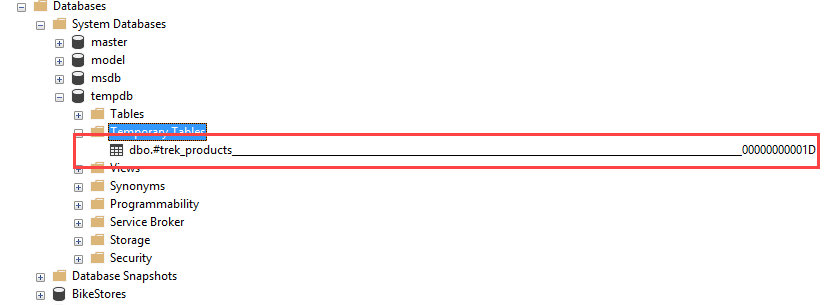
This tutorial covers SQL Server Temporary Tables and how to manipulate the them effectively including creating and removing operations.
gilded stag
@rain wagon thanks!
undone roost
@gilded stag what are you working on?
i will have to deal with the same problem later on
proven wagon
@rain wagon Yes, and also changed some the listen_addresses
Also tried turning SSL off, changing the port etc and always get the same error
I have a feeling its not the postgresql configs that are wrong
torn sphinx
@rain wagon thank you for the suggestion
undone roost
Seat.query.with_entities(Seat.id).filter_by(audi_id=(Showing.query.with_entities(Showing.audi_id).filter_by(id=data['showing_id']))).first()
will this get me a list of id in seat table?
i am getting error : none type object is not iterable....it means it is returning nothing right?
solved 😅
 woeful ice
Hi,
Is there a way to keep data somewhere in database and let many tables point to that data. Like if i have some text and i want to distribute that data in multiple location can i make the data once and then let the location point to that data
undone roost
@rich trout will this query give me a list of IDs in table Seat
seat_id=Seat.query.with_entities(Seat.id).filter_by(audi_id=(Showing.query.with_entities(Showing.audi_id).filter_by(id=data['showing_id']).first())).all()
 rich trout
if it works, yes
undone roost
but when i run a for loop over it i get only one entry
def save_a_reservation(data):
    rsrv=Reservation.query.filter_by(showing_id=data['showing_id']).first()
    if not rsrv:
        seat_id=Seat.query.with_entities(Seat.id).filter_by(audi_id=(Showing.query.with_entities(Showing.audi_id).filter_by(id=data['showing_id']).first())).all()
        seat_id=[id for id in seat_id]
        for i in seat_id:
            new_rsrv=Reservation(
                seat_id=i,
                showing_id=data['showing_id']
                )
            save_changes(new_rsrv)
            response_object = {
                'status': 'success',
                'message': 'Reservation detail successfully saved ',
            }
            return response_object, 201
        else:
            response_object = {
                'status': 'fail',
                'message': 'Reservation already exists.',
            }
            return response_object, 409
which is first id of seat table
i did list comprehension if in case i was getting a tuple instead of a list
undone roost
there was some error in code .....corrected that and it worked
proven wagon
Error when connecting to the database hosted on my raspberry pi.
SSL error: wrong version number
expected authentication request from server, but received S```
I have:
 - Changed listen_address to `'*'`
 - Turned SSL off
 - appended `host   all   all   my_ip   md5`
 - Changed port to same as pi is hosted off
 - Tried to re-install (twice)

Please help 🤷How can i check? 🤔 Only got my Pi this week @ionic pecan e: sorry for late ping 🤷
 ionic pecan
no worries, friend, i don't mind it at all
for checking server version, you can either ask postgres or ask your package manager
$ sudo -u postgres psql -c 'SELECT version();'
[sudo] password for myself:
                                                     version
------------------------------------------------------------------------------------------------------------------
 PostgreSQL 11.5 (Debian 11.5-3.pgdg100+1) on x86_64-pc-linux-gnu, compiled by gcc (Debian 8.3.0-6) 8.3.0, 64-bit
(1 row)
or
dpkg --list | fgrep postgresql-
ii  postgresql-10                     10.10-1.pgdg100+1            amd64        object-relational SQL database, version 10 server
ii  postgresql-11                     11.5-3.pgdg100+1             amd64        object-relational SQL database, version 11 server
but as you see that may display other versions as well, so the top one is more reliable, as it uses the default one (based on postgres' port)
for client library - how are you connecting to postgres from your python app?
chances are you're using psycopg2, right?
proven wagon
No im connecting using pgAdmin
For some reason that query doesent work for me
I have 11.5
@ionic pecan
ionic pecan
wait, so that error is from pgadmin?
proven wagon
I dont think sop
I have always been able to connect to localhost and databases hosted online with pgAdmin
proven wagon
oh yeah nvm yes, the error is coming when connecting in pgAdmin @ionic pecan didnt really see what you meant
proven wagon
 stable pilot
hey guys
can anyone please help me
i have this code
            await ctx.send('player has won')
                    async with conn.cursor() as mycursor:
                        userint = ctx.author.id
                        check2 = "SELECT discordCoin FROM discordcoin WHERE discordID = %s"
                        await mycursor.execute(check2, (userint,))
                        myresult2 = await mycursor.fetchone()
                        addCoin = (myresult2[0] + (coinAmount + coinAmount))
                        sql = "UPDATE discordcoin SET discordCoin = %s WHERE discordID = %s"
                        val = (addCoin, ctx.author.id)
                    async with get_conn() as conn:
                        async with conn.cursor() as cur:
                            await cur.execute(sql, val)
                        await conn.commit()
                    conn.close()


                else:
                    conn.close()
await ctx.send('NPC has won')```just wondering why it aintworking >
 pure cypress
Why are you getting a new connection when you already have one?
or a new cursor for that matter
 vocal moon
@bot.command()
#@commands.has_any_role("[JA] Junior Agent", "[BA] Border Agent", "[BC] Border Commander", "[BI] Border Inspector", "[DD] Department CO/XO", "[DBC] Deputy Border Chief", "[BC] Border Chief", "[BA] Board of Advisors", "[DBD] Deputy Commissioner", "[C] Commissioner")
async def createFile(ctx):

    member = ctx.author
    role = member.roles

    await ctx.send('`Enter your ROBLOX name.`')
    def check(m):
        return m.author == ctx.author
    robloxIgn = await bot.wait_for('message', check=check)

    await ctx.send("`Enter your callsign.`")
    callsign = await bot.wait_for('message', check=check)

    hs = discord.utils.get(ctx.author.roles, id='634073747195822090') #630370651537932308
    ofo = discord.utils.get(ctx.author.roles, id='634129126655000586') #630370583959306287

    if hs in role:
        hs_var = {HS}
        c.execute("INSERT INTO this (roblox, call, depname) VALUES (?, ?, ?)", (robloxIgn.content, callsign.content, hs_var))
        conn.commit()
    elif ofo in role:
        ofo_var = {OFO}
        c.execute("INSERT INTO this (roblox, call, depname) VALUES (?, ?, ?)", (robloxIgn.content, callsign.content, ofo_var))
        conn.commit()
    else:
        await ctx.send('ok')
    await ctx.send(f"`Successfully created a user file for {robloxIgn.content}`")
This code does not output anything onto the SQL, not sure whats wrong nor does it output any errors.
rich trout
@vocal moon hs and ofo are always None, because discord.py's ids are integers, not strings. There will be no role with id "634073747195822090", but there may be one with id 634073747195822090
 remote hatch
with pgadmin 4 how do you make a sub table from a column?
i have a column guild id and i want to have a set of preferences for the guild
 void otter
you can make a table and connect it
void otter
foreign keys to connect tables
take a look at table relationships, fundamental for database management and creation
torn sphinx
Postgresql
Is it bad if I directly assign a value when selecting things from the database? Security wise
I know in sqlite3 we do SOMETHING = ?
 buoyant breach
http://initd.org/psycopg/docs/usage.html
>>> cur.execute("INSERT INTO numbers VALUES (%s, %s)" % (10, 20)) # WRONG
>>> cur.execute("INSERT INTO numbers VALUES (%s, %s)", (10, 20))  # correct
That is if you use psycopg. Other libs may have other approaches.
torn sphinx
Thank you very much!
buoyant breach
There is a statement for that in table schema query.
I think in postgres there is a datatype called SERIAL.
PostgreSQL - AUTO INCREMENT - PostgreSQL has the data types smallserial, serial and bigserial; these are not true types, but merely a notational convenience for creating unique identifier co
torn sphinx
You are such a nice person!! Thanks
buoyant breach
You can make your own sequence if you like, but generally serial should be enough.
torn sphinx
Cool
I get too many connections on the role??
the port is too busy or what?
nevermind I just had to refresh my database browser -_-
proven wagon
Error when connecting to the database hosted on my raspberry pi.
I am using pgAdmin to connect.
SSL error: wrong version number
expected authentication request from server, but received S```
I have:
 - postgresql version 11.5 on my pi
 - Changed listen_address to `'*'`
 - Tried turning SSL off
 - appended `host   all   all   my_ip   md5`
 - Changed port to same as pi is hosted off
 - Tried to re-install (twice)

Please help 🤷For anyone looking back at this. I solved it.
did everything again, but with sudo apt-get update && sudo apt-get upgrade -y before installing postgresql
torn sphinx
😂 glad you fixed it
torn sphinx
I store datetime.datetime.utcnow() on my database on a column that's TIMESTAMP WITH TIME ZONE,
when i fetch this value from the database (i get it as utc, not sure if i can change this behavior with asyncpg)
i try to compare it again with datetime.datetime.utcnow() and it complains that i can't deal with offset-naive and offset-aware datetimes?
 pure scroll
datetime.utcnow does not return any timezone offset
while the result from a database will have explicit UTC offset
 tropic crescent
Hi guys, I am trying to set up a python DB using python DB-API I am having issues inserting values into my DB using parameters when I want to insert integers and not just strings.
I tried to do it this way - but it makes sense that I get an error since I have designed my tables columns to be integers other than "Name".
What is the correct paramstyle for inserting integers I already tried %int
?
torn sphinx
should I use multiple databases rather than different tables only for POSTGRESQL ? I was using sqlite3 before,but I got databases locked..thus why I am switching
torn sphinx
@pure scroll So it is wise to do: datetime.datetime.now(datetime.timezone.utc) instead of utcnow()? I want to handle everything in UTC and convert as it's needed (if it is)
Also if I want to compare the UTC time I have on my database on that table (from that datetime.datetime.now()) I should compare it with something like CURRENT_TIMESTAMP AT TIME ZONE 'UTC'?
pure scroll
depends on the database, but most of the times databases are able to handle time offsets
e.g if you compare UTC vs GMT database will know how to convert one to another
datetime.datetime.now(datetime.timezone.utc) yeah that will work
torn sphinx
Well all I know is that what I will be inserting into the table is utc all the time
pure scroll
yes, but you can query for it using any timezone
db will convert your query timestamp to UTC
pure scroll
depends on your configuration you can make it store in any other timezone
but it's recommended to do it in UTC
torn sphinx
hmm i never saw any kind of setting to change how it' stored (other than setting current time zone)
pure scroll
which database you have?
torn sphinx
PSQL
pure scroll
yeah, it stores in UTC and only utc
torn sphinx
Yeah I was just checking that
I'm curious if the only way to change what time zone it returns is by doing select current_timestamp at time zone 'anything other than UTC';
or if it can be i.e. set up by asyncpg
pure scroll
I think it's up to you, I personally prefer to have as less logic on DB layer as possible, so I'd do that in my python code
but there is nothing wrong with doing that on DB and most likely DB will make it faster
torn sphinx
oh mostly curiosity as i'll handle everything in utc and dont need to show any other time zone
just want to be sure nothing messes up
pure scroll
multiple databases to solve what problem?
Postgres is able to hold lots of concurrent requests and connections to it (depends on your server and queries of course but can go up to thousands)
torn sphinx
COOL
I am asking because I am scared the database gets locked or something like sqlite3 did 😂
So to summarize:
create table testing (timedata timezone with timestamp);
# then insert with
await db.execute('insert into time(timedata) values($1)', datetime.datetime.now(datetime.timezone.utc))
is fine?
pure scroll
yeah, should work
torn sphinx
I'm not really sure if this is correct behaviour or i'm doing something wrong but if i do:
now = datetime.datetime.now(datetime.timezone.utc)
jst = now.astimezone(pytz.timezone('Japan'))
await db.execute('INSERT INTO testing(timedata) VALUES($1)', jst)
result = await db.fetchval('SELECT timedata AT TIME ZONE \'Japan\' FROM testing')
print(result == jst) # This gives False

# Japan Time: 2019-10-22 20:50:55.351206+09:00
# Japan Time (Database): 2019-10-22 20:50:55.351206
I'm not sure what's causing this
torn sphinx
But if I return it with no timezone (I assume it should be returning as UTC since the value is 2019-10-22 12:13:27.724365+00:00 the comparison works fine
select timedata AT TIME ZONE 'Japan' from testing;
          timedata
----------------------------
 2019-10-22 21:13:27.724365
(1 row)
 tawny plank
Hey! I would need to interact with a MySQL DB in one of my python project but I don't know which module to use for that. Should I just use the MySQL Connector for python or would you rather advise others? Which? Why?
 rough onyx
@tawny plank look up sqlalchemy
 zealous echo
Im learning sql. Any good certs to prove to employers I know what Im doing?
tawny plank
@rough onyx ok thanks. Why would you recommend it over the others though? What are your experiences with DB modules for python?
rough onyx
@tawny plank sqlalchemy is extremely popular by itself and you will find lots of plugins to make it interact with libraries like flask, graphene, etc...
also it will be a bit more "abstract" than something like mysql-connector-python, so it will probably lead to quicker development and code that's easier to port for other rdbms
tawny plank
How is it more abstract? (not very experienced with DBs)
rough onyx
basically mysql-connector-python is about sending raw mysql queries
tawny plank
ok
rough onyx
sqlalchemy let's you use the db with python function
like
s = select([table.c.col1]).where(table.c.col2==5)
tawny plank
So it create sother models? Like makes a table a dict or something of the kind?
ok I see
rough onyx
kinda yeah
tawny plank
ok
 low stone
 elfin geyser
            columns = [seller,buyer,item,price]
            c.execute("""INSERT INTO auctions (seller,buyer,item,price)
values(?,?,?,?)""" % (columns))```sqlite3.ProgrammingError: Incorrect number of bindings supplied. The current statement uses 4, and there are 0 supplied.
            c.execute("""INSERT INTO auctions (seller,buyer,item,price)
              VALUES(?,?,?,?)"""  % (seller,buyer,item,price))```
`TypeError: not all arguments converted during string formatting`what am i missing?
 molten knoll
How many columns does the table auctions have? If there are missing columns do they have default values?
elfin geyser
c.execute("""CREATE TABLE auctions (seller,buyer,item,price)""")
 twilit swan
!e
"""INSERT INTO auctions (seller,buyer,item,price) VALUES (%d, %s, %s, %s)""" % (1, "hello", "world", 2)
 delicate fieldBOT
Sorry, but you may only use this command within #bot-commands.
twilit swan
@elfin geyser you need to use the old printf-style formatting placeholders if you're using % for string formatting
>>> """INSERT INTO auctions (seller,buyer,item,price) VALUES (%d, %s, %s, %s)""" % (1, "hello", "world", 2)
'INSERT INTO auctions (seller,buyer,item,price) VALUES (1, hello, world, 2)'
try this
pure scroll
never try this with database queries
twilit swan
also true ^
pure scroll
just never use string formatting as this is a subject to sql injection
molten knoll
c.execute("INSERT INTO auctions (seller,buyer,item,price) VALUES(?,?,?,?)" , (seller,buyer,item,price))
I think the proper syntax is a , not %.
pure scroll
but @twilit swan was half way there, you most likely need to use %s instead of ?, even though we have a database API standart in python, none of db drivers do really care about it
molten knoll
using ? is the recommended way of executing sql statements I believe.
pure scroll
yeah, this is a standard but again, many libraries don't care about it
elfin geyser
@twilit swan when i try to run your example:
    c.execute("""INSERT INTO auctions (seller,buyer,item,price) VALUES (%d, %s, %s, %s)""" % (1, "hello", "world", 2))
sqlite3.OperationalError: no such column: hello```try % (1, "'hello'", "'world'", 2)
" 'hello' "
@elfin geyser it thinks hello is a column name because i didn't put it in single quotes
twilit swan
did it work? you mean you want to store the " 'hello' " into a variable?
elfin geyser
yes
a - "hello" c.execute("""INSERT INTO auctions (seller,buyer,item,price) VALUES (%d, %s, %s, %s)""" % (1, 'a', "'world'", 2))
molten knoll
a also needs to be put into quotation marks else it looks for a column called a instead of the string a.
with the ? you don't need to worry about putting the right quotes. I also don't know if single quotes are accepted.
twilit swan
yeah, ? is the better way compared to manually constructing queries and worrying about escaping
molten knoll
This is why you should stick to ? when possible:
c.execute("""INSERT INTO auctions (seller,buyer,item,price) VALUES (%s, %s, %s, %s)""" % ('"sql"','"injection"','"careful"','"lmao"); DROP TABLE auctions;--'))
it inserts a new row into auctions and deletes the table auctions. With ? the last value would be the string "lmao"); DROP TABLE auctions;. Without ? it would evaluate the SQL statement DROP TABLE auctions
-- is a comment. With that it will ignore the closing bracket ) that would normally follow.
proven wagon
What are the main differenced between asyncpg.pool.Pool and asyncpg.Connection
pure scroll
a pool is a set of connections
Because establishing connection with a database server takes time it makes sense too keep it alive.
So Pool is abstraction of set of connections, whenever you take a connection from it, it will start a transaction and give one available connection to you.
Whenever you close it, it will actually return it back to pool and also would execute rollback statement so that connection is not dirty, and has no pending transaction running on it.
proven wagon
Thanks 🙂
 ivory turtle
tawny plank
ivory turtle
tawny plank
Hey!
I must be completly blind but I've been looking at how to install a DBAPI for sqlalchemy
I wonder, which is the recommended one?
torn sphinx
@pure scroll reading what you said about, since a pool is a set of connections,
whats the difference between doing:
mypool.execute('myquery')
vs
async with mypool.acquire() as test:
    test.execute('myquery')
what is the purpose of the second and when should i use it?
pure scroll
in the first example pool will take the first available connection and execute statement on it.
so e.g if you do
mypool.execute('query1')
mypool.execute('query2')
``` its not guaranteed that both sttatement will happen within the same db connectionwhile in the second example yoou explicitly aquire a connection and pool will never give it to any other thread/coroutine until you release it back @torn sphinx
torn sphinx
@pure scroll oh, as i thought makes sense. what "real life" use cases are a good example of when needing to acquire()?
pure scroll
Can't come up with any apart from a transaction, as long as you don't need a transaction, you can stick to executing things on pool directly
 plush dune
hey, I've tried asking this in web-dev channel... How do I make each name return it's own database... right now, when I print my database in html, it returns every database ...
 crisp tundra
I need some help with choosing a data type for postgres sql
I basically have some json that's in a format
the string appears multiple times, like tags from an album
and some cells may have more than one of these items
Basically Im planning to make arrays of hstores
is there any better data type I should use?
the key can be dense_ranked and made into a one to many relationship
undone roost
how to make changes into and existing record in SQLAlchemy?
 frigid tartan
is it generally bad practice to access data (csv's, sql tables) in a classes constructor? that is to say, I pass a name to the constructor and then have the constructor find the relevant data in a file to set it's attributes
vocal moon
import discord
from discord.ext import commands
import sqlite3


class RPG(commands.Cog):

    def __init__(self, bot):
        self.bot = bot

    global conn
    global c
    conn = sqlite3.connect('main.db')
    c = conn.cursor()

    def create_table():
        c.execute('CREATE TABLE IF NOT EXISTS info(name BLOB, ammount BLOB)')
    create_table()

    @commands.command()
    async def create(self, ctx):
        value = 100.00
        value = float(value)
        author = ctx.message.author
        c.execute("INSERT INTO this (name, ammount) VALUES (?, ?)", (author, value))
        conn.commit()
        await ctx.send(f"`Created a file for {author}`")

def setup(bot):
    bot.add_cog(RPG(bot))
I have this code, the main error is in the line where I insert the two variables, I am getting no errors and no output
vocal moon
anyone?
 proud iron
@vocal moon
I just started Python 2 weeks ago, so I'm not rlly sure, but maybe...
The output of ctx.message.author is type abc.User. So it's not just a simple string, not sure if your database can store that datatype? You can try changing it to ctx.message.author.id (Data type integer).
proud iron
:p
proud iron
Np ;)
proud iron
Idk dude, I'm not using your kind of database.
vocal moon
o thanks ill google it also can i dm you real quick
proud iron
Ofc you can dm me
vocal moon
thanks
 candid night

A fast intuitive paste service.
 rancid root
can someone explain how this is possible in sql server and what dumb mistake I am making?
the only difference between the left and right query is removing the degenerate groupby fields. The output is the same. But the left query runs in 8s while the right in 45s...
buoyant breach
What exactly is the issue?
rancid root
the fact that removing a bunch of degenerate groupby makes the thing run 5x slower
buoyant breach
Execution time difference? Grouping may take quite a while depending on the nature and distribution of the data.
Oh, so it's the other way around.
Lol. I see.
rancid root
slower with groupby removed
and key point is the groupby are degenerate, they have a cardinality of 1, they match the where clause predicates
buoyant breach
Then I would guess there are different optimizations and essentially different low level queries are being executed.
You may want to do EXPLAIN or whatever the equivalent of your server for it is and inspect the output.
rancid root
yeah i'm currently locked out from showplan/explain so just left to guess at the random magic sql server must be doing under the hood to act like this
buoyant breach
But yeah, the behavior is puzzling to say the least.
I would be interested to know the specifics too if you ever get to it. =]
rancid root
only guess is the groupby stack might be aligned to the clustered index order and the reduced stack is not, so it seeks more..? Idk
rich trout
I suspect it's difficult for the database to compare A_Location_ID
That, or Type_ID is indexed and A_Location_ID is not, which would lead to the differing query speeds
The one on the left, then, would involve grouping first by type_Id, then by whatever else it has, but the other would involve grouping over a parameter that may be much more awkward to section over
Especially if it treats the index as a precomputed binary tree, at which point the grouping is already essentially computed at the beginning of the query itself
rancid root
hrm
rich trout
...I read your query again
If group_by occurs before the WHERE statement, this makes sense
that does not seem like an optimized query plan though
rich trout
I found a good explanation of your exact circumstances
due to bad luck and a hedging optimizer, it does indeed seem that some of your filters are being pushed behind the join

A SQL Server technical blog from New Zealand by Paul White (SQL Kiwi)
I would expect only adding type_id to the group_by would return you to the fast speed
Or, as the article suggests, in some cases () might work too
rancid root
i'll give that a whirl and ping you back if it works
rancid root
nope
and it seems like removing any of the groupby stages from the original stack causes a perf hit (not sure if linear)
rich trout
hm.
A portion of the performance is lost for each one?
If it's splitting the where clause, that might happen
Each group_by could force the where to be on the other side of the join
rancid root
thanks for helping out, im gonna give up for now and wait for them to give me showplan so at least this isn't blind guessing
tropic crescent
Hi guys, I am getting a syntax error that I can not fix.
I am typing this statement: """CREATE OR REPLACE TABLE item (id INT AUTO_INCREMENT PRIMARY KEY, name VARCHAR(128) NOT NULL, type VARCHAR(128) NOT NULL, amount INT NOT NULL, cost INT NOT NULL);
I get this error:
mysql.connector.errors.ProgrammingError: 1064 (42000): You have an error in your SQL syntax; check the manual that corresponds to your MariaDB server version for the right syntax to use near 'type VARCHAR(128) NOT NULL,
amount INT NOT NULL,
cost INT NOT NULL)' at line 1
I also tried to change "type" to a different name in case it was a reserved word
 stable badger
!sucribe
vocal moon
import sqlite3

conn = sqlite3.connect('users.db')
c = conn.cursor()

def create_table():
    c.execute("CREATE TABLE IF NOT EXISTS this(id BLOB,  value BLOB)")
create_table()

@bot.command()
async def create(ctx):
    member = ctx.author.id
    value = 100.00
    c.execute("INSERT INTO this (id, value) VALUES (?, ?, ?)", (member, value))
    conn.commit()
    await ctx.send(f"`Created a file for {ctx.author}`")
It does not seem to be working or outputting any errors
rich trout
INSERT INTO this (id, value) VALUES (?, ?, ?)
is wrong, the number of ?'s should match the number of inputs
You should be getting an error
torn sphinx
Do take note to sanitize the inputs before inserting them into the SQL query.
rancid root
@rich trout so turns out at least some facet of it is caching of some sort. :/
rich trout
oh that sounds peachy
rancid root
every time the query string is changed, it takes 45s to run, then 8s on the subsequent run. The groupby stack was a red herring
but that makes the actual perf problem even more fun to diagnose...
rich trout
I had to deal with an http cache that ignored cache-control: no cache
man was that fun debugging cached authentication
mumble
You are grouping by A_Location_ID, correct?
Do you have permission to create an index?
rancid root
location id, geometry
rich trout
I also spot a distict(stringvalue), how big is stringvalue?
rancid root
yeah I think I can do pretty much anything except showplan, because our itsec guys are super smart and don't need to have their hand held for each individual permission on each db
it's a varchar 100
we'll be reducing it to a numeric hash
rancid root
it walks 10m, the total table is about 40m
i'm shocked it takes 8 seconds to do so little work
rich trout
that would do it
rancid root
we must still be doing something really wrong
rich trout
It's not doing little work
rancid root
I typically use something like clickhouse for these kinds of workloads and it'd do this in 8 milliseconds
rich trout
its comparing 10 million rows of 100 length strings to each other
rancid root
see value
check against seen values
is it new? add, incr count
move on
rich trout
or, I suppose, O(n) hashes
rancid root
yeah
rich trout
but 100 characters has a very large number of possibilities
rancid root
i want to try another agg that's not count d to verify this, not sure what i can use though
sum/max/avg/etc are all precalculated in column stores
so not a fair comparison
rich trout
I'd just try Count(stringvalue)
rancid root
precalc'd
rich trout
Is it though? Since it's per group?
rancid root
yes because it can then sum the precalc group counts without actually evaluating them per row
count d is unique here in having to walk every row
rich trout
why not do an == comparison
rancid root
I just tried count anyway. Same 8 seconds as count d actually
so that's not the bottleneck
i mean maybe 8 sec is just how long sql server takes to traverse 10m rows, i don't know what to expect from it
but something like clickhouse would do this closer to 8-80ms
rich trout
Well, since it pulled 8 seconds I think we can deduce that it is the hashing of uniques that's triggering the 5x time increase
rancid root
let me verify that..
good point
yes, the caching behaviour and 5x slowdown on first run seems to be gone. That's one down
rich trout
Good, at least we know where that's coming from
rancid root
I guess it retains the hashmap of seen items between runs and dumps it if the query changes
rich trout
Try a run with just counts(), no actual rows returned
That ought to give us a view on how fast it iterates and filters through it all
rancid root
ok so
1: the caching behaviour is back, so I guess it's just an unpredictable force for now
2:
FROM
(
SELECT
      count(*) as Num_Records


  FROM dbo.FACT_AssetAttributes_Col
  where Attr_URN = 'urn:asset:ci_name'
  and TypeId = 5
  and Aggregation = 'COUNTD'
  and DataFormat = 'numeric'
  and DisplayName = 'CI Name'
  and GroupDisplayName = 'Asset'
  group by
        Geography
        ,A_Location_ID
) t```
slow time with groupbys, instant withoutIs Geography a string?
rich trout
try group_by type_id
rancid root
you win
rich trout
Instant again?
rancid root
anything that's not a string in the groupbys is instant
rich trout
Yep
rich trout
So the slowdown is occurring because it builds a massive list of unique strings and has to filter on them
In both cases
rancid root
i've been spoilt by analytics stores that intern strings as a matter of fact
rich trout
good to know, note to self: all that extra work you did turning string flags into foreignkeys was a very good idea
I don't know, but I hope mysql does that, but your strings are probably too long
rancid root
they're pretty long but low cardinality. But yeah this all makes sense now 😄
rich trout

rancid root
thanks again
rich trout
May I point you towards an alternate solution instead of integer hashing?
rancid root
interning?
rich trout
foreign keys
rancid root
how's that work
rich trout
I've noticed you have more than a few string flags involved
rancid root
yes
rich trout
Generally, you'd create a table for each column of flag
so, you'd have an Aggregations table
and it would have an id, and the aggregation label, and anything else specific to it
then in this table you would simply have the integer referencing that aggregation
it does end up making queries a little bit more complicated, but as you can see it is very efficient
rancid root
so interning with extra steps?
rancid root
i was thinking of just chucking in an additional column for each string flag with an integer version of it, no need for hashing, just inrc an int or something for each uniq
rich trout
It's basically that except db side
rich trout
It should be basically free
rancid root
(again I mostly live on data-science and work with very different tooling)
rich trout
It only needs to be done once, and if you do a JOIN WHERE then it should filter first
rancid root
well, I have time. So might as well try both and see if there's a perf cost
rich trout
regardless, even if you don't want to add that to the query, you can simply use the ID's as your integer interning and load them manually into your application at the beginning
rancid root
yeah
rich trout
👍
good luck!
sorry, join on
ugh
SELECT Orders.OrderID, Customers.CustomerName, Orders.OrderDate
FROM Orders
INNER JOIN Customers ON Orders.CustomerID=Customers.CustomerID;
is an example
That should filter prior to joining
rancid root
noted
i think as long as an index exists it'll be o(1) slower than storing the intern'd/key value explicitly alongside the string
1 being very small
rich trout
F
rancid root
F to respect our itsec team that's going to get an ass whooping on monday
 weary cloak
hiii! is there any way to store list of strings in a sqlite3 db
rancid root
list of strings per row, or just list of strings in general?
weary cloak
per row
rancid root
apparently not, SO recommends storing a long string with a separator per item and deserialising from that
weary cloak
right on, thanks
vocal moon
@bot.command()
async def flip(ctx, choice, bet: int):

    c.execute(f"SELECT * FROM this WHERE id = {ctx.author.id}")
    data = c.fetchall()

    value = data[0][1]

    choice = choice.upper()

    x = random.choice(["HEADS", "TAILS"])

    if choice == x:
        y = value+bet
        c.execute("UPDATE this SET value = {} WHERE id = {}".format(y, ctx.author.id))
        conn.commit()
        await ctx.send("yess boi u won")
    else:
        await ctx.send(x)
        await ctx.send("`(test)`")
Not updating and it's not presenting any errors
vocal moon
¬
 rain ember
Could it be the curser isn't set properly or something?
rain ember
I think it should still be the same tho, right ?
rain ember
Yeah
Can you look into the database using the gui and see if the values are updating or what's going on?
It should have some record of changes
That's all I can really offer 😦
rain ember
are you using sql alchemy?
vocal moon
could it be because there is one row im not inserting into?
sqlite
already done that
wait i think i found my issue
vocal moon
nvm
vocal moon
yeh
no
wait
lemme try
nop
nope*
I FOUND THE ISSUE
i had an on_error event that i did not even know about and it was throwing the errors away
rain ember
??
Wait
what was causing the on-error event?
How was it being handled that you couldn't see it?
what was the issue ?
vocal moon
None Type + int
rain ember
lol
vocal moon
lmao
 lofty summit
Hey, how to use a cursor in a multi-file project without open and close it for each operation?
lofty summit
yes, why?
 late palm
In one db
lofty summit
yes
late palm
Or separate
lofty summit
same db
late palm
Just rerun you sql code to the table that you want
And it should work with out re-declaring
Unfortunately
You do need to reopen or redo the cursor i think
Just gimme a sec to check my notes
cur.execute(sql, params)
That
Will be needed to be runned again
Otherwise it should work
lofty summit
Since I'm pretty new with db I'll try to explain clearly what I've in mind:
Let's say I've 2 file
-db.py
-other.py
In my db.py I define all my functions related to my database, and then I import these functions in other.py to use them. Question is: How to avoid opening and closing the database in each function of db.py? Or is it ok to do so?
rain wagon
Use a getter function that checks if the object already exists
look at setattr and getattr as well
especially if using Flask or Django
late palm
It is also fine to open it each time
rain wagon
but you also don't need to close the db if you still need it
commit() should be enough and your data is safe
lofty summit
I don't use any framework, but I'll look into getter and setattr
late palm
Okay so then your using sqlite3???
lofty summit
discord bot with a db
late palm
Okay
lofty summit
I don't really understand how to have a cursor that can be used from different files ,that's why I thought I needed to open and close it each time.
@rain wagon You said it was possible not to close it, how? each function is separated from the others
rain wagon
I've assumed you are making a normal program or web app
lofty summit
Ok, thank you both anyway!
 mystic ivy
Hey all, I'm having trouble understanding how to structure my database such that users can select their interests from a pre-defined list as well as add their own custom interests
rain wagon
Well, you are making a table with some predefined interests and then have a form where user can enter their own
also add the ability to remove the predefined stuff
so, when a user registers, prefill the table and let them manage it
mystic ivy
how does that look as far as the database? Like I wouldn't make a column in my interests table for every interest would I?
And this would be a many-to-many relationship between users and interests?
rain wagon
there are multiple ways to approach this: One way is to have a table where you resolve the n:m relationship, insert the foreign keys for the predefined interests and the user id as another foreign keys. It get's tricky when users make their own interests, because you need to save them somewhere as well
so I'd say have 2 different tables, one with predefined, one with user defined and resolve it in a third table
mystic ivy
hm okay. If I try to mock this schema up would you take a look?
rain wagon
hold on, need to think again 😛
Quick and simple free tool to help you draw your database relationship diagrams and flow quickly using just keyboard
@mystic ivy
I think this is kind of a solution
Add all interests to ONE table, reference the creator, then resolve the chosen interests in a new table. All predefined interests get id 1, so make sure to never delete ID 1
This way you can also offer those interests to other users as they type
mystic ivy
Thanks!! So when I say predefined I don't mean pre-selected, I mean when they're looking at this page there are checkboxes for preset options but if they're option isn't there, they can type this in
that might simplify things
also confused how all predefined interests get id 1, wouldn't every interest have its own ID?
So I'm guessing I would just have checkboxes, then pull the values from the checkboxes that are selected, then commit them to t_interests with the current_user.id?
mystic ivy
Ah right so the resolve table is used to capture those interests that weren't created by the current user? So I would query the resolve table instead. But if I go the route I mentioned above, I could eliminate the resolve table right?
rain wagon
When you have a n:m relationship, you need a resolve table
mystic ivy
Oh right. But I could get rid of the created_by_id field?
rain wagon
I wouldn't.
So you can delete stuff created by a specific user
and considering DSGVO, you may have to
sorry, GDPR in English
mystic ivy
Okay, thanks so much for all your help 🙂
 supple fox
I have table of polls.
When i insert the polls into the table i do it in newest to oldest.
Which makes it so that my serial id of the newest becomes 1.
This causes trouble if i keep inserting polls to the table since than it will go 3 -> 2 -> 1 -> 46 -> 47... when i output the polls to users.
Is there a way to reset the serial id in the opposite order or a custom order? (i got a column for poll creation i can sort by)
rough onyx
there's most likely a way to reset a serial id (on postgres it's possible if that's what you're using)
but I wouldn't do that
if it's just an output issue, I think a simple for loop will allow you to reindex things easily
 inner pecan
I have table1, I want to add a colum to it from table2 with value depending on some condition. I currently have done this but I did it by creating a table3 which is made from JOIN of table1 and table2. What is a better way of just updating table1 so I don't need to have table3 ?
def Test():
    c.execute("DROP TABLE IF EXISTS TEST")
    Query = "CREATE TABLE if not exists TEST AS SELECT a.Symbol, a.FieldName, a.Value1, a.Value2, b.Value as Permission FROM FieldDifferences a JOIN '{}' as b USING(Symbol) WHERE b.FieldName = 'P'".format(tablename1)
c.execute(Query)```so now I want to have table3 (TEST) replace table1 (FieldDifferences)
which does not seem like good practice for this
inner pecan
nvm i did this by doing a select of a select
 viscid vault
Hi all - does anyone know if there's a way to either a) cascade deletion down to foreign keys when deleting their related rows or b) refuse to delete if a conflict arises? I'm running into an issue where running raw SQL against my postgres DB doesn't seem to be obeying the foreign key constraints I've put in place.
The query I'm using is
WITH updated AS ( INSERT INTO screener_ticker SELECT * FROM screener_ticker_temp ON CONFLICT (ticker) DO UPDATE SET "table" = EXCLUDED."table", permaticker = EXCLUDED.permaticker, ticker = EXCLUDED.ticker, name = EXCLUDED.name, [...other fields] RETURNING id ) DELETE FROM screener_ticker CASCADE WHERE id NOT IN ( SELECT id FROM updated );
and I have a related table screener_incomestatement which has a FK back to screener_ticker.id but for some reason this is deleting the ticker but not the related income statement.
viscid vault
I think I found the problem. I think my FK constraints got deleted somehow as I was messing around here
 toxic rune
If I have a string that is repeated multiple times in a table is it better to have a lookup table and use a constant (integer) to reference to the string in the lookup table?
rich trout
yes
elfin geyser
any free database cloud ?
 old scarab
hello, I am new to learning sql in class and I've tried googling this but haven't really found what I'm looking for
I'm wondering if SUM has to be by itself (not nested in anything) or if I can use it in the following way:
SELECT (SUM(col1)+SUM(col2)) col3
(also same question for COUNT)
(please tag if answering)
lofty summit
Quick question, what's the interest of disabling auto commit in a DB? (Postgres)
rich trout
autocommit causes every statement to "commit" if it finishes successfully
With autocommit off, you need to issue a COMMIT or ROLLBACK command to finalize your instructions
lofty summit
I know what it does, ty, but I am more questioning the goal of this practice
rich trout
Here's an example use:
rows = cursor.execute("Massive expensive query")
if not validate(rows):
    cursor.execute("ROLLBACK")
    raise Error()

more_rows = cursor.execute("Modify half of the data we need to")
if not validate(more_rows):
    cursor.execute("ROLLBACK")
    raise Error()
param1, param2 = learning_model_operate(rows, more_rows)
finish = cursor.execute("Finish modifications, %, %", param1, param2)
cursor.execute("COMMIT")
Essentially, it lets you "pause" a query while you perform external operations, without losing your state or leaving the database "halfway" between valid states
depending on your isolation level, this "pause" could be visible or not
this transaction would preserve atomicity depending on your isolation level, whereas with autocommit on you may overwrite new data with results from old data
lofty summit
Hmm right, but why checking the data after executing the query and not before?
I mean, checking if the query is right before sending it to the db
rich trout
You could, but with autocommit off you can interface with things outside the database to ensure the data is correct, such as a REST api
You can do the same by prepending your queries with "BEGIN TRANSACTION"
 wind zinc
@elfin geyser if you're looking for a free database you won't really find a good stable and reliable one, other than Firebase (made by google), it uses NoSQL tho
ionic pecan
postgres definitely is stable and reliable lol
 gilded narwhal
@ionic salmon afaik INTEGER PRIMARY KEY should reuse deleted ids
but maybe that's only when the id count reaches the max
 remote harness
i'm not a sqlite user, but do you have AUTOINCREMENT turned on?
https://www.sqlite.org/autoinc.html
If the AUTOINCREMENT keyword appears after INTEGER PRIMARY KEY, that changes the automatic ROWID assignment algorithm to prevent the reuse of ROWIDs over the lifetime of the database. In other words, the purpose of AUTOINCREMENT is to prevent the reuse of ROWIDs from previously deleted rows.
@ionic salmon
viscid vault
anyone familiar w/ postgres cursor objects and how to execute more advanced statements safely w/ them? particularly w/ parameterized SQL .... for example how can I safely do something like this in a cursor.execute()?
CREATE TABLE "table_name" ("id" serial NOT NULL PRIMARY KEY, "field1" varchar(255) NULL, "field2" varchar(255) NULL, [... other fields]);
I'm reading that escaping the quotes is "doing it wrong" so I'm trying to understand how to form this string properly
viscid vault
yeah I'm seeing that right now actually 🙂
removing the quotes as we speak lol
what about if I have a column called "table"?
might I need to quote that?
rain wagon
don't use reserved names
viscid vault
it's a requirement to have this field called table. changing it isn't currently an option
rain wagon
table is a sql keyword
viscid vault
I understand that. I agree w/ you on not using reserved names, just saying in this situation I don't have a choice
I need to make the schema match the data going into it which has a column called "table" referencing which table the data comes from at the source
rain wagon
then call it from_table
If it is homework, then your teacher needs a lesson
if it's work, then tell your boss it does not work this way
viscid vault
It's not homework, it's a professional codebase w/ 200k lines of code and I am my own boss, and this is beyond my control.
I don't really wanna argue about the semantics of it though - I agree w/ you, but I'm very aware of the need to stay away from reserved keywords and I know for a fact this will not be a problem in this case that's all
anyway you answered my original question so it's all good!
thanks
as an aside though I do agree w/ you...the issue is that the API I get the data from calls the field "table" (which I agree is dumb and bad practice) but I don't want to deal w/ translating fields that are named differently on my end just for this one column.
rich trout
If you know there are going to be conflicts or are potentially going to be conflicts with reserved names, I would suggest having an easy-add easy-remove shared prefix/postfix applied to every table and column name
something like project_
so you can have project_table
If you're using SQLite, here's a guide on string quoting:
The standard quoting for identifiers is the double quote
viscid vault
thanks - I'm using Postgres and you're right that's not a bad idea but it's really not a big deal in my situation 🙂
just quoting that one field works fine and won't cause any problems. This is a nightly management operation I'm writing anyway so I don't need to worry about SQL injection here
I'd be more inclined to avoid escaping and stuff if it was user facing
rich trout
Postgres has some interesting string escaping features sqlite doesn't have, too, but I think "" will work fine for your needs
viscid vault
yea that worked fine.
at the moment the issue I'm struggling w/ is how to handle duplicate IDs that are inserted in a temp table
for example in my temp table:
----------------------------------------------------------------------------
 (1,A,"Agilent Technologies Inc")
 (2,AA,"Alcoa Corp")
 (3,AAAB,"Admiralty Bancorp Inc")
 (4,AAAGY,"Altana Aktiengesellschaft")
 (5,AAAP,"Advanced Accelerator Applications SA")
 (6,AABC,"Access Anytime Bancorp Inc")
 (7,AAC,"AAC Holdings Inc")
 (8,AAC1,"Arcadia Financial Ltd")
 (9,AACB,"Alliance Atlantis Communications Inc")
 (10,AACC,"Asset Acceptance Capital Corp")
 (11,AACE,"Ace Cash Express Inc")
 (12,AACG,"ATA Inc") <---------------------------------note this guy
 (13,AACPF,"Australia Acquisition Corp")
 (14,AAI,"Airtran Holdings Inc")
 (15,AAI1,"Aqua Alliance Inc")
 (16,AAII,"Aaipharma Inc")
 (17,AAIIQ,"Alabama Aircraft Industries Inc")
and in the table I want to "merge" with this one:
----------------------------------------------------------------------------
 (1,A,"Agilent Technologies Inc Updated")
 (3,AAAB,"Admiralty Bancorp Inc")
 (4,AAAGY,"Altana Aktiengesellschaft")
 (5,AAAP,"Advanced Accelerator Applications SA")
 (6,AABC,"Access Anytime Bancorp Inc")
 (7,AAC,"AAC Holdings Inc")
 (8,AAC1,"Arcadia Financial Ltd")
 (9,AACB,"Alliance Atlantis Communications Inc")
 (10,AACC,"Asset Acceptance Capital Corp")
 (11,AACE,"Ace Cash Express Inc")
 (12,AACPF,"Australia Acquisition Corp") <-------causes an ID conflict on INSERT INTO
 (13,AAI,"Airtran Holdings Inc")
 (14,AAI1,"Aqua Alliance Inc")
 (15,AAII,"Aaipharma Inc")
is it possible to have multiple ON CONFLICT solutions?
rich trout
The question is why
viscid vault
Well the reason is this query throws an integrity error cause id 12 exists already in the current table:
CREATE TABLE deleted_tickers_temp AS (
    WITH updated AS (
        INSERT INTO screener_ticker SELECT * FROM screener_ticker_temp ON CONFLICT (ticker) DO UPDATE SET
        ticker = EXCLUDED.ticker,
        name = EXCLUDED.name,
        [...] RETURNING id
    ), deleted_tickers as (
        SELECT id FROM screener_ticker WHERE id NOT IN (
            SELECT id FROM updated
        )
    ) select * from deleted_tickers
);
cause I create the temp tickers table from a CSV which has its own id sequence
rich trout
Is there a reason not to discard one of the two id sequences?
viscid vault
yes, the IDs are FK'd from another table
so I don't want to lose the original sequence
I delete the tickers that aren't in the new temp table, which cascades down to their related objects, but for new ones I probably want to just create them at the end of the table
this is what I've got so far which works up to the point of that ID conflict (these are just SQL statements imported from another file called ops to keep the code reasonable but it should give you an idea of the process:
with connection.cursor() as cursor:
    cursor.execute(ops.DROP_EXISTING_TEMP_TICKERS_TABLE)
    cursor.execute(ops.CREATE_TEMP_TICKERS_TABLE)
    cursor.execute(ops.COPY_CSV_TO_TEMP_TICKERS_TABLE.format(filename))
    cursor.execute(ops.DROP_EXISTING_DELETED_TICKERS_TABLE)
    cursor.execute(ops.INSERT_UPDATE_AND_CREATE_DELETED_TICKERS_TABLE)
I think it would help to split this into two steps
viscid vault
ok - how so??
alternatively, I wonder if instead of selecting * from the temp table I select everything except ID will that let the real one handle the auto-increment?
rich trout
I'm finding it difficult to untangle the logic and references in that statement, which is why I suggested separating it
viscid vault
which statement?
rich trout
The big create table statement
viscid vault
ok I can try to simplify it ...
viscid vault
working from the inside out, the WITH updated AS part just takes everything from the screener_ticker_temp table and inserts it into screener_ticker (the current/existing table) but if it hits a conflict on the ticker column, rather than insert, it updates that row
it saves that result as a CTE called "updated"
rich trout
The syntax is ON CONFLICT (column) DO THING
What I would do is create two temporary tables
viscid vault
right, so the ON CONFLICT (ticker) looks for any tickers that exist in both tables and rather than insert a duplicate just update the existing row
rich trout
one for insert, one for update, and on conflict insert it into another table
You're missing an ON CONFLICT (id), then, I think
viscid vault
unless, since I don't really care about the ID I just don't select it to insert
rich trout
You'd still need an ON CONFLICT (id) DO NOTHING, or w.e
viscid vault
not if I'm not inserting that column though?
rich trout
true
but you wouldn't get an id conflict if you weren't inserting that column?
From what I can tell, it looks like you've got a conflict handler for the ticker column, but not the ID column
viscid vault
yeah you're right - that's why I was wondering if there's a way to have multiple
cause if there's an ID conflict I don't want to update, I want to insert, lol
but generate a new ID 😛
hmm, it doesn't seem to like me skipping the ID column either.
django.db.utils.ProgrammingError: column "id" is of type integer but expression is of type record
LINE 3:   INSERT INTO screener_ticker SELECT ("table",
                                             ^
HINT:  You will need to rewrite or cast the expression.
I think writing the on conflict handler for ID is trivial, the question is just what do I actually want to do on that conflict 🙂
rich trout
Good luck!
viscid vault
thanks haha
rich trout
Perhaps try splitting it out a little bit more. If you manually separate your sequences out into "conflicts on id" and "conflicts on ticker", then it could be more cleanly handled
viscid vault
yeah that's what I'm trying to figure out
rich trout
Something like SELECT id WHERE table1id = table2id
Where you filter proactively instead of reactively
viscid vault
I think basically what I want to do is
- select everything from temp table
- insert it into existing table
2a) if there's a conflict on 'ticker', update the row
2b) if there's a conflict on 'id', toss the temp ID and insert a new record in the existing table after the last current ID
but I don't know how to do that 😛
might have to just do nothing and then make a second pass
or insert into another temp table
rich trout
Why "if there's a conflict"
Why "insert, and if there's a conflict" and not "if there is a conflict, update"
You can SELECT conflicts easily, so you could explicitly handle each case individually
without dealing with the conflict machinery
viscid vault
because the goal is to insert new tickers as well as update existing ones, and delete ones that have been removed
hence try to insert, if there's a conflict, update
but that doesn't work when it tries to insert a ticker w/ an ID that already exists
and if I just add an on conflict (id) do update set .... then it will overwrite the existing ID w/ the new ticker's info
which effectively changes the PK
rich trout
Here:
CREATE deleted_tickers_temp AS ( SELECT * FROM screener_ticker_temp );
INSERT INTO deleted_tickers_temp ( SELECT * from screener_ticker ON CONFLICT (ticker, id) DO NOTHING);
INSERT INTO deleted_tickers_temp ( SELECT all but id FROM screener_ticker WHERE ticker not in (SELECt ticker from deleted_tickers_temp))
UPDATE deleted_tickers_temp ...from.. (SELECT * from screener_ticker WHERE ticker in ( SELECT ticker from deleted_tickers_temp))
You can use better syntax, this was just to get the idea out
you can use UPDATE FROM on the conflicting tickers, and the insert into is self-explanatory
Or you could chain them
viscid vault
I don't think this does what I need though ... particularly this:
INSERT INTO deleted_tickers_temp ( SELECT * from screener_ticker ON CONFLICT (ticker, id) DO NOTHING);
rich trout
That step inserts all the non conflicting rows
The next step inserts new rows that have conflicting ids but not tickers
viscid vault
but there will be like 99% conflicting rows
rich trout
the final step updates rows with conflicting tickers
Even better to handle them explicitly then
viscid vault
hmmm, I'm trying to visualize how this works.
rich trout
Divide the job into three different instructions
if (row is good) -> row
if (row should be updated) -> update row
if (row should be adjusted and added) -> insert row with new id
viscid vault
so here's the problem with it...
I just did the first step and it creates a table which is basically a dupe of screener_tickers_temp (ok fine, no worries) ... but this is what's in it ...
----------------------------------------------------------------------------
 (1,A,"Agilent Technologies Inc")
 (2,AA,"Alcoa Corp")
 (3,AAAB,"Admiralty Bancorp Inc")
 (4,AAAGY,"Altana Aktiengesellschaft")
 (5,AAAP,"Advanced Accelerator Applications SA")
 (6,AABC,"Access Anytime Bancorp Inc")
 (7,AAC,"AAC Holdings Inc")
 (8,AAC1,"Arcadia Financial Ltd")
 (9,AACB,"Alliance Atlantis Communications Inc")
 (10,AACC,"Asset Acceptance Capital Corp")
 (11,AACE,"Ace Cash Express Inc")
 (12,AACG,"ATA Inc")
 (13,AACPF,"Australia Acquisition Corp")
 (14,AAI,"Airtran Holdings Inc")
 (15,AAI1,"Aqua Alliance Inc")
note in particular id 13 (AACPF)
now I do: INSERT INTO deleted_tickers_temp ( SELECT * from screener_ticker ON CONFLICT (ticker, id) DO NOTHING);
rich trout
That's not quite right
it was an example, so there's bits of syntax missing
that on-conflict is in the wrong ()
viscid vault
that's not the problem though - regardless of the syntax when that query works, it will pull from this table:
----------------------------------------------------------------------------
 (1,A,"Agilent Technologies Inc Updated")
 (3,AAAB,"Admiralty Bancorp Inc")
 (4,AAAGY,"Altana Aktiengesellschaft")
 (5,AAAP,"Advanced Accelerator Applications SA")
 (6,AABC,"Access Anytime Bancorp Inc")
 (7,AAC,"AAC Holdings Inc")
 (8,AAC1,"Arcadia Financial Ltd")
 (9,AACB,"Alliance Atlantis Communications Inc")
 (10,AACC,"Asset Acceptance Capital Corp")
 (11,AACE,"Ace Cash Express Inc")
 (12,AACPF,"Australia Acquisition Corp")
 (13,AAI,"Airtran Holdings Inc")
 (14,AAI1,"Aqua Alliance Inc")
 (15,AAII,"Aaipharma Inc")
and when it gets to id 12 (AACPF) it will do nothing right?
rich trout
yep
viscid vault
that's no bueno
rich trout
Why?
viscid vault
because then I have the ticker AACPF w/ an id of 13 and it's supposed to be 12
it got shifted in the temp tickers table cause there was another ticker inserted above it
rich trout
But the tickers still conflict, no?
viscid vault
yea ... so what does that mean?
rich trout
Ok
You select in from your first table
that defines your initial, old data
you select in from your second table
if the id's are duplicate, don't insert, if the tickers dupe, don't insert
viscid vault
hmm, ok, I think you've got the tables backwards
rich trout
probably
viscid vault
screener_ticker is the one that will have the correct existing IDs
temp is the one that will have new stuff
rich trout
then create your temp from your valid base data
viscid vault
doing that now. So now I have basically a dupe of the current (valid) data, and I need to take everything from the temp table and stuff it in, handling the various conflicts.
lemme go back to your query again 😄
rich trout
👍
viscid vault
ugh, apparently you can't use multiple columns in the on conflict clause
rich trout
Meh, just make it a where
INSERT INTO deleted_tickers_temp ( SELECT * from new_data_table WHERE id not in (SELECT id from deleted_tickers_temp) AND ticker not in (select ticker from deleted_Tickers_Temp));
doesn't that search the whole table repeatedly?
rich trout
depends on the optimizer
also, try just a plain ON CONFLICT DO NOTHING
you may not have to specify a constraint
viscid vault
welp ... that ain't right lol
lfa_pg_test=# drop table deleted_tickers_temp;
DROP TABLE
lfa_pg_test=# CREATE TABLE deleted_tickers_temp AS ( SELECT * FROM screener_ticker );
SELECT 14376
lfa_pg_test=# INSERT INTO deleted_tickers_temp SELECT * from screener_ticker_temp ON CONFLICT DO NOTHING;
INSERT 0 14390
lfa_pg_test=# select count(*) from deleted_tickers_temp ;
 count
-------
 28766
(1 row)

lfa_pg_test=#
What's wrong about it?
viscid vault
it created 14,000+ duplicates 😄
rich trout
yikes
Where'd the constraints go?
oh
Your query doesn't have ()
it's possible the on conflict is applying to the inner query
viscid vault
looks like CREATE TABLE AS didn't copy the constraints
I think I know how to resolve that
rich trout
I need to be going, but good luck!
viscid vault
no prob - thanks for your help!
viscid vault
oye this query will be the death of me.
 pseudo geode
I was wondering if anyone can help me with how to search or lookup in SQLite3 with python
rancid root
@rich trout that 45s query down to 700ms or so after removing all strings, cheers
rancid root
still slow asf for 10m rows but yeah i guess
 foggy cedar
I've posted a question in help-7 that i think i maybe should have posted here, but any help is appreciated 😄
toxic rune
Is it a bad idea to have two different type of databases in one same project? I.e. Postgres and mongo.
Reason: My project right now uses postgres for it's data. But I have a specific type of data which comes from another source that i'm formatting that has been a huge pain until today to organize in something like postgres, a lot of tables, references, etc which breaks my brain.
 glad spear
can you use a jsonb column for that data?
toxic rune
I can, but I'm not sure if it's a good idea. As I need to query specific values of that data
rich trout
It's not a great idea to mix them, because it significantly increases your operational complexity and causes you to have to manage two different datastores separately. But if it's going to be an extreme pain to manage in a RDBMS then perhaps a secondary "document store" could solve your problem. Code that works is better than pretty code that does not.
But I would suggest taking a second look or opinion on how hard it is to organize the data into postgres, as there could be some easy savings overlooked
 compact warren
please what is the equivalent for decimal(8,2) in SqlAlchemy?
I'm declaring models for tables
Would
db.Numeric(8,2)
suffice?
toxic rune
@rich trout Well the data in both databases don't really interact with each other at all, they're separated
It's just a lot of data that sounds painful to keep updated, lot of tables too
 polar badge
Anyone able to help me get mongodb working. I am having issues connecting to my cluster from python. this is the rror.
pymongo.errors.ServerSelectionTimeoutError: SSL handshake failed: cluster0-shard-00-01-ltipa.gcp.mongodb.net:27017: [WinError 10054] An existing connection was forcibly closed by the remote host,SSL handshake failed: cluster0-shard-00-02-ltipa.gcp.mongodb.net:27017: [WinError 10054] An existing connection was forcibly closed by the remote host,SSL handshake failed: cluster0-shard-00-00-ltipa.gcp.mongodb.net:27017: _ssl.c:1039: The handshake operation timed out
polar badge
figured it out, guess my work is blocking port 27017f or outbound.
inner pecan
hi can someone please explain this sql query to me
Select A., B. From A Full Join B on A.key = B.key Where B.Key is null or A.key is null```specifically, the last bit. I don't understand what checking if A.key or B.key is null does?
For context, A and B have identical table schema but values for the primary key may or may not be different between them
this is meant to find differences?
polar badge
If memory serves me right, you may have two columns where the data is null, and it could happen a lot. so you wouldn't want it to match one very one, as null is not very unique.
inner pecan
how can I refer to my tables composite primary key? it's made of two fields
so how do I join on it?
e.g join on table1.primarykey = table2.primarykey ?
ON Table1.Key1 = Table2.Key1 AND Table1.Key2 = Table2.Key2
would this work? by .Key1/.Key2 is just that the column?
inner pecan
Query1 = "SELECT Symbol, Fieldname, a.Value as Value1, b.Value as Value2  FROM '{}' as a JOIN '{}' as b USING(Symbol,FieldName) WHERE a.Value != b.Value".format(tablename1,tablename2)```
Can someone explain to me why this has the same query speed whether I make Symbol,FieldName my primary composite key in the table or not?I have two Symbol,FieldName,Value tables where Symbol+FieldName is unique (primary key)
and i want to find the different values for Value
how can I make this query faster, I thought it would be if I define these as my composite key in table?
 faint prairie
optimizing querys depends on a lot of things, like what other data is stored in the table, the order of the columns, the amount of data etc.
But I do see something that should be addressed
using .format() to format SQL queries puts you at rist of SQL injection attack unless you're doing aggressive input validation yourself
You should use a library that can do parametrized queries with prepared statements
The pymysql library has a simple api for this, here's an example: https://stackoverflow.com/questions/775296/mysql-parameterized-queries

Stack Overflow
I am having a hard time using the MySQLdb module to insert information into my database. I need to insert 6 variables into the table.
cursor.execute ("""
INSERT INTO Songs (SongName, SongAr...
Almost all other databases and client libraries support similar things if you're not using mysql
faint prairie
Yes
inner pecan
ok ive used that before on other statements, ill make sure im consistent
faint prairie
If your application doesnt accept input from users there's no danger, but it's good practice anyway
inner pecan
im just trying to work out whether SQL is what I want for my project
and im not sure if its too slow or if my queries are just bad
since im new to it
faint prairie
a major slowdown with SQLite has to do with the order of columns
if you have a column that is type BLOB in the middle of the table and the objects are very large it will hurt performance as it has to scan over those object every time
inner pecan
my columns are all VARCHAR(255) at the moment
faint prairie
How many columns?
inner pecan
5, 4 of which are unique and can make a composite key
faint prairie
(BLOB was just an example btw, any large field will impact performance)
faint prairie
I would just recommend using an AUTOINCREMENT as PK anyway
inner pecan
im using a Attribute Entity Value schema someone recommended me
or maybe its entity attribute value
well
its basically
I have two tables, both of which should be identical but in reality aren't due to various issues
they're all for stock market symbols btw
each stock market symbol (lke AAPL, MSFT)
has fields
so
AAPL 52WeekHigh 34.5
AAPL 52WeekLow 23.4
MSFT Close 30.3
so I have these in tabe1, but I also have them in table2 but the values might be slightly different
I want to get the differences all in one table
like
AAPL 52WeekHigh 34.5 56.4
so
symbol field value1 value2
make sense?
and symbol field is a primary key
its unique
faint prairie
Sure so you want to join on the identical PKs and detect discrepancies?
inner pecan
yes
but
my question is
I was stupid and didn't define my primary KEy in my table schema
and I was using this query: python Query1 = "SELECT Symbol, Fieldname, a.Value as Value1, b.Value as Value2 FROM '{}' as a JOIN '{}' as b USING(Symbol,FieldName) WHERE a.Value != b.Value".format(tablename1,tablename2)
and I changed it so I defined my primary key as a composite of Symbol,FieldName
but there was no difference in speed
so is that query already using the primary key to index ?
and its not needed?
but yes, what I want to do is join on the identical PK's and detect discrepancies
thats exactly it
now I'm wondering if for an example table with potentially 120,000,000 rows this is way too slow and not feasible?
because that's a potential max use case i may run into
and i have to build my app based on that just in case
faint prairie
I mean 60mil rows is a bit big for SQLite, are you considering putting the data into postres/mysql for the large table?
inner pecan
because in theory it should just iterate through table1 then use index lookup on the PK to see if the same or not
I am not, I wanted to use SQLite so its running locally and not on a port/etc on my box
when ive found the differences, I will be making some stats on them e.g how many are different, what are the main differences
and sending this over the network to a remote MySQL database
the SQLITE DB is meant to be temporary - it will get deleted after I generate stats off of the differences
I was using dictionaries before this but I ran out of memory when I got to the large datasets
so now im trying sqlite
as its disk based
faint prairie
I'm not sure then, if it doesn't take too long (less than days) and its a one time ETL it might be "good enough"
inner pecan
it needs to be run once a day every day on a large number of servers 😛
(which are also doing other things)
i guess I will just download my max use case dataset and try it on there and see how long it takes..
faint prairie
Hmmm, then I might look at something more productionalized, but I'm not sure how to optimize that query as is
inner pecan
yeah its a bit above my pay grade to be honest but if no one else does it it wont get done
its that kind of situation
faint prairie
¯_(ツ)_/¯
 lament hornet
i've got a discord bot that currently uses sqlite with an ORM (peewee) but i want to migrate to postgres and do everything with queries rather than an ORM.
can anyone recommend a sort of best practices guide for this? i have no prior experience with postgres and my other DB experience is with mssql using exclusively sprocs.
related question, looking at some examples of other bots using dbs like these, they seem to have a lot of boiler plate stuff like:
class DateSQL(SQLType):
    python = datetime.date

    def to_sql(self):
        return 'DATE'
defined for all types. is this a requirement?
viscid vault
anyone know if it's possible to capture conflicts when doing an INSERT INTO blah_table ... ON CONFLICT DO UPDATE SET blah=EXCLUDED.blah?
I want to know which rows were updated vs which ones weren't touched.
actually, on that note, I think my query here is just updating all rows since the conflict isn't actually on the row data but rather on whether it's trying to insert a dupe ... in other words, most times when there's a conflict on the constraint in question, the row won't change so I want to DO NOTHING, however if something has changed I want to update it.
Here's my query (Postgres):
CREATE TABLE updated_income_statements AS (
    WITH updated AS (
        INSERT INTO screener_incomestatement (
            ...
        ) SELECT
            ...
        FROM screener_incomestatement_temp ON CONFLICT ON CONSTRAINT unique_income_statement DO UPDATE SET
            col1 = EXCLUDED.col1,
            col2 = EXCLUDED.col2,
            ...
            RETURNING ticker_id, dimension_id
    ) SELECT * FROM updated
)
figured this out by adding a WHERE clause ... now I am going the other way, trying to figure out how to also log which ones were inserted lol
inner pecan
anyone know why a 3.8 GB text file inserted into a sqlite3 table is making my DB more than 40 GB ??
is that normal?
 full jungle
What exactly are you using to store it? Also, I would consider simply storing the file path to it in the DB that's on an FTP server, rather than the file itself. But if that's not an option you should be able to store it as a BLOB.
lofty summit
I need to store datas (json/python dictionaries) temporarily (datas that are used in combination with my Postgres db), I don't want to add a column/table to store them because after a short period of time I'll delete them. Is storing them in a local file (using pickle ?) is okay or a bad idea?
buoyant breach
Depends on the load. It may be slow if you want to store a lot at once.
Also pickle has it's own issues. It may make sense to use something like raw json.
lofty summit
the datas would be a couple of ids
buoyant breach
Then it should be fine.
lofty summit
ok ty
 ornate isle
just use json if the data is easily serializable.
that said, there are also things like dataset that lets you literally write to an actual sql db (sqlite or postgres) with the ease of using a dict, or tinydb that uses a flat json file as a "database" but has the ability to query it like you might a true db, etc
those options are probably way overkill for what you are doing currently but nonetheless they are fantastic tools to be aware of for down the road
inner pecan
if I have two tables with identical schema and have 30 columns, there's one primary key. What would bet he most efficient way of finding all column values where the primary key differs between to two tables?
e.g primary key BOB in table 1 might have the 10th column with value 10, but in table 2 its 20
I guess I can do a join on primary key where a.column1 != b.column1 or a.column2 != b.column2 .... a.column30 != b.column30
but that seems a bit silly?
 sweet nebula
would anyone be willing to help me design a small database from scratch? i know whats going to be stored in it etc. however i need a design write up. So something that shows how i developed the tables from no normal form up to 3rd normal form and an ERD
also wont be online for a couple of hours so if you are willing could you private message me thanks 🙂
 fringe tiger
I'm using debian 10 and trying to set up mysql (mariadb) on it wjth Python aiomysql. So I can connect to it in CLI with
sudo mysql -u root -h localhost -p (empty password for now just want to connect to it)
but when trying to connect with python I get "cant connect to database" alltho I'm using the same data as in sudo mysql -u root -h localhost -p aka user root host localhost port 3306 passeword empty
ping for reply
fringe tiger
Aka I know the code is working because I used it on win. But it wont conmect on linhx vps
Sec
 urban cradle
if your code is connecting into a remote host you'll obviously need to specify that
plus you'll need to GRANT ALL ON *.* (or whatever database/table) TO 'user'@'clientip'
fringe tiger
no no it's all on local
urban cradle
could be the hostname of your VPS isn't coming through as you'd expect
if you cat /etc/hostname on your VPS what do you get?
your python could be trying to access it as 'user'@'hostname'
rather than being viewed as local host or any
fringe tiger
so my config
{
  "host": "127.0.0.1",
  "port": 3306,
  "user": "root",
  "password": "",
  "database_name": "spectro"
}
I tried "localhost" too no bueno.
The database "spectro" as created trough CLI sudo mysql -u root -h localhost -p and then using mysql queries.
My connect command in python looks like:
async def _get_pool(self):
        host = self.database_config.get_key("host")
        port = self.database_config.get_key("port")
        user = self.database_config.get_key("user")
        password = self.database_config.get_key("password")
        password = password if password else None
        database_name = self.database_config.get_key("database_name")
        return await aiomysql.create_pool(host=host, port=port, user=user, password=password,
                                          db=database_name, autocommit=True)
And I run the script with sudo python3 bot.py
Id on't have that much epx with setting databases in linux, first one in fact
I can't test that command as it's not my VPS (it's a client for which I'm creating the script but the database won't connect)
urban cradle
SELECT user,host FROM mysql.user;
fringe tiger
It google cloud btw
urban cradle
and see what the host is set to
urban cradle
if you set the host to 'user'@'%' then that user can log in from any IP
fringe tiger
I though local is always enabled
urban cradle
create a new user for your app to use rather than root too
yeah but it could be specified as "localhost" and your code is trying to connect in as "<hostname of server>"
fringe tiger
yes I planned that but I was wondering why I can't connect with root
oki
oke thanks 👍
sweet nebula
ok im making a database. which stores usernames (unique key), whether they are an admin, whether its their first time logging on, and what parts of a programme they have access too. with this i notice their is a many-to-many relationship that needs resolving with a link table as many users can have access to many different programmes. On top of this different users may have access to different parts e.g. USER1 has access to part A and B whereas USER2 just has access to part A. So how would i make the link in an Entity relationship diagram
would something like this work?
ignore the lists in the Users table
 craggy jackal
