#databases
1 messages · Page 74 of 1
 rich trout
Things that make Bast very unhappy: spaces in table names, and caps in table names. s/ /_. s/CAPS/caps.
What were you thinking?
 unborn sentinel
I was thinking that CONCAT() would add spaces implicitly if you didn't have any string literals but as soon as you have at least one string literal in there, it removes all implicit spaces
Yep, I'm wrong. Not sure why I thought that
rich trout
That's what CONCAT_WS is for
unborn sentinel
-nods- Right
Wouldn't work in this case since the format needs to be LastName, FirstName MiddleInitial
But yeah, I'm surprised that CONCAT_WS is still fairly new
rich trout
Yeah
I kind of see why, as data formatting is not something I'd expect out of a db server
unborn sentinel
True but it's typically faster to have the server do it
And something like that is incredibly minor, especially if you're already directly controlling it via a query
Dim you can ask your question, I'm solved. Just still musing about some SQL stuff
rich trout
If it was up to me, my argument against it would be that you're already having to format it to output it wherever you're using it, so why not put it there?
unborn sentinel
.... and she just sent me an example where the names are separate anyway sooooooo
rich trout
But I suppose as is you could use it for some table-table comparisons and similar
lol
rich trout
yYikes
unborn sentinel
This is what happens when accountants want data
rich trout
happy tuple unpacking sounds
unborn sentinel
Yeah like a freakin' firehose
rich trout
lol
unborn sentinel
Alright, follow-up dumb question: Is there a way to SELECT a column that will have the same value in all of the rows?
Because apparently there's one particular value that isn't in the accounting program I'm pulling from, but it needs to be part of this report
 distant hazel
SELECT * FROM table WHERE colname = "sneaky new value"
So if it's company
SELECT * FROM table WHERE company = "US"
You can also do something like
SELECT company, count(*) as count FROM table GROUP BY company
To get an idea of how many rows are in all type of that column if that makes sense
Is that what you're asking? 😬
unborn sentinel
Sort of
So I'm not trying to weed out the ones that don't have x value in a column, more trying to insert an additional column (one that doesn't exist in the database) and its only value it holds is a given one
rich trout
An online SQL database playground for testing, debugging and sharing SQL snippets.
yes
unborn sentinel
Oh I'm currently in Microsoft SQL Server Management Studio and I've got two queries open currently. One for actually writing out the full one and another for testing
I really appreciate the help, guys. This doesn't seem like it's going to be complicated now that I know where the values I need are, but my SQL is quite rusty
rich trout
👍
unborn sentinel
Oh interesting. (No column name)
I just realized I could probably make this a Python script once I work the kinks out....
 toxic rune
Oh, my question (I forgot)
Let's say I have a bot (user data, guild data, etc stored on a database) but I also need some place to store data which is generated from a different application (but that the bot queries), is it good to have that data in a different database? I fear I might make some mistake and mess up some day, due to the amount of tables.
unborn sentinel
It kind of depends. If the separate app is exclusively for the use of the bot, then it would make sense to have them in one database. Otherwise, if other things tap into the data that the app has but you want to make sure none of the bot data is accessible other than from the bot, then a separate one makes sense
Also consider expandability. If this app is something that might become a bigger thing in the future, it might make more sense to build the groundwork for the separate database now rather than having to pull all the tables out later
I'm not entirely sure if I made sense or not
toxic rune
Hmm I see. I'm mostly worried since the bot uses the database a lot (something I should optimize, but there's not much place for optimization here.)
unborn sentinel
Well what kind of database is it?
unborn sentinel
And if the bot is mostly doing reads then it's not a big deal. Databases are built to take that kind of abuse
toxic rune
Had no issues so far even with poorly designed choices (surprisingly)
unborn sentinel
I'm curious, what's the other app?
toxic rune
Data from a game we compiled manually which I took the dumb idea of localizing it
It's mostly reads, data inserting barely happens (at least not to worry) but my worry comes that user get points per message, so I'm upsert(ing) a lot and it's a big bot. I thought maybe here updating in batches (let's say every 10 seconds) would be better than doing it every message. (There's a cooldown for it.)
unborn sentinel
The database itself should handle any write queuing, so it shouldn't be an issue (I think that's right anyway).
toxic rune
On average it's around 1-2m messages / day.
unborn sentinel
And if the bot is async it's not like it's going to get stuck behind the read/write
toxic rune
Yeah and the query is pretty simple, most if not all of them are
unborn sentinel
Then in my (highly limited) experience, I wouldn't worry too terribly about it. Others might have a different thought than I, but if it hasn't broken yet, then I don't think it will
The combination of async + Postgres being an absolute beast helps
toxic rune
I do have some longer queries that look complicated (to me, since this is my first "big" database) but they're on tables with ~1000 rows so maybe there's no worry about these, they take a few ms only.
Yeah, using discord.py and asyncpg
unborn sentinel
Yeah, 1k rows is fairly low impact
toxic rune
But these queries use pg_trgm module (which I'm not sure if it's the best idea) to find the most similar name for a game item an user passed, don't think it's going to affect much either since it's low.
unborn sentinel
Yeah that's getting way above my knowledge level about that kind of stuff, unfortunately
Some of the others here might have thoughts on it, though
toxic rune
Well if anyone is able to tell me if this is the proper approach for this I can post what I have here.
unborn sentinel
I'd say go ahead and post it. Usually the more info that's left the easier it is to help
toxic rune
I will do after lunch, I do feel like I know how to break what I made anyways.
unborn sentinel
Alright, got stuck again. So I need two columns, one for Home Phone Number and one for Work Number
Now, both of those are stored as one column in the table they're housed in, with a type int that is in another table that tells you what kind it is
How do I go about splitting that single column's fields into two columns
 vocal moon
Hey im a bit confused
so there is this which is a row
but how do i get data this way
 real timber
is it possible to use str.replace() with a list? If i have multiple things to replace and only one thing to replace them with?
or some form of list solution, ideally not a for loop, and chaining a bunch of .replace.replace.replace felt off
 mystic surge
So i need to make over 200k changes to a database
well, over 200k
150k for one table (i have 40 tables)
What would be most effecting way
1 - Run Select Queries and make 1000s of "UPDATE Queries"
2 - Dump database and find & replace ?
unborn sentinel
Doing the changes directly with SQL would likely be faster than trying to process the raw data via Python
SQL is typically incredibly optimized, and even that many changes should only be a few minutes (I think that's right anyway)
Although to simplify it, you could wrap it in Python and use an ORM to make the work a bit easier
vocal moon
mystic surge
@unborn sentinel any advice / examples you could point me in the direction off ?
mystic surge
@unborn sentinel at the moment because data is quite straight forward.. i can easily dump table
Search for 'unique strings' and replace with new 'unique strings'
then import back in to mysql
 sturdy dust
hey i whant to create a DataBase
Can you guys help me in sqlite3, i have made some databases but i whant this organised and capable of getting it of as a Dictionary
 restive jasper
i made a table with a serial id as primary key with the goal of each new row i insert getting a new PK. the problem is that i want to create a new row before i know everything about its columns. how can i know which row (which PK) to update once i get the other info?
oh wow, TIL about the RETURNING clause of insert
 undone roost
How can i connect mariaDB to my project ?
 rustic yarrow
Anyone ever use RDF? Trying to figure out what kind of graph db to use
 crisp tundra
How does one exactly go on to turn repeated data into numbers?
So I had a table thats like
------------------
Cat
Cat
Cat
Dog
Bird
Dog
It would turn into:
1
1
1
2
3
1
Use count() and group by
I would recommend checking out w3schools. Quick way to learn basics pretty fast.
crisp tundra
Hmm I don't want to exactly count the rows
I want to relate each element to a number
rustic yarrow
You are using SQL I assume?
You can create a stored procedure or function that calculates this or you can just calculate this first
Then join results as necessary to get what you want
You can't magically get the count of something as far as I know of.
crisp tundra
alrighty
undone roost
Use defaultdict initialize with int
Then put element as keys and increment the value each time it appears....in the end you will get a dictionary with elements as keys and their count as values
rich trout
You can do that with bare sql, group by what you want to count, and select a count()
I'm just not certain what's intended here, since it doesn't line up with anything I'd expect
would you want that last dog to be 2?
undone roost
Hey bast.... nice timing
I was trying to connect mariaDB
But i am getting an error no application found
I'll show you the code
rich trout
Let me help Neko first?
undone roost
Sure
rich trout
If they are still about?
undone roost
I can wait
rich trout
SELECT Count(DISTINCT) might also help
that would allow you to calculate, say, the number of unique names in a database
undone roost
Cool
 patent glen
@crisp tundra If you just want arbitrary numbers, look at dense_rank
crisp tundra
Preferably in a sequence
patent glen
note that dense_rank only exists in sqlite from version 3.25.0, which may not ship with python (my windows python 3.7.3 is 3.21.0) but all the real major database engines have it
patent glen
well then yeah look at dense_rank
it does require you to define the ordering (e.g. it'll be 1 2 3 in alphabetical "bird", "cat", "dog" order) rather than just numbering in the order they're found in
crisp tundra
It does what I need, thanks!
patent glen
sqlite doesn't have a good way to do this until 3.25 and python lags behind a little, it's not the first time i've had someone ask for something that sqlite can do but only in later versions
but dense_rank exists on all the major real databases
crisp tundra
here's to the first time I avoid regrets by not using sql lite ^~^
 harsh pulsar
python 3.7 uses sqlite 3.29.0
so you should be good
In [12]: sqlite3.sqlite_version
Out[12]: '3.29.0'
what i really want is json1 support compiled in
for all the huge overload of stuff in the python stdlib, and the importance of json in serializing python objects... its really weird how json1 is just left out
fts i could understand omitting
rustic yarrow
json1?
 gilded narwhal
is that 3.7.5 rc1?
im on 3.7.4 and it says 3.28.0
>>> import sqlite3
>>> sqlite3.sqlite_version
'3.28.0'
>>>
Does json not work?
harsh pulsar
this is the conda build
im actually on 3.7.0
so its possible that anaconda re-built python against a different sqlite version
i hadnt considered that
@rustic yarrow no, the bundled sqlite3 library is compiled with json support disabled
so you have to write and read binary or text blobs, and dont have json indexing or query syntax support
undone roost
hey .....check if i made the correct changes in config file ....coz it's not working..https://paste.pydis.com/ezujasagoh.py
@rich trout
toxic rune
As per what I was discussing earlier yesterday, is it a better idea to INSERT / UPDATE user points in batches rather than doing it per message? For example: (I get around 4 million messages per day, not exactly the amount of updates I do to the database but should be around there.)
Have a list with the data for the UPSERT. When a user sends a message and the user is not in cooldown (stored on the bot) add the (user_id, points_to_give) to a "queue" list.
Every X amount of seconds (let's say 10) I go over every item in said list and INSERT ON CONFLICT DO UPDATE onto the database.
Or is this too much overthinking seeing I currently have no problems?
 full jungle
is it a better idea to INSERT / UPDATE user points in batches rather than doing it per message?
I'd say it depends on if the messages in each potential batch were coming in at around the same time and being written to the same tables. Batching is generally worthwhile when the main bottleneck is the locks and there's a high degree of concurrency.
Or is this too much overthinking seeing I currently have no problems?
I don't think this would be considering overthinking, you're trying to optimize the performance of the database.
toxic rune
@full jungle The data is written always to the same table and it's the module of the bot that would be doing the most writes to that table, while there are other modules in the same bot that will be writing / updating data to that table it's almost never / depending on user command input rather than just when sending a message.
full jungle
The data is written always to the same table and it's the module of the bot that would be doing the most writes to that table, while there are other modules in the same bot that will be writing / updating data to that table
@toxic rune In that case, batching the insertions and updates seems like it would be worthwhile. I would highly recommend running some benchmark tests before changing it in production though, to assess the performance difference and ensure there's no unintended consequences.
 vast zodiac
Quick question about data redundancy. I have a DB for NBA basketball games, and I have a table called Game where one column is home_score and away_score. These are the final scores. I also have a table called TeamGameScore, where it has each team's score for every quarter for every game. Is it redundant to have the final score in the Game table when I can just sum up the quarter scores for a specific game for a specific team?
If this question isn't clear let me know.
 pure cypress
@vast zodiac I would say that yes, it is redundant to have such a column. This kind of thing can especially be a problem if one of the columns changes and suddenly your total is wrong (though in your case, this is unlikely to happen due to being historical data).
In general, that doesn't necessarily mean you should do it
exceptions can be made
like if its expensive to calculate it
In this case it isn't
vast zodiac
Alright that's what I was thinking. Thanks for the advice @pure cypress
 normal rampart
Anyone know if multiprocessing Queue together with one single thread handling all the sqlite DB related stuff would actually be better than simply using the sqlite with (the built in) locks when using it in single-thread mode (which is the default, and basically requires me to instantiate the DB call and connect and close each time any task is done)
harsh pulsar
The latter will block your main thread
The former wont
But the former is harder to debug, handle errors, etc
normal rampart
@harsh pulsar the latter doesn't block my main thread per se. Since I have multiple threads doing different things. Only sometimes those threads need to query the db.
Any noticeable speed /latency differences?
harsh pulsar
im not sure what your question is then
normal rampart
Each thread makes its own connections and close
Rather than one single thread opening one connection leaving it open and having class functions, more elegant in a way
normal rampart
Currently even to read data, connect and close.
Memory overhead only I assume?
Rather than latency
normal rampart
Would that be faster than multiprocessing queue put and gets? Then one single open connection
harsh pulsar
probably irrelevant
doing it in a queue w/ a single thread means you have a better guarantee on the order of query execution
and less having to mess with locking the database
its literally FIFO
normal rampart
I see
harsh pulsar
as opposed to a free-for-all where you're relying on sqlite locking to do the right thing
normal rampart
Locking wise there isn't much I need to do other than have it have a decent timeout on sqlite3.connect()
So no speed benefits I guess
Is there no other db formats which is deployable with no installation (ie freezable) and portable, yet support multiple simultaneous read writes?
Afaik everything requires an install. Postgre etc
harsh pulsar
what are you actually trying to do
sqlite has several locking modes
as does the python sqlite module
normal rampart
basically something that supports multiple writes with orders being important, and doesnt lock hence no latency
^ might be asking something stupid sorry 😦
normal rampart
nope
harsh pulsar
multiple writes with order being important afaik is just writing sequentially
i could be wrong
but
you asked about a queue w/ a single database thread, i said its probably a better idea
normal rampart
basically i use sqlite atm, but i want to reduce latency as much as possible, hence why i thought maybe the locking is bad
harsh pulsar
reduce latency
but what are you doing and why do you need to reduce latency this way
normal rampart
sqlite3 isnt exactly going to be great if theres tons of data being written onto it all the time
harsh pulsar
have you benchmarked your application
normal rampart
i have a trading program
harsh pulsar
sqlite3 writes are stupid fast
normal rampart
so yes latency is super important when it needs to scale up high
harsh pulsar
i mean like
do you need redis
and another process pulling stuff off the redis queue into a database?
normal rampart
like for backtesting live data of orders, tons of writes per second, which would be bad when it locks all the time
harsh pulsar
from the python side at least, this should partly answer your question
When a database is accessed by multiple connections, and one of the processes modifies the database, the SQLite database is locked until that transaction is committed. The timeout parameter specifies how long the connection should wait for the lock to go away until raising an exception. The default for the timeout parameter is 5.0 (five seconds).
harsh pulsar
youre using sqlite in memory?
normal rampart
i have used both before
in memory for some of my apps, write to storage for others
harsh pulsar
so what are you using for this application
normal rampart
this one is write to storage
but i plan to add live data fed in via live websockets
potentially up to 30 connections etc feeding live trades from an (or multiple) exchange
harsh pulsar
yeah i mean... if you've benchmarked it and you've found that sqlite3 is in fact the bottleneck
and you dont think async will help
then maybe try something like redis
normal rampart
i assume redis is basically an in memory DB with persistence options?
harsh pulsar
how many trades per second are we talking
if you're doing this with python, you'll also probably want to exercise some control over how python manages transactions: https://docs.python.org/3/library/sqlite3.html#sqlite3-controlling-transactions
if this is really high volume, there are purpose built streaming databases
i have no experience with them however
more technical stuff you might want to read through
https://sqlite.org/lockingv3.html
https://sqlite.org/isolation.html
normal rampart
redis requires an install still i think
Thanks, had a look at those before, but didnt really come of confident with sqlite handling at peak of thousands of writes per second to disk from multiple threads
i guess i could use seperate sqlite database for each function, since i believe the locking is on a file level (sadly not on a table level)
undone roost
hey,i tried to link mariaDB to my project....but no tables are created when i ran the app.https://paste.pydis.com/ihotaxukit.py this is my config file ......https://paste.pydis.com/uvowajobuw.py... and this is my app file...please check if i am doing anything wrong
corrected link
wait...idk how but it started working
thank you for your wishes ..love you all
undone roost
hey, so i made a few changes in one model and now when i run upgrade command it gives error .....table already exists.......how do i update my model without downgrading the migration?
 void otter
What orm are you using @undone roost
undone roost
sqlalchemy
undone roost
@void otter
void otter
db.create_all()
toxic rune
I was told to post it here or on off-topic, thought maybe it'd be better here. It's mostly a design / best approach which involves both Python and PostgreSQL.
I currently have the following table which holds user data:
+----+--------------------+--------+--------+--------+
| id | user_id            | locale | prefix | points |
+----+--------------------+--------+--------+--------+
| 1  | 123456790123456789 | en-US  | !      | 0      |
+----+--------------------+--------+--------+--------+
Currently the bot calls the function that handles the command processing on the on_message that's on the bot. Then the on_message inside one of my Cogs will execute a query against this database and either insert or update data to it.
I have multiple commands that rely on this table, the problem is when I have no user data on the table and the user executes a command that require to select / update data from this table, because it will fail 100% due to it not existing yet (because the process is Bot on_message -> bot.process_commands then the Cog on_message -> INSERT / UPDATE)
I have thought only one solution: UPSERT on every command that uses this table, the table has default values so it's not an issue. But it would look kind of ugly to do this on a few commands.
What would be a proper approach regarding this? If I need to post this somewhere else let me know since it covers stuff that can go on two different channels.
Though maybe it'd be better if I bring it to a site like SO.
 wind pelican
@toxic rune there are prob two main ways to handle this:
- treat each command/event as a 'session' and at the start retrieve/create the user using a consistent interface
- have a db/model handler that translates between discord users and users in your db, the first time you request a user thats not in the db have it create the entry. then any operation on that user object that you get will succeed
toxic rune
@wind pelican Wouldn't 1) be most likely what I'm currently doing? Let's say:
@commands.command(name='prefix')
async def prefix(self, ctx, *, new_prefix):
    await self.bot.database.execute('INSERT INTO User (user_id, prefix) VALUES ($1, $2) ON CONFLICT (user_id) DO UPDATE SET prefix = $2', ctx.author.id, new_prefix)
    # ...

# Anoher module...
@commands.command(name='locale')
async def locale(self, ctx, *, new_locale):
    await self.bot.database.execute('INSERT INTO User (user_id, locale) VALUES ($1, $2) ON CONFLICT (user_id) O UPDATE SET locale = $2', ctx.author.id, new_locale)
    # ...
Or maybe something like this for 2)? (I wrote this fast and didn't test it, so might not work but the idea is there.)
# {user_id: User()} -> LRUCache, or something else.
self._user_cache = {}

async def fetch_user(self, user_id):
    user_data = await self.bot.database.fetchrow('SELECT * FROM User WHERE user_id = $1', user_id)
    if not user_data:
        user_data = await self.bot.database.execute('INSERT INTO User (user_id) VALUES ($1)', user_id)

    return User(user_data)

class User(object):
    def __init__(self, bot, *args, **kwargs):
        self.db = bot.database
        self.user_id = kwargs.get('user_id')
        self.locale = kwargs.get('locale')
        self.prefix = kwargs.get('prefix')
        # do not cache points?

    # Have functions to set / get locale, prefix, points... In the case of points always querying the database while locale and prefix using cached data unless setting in which case I change the value here and on the database.
I took into consideration having some kind of database function to deal with this but maybe that's overkill and might not look that nice either.
wind pelican
Yeah that looks about right. For 1) I would put it in a function so you don't have to copy-paste it and since update will prob be more common you might want to use a transaction instead of failing on insert
toxic rune
@wind pelican I feel like the second approach looks cleaner in this case (I have other functions but separate tables/module that have the queries inside them like 1) but this is not something that would happen in them)
How would the transaction look like? I'm not understanding why it'd be useful in this specific case.
wind pelican
you can have multiple sql statements that operate as a group
in this case you should be able to use one to ensure that an update/insert that are after but associated with a select cant be interrupted by a different insert
it likely depends on the db itself some but you should be able to simplify your code a bit if you can figure out what guarantees it can give your transactions
for example in the default mode for postgresql https://www.postgresql.org/docs/9.1/transaction-iso.html it looks like you could have a single transaction check if the user exists and then perform an operation depending on if it already exists or not
if all attempts to mess with the user use this same transaction code then you can ensure that the db will force them to execute an entire transaction in order instead of letting them overlap
in this simple case 'upsert' is prob fine for both 1) and 2)
if you structure your code so that 'get/create user' is always the first thing your events/commands do then for the rest of the event/command operate on the assumption that the user exists in the db then this should be pretty clean
i think your 2 example is a pretty clean way to do it and it resembles how many ORM's present database objects.
toxic rune
Sorry for the late reply. @wind pelican (I forgot to mention I'm working with PostgreSQL) So basically something like a function which all the commands use that use the same transaction code? I.e.
async def update_user(self, user_id, query, data):
    async with self.bot.database.transaction():
        # ???
        # do 2nd query?

async def prefix(self, ctx, *, new_prefix):
    await self.bot.update_user(ctx.author.id, 'UPDATE User SET prefix = $2 WHERE prefix = $1', (ctx.author.id, new_prefix))
    # ...

# Another module...
@commands.command(name='locale')
async def locale(self, ctx, *, new_locale):
    await self.bot.update_user(ctx.author.id, 'UPDATE User SET locale = $2 WHERE user_id = $1', (ctx.author.id, new_locale))
    # ...
But yeah the example 2 would work like that, it's the first thing that would be run. I do think it could have some concurrency issues because of what I mentioned earlier.
Since if it's a normal message that doesn't run a command that's fine, but if it's one that runs a command and fetch an user and for some reason the fetch that happens when a message is made is not done (to give points) and is done after the one inside the command, it'd raise an exception if there's no user data (maybe mitigated by the ON CONFLICT, though) Sadly didn't have the time to test this all so it's coming from the top of my mind.
 fluid lantern
?
SELECT * FROM "some_table" WHERE "some_table"."col3_name" = 5
No, it just says "give me whatever columns are there". You could also specify the column names to retrieve, in case you don't care about some of them:
SELECT
    id, "name", "another_column_name"
FROM
    some_table AS t
WHERE
    t.col3_name = 5
hey, so i ran my app and it created all tables successfully then i entered data into it ...all good.....but then i made some changes in a model and tried migrate and upgrade commands ...migrate says target db not up to date and upgrade says 'table already exists'.....how to make changes in models?
wind pelican
@toxic rune with your example you wouldnt have any sql in prefix nor locale, it would all be in update_user
you would want to have a group of functions that handle the db that are all built to either use a transaction that starts with a check to see if the user is in the db, or that uses on conflict
then you just have to document that these functions are 'safe' to use as the first/only database operation in a command/event
as long as you always use one of these 'safe' functions you shouldnt have any concurrency issues
basically the flow would be something like
async def increment_points(self, user_id):
    """Query safe to use as first/only query"""
    await self.bot.database.query("""
INSERT INTO User (user_id, points)
VALUES ($1, 1)
ON CONFLICT (user_id)
DO UPDATE SET points = User.points + 1
""")

@commands.command(name='point')
async def point(self, ctx, *):
    await self.increment_points(ctx.author.id)
    # no matter what there is now an entry in the db for that user and any further operations in this function can assume thats true
for more complicated queries you might use a transaction in your db helper function instead of just running a single atomic query via upsert
either way though you would want your first db operation in a command to always be one that uses upsert/a transaction to create the user
any db operation after that in the same command can just assume the user exists
toxic rune
Oh, it makes sense. I used to do something similar to this in an older version but made the switch to have the queries inside the actual commands due to mostly keeping it organized since it's not many queries and they're pretty simple overall, but had this race condition 2 - 3 times in like 9 months but I didn't like it so tried to approach this differently.
I do think I might be going for the User() object approach simply because it would also help when SELECT values as the User object would be created before getting the values from the database so I won't run into any cases where I get no result. (Yeah it can be solved by an UPSERT and RETURNING too I guess.)
Thanks @wind pelican!
 icy jungle
Anybody here use restdb.io?
vocal moon
I have this code
@bot.command()
@commands.has_any_role("[DD] Department CO/XO", "[DBC] Deputy Border Chief", "[BC] Border Chief", "[BA] Board of Advisors", "[DBD] Deputy Commissioner", "[C] Commissioner")
async def info(ctx, name):
    c.execute(f"SELECT * FROM this where roblox='{name}'")
    data_a = c.fetchall()
    roblox = (data_a[0])
    call = (data_a[1]) # This part is giving me errors
    await ctx.send(f""">>> **{roblox} FILE**
    *Agent Username - {roblox}*
    *Callsign - {call}*""")
The error is IndexError: list index out of range.
I also want to fetch columns but im not sure how to do that does anyone know?
wind pelican
i think fetchall is a list of rows, so first row first column should be data_a[0][0]
if it only returned one row then data_a[1] doesnt exist
 torn sphinx
i have an error related in #discord-bots
vocal moon
I dont understand @wind pelican
wind pelican
fetchall doesnt return a single list with columns as the content
it returns a list of lists eg
data_a[0][0] is first row, first column
data_a[0][1] is first row, second column
data_a[1][1] is second row, second column
wind pelican
yea for call
wind pelican
and [0][0] for roblox
wind pelican
yw
undone roost
#repost....hey, so i ran my app and it created all tables successfully then i entered data into it ...all good.....but then i made some changes in a model and tried migrate and upgrade commands ...migrate says target db not up to date and upgrade says 'table already exists'.....how to make changes in models?
 icy badge
quick question from an sql beginnerSELECT PERCENTILE_CONT(0.25) WITHIN GROUP (ORDER BY duration) AS twentyfive, PERCENTILE_CONT(0.5) WITHIN GROUP (ORDER BY duration) AS fifty, PERCENTILE_CONT(0.75) WITHIN GROUP (ORDER BY duration) AS seventyfive FROM `bigquery-public-data.london_bicycles.cycle_hire`;
i'm trying to get the 25th, 50th and 75th percentiles of a column named "duration" using the bigquery public database on london bicycles
the code above is what i've tried, but it's returning an error: Syntax error: Unexpected keyword WITHIN at [2:23]
wondering if anyone has some expertise on SQL on why Within Group is causing the syntax error
 ornate isle
@undone roost using what framework/migration system?
undone roost
@ornate isle using migrate and upgrade command in command prompt
flask
sqlalchemy
MariaDB
ornate isle
@undone roost did you ever run db.create_all() or do any sort of modification to the database outside of your migrations? That’ll mess it up. Also silly things like giving your table or field names something other than lowercase names. Some little gotchas like that. Aside from that, I am not positive, and I don’t know that much about MariaDB. Assuming this isn’t some app in production with a bunch of data or something, the easiest thing to do to just get it back to where it belongs is kill the db and recreate it with the migration commands
But the error about not being up to date implies the db itself is out of sync, like it were modified elsewhere or it’s pointing at a different database or something
Or if you have your Base model set to declarative_base() instead of db.Model or something
Alembic is rock-solid so it’s likely something silly like one of those
The sync error implies your alembic_version table is messed up though or something
undone roost
db.create_all() runs on starting my app i think...it's in my application entry point...manage.py....should i remove it now since the tables are created?
and i modified a few models.......all table names are lowercase names
i am using db.model only
@ornate isle
it might have anything to do with development or production server in config file?
ornate isle
@undone roost no, remove it from manage.py, you never need it there to begin with if using flask-migrate
undone roost
Ohh
ornate isle
And the class names should still be capitalized just if you are using __table_name__ = ‘sometable’ that should be lowercase
undone roost
Upgrade still says ...table already exists....even though i added....extend existing as True
There was one error
One table name capitalized
What should i do now ?
And it was the same table as in error
ornate isle
Is this something in development? You should really just kill the db and start fresh not running the create command
undone roost
I am creating the app only
In middle
How to kill the db properly ?
I can do it at this point
But what if the same problem comes again
Upon changing models
Tell me how to kill db first
ornate isle
During dev I use a test db and fully create it and recreate it several times a day. This is common if not in production to be able to test migrations and things
undone roost
How to see whether i am in dev or prod ?
ornate isle
Especially if you broke something in the migration system which you may have done
undone roost
Debug mode?
undone roost
How to see if it's dev or production?
ornate isle
If nobody is using the app and it isn’t live somewhere and the data isn’t super important there’s no harm in killing It and starting fresh
I’m not talking about the mode
ornate isle
Sure or make a second one in MariaDB and try using that
undone roost
And where should i put create all method if not at app entry point
Yeah i can make a new one
ornate isle
Look at the flask-migrate docs, not the flask-sqlalchemy docs for that
You don’t need it manually anywhere
undone roost
How to create it first time then?
ornate isle
And migrate and upgrade
undone roost
Cool thanks
ornate isle
It will create everything it needs the first time and from then on only make changes
undone roost
So just migrate will create new tables...right ?
ornate isle
You don’t create it yourself and you actually should not, doing any changes to the db (including creating tables) outside the migration system will break it. You let it do everything
Your first migrate and upgrade should create everything
 tacit acorn
I'm wondering how to add thousands of entries in a list to a DB in a reasonable amount of time while also not having duplicates
I'm using Pony with many-to-many relations. I'm willing to learn and move to pure SQL, just not sure how. But as it is, its taking over a day just to add 12k DB entries.
rich trout
That certainly does not sound right
Are they 12k items, each with a many-many relationship to every other?
tacit acorn
12k new DB entries
rich trout
I've used pony previously, and I successfully added several hundred in less than a second
tacit acorn
its probably because im doing alot of duplicate checking
rich trout
Are you using unique=True?
You can defined fields as unique, which would enforce no-duplicates
tacit acorn
example of the code
rich trout
Ah
yeah, you'd want files, resoluitions, and hashes to be unique=true, then you wouldn't have to do any of that checking
tacit acorn
but its in the checking if the many to many link is there for that
rich trout
I feel like it's already determining that
do a small scale test to see if it allows duplicates
tacit acorn
ya i should
question though, ive been questioning what i need and if im over complicating it, but im wondering is it a pony thing to have the intermediary table for all many to many links or all DB's .. im new to db
rich trout
The name of a relationship is set, and sets only allow unique pairs
tacit acorn
so just try to add and if it errors move on?
rich trout
yes
tacit acorn
ok thank you
rich trout
I think what was happening, was to perform not in on the attributes, it was individually loading every single element in that list from the database
tacit acorn
right
any way to maybe load the DB into ram then dump back to disk? the file so far is under a gig so could hold it in ram
rich trout
Yes, you could create an in memory sqlite database, then dump it to disk via grabbing the resulting sql
database.iterdump() gives the sql commands line by line, so you'd just have to pass them into an execute() method
But with your loading method, if its not basically as fast, I would suspect something is wrong
tacit acorn
ya im changing it now to remove the checks and just push the add's
rich trout
I would not expect blistering speed, since sqlite is not a massively concurrent database manager like others. However, it does support the order of thousands of queries a second. Writes are slower, and mixing writes and reads can get painful because determining restrictions and constraints is not as easy as it might seem.
sqlite itself can burn tens of thousands of bare writes per second, with just normal data insertion
tacit acorn
what would you recommend for a free DB server?
rich trout
I've used mysql, postgres, and mariadb personally
I would suggest sticking with sqlite and figuring out what the bottleneck happens to be
You don't seem to have a need for more than sqlite can give you, and the others require managing a separate database application
pragma journal_mode off may also give you a large speedup, at the loss of crash-safety
tacit acorn
how would i do that with pony?
rich trout
db.execute("pragma journal_mode off")
tacit acorn
at the start or every transaction?
 hearty latch
heyo, I'm having a bit of trouble working with sqlite, sqlite3.Row objects, and iterations, and I don't quite grasp what I need to change to get the result I'm looking for
rich trout
By default, sqlite and other database's maintain a "journal" of all transactions applied, allowing them to undo them if they fail midway, and providing them with a failure-safe state if power is lost mid way
that command is config, and applies to the entire connection, so you should only have to do it once
it disables the journal, which means that the entire management work that must be done to maintain the journal is no longer done, but also means if there's a crash the database is probably hosed
tacit acorn
ok ty
rich trout
..I read a little further into it
don't use it
use memory instead of off
off causes constraint failures to corrupt the database ;-;
I feel like there's got to be a better way to do this
tacit acorn
ya ill look into it
Deadbear seams to have a question
hearty latch
yeah sorry, I decided it might be more useful to just push my code to the repo first and link it instead of trying to abstract it for example purposes
rich trout
No worries
hearty latch
https://github.com/atbrandt/DeadbearBot/blob/database/lib/db.py
this is the database code for a discord bot I'm working on
https://github.com/atbrandt/DeadbearBot/blob/database/lib/main.py#L364
this is the particular section of iteration that I'm having trouble with

GitHub
A discord bot written in Python, making use of the discord.py library at: https://github.com/Rapptz/discord.py - atbrandt/DeadbearBot
GitHub
A discord bot written in Python, making use of the discord.py library at: https://github.com/Rapptz/discord.py - atbrandt/DeadbearBot
rich trout
oh
your mistakes is that for is a foreach loop
I think
yes
sqlite.fetchall() returns a list
hearty latch
the short version is that the current code returns an error that list indices must be numbers instead of row objects
hearty latch
hm, not sure I understand.... frankly sqlite3.Row has been difficult for me to get a grip on how to interact with properly
rich trout
You're doing this, in your code:
def a():
    return ["a", "b", "c"]

items = a()
for item in items:
    items[item].doathing()
It's failing because items is a list, and indexing into a list with the item you got from a for loop makes no sense
hearty latch
hmm... why does printing the list return a list of memory addresses rather than the actual data?
rich trout
because the rows are objects, and not the bare data
You can access it's properties by name, say, item.name, item.columname, etc
You can convert it into a tuple with tuple(row) and that should serve easily for printing
>>> r = c.fetchone()
>>> type(r)
<class 'sqlite3.Row'>
>>> tuple(r)
('2006-01-05', 'BUY', 'RHAT', 100.0, 35.14)
>>> len(r)
5
>>> r[2]
'RHAT'
>>> r.keys()
['date', 'trans', 'symbol', 'qty', 'price']
>>> r['qty']
100.0
>>> for member in r:
...     print(member)
...
2006-01-05
BUY
RHAT
100.0
35.14
I think this is where I keep getting confused, because I've tried some of the examples in the docs and I seem to not get the same results, e.g. I just tried changing it to print a tuple of the object and it still gives me a tuple of memory addresses
rather than what appears to be just a tuple of the data in the memory addresses a-la the doc examples
rich trout
if you were doing tuple(items) instead of tuple(item) that would be the case
hearty latch
I think it just clicked what I was doing wrong
a-doy, I just needed to drop the reference to the list because I was already iterating over an item in the list, so i[indice] instead of list[i][indice]
thanks for the help, that fixed it
rich trout
👍
undone roost
Hey, i am making a theatre with various auditoriums . Each audi has a seat map so i need to initialize another table in which each seat has different properties. I created a function to initialize seat map by inputting rows and columns(using two nested for loops), but now there are other stuff such as slot and date and there will be so many nested loops if i continue the same.....even though an audi has around a 100 seats which means 100*4(slots)*d(dates)...will be a lot of entries ....is there any other way to initialize the seat table efficiently
rich trout
The efficient way is.. don't
Or, to be precise, do not initialize every slot, only the full ones
You restrict your possible theatres to theatres that have been provided, attached auditoriums to those provided, and for each seat require a valid date, slot, and auditorium
If all your seats are full, then you do unfortunately have to save every single slots worth of data, because it is indeed that many slots of unique pieces of data
but if seats are not full, then there is no reason to fill empty seats
undone roost
So when i get data from the user then only i initiate the seat table ?
rich trout
The terms are "create a schema"
you create your restrictions on your data, and then you add entries that obey the restrictions
for example, you restrict each auditorium to having a valid theatre, and each entry to having a valid slot and seat
You restrict valid seats depending on auditorium type, you could say, or just limit the total number per auditorium
undone roost
Yes..i have done that...you have to provide theatre id to create an auditorium
rich trout
Right, now you need to define your seats, and slots separately
Seats are specific to auditoriums, and perhaps slots are also specific to auditoriums
but slots are not constrained to seats
reservations are constrained to seats and slots
rich trout
Right
undone roost
Do i need different table for slots ?
rich trout
Yes
Although at this point it is important to know what data you are making a model for
The trick is to figure out the model that fits your data most accurately through constraints and relations
Each theatre has audis, each audi has seats, is simple enough
but each movie, does each movie have a slot? How do slots relate to each other?
Seats having slots does not make sense, as a seat is not time-dependent
undone roost
Hmmm
rich trout
That introduces complexity: Seats are not dependent on slots, and a time slot is not dependent on seating
something can be dependent on a slot in a particular seat
but in that case, that is when you use a composite key
undone roost
Let me read
rich trout
ok
undone roost
What is a composite key?
rich trout
A composite key is a database structure, used to consider multiple independent columns together
undone roost
I will read about it more
rich trout
yes
undone roost
And yes it's really complex
rich trout
If you have a unique composite key composed of seat and slot, then you can ensure that any combination of the two is unique, which allows you to "map" all seat-slot combinations without filling them, and without duplicates
That is to say, a reservation for a movie would be dependent on a seat and slot, or a seat and movie, and movies would be dependent on an auditorium and a slot
that way there is no direct movie-seat relation, and if you use seat/slot, then you don't have the possibility of breaking a constraint by accident
you would be able to get the movie for a reservation, by selecting through the reservations slot into movies, and the reservations seat into audi, into movies
Say, SELECT reservation.name FROM reservations WHERE reservation.slot, reservation.audi == (SELECT movie.slot, movie.audi from movies where movie.id == $1)
That syntax isn't quite right but shows the power of the data model
rich trout
nods
undone roost
Let me read about composite key first
rich trout
ok
undone roost
Got composite key
So i can use columns like seat,slot,movie and audi
But all these columns are in different tables
A new model is needed or there is a select method from different tables
rich trout
SELECT reservation.name WHERE reservation.seat IN
    (SELECT seat.id WHERE seat.audi IN
        (SELECT movie.audi FROM movies WHERE movie.id == $1))
AND reservation.slot IN
    (SELECT movie.slot FROM movies WHERE movie.id == $1)
Can i make a new table of columns from other tables ?
rich trout
Depends on what you mean by that
but the SQL I posted will directly translate into an sqlalchemy query
stmt = config.Session.query(Person).filter(~Person.id.in_(config.Session.query(more query))
is an example
in_ is the IN operator
.filter() is where
undone roost
Are there different models used in the query above ?
Config is one
Ohh
Nested query?
That is
rich trout
yes
undone roost
Ohh kk
rich trout
The alternative is a massive join, which is probably inefficient at this point
undone roost
Yeah
That's what i meant to say earlier
Like make a join table of those columns and then make a composite key out of it
rich trout
The composite key is only for constraining the data, you don't apply it to a join table
It's part of the model not the query
consider it a multi-column primary key
rich trout
It is, a bit
It's much simpler than it looks
The reason it looks scary is because it's been taken apart into its individual pieces
The large, nested query up there is really a few simple queries
(SELECT movie.audi FROM movies WHERE movie.id == $1) gets all auditoriums where a movie is playing
(SELECT seat.id WHERE seat.audi IN ... ) fetches all seats in those movies
undone roost
That is but making the models and few other things you told above
Like dependecy and constraints
rich trout
sqlalchemy thankfully does all of it
to paraphrase,
class Audi:
    theatre = foreignkey(Theatre)

class Seat:
    audi = foreignkey(Audi)

class Rservation:
    slot = foreignkey(Slot)
    seat = foregnkey(Seat)
    seat_slot = composite_key(slot, seat, unique=True)
okay
rich trout
Passing primary_key=True to both slot and seat appears to be an intended method
which is interesting
here, this oughta help https://stackoverflow.com/questions/10059345/sqlalchemy-unique-across-multiple-columns

Stack Overflow
Let's say that I have a class that represents locations. Locations "belong" to customers. Locations are identified by a unicode 10 character code. The "location code" should be unique among the loc...
So, this, instead of the composite_key line:
__table_args__ = (UniqueConstraint('seat', 'slot', name='seat_slot_unique'),)
 tawny sail
hey guys i recently installed pgadmin4 and i already had postgres installed, the problem is that pgadmin does show all the database, in fact it says 0
but when i run from command line, i can see everything
harsh pulsar
you have to configure pgadmin to point to your database
harsh pulsar
how are you running postgres
the default port is 5432 i think
try connecting on localhost:5432
tawny sail
i think i got it
i used the connections tab, dint see that before 🙂
jeez pgadmin is complicated
 supple fox
I'm moving all my discord bots data from a bunch of json files to a PostgreSQL database.
But im not sure how to implement certain parts of it.
One of the Tables i made is the one that holds all the Poll data such as: Opening date, Closing date, total votes, title, etc.
However im unsure on to add the voting options since the amount of options can vary from 2 to 13 (and it's not 100% that there won't be polls with more than 13 options in the future)
Do i create a second table and have Poll_Option | Poll_id where i use the poll id to link them to the correct poll or is there a better way of creating table within a table? (or other solutions?)
I'm pretty much brand new to SQL databases so i might have missed something obvious.
supple fox
Alright, so that's the best solution then?
 lofty summit
Hey, for a project I would need a database and was thinking to use Postgres, because the tables are well fit to use tables. Do you know a pretty complete tutorial? I searched on the internet, but only found "how to get started" things. Ideally the ressource would deal with Postgres in general (including a bit of theory) in a first part, and after that explain how to actually use it in python with the right package.
tawny sail
this one @lofty summit

Learn how to use PostgreSQL in this full course. PostgreSQL is a general purpose and object-relational database management system. It is the most advanced op...
I am mid way into the course
pretty good
u probably wanna make notes while going through it as there are a lot of stuff xD
lofty summit
@tawny sail Ty, this looks pretty good!
tawny sail
👍
undone roost
@rich trout https://paste.pydis.com/juwubovoxe.py .......reservation depends on movie,date,seat and slot(timing)......check my model and see what can be improved or what else to add.
hearty latch
I'm back again with another database issue that I can't figure out
https://github.com/atbrandt/DeadbearBot/blob/database/lib/main.py#L421 this function is supposed to update a row in the database to reflect the changes made to the user's profile in the code above it, referencing this function https://github.com/atbrandt/DeadbearBot/blob/database/lib/db.py#L155
GitHub
A discord bot written in Python, making use of the discord.py library at: https://github.com/Rapptz/discord.py - atbrandt/DeadbearBot
GitHub
A discord bot written in Python, making use of the discord.py library at: https://github.com/Rapptz/discord.py - atbrandt/DeadbearBot
for whatever reason, the database refuses to update the level, xp, or cash values from their default of 0
and I have no idea why
rich trout
@undone roost if movie is dependent on date and slot, then you've got codependencies, and those aren't good to have
Deadbear, I'm not sure why, since those commands seem just fine. Are you certain the user already exists inside the database?
hearty latch
@rich trout absolutely certain, and no other update commands fail in the database so it's not a locking issue as far as I can tell
undone roost
ohh in date class?
rich trout
Ace, the issue is you can now have two seats in the same auditorium at the same time saying that they show two different movies
Your sql is correct, deadbear, as far as I can tell
Do you maybe have the database open in an editor at the same time? That's caused this kind of issue before
hearty latch
not at the same time as it's supposed to log the data, no. I have it closed while testing, then open to check the results
AGH, I JUST REALIZED
this is what happens when you copy-paste recklessly
rich trout
?
hearty latch
I accidentally kept a return c.fetchone() instead of replacing it with a conn.commit()
it wasn't updating because it was never committed
 rich trout
No worries :P
Ace, not in the date class
Let's say I have a movie showing in auditorium 1B
I can reserve a seat in auditorium 3A, but have it's movie be the movie playing in auditorium 1B
undone roost
where is the fault?
rich trout
Data is in too many places
rich trout
If you have a reservation, there should only be one way to figure out what movie you're seeing
What you've got, if you're careful, should function ok. The issue is you're saving what movie these different things--date, reservation, seat, etc-- in too many places
If your reservation only specifies the date, and the seat, then you should be able to find the movie, by looking for movies that show in the seat's auditorium at that date
undone roost
audi should have a column movie_id?
rich trout
No
I would suggest having a "showing" class
Which has a movie and a time, and an auditorium
To get the theatre from a showing, you go showing.audi.theatre
Reservations would then be a seat number and a showing
to get the movie for a reservation, you would do reservation.showing.movie
That way all your data is in one place, and one place only
undone roost
"reservation.showing.movie" this way we can access columns of other tables ?
undone roost
all the foreignkeys in showing/reservation class must have a relationship in respective tables ...right?
@rich trout
rich trout
yes
I've got to get to sleep now, so good luck! I think you're almost there
They would be many-one relationships
So yes, a foreignkey on the one, and a relationship on the many
reservation.showing is one, so foreignkey
showing.reservations is many, so relationship
undone roost
goodnight
torn sphinx
Morning! Anyone here using pugsql?
undone roost
morning
@rich trout
class Reservation:
tablename= "reservation"
table_args= {'extend_existing': True}
table_args = (UniqueConstraint('seat', 'showing', name='ticket'))
id=Column(Integer,primary_key=True,autoincrement=True)
seat = Column(Integer, ForeignKey('seat.seat_no'))
showing=Column(Integer, ForeignKey('showing.id'))
class Showing:
tablename= "showing"
table_args= {'extend_existing': True}
table_args = (UniqueConstraint('slot', 'movie', 'date', 'audi', name='showing_now'))
id= Column(Integer,primary_key=True,autoincrement=True)
slot = Column(Integer, ForeignKey('slot.id'))
movie= Column(Integer, ForeignKey('movie.id'))
date = Column(Integer, ForeignKey('date.id'))
audi = Column(Integer, ForeignKey('audi.id'))
reservation=relationship('Reservation', backref='showing',lazy='dynamic')
👍
undone roost
do i need relationships for foreign keys of showing class in respective classes?
for slot,date,movie & audi
https://paste.pydis.com/labucoheti.py ....this is the complete model
lofty summit
Hey, I installed PostgreSQL a few month ago, and now I can't start it:
postgres -D /usr/local/pgsql/data does not works:
postgres: could not access directory "/usr/local/pgsql/data": No such file or directory
more precisely I can't start running the PostgreSQL database server.
lofty summit
tag me if you know, see you
rich trout
Yes, ace, you would
torn sphinx
@lofty summit does the /usr/local/pgsql/data exists?
torn sphinx
and btw i dont think thats the right way to start postgres
lofty summit
Hey @torn sphinx Thanks for your help
I don't think
/usr/local/pgsql/dataexists, but I followed the Postgres's guide to start the server
rich trout
If anyone knows an asyncpg function to string-escape a postgres table name I'd be very appreciative
lofty summit
I resolved my problem, using:
$initdb test
$pg_ctl -D test -l logfile start
@rich trout like interpolation? I don't know if it has a native way to do it, you might just have to escape carefully
supple fox
async def poll_list(ctx, year=datetime.now(timezone.utc).year):
    polls_year = await bot.pg_con.fetch("SELECT * FROM poll WHERE date_part('year', expire_date) = date_part('year', $1)", year)
I have this discord.py command which i want to use to enable users to get a list of polls from a specific year. However if i try this i get the error
asyncpg.exceptions.AmbiguousFunctionError: function date_part(unknown, unknown) is not unique
HINT:  Could not choose a best candidate function. You might need to add explicit type casts.
Which is from date_part('year', $1)", year).
I can make it work if i replace the $1 part with current_date. But that's not what i need.
what do i need to do to enable the user to query by year?
I can also make it work if replace date_part('year', $1)", year) with date_part('year', current_date - interval '1 year')" but i can't figure out how to switch the 1 with a python varible. the usual $1 doesn't seem to work
undone roost
@rich trout they can have either one to many or many to many relationship right?
supple fox
Solved the above issue, Didn't need the date_part('year', $1)", year). Could just do a direct = year
 stable violet
This seems like it shouldn't be difficult but I'm coming up short with the syntax, my problem is that I am retrieving values from an SQL DB and where I'm attempting to search for a specific date, problem is that in the column I'm searching both the date and time are within the same column like so -
2016-10-04 09:44:44.127
My SQL statement is looking like this currently, I thought the LIKE clause might work but I'm beginning to question whether or not this is the case
date = "2016-10-10"
sql_all_dates_specific = c.execute("SELECT * FROM table WHERE column LIKE ?", (date,))```
And this db is massive, so I can't just bring the entire thing down into memory and hack it apart by any means fringe tiger
maybe something like WHERE columname BETWEEN '2012-12-25 00:00:00' AND '2012-12-25 23:59:59' I googled that btw
Stack Overflow
I have a table which contains a datetime column. I wish to return all records of a given day regardless of the time. Or in other words, if my table only contained the following 4 records, then on...
using LIKE seems it kills the perfomanse
stable violet
I'm not overly worried about performance, this would run likely bi-weekly and it'll be faster than the interactions with google sheets api anywho where the real bottleneck occurs (don't ask, I dont want to be using sheets, just the way its worked out). I'll get back to you on the between suggestion though
fringe tiger
No I mean judging by those answers it does something horrible with the database (something about checking each column) and kills the perfomance. Might be a issue if you have a huge db as you said
stable violet
yeah I was just reading, if I'm understanding right it would make it a non-viable option to use LIKE
 split owl
i have a question
what's the difference between all the types of databases?
and which one's the most used or the best for python?
stable violet
SQL is fairly popular, that much I can tell you. This link might be helpful for you @split owl https://www.tutorialspoint.com/Types-of-databases
Depending upon the usage requirements, there are following types of databases available in the market:Centralised database.Distributed database.Personal databas ...
@fringe tiger found a person from another discord who said they've used LIKE on DB's with up to 32mill lines, so shouldn't be an issue to use it
so now a new question, how do you provide a string but leave the value on the inside alone?
If I have
("SELECT * FROM TableName WHERE ColumnName LIKE '%?%'", (date,))
This won't work because '%?%' is a string, but removing and making it %?% does not work either. I have tested and
SELECT * FROM TableName WHERE ColumnName LIKE "%2016-10-04%" does work in DB Browser for SQLite, so I'm at a loss as to what to do
Found the solution with some other helpful discord-ers! For the curious
("SELECT * FROM TableName WHERE ColumnName LIKE '%' || ? || '%'", (date,))
 normal musk
if you're gonna do something in sql repeatedly is it common practice to make it into a stored procedure?
undone roost
@rich trout hey, how to provide users a seat map.......i opened book my show.....it shows only one seat map for one time slot even if there are multiple audis present......so how do i give the users the list of available seats in an audi without initializing all the seatmap first?.....coz there might be same seat(like a corner seat ) available in a different audi displaying the same movie.
Or should i make different time slots for each audi....so users have more time slots ?
rich trout
Each seat should be specific to an Audi
Audi.seats should be the seats for an Audi
They should only need setting once, and you have to set them, because they can be different, and how would the database know what you know without telling it?
If things are getting out of hand with the model's complexity, I'd suggest drawing it on some physical paper
Draw a theatre, teh audis inside, the seats, etc, and draw boxes for containment and relation
rich trout
yes
undone roost
and audi.seats ?....didn't get that
rich trout
seat=relationship('Seat', backref='audi',lazy='dynamic') in your audi model
undone roost
in audi table there is no such thing as seat
rich trout
audi.seat should be a list of seats
undone roost
__repr function is to be used ?
rich trout
?
rich trout
yes
rich trout
and it fills both sides
undone roost
if it is one to many then only id of one is enough to get list of other?
i need to read about relationships more....do you have any link where i can?
went through a few docs but didn't get to know how to implement ....there were very less or none examples
rich trout
Yeah, they're not very clear imo
rich trout
undone roost
thanks
vocal moon
@bot.command()
#@commands.has_any_role("[JA] Junior Agent", "[BA] Border Agent", "[BC] Border Commander", "[BI] Border Inspector", "[DD] Department CO/XO", "[DBC] Deputy Border Chief", "[BC] Border Chief", "[BA] Board of Advisors", "[DBD] Deputy Commissioner", "[C] Commissioner")
async def createFile(ctx):

    member = ctx.author
    role = member.roles

    await ctx.send('`Enter your ROBLOX name.`')
    def check(m):
        return m.author == ctx.author
    robloxIgn = await bot.wait_for('message', check=check)

    await ctx.send("`Enter your callsign.`")
    callsign = await bot.wait_for('message', check=check)

    hs = discord.utils.get(ctx.author.roles, id='634073747195822090') #630370651537932308
    ofo = discord.utils.get(ctx.author.roles, id='634129126655000586') #630370583959306287

    if hs in role:
        hs_var = {HS}
        c.execute("INSERT INTO this (roblox, call, depname) VALUES (?, ?, ?)", (robloxIgn.content, callsign.content, hs_var))
        conn.commit()
    elif ofo in role:
        ofo_var = {OFO}
        c.execute("INSERT INTO this (roblox, call, depname) VALUES (?, ?, ?)", (robloxIgn.content, callsign.content, ofo_var))
        conn.commit()
    else:
        await ctx.send('ok')
    await ctx.send(f"`Successfully created a user file for {robloxIgn.content}`")
This code does not output anything onto the SQL, not sure whats wrong.
Nor does it output any errors
 atomic plank
How to save a date and time object from discord.py's datetime/datetime object in postgresql?
like the utc object acquired from
from datetime import datetime
print(datetime.utcnow)
like what would be the appropriate type of column to be able to compare the object with current utcnow
torn sphinx
are there any open source alternatives similar to cosmos db
 jade topaz
ok this is going to sound really weird but is there a NoSQL equivalent to sqlite? I've got JSON that I need to store, and just using flat file(s) seems unoptimal
 midnight verge
@jade topaz https://docs.python.org/3/library/shelve.html ?
Also if flat files are really unoptimal... consider designing a data model and use SQLite
 gilded loom
how do i choose between SQLite, MySQL, PostgreSQL, Firebase, etc.?
jade topaz
im unfamiliar with shelve - can this be queried the way an sqlite db can?
maybe i should just bite the bullet and invest in setting up mongo/couchdb or something
sqlite is fine and all that, but I'd really like to stick with nosql for this particular need - if I can just shove the json i'm pulling from APIs straight into a db that'd be great
midnight verge
@jade topaz no, shelve is basically an “organized” way to store random objects and retrieve them later, but nowhere as efficient as any RDBMS
@gilded loom if SQLite is enough use it, otherwise go for PosgtreSQL, unless you know you need anything else (protip: at that point you don't, otherwise you would not be asking)
gilded loom
I'm thinking of making a DB for my web app that I will eventually also make into a mobile app
midnight verge
My answer is valid for any project
gilded loom
if that affects anything
okay 👍
out of curiosity though, what is firebase for exactly?
jade topaz
i'd say use sqlite for prototyping then when you're ready move onto an actual db
gilded loom
i've heard that people use it for real-time apps?
midnight verge
@gilded loom fast application development/prototyping, but it involves a lot of technical debt and financial costs beyond short-term
jade topaz
firebase seems like this "all-in-one" solution for mobile app developers - its got a database, support for authentication, etc. never used it myself but I iknow others that have
gilded loom
alright i'll go with PostgreSQL 👍 thanks
undone roost
@rich trout this is my Audi and Seat model ....when i try to initialize Seat table after creating and audi using audi.id by passing audi_id in my DTO it shows error : InvalidRequestError: Entity '<class 'app.main.model.theatre.Audi'>' has no property 'audi_id'.......however i am putting data into Seat model not Audi.
class Audi(db.Model):
""" Model for storing auditorium related details """
__tablename__ = "audi"
__table_args__ = {'extend_existing': True}

id=Column(Integer, primary_key=True,autoincrement=True)
audi_name= Column(String(20),nullable=False)
rows = Column(Integer, nullable=False)
columns = Column(Integer, nullable=False)
public_id = Column(String(100), unique=True)
slot1=Column(DateTime())
slot2=Column(DateTime())
slot3=Column(DateTime())
slot4=Column(DateTime())
theatre_id = Column(Integer, ForeignKey('theatre.id'))
seat=relationship('Seat', backref='audi',lazy='dynamic')
movies=relationship('Movie', secondary='audi_movie',backref='audi',lazy='dynamic')
showing=relationship('Showing', backref='audi',lazy='dynamic')

def __repr__(self):
    return "<Audi : '{}'>".format(self.audi_name)
class Seat(db.Model):
""" Model for storing seat related details """
tablename = "seat"
table_args = {'extend_existing': True}
id=Column(Integer, primary_key=True,autoincrement=True)
public_id = Column(String(100), unique=True)
seat_type = Column(String(10), default='silver')
seat_no=Column(String(5))
seat_price=Column(Integer)
status=Column(Boolean,default=True)
audi_id = Column(Integer, ForeignKey('audi.id'))


def __repr__(self):
    return "<Seat : '{}'>".format(self.seat_no)

@property
def seat(self):
    raise AttributeError('seat: write-only field')

@seat.setter
def seat(self,seat,seat_type):
    if seat_type=='silver':
        self.seat_price=theatre.base_price
    elif seat_type=='gold':
        self.seat_price=50+theatre.base_price
    elif seat_type=='platinum':
        self.seat_price=100+theatre.base_price
In short i am having problem in passing audi.id to seats while creating a seatmap for audi
rich trout
That's.. interesting
In your DTO, you said?
I have a feeling you're using audi_id somewhere outside this code, since the model looks just fine
Maybe during your creation you're attempting to set audi_id on the audi by mistake
undone roost
no no audi_id on seat
class SeatDto:
api = Namespace('Seat', description='Seat related operations')
seat = api.model('Seat_details', {
'audi_id': fields.Integer(required=True, description='audi id of seat '),
'status' : fields.String(required=True,description='availability of a seat'),
'seat' : fields.String(required=True,description='seat number'),
'public_id': fields.String(description='seat Identifier')
})
this is seat DTO
def init_seats_in_audi(data):
r=Audi.query.with_entities(Audi.rows).filter_by(audi_id=data['audi_id'])
c=Audi.query.with_entities(Audi.rows).filter_by(audi_id=data['audi_id'])
for i in range(r):
    for j in range(c):
        if i < r+1 and i > r-2:
            seat=Seat(public_id=str(uuid.uuid4()),
            seat_no=data['seat_no'],
            audi_id=data['audi_id'],
            seat_type='platinum'
            )
            save_changes(seat)
        elif i < r-1 and i > r-4 :
            seat=Seat(public_id=str(uuid.uuid4()),
            seat_no=data['seat_no'],
            audi_id=data['audi_id'],
            seat_type='gold'
            )
            save_changes(seat)
        elif i<r-3:
            seat=Seat(public_id=str(uuid.uuid4()),
            seat_no=data['seat_no'],
            audi_id=data['audi_id']
            )
        save_changes(seat)
and this is seatmap function
rich trout
Audi.query.with_entities(Audi.rows).filter_by(audi_id
This is filtering audi on audi_id
audi doesn't have audi_id
There's the error
 unreal tartan
Unless your filters come from sources out of your control you're usually better of using filter() instead of filter_by and then you can use your model.
It's much more difficult to make mistakes because your editor (hopefully) will tell you that Audi.audi_id is not possible.
Audi.query.with_entities(Audi.rows).filter(Audi.id==data['audi_id'])
ohh ok
does this returns me the integer value stored in rows column or do i need to do something else to get it
for i in range(r):
TypeError: 'BaseQuery' object cannot be interpreted as an integer
this is the error i am getting
r=Audi.query.with_entities(Audi.rows).filter_by(audi_id=data['audi_id'])
unreal tartan
It will return a list of Audi objects.
unreal tartan
actually it would return the 'rows' now that i look at it.
undone roost
yeah
but look at the error
i am unable to use it as integer
Audi.query.with_entities(Audi.rows).filter(Audi.id==data['audi_id']) ....this query shows error
syntax error : keyword can't be an expression
unreal tartan
I think that's because you used 1 = instead of 2 ==
undone roost
ohh
unreal tartan
As for your other error, I think that it will return a list by default.
so you'd have [3] as a response.
You could try adding .one(), first() or one_or_none()
unreal tartan
They're all different.
one() will raise if there are more than 1, or there are no results.
first() will return the first row, or none if there are no results
one_or_none() will raise if there are more than 1, but allow no results (returns None then)
undone roost
for i in range(r):
TypeError: 'result' object cannot be interpreted as an integer
it changed to this now
let me try one()
unreal tartan
hmmm, it's possible it still returns a row-like object. So youd have to do result.rows , or result[0] to pick the first column.
If you expect exactly 1 row, and 1 column, there's also .scalar()
undone roost
after one ?
unreal tartan
instead of .one() (replace it)
undone roost
look
the audi has only one integer value saved in the column named "rows"
and there is only one audi with each audi_id
unreal tartan
yeah, so .scalar() sounds doable then if you only select that column.
unreal tartan
You should learn a debugger and put breakpoints instead.
Depends on your editor and personal choice though.
undone roost
i use sublime
and i use only print statement to debug for now 😩
but i need to learn a debugger
unreal tartan
pdb is the standard one.
But there's fancier ones like ipdb , pudb,..
vocal moon
@bot.command()
#@commands.has_any_role("[JA] Junior Agent", "[BA] Border Agent", "[BC] Border Commander", "[BI] Border Inspector", "[DD] Department CO/XO", "[DBC] Deputy Border Chief", "[BC] Border Chief", "[BA] Board of Advisors", "[DBD] Deputy Commissioner", "[C] Commissioner")
async def createFile(ctx):

    member = ctx.author
    role = member.roles

    await ctx.send('`Enter your ROBLOX name.`')
    def check(m):
        return m.author == ctx.author
    robloxIgn = await bot.wait_for('message', check=check)

    await ctx.send("`Enter your callsign.`")
    callsign = await bot.wait_for('message', check=check)

    hs = discord.utils.get(ctx.author.roles, id='634073747195822090') #630370651537932308
    ofo = discord.utils.get(ctx.author.roles, id='634129126655000586') #630370583959306287

    if hs in role:
        hs_var = {HS}
        c.execute("INSERT INTO this (roblox, call, depname) VALUES (?, ?, ?)", (robloxIgn.content, callsign.content, hs_var))
        conn.commit()
    elif ofo in role:
        ofo_var = {OFO}
        c.execute("INSERT INTO this (roblox, call, depname) VALUES (?, ?, ?)", (robloxIgn.content, callsign.content, ofo_var))
        conn.commit()
    else:
        await ctx.send('ok')
    await ctx.send(f"`Successfully created a user file for {robloxIgn.content}`")
This code does not output anything onto the SQL, not sure whats wrong nor does it output any errors.
split owl
hello friends
has anyone used ZODB before?
if so, what do you think about it?
how easy is it to use for a beginner?
and is it just simple overall?
 junior star
Hello All, Anyone here has any experience in connecting IBM i server to python code using ibm_db package?
undone roost
can we use the unique constraint's name in our query?
undone roost
i mean to ask if i can treat it as a column in that table and input it via a DTO?
@rich trout
undone roost
so i have 4 values in my table ,all are Integer value and i want to query by all 4 of them
so i should filter them separately?
i guess
rich trout
yes
 stoic kernel
I'm trying to use the SUM function in Postgres. I want it so that in the SELECT statement for something else I can can the sum of a column in a different table and check if it less than a number.
So in the 'WHEREclause of my select statement I want to check if the sum of a column in another table is less than say, 100. So if I have table points withidandpoints`, I want to check if the sum of the points where id=something is less than 100
Does that make sense?
nevermind i've decided to go a different way
 alpine kindle
Hello
I am trying a sql statement to update a few things in a table
UPDATE nodes SET fqdn=[PythonPublicIP], memory=[PythonInstanceMem], disk=[PythonGP2Size] WHERE id=1
This is the query, i will replace the [] thing with vars later
These are the columns in the table im trying to update
How to get the timestamp so i can update those cols as well?
Something like
UPDATE nodes SET fqdn=[PythonPublicIP], memory=[PythonInstanceMem], disk=[PythonGP2Size], created_at=[somethinghere for current timestamp], updated_at=[something here again] WHERE id=1
I'm running a cursor that gets me a tuple of 2(?) With 300,000 rows of data
I made the mistake of trying to add to a list so I keep getting memory error...
Any idea how to approach this?
So I'm running query like
Select username, email from user_aud
 rain wagon
slice the data and only request chunks at a time as you display it, using the LIMIT SQL instruction
SELECT username, email FROM user_aud LIMIT 50 for example
when you need the next batch, use OFFSET to get it
SELECT username, email FROM user_aud LIMIT 50 OFFSET 50 would get the next batch
@mystic surge
rain wagon
yes.
100 for the second batch obviously
so you need to keep track
on a webpage, you could simple use a get parameter for the offset
mystic surge
Oh hmm
mystic surge
Whatever offsett mean?
rain wagon
it means by how many rows the sql query shifts
if you run a query with limit 50 and want the next batch, offset it with 50 so you get entry 50-99
if you offset by 100, you get 100-149 etc
mystic surge
Ah okay
If I had offset 100
But only had 120 rows
Would it just get the 120?
*20
rain wagon
yes
mystic surge
Wow
rain wagon
quick examples: ```
sqlite> select * from t_stations LIMIT 1;
id_stations name url image format
1 Rockantenne http://mp3channels.webradio.rockantenne.de/rockantenne radio.png aac```
id_stations  name        url                                                            image       format
-----------  ----------  -------------------------------------------------------------  ----------  ----------
2 Radio GONG http://mp3.radiogong963.c.nmdn.net/fs_radiogong963/livestream radio.png mp3```see?
torn sphinx
Why do I get this error? 😭
ValueError: operation parameter must be str```It did work
how can it suddendly not work and give me this error
it makes no sense!! why does it even say that it must be STR???? There is no string, all the needed parameters are int
rain wagon
the sql string must be, well, a string
what is self.set_welcome_channel set to?
is it a sql query?
torn sphinx
what does sql query mean?
I work in sqlite3
set_welcome_channel = "update Settings set Welcome_channel = ? where Server_ID = ?"
rain wagon
that is a sql query there
torn sphinx
        return sqlite3.connect("C:\\Users\\Crossfire StationXd\\PycharmProjects\\untitled1\\serversettings.db", isolation_level=None ,timeout = self.sqlite_timeout)

    @commands.has_permissions(administrator=True)
    @commands.command()
    async def set_welcome_channel(self, ctx, *, channel : discord.TextChannel = None):
        guild = await self._ctx_get_guild(ctx)
        if guild is None:
            return await ctx.send("Please try this command in a server.")
        server_id = guild.id
        if channel is None:
            async with self.db_write_lock:
                with closing(self._connect1()) as db:
                    with db:
                        db.execute(self.set_welcome_channel, (None, server_id,))
                        await ctx.send("Please specify a valid text channel. Welcome message DISABLED .")
                        return
        channel_id = channel.id
        async with self.db_write_lock:
            with closing(self._connect1()) as db:
                with db:
                    db.execute(self.set_welcome_channel, (channel_id, server_id,))
await ctx.send(f"This server's welcome channel is set to {channel}.")```oh
here is the code
but all of the commands SUDDENDLY stop working!!
Was there a update or something?
I am freeking out now ;-; it does not really make sense
You there?
Everything was working when suddendly 2 hours later almost everything broke
HOW can someone be so dumb
rain wagon
I am there, however, this should actually work, if the error is coming from that line
tawny sail
send us the full error
torn sphinx
db.execute(self.set_welcome_channel, (channel_id, server_id,))
Traceback (most recent call last):
  File "C:\Users\Crossfire StationXd\PycharmProjects\untitled1\venv\lib\site-packages\discord\ext\commands\core.py", line 79, in wrapped
    ret = await coro(*args, **kwargs)
  File "C:\Users\Crossfire StationXd\PycharmProjects\untitled1\cogs\serversettings.py", line 48, in set_welcome_channel
    db.execute(self.set_welcome_channel, (channel_id, server_id,))
ValueError: operation parameter must be str

The above exception was the direct cause of the following exception:

Traceback (most recent call last):
  File "C:\Users\Crossfire StationXd\PycharmProjects\untitled1\venv\lib\site-packages\discord\ext\commands\bot.py", line 863, in invoke
    await ctx.command.invoke(ctx)
  File "C:\Users\Crossfire StationXd\PycharmProjects\untitled1\venv\lib\site-packages\discord\ext\commands\core.py", line 728, in invoke
    await injected(*ctx.args, **ctx.kwargs)
  File "C:\Users\Crossfire StationXd\PycharmProjects\untitled1\venv\lib\site-packages\discord\ext\commands\core.py", line 88, in wrapped
    raise CommandInvokeError(exc) from exc
discord.ext.commands.errors.CommandInvokeError: Command raised an exception: ValueError: operation parameter must be str
there the error
tawny sail
is self.set_welcome_channel a str?
torn sphinx
YEAH
set_welcome_channel = "update Settings set Welcome_channel = ? where Server_ID = ?"
I am freeking out ;-; I was doing so well,then everything collapsed
torn sphinx
no?
SALTROCKLAMP teached me that
;-;
like 15-20 days ago
The weird part is ..does that even matter? Because IT WORKED
tawny sail
db.execute(set_welcome_channel, (channel_id, server_id,))try this
torn sphinx
fine
rain wagon
yeah
rain wagon
ServerSettings.select_welcome_channel should do the trick
tawny sail
ahh mb
rain wagon
copy the text and insert it directly
torn sphinx
NameError: name 'ServerSettingsset_welcome_channel' is not defined
tawny sail
.
rain wagon
you forgot the dot
tawny sail
<class_name>.<var_name>
torn sphinx
yeah the dot is nowhere to be found xD
ValueError: operation parameter must be str
same bs again 😭 python hates me
Why even change the self thingy? IT WORKED
the code WORKED for like 2 weeks
And I literally did nothing new
tawny sail
wait
rename that var
when you do self.set_welcome_channel, it is calling the function
rain wagon
ohh shit, how did I not see this
I actually thought about a name clash but dismissed it
tawny sail
lol
rain wagon
yeah, it is passing the function pointer
torn sphinx
wait what
tawny sail
rename variable
torn sphinx
WT.F
tawny sail
yep
rain wagon
rename either the variable or the function
rain wagon
that is also the reason why it suddenly stopped working
Python suddenly decided to use the function pointer
 spiral burrow
Generally things don't suddenly decide to do things differently
torn sphinx
@spiral burrow I apologise I was freeking out before..
rain wagon
It does when you are dealing with race conditions
torn sphinx
I am literally about to cry
rain wagon
it works 10000 times, then boom
torn sphinx
yeah..
anyways..anyone knows how do I CHECK or SEE what part of the code is keeping the database LOCKED?
torn sphinx
🤔 what
rain wagon
if it stays locked, dump the contents, delete it, make a new one
torn sphinx
why?
is that some sort of bug?
It also worked before
and I did not touch it 100%
rain wagon
SQLite cannot force unlock a database
torn sphinx
oh
rain wagon
you have to dump the contents as SQL and reimport it to a new one
rain wagon
open cli, .dump then .read file.sql in a new db
torn sphinx
cli? what is that
rain wagon
the sqlite3 command line?
rain wagon
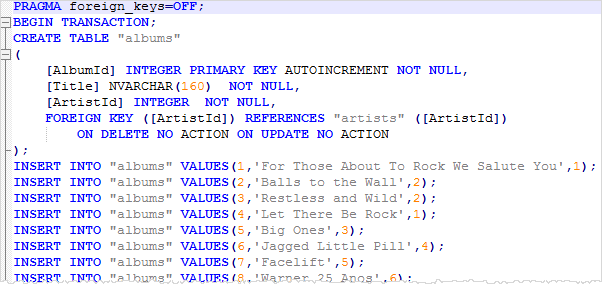
SQLite Tutorial
This tutorial shows you how to use the SQLite dump command and other commands to dump database, tables, data into text files.
torn sphinx
wait
so people have to MANUALLY unlock their databases????
Or is it just me,the idiot?
rain wagon
if a bug in your program causes it to lock up indefinetely, yes
torn sphinx
0.0
wow
let me do that
bruh
I better do this without those programs hahaha
confusing level 100
still locked -_-
I remade the database
I have everything connected with a timeout
I am making the things even more broken,why is it locked -_-
rain wagon
So, pragma journal_mode=WAL needs SQLite 3.7.0 according to https://www.sqlite.org/wal.html. But Python 3.5.3 uses only 2.6.0. Does anyone know an alternative mode that can replace WAL mode? NOt really sure which mode with SQLite is the one I want.
Is using shelve a good alternative?
 golden comet
If someone could help me build a query using peewee (mysql) that will give me the count of each user's items in a table - something equitant to:
SELECT author, COUNT(*) AS cnt FROM Posts GROUP BY author ORDER BY cnt DESC LIMIT 50; - In reading the help docs I'm finding examples but all of them have another col for the count and I'm unsure exactly how to write this. Any help or points in the right direction would be appreciated
crisp tundra
async with self.conn.acquire() as conn:
            print(f'Wiki request received! {nation}')
            nation = nation.title()
            keyWord = nation.rstrip().replace(' ', '_').title()
            tag = await conn.fetchval('SELECT tag FROM tags WHERE country=$1', nation)
            x = await conn.fetchval('SELECT one, two, three, four, five, six, seven FROM idea_names WHERE tag=$1', tag)
            if tag is None:
                await ctx.send('Does your nation have Bielefeld as a name? Neko is sure it doesn\'t exist oAo')
                return
            if keyWord in {'England','Great_Britain'}: keyWord = 'England_Great_Britain'
            if keyWord in {'Granada', 'Andalusia'}: keyWord = 'Granada_Andalusia'
            if keyWord in {'Milan', 'Lombardy'}: keyWord = 'Milan_Lombardy'
            if keyWord in {'Holland', 'Netherlands'}: keyWord = 'Holland_Netherlands'
            async with aiohttp.ClientSession() as cs:
                async with cs.head(f'http://modcoop.org/index.php?title=Expanded_Mod_Family/{keyWord}') as r:
if r.status == 200:```Using asyncpg (library for postgresql)
and discordpy just in case
For some reason, self.conn.acquire sometimes fails to work, saying that the class –called 'me'– doesn't have .conn as a object
but sometimes it wont
discord.ext.commands.errors.CommandInvokeError: Command raised an exception: AttributeError: 'me' object has no attribute 'conn'
nvm I found the error
 gritty pine
You can probably re factor the if-keyword stuff too to make it more general
and marginally faster because i'm assuming you won't have any overlap of keywords so once you detect a match you can ignore all subsequent checks
undone roost
sqlalchemy.exc.InvalidRequestError: When initializing mapper mapped class Audi->audi, expression 'Showing' failed to locate a name ("name 'Showing' is not defined"). If this is a class name, consider adding this relationship() to the <class 'app.main.model.theatre.Audi'> class after both dependent classes have been defined.
i'm getting this error on running my app
this is my model
however i have defined showing class in my model
but it says not defined
undone roost
forget this one
I am getting a different error now...table args must be tuple dict or None
class Reservation(db.Model):
tablename= "reservation"
table_args= {'extend_existing': True}
table_args = (UniqueConstraint('seat', 'showing', name='ticket'))
id=Column(Integer,primary_key=True,autoincrement=True)

seat = Column(Integer, ForeignKey('seat.seat_no'))
showing_id=Column(Integer, ForeignKey('showing.id'))
is there something wrong with the definition?
rich trout
yes
table_args = (UniqueConstraint('seat', 'showing', name='ticket'))
not only overrides table_args, but is missing a comma
it should be (UniqueConstraint(),)
I suspect you'd have to change it slightly to combine them, as righ tnow it's not extending the existing table
look up how to add a unique constraint with other args
I expect it to be straightforwards
undone roost
okei