#botchannel
1 messages · Page 117 of 1
 main arrowBOT
 kindred wyvern
ex all
main arrowBOT
Please enter an FAQ name
- Accusative [Akkusativ]
- Adjective Declension [Adjective endings, Adjektivdeklination]
- also [so, so und also]
- beginner [How to get started, Starting out]
- beibringen [lernen, studieren, Study Vocabulary, unterrichten]
- Beide [Beides, Beides vs. Beide, Beide vs. Beides]
- Birthdays
- case [Cases, grammatical case]
- CEFR [CEFR levels]
- CH [Schweiz, Switzerland]
- Dativ [Dative]
- denn [weil, weil, denn, da]
- der-die-das [gender, genders, Grammatical gender]
- doch 1 [doch beginner]
- duo [Duolingo]
- Du vs. Sie [duzen vs. siezen, Formal and informal speech, Sie]
- Eszett [Scharfes S, ss, ß]
- FAQ
- Gender patterns
- Genitiv [Genitive]
Confused? React with ℹ for more info.
Page 1/3 (42 entries)
kindred wyvern
help evalin
main arrowBOT
[compile|evalin] <code>
Compiles code via rextester.com
You have to pass in a code block with the language
syntax set to one of these:
- python | py
- kotlin | kt
- cpp
- c
- rb
- haskell
- pascal
- bash
- octave
- sql
Python code is automatically wrapped in an async function with its own loop.
Kotlin code is wrapped in a normal function with threads imported.
Additionally, if you'd like to pass input,
please append it after the end of the code block.
 muted hinge
cefr level B
 upbeat karma
evalin python 1+1
main arrowBOT
❌ Bad argument: Missing code block. Please use the following markdown
```language
code here
```
upbeat karma
evalin
A=1+1
 simopr
Evaluation has finished
Result
Evaluation returned nothing.
Absolute running time: 1.7 sec, cpu time: 0.8 sec, memory peak: 21 Mb, absolute service time: 1,72 sec
upbeat karma
evalin
for i in range(10):
  print(i)
Evaluation has finished
Result
0
1
2
3
4
5
6
7
8
9
Absolute running time: 0.68 sec, cpu time: 0.66 sec, memory peak: 21 Mb, absolute service time: 0,69 sec
 untold lily
latex \newcount\colveccount
\newcommand*\colvec[1]{
\global\colveccount#1
\begin{pmatrix}
\colvecnext
}
\def\colvecnext#1{
#1
\global\advance\colveccount-1
\ifnum\colveccount>0
\
\expandafter\colvecnext
\else
\end{pmatrix}
\fi
}
\colvec{1}
main arrowBOT
Latex rendering failed: Missing \endcsname inserted.
 sick forge
faq cefr
main arrowBOT
If you see something like A1, B2 or C1, these represent the proficiency of a speaker in a language they're not native in, and are called CEFR levels. They are valid for any language, not only German!
Roughly speaking, A levels are beginners and C levels are experts. Remember that CEFR level are self-assessed and indicative!
You can see more specific names and descriptions on the Wikipedia page:
https://en.wikipedia.org/wiki/Common_European_Framework_of_Reference_for_Languages
🗨 How do I know what level I am?
If the table on Wikipedia is too generic for you, you can try using this one here:
https://rm.coe.int/168045bb52
Just check each column one at a time: if you can do all it describes, move to the next column. Your level is the highest where you can do the most things.
Alternatively, you can use this questionnaire to estimate your level more accurately:
https://www.laits.utexas.edu/fi/sites/laits.utexas.edu.fi/files/Self Assessment Checklist European.pdf
 grave wind
cefr Level B
main arrowBOT
:x: You already have this role.
grave wind
O perf
 rare sierra
evalin
#!/bin/bash
echo "Hello"
 Mightymauz
Evaluation has finished
Result
```source_file.sh: line 2: unexpected EOF while looking for matching `"'
source_file.sh: line 3: syntax error: unexpected end of file
Absolute running time: 0.2 sec, cpu time: 0.13 sec, memory peak: 3 Mb, absolute service time: 0,21 sec
rare sierra
evalin
#!/bin/bash
echo "Hello"
Evaluation has finished
Result
Hello
Absolute running time: 0.22 sec, cpu time: 0.14 sec, memory peak: 3 Mb, absolute service time: 0,22 sec
rare sierra
evalin
#!/bin/bash
echo "Hello $1"
``` testinput
Evaluation has finished
Result
Hello
Absolute running time: 0.19 sec, cpu time: 0.13 sec, memory peak: 3 Mb, absolute service time: 0,2 sec
 tender trellis
evalin
read memes
echo Hey $memes
nerd
main arrowBOT
 0x1
0x1
Evaluation has finished
Result
Hey nerd
Absolute running time: 0.23 sec, cpu time: 0.16 sec, memory peak: 3 Mb, absolute service time: 0,25 sec
tender trellis
cefr level b
tender trellis
help lookup
main arrowBOT
Page 1/1 (1 commands)
[lookup|lk|translate|trans|dict] <lang_in> <lang_out> <word>
Allows you to look up words you don't know.
Example lookup: >lookup de en laufen
lookup info
List all supported languages.
Use ">help command" for more info on a command.
main arrowBOT
:x: Sorry, this role is not assignable.
Roles you can give yourself
- Level A
- Level B
- Level C
- Learning German
Use >groups for a list of group roles.
tender trellis
group Science
main arrowBOT
This command needs a sub-command. Further help:
Page 1/2 (8 commands)
group
Commands for the central bot group system.
group info <group>
Gets information about a group.
group join <group>
Join a group
group joinall
Join all available groups at once.
group leave <group>
Leave an existing group.
Use ">help command" for more info on a command.
main arrowBOT
❌ Bad argument: Group "group Science" not found.
main arrowBOT
❌ Bad argument: Group "imscrewedsokillmeplease" not found.
tender trellis
sub Medicine
main arrowBOT
❌ Bad argument: Group "Medicine" not found.
 amber ocean
sub sameiwanttocry
main arrowBOT
❌ Bad argument: Group "sameiwanttocry" not found.
tender trellis
sub hugEziomeorKillhimdependingonurmood
main arrowBOT
❌ Bad argument: Group "hugEziomeorKillhimdependingonurmood" not found.
amber ocean
sub killhimhesgoingtodieanyway
main arrowBOT
❌ Bad argument: Group "killhimhesgoingtodieanyway" not found.
tender trellis
sub storyofmylife
main arrowBOT
❌ Bad argument: Group "storyofmylife" not found.
tender trellis
sub didyoutalktoheryet?
main arrowBOT
❌ Bad argument: Group "didyoutalktoheryet?" not found.
amber ocean
sub nopeigotbiganxiety
main arrowBOT
❌ Bad argument: Group "nopeigotbiganxiety" not found.
tender trellis
sub okwellwhataboutplanB?orIcouldhelpsinceurlikemylittlebro 🙂
main arrowBOT
❌ Bad argument: Group "okwellwhataboutplanB?orIcouldhelpsinceurlikemylittlebro 🙂" not found.
amber ocean
sub mylifeisallovertheplacemaybewhenIamsomethingmore
main arrowBOT
❌ Bad argument: Group "mylifeisallovertheplacemaybewhenIamsomethingmore" not found.
tender trellis
sub patshead.iunderstand.loveishard
main arrowBOT
❌ Bad argument: Group "patshead.iunderstand.loveishard" not found.
amber ocean
sub thanks
main arrowBOT
❌ Bad argument: Group "thanks" not found.
tender trellis
">rr level B1"
main arrowBOT
Page 10/15 (40 commands)
Music Commands
current
Return information about the current song.
play <query>
Add a song to the queue.
skip
Skip the current song.
upnext
Show the queue.
Use ">help command" for more info on a command.
 dense cave
word
 short crow
tender trellis
short crow
tender trellis
help
main arrowBOT
Page 3/15 (40 commands)
Faqs Commands
FAQ related commands that serve as FAQ
faq <name>
Allows you to create automatic replies to popular questions and things.
Use ">help command" for more info on a command.
tender trellis
faq commands
main arrowBOT
FAQ not found. Try >explain all.
Note: This entry has been added to our FAQ idea pool.
tender trellis
faq
main arrowBOT
❌ Bad argument: name is a required argument that is missing.
main arrowBOT
Please enter an FAQ name
- Accusative [Akkusativ]
- Adjective Declension [Adjective endings, Adjektivdeklination]
- also [so, so und also]
- beginner [How to get started, Starting out]
- beibringen [lernen, studieren, Study Vocabulary, unterrichten]
- Beide [Beides, Beides vs. Beide, Beide vs. Beides]
- Birthdays
- case [Cases, grammatical case]
- CEFR [CEFR levels]
- CH [Schweiz, Switzerland]
- Dativ [Dative]
- denn [weil, weil, denn, da]
- der-die-das [gender, genders, Grammatical gender]
- doch 1 [doch beginner]
- duo [Duolingo]
- Du vs. Sie [duzen vs. siezen, Formal and informal speech, Sie]
- Eszett [Scharfes S, ss, ß]
- FAQ
- Gender patterns
- Genitiv [Genitive]
Page 1/3 (42 entries)
tender trellis
faq eszett
main arrowBOT
The ß, called Eszett or scharfes S, is a letter of the Standard German alphabet.
🗨 How to type it?
If you're on a US keyboard, you can use the US International layout and type ß with [right alt] + s. There is also an altcode (press [alt], type the numbers and release [alt]):
ß = alt+225
🗨 What about capital ẞ?
Capital ẞ is only used in typography and all caps words (and not even always). It never occurs as the first letter of a word, so you will never really need to be able to write it. ;)
🗨 How to read it?
It is always read as an unvoiced [s], like in the English word ma__ss__.
🗨 When to ß and when to ss?
The pronunciation is the same, but they're used in different positions.
ẞ is used after long vowels, which are vowels pronounced for slightly longer than otherwise (Fuß, Straße); compare the English m__i__nd and m__i__tten: same letter, different length, thus different pronunciation.
ẞ is also used after diphthongs, which are groups of vowels pronounced together (gießen, Preußen).
ss is used after short vowels (Schloss, Abfluss). This also occurs for ck vs k and similar: double consonant means short (even in English, see mitten above!)
ss is also found after diphthongs and long vowels if the two Ses belong to separate parts; this can happen in prefixes (aussteigen) and compound words (Moossee).
🗨 I've seen something that doesn't follow these rules! ‼
Not to worry! The above rules apply for Standard German and you can follow them religiously. If you find exceptions, these are the possible reasons:
- The writer or text follows old rules, where all instances of
ssin the same word becameßregardless of the vowel. - The writer or text comes from Switzerland, where ß is seldom used, if at all.
 true locust
queue
main arrowBOT
Queued songs:
- Da Tweekaz x Sub Zero Project - DRKNSS (Official Video Clip)
Queued by: d_extrumi
Duration: 0:04:09
 main arrowBOT
Now Playing: Beep Beep I'm a Sheep (feat. TomSka & BlackGryph0n) | asdfmovie10 song | LilDeuceDeuce [0:00:26] requested by hecke#6550
 trim flax
faq
main arrowBOT
❌ Bad argument: name is a required argument that is missing.
trim flax
faq beginner
main arrowBOT
How to get started
The simplest way to learn German is to find topics you don’t understand yet and search for explanations of them. This list provides you with a guide for which topics to learn if you are completely new to German. Type the topic into Google (or YouTube) and start learning!
Introduction
1: Alphabet (especially ä, ü, ö and ß)
2: Basic greetings (hello, goodbye, etc.)
Part 1 - Simple Sentence
1: Noun gender & plurals
2: Nominative case (What are cases?)
3: Nominative pronouns (I, you, he, she, etc.)
4: Verbs in present tense
5: Definite/indefinite articles
6: Accusative case (for nouns)
7: Accusative pronouns
8: Word order of simple sentences
9: How to ask questions
Tips
- Always learn the gender of a noun when you learn a new noun
- Learn to use a translation dictionary (e.g. dict.cc, leo.org)
- Use
>faq resourcesto see our list of German learning resources - For listening and pronunciation practice, try watching movies or videos (incl. YouTube)
- You can listen to pronunciation for words on websites like dict.cc, forvo.com, and others
- Practice writing sentences every day (and asking people to correct them)
- Ask as many questions as possible
- Don’t be scared to make mistakes!!!! If you don’t let yourself make mistakes, you will never be able to learn German
 split breach
ex beginner
main arrowBOT
How to get started
The simplest way to learn German is to find topics you don’t understand yet and search for explanations of them. This list provides you with a guide for which topics to learn if you are completely new to German. Type the topic into Google (or YouTube) and start learning!
Introduction
1: Alphabet (especially ä, ü, ö and ß)
2: Basic greetings (hello, goodbye, etc.)
Part 1 - Simple Sentence
1: Noun gender & plurals
2: Nominative case (What are cases?)
3: Nominative pronouns (I, you, he, she, etc.)
4: Verbs in present tense
5: Definite/indefinite articles
6: Accusative case (for nouns)
7: Accusative pronouns
8: Word order of simple sentences
9: How to ask questions
Tips
- Always learn the gender of a noun when you learn a new noun
- Learn to use a translation dictionary (e.g. dict.cc, leo.org)
- Use
>faq resourcesto see our list of German learning resources - For listening and pronunciation practice, try watching movies or videos (incl. YouTube)
- You can listen to pronunciation for words on websites like dict.cc, forvo.com, and others
- Practice writing sentences every day (and asking people to correct them)
- Ask as many questions as possible
- Don’t be scared to make mistakes!!!! If you don’t let yourself make mistakes, you will never be able to learn German
split breach
ex beginner
main arrowBOT
How to get started
The simplest way to learn German is to find topics you don’t understand yet and search for explanations of them. This list provides you with a guide for which topics to learn if you are completely new to German. Type the topic into Google (or YouTube) and start learning!
Introduction
1: Alphabet (especially ä, ü, ö and ß)
2: Basic greetings (hello, goodbye, etc.)
Part 1 - Simple Sentence
1: Noun gender & plurals
2: Nominative case (What are cases?)
3: Nominative pronouns (I, you, he, she, etc.)
4: Verbs in present tense
5: Definite/indefinite articles
6: Accusative case (for nouns)
7: Accusative pronouns
8: Word order of simple sentences
9: How to ask questions
Tips
- Always learn the gender of a noun when you learn a new noun
- Learn to use a translation dictionary (e.g. dict.cc, leo.org)
- Use
>faq resourcesto see our list of German learning resources - For listening and pronunciation practice, try watching movies or videos (incl. YouTube)
- You can listen to pronunciation for words on websites like dict.cc, forvo.com, and others
- Practice writing sentences every day (and asking people to correct them)
- Ask as many questions as possible
- Don’t be scared to make mistakes!!!! If you don’t let yourself make mistakes, you will never be able to learn German
 vale turtle
cefr Level A
tender trellis
ping
main arrowBOT
:ping_pong: Pong! | 2318.39ms
tender trellis
ping
main arrowBOT
:ping_pong: Pong! | 128.26ms
tender trellis
ping
main arrowBOT
:ping_pong: Pong! | 145.76ms
amber ocean
ping
main arrowBOT
:ping_pong: Pong! | 142.4ms
 proper ibex
remind 2019-10-23 ask Atomic for the bosnian verse translation
main arrowBOT
Alright @proper ibex, in 1 month, 1 week and 3 days: ask Atomic for the bosnian verse translation
main arrowBOT
Translations for general
- main road
- headquarters
- dress rehearsal
- general strike
- all-out strike
- attorney general
- lieutenant general
- annual general meeting
 mighty nebula
help lk
main arrowBOT
Page 1/1 (1 commands)
[lookup|lk|translate|trans|dict] <lang_in> <lang_out> <word>
Allows you to look up words you don't know.
Example lookup: >lookup de en laufen
lookup info
List all supported languages.
Use ">help command" for more info on a command.
mighty nebula
lk en es hello
main arrowBOT
Translations for hello
- Hello!
 desert mural
faq all
 left cliff
faq beginner
main arrowBOT
How to get started
The simplest way to learn German is to find topics you don’t understand yet and search for explanations of them. This list provides you with a guide for which topics to learn if you are completely new to German. Type the topic into Google (or YouTube) and start learning!
Introduction
1: Alphabet (especially ä, ü, ö and ß)
2: Basic greetings (hello, goodbye, etc.)
Part 1 - Simple Sentence
1: Noun gender & plurals
2: Nominative case (What are cases?)
3: Nominative pronouns (I, you, he, she, etc.)
4: Verbs in present tense
5: Definite/indefinite articles
6: Accusative case (for nouns)
7: Accusative pronouns
8: Word order of simple sentences
9: How to ask questions
Tips
- Always learn the gender of a noun when you learn a new noun
- Learn to use a translation dictionary (e.g. dict.cc, leo.org)
- Use
>faq resourcesto see our list of German learning resources - For listening and pronunciation practice, try watching movies or videos (incl. YouTube)
- You can listen to pronunciation for words on websites like dict.cc, forvo.com, and others
- Practice writing sentences every day (and asking people to correct them)
- Ask as many questions as possible
- Don’t be scared to make mistakes!!!! If you don’t let yourself make mistakes, you will never be able to learn German
left cliff
@tender trellis
tender trellis
Hmm?
left cliff
Above message 🙂@tender trellis
tender trellis
Oh thanks
untold lily
info
main arrowBOT
Information about Nola1222#2557
ID
188725806065909760
Joined
05/08/2017 08:33 (2 years, 1 month and 1 week ago)
Created
04/06/2016 18:48 (3 years, 3 months and 1 week ago)
Roles
12 roles
 tender trellis
@mint flint
ZUZIA!
 mint flint
tender trellis
mint flint
tender trellis
@mint flint

tender trellis
cefr b
 lapis seal
play miley cyrus mother's daughter
main arrowBOT
❌ No translations found for word tangledness.
 sterile dune
tex "Las manos hacia aribba, las manos hacia abajo
Como los gorilas: Ho-ho-ho-ho"
main arrowBOT
Latex rendering failed: Illegal math \discretionary.
Latex rendering failed: Illegal math \discretionary.

 manic robin
cefr c
 snow compass
ping
main arrowBOT
:ping_pong: Pong! | 149.26ms
upbeat karma
removecefr b
 upbeat compass
ex beginner
main arrowBOT
How to get started
The simplest way to learn German is to find topics you don’t understand yet and search for explanations of them. This list provides you with a guide for which topics to learn if you are completely new to German. Type the topic into Google (or YouTube) and start learning!
Introduction
1: Alphabet (especially ä, ü, ö and ß)
2: Basic greetings (hello, goodbye, etc.)
Part 1 - Simple Sentence
1: Noun gender & plurals
2: Nominative case (What are cases?)
3: Nominative pronouns (I, you, he, she, etc.)
4: Verbs in present tense
5: Definite/indefinite articles
6: Accusative case (for nouns)
7: Accusative pronouns
8: Word order of simple sentences
9: How to ask questions
Tips
- Always learn the gender of a noun when you learn a new noun
- Learn to use a translation dictionary (e.g. dict.cc, leo.org)
- Use
>faq resourcesto see our list of German learning resources - For listening and pronunciation practice, try watching movies or videos (incl. YouTube)
- You can listen to pronunciation for words on websites like dict.cc, forvo.com, and others
- Practice writing sentences every day (and asking people to correct them)
- Ask as many questions as possible
- Don’t be scared to make mistakes!!!! If you don’t let yourself make mistakes, you will never be able to learn German
 pine cipher
cefr level a
main arrowBOT
:x: You already have this role.
 proven halo
cefr lvl b
main arrowBOT
❌ Bad argument: Role "lvl b" not found.
proven halo
cefr level b
main arrowBOT
:heavy_check_mark: I replaced your old CEFR role with Level B.
manic robin
help
main arrowBOT
Page 1/15 (40 commands)
DictCC Commands
lookup <lang_in> <lang_out> <word>
Allows you to look up words you don't know.
Use ">help command" for more info on a command.
manic robin
lookup german english genau
main arrowBOT
❌ german is not a supported language. Use dict info.
manic robin
dict info
main arrowBOT
These languages are supported
- en (
english) - de (
german) - fr (
french) - sv (
swedish) - es (
spanish) - bg (
bulgarian) - ro (
romanian) - it (
italian) - pt (
portuguese) - ru (
russian)
Confused? React with ℹ for more info.
Page 1/3 (25 entries)
manic robin
lookup de en genau
main arrowBOT
Translations for genau
- exactly
- accurate
- precisely
- precise
- accurately
- just
- exact
- very
- closely
- faithful
Confused? React with ℹ for more info.
Page 1/2 (20 entries)
proven halo
lookup de ro genau
main arrowBOT
Translations for genau
- exact
- tocmai
- precis
- întocmai
- anume
- strict vorbind
- exact la fel
- precis
- a calcula ceva exact
- a privi cu atenție
Confused? React with ℹ for more info.
Page 1/2 (15 entries)
proven halo
lookup de ro eben
main arrowBOT
Translations for eben
- tocmai
- abia
- chiar
- neted
- adineauri
- taman
- plan
- plat
- chiar acum
- din acest motiv
Confused? React with ℹ for more info.
Page 1/2 (19 entries)
tender trellis
cefr level b
kindred wyvern
gr c
main arrowBOT
:heavy_check_mark: I replaced your old CEFR role with Level C.
kindred wyvern
gr a
main arrowBOT
:heavy_check_mark: I replaced your old CEFR role with Level A.
upbeat karma
lk de en Hubschrauber
main arrowBOT
Translations for Hubschrauber
- helicopter
- chopper
- whirlybird
- eggbeater
- helicopters
- copter
- gyroplane
- gyroplanes
- ABC helicopter
- advanced blade concept helicopter
Confused? React with ℹ for more info.
Page 1/2 (20 entries)
upbeat karma
lk de en Hubsch
main arrowBOT
❌ No translations found for word Hubsch.
upbeat karma
lk en de pretty
main arrowBOT
Translations for pretty
- hübsch
- ziemlich
- schön
- bezaubernd
- beträchtlich
- charmant
- reizend
- herrlich
- fein
- fesch
Confused? React with ℹ for more info.
Page 1/2 (20 entries)
 wooden frost
Hey Botty, it's been so long. I've missed you
upbeat karma
lk de en gewissenhaft
main arrowBOT
Translations for gewissenhaft
- conscientious
- diligent
- faithful
- scrupulous
- conscientiously
- religious
- painstakingly
- painstaking
- assiduous
- assiduously
Confused? React with ℹ for more info.
Page 1/2 (20 entries)
upbeat karma
lk de en Verwandter
main arrowBOT
Translations for Verwandter
- more related
- relative
- relation
- kinsman
- rellie
- connexion
- affine
- in-law
- relative by marriage
- relative-in-law
Confused? React with ℹ for more info.
Page 1/2 (20 entries)
upbeat karma
lk de en belohnen
main arrowBOT
Translations for belohnen
- to reward sb.
- to award
- to requite
- to remunerate
- to recompense
- to guerdon
- to make sth. worth sb.'s while
- to recompense sb. for doing sth.
- to treat oneself
- to reward the courage
Confused? React with ℹ for more info.
Page 1/2 (11 entries)
 polar swallow
cefr level a
proper ibex
play if you wanna be my lover
 icy egret
play Billie eilish I love you live
 shut smelt
play https://www.youtube.com/watch?v=DNobqcfLb2Y&list=PLIfimecZc3msJK8LjVphzKto3Qs7jl6zv&index=205&t=0s

Listen to Sting & Shaggy’s album “44/876,“ out now. http://smarturl.it/44876 For more, visit: https://www.facebook.com/sting https://twitter.com/officialstin...
skip
main arrowBOT
Capn#9474 has skipped the song.
proper ibex
ex beginner
main arrowBOT
How to get started
The simplest way to learn German is to find topics you don’t understand yet and search for explanations of them. This list provides you with a guide for which topics to learn if you are completely new to German. Type the topic into Google (or YouTube) and start learning!
Introduction
1: Alphabet (especially ä, ü, ö and ß)
2: Basic greetings (hello, goodbye, etc.)
Part 1 - Simple Sentence
1: Noun gender & plurals
2: Nominative case (What are cases?)
3: Nominative pronouns (I, you, he, she, etc.)
4: Verbs in present tense
5: Definite/indefinite articles
6: Accusative case (for nouns)
7: Accusative pronouns
8: Word order of simple sentences
9: How to ask questions
Tips
- Always learn the gender of a noun when you learn a new noun
- Learn to use a translation dictionary (e.g. dict.cc, leo.org)
- Use
>faq resourcesto see our list of German learning resources - For listening and pronunciation practice, try watching movies or videos (incl. YouTube)
- You can listen to pronunciation for words on websites like dict.cc, forvo.com, and others
- Practice writing sentences every day (and asking people to correct them)
- Ask as many questions as possible
- Don’t be scared to make mistakes!!!! If you don’t let yourself make mistakes, you will never be able to learn German
proper ibex
@rapid hemlock maybe this will help ^
icy egret
play working 9 til 5
 finite kelp
cefr Level A
 restive crow
cefr Level A
 carmine panther
cefr Level A
 clear scaffold
help
main arrowBOT
Page 11/15 (40 commands)
OpenEval Commands
Open eval command made for the German server.
Do not try to exploit this.
compile <code>
Compiles code via rextester.com
Use ">help command" for more info on a command.
clear scaffold
groups
main arrowBOT
These groups are currently accessible
- Ouija
- Grammar - Lessons! Subscribe for pings.
- Reading - Lessons! Subscribe for pings.
- Advancedreading - Like Reading but only B2+ level content.
- Coding - For all the coding nerds.
- Food - A group for food talks.
- Gaming - All gaming-related topics.
- Science - STEM-related topics.
- Sciencepractice - For solving science problems.
- Translation - Offers weekly sentences to translate.
- Writing - Join to get weekly and monthly prompts!
Type >sub to join a group or >group joinall to join all available groups .
clear scaffold
help Coding
main arrowBOT
No command called "Coding" found.
clear scaffold
help compile
main arrowBOT
[compile|evalin] <code>
Compiles code via rextester.com
You have to pass in a code block with the language
syntax set to one of these:
- python | py
- kotlin | kt
- cpp
- c
- rb
- haskell
- pascal
- bash
- octave
- sql
- js
Python code is automatically wrapped in an async function with its own loop.
Kotlin code is wrapped in a normal function with threads imported.
Additionally, if you'd like to pass input,
please append it after the end of the code block.
upbeat karma
lk de en lobenswert
main arrowBOT
Translations for lobenswert
- laudable
- commendable
- worthily
- praiseworthy
- commendably
- praisable
- praiseworthily
- applaudable
- celebrable
- laudably
Confused? React with ℹ for more info.
Page 1/2 (11 entries)
upbeat karma
lk de en Hochenflocken
main arrowBOT
❌ No translations found for word Hochenflocken.
upbeat karma
lk de en Haferflocken
main arrowBOT
Translations for Haferflocken
- oatmeal
- oat flakes
- porridge oats
- rolled oats
- rolled oats
upbeat karma
lk de en Antrag
main arrowBOT
Translations for Antrag
- application
- proposal
- request
- claim
- motion
- proposition
- petition
- offer
- overture
- application form
Confused? React with ℹ for more info.
Page 1/2 (20 entries)
upbeat karma
lk de en vorliegen
main arrowBOT
Translations for vorliegen
- to exist
- to be received by sb.
- to be available
- to be there
- to have arrived
- to be present
- to be on / across
- to be on hand
- presence
- sth. may be present
Confused? React with ℹ for more info.
Page 1/2 (20 entries)
upbeat karma
lk de en Tal
main arrowBOT
Translations for Tal
- valley
- valley
- vale
- dale
- dell
- glen
- trough
- everyone in the valley
- intervale
- adaptive valley
Confused? React with ℹ for more info.
Page 1/2 (20 entries)
 rich talon
ex beginner
main arrowBOT
How to get started
The simplest way to learn German is to find topics you don’t understand yet and search for explanations of them. This list provides you with a guide for which topics to learn if you are completely new to German. Type the topic into Google (or YouTube) and start learning!
Introduction
1: Alphabet (especially ä, ü, ö and ß)
2: Basic greetings (hello, goodbye, etc.)
Part 1 - Simple Sentence
1: Noun gender & plurals
2: Nominative case (What are cases?)
3: Nominative pronouns (I, you, he, she, etc.)
4: Verbs in present tense
5: Definite/indefinite articles
6: Accusative case (for nouns)
7: Accusative pronouns
8: Word order of simple sentences
9: How to ask questions
Tips
- Always learn the gender of a noun when you learn a new noun
- Learn to use a translation dictionary (e.g. dict.cc, leo.org)
- Use
>faq resourcesto see our list of German learning resources - For listening and pronunciation practice, try watching movies or videos (incl. YouTube)
- You can listen to pronunciation for words on websites like dict.cc, forvo.com, and others
- Practice writing sentences every day (and asking people to correct them)
- Ask as many questions as possible
- Don’t be scared to make mistakes!!!! If you don’t let yourself make mistakes, you will never be able to learn German
upbeat karma
lk de en spatis
main arrowBOT
❌ No translations found for word spatis.
upbeat karma
lk en de geek
main arrowBOT
Translations for geek
- Langweiler
- Streber
- Fachidiot
- Computerfreak
- Waschlappen
- Fachtrottel
- Geek
- Computer-Versessener
- Alpha-Geek
- Autofreak
Confused? React with ℹ for more info.
Page 1/2 (14 entries)
 strange hemlock
faq beginner
main arrowBOT
How to get started
The simplest way to learn German is to find topics you don’t understand yet and search for explanations of them. This list provides you with a guide for which topics to learn if you are completely new to German. Type the topic into Google (or YouTube) and start learning!
Introduction
1: Alphabet (especially ä, ü, ö and ß)
2: Basic greetings (hello, goodbye, etc.)
Part 1 - Simple Sentence
1: Noun gender & plurals
2: Nominative case (What are cases?)
3: Nominative pronouns (I, you, he, she, etc.)
4: Verbs in present tense
5: Definite/indefinite articles
6: Accusative case (for nouns)
7: Accusative pronouns
8: Word order of simple sentences
9: How to ask questions
Tips
- Always learn the gender of a noun when you learn a new noun
- Learn to use a translation dictionary (e.g. dict.cc, leo.org)
- Use
>faq resourcesto see our list of German learning resources - For listening and pronunciation practice, try watching movies or videos (incl. YouTube)
- You can listen to pronunciation for words on websites like dict.cc, forvo.com, and others
- Practice writing sentences every day (and asking people to correct them)
- Ask as many questions as possible
- Don’t be scared to make mistakes!!!! If you don’t let yourself make mistakes, you will never be able to learn German
strange hemlock
faq resources
main arrowBOT

Google Docs
The resource list of the German Learning and Discussion Discord server. Join us at https://discord.gg/german Grammar: Schenke and Seago - Basic German Miell and Schenke - Intermediate German Hammer’s German grammar and usage, 4th edition pdf Modern German grammar: A pract...
 glad lark
faq german keyboard
main arrowBOT
Being able to type German letters is quite important!
- Schon = already. Schön = beautiful.
- Mutter = mother. Mütter = mothers.
How to? There are several options.
🔸 US International layout: if you're using a US keyboard or a keyboard based on it, the transition is very easy! Everything stays as you know it, except for some symbol keys like ~, ` or ", which can be pressed to add accents. For example " + a = ä. You can also do RightAlt + s = ß.
To use US International on Windows, look for the Region & Language options and switch your selected keyboard layout to US International.
:small_orange_diamond: Use a program like AutoHotkey to automatically type the symbols you need when you type certain shortcuts: https://www.autohotkey.com/
:small_orange_diamond: Alternatively, you can memorise the altcodes for German characters. Learning them is easier than you might think! Simply hold Alt and type the numbers on your numpad:
ä = 132; Ä = 142
ö = 148; Ö = 153
ü = 129; Ü = 154
ß = 225
:small_orange_diamond: If all else fails, you can use ASCII conventions for the characters: add an e to other vowels, and write ss or sz for ß. For example:
ae = ä
oe = ö
ue = ü
ss = ß
But this is discouraged since it's harder to read and... looks ugly. It is only done in situations where alternatives are impossible (fonts with no unicode etc).
glad lark
ß
tender trellis
faq Swiss German
main arrowBOT
What is Swiss German?
Swiss German is the common name for the group of dialects native to Switzerland. It is closely related to the dialects of south-western Germany (e.g. Swabian), and to a lesser extent to the dialects of Austria and Bavaria.
What do you mean, group of dialects?
Because Swiss German is not standardized in any way, there is a lot of variety in how people speak. The differences aren’t large enough to impede understanding, but they are definitely noticable and range from vocabulary over different sounds being used to even differences in grammar!
If I speak German to a Swiss person, will I be understood?
Yes.
All Swiss German speakers have gone through several years of schooling held in Standard German and will definitely understand you without any problems. However, not all Swiss German speakers are very comfortable speaking it themselves, so keep that in mind.
If I want to move to Switzerland, do I have to learn Swiss German?
First of all, make sure to actually learn Standard German. You’ll need it more urgently. But if that’s out of the way, I would advise you to at least learn to understand it. Swiss people really appreciate it when they don’t have to speak Standard German. You don’t have to learn to speak it yourself to integrate. But feel free to try!
Where can I learn Swiss German?
Good question. There’s a collection of resources here: https://www.reddit.com/r/German/comments/abswl2/i_made_a_collection_of_resources_for_learning/
If you find something, let us know. If you have questions, you can always ask in #dialects.
What does it sound like?
It’s been variously described as everything from melodious to throat cancer. Best you just listen yourself:
https://youtu.be/h5-If3WKqfg (Dialect of Graubünden)
https://youtu.be/Gz2S9iggdzM (Slightly over the top comparison)
https://youtu.be/PkGatIgXERI (Classic Bern German song)
See also: >faq Switzerland, >faq Dialects
upbeat karma
lk de en nahende
main arrowBOT
❌ No translations found for word nahende.
upbeat karma
lk de en weich
main arrowBOT
Translations for weich
- soft
- smooth
- tender
- bland
- squashy
- limp
- mellow
- supple
- smoothly
- malleable
Confused? React with ℹ for more info.
Page 1/2 (20 entries)
upbeat karma
lk de en betreuen
main arrowBOT
Translations for betreuen
- to supervise
- to guide sb.
- to steward
- to mentor
- to maintain
- to maintain sth.
- to caretake
- to look after
- to be in charge of sth.
- to caretake sth.
Confused? React with ℹ for more info.
Page 1/2 (12 entries)
upbeat karma
lk de en Studierenden
main arrowBOT
❌ No translations found for word Studierenden.
upbeat karma
lk de en schreibstil
main arrowBOT
Translations for schreibstil
- writing style
- style of writing
- cursive style
- cacography

 tender trellis
help
main arrowBOT
Page 15/15 (40 commands)
WordTrainer Commands
A cog that lets you train your vocabulary.
word
A command that helps you train and expand your vocabulary.
Use ">help command" for more info on a command.
tender trellis
conj ablaufen
main arrowBOT

Konjugation von ablaufen (ist): Verb ablaufen konjugiert im Präteritum, Partizip, Konjunktiv, Imperativ, ... Tabellen, Regeln, Übungen, Downloads, Beispiele und Sprachausgabe.
tender trellis
conj abliefern
main arrowBOT

Konjugation von abliefern: Verb abliefern konjugiert im Präteritum, Partizip, Konjunktiv, Imperativ, ... Tabellen, Regeln, Übungen, Downloads, Beispiele und Sprachausgabe.
amber ocean
hey teri
tender trellis
hoi?
amber ocean
where are you getting the words from?
tender trellis
I was just trying to find the infinitive of "abgeliefert"
@amber ocean sorry for the late reply :D
amber ocean
Thanks, even A2 books are helpful regardless of level.
Repetition is the name of the game
tender trellis
I can send it to you if you want?
amber ocean
Oh yes, that would be amazing!!
manic robin
help
main arrowBOT
Page 1/15 (40 commands)
DictCC Commands
lookup <lang_in> <lang_out> <word>
Allows you to look up words you don't know.
Use ">help command" for more info on a command.
main arrowBOT
❌ jetzt is not a supported language. Use dict info.
manic robin
lookup de en jetzt
main arrowBOT
Translations for jetzt
- now
- currently
- at the moment
- This is it!
- present
- hence
- henceforth
- as of now
- from now on
- heretofore
Confused? React with ℹ for more info.
Page 1/2 (20 entries)
manic robin
lookup en de to
main arrowBOT
Translations for to
- zu
- bis
- nach
- an
- auf
- Wirbel
- Aufregung
- Getue
- Tamtam
- Gedöns
Confused? React with ℹ for more info.
Page 1/2 (20 entries)
manic robin
lookup en de translate
main arrowBOT
Translations for translate
- übersetzen
- konvertieren
- umrechnen
- umwandeln
- etw. umsetzen
- verschieben
- übertragen
- jdn. entrücken
- überführen
- wiedergeben
Confused? React with ℹ for more info.
Page 1/2 (20 entries)
manic robin
lookup de en mehr
main arrowBOT
Translations for mehr
- more
- further
- multi-
- poly-
- mair
- plus
- majority of votes
- a good deal more
- once again
- once more
Confused? React with ℹ for more info.
Page 1/2 (20 entries)
manic robin
lookup de en los
main arrowBOT
Translations for los
- Go!
- loose
- off
- -less
- void of ...
- Let's go!
- Look sharp!
- fate
- lot
- batch
Confused? React with ℹ for more info.
Page 1/2 (20 entries)
manic robin
lookup de en don't
main arrowBOT
Translations for don't
- Don't!
- don't
- Don't!
- Don't!
- Don't!
- Dunno.
- Dunno.
- Dunno.
- Meh.
- Meh.
Confused? React with ℹ for more info.
Page 1/2 (20 entries)
tender trellis
sub
main arrowBOT
❌ Bad argument: group is a required argument that is missing.
 manic star
sub
tender trellis
sub
main arrowBOT
❌ Bad argument: group is a required argument that is missing.
manic star
sub
main arrowBOT
❌ Bad argument: group is a required argument that is missing.
amber ocean
sub grammar
main arrowBOT
:x: You're already in this group.
tender trellis
sub Reading
main arrowBOT
:x: You're already in this group.
amber ocean
sub all
main arrowBOT
❌ Bad argument: Group "all" not found.
amber ocean
sub group
main arrowBOT
❌ Bad argument: Group "group" not found.
amber ocean
join group all
tender trellis
cefr level B
main arrowBOT
:x: You already have this role.
amber ocean
join group all
manic star
cefr level A
tender trellis
sub reading
main arrowBOT
:x: You're already in this group.
amber ocean
sup mate
tender trellis
u think u are so cool
amber ocean
sup patrick
tender trellis
reality is....im cooler
amber ocean
reality can be whatever I want
amber ocean
you make me un poco loco
manic star
un pocitito loco
main arrowBOT
❌ Bad argument: lang_in is a required argument that is missing.
main arrowBOT
❌ Bad argument: lang_out is a required argument that is missing.
tender trellis

The Official LINKIN PARK YouTube Channel. Want more LPTV? Check out all episodes http://bit.ly/1LODGiU iTunes: http://apple.co/1LL4AaM Spotify: http://spoti....
 brisk monolith
Habt dies eine Queue?
main arrowBOT
❌ Bad argument: query is a required argument that is missing.
brisk monolith
play Kikuo - Hole-dwelling
forgive me for being a weeb
but I ask no forgiveness either way

play Cafe Tacvba - Esa noche
play Mecano - hijo de la luna
play Cafe Tacvba - Ingrata
 gaunt cliff
cefr Level B
main arrowBOT
:heavy_check_mark: I replaced your old CEFR role with Level B.
tender trellis
cefr Level B
tender trellis
lookup en de to borrow
main arrowBOT
Translations for to borrow
- ausleihen
- borgen
- entlehnen
- entleihen
- Kredit aufnehmen
- sich ausleihen
- sich Geld leihen
- sich verschulden
- (sich ) etw. leihen
- etw. mitgehen lassen
Page 1/2 (20 entries)
tender trellis
lookup en de Lackadasical
main arrowBOT
❌ No translations found for word Lackadasical.
tender trellis
lookup en de Law of meat
main arrowBOT
Translations for Law of meat
- Fleischhygienegesetz
- Fleischkonserven
- Fleischbrocken
- Fleischgenuss
- Fleischteil
- Teile
- Fleischstück
- Fleischstücke
- Fleischmenge
- Fleischschnitte
Confused? React with ℹ for more info.
Page 1/2 (20 entries)
tender trellis
lookup en de Narcotics Prescription Regulation
main arrowBOT
Translations for Narcotics Prescription Regulation
- Betäubungsmittelgesetz
- Arzneimittelbehörde
- allosterische Regulation
- hormonale Regulation
- CLP-Verordnung
- Betäubungsmittel
- Narkotika
- Rauschgift
- Säure-Base-Regulation
- Injektionsnarkotika
Confused? React with ℹ for more info.
Page 1/2 (20 entries)
tender trellis
lookup en de to watch
main arrowBOT
Translations for to watch
- ankieken
- beobachten
- bewachen
- gucken
- kucken
- überwachen
- wachen
- zugucken
- zuschauen
- zusehen
Confused? React with ℹ for more info.
Page 1/2 (20 entries)
 sharp rampart
cefr level A
 onyx iris
cefr Level B
tender trellis
cefr level A
tender trellis
ping
main arrowBOT
:ping_pong: Pong! | 264.75ms
tender trellis
ping
main arrowBOT
:ping_pong: Pong! | 171.06ms
 rough abyss
remind
main arrowBOT
❌ Bad argument: when is a required argument that is missing.
amber ocean
forgetting what you want to remember is a way of life
 ruby gale
faq all
main arrowBOT
Please enter an FAQ name
- Accusative [Akkusativ]
- Adjective Declension [Adjective endings, Adjektivdeklination]
- also [so, so und also]
- beginner [How to get started, Starting out]
- beibringen [lernen, studieren, Study Vocabulary, unterrichten]
- Beide [Beides, Beides vs. Beide, Beide vs. Beides]
- Birthdays
- case [Cases, grammatical case]
- CEFR [CEFR levels]
- CH [Schweiz, Switzerland]
- Dativ [Dative]
- denn [weil, weil, denn, da]
- der-die-das [gender, genders, Grammatical gender]
- doch 1 [doch beginner]
- duo [Duolingo]
- Du vs. Sie [duzen vs. siezen, Formal and informal speech, Sie]
- Eszett [Scharfes S, ss, ß]
- FAQ
- Gender patterns
- Genitiv [Genitive]
Page 1/3 (42 entries)
 quartz agate
ping
amber ocean
ping
main arrowBOT
:ping_pong: Pong! | 278.01ms
amber ocean
ping
main arrowBOT
:ping_pong: Pong! | 148.04ms
quartz agate
How do I get the native speaker tag? :D
tender trellis
cefr native
main arrowBOT
❌ Bad argument: Role "native" not found.
desert mural
ex beginner
main arrowBOT
How to get started
The simplest way to learn German is to find topics you don’t understand yet and search for explanations of them. This list provides you with a guide for which topics to learn if you are completely new to German. Type the topic into Google (or YouTube) and start learning!
Introduction
1: Alphabet (especially ä, ü, ö and ß)
2: Basic greetings (hello, goodbye, etc.)
Part 1 - Simple Sentence
1: Noun gender & plurals
2: Nominative case (What are cases?)
3: Nominative pronouns (I, you, he, she, etc.)
4: Verbs in present tense
5: Definite/indefinite articles
6: Accusative case (for nouns)
7: Accusative pronouns
8: Word order of simple sentences
9: How to ask questions
Tips
- Always learn the gender of a noun when you learn a new noun
- Learn to use a translation dictionary (e.g. dict.cc, leo.org)
- Use
>faq resourcesto see our list of German learning resources - For listening and pronunciation practice, try watching movies or videos (incl. YouTube)
- You can listen to pronunciation for words on websites like dict.cc, forvo.com, and others
- Practice writing sentences every day (and asking people to correct them)
- Ask as many questions as possible
- Don’t be scared to make mistakes!!!! If you don’t let yourself make mistakes, you will never be able to learn German
 zinc arch
sub Grammar
main arrowBOT
:x: You're already in this group.
quartz agate
sub
main arrowBOT
❌ Bad argument: group is a required argument that is missing.
quartz agate
help
main arrowBOT
Page 1/15 (40 commands)
DictCC Commands
lookup <lang_in> <lang_out> <word>
Allows you to look up words you don't know.
Use ">help command" for more info on a command.
quartz agate
help star
main arrowBOT
Page 1/1 (4 commands)
star <message>
Stars a message via message ID.
To star a message you should right click on the on a message and then
click "Copy ID". You must have Developer Mode enabled to get that
functionality.
A message needs to be present in the starboard in order for this command to work.
It is recommended that you react to a message with ⭐ instead.
You can only star a message once.
star random [member]
Shows a random starred message.
star show <message>
Shows a starred message via its ID.
star stats [member]
Shows statistics on the starboard usage of the server or a member.
star who <message>
Show who starred a message.
Use ">help command" for more info on a command.
 alpine vault
cefr Level A
main arrowBOT
:x: You already have this role.
main arrowBOT
Both Beide and Beides mean "both", then how to differentiate them?
🔸 Use beide if the items are of the same kind.
🔸 If the items are different, use beides.
- Ich will beide Äpfel!
- Möchten Sie Ketchup oder Mayo?
- Beides, danke.
🔸 With people you always use beide.
🔸 Article or no article?
An article is used when the people described are doing something together.
- Die beide sind verlobt. (they are engaged to one another)
- Beide sind verlobt. (they are both engaged, each to their own significant other)
Note: other forms of beid* like beidem or beiden depend on grammatical case, see >explain case.
FAQ not found. Did you mean...
N-Declension
Adjective Declension
A Brief Guide to Memorizing German Noun and Adjective Declension by Basementality
https://docs.google.com/document/d/1jWl5-kkqF3FQLDzrz8XLBJj7hvPFQK7MT5SYEDGK65E/edit

Google Docs
A Brief Guide to Memorizing German Noun and Adjective Declension Introduction Don’t try to memorize this whole guide at once. This guide was written to help people learn these concepts in parts over a period of time. This way you will (hopefully) be able to remember the i...
 outer flare
main arrowBOT
outer flare
main arrowBOT
:x: You're already in this group.
lapis seal
queue
main arrowBOT
Queued songs:
- Jane Monheit / Caminhos Cruzados
Queued by: Atomic Blond
Duration: 0:05:00
lapis seal
np
main arrowBOT
Now Playing: Käptn Peng - Sockosophie [0:01:06] requested by Derrest#3583
 karmic peak
ping
main arrowBOT
:ping_pong: Pong! | 24129.84ms
tender trellis
sub > Reading
tender trellis
play byebye cro
aha
play das ist dein leben
@red magnet
hier
play wolke 4
 red magnet

Oldie but Goldie - einer der ersten ganz großen Hits von Cro. Immer noch Fire! Das neue Album tru. OUT NOW: https://cro.lnk.to/TRUID Kontakt, News und mehr: ...
tender trellis
play verliebt antilopen
main arrowBOT
❌ Bad argument: group is a required argument that is missing.
❌ Bad argument: Group "all" not found.
:white_check_mark: Added you to all available groups.
 potent skiff
sub Reading
main arrowBOT
:x: You're already in this group.
upbeat karma
lk de en ausstehend
main arrowBOT
Translations for ausstehend
- pending
- outstanding
- receivable
- enduring
- remaining
upbeat karma
lk de en wählen
main arrowBOT
Translations for wählen
- to pick sb./sth.
- to choose
- to vote
- to elect
- to dial
- to select
- to adopt
- to ballot (for sth.)
- to return
- to make one's choice
Page 1/2 (20 entries)
upbeat karma
lk de en beheben
main arrowBOT
Translations for beheben
- to correct
- to remedy
- to remove
- to cure sth.
- to fix sth.
- to rectify
- to eliminate
- to get cash back
- to patch
- to troubleshoot
Confused? React with ℹ for more info.
Page 1/2 (20 entries)
upbeat karma
lk de en Abschließen
main arrowBOT
Translations for Abschließen
- to lock
- to complete
- to conclude sth.
- to negotiate
- to finish sth.
- to close
- to arrange
- to terminate
- to finalize
- to finalise
Confused? React with ℹ for more info.
Page 1/2 (20 entries)
upbeat karma
lk de en ausführen
main arrowBOT
Translations for ausführen
- to implement sth.
- to accomplish sth.
- to perform sth.
- to conduct sth.
- to execute sth.
- to obey sth.
- to achieve sth.
- to do sth.
- to export sth.
- to run sth.
Confused? React with ℹ for more info.
Page 1/2 (20 entries)
upbeat karma
lk de en Absatz
main arrowBOT
Translations for Absatz
- heel
- paragraph
- sales
- turnover
- passage
- outlet
- marketing
- sale
- section
- subparagraph
Confused? React with ℹ for more info.
Page 1/2 (20 entries)
upbeat karma
lk de en Umlauf
main arrowBOT
Translations for Umlauf
- orbital
- circulation
- currency
- revolution
- convolution
- orbit
- tour
- whitlow
- paronychia
- circulating
Page 1/2 (20 entries)
upbeat karma
lk de en Verteilung
main arrowBOT
Translations for Verteilung
- distribution
- dispersion
- allocation
- dispensation
- repartition
- dissemination
- diversification
- deployment
- apportionment
- spreading
Confused? React with ℹ for more info.
Page 1/2 (20 entries)
 pseudo peak
help
main arrowBOT
Page 6/15 (40 commands)
German Commands
Commands used by the German learning server.
cefr [role]
Assigns a role to you from a list of available roles.
removecefr <role>
Removes a previously assigned role.
verb <verb>
Get the conjugation for a verb you provided.
Use ">help command" for more info on a command.
pseudo peak
dog
 pseudo peak
cefr
main arrowBOT
Roles you can give yourself
- Level A
- Level B
- Level C
- Learning German
Use >groups for a list of group roles.
main arrowBOT
Translations for empfehlen
- préconiser qc.
- prôner qc.
- indiquer qc.
- conseiller qc. à qn.
- recommander qc. à qn.
- tirer sa révérence à qn.
- préconiser faire qc.
upbeat karma
cat
main arrowBOT
 upbeat karma
katze
main arrowBOT
 upbeat karma
lk de en Täschchen
main arrowBOT
Translations for Täschchen
- purse
- small bag
upbeat karma
lk de en kriechen
main arrowBOT
Translations for kriechen
- to crawl
- to creep
- to grovel
- to toady
- to cringe
- to trail
- to truckle
- to bootlick
- to crouch (to)
- to run at crawl speed
Confused? React with ℹ for more info.
Page 1/2 (20 entries)
upbeat karma
lk de en Aufgabengebiet
main arrowBOT
Translations for Aufgabengebiet
- assignment
- remit
- range of duty
upbeat karma
lk de en reim
main arrowBOT
Translations for reim
- rhyme
- rime
- consonance of words
- mosaic rhyme
- masculine rhyme
- perfect rhyme
- embracing rhyme
- envelope rhyme
- forced rhyme
- half rhyme
Page 1/2 (20 entries)
upbeat karma
lk de en zuging
main arrowBOT
Translations for zuging
- from whom the order was received
tender trellis
cefr
main arrowBOT
Roles you can give yourself
- Level A
- Level B
- Level C
- Learning German
Use >groups for a list of group roles.
tender trellis
cefr Learning German
main arrowBOT
:x: You already have this role.
 karmic otter
group joinall
main arrowBOT
:white_check_mark: Added you to all available groups.
icy egret
group joinall
main arrowBOT
:white_check_mark: Added you to all available groups.
amber ocean
You da best hecke
icy egret
I know love 
desert mural
faq weil
main arrowBOT
weil vs denn vs da
These are the three common causal conjunctions in German: weil, denn, and da. They are all used to introduce a cause or reason to something and are analagous to 'because' or 'since' in English.
So what are the differences between them?
The main difference is the placement of the verb. denn is a coordinating conjunction, so it introduces a main clause and the verb is the second element:
Ich habe einen Apfel gegessen, denn ich hatte Hunger.
weil and da are subordinating conjunctions, so introduce subordinate clauses, where the verb is (usually) the last element:
Ich habe einen Apfel gegessen, weil/da ich Hunger hatte.
Subordinating conjunctions can introduce a sentence:
Weil/da ich Hunger hatte, habe ich einen Apfel gegessen.
But this does not work with a coordinating conjunction like denn:
❌ Denn ich hatte Hunger, habe ich einen Apfel gegessen.
What are the other differences?
There are many subtle differences in usage between them that you can only really learn by immersion. However, there are a few of note:
da is similar to English 'as' or 'since', in that it often precedes a main clause and introduces a reason that is already known.
weil can have qualifiers like nur, but this does not work (or sounds pecuilar) with the other conjunctions:
Ich habe ihn festgenommen, nur weil ich sein Grinsen nicht mochte.
It can also have a 'placeholder' adverb, like darum, deshalb, or deswegen, in a main clause, where it points to the subordinate clause:
Er konnte deswegen nicht kommen, weil er krank war.
When should I use which?
You can use whichever one you like and you will be understood. However, weil is widely favoured in spoken language, followed by da. denn is not common in spoken language, but still fairly common in written language.
 barren idol
faq umlaut
main arrowBOT
FAQ not found. Try >explain all.
Note: This entry has been added to our FAQ idea pool.
barren idol
explain all
main arrowBOT
Please enter an FAQ name
- German keyboard [German letters, Keyboard]
- Glossary [Grammar terms, Grammatical terms]
- gsw [Swiss German]
- Homework [How to ask a question, Translation]
- International Phonetic Alphabet [IPA, Pronunciation, Sound transcription]
- kein [Negation, nicht]
- kennen [wissen, wissen und kennen]
- KII 1 [Usage of Konjunktiv II]
- KII 2 [Structure of Konjunktiv II]
- Nach-In-Auf-Zu [Prepositions of Place Part 1]
- N-Declension [N-Deklination, Weak Nouns]
- Nominativ [Nominative]
- Passiv [Passive]
- Proposals [Suggestions]
- Resource List [Resources]
- schauen [seeing verbs, sehen]
- Stative Passive [Zustandspassiv]
- tias
- um zu [Usage of zu]
- verbs word order [Word Order for Verbs, word order verbs]
Page 2/3 (42 entries)
tender trellis
cefr
main arrowBOT
Roles you can give yourself
- Level A
- Level B
- Level C
- Learning German
Use >groups for a list of group roles.
tender trellis
cefr A
main arrowBOT
:x: You already have this role.
tender trellis
cefr B
main arrowBOT
:heavy_check_mark: I replaced your old CEFR role with Level B.
tender trellis
danke
barren idol
faq German keyboard
main arrowBOT
Being able to type German letters is quite important!
- Schon = already. Schön = beautiful.
- Mutter = mother. Mütter = mothers.
How to? There are several options.
🔸 US International layout: if you're using a US keyboard or a keyboard based on it, the transition is very easy! Everything stays as you know it, except for some symbol keys like ~, ` or ", which can be pressed to add accents. For example " + a = ä. You can also do RightAlt + s = ß.
To use US International on Windows, look for the Region & Language options and switch your selected keyboard layout to US International.
:small_orange_diamond: Use a program like AutoHotkey to automatically type the symbols you need when you type certain shortcuts: https://www.autohotkey.com/
:small_orange_diamond: Alternatively, you can memorise the altcodes for German characters. Learning them is easier than you might think! Simply hold Alt and type the numbers on your numpad:
ä = 132; Ä = 142
ö = 148; Ö = 153
ü = 129; Ü = 154
ß = 225
:small_orange_diamond: If all else fails, you can use ASCII conventions for the characters: add an e to other vowels, and write ss or sz for ß. For example:
ae = ä
oe = ö
ue = ü
ss = ß
But this is discouraged since it's harder to read and... looks ugly. It is only done in situations where alternatives are impossible (fonts with no unicode etc).
 umbral ravine
faq German keyboard
main arrowBOT
Being able to type German letters is quite important!
- Schon = already. Schön = beautiful.
- Mutter = mother. Mütter = mothers.
How to? There are several options.
🔸 US International layout: if you're using a US keyboard or a keyboard based on it, the transition is very easy! Everything stays as you know it, except for some symbol keys like ~, ` or ", which can be pressed to add accents. For example " + a = ä. You can also do RightAlt + s = ß.
To use US International on Windows, look for the Region & Language options and switch your selected keyboard layout to US International.
:small_orange_diamond: Use a program like AutoHotkey to automatically type the symbols you need when you type certain shortcuts: https://www.autohotkey.com/
:small_orange_diamond: Alternatively, you can memorise the altcodes for German characters. Learning them is easier than you might think! Simply hold Alt and type the numbers on your numpad:
ä = 132; Ä = 142
ö = 148; Ö = 153
ü = 129; Ü = 154
ß = 225
:small_orange_diamond: If all else fails, you can use ASCII conventions for the characters: add an e to other vowels, and write ss or sz for ß. For example:
ae = ä
oe = ö
ue = ü
ss = ß
But this is discouraged since it's harder to read and... looks ugly. It is only done in situations where alternatives are impossible (fonts with no unicode etc).
umbral ravine
faq Präteritum
main arrowBOT
FAQ not found. Try >explain all.
Note: This entry has been added to our FAQ idea pool.
 frank lichen
groups
main arrowBOT
These groups are currently accessible
- Ouija
- Grammar - Lessons! Subscribe for pings.
- Reading - Lessons! Subscribe for pings.
- Advancedreading - Like Reading but only B2+ level content.
- Coding - For all the coding nerds.
- Food - A group for food talks.
- Gaming - All gaming-related topics.
- Science - STEM-related topics.
- Sciencepractice - For solving science problems.
- Translation - Offers weekly sentences to translate.
- Writing - Join to get weekly and monthly prompts!
Type >sub to join a group or >group joinall to join all available groups .
frank lichen
gr food
main arrowBOT
:x: Sorry, this role is not assignable.
Roles you can give yourself
- Level A
- Level B
- Level C
- Learning German
Use >groups for a list of group roles.
frank lichen
group join food
main arrowBOT
:x: You're already in this group.
upbeat karma
lk de en widerlegen
main arrowBOT
Translations for widerlegen
- to refute sb./sth.
- to disprove sth.
- to confute
- to confound
- to belie sb./sth.
- to debunk
- to discount
- to rebut
- to falsify
- to disconfirm sth.
Confused? React with ℹ for more info.
Page 1/2 (20 entries)
 green fern
faq Nach-In-Auf-Zu
main arrowBOT
Generally you use the preposition nach when talking about going to countries, cities or directions, for example:
(1) Ich fahre nach Berlin. (I’m going to Berlin.)
(2) Ich gehe nach Westen. (I’m going west.)
(3) Ich fahre nach Deutschland. (I'm going to Germany.)
‼ Note that nach does not work with countries or regions that take an article. In this case you need to replace it with in, for example: Ich fahre in die Schweiz. (I’m going to Switzerland.)
In addition to that you will need to use auf for specific islands, for example: Ich fliege auf die Balearen. (I fly to the Balearic Islands.)
Here you can find a map with countries that take an article: http://i.imgur.com/QRFA2WI.png
🌟 nach is also idiomatically used in nach Hause gehen (to go home)
The preposition zu is used when talking about going to people, or places with a proper name, for example:
(4) Ich gehe zu ihm. (I go to him.)
(5) Ich gehe zum [zu dem] Arzt. (I go to the doctor.)
(6) Ich gehe zu Aldi. (I go to Aldi.)
You use in if you will end up inside a place or location, for example:
(7) Ich gehe in die Kirche. (I go to church.)
(8) Ich gehe ins [in das] Kino. (I go to the cinema.)
You use auf if you will end up on something, or for going to formal events, for example:
(9) Ich klettere auf den Berg. (I climb up the mountain.)
(10) Ich gehe auf die Toilette. (I go to the toilet.)
(11) Ich gehe auf eine Party. (I go to a party.)
🌟 When in doubt, use zu, since you can often replace in and auf with zu, for example:
(12) Ich gehe zur Kirche. (I go to the church.) [but not necessarily inside]
(13) Ich gehe zu einer Party. (I go to a party.)
‼ However, note that you cannot replace zu with in if it would be absurd to speak of going inside:
(14) Ich fahre in die Kirche. (I drive into the church.)
green fern
ex prepositions of Place part 2
main arrowBOT
FAQ not found. Did you mean...
Prepositions of Place Part 1
green fern
ex prepositions of Place Part 2
main arrowBOT
FAQ not found. Did you mean...
Prepositions of Place Part 1
main arrowBOT
Page 1/15 (40 commands)
DictCC Commands
lookup <lang_in> <lang_out> <word>
Allows you to look up words you don't know.
Use ">help command" for more info on a command.
upbeat karma
lk de en überarbeiten
main arrowBOT
Translations for überarbeiten
- to revise
- to edit
- to rework
- to redact
- to review
- to remaster sth.
- to blue-pencil
- to re-engineer
- to go over (again)
- to review and edit
Confused? React with ℹ for more info.
Page 1/2 (15 entries)
upbeat karma
lk de en betrachten
main arrowBOT
Translations for betrachten
- to consider sth.
- to regard sb./sth.
- to contemplate sth.
- to view sb./sth.
- to observe sb./sth.
- to eye sb./sth.
- to behold sb./sth.
- to sight sth.
- to look at sb./sth.
- to look upon sb./sth.
Confused? React with ℹ for more info.
Page 1/2 (20 entries)
 sick moat
help
main arrowBOT
Page 15/15 (40 commands)
WordTrainer Commands
A cog that lets you train your vocabulary.
word
A command that helps you train and expand your vocabulary.
Use ">help command" for more info on a command.
sick moat
rr Learning German
 finite token
help
main arrowBOT
Page 1/15 (40 commands)
DictCC Commands
lookup <lang_in> <lang_out> <word>
Allows you to look up words you don't know.
Use ">help command" for more info on a command.
finite token
cefr
main arrowBOT
Roles you can give yourself
- Level A
- Level B
- Level C
- Learning German
Use >groups for a list of group roles.
finite token
groups
main arrowBOT
These groups are currently accessible
- Ouija
- Grammar - Lessons! Subscribe for pings.
- Reading - Lessons! Subscribe for pings.
- Advancedreading - Like Reading but only B2+ level content.
- Coding - For all the coding nerds.
- Food - A group for food talks.
- Gaming - All gaming-related topics.
- Science - STEM-related topics.
- Sciencepractice - For solving science problems.
- Translation - Offers weekly sentences to translate.
- Writing - Join to get weekly and monthly prompts!
Type >sub to join a group or >group joinall to join all available groups .
finite token
sub
main arrowBOT
❌ Bad argument: group is a required argument that is missing.
main arrowBOT
Page 6/15 (40 commands)
German Commands
Commands used by the German learning server.
cefr [role]
Assigns a role to you from a list of available roles.
removecefr <role>
Removes a previously assigned role.
verb <verb>
Get the conjugation for a verb you provided.
Use ">help command" for more info on a command.
finite token
cefr
main arrowBOT
Roles you can give yourself
- Level A
- Level B
- Level C
- Learning German
Use >groups for a list of group roles.
 tall igloo
faq beginner
main arrowBOT
How to get started
The simplest way to learn German is to find topics you don’t understand yet and search for explanations of them. This list provides you with a guide for which topics to learn if you are completely new to German. Type the topic into Google (or YouTube) and start learning!
Introduction
1: Alphabet (especially ä, ü, ö and ß)
2: Basic greetings (hello, goodbye, etc.)
Part 1 - Simple Sentence
1: Noun gender & plurals
2: Nominative case (What are cases?)
3: Nominative pronouns (I, you, he, she, etc.)
4: Verbs in present tense
5: Definite/indefinite articles
6: Accusative case (for nouns)
7: Accusative pronouns
8: Word order of simple sentences
9: How to ask questions
Tips
- Always learn the gender of a noun when you learn a new noun
- Learn to use a translation dictionary (e.g. dict.cc, leo.org)
- Use
>faq resourcesto see our list of German learning resources - For listening and pronunciation practice, try watching movies or videos (incl. YouTube)
- You can listen to pronunciation for words on websites like dict.cc, forvo.com, and others
- Practice writing sentences every day (and asking people to correct them)
- Ask as many questions as possible
- Don’t be scared to make mistakes!!!! If you don’t let yourself make mistakes, you will never be able to learn German
tall igloo
faq resources
main arrowBOT
Google Docs
The resource list of the German Learning and Discussion Discord server. Join us at https://discord.gg/german Grammar: Schenke and Seago - Basic German Miell and Schenke - Intermediate German Hammer’s German grammar and usage, 4th edition pdf Modern German grammar: A pract...
main arrowBOT
❌ Bad argument: Group "group" not found.
 magic grove
group
main arrowBOT
This command needs a sub-command. Further help:
Page 1/2 (8 commands)
group
Commands for the central bot group system.
group info <group>
Gets information about a group.
group join <group>
Join a group
group joinall
Join all available groups at once.
group leave <group>
Leave an existing group.
Use ">help command" for more info on a command.
magic grove
group joinall
main arrowBOT
:white_check_mark: Added you to all available groups.
wooden frost
Testing my new nick
 steel token
desert mural
steel token
desert mural
faq prepositions
main arrowBOT
FAQ not found. Did you mean...
Prepositions of Place Part 1
desert mural
faq prepositions of place part 1
main arrowBOT
Generally you use the preposition nach when talking about going to countries, cities or directions, for example:
(1) Ich fahre nach Berlin. (I’m going to Berlin.)
(2) Ich gehe nach Westen. (I’m going west.)
(3) Ich fahre nach Deutschland. (I'm going to Germany.)
‼ Note that nach does not work with countries or regions that take an article. In this case you need to replace it with in, for example: Ich fahre in die Schweiz. (I’m going to Switzerland.)
In addition to that you will need to use auf for specific islands, for example: Ich fliege auf die Balearen. (I fly to the Balearic Islands.)
Here you can find a map with countries that take an article: http://i.imgur.com/QRFA2WI.png
🌟 nach is also idiomatically used in nach Hause gehen (to go home)
The preposition zu is used when talking about going to people, or places with a proper name, for example:
(4) Ich gehe zu ihm. (I go to him.)
(5) Ich gehe zum [zu dem] Arzt. (I go to the doctor.)
(6) Ich gehe zu Aldi. (I go to Aldi.)
You use in if you will end up inside a place or location, for example:
(7) Ich gehe in die Kirche. (I go to church.)
(8) Ich gehe ins [in das] Kino. (I go to the cinema.)
You use auf if you will end up on something, or for going to formal events, for example:
(9) Ich klettere auf den Berg. (I climb up the mountain.)
(10) Ich gehe auf die Toilette. (I go to the toilet.)
(11) Ich gehe auf eine Party. (I go to a party.)
🌟 When in doubt, use zu, since you can often replace in and auf with zu, for example:
(12) Ich gehe zur Kirche. (I go to the church.) [but not necessarily inside]
(13) Ich gehe zu einer Party. (I go to a party.)
‼ However, note that you cannot replace zu with in if it would be absurd to speak of going inside:
(14) Ich fahre in die Kirche. (I drive into the church.)
 shut raft
cefr Level A
 simple glacier
lk en de betray
main arrowBOT
Translations for betray
- verraten
- betrügen
- preisgeben
- jdn. hintergehen
- jdn. verraten
- jdn. betrügen
- Verrat begehen
- im Stich lassen
- jdm. die Treue brechen
- Unwissenheit zeigen
Confused? React with ℹ for more info.
Page 1/2 (20 entries)
 meager wigeon
cefr Level A
main arrowBOT
Translations for intriguing
- faszinierend
- verblüffend
- intrigierend
- interessante Hypothese
untold lily
latex \pmqty{x\y\z}
main arrowBOT
Latex rendering failed: Undefined control sequence.
tender trellis
cefr Level A
 midnight coyote
groups
main arrowBOT
These groups are currently accessible
- Ouija
- Grammar - Lessons! Subscribe for pings.
- Reading - Lessons! Subscribe for pings.
- Advancedreading - Like Reading but only B2+ level content.
- Coding - For all the coding nerds.
- Food - A group for food talks.
- Gaming - All gaming-related topics.
- Science - STEM-related topics.
- Sciencepractice - For solving science problems.
- Translation - Offers weekly sentences to translate.
- Writing - Join to get weekly and monthly prompts!
Type >sub to join a group or >group joinall to join all available groups .
 distant aurora
faq
main arrowBOT
❌ Bad argument: name is a required argument that is missing.
distant aurora
faq resources
main arrowBOT
Google Docs
The resource list of the German Learning and Discussion Discord server. Join us at https://discord.gg/german Grammar: Schenke and Seago - Basic German Miell and Schenke - Intermediate German Hammer’s German grammar and usage, 4th edition pdf Modern German grammar: A pract...
karmic peak
star random
 karmic peak
star random @karmic peak
 true locust
 tender trellis

Directed by Victor Derr Produced by Alina Borodina БОЛЬШИЕ КОНЦЕРТЫ 2019 27 сентября - КИЕВ @ ATLAS 15 ноября - СПБ @ AURORA - https://vk.com/bumblebeezypite...
queue
main arrowBOT
Queued songs:
- BUMBLE BEEZY - На Рассказе / Groupie Town
Queued by: Carl Sagan
Duration: 0:03:44
upbeat karma
lk de en Hubschrauber
main arrowBOT
Translations for Hubschrauber
- helicopter
- chopper
- whirlybird
- eggbeater
- helicopters
- copter
- gyroplane
- gyroplanes
- ABC helicopter
- advanced blade concept helicopter
Confused? React with ℹ for more info.
Page 1/2 (20 entries)
tender trellis
help
main arrowBOT
Page 7/15 (40 commands)
Group Commands
Commands for temporary sessions.
Groups are made of text and voice channels that are
temporarily created whenever a session is happening.
All groups are opt-in by default which means you
have to explicitly join them in order to be able
to access them.
Each group has moderators assigned to it who can
either start or end a group session and even ping
all members of it along with the ability to manage
messages within the group channel.
group
Commands for the central bot group system.
groups
List all groups this guild has.
sub <group>
Join an existing group.
unsub <group>
Leave an existing group
Use ">help command" for more info on a command.
main arrowBOT
This command needs a sub-command. Further help:
Page 1/2 (8 commands)
group
Commands for the central bot group system.
group info <group>
Gets information about a group.
group join <group>
Join a group
group joinall
Join all available groups at once.
group leave <group>
Leave an existing group.
Use ">help command" for more info on a command.
tender trellis
cefr Level A
 frank orbit
faq
main arrowBOT
❌ Bad argument: name is a required argument that is missing.
frank orbit
faq all
main arrowBOT
Please enter an FAQ name
- Accusative [Akkusativ]
- Adjective Declension [Adjective endings, Adjektivdeklination]
- also [so, so und also]
- beginner [How to get started, Starting out]
- beibringen [lernen, studieren, Study Vocabulary, unterrichten]
- Beide [Beides, Beides vs. Beide, Beide vs. Beides]
- Birthdays
- case [Cases, grammatical case]
- CEFR [CEFR levels]
- CH [Schweiz, Switzerland]
- Dativ [Dative]
- denn [weil, weil, denn, da]
- der-die-das [gender, genders, Grammatical gender]
- doch 1 [doch beginner]
- duo [Duolingo]
- Du vs. Sie [duzen vs. siezen, Formal and informal speech, Sie]
- Eszett [Scharfes S, ss, ß]
- FAQ
- Gender patterns
- Genitiv [Genitive]
Confused? React with ℹ for more info.
Page 1/3 (42 entries)
frank orbit
faq Birthdays
main arrowBOT
tender trellis
ping
main arrowBOT
:ping_pong: Pong! | 140.28ms
tender trellis
play sound of silence simon and garfunkel

Music from the Russkaja EP "Barada" get it at itunes: https://itunes.apple.com/album/barada-special-version-ep/id760726014 get it at amazon (germany): http:/...
 wise relic
explainall
explain all
Word Order for Nouns & Pronouns
word order nouns, word order pronouns
Word order
FAQ
FAQ
- FAQ
help
faq Word Order for Nouns & Pronouns [word order nouns, word order pronouns]
Explain all
Explain all
explain all
main arrowBOT
FAQ not found. Did you mean...
word order verbs
verbs word order
word order nouns
wise relic
faq word order nouns
main arrowBOT
Word Order - Nouns & Pronouns
The placement of nouns and pronouns in a German sentence is dependent on their case and is flexible, but still tends to come in a particular order. When placed outside this "neutral" word order, the noun/pronoun is often "emphasised".
🔸 Nouns Only
Sentence with only nouns: Nominativ -> Dativ -> Akkusativ
Der Mann gibt der Frau das Buch.
Heute muss der Mann der Frau das Buch geben.
🔸 Pronouns Only
Sentence with only personal pronouns: Nominativ -> Akkusativ -> Dativ
Er gibt es ihr.
Heute gibt er es ihr.
🔸 Nouns & Pronouns
Pronouns tend to go before nouns. If a noun is the topic (the focus of the sentence), then it's always the first element in a main clause and the pronoun does not go before it.
Er gibt der Frau das Buch.
Der Mann gibt ihr das Buch.
Der Mann gibt es der Frau.
If something else is the topic, then pronouns tend to precede nouns:
Heute gibt er der Frau das Buch.
Heute gibt ihr der Mann das Buch.
Heute gibt es der Mann der Frau.
‼ However, a pronoun object (i.e. Akkusativ/Dativ) can also go after the noun subject (and only the noun subject) when confusion is possible. Compare these two sentences:
Heute ruft die Journalistin sie an.
Heute ruft sie die Journalistin an.
They will not be interpreted to mean the same thing, so you need to be careful.
🔸 Other Pronouns
Demonstrantive pronouns (das, der, dies, etc.) always go after personal pronouns, irrespective of case.
Heute gibt er mir das.
Reflexive pronouns follow the same order as personal pronouns (Akk -> Dat) and tend to also precede nouns. Sometimes it can be very important to stick to this rule, as seen here:
Gestern hat er sich mir vorgestellt. (He introduced himself to me yesterday.)
Gestern hat er es sich vorgestellt. (He imagined it yesterday.)
 eternal gyro
ex
main arrowBOT
❌ Bad argument: name is a required argument that is missing.
eternal gyro
ex list
main arrowBOT
FAQ not found. Did you mean...
Resource List
eternal gyro
ex conj
main arrowBOT
FAQ not found. Try >explain all.
Note: This entry has been added to our FAQ idea pool.
eternal gyro
ex all
main arrowBOT
Please enter an FAQ name
- German keyboard [German letters, Keyboard]
- Glossary [Grammar terms, Grammatical terms]
- gsw [Swiss German]
- Homework [How to ask a question, Translation]
- International Phonetic Alphabet [IPA, Pronunciation, Sound transcription]
- kein [Negation, nicht]
- kennen [wissen, wissen und kennen]
- KII 1 [Usage of Konjunktiv II]
- KII 2 [Structure of Konjunktiv II]
- Nach-In-Auf-Zu [Prepositions of Place Part 1]
- N-Declension [N-Deklination, Weak Nouns]
- Nominativ [Nominative]
- Passiv [Passive]
- Proposals [Suggestions]
- Resource List [Resources]
- schauen [seeing verbs, sehen]
- Stative Passive [Zustandspassiv]
- tias
- um zu [Usage of zu]
- verbs word order [Word Order for Verbs, word order verbs]
Page 2/3 (42 entries)
 lime plume
group Science
main arrowBOT
This command needs a sub-command. Further help:
Page 1/2 (8 commands)
group
Commands for the central bot group system.
group info <group>
Gets information about a group.
group join <group>
Join a group
group joinall
Join all available groups at once.
group leave <group>
Leave an existing group.
Use ">help command" for more info on a command.
lime plume
group joinall
main arrowBOT
:white_check_mark: Added you to all available groups.
 gleaming kindle
cefr Level A
eternal gyro
ex all
main arrowBOT
Please enter an FAQ name
- German keyboard [German letters, Keyboard]
- Glossary [Grammar terms, Grammatical terms]
- gsw [Swiss German]
- Homework [How to ask a question, Translation]
- International Phonetic Alphabet [IPA, Pronunciation, Sound transcription]
- kein [Negation, nicht]
- kennen [wissen, wissen und kennen]
- KII 1 [Usage of Konjunktiv II]
- KII 2 [Structure of Konjunktiv II]
- Nach-In-Auf-Zu [Prepositions of Place Part 1]
- N-Declension [N-Deklination, Weak Nouns]
- Nominativ [Nominative]
- Passiv [Passive]
- Proposals [Suggestions]
- Resource List [Resources]
- schauen [seeing verbs, sehen]
- Stative Passive [Zustandspassiv]
- tias
- um zu [Usage of zu]
- verbs word order [Word Order for Verbs, word order verbs]
Page 2/3 (42 entries)
eternal gyro
ex tias
main arrowBOT

 spare dock
sub hidden group
main arrowBOT
❌ Bad argument: Group "hidden group" not found.
eternal gyro
evalin
print('hello')
 trishmapow
Evaluation has finished
Result
hello
Absolute running time: 0.48 sec, cpu time: 0.43 sec, memory peak: 13 Mb, absolute service time: 0,48 sec
eternal gyro
evalin
__import__('ctypes').string_at(1)
Evaluation has finished
Result
Invalid memory reference (SIGSEGV)
Absolute running time: 0.38 sec, cpu time: 0.43 sec, memory peak: 13 Mb, absolute service time: 0,39 sec
eternal gyro
evalin
x = [[[[[[[[[[[[[[[[[[[[[[[[[[[[[[[[[[[[[[[[[[[[[[[[[[[[[[[[[[[[[[[[[[[[[[[[[[[[[[[[[[[[[[[[[[[[[[[[[[[[[[[[[[[[[[[[[[[[[[[[[[[[[[[[[[[[[[[[[[[[[[[[[[[[[[[[[[[[[[[[[[[[[[[]]]]]]]]]]]]]]]]]]]]]]]]]]]]]]]]]]]]]]]]]]]]]]]]]]]]]]]]]]]]]]]]]]]]]]]]]]]]]]]]]]]]]]]]]]]]]]]]]]]]]]]]]]]]]]]]]]]]]]]]]]]]]]]]]]]]]]]]]]]]]]]]]]]]]]]]]]]]]]]]]]]]]]]
Evaluation has finished
Result
MemoryError
Absolute running time: 0.33 sec, cpu time: 0.38 sec, memory peak: 16 Mb, absolute service time: 0,34 sec
karmic peak
nice try
 mighty cedar
unsung coding
 dusk raven
cefr Level A
 worldly acorn
ex KII 1
main arrowBOT
Konjunktiv II: Usage
Konjunktiv II is a grammatical mood that expresses irreality - it describes something that isn't guaranteed to happen.
(1) Wenn ich Millionen Dollar hätte, würde ich alle Speisen der ganzen Welt probieren. = “If I had million dollars, I would try all dishes around the world.”
(2) Wäre ich Mod, würde ich alle bannen. = “If I were a Mod, I would ban everybody.”
Konjunktiv II is also used as a form of politeness.
(3) Könnten Sie mir bitte helfen? = “Could you help me, please?”
And it also replaces Konjunktiv I (see >explain Konjunktiv I) when the conjugation of Konjunktiv I is ambiguous. For example, when it matches Präsens:
(4) Sie sagte, ich brauche sie. ➡️ Sie sagte, ich würde sie brauchen.
Now that we have explained the usage of Konjunktiv II, let’s see how it’s built!
Type >explain Structure of Konjunktiv II to read the second part.
main arrowBOT
FAQ not found. Did you mean...
Usage of Konjunktiv II
 celest delta
Rip
worldly acorn
help
main arrowBOT
Page 6/15 (40 commands)
German Commands
Commands used by the German learning server.
cefr [role]
Assigns a role to you from a list of available roles.
removecefr <role>
Removes a previously assigned role.
verb <verb>
Get the conjugation for a verb you provided.
Use ">help command" for more info on a command.
worldly acorn
removecefr A
main arrowBOT
Roles you can give yourself
- Level A
- Level B
- Level C
- Learning German
Use >groups for a list of group roles.
main arrowBOT
trishmapow
Evaluation has finished
Result
eval() arg 1 must be a string, bytes or code object
Absolute running time: 0.46 sec, cpu time: 0.53 sec, memory peak: 13 Mb, absolute service time: 0,47 sec
eternal gyro
evalin
eval("1+1")
Evaluation has finished
Result
Evaluation returned nothing.
Absolute running time: 0.44 sec, cpu time: 0.47 sec, memory peak: 13 Mb, absolute service time: 0,45 sec
icy egret
help groups
main arrowBOT
groups
List all groups this guild has.
icy egret
sub all
main arrowBOT
❌ Bad argument: Group "all" not found.
 I'm a big dumb
main arrowBOT
I'm a big dumb
main arrowBOT
:white_check_mark: Added you to all available groups.
 proud obsidian
group assign bullycallumclub hecke
main arrowBOT
Added 1 member to Bullycallumclub
- hecke (222382805072478208)
 thick spindle
help
main arrowBOT
Page 1/15 (40 commands)
DictCC Commands
lookup <lang_in> <lang_out> <word>
Allows you to look up words you don't know.
Use ">help command" for more info on a command.
thick spindle
help
main arrowBOT
Page 15/15 (40 commands)
WordTrainer Commands
A cog that lets you train your vocabulary.
word
A command that helps you train and expand your vocabulary.
Use ">help command" for more info on a command.
main arrowBOT
night dew
A: Strahlungsmesser
B: Nachttau
C: Achsenfläche
D: Zuständigkeit
Score -6 | Correct!
main arrowBOT
These groups are currently accessible
- Ouija
- Grammar - Lessons! Subscribe for pings.
- Reading - Lessons! Subscribe for pings.
- Advancedreading - Like Reading but only B2+ level content.
- Coding - For all the coding nerds.
- Food - A group for food talks.
- Gaming - All gaming-related topics.
- Science - STEM-related topics.
- Sciencepractice - For solving science problems.
- Translation - Offers weekly sentences to translate.
- Writing - Join to get weekly and monthly prompts!
Type >sub to join a group or >group joinall to join all available groups .
 deep inlet
group coding
main arrowBOT
This command needs a sub-command. Further help:
Page 1/2 (8 commands)
group
Commands for the central bot group system.
group info <group>
Gets information about a group.
group join <group>
Join a group
group joinall
Join all available groups at once.
group leave <group>
Leave an existing group.
Use ">help command" for more info on a command.
tender trellis
rr Learning German
tender trellis
play juli warum
WTF you choose that video MCROOB??
such a moron
play Red Fight Inside
amber ocean
youll regret this when bots rise up against human kind
tender trellis
allah la yateek el afyeh ya hayawan
amber ocean
IS this WHO i THINK IT IS?
tender trellis
what?
amber ocean
hmmmmmm
tender trellis
the name's abdullah hashem, mini terrorist in the making
tender trellis
i mean.....maybe
amber ocean
That arabic previously is shamy arabic
amber ocean
Im not your habibi, akhi
tender trellis
idk about that
amber ocean
youre supposed to say im not your akhi, sadeeqy
tender trellis
oh...well i guess im not 100% shami
amber ocean
perhabs
tender trellis
so sir, where u from?
amber ocean
The northeastern most part of africa
tender trellis
well i mean that makes sense. ur not nice to me as a shami akhi. therefore u must be egyptian
amber ocean
I love my shami akhwan wym?
tender trellis
well i mean...u aint talking to me lol
main arrowBOT
Active suggestions (15 in total)
:clock1: [153] Suggested 2 weeks, 6 days and 1 hour ago
Ein Wettbewerb für die beste Schreibung. Der Sieg bekommt eine temporäre Rolle wie "The writer of the Month". Ein Jury (am besten aus Muttersprachler oder C) gibt eine Note und die Leute eine Note. Der Admin entscheidet danach wer Gewinner wird.
By: simopr
Link to suggestion
:clock1: [154] Suggested 1 week, 4 days and 15 hours ago
What if, for example, any user would get an unique title? Like after writing a good text, he may be named The Master of Passiv or The Konju(nktiv)gator. You can find better titles. Which will make us feeling that we master something of the german grammar. Or if our texts are not so good, something like "Run, Konjunktiv, run". I don't know, but that would be funny, to get titles after writing texts.
It should be a role tho.
Like Angus said master of passiv or so as an role. And whoever masters it or does it incredibly well can achieve that roll. Tbh that would motivate people to wright stuff and learn German.
All props go to @HerrArgus
By: owoui
Link to suggestion
:clock1: [155] Suggested 1 week, 2 days and 18 hours ago
Some command in the bot that gives the article for a specific word
By: New rnleasO AouisiaLn
Link to suggestion
:clock1: [156] Suggested 1 week, 17 hours and 42 minutes ago
Make the bot tell people right after use to move to #botchannel for the commands that belong there (like role or dictionary stuff)
By: Bulli
Link to suggestion
:clock1: [157] Suggested 3 days, 21 hours and 26 minutes ago
Add a :pepeStraightFace: emoji
By: Abermals || der Altweibersommer
Link to suggestion
Page 3/3 (15 entries)
 frozen depot
cefr B
main arrowBOT
:heavy_check_mark: I replaced your old CEFR role with Level B.
tender trellis
ping
main arrowBOT
:ping_pong: Pong! | 169.92ms
 main raptor
ping
main arrowBOT
:ping_pong: Pong! | 203.82ms
main arrowBOT
:ping_pong: Pong! | 221.11ms
This command needs a sub-command. Further help:
Page 1/2 (8 commands)
group
Commands for the central bot group system.
group info <group>
Gets information about a group.
group join <group>
Join a group
group joinall
Join all available groups at once.
group leave <group>
Leave an existing group.
Use ">help command" for more info on a command.
proper ibex
remind 45m wake up Atomic
main arrowBOT
Alright @proper ibex, in 45 minutes: wake up Atomic
main arrowBOT
@proper ibex, 45 minutes ago: wake up Atomic
https://discordapp.com/channels/221708975698083841/248530603165614080/627253344020332594
 wooden oracle
lol
 small sigil
cefr B
main arrowBOT
:heavy_check_mark: I replaced your old CEFR role with Level B.
 cyan garnet
help
main arrowBOT
Page 7/15 (40 commands)
Group Commands
Commands for temporary sessions.
Groups are made of text and voice channels that are
temporarily created whenever a session is happening.
All groups are opt-in by default which means you
have to explicitly join them in order to be able
to access them.
Each group has moderators assigned to it who can
either start or end a group session and even ping
all members of it along with the ability to manage
messages within the group channel.
group
Commands for the central bot group system.
groups
List all groups this guild has.
sub <group>
Join an existing group.
unsub <group>
Leave an existing group
Use ">help command" for more info on a command.
cyan garnet
groups
main arrowBOT
These groups are currently accessible
- Ouija
- Grammar - Lessons! Subscribe for pings.
- Reading - Lessons! Subscribe for pings.
- Advancedreading - Like Reading but only B2+ level content.
- Coding - For all the coding nerds.
- Food - A group for food talks.
- Gaming - All gaming-related topics.
- Science - STEM-related topics.
- Sciencepractice - For solving science problems.
- Translation - Offers weekly sentences to translate.
- Writing - Join to get weekly and monthly prompts!
Type >sub to join a group or >group joinall to join all available groups .
tender trellis
cefr c
 daring kiln
ping
main arrowBOT
:ping_pong: Pong! | 163.7ms
daring kiln
ping
main arrowBOT
:ping_pong: Pong! | 160.82ms
eternal gyro
ex all
main arrowBOT
Please enter an FAQ name
- Vorgangspassiv
- Word Order for Nouns & Pronouns [word order nouns, word order pronouns]
Page 3/3 (42 entries)
eternal gyro
ex all
main arrowBOT
Please enter an FAQ name
- German keyboard [German letters, Keyboard]
- Glossary [Grammar terms, Grammatical terms]
- gsw [Swiss German]
- Homework [How to ask a question, Translation]
- International Phonetic Alphabet [IPA, Pronunciation, Sound transcription]
- kein [Negation, nicht]
- kennen [wissen, wissen und kennen]
- KII 1 [Usage of Konjunktiv II]
- KII 2 [Structure of Konjunktiv II]
- Nach-In-Auf-Zu [Prepositions of Place Part 1]
- N-Declension [N-Deklination, Weak Nouns]
- Nominativ [Nominative]
- Passiv [Passive]
- Proposals [Suggestions]
- Resource List [Resources]
- schauen [seeing verbs, sehen]
- Stative Passive [Zustandspassiv]
- tias
- um zu [Usage of zu]
- verbs word order [Word Order for Verbs, word order verbs]
Page 2/3 (42 entries)
eternal gyro
ex verbs word order
main arrowBOT
Word Order - Verbs
The placement of the finite verb (or conjugated verb) is very important to the structure of a German sentence. While most other elements in a sentence can be moved, the position of the finite verb is fixed.
🔸 Main clause
A main clause is an independent clause that makes sense by itself. Here the finite verb is always the second element.
Der Mann gibt der Frau das Buch.
An auxiliary/modal verb (e.g. müssen) replaces the original verb (called the main verb) as the finite verb and results in the main verb being placed at the end of the clause. Additionally, the main verb is returned to its infinitive or past participle form, depending on the tense.
Der Mann muss der Frau das Buch geben.
🔸 Questions & Statements
The finite verb is always the first element.
Siehst du den Ausgang?
Interrogative words (or w-words) are considered to be in the zeroth position.
Worauf wartet ihr?
Auxiliary/modal verbs have the same effect as before:
Kannst du den Ausgang sehen?
Worauf habt ihr gewartet?
🔸 Subordinate clause
A subordinate clause depends on a main clause to make sense. It is often introduced by a conjunction as the first element and the finite verb is usually the last element.
Ich bin nicht zur Arbeit gefahren, weil ich krank war.
Du könntest ihm helfen, statt dich nur zu beschweren!
When a single auxiliary modal verb is introduced, it becomes the finite verb and the main verb is placed before it::
Er ist sich immer noch nicht sicher, ob er ihr alles erzählen soll.
If a double infintive is present, it is placed at the end and the finite verb comes before it.
Das ist das Haus, das ich hätte verkaufen sollen.
umbral ravine
ex verb word order
main arrowBOT
FAQ not found. Did you mean...
word order verbs
verbs word order
Word Order for Verbs
umbral ravine
word order for verbs
main arrowBOT
black as coal
A: herrisch
B: teppichbildend
C: mühelos
D: kohlschwarz
Score 0
umbral ravine
faq word order for verbs
main arrowBOT
Word Order - Verbs
The placement of the finite verb (or conjugated verb) is very important to the structure of a German sentence. While most other elements in a sentence can be moved, the position of the finite verb is fixed.
🔸 Main clause
A main clause is an independent clause that makes sense by itself. Here the finite verb is always the second element.
Der Mann gibt der Frau das Buch.
An auxiliary/modal verb (e.g. müssen) replaces the original verb (called the main verb) as the finite verb and results in the main verb being placed at the end of the clause. Additionally, the main verb is returned to its infinitive or past participle form, depending on the tense.
Der Mann muss der Frau das Buch geben.
🔸 Questions & Statements
The finite verb is always the first element.
Siehst du den Ausgang?
Interrogative words (or w-words) are considered to be in the zeroth position.
Worauf wartet ihr?
Auxiliary/modal verbs have the same effect as before:
Kannst du den Ausgang sehen?
Worauf habt ihr gewartet?
🔸 Subordinate clause
A subordinate clause depends on a main clause to make sense. It is often introduced by a conjunction as the first element and the finite verb is usually the last element.
Ich bin nicht zur Arbeit gefahren, weil ich krank war.
Du könntest ihm helfen, statt dich nur zu beschweren!
When a single auxiliary modal verb is introduced, it becomes the finite verb and the main verb is placed before it::
Er ist sich immer noch nicht sicher, ob er ihr alles erzählen soll.
If a double infintive is present, it is placed at the end and the finite verb comes before it.
Das ist das Haus, das ich hätte verkaufen sollen.
:x: You're already in this group.
 sick frost
sub Writing
main arrowBOT
:x: You're already in this group.
tender trellis
sub maths
main arrowBOT
❌ Bad argument: Group "maths" not found.
amber ocean
ping
main arrowBOT
:ping_pong: Pong! | 221.65ms
amber ocean
ping
main arrowBOT
:ping_pong: Pong! | 255.63ms
amber ocean
ping
main arrowBOT
:ping_pong: Pong! | 175.92ms
true locust

Brrrrrrrrrrrrrrrrrrrrrrrrrrrrrrrrrrrr...uck Chuck a-chuck-chuck (huh! yeah!) A summertime And the livin' is easy Fish are jumpin, don't you know my darling, ...
tender trellis
cefr b
main arrowBOT
:heavy_check_mark: I replaced your old CEFR role with Level B.
sick frost
play
main arrowBOT
❌ Bad argument: query is a required argument that is missing.
main arrowBOT
FAQ not found. Did you mean...
beginner
doch beginner
 robust zenith
faq beginner
main arrowBOT
How to get started
The simplest way to learn German is to find topics you don’t understand yet and search for explanations of them. This list provides you with a guide for which topics to learn if you are completely new to German. Type the topic into Google (or YouTube) and start learning!
Introduction
1: Alphabet (especially ä, ü, ö and ß)
2: Basic greetings (hello, goodbye, etc.)
Part 1 - Simple Sentence
1: Noun gender & plurals
2: Nominative case (What are cases?)
3: Nominative pronouns (I, you, he, she, etc.)
4: Verbs in present tense
5: Definite/indefinite articles
6: Accusative case (for nouns)
7: Accusative pronouns
8: Word order of simple sentences
9: How to ask questions
Tips
- Always learn the gender of a noun when you learn a new noun
- Learn to use a translation dictionary (e.g. dict.cc, leo.org)
- Use
>faq resourcesto see our list of German learning resources - For listening and pronunciation practice, try watching movies or videos (incl. YouTube)
- You can listen to pronunciation for words on websites like dict.cc, forvo.com, and others
- Practice writing sentences every day (and asking people to correct them)
- Ask as many questions as possible
- Don’t be scared to make mistakes!!!! If you don’t let yourself make mistakes, you will never be able to learn German
thick spindle
faq resources
main arrowBOT
Google Docs
The resource list of the German Learning and Discussion Discord server. Join us at https://discord.gg/german Grammar: Schenke and Seago - Basic German Miell and Schenke - Intermediate German Hammer’s German grammar and usage, 4th edition pdf Modern German grammar: A pract...
main arrowBOT
❌ Bad argument: Group "Hidden Groub" not found.
❌ Bad argument: Group "Hidden Group" not found.
proper ibex
remind 4d critical thinking horko
main arrowBOT
Alright @proper ibex, in 4 days: critical thinking horko
proper ibex
remind list
main arrowBOT
Reminders
In 1 day, 10 hours and 15 minutes
[1049] check 617464408880316436s german level 
In 3 days, 23 hours and 56 minutes
[1082] critical thinking horko
In 3 weeks, 3 days and 12 hours
[1064] ask Atomic for the bosnian verse translation
In 6 months, 3 weeks and 5 days
[891] make horko come to germany for the vatertagswanderung
In 5 years, 8 months and 1 week
[907] has horko bought me nitro yet
Only showing the latest 5 timers.
proper ibex
remind cancel 1064
main arrowBOT
Successfully deleted reminder.
karmic peak
remind 14679d watch only connect with @icy egret
main arrowBOT
Alright @karmic peak, in 40 years, 2 months and 1 week: watch only connect with @C1 stinko
karmic peak
remind list
main arrowBOT
Reminders
In 8 months, 3 weeks and 5 days
[931] check how many faqs youve written so far you lazy fuck
In 40 years, 2 months and 1 week
[1083] watch only connect with @C1 stinko
In 49 years, 8 months and 3 weeks
[934] nice
3 reminders
icy egret
I love how you calculated
mighty nebula
remind list
main arrowBOT
Reminders
In 2 years, 11 months and 7 hours
[569] ban colmo again
In 5 years, 10 months and 2 weeks
[529] haggis
In 11 years, 2 months and 10 hours
[645] Remove Mr. Snowseidon's role.
In 75 years, 4 months and 1 week
[765] am I still alive
4 reminders
tender trellis
ex beginner
main arrowBOT
How to get started
The simplest way to learn German is to find topics you don’t understand yet and search for explanations of them. This list provides you with a guide for which topics to learn if you are completely new to German. Type the topic into Google (or YouTube) and start learning!
Introduction
1: Alphabet (especially ä, ü, ö and ß)
2: Basic greetings (hello, goodbye, etc.)
Part 1 - Simple Sentence
1: Noun gender & plurals
2: Nominative case (What are cases?)
3: Nominative pronouns (I, you, he, she, etc.)
4: Verbs in present tense
5: Definite/indefinite articles
6: Accusative case (for nouns)
7: Accusative pronouns
8: Word order of simple sentences
9: How to ask questions
Tips
- Always learn the gender of a noun when you learn a new noun
- Learn to use a translation dictionary (e.g. dict.cc, leo.org)
- Use
>faq resourcesto see our list of German learning resources - For listening and pronunciation practice, try watching movies or videos (incl. YouTube)
- You can listen to pronunciation for words on websites like dict.cc, forvo.com, and others
- Practice writing sentences every day (and asking people to correct them)
- Ask as many questions as possible
- Don’t be scared to make mistakes!!!! If you don’t let yourself make mistakes, you will never be able to learn German
frank lichen
gr Level B
 brittle scarab
wait whaat
 north ginkgo
gr Level A
 stuck pebble
gr Level B
main arrowBOT
These groups are currently accessible
- Ouija
- Grammar - Lessons! Subscribe for pings.
- Reading - Lessons! Subscribe for pings.
- Advancedreading - Like Reading but only B2+ level content.
- Coding - For all the coding nerds.
- Food - A group for food talks.
- Gaming - All gaming-related topics.
- Science - STEM-related topics.
- Sciencepractice - For solving science problems.
- Translation - Offers weekly sentences to translate.
- Writing - Join to get weekly and monthly prompts!
Type >sub to join a group or >group joinall to join all available groups .
 thin iris
subbed
eternal gyro
info
main arrowBOT
Information about trishmapow#4409
ID
218972149635874817
Joined
03/04/2017 11:07 (2 years, 5 months and 3 weeks ago)
Created
27/08/2016 05:57 (3 years, 1 month and 3 days ago)
Roles
11 roles
 frank lichen
info
main arrowBOT
Information about snokkw🐍#3120
ID
52349119552819200
Joined
30/11/2016 14:37 (2 years, 10 months and 3 hours ago)
Created
25/05/2015 10:56 (4 years, 4 months and 5 days ago)
Roles
11 roles
 north ginkgo
info
main arrowBOT
Information about Riox#7035
ID
541330559868207114
Joined
01/06/2019 01:35 (3 months, 4 weeks and 1 day ago)
Created
02/02/2019 18:54 (7 months, 3 weeks and 6 days ago)
Roles
@everyone, Learning German, Level A
 north ginkgo
gr Grammer
main arrowBOT
❌ Bad argument: Role "Grammer" not found.
north ginkgo
gr Grammar
main arrowBOT
:x: Sorry, this role is not assignable.
Roles you can give yourself
- Level A
- Level B
- Level C
- Learning German
Use >groups for a list of group roles.
north ginkgo
oof
main arrowBOT
:white_check_mark: Added you to all available groups.
 stable imp
cefr Level A
desert mural
faq word order
main arrowBOT
FAQ not found. Did you mean...
word order verbs
verbs word order
word order nouns
icy egret
gr Level B
main arrowBOT
:x: You already have this role.
icy egret
gr Level C
main arrowBOT
:heavy_check_mark: I replaced your old CEFR role with Level C.
 green beacon
cefr level c
main arrowBOT
:heavy_check_mark: I replaced your old CEFR role with Level C.
main arrowBOT
❌ Bad argument: Role "levelA" not found.
green beacon
cefr level A
main arrowBOT
:heavy_check_mark: I replaced your old CEFR role with Level A.
tender trellis
sub Hiddengroup
main arrowBOT
❌ Bad argument: Group "Hiddengroup" not found.
tender trellis
sub hiddengroup
main arrowBOT
❌ Bad argument: Group "hiddengroup" not found.
tender trellis
sub Hidden Group
main arrowBOT
❌ Bad argument: Group "Hidden Group" not found.
amber ocean
ping
main arrowBOT
:ping_pong: Pong! | 205.78ms
amber ocean
ping
main arrowBOT
:ping_pong: Pong! | 165.76ms
amber ocean
ping
main arrowBOT
:ping_pong: Pong! | 166.32ms
amber ocean
ping
main arrowBOT
:ping_pong: Pong! | 147.93ms
main arrowBOT
:ping_pong: Pong! | 188.18ms
amber ocean
ping
main arrowBOT
:ping_pong: Pong! | 172.83ms
amber ocean
ping
main arrowBOT
:ping_pong: Pong! | 173.5ms
amber ocean
ping
main arrowBOT
:ping_pong: Pong! | 177.3ms
amber ocean
ping
main arrowBOT
:ping_pong: Pong! | 157.55ms
main arrowBOT
:ping_pong: Pong! | 166.14ms
main arrowBOT
:ping_pong: Pong! | 171.29ms
main arrowBOT
:ping_pong: Pong! | 192.18ms
main arrowBOT
:ping_pong: Pong! | 188.81ms
main raptor
ping
main arrowBOT
:ping_pong: Pong! | 238.62ms
main raptor
ping
main arrowBOT
:ping_pong: Pong! | 166.38ms
tender trellis
ping
main arrowBOT
:ping_pong: Pong! | 180.24ms
tender trellis
group joinall
main arrowBOT
:white_check_mark: Added you to all available groups.
 daring hornet
group A2
main arrowBOT
This command needs a sub-command. Further help:
Page 1/2 (8 commands)
group
Commands for the central bot group system.
group info <group>
Gets information about a group.
group join <group>
Join a group
group joinall
Join all available groups at once.
group leave <group>
Leave an existing group.
Use ">help command" for more info on a command.
daring hornet
group join
main arrowBOT
❌ Bad argument: group is a required argument that is missing.
main arrowBOT
❌ Bad argument: Role "level A2" not found.
daring hornet
cefr Level A
eternal gyro
ping
main arrowBOT
:ping_pong: Pong! | 158.27ms
 frail parcel
cefr level B
 heady bloom
cefr level B
tender trellis
cefr level A
main arrowBOT
Page 3/15 (40 commands)
Faqs Commands
FAQ related commands that serve as FAQ
faq <name>
Allows you to create automatic replies to popular questions and things.
Use ">help command" for more info on a command.
frank lichen
faq
main arrowBOT
❌ Bad argument: name is a required argument that is missing.
frank lichen
faq cases
main arrowBOT
Cases
German has four grammatical cases (der Fall or der Kasus in German): nominative, accusative, dative, and genitive. A case alters a noun, pronoun, adjective, etc., in some way to mark its grammatical function in a phrase, clause, or sentence. For example, the main function of the nominative (der Nominativ) case is to mark the subject in a sentence:
Ich liebe die deutsche Sprache!
In this sentence, the pronoun "ich" represents the first person subject and is in the nominative case. Every noun, pronoun, adjective, etc. has form in every case and it is very important to learn all of them. For example, the accusative form of ich is mich:
Die deutsche Sprache liebt mich!
See >explain adjective declension to get started on that. Don't get discouraged by how much there is, it takes some time master.
To see an explanation of the usages of every case, see their individual articles:
>explain nominative
>explain accusative
>explain dative
>explain genitive
frank lichen
faq gender
main arrowBOT
German nouns are sorted in three different genders: masculine, neuter and feminine. These have nothing to do with sex or social gender.
The first thing genders will influence are articles like der, das, die. Each word has its own and you better get it right: some words that look identical can have different meanings depending on the gender they're used with. For example:
die Band = the (musical) band,
der Band = the (book) volume,
das Band = the tape.
Some words, mainly trademarks and loanwords, have multiple acceptable genders while having no change in meaning:
der Jogurt = das Jogurt
das Virus = der Virus
These may vary by region or colloquiality.
💢 But WHY, German, WHY ⁉
Gender is actually quite useful! Since sentence structure is less rigid than in English, grammatical case helps you tell the various elements apart (with some practice), and that works through genders: each gender has its own forms, which makes everything a little less ambiguous. Besides, as you've seen with Band above, it allows us to make up words with different meanings that look the same but are not ambiguous, and if that's not magic, I don't know what is. ✨
🙀 But how am I supposed to tell them apart? 🙀
Check out >explain gender patterns. 😉
lime plume
ex beginner
main arrowBOT
How to get started
The simplest way to learn German is to find topics you don’t understand yet and search for explanations of them. This list provides you with a guide for which topics to learn if you are completely new to German. Type the topic into Google (or YouTube) and start learning!
Introduction
1: Alphabet (especially ä, ü, ö and ß)
2: Basic greetings (hello, goodbye, etc.)
Part 1 - Simple Sentence
1: Noun gender & plurals
2: Nominative case (What are cases?)
3: Nominative pronouns (I, you, he, she, etc.)
4: Verbs in present tense
5: Definite/indefinite articles
6: Accusative case (for nouns)
7: Accusative pronouns
8: Word order of simple sentences
9: How to ask questions
Tips
- Always learn the gender of a noun when you learn a new noun
- Learn to use a translation dictionary (e.g. dict.cc, leo.org)
- Use
>faq resourcesto see our list of German learning resources - For listening and pronunciation practice, try watching movies or videos (incl. YouTube)
- You can listen to pronunciation for words on websites like dict.cc, forvo.com, and others
- Practice writing sentences every day (and asking people to correct them)
- Ask as many questions as possible
- Don’t be scared to make mistakes!!!! If you don’t let yourself make mistakes, you will never be able to learn German
lime plume
@brazen dock
 brazen dock
hi
wooden frost
🦇
brazen dock
ah okay tnx
 tender tundra
explain doch 2
main arrowBOT
FAQ not found. Did you mean...
doch 1
doch beginner
tender tundra
faq doch 2
main arrowBOT
FAQ not found. Did you mean...
doch 1
doch beginner
main arrowBOT
FAQ not found. Did you mean...
doch 1
main arrowBOT
FAQ not found. Did you mean...
doch 1
doch beginner
tender tundra
explain all
main arrowBOT
Please enter an FAQ name
- Accusative [Akkusativ]
- Adjective Declension [Adjective endings, Adjektivdeklination]
- also [so, so und also]
- beginner [How to get started, Starting out]
- beibringen [lernen, studieren, Study Vocabulary, unterrichten]
- Beide [Beides, Beides vs. Beide, Beide vs. Beides]
- Birthdays
- case [Cases, grammatical case]
- CEFR [CEFR levels]
- CH [Schweiz, Switzerland]
- Dativ [Dative]
- denn [weil, weil, denn, da]
- der-die-das [gender, genders, Grammatical gender]
- doch 1 [doch beginner]
- duo [Duolingo]
- Du vs. Sie [duzen vs. siezen, Formal and informal speech, Sie]
- Eszett [Scharfes S, ss, ß]
- FAQ
- Gender patterns
- Genitiv [Genitive]
Confused? React with ℹ for more info.
Page 1/3 (42 entries)
tender tundra
explain eszett
main arrowBOT
The ß, called Eszett or scharfes S, is a letter of the Standard German alphabet.
🗨 How to type it?
If you're on a US keyboard, you can use the US International layout and type ß with [right alt] + s. There is also an altcode (press [alt], type the numbers and release [alt]):
ß = alt+225
🗨 What about capital ẞ?
Capital ẞ is only used in typography and all caps words (and not even always). It never occurs as the first letter of a word, so you will never really need to be able to write it. ;)
🗨 How to read it?
It is always read as an unvoiced [s], like in the English word ma__ss__.
🗨 When to ß and when to ss?
The pronunciation is the same, but they're used in different positions.
ẞ is used after long vowels, which are vowels pronounced for slightly longer than otherwise (Fuß, Straße); compare the English m__i__nd and m__i__tten: same letter, different length, thus different pronunciation.
ẞ is also used after diphthongs, which are groups of vowels pronounced together (gießen, Preußen).
ss is used after short vowels (Schloss, Abfluss). This also occurs for ck vs k and similar: double consonant means short (even in English, see mitten above!)
ss is also found after diphthongs and long vowels if the two Ses belong to separate parts; this can happen in prefixes (aussteigen) and compound words (Moossee).
🗨 I've seen something that doesn't follow these rules! ‼
Not to worry! The above rules apply for Standard German and you can follow them religiously. If you find exceptions, these are the possible reasons:
- The writer or text follows old rules, where all instances of
ssin the same word becameßregardless of the vowel. - The writer or text comes from Switzerland, where ß is seldom used, if at all.
proper ibex
explain doch 1
main arrowBOT
⭐ doch for beginners ⭐
Germans tend to use the word doch in lots of different situations. But what does it mean, and when do you use it? ⁉
🔆 Using doch to contradict negative statements 🔆
You can use doch to contradict a negative statement/question in the same manner as you would use nein to contradict a positive statement.
(1) Laura hat keinen Fernseher, oder? - Doch, sie hat einen Fernseher!
Laura doesn't have a TV, does she? - Yes, she does!
(2) Du kannst kein Schach spielen! - Doch, das kann ich!
You can't play chess! - Yes, I can!
💡 With doch, correctly answering negative questions (with positive tags) has never been easier. Isn't that awesome? Doch, it is! 😏
🔅 Using doch as an adversative conjunction 🔅
You can also use doch as an adversative conjunction (yet, however, ...).
(3) Du hattest genug Zeit, doch du hast nicht für die Prüfung gelernt.
You had enough time, yet you didn't study for the exam.
(4) Es ist noch nicht Sommer, doch es ist fast genauso heiß.
It is not yet summer, it is, however, almost as hot.
‼ Keep in mind that doch as an adversative conjunction doesn't change the word order. ‼
🔅 Using doch as a subjunctive 🔅
Furthermore, you can use doch in concessive clauses.
(5) Auch wenn wir erwarteten, zu verlieren, so haben wir das Spiel doch gewonnen.
Though we expected to lose, we still won the game.
(6) Obwohl sie sehr nett ist, findet sie doch keine neuen Freunde.
Although she's very kind, she doesn't make new friends.
❗ But wait! There's more. If you're B+, you can learn about additional usages of doch by doing >faq doch 2. 😊
tender tundra
doch 2 doesnt work
main arrowBOT
- doch 1
tender tundra
tender tundra
alright then
proper ibex
ex info doch 1
main arrowBOT
 Lady Starbreeze#9156
doch 1
Owner
@mighty nebula
Uses
6
Rank
38
FAQ created at
·
proper ibex
@mighty nebula do doch faq lolbone
proper ibex
@mighty nebula Stop memeing and do the important parts reee
mighty nebula
Ich meme gerade nur, weil ich echt sehr beschäftigt bin und mich meine Familie gerade sehr dezent ankotzt
proper ibex
Wann ist das mal nicht der fall 😔
mighty nebula
Nie :^)
proper ibex
Ree
wooden frost
🦇
Hey Botty
Dam
it
🦇Traxylvania🦇
🦇 Traxylvania 🦇
what
o m g
Boo Botty
Sorry didn't mean to scare you
main arrowBOT
❌ Bad argument: name is a required argument that is missing.
❌ Bad argument: name is a required argument that is missing.
Please enter an FAQ name
- Accusative [Akkusativ]
- Adjective Declension [Adjective endings, Adjektivdeklination]
- also [so, so und also]
- beginner [How to get started, Starting out]
- beibringen [lernen, studieren, Study Vocabulary, unterrichten]
- Beide [Beides, Beides vs. Beide, Beide vs. Beides]
- Birthdays
- case [Cases, grammatical case]
- CEFR [CEFR levels]
- CH [Schweiz, Switzerland]
- Dativ [Dative]
- denn [weil, weil, denn, da]
- der-die-das [gender, genders, Grammatical gender]
- doch 1 [doch beginner]
- duo [Duolingo]
- Du vs. Sie [duzen vs. siezen, Formal and informal speech, Sie]
- Eszett [Scharfes S, ss, ß]
- FAQ
- Gender patterns
- Genitiv [Genitive]
Confused? React with ℹ for more info.
Page 1/3 (42 entries)
❌ Bad argument: name is a required argument that is missing.
tender trellis
conj suchen
main arrowBOT
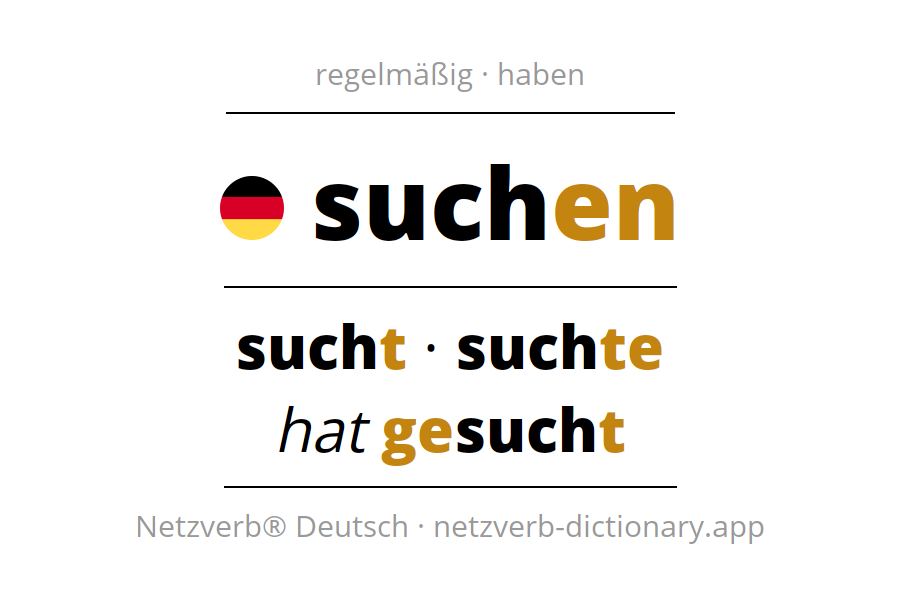
Konjugation von suchen: Verb suchen konjugiert im Präteritum, Partizip, Konjunktiv, Imperativ, ... Tabellen, Regeln, Übungen, Downloads, Beispiele und Sprachausgabe.
icy egret
remind 12:00 arrem postcard
main arrowBOT
❌ Bad argument: This time is in the past.
icy egret
remind 12pm arrem postcard
main arrowBOT
❌ Bad argument: This time is in the past.
main arrowBOT
Alright @icy egret, in 10 hours: arrem postcard
wooden frost
conj schwelen
main arrowBOT

Konjugation von schwelen: Verb schwelen konjugiert im Präteritum, Partizip, Konjunktiv, Imperativ, ... Tabellen, Regeln, Übungen, Downloads, Beispiele und Sprachausgabe.
wooden frost
conj schwellen
main arrowBOT

Konjugation von schwellen (unr) (ist): Verb schwellen konjugiert im Präteritum, Partizip, Konjunktiv, Imperativ, ... Tabellen, Regeln, Übungen, Downloads, Beispiele und Sprachausgabe.
tender trellis
cefr level B
main arrowBOT
FAQ not found. Try >explain all.
Note: This entry has been added to our FAQ idea pool.
tender tundra
explain passiv
main arrowBOT
Passive Voice
In English and German, a verb can have one of two voices which describe the relationship between the verb and the subject. These voices are the active voice and passive voice.
Typically, we use the active voice, where the subject is the doer or agent of the action. For example:
The man eats the apple.
In this sentence, the agent (the man) is acting upon (by eating) the object (the apple).
In the passive voice, the subject is the receiver or patient of the action. This typically places the emphasis on the patient or action, and the agent can be left out altogether if it is unknown or irrelevant. For example, the above sentence converted into the passive voice becomes:
The apple is being eaten.
In this example, the patient (the apple) is being acted upon (by being eaten) by an unknown agent.
German offers two passive forms: the Vorgangspassiv and the Zustandspassiv. The Vorgangspassiv refers to the process of an action, while the Zustandspassiv refers to the state of an action. The Vorgangspassiv is more often used and relates closely to the active voice. See >explain Vorgangspassiv for an explanation of the Vorgangspassiv, and see >explain Stative Passive for an explanation of Zustandspassiv.
See Also:
https://bit.ly/2Nqu84t (dartmouth university)
https://bit.ly/2y6iy9D (canoo)
https://bit.ly/2RyEodX (Passive Voice on Pferd's blog)
Network Solutions - Original domain name registration and reservation services with variety of internet-related business offerings. Quick, dependable and reliable.
Introduction to the passive voice in German and links to articles explaining more.
tender tundra
explain konj
main arrowBOT
FAQ not found. Try >explain all.
Note: This entry has been added to our FAQ idea pool.
main arrowBOT
FAQ not found. Did you mean...
KII 1
tender tundra
explain KII 1
main arrowBOT
Konjunktiv II: Usage
Konjunktiv II is a grammatical mood that expresses irreality - it describes something that isn't guaranteed to happen.
(1) Wenn ich Millionen Dollar hätte, würde ich alle Speisen der ganzen Welt probieren. = “If I had million dollars, I would try all dishes around the world.”
(2) Wäre ich Mod, würde ich alle bannen. = “If I were a Mod, I would ban everybody.”
Konjunktiv II is also used as a form of politeness.
(3) Könnten Sie mir bitte helfen? = “Could you help me, please?”
And it also replaces Konjunktiv I (see >explain Konjunktiv I) when the conjugation of Konjunktiv I is ambiguous. For example, when it matches Präsens:
(4) Sie sagte, ich brauche sie. ➡️ Sie sagte, ich würde sie brauchen.
Now that we have explained the usage of Konjunktiv II, let’s see how it’s built!
Type >explain Structure of Konjunktiv II to read the second part.
tender tundra
explain Konjunktiv I
main arrowBOT
FAQ not found. Did you mean...
Usage of Konjunktiv II
Structure of Konjunktiv II
main arrowBOT
@icy egret, 10 hours ago: arrem postcard
https://discordapp.com/channels/221708975698083841/248530603165614080/629097326975123487
main arrowBOT
@proper ibex, 4 days ago: critical thinking horko
https://discordapp.com/channels/221708975698083841/248530603165614080/627817982487429141
icy egret
@proud obsidian postcard
proud obsidian
I said at 12. I'm already at uni now. 
tender tundra
conj sein
main arrowBOT

Konjugation von sein: Verb sein konjugiert im Präteritum, Partizip, Konjunktiv, Imperativ, ... Tabellen, Regeln, Übungen, Downloads, Beispiele und Sprachausgabe.
left cliff
gr level B
main arrowBOT
:heavy_check_mark: I replaced your old CEFR role with Level B.
main arrowBOT
❌ Bad argument: Role "help" not found.
true locust
Brrrrrrrrrrrrrrrrrrrrrrrrrrrrrrrrrrrr...uck Chuck a-chuck-chuck (huh! yeah!) A summertime And the livin' is easy Fish are jumpin, don't you know my darling, ...

This video clip was made in 1970, and is the original Mungo Jerry line up that recorded In The Summertime, this is not to be confused with the version that h...

The rights to this song belong to the artist and label. Just sharing a great song with the world.
 true locust
 icy egret
groups
main arrowBOT
These groups are currently accessible
- Ouija
- Grammar - Lessons! Subscribe for pings.
- Reading - Lessons! Subscribe for pings.
- Advancedreading - Like Reading but only B2+ level content.
- Coding - For all the coding nerds.
- Food - A group for food talks.
- Gaming - All gaming-related topics.
- Science - STEM-related topics.
- Sciencepractice - For solving science problems.
- Translation - Offers weekly sentences to translate.
- Writing - Join to get weekly and monthly prompts!
Type >sub to join a group or >group joinall to join all available groups .
icy egret
@muted moth just write >sub food
true locust

Feeling Good: It's a song written by English musicians Anthony Newley and Leslie Bricusse Nina Simone re-recorded the song in 1965 For the album "I Put a Spe...
wooden frost
Botty got any food?
desert mural
faq conjugation
main arrowBOT
FAQ not found. Did you mean...
Negation
 whole reef



 main arrowBOT
These groups are currently accessible
- Ouija
- Grammar - Lessons! Subscribe for pings.
- Reading - Lessons! Subscribe for pings.
- Advancedreading - Like Reading but only B2+ level content.
- Coding - For all the coding nerds.
- Food - A group for food talks.
- Gaming - All gaming-related topics.
- Science - STEM-related topics.
- Sciencepractice - For solving science problems.
- Translation - Offers weekly sentences to translate.
- Writing - Join to get weekly and monthly prompts!
Type >sub to join a group or >group joinall to join all available groups .
desert mural
faq beginner
main arrowBOT
How to get started
The simplest way to learn German is to find topics you don’t understand yet and search for explanations of them. This list provides you with a guide for which topics to learn if you are completely new to German. Type the topic into Google (or YouTube) and start learning!
Introduction
1: Alphabet (especially ä, ü, ö and ß)
2: Basic greetings (hello, goodbye, etc.)
Part 1 - Simple Sentence
1: Noun gender & plurals
2: Nominative case (What are cases?)
3: Nominative pronouns (I, you, he, she, etc.)
4: Verbs in present tense
5: Definite/indefinite articles
6: Accusative case (for nouns)
7: Accusative pronouns
8: Word order of simple sentences
9: How to ask questions
Tips
- Always learn the gender of a noun when you learn a new noun
- Learn to use a translation dictionary (e.g. dict.cc, leo.org)
- Use
>faq resourcesto see our list of German learning resources - For listening and pronunciation practice, try watching movies or videos (incl. YouTube)
- You can listen to pronunciation for words on websites like dict.cc, forvo.com, and others
- Practice writing sentences every day (and asking people to correct them)
- Ask as many questions as possible
- Don’t be scared to make mistakes!!!! If you don’t let yourself make mistakes, you will never be able to learn German